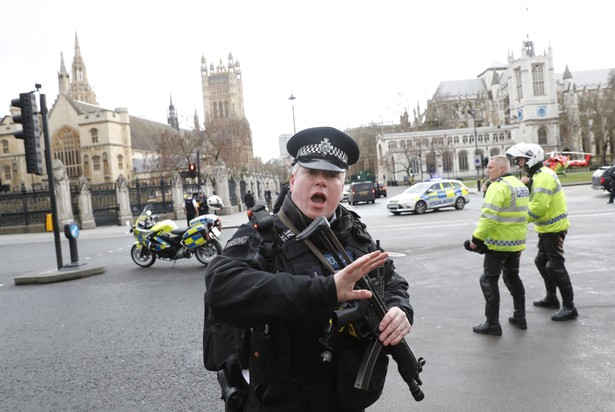
—Police say five people, including the alleged assailant, were killed in a terrorist attack in London. Forty others were injured. More here
—At Wednesday’s hearing, Democratic senators adopted a new strategy to press Supreme Court nominee Neil Gorsuch on abortion and campaign finance. More here
—House Intelligence Chairman Devin Nunes turned quite a few heads on Capitol Hill when he announced he’s learned that the Intelligence Community “incidentally collected information about U.S. citizens involved in the Trump transition.” More here
—We’re tracking the news stories of the day below. All updates are in Eastern Standard Time (GMT -5).
House Intelligence Chairman Devin Nunes turned quite a few heads on Capitol Hill Wednesday when he announced he’s learned that the Intelligence Community “incidentally collected information about U.S. citizens involved in the Trump transition.” He said he received this information through an unnamed source. The vague statement from the congressman and Trump ally did note that the intelligence was gathered legally and that there was no evidence of wiretapping at Trump Tower. But the news does throw a lifeline to President Trump after weeks of alleging his predecessor “wiretapped” him. As my colleague David A. Graham writes:
Nunes’s vague statements raised a host of questions, and his decision to announce them publicly and then go to the White House to brief President Trump, having not informed Democrats on the committee about his new findings, cast a pall of politics over the proceedings.
Trump said felt “somewhat vindicated” by the announcement, as former intelligence officials and Democrats on the Hill said the statement from Nunes was inappropriate.
Possible U.S. Airstrike Kills 33 Civilians in Syria
Ammar Abdullah / Reuters
A possible U.S. airstrike killed 33 civilians in Syria, a monitoring group said Wednesday. The Syrian Observatory for Human Rights, a London-based network trusted by many news organizations, said the U.S.-led coalition airstrike hit a school in northern Syria in a region controlled by ISIS. The school, located in the town of Mansoura, some 15 miles southwest of Raqqa, was being used as a shelter for displaced families from Raqqa, Aleppo, and Homs. Only two people survived the airstrike. U.S. officials have not confirmed whether the airstrike took place. U.S. military personnel were in the area that day airlifting around 500 U.S.-trained Syrian fighters. Fighting remains intense the northern city of Raqqa, the last ISIS stronghold and self-declared capital.
A file photo of the Palace of Westminister in central London on January 9, 2002. (Russell Boyce / Reuters)
The U.K. Parliament was placed under lockdown Wednesday after reports emerged of gunfire outside Westminster Palace in central London, according to local media. Details about what exactly happened are not yet known.
This story is developing. For more updates, follow our live blog here.
More Allegations About Manafort's Russia Links, But Trump's Former Campaign Manager Rejects Them
(Carlo Allegri / Reuters)
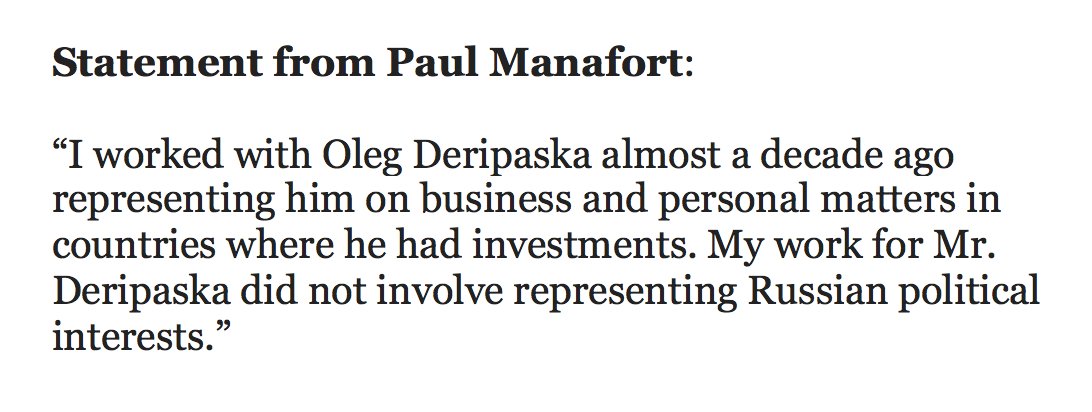
Paul Manafort, who was chair of Donald Trump’s presidential campaign, worked secretly a decade ago for Oleg Deripaska, a Russian billionaire, to further Russian President Vladimir Putin’s interests, the Associated Press is reporting this morning, citing documents that laid out Manafort’s plan to hurt opponents of Russia across the former Soviet Union. For this work, the AP adds, Manafort received a $10 million annual contract beginning in 2006. Manafort and the Trump White House have repeatedly denied that Manafort, who previously worked for Ukraine’s pro-Moscow president, worked to further Russian government interests. Manafort’s repeated that assertion today in response to the AP’s story, acknowledging he worked for Deripaska, but noting his “work did not involve representing Russian political interests.” Here’s more from the AP: “Manafort proposed in a confidential strategy plan as early as June 2005 that he would influence politics, business dealings and news coverage inside the United States, Europe and the former Soviet republics to benefit the Putin government, even as U.S.-Russia relations under Republican President George W. Bush grew worse. … Manafort and Deripaska maintained a business relationship until at least 2009, according to one person familiar with the work.” The allegations come a day after Serhiy Leshchenko, a Ukrainian lawmaker, said he had evidence Manafort tried to hide about $750,000 as payment in 2009 from a pro-Russia political party in Ukraine; at the time, Manafort was an adviser to Viktor Yanukovych, the Ukrainian president who was close to Moscow. Manafort called that claim “baseless.” On Monday, FBI Director James Comey told lawmakers the bureau was “investigating the Russian government's efforts to interfere in the 2016 presidential election,” including “the nature of any links between individuals associated with the Trump campaign and the Russian government, and whether there was any coordination between the campaign and Russia’s efforts.”
Judge Gorsuch Prepares for the Third Day of His Confirmation Hearings
(Joshua Roberts / Reuters)
Judge Neil Gorsuch will face questions for the third day from lawmakers on the Senate Judiciary Committee, a day after he went before the panel and defended the independence of the judiciary, but refused to be drawn into more controversial issues such as abortion rights and gun control. As my colleague Matt Ford wrote last night, “attempts by the Democratic senators … to reveal new dimensions of Gorsuch’s ideological beliefs were largely unsuccessful.” Gorsuch is President Trump’s nominee to fill the position on the U.S. Supreme Court made vacant by the death last year of Justice Antonin Scalia. Democrats were angered that President Obama’s nominee for the position, Judge Merrick Garland, was not given a hearing by Republicans, who control the Senate. The fourth and final day of the hearings are scheduled for Thursday. Despite some public opposition from Democrats and their supporters, Gorsuch, a widely respected jurist, is expected to be easily confirmed by the Senate.
The shooting at the correspondents’ dinner made clear who gets saved first.
This article was featured in the One Story to Read Today newsletter. Sign up for it here.
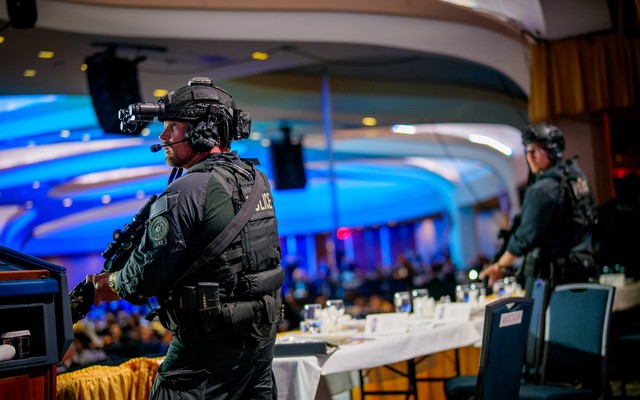
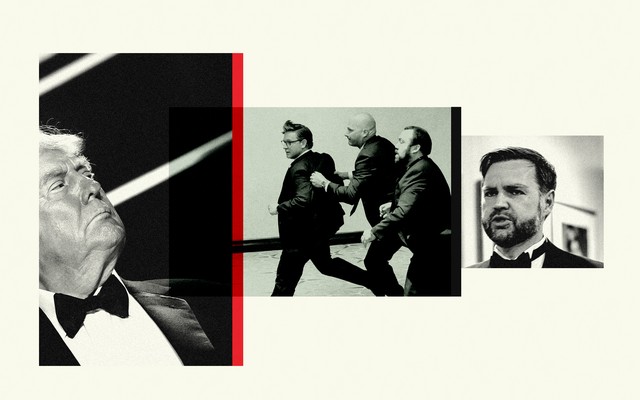
On one level, the system worked. The perimeter held. A would-be assassin was tackled in the hallway outside the White House Correspondents’ Association’s annual dinner. The one bullet that found a human target—a U.S. Secret Service agent—was halted, in part, by the officer’s phone and bulletproof vest, according to a law-enforcement summary report that we reviewed. A counterassault team promptly swarmed the stage with assault rifles and night-vision equipment in case the lights were cut. The government’s top leaders—president, vice president, Cabinet officials, speaker of the House—were ushered to secure locations in a matter of minutes. No one died in the attack.
Instead of a crackdown on his enemies, Trump wants his ballroom.
When an assassin murdered Charlie Kirk in September 2025, the MAGA movement seized the moment to demand a campaign of repression. Vice President Vance called for an ambitious program to “go after the NGO network that foments, facilitates, and engages in violence.” He named the Ford Foundation, Open Society Foundations, and The Nation magazine as examples of candidates for the retaliation he had in mind. The people who faced consequences after the killing almost universally did so for things they had written or said, not for acts of violence. In November, Reuters counted some 600 cases of people who were fired, suspended, or otherwise disciplined for their speech about Kirk’s life and death.
Now another gunman has attacked political targets. At the White House Correspondents’ Association dinner, a man discharged a firearm in the vicinity of hundreds of people from the worlds of politics, media, and business—among them, the president and vice president of the United States. Although much about the event remains unclear, the available evidence suggests that the gunman was motivated by an anti-Trump agenda. Yet this time, MAGA’s immediate response to political violence has been much less aggressive. At his press conference after yesterday’s attempted shooting, President Trump cited the attack as proof of the need for his wished-for White House ballroom. Social-media accounts that take their cues from the White House promptly echoed the message.
For the richest men on Earth, everything is free and nothing matters.
At the end of Paul Thomas Anderson’s 2007 movie, There Will Be Blood, Daniel Day-Lewis’s oil-baron character, old now and richer than Croesus, beats Paul Dano’s preacher to death with a bowling pin. Dano’s Eli Sunday, a nemesis of Day-Lewis’s Daniel Plainview during his seminal, wealth-building years, has come to sell Plainview the oil-rich land that he once coveted. But Plainview doesn’t need the land anymore, because—as he explains in one of the most famous monologues in modern cinema—he has sucked out all the oil hidden beneath it from an adjoining property, like a milkshake.
Desperate for money, Eli begs for a loan. Instead, Plainview chases him around a bowling alley and murders him with great enthusiasm. Once it’s over, a butler comes to see what all the noise was about. “I’m finished,” Plainview yells.
A manifesto-like email allegedly sent by the dinner shooter suggests a murderous obsession with Trump’s politics.
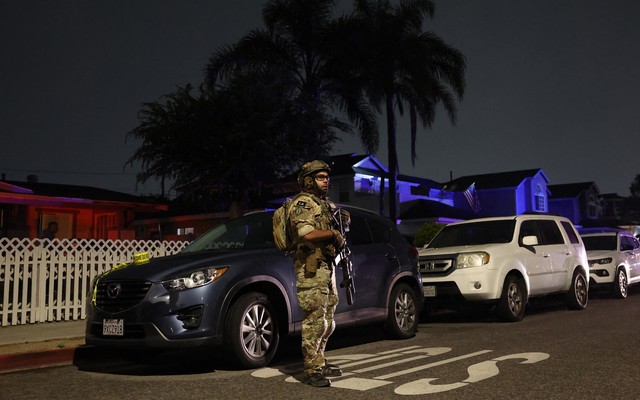
The line “I experience rage thinking about everything this administration has done” could probably have been written in an email to friends by any number of the attendees at last night’s White House Correspondents’ Association dinner. But the line was apparently written by a man who showed up with a shotgun and pistol and was ready to kill “most everyone” there to get to Donald Trump and assassinate him and his Cabinet. In a manifesto-like email that he reportedly sent to family minutes before allegedly shooting, Cole Tomas Allen wrote that the assembled journalists and machers “chose to attend a speech by a pedophile, rapist, and traitor, and are thus complicit.” Allen never came near the president or the gala floor. A Secret Service agent was shot in the vest before Allen was tackled and arrested.
Tragedy was averted at a Washington hotel, but such moments will happen again.
Except for what appears—thank God—to be only a minor injury to a Secret Service officer who was shot near a security checkpoint, no one was hurt at the White House Correspondents’ Association dinner last night. News reports are reassembling the mosaic of the attacker’s movements; he apparently took a train and transported some weapons with him, checked into the hotel, and then made his run at the event.
These are the basic contours of all that we know, and it will take time for more credible information to emerge. In the meantime, the vacuum of facts has been filled by a certain amount of hysteria and the usual conspiracy theories, as well as understandable demands to make changes so that such a thing can never happen again.
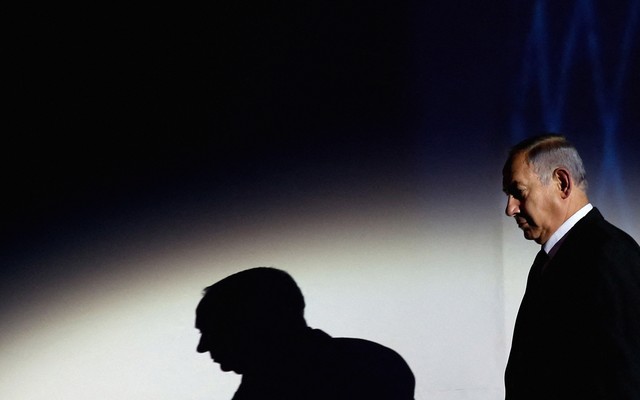
The Israeli prime minister’s focus is, as always, on himself and his near-term political needs. The plight of American Jews is simply not his concern.
The relationship between the United States and Israel is in crisis. Six in 10 Americans have a negative view of Israel, and a majority of those under 50 in both major parties view Israel as well as its prime minister, Benjamin Netanyahu, negatively. After the brutal Gaza war, a large percentage of liberal-leaning Generation Z considers Israel a pariah state. Democratic candidates are scrambling to distance themselves from Israel and its controversial leader; earlier this month, 40 of the 47 Democratic senators voted against a military aid package for the country. And hostility toward Israel is spilling over into hostility toward Jews. Liberal influencers, activists, podcasters, and even politicians are invoking age-old anti-Semitic tropes with frightening regularity.
Priests and theologians want to shape the future of AI. Big Tech is listening.
In 1633, Galileo Galilei stood in the convent of the Santa Maria sopra Minerva church in Rome, where a tribunal of Catholic authorities forced him to “abjure, curse, and detest” his belief that the sun—not Earth—was the center of the universe.
Almost four centuries later, in 2016, the Vatican invited a group of the world’s most prominent technologists to the same church to discuss AI ethics. That was the start of the Minerva Dialogues, annual closed-door conferences in Rome that have become the centerpiece of a decade-long exchange between Silicon Valley and the Catholic Church.
The Valley and the Vatican seem like strange bedfellows: The oldest institution in the world meets secular upstarts bent on creating godlike technology. When the venture capitalist Reid Hoffman first attended the dialogues, he told me he was struck by the portraits lining the walls that depicted Catholic inquisitors like those who persecuted Galileo. “It feels a little bit weird to be walking in voluntarily past these,” he remembers thinking.
This weekend’s failed attack highlighted a risk that often goes unspoken.
In the chaotic swirl of events after President John F. Kennedy’s assassination, doctors feared that Vice President Lyndon B. Johnson had suffered a heart attack upon arrival at Parkland Memorial Hospital in Dallas. The signs were ominous: Johnson’s face was ashen, and he was clutching his chest. “There was the real possibility that the No. 3 in the line of succession would become president,” the historian Michael Beschloss told me. Johnson was reportedly examined and a heart attack ruled out—but not before then–House Speaker John McCormack was told that he might be the next president. The declaration prompted a severe bout of vertigo in the 71-year-old.
Few moments in history have so starkly exposed the vulnerabilities of the presidential line of succession—or the lack of clarity about how it is protected. Last night provided another illustration of them. If events at the White House Correspondents’ Association Dinner had gone differently, a gunman who breached security at the Washington Hilton could have reached a ballroom containing an unusually dense cluster of American power. The president and the vice president were seated a few feet apart. Congressional leadership and many Cabinet secretaries were also on hand. In other words, much of the presidential line of succession was in the same spot—and subject to the same vulnerabilities.
A New York Times podcast hosted Hasan Piker and a New Yorker staff writer for a discussion of lawbreaking, which they both endorsed as resistance to tyranny.
The late political scientist James C. Scott endorsed what he called “anarchist calisthenics”—the regular practice of small acts of lawbreaking and disobedience. Jaywalk at an empty intersection. Have a beer in the park. Smuggle a pudding cup past the TSA agents. The point, Scott said, was to keep the civic muscles strong. Without constant reinforcement, these muscles will atrophy, and when real tyranny arrives, the flabby citizen will be powerless to resist. Scott particularly enjoyed telling Germans to get their reps in, because their grandparents had not.
On Wednesday a New York Times podcast hosted the Twitch streamer Hasan Piker and the New Yorker staff writer Jia Tolentino for a discussion of lawbreaking, which they both endorsed not as a habit of mind but as resistance to actual tyranny, today. They agreed that shoplifting from grocery stores such as Whole Foods is laudable, because (as Tolentino says, without evidence) “every major grocery chain” steals from workers and customers. Streaming services—they specifically name Spotify, which carries the Times podcast—are bad for creators and, they say, worthy of being ripped off. Piker said he would steal cars, “if I could get away with it.” Channeling Abbie Hoffman, Tolentino encourages people to steal from her own employer, The New Yorker, but does not explain which high crimes David Remnick has committed to earn this comeuppance.
Requiring schools to endorse biblical laws is both unconstitutional and counterproductive.
When you were in elementary school, did your mind occasionally rise above the smell of pencil shavings and the sound of squeaking desk chairs to contemplate whether you ought to commit murder? Did you ponder what it would mean to covet your neighbor’s wife? Ordinarily those aren’t questions addressed in grade-school classrooms, but according to legislators in Alabama, Louisiana, Texas, and Arkansas, they ought to be.
In those districts, state Republicans are rallying behind laws that would mandate posting the Ten Commandments in public-school classrooms and common areas, such as cafeterias and libraries. This fad began in 2024, when Louisiana Governor Jeff Landry signed such a bill, reviving a debate long silenced by the Supreme Court’s 1980 decision in Stone v. Graham to strike down a similar Kentucky law.Other states followed suit: Arkansas and Texas last year, and Alabama just this month. Although these laws pose a threat to the First Amendment rights of students and teachers, the trend is spreading, so far unchecked by courts. Opponents of Texas’s law suffered a defeat last week when an appellate court decided in the state’s favor. The ACLU and other organizations representing the plaintiffs—a multifaith group of Texas families—are expected to appeal this decision to the Supreme Court.