Two explosions in Damascus, Syria, killed at least 40 Shiite pilgrims traveling to holy shrines, the United Nations says that with 20 million people at risk of starvation the world faces the greatest humanitarian crisis since World War II, and more news from the U.S. and around the globe.
—Two explosions in Damascus, Syria, killed at least 40 Shiite pilgrims traveling to visit holy shrines.
—The United Nations said the world faces the largest humanitarian crisis since the end of World War II, and some 20 million people in four countries are at risk of starvation.
—We’re tracking the news stories of the day below. All updates are in Eastern Standard Time (GMT -5).
Manhattan US Attorney Says He's Been Fired by DOJ After Refusing to Resign
Brendan McDermid / Reuters
Preet Bharara, the U.S. attorney for the Southern District of New York, said Saturday he was fired from his position after he refused a request from the U.S. Justice Department to resign. On Friday, Attorney General Jeff Sessions asked the 46 remaining U.S. attorneys appointed by former President Obama to step down, something that usually happens much earlier in a new president’s term, but was delayed because the Trump administration had not lined up replacements. Asking for their resignations early on allows the U.S. attorneys to tie up loose ends on important investigations while their replacements are confirmed. What was surprising in Bharara’s case was that he was asked to remain in his current position after he and Trump met in Trump Tower in November. News of the firing came from Bharara’s personal Twitter account.
I did not resign. Moments ago I was fired. Being the US Attorney in SDNY will forever be the greatest honor of my professional life.
Secret Service Arrests a Man After He Climbs the White House Fence
Carlos Barria / Reuters
U.S. Secret Service says it arrested a man late Friday night after he climbed the White House fence and tried to enter the south entrance. The man was identified by police as Jonathan Tran, a 26-year-old from Milpitas, California. President Donald Trump was at the White House during the incident. Tran, who was carrying a backpack, climbed the fence just before midnight, and was found near the south entrance portico. A search of his belongings didn’t turn up anything hazardous, and he has been taken into custody. In the past few years, several people have scaled the fence around the White House, and one man, in 2014, made it through the north entrance doors with a small knife in his pocket. The first family was not at the White House at the time.
20 Million People Face Starvation in East Africa, the Worst Humanitarian Crisis Since WWII
Siegfried Modola / Reuters
The United Nations said more than 20 million people in four countries are facing starvation due to drought and exacerbated by conflict, marking the largest humanitarian crisis since the end of World War II. Yemen, South Sudan, Somalia, and Nigeria are in immediate need of aid, otherwise “people will simply starve to death,” Stephen O’Brien, the UN under secretary-general for humanitarian affairs, told the security council at a meeting in New York late Friday. To “avert catastrophe,” O’Brien said, nonprofits would need about $4.4 billion by July. An unusual dry season has caused a drought in parts of East Africa, with crops wilting and livestock dying by the thousands. In South Sudan, where a famine was declared last month, the crisis has been exacerbated by a civil war. Famine is a technical term used to measure the risk of starvation in a country, and in order to meet the requirements, more than 30 percent of children would need to be suffering from acute malnutrition, with mortality rates of the country’s population reaching two starvation deaths per day for every 10,000 people. In Nigeria, too, Boko Haram has worsened the situation with attacks on villages in the country’s northeast, displacing 2.6 million people.
Explosions in Damascus Kill at Least 40 Shia Pilgrims
Omar Sanadiki / Reuters
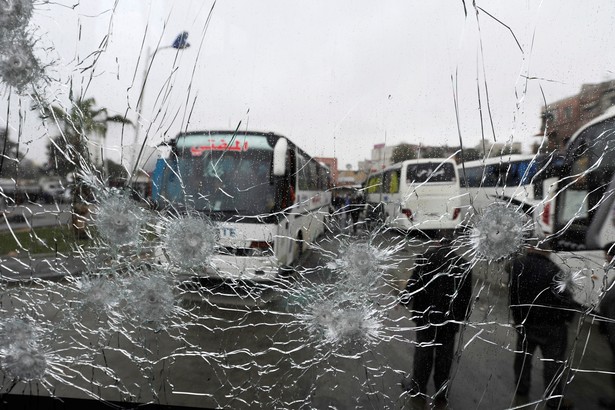
Two explosions killed at least 40 Shia pilgrims and wounded 120 others Saturday in Damascus, Syria. No group has claimed responsibility for the bombings. Local TV said the attack was carried out by two suicide bombers, Reuters reported, and images from the scene showed buses with windows shattered, bloodstains on the street, and random bits of scattered clothing. The pilgrims had gathered at a bus station nearby the Bab el Saghir Cemetery when the first bomb exploded, and about 10 minutes later, as victims were being tended to, the second blast went off. The pilgrims had just come from the shrine of Sayeda Zeinab, the granddaughter of the Prophet Muhammad. The shrine is a frequent target of attack by ISIS because it’s regularly visited by Shia pilgrims.
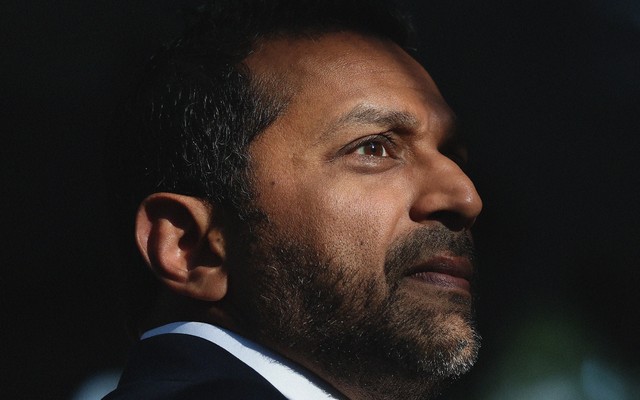
Kash Patel has alarmed colleagues with episodes of excessive drinking and unexplained absences.
On Friday, April 10, as FBI Director Kash Patel was preparing to leave work for the weekend, he struggled to log into an internal computer system. He quickly became convinced that he had been locked out, and he panicked, frantically calling aides and allies to announce that he had been fired by the White House, according to nine people familiar with his outreach. Two of these people described his behavior as a “freak-out.”
Patel oversees an agency that employs roughly 38,000 people, including many who are trained to investigate and verify information that can be presented under oath in a court of law. News of his emotional outburst ricocheted through the bureau, prompting chatter among officials and, in some corners of the building, expressions of relief. The White House fielded calls from the bureau and from members of Congress asking who was now in charge of the FBI.
I spent 10 months working at the institution because I thought I could help protect it. What I observed there is far worse than the public knows.
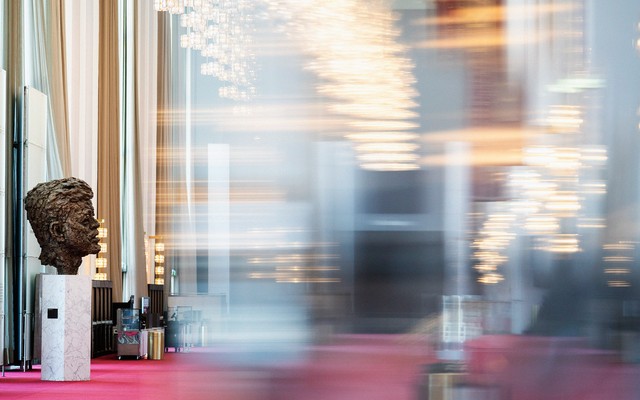
On the day I was laid off from the Kennedy Center, I felt a little like Dolley Madison saving the Stuart portrait of Washington before the British sacked the capital. I was the staffer in charge of the artworks in the building. A crucial difference is that my institution, unlike the White House in 1814, had been on fire for months.
About a year elapsed between the moment President Trump took over the Kennedy Center in early 2025 and his declaration this past February that he’d decided to shut down the nation’s cultural center for two years. In between, we had seen artist cancellations, shrinking audiences, firings of old staffers and influxes of new ones—a lot of drama, just not onstage. The date Trump announced for the closure was July 4, the country’s 250th birthday, an event that I had been hired to help commemorate as the institution’s first curator of visual arts and special programming.
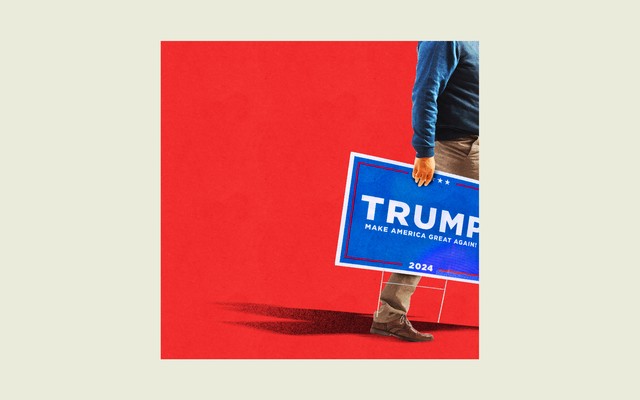
A shocking number of the president’s supporters have turned against him.
Tomas Montoya has sold festival foods—funnel cakes, burgers, hot dogs—across the American Southwest for years. But lately, business has been rough. Costs are up, so he’s increased his prices. Employees are begging for hours he can’t give them. In Arizona, where he lives, Montoya pays $6 a gallon to fill up his food trucks with diesel. This summer, he may have to skip the California leg of his festival route because fuel is even more expensive there.
“It’s Trump,” Montoya told us outside a popular Hispanic grocery store in Casa Grande, Arizona, much of which sits in one of the most evenly divided House districts in the country. Montoya voted for President Trump in 2024, but now, well, frustrated doesn’t begin to cover how he’s feeling. The president is bragging about the economy, even though everyone Montoya knows is hurting; he promised to stop wars, but started one in Iran. “When Trump opens his mouth, three-quarters of what he says is stories, lies,” Montoya said. He’s planning to vote in the midterm elections this fall. But he may not choose a Republican.
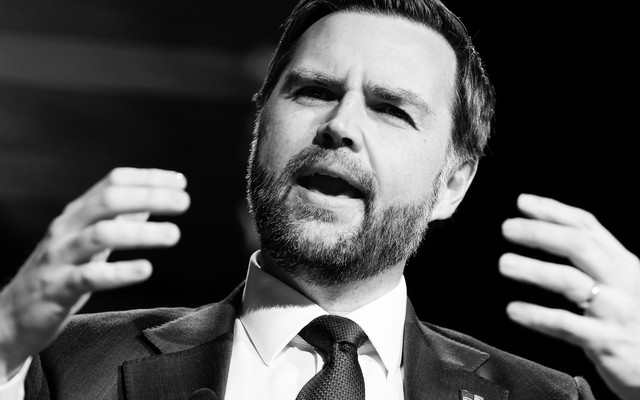
The vice president has decided he’s a more accomplished theologian than Leo XIV.
The Trump administration doesn’t seem to have many rules, but one of them is that once the president picks a fight, his posse must show up to support him, no matter how ill-advised the conflict. And few senior officials are more eager to back up the boss in every embarrassing beef than Vice President Vance, who recently seems to have decided that he, and not Pope Leo XIV, is the true arbiter of Catholic doctrine.
President Trump is personally angry with Leo because the pontiff has been deeply critical of America’s war of choice in Iran. Accordingly, Trump lashed out at His Holiness twice over the past few days. Vance might have seen this as a valuable opportunity to say nothing and let the storm pass; Leo, naturally, doesn’t seem to care all that much what Trump thinks. (As my colleague Liz Bruenig wrote, Leo answers to a higher authority.) Had the vice president remained silent, Trump might have moved on, and Vance, a relatively recent convert to Catholicism, would have been able to stay out of a dustup between his president and his spiritual leader.
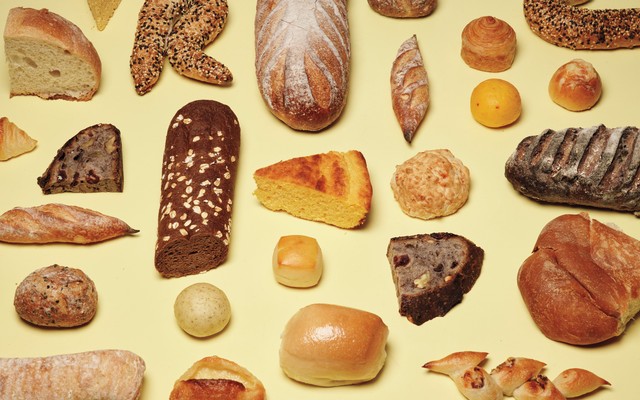
Thirteen thousand miles. Infinite contenders. One beautiful loaf.
This article was featured in the One Story to Read Today newsletter. Sign up for it here.
Here is the promise you and I must cling to across the thousands of words that follow: At some point within this text, I will reveal to you what—after 555 responses, 13,000 miles of travel, and months of monomaniacal research—I have determined to be the best free restaurant bread in America. I will not attempt to slither to the moral high ground, arguing that best is a meaningless measure, or insisting that all bread is dear in its own way. Even if you attempt to betray me—for instance, by merely scanning the text that follows for the phrase Here it is: the best free restaurant bread in America—I will uphold my end of the bargain.
Trump has developed a reputation for backing down from his most over-the-top threats, but dismissing his words is a mistake.
Twelve hours after Donald Trump warned that a “whole civilization will die tonight, never to be brought back again”—after he’d previously threatened to bomb Iran “back to the Stone Ages”—the president agreed to a temporary cease-fire. Since then, initial peace negotiations failed and Trump responded with a naval blockade of the Strait of Hormuz; a new round of talks may begin soon.
But what to do with his everyone in Iran is going to die comments last week? Because they were designed to pressure Iran to come to the table, and because the promised carnage did not materialize, many observers simply moved on, explaining away Trump’s threats as a ham-fisted negotiation tactic, some kind of 5-D chess, or another example of the president’s propensity to “TACO” (Trump Always Chickens Out).
In this episode of Galaxy Brain, Charlie Warzel speaks with Josh Owens, a videographer and the author of a memoir about his years working for Infowars, the media company of the conspiracy theorist Alex Jones. Owens traces his journey from a film-school student who stumbled onto Jones’s radio show to an insider who spent four years filming, editing, and traveling for the organization. Owens describes how Jones’s conspiracy machine works, as well as how his own moral compass was scrambled by Jones’s manipulative management. The conversation explores radicalization, the conspiratorial media ecosystem Jones helped create, and how Owens was able to pull himself out.
This article was featured in the One Story to Read Today newsletter. Sign up for it here.
Maybe you’ve seen photos of Tehran in the 1970s, just before the Islamic Revolution: images of young women going to work in miniskirts, of couples making out in parks while wearing bell-bottoms, of people at pools in bikinis. It looks like Paris or Milan or Los Angeles. But in 1979 the revolution happened, and now Tehran looks like something from an earlier century.
Sometimes I think that our whole world has become kind of like that—going backwards in time. The religious movements thriving in today’s secularized age are the traditionalist ones that dissent from large parts of contemporary culture—not only the Shiite Islam of post-revolution Iran, but Orthodox Judaism and conservative Catholicism. Young Americans are flooding into Eastern Orthodox churches.
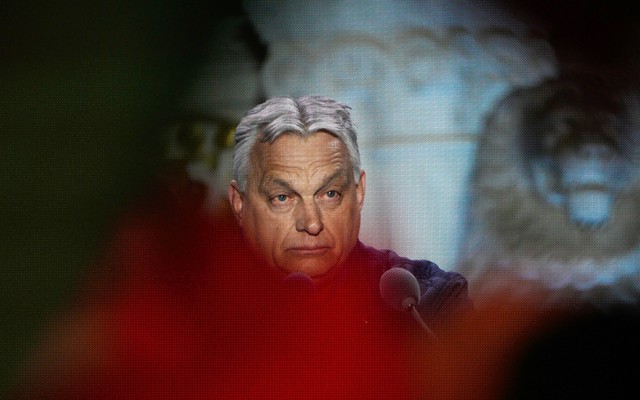
The Hungarian strongman Viktor Orbán, who lost his election in a landslide on Sunday after 16 years in power, presented himself as a defender of Western civilization. But at best, his lofty rhetoric was a code for bigotry and a justification for the persecution of minorities; at worst, it was a scam to fleece Hungarians by persuading them to blame everyone but those responsible for their problems. Maybe both.
Eventually Hungarians decided that a major source of their problems was Orbán himself. Maybe someday Americans will come to a similar realization about Orbán’s great admirer, Donald Trump, who praised the former Hungarian leader before the election as a “fantastic man” who had done a “fantastic job.”
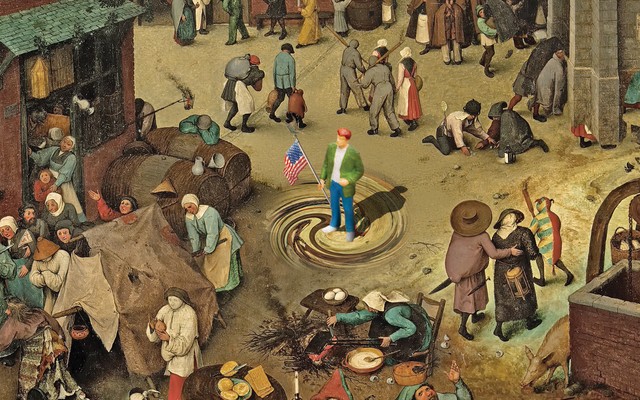
Has the president failed to learn the lessons of classic cautionary fables—or does he just understand them in his own novel ways?
This is an edition of The Atlantic Daily, a newsletter that guides you through the biggest stories of the day, helps you discover new ideas, and recommends the best in culture. Sign up for it here.
Donald Trump, as even some of his fiercest admirers will admit, is not always a paragon of personal virtue. Although the president’s aides sometimes treat him like he is a toddler, as the political scientist Daniel Drezner has observed, he’s not an especially well-behaved one. Trump often acts in ways that would result in detention or other punishment for an elementary-school student: bald-faced dishonesty, name-calling, unkindness, refusal to share, and an inability to use an inside voice. Put another way, Trump sometimes seems as though he missed out on all of the lessons that children are supposed to learn from fables and fairy tales. (Meanwhile, his administration is seeking to evict some lessons about tolerance from classrooms.) But perhaps that’s uncharitable: Trump isn’t ignoring those fables; he’s just taking different lessons away from them than the familiar ones. Here’s a set of classic stories and their morals, reinterpreted for MAGA political correctness.