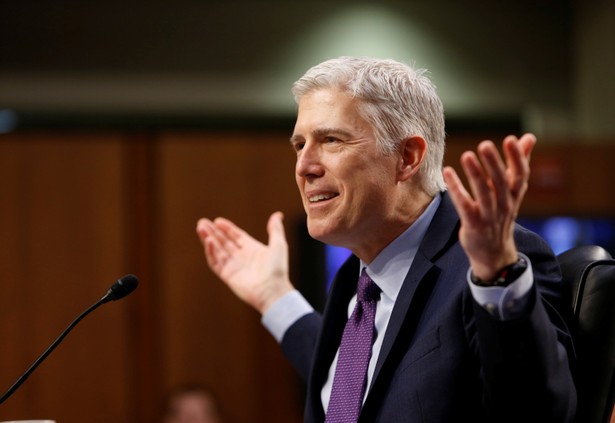
—The Senate Judiciary Committee begins deliberations today on the nomination of Judge Neil Gorsuch to the U.S. Supreme Court. Republicans need five more Democratic votes to overcome a filibuster that Democrats have vowed to mount on the nomination.
—We’re tracking the news stories of the day below. All updates are in Eastern Daylight Time (GMT -4).
Trump Donates His First-Quarter Paycheck to the National Park Service
Carlos Barria / Reuters
President Trump donated his first three months of salary to the National Park Service (NPS) on Monday. The total comes to $78,333.32, which Sean Spicer, the White House spokesman, handed in the form of a check to an NPS employee. During his election campaign, Trump promised to donate his $400,000 annual salary if elected, even asking for the press corps’s help in deciding where to send it. The NPS is overseen by the Department of Interior, which said the money would go toward maintaining historic battlefield sites. At these areas alone, the NPS faces a $229 million budget shortfall. Interior Secretary Ryan Zinke has said the NPS faces an overall maintenance shortfall of $12 billion, and he’s made this one of his top priorities. But it’s unclear how that shortfall will be made up because Trump’s “skinny” budget calls for a 12 percent cut to the Interior Department.
UPDATE: Democrats Have Enough Votes to Filibuster Gorsuch's Nomination; GOP Vows to Press Ahead
(Joshua Roberts / Reuters)
The Senate Judiciary Committee voted 11-9 along party lines Monday to move the nomination of Judge Neil Gorsuch to a full Senate vote. The move comes after Senate Democrats said they have the 41 votes needed to filibuster Gorsuch’s nomination, likely forcing Republicans to use the so-called “nuclear option” and put the Supreme Court nominee’s appointment to a full vote. Gorsuch, President Trump’s nominee to fill the vacancy created by the death last year of Judge Antonin Scalia, has the support of all 52 Republicans in the Senate, as well as of at least three Democrats—Joe Manchin of West Virginia, Heidi Heitkamp of North Dakota, and Joe Donnelly of Indiana—from conservative states that went to Trump. He needed 60 votes—a supermajority—for his nomination to be approved. The “nuclear option” would allow Gorsuch’s nomination to be approved by a simple majority of senators rather than the 60-vote supermajority. Democrats, who are still angry over the Republican refusal to hold hearings for Judge Merrick Garland, whom President Obama nominated to fill Scalia’s spot on the court, insist that if Republicans don’t have 60 votes for Gorsuch, Trump should nominate a judge who can win the support of a supermajority of lawmakers. Despite their opposition, however, Gorsuch is expected to be confirmed.
President Trump meets Egyptian President Abdel Fattah al-Sisi in the Oval Office on April 3, 2017. (Kevin Lamarque / Reuters)
President Trump welcomed Egyptian President Abdel Fattah al-Sisi to the White House Monday, marking the Arab leader’s first visit to Washington since he assumed power following former President Mohamed Morsi’s ouster in 2013. “I just want to let everybody know, in case there was any doubt, that we are very much behind President al-Sisi,” Trump told reporters at the meeting. “He’s done a fantastic job in a very difficult situation. We are very much behind Egypt and the people of Egypt.” Though Egypt has been a longstanding U.S. ally—receiving approximately $1.3 billion in U.S. military aid annually—Sisi was never afforded an invitation to the White House under the Obama administration. Indeed, Obama froze aid to the country for two years after Sisi, then Egypt’s defense minister, led a popular uprising against Morsi’s Muslim Brotherhood-led government, which was elected the previous year. The U.S.-Egyptian relationship was further strained by alleged human-rights abuses by the Sisi government, including mass arrests, enforced disappearances, and extrajudicial executions. Though Trump noted that both countries “have a few things” they do not agree upon, he said the two countries will work together “to fight terrorism and other things.”
Ecuador's New Socialist President Is Good News for Julian Assange
Mariana Bazo / Reuters
Socialist candidate Lenín Moreno narrowly won Ecuador’s presidential election Sunday night, though his opponent has demanded a recount and protesters from both sides took to the streets. Moreno’s win bucked a trend of center-right victories in South America, and was also good news for Julian Assange, whose fate as an asylee in Ecuador’s embassy in London was predicated on the win. Moreno, a former vice president, won 51 percent of the vote over his opponent, Guillermo Lasso. Lasso was a former banker who offered voters a change from leftist economic policies he blamed for the country’s sagging economy. He also promised to kick Assange out of the embassy within 30 days of taking office. At least one respected exit poll had put Lasso ahead Sunday night, so when news of Moreno’s win came later that evening, Lasso denounced it as fraudulent, saying, “We won’t let them cheat us!” His supporters stormed the country’s election headquarters and battled riot police. As oil prices and exports have fallen in the region, countries like Argentina, Peru, and Brazil have turned to center-right leaders who’ve promised fiscal reforms. But by selecting Moreno, Ecuador remains in the company of Socialist-led Bolivia and Venezuela.
Blast Reported at Metro Station in St. Petersburg, Russia
A general view of St. Petersburg, Russia (Maxim Zmeyev / Reuters)
Updated at 9 a.m.
Russian news reports say an explosion in the St. Petersburg metro system has killed at least people. The blast reportedly occurred at the Sennaya Square metro station.
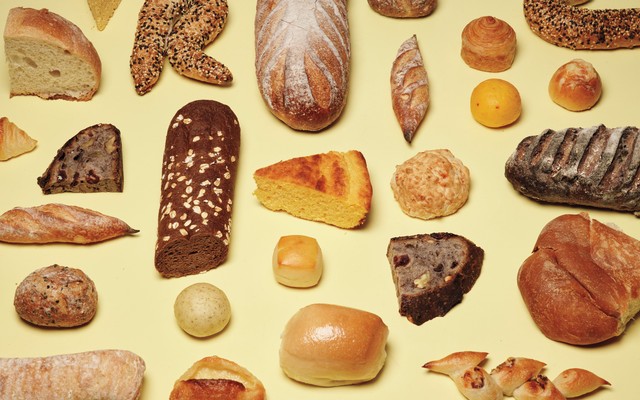
Thirteen thousand miles. Infinite contenders. One beautiful loaf.
This article was featured in the One Story to Read Today newsletter. Sign up for it here.
Here is the promise you and I must cling to across the thousands of words that follow: At some point within this text, I will reveal to you what—after 555 responses, 13,000 miles of travel, and months of monomaniacal research—I have determined to be the best free restaurant bread in America. I will not attempt to slither to the moral high ground, arguing that best is a meaningless measure, or insisting that all bread is dear in its own way. Even if you attempt to betray me—for instance, by merely scanning the text that follows for the phrase Here it is: the best free restaurant bread in America—I will uphold my end of the bargain.
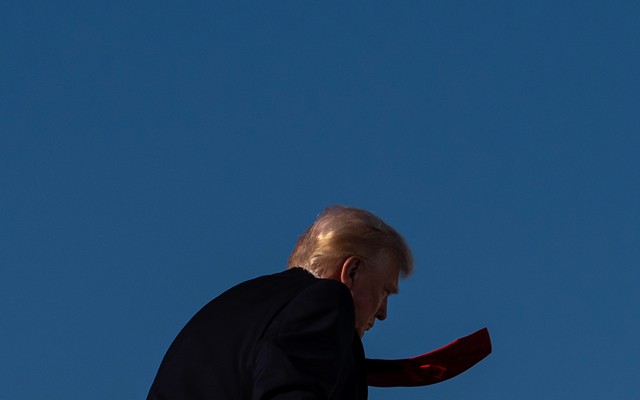
The president is on a losing streak, and even some of his aides are dismayed by his choices.
This article was featured in the One Story to Read Today newsletter. Sign up for it here.
You’ve heard the joke: The White House is going to start talking about the Epstein files to distract from how badly the Iran war is going.
Except that this reverse “Wag the dog” is based on bizarre truth: First Lady Melania Trump did bring the disgraced financier up, unprompted, late last week in an effort to distance herself from the scandal (in a move that, predictably, only shifted it back into the spotlight once again). Meanwhile, as negotiations with Iran stumble forward, the Strait of Hormuz is still in Tehran’s hands and now President Trump has authorized a risky naval blockade that will likely send prices soaring further. Moreover, Trump’s poll numbers have continued to fall, Republicans worry that both houses of Congress could be lost in November, and the president threw away a remarkable amount of geopolitical capital trying to support his now-defeated illiberal buddy Viktor Orbán of Hungary. Oh, and Trump deeply offended adherents of the world’s two largest religions in one week’s time.
The car industry says it has an answer for drivers wary of going electric.
Two hours into a road trip in my Tesla, I start to get twitchy. By that point, the battery in my 2019 Model 3 has dipped to an uncomfortably low percentage. If I can’t reach the next plug, I’m in trouble. This is the kind of problem that Ram’s electric pickup truck—the first of a new breed of EV to arrive in the United States—is intended to solve. When the range starts to dwindle, the truck automatically fires up a hidden gas engine that refills the giant battery. The “electric” vehicle keeps on chugging down the highway, hour after hour; pit stops are once again decided by the need for bathroom breaks rather than battery range.
The Ram 1500 REV, set to debut later this year, is what’s called an “extended-range electric vehicle,” or EREV. In essence, it is an electric vehicle that burns gas. There’s nothing revolutionary about a half-gas, half-electric car, of course. Hybrids have been a mainstay in the United States since the Toyota Prius broke through two decades ago, and automakers have released more efficient plug-in hybrids—allowing drivers to charge up for about 30 miles of electric driving, just enough to accomplish daily errands without fossil fuels. An extended-range EV is a different kind of beast. The engine burns gasoline for the sole purpose of replenishing the battery—it never actually pushes the wheels. In the Ram, the battery can run for about 150 miles of electric driving, and the whole setup delivers enough range to travel nearly 700 miles between stops.
A minimally speaking autistic man just wrote a best-selling book. Or did he?
On a recent morning at Rockefeller Center, NBC employees strolled through the crowd with copies of Upward Bound, the latest book-club pick from the Today show co-host Jenna Bush Hager. “It’s deeply heartfelt and moving,” Hager said, after holding up the debut novel from the 28-year-old Woody Brown, “and the reason it’s so authentic is that the author understands autism firsthand.”
That understanding is indeed profound. Brown’s autism is such that he can barely speak, and he communicates mostly by pointing to letters, one by one, on a laminated board. This is also how his novel, which is already a New York Times best seller, came to be. In the recorded interview that followed Hager’s introduction, Brown’s mother, Mary, sat beside him, holding the letter board and reading his tapped-out messages.
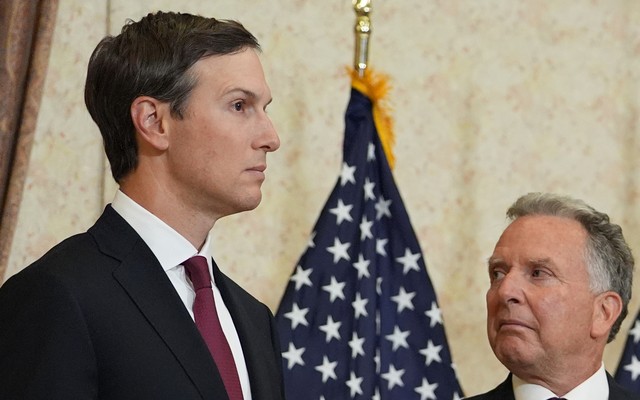
Is the president’s son-in-law carrying out the public’s business or pursuing his own private interests?
In 2021, shortly after he left his role as a senior White House adviser, Jared Kushner let it be known that he had loved his job but disliked the scrutiny and disclosure that came with being a top U.S. government official. He set up a private-equity firm and took a $2 billion investment from a Saudi fund led by Crown Prince Mohammed bin Salman. He proclaimed that he was embracing private life. “I’m an investor now,” Kushner said in a 2024 interview. If President Trump “calls you on November whatever and says, ‘I’d like you to come back to D.C.,’ you say, ‘Thanks, but I’m good’?” the interviewer, Dan Primack of Axios, pressed. “Yes,” Kushner responded.
But Kushner did come back. Two days before the United States and Israel attacked Iran this past February, he was in Geneva in a negotiation of the highest possible stakes. Over the weekend, he traveled with Vice President Vance to Islamabad to participate in failed peace talks with Iran. Without title or remit or any kind of official designation—only “presidential son-in-law”—Kushner has in the first 14 months of the second Trump administration sat down with world leaders including Vladimir Putin, Benjamin Netanyahu, and Volodymyr Zelensky, along with Saudis and multiple other actors from the Middle East.
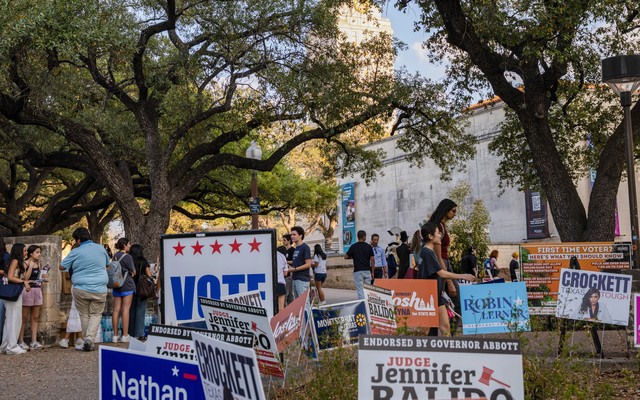
The president’s attempts to interfere with the midterms demand vigilance, but a recent flimsy gambit is an argument against despair.
This is an edition of The Atlantic Daily, a newsletter that guides you through the biggest stories of the day, helps you discover new ideas, and recommends the best in culture. Sign up for it here.
Anxiety among election officials and experts had been building for months before Donald Trump issued his latest executive order purporting to ensure election integrity late last month. When the actual text emerged, the reaction wasn’t relief exactly—but a definite sense that things could have been much worse.
Americans have many reasons to be worried about whether the midterm elections will be free and fair. As I laid out in a cover story last fall, the president’s plan to subvert the 2026 election is multifaceted and already in swing. But last month’s order and the dismissive reaction it’s received from experts—along with this weekend’s decisive defeat of Hungarian Prime Minister Viktor Orbán, which shows how the competitive-authoritarian playbook that Trump has imitated can be beaten—also point to the reasons to resist doomerism.
Testing has become so advanced that doctors now miss important elements of diagnosis.
In her first year of medical school, Diana Cejas discovered a lump in her neck. She went to the student medical center to have it evaluated and was told that it was likely benign. But the lump kept growing, and she returned to her doctors, who reassured her that it was just a large lymph node. One night, following a 36-hour shift in her residency, the lump hurt so much she couldn’t sleep. The next day, after she begged for help, a doctor finally ordered a CT scan. She looked up her results on the hospital computer system. There, on the screen, was a large mass in her neck. It turned out to be cancerous. Even as she had been learning how to correctly diagnose others, she had not been able to get an accurate diagnosis herself.
A phonics-based curriculum is only one part of how Mississippi went from worst to first in education. The other part is much harder to pull off.
Updated at 8:52 p.m. ET on April 9, 2026
This article was featured in the One Story to Read Today newsletter. Sign up for it here.
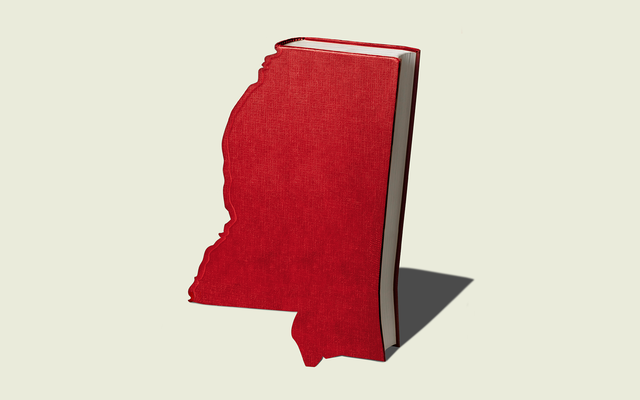
No story has caught the imagination of education reformers this decade quite like the “Mississippi miracle.” From 1998 to 2024, fourth-grade reading and math scores in my home state—the nation’s poorest—rose from among the worst in the country to among the best. When adjusting for demographic factors such as poverty, we’re in first place.
Other states are now trying to emulate what Mississippi did. Those efforts largely revolve around adopting what’s known as the “science of reading”— a set of principles and teaching techniques, including phonics, that are grounded in decades of empirical research. Last fall, for example, the Wall Street Journal editorial board marveled that “even California is now following Mississippi’s lead by returning to phonics” as Governor Gavin Newsom prepared to sign a major new reading bill into law. But what many outsiders fail to understand is that Mississippi changed far more than just how reading is taught. They therefore miss why and how our literacy approach succeeded.
Hungary offers lessons in defeating right-wing populists.
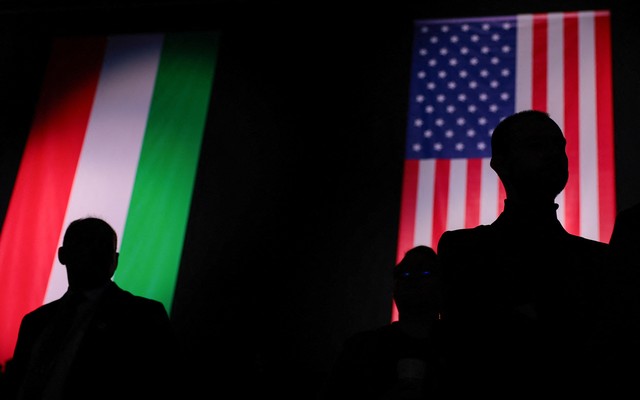
To the outside world, Hungarian Prime Minister Viktor Orbán began his rule as a pariah—an obstreperous, often lone dissenter from European Union policies, especially over migration. Then he became a prophet to new-style “national conservatives”—the anti-immigration, anti-elite right-wing movement that has reshaped the politics of the West. After resoundingly losing national elections held on April 12, Orbán has become a parable for how populism can be defeated.
His political demise was hardly inevitable. It had to be shrewdly engineered by politicians and voters who put aside their ideological differences to defeat him. In politics, there is no natural law of self-correction.
From 2010 until now, Orbán and his Fidesz party transformed Hungary into a new kind of state, which he proudly proclaimed as an “illiberal democracy.” He and his allies rewrote the constitution to entrench his power, centralizing control over civil society and countervailing institutions such as courts and universities. Péter Magyar, the presumptive next prime minister, triumphed against a tilted electoral system—gerrymandered districts, government influence over traditional media and even over the country’s billboards—designed to keep Fidesz in power. Magyar understood that such a regime does not simply collapse under the weight of its own contradictions and mismanagement.
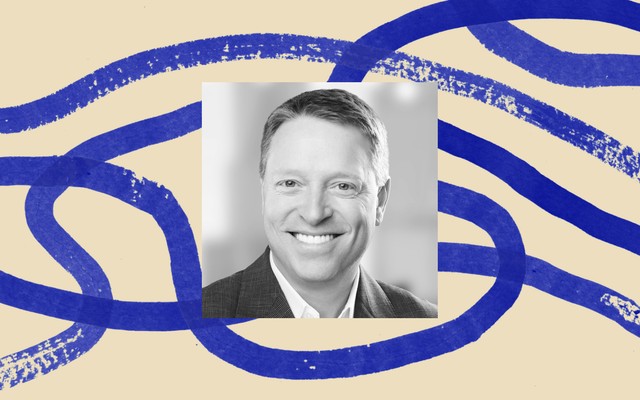
Former U.S. Deputy National Security Adviser Matt Pottinger on the U.S.-Iran cease-fire, Trump’s Hormuz blockade, and China’s reaction to the Iran war. Plus: A seismic election in Hungary, and Labyrinths, by Jorge Luis Borges.
In this week’s episode of The David Frum Show, The Atlantic’s David Frum opens with his reaction to the recent election in Hungary and the defeat of Viktor Orbán. David counters Orbán defenders who claim that this loss proves Orbán was never a threat. Antidemocratic leaders often face institutional constraints, and it was those institutional constraints that compelled Orbán to accept a defeat after years of abuse of power.
Then, David is joined by former U.S. Deputy National Security Adviser Matt Pottinger to discuss the current state of President Trump’s war in Iran. David and Pottinger talk about the recent failed negotiations between the two sides in Pakistan, the blockade of the Strait of Hormuz, and what could happen next. They also discuss how the Iran war is viewed in China and how it has been a financial gain for Russia.