Police block off a road after a shooting incident in downtown Fresno, California on April 18, 2017. (Fresno County Sheriff / Reuters)
A suspect was apprehended after killing three people and injuring one other Tuesday in downtown Fresno, California, in what authorities are calling “a random act of violence.” Fresno Police Chief Jerry Dyer said at a news conference the suspect, who was identified as 39-year-old Kori Ali Muhammad, allegedly shot and killed three people in the city’s downtown area, including a Pacific Gas & Electric employee and two others outside a Catholic Charities facility. Muhammad, who police say yelled “God is great” in Arabic before he was apprehended, was wanted by police on suspicion of fatally shooting a security guard outside a Fresno hotel last week. Dyer added the suspect’s Facebook page indicated “he does not like white people,” and also included “anti-government sentiments.” Authorities did not label the incident a hate crime, and said it is too soon to determine if it was an act of terrorism. Muhammad is believed to have acted alone and faces four counts of murder and two counts of attempted murder.
This story is developing and we will update it as we learn more.
Pedro Hernandez Sentenced to 25 Years to Life in Etan Patz Murder Case
Louis Lanzano / Reuters
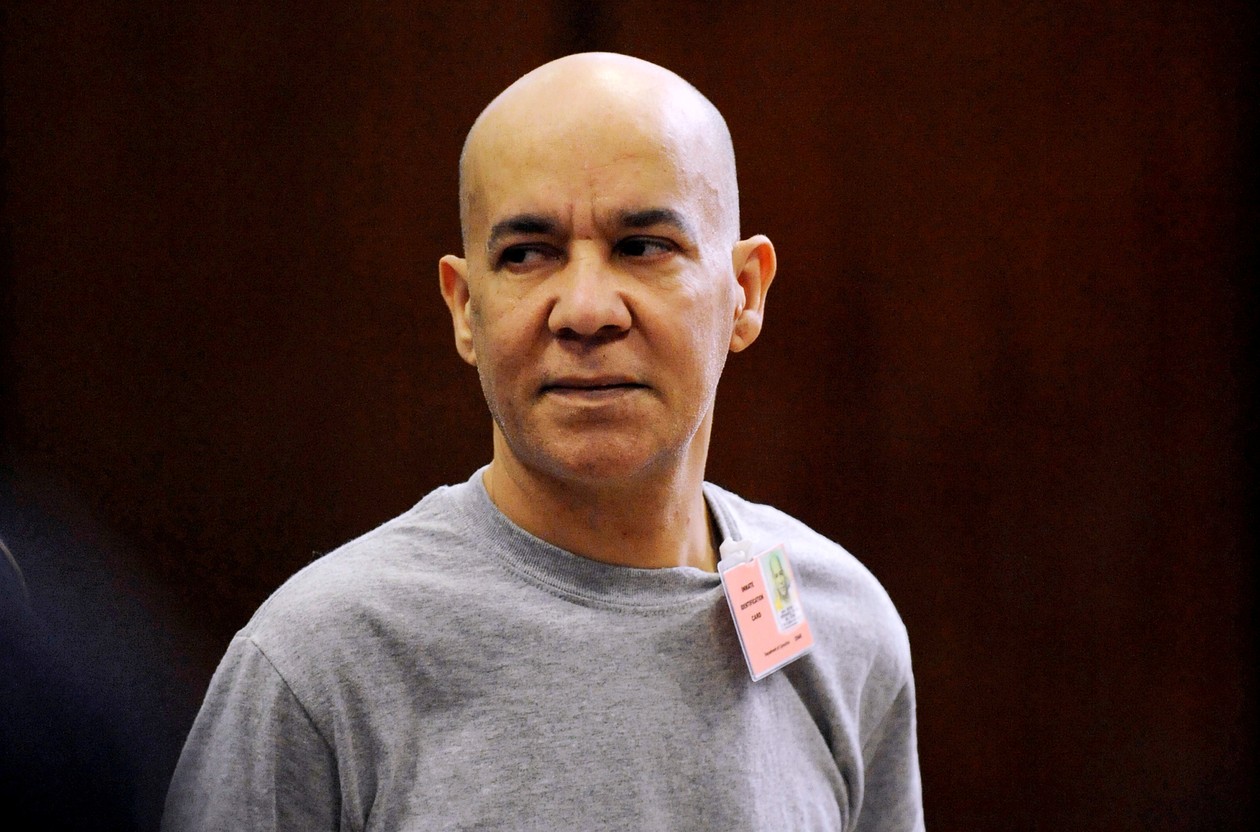
Pedro Hernandez was sentenced to 25 years to life in prison Tuesday for the kidnapping and murder of 6-year-old Etan Patz, marking an end to the infamous case that began nearly four decades ago. Hernandez was convicted by a New York jury in February at the end of the case’s second trial. The first, which took place in 2015, ended in a mistrial after the jury deadlocked. Hernandez confessed in 2012 that he lured Patz into the basement of the grocery store where he worked in 1979 and strangled him; Hernadez’s lawyers argued the confession was a product of police manipulation and that Hernandez is mentally ill. Patz, whose body was never found, was one of the first missing children to ever be pictured on a milk carton. The anniversary of his disappearance has since been commemorated as National Missing Children’s Day.
United Airlines CEO: No One Will Be Fired Over Dragging Incident
Lucas Jackson / Reuters
United Airlines CEO Oscar Munoz said Tuesday no one would be fired from the airline over last week’s incident in which a passenger was dragged off what was thought to be an overbooked flight. The airlines’s executives added it was too soon to tell how the incident has affected ticket sales. Video of the incident, which showed police forcibly drag the 69-year-old passenger, Dr. David Dao, off his seat and down the plane’s aisle, generated global backlash against the airline and wiped nearly $1 billion off United Continental Holdings Inc’s value. Munoz condemned the event as a “system failure” and vowed the airline would no longer use law enforcement to remove passengers who are “booked, paid, seated.” The controversy prompted other airlines to revisit their policies, as well. Delta Airlines announced Friday it would increase its compensation to passengers removed from overbooked flights from $1,350 to $9,950, and American Airlines said it would no longer permit the removal of passengers who have already boarded the plane.
Police Say Facebook-Murder Suspect Steve Stephens Found Dead
(Reuters)
Updated at 1:23 p.m.
Pennsylvania State Police announced Tuesday that Steve Stephens, the man authorities in Cleveland say shot and killed a 74-year-old man and uploaded video of the slaying to Facebook, killed himself in Erie County.
Steve Stephens was spotted this morning by PSP members in Erie County. After a brief pursuit, Stephens shot and killed himself.
Cleveland Police Chief Calvin Williams thanked the public for their help in finding Stephens, noting authorities had 400 tips on his whereabouts. He also warned of using social media to post videos of violence. “We can’t do this in this country,” Williams said in a news conference. “I think the people on social media kind of know the power and the harm it can do.” The video remained on Facebook for more than two hours before it was removed by the social-networking site. Facebook CEO Mark Zuckerberg said: “We will keep doing all we can to prevent tragedies like this from happening.”
Stephens made several Facebook posts before the shooting, saying he’d lost all his money gambling and that he was upset with his girlfriend. He also claimed to have committed a dozen other murders, though police have not verified if that is true. The killing happened Sunday afternoon, and the video, as described byThe Washington Post, shows Stephens approach a man, then ask him to repeat the name of his girlfriend. The man does so, then Stephens says, “She’s the reason why this is about to happen to you.” Stephens then raises the gun and fires, according to the Post. The victim was identified as Robert Godwin Sr., and police said there was no indication the men knew each other. Authorities say they believe Stephens left the state, and they cautioned residents in Pennsylvania and New York that he is armed and dangerous. Stephens was last seen in a white Ford Fusion.
Following the killing, Facebook said it needed to respond to such videos more quickly. “We know we need to do better,” Justin Osofsky, Facebook’s vice president of global operations, said Monday in a blog post. As early as this morning, Stephens’s whereabouts were unknown. Rumors that Stephens had been spotted in other cities and as far afield as Texas were dismissed by authorities in those places. This is not the first time a crime has been committed and video of it found on Facebook.
Protesters demonstrate against Arkansas’s scheduled executions outside the Capitol building in Little Rock on April 14, 2017. (Kelly P. Kissel / AP)
The U.S. Supreme Court declined early Tuesday to vacate the Arkansas Supreme Court ruling halting a scheduled execution from taking place. The high court’s ruling, which came just minutes before the death warrant of 54-year-old inmate Don Davis expired, prevented the state of Arkansas from conducting the first of eight lethal injections scheduled to take place this month, as well as the first execution to take place in the state since 2005. The court provided no explanation for the denial, and no dissents were recorded. Arkansas Governor Asa Hutchinson said he was “disappointed” by the decision, but added the state “will continue to fight back on last minute appeals and efforts to block justice for the victims’ families.” As Garrett Epps noted, the state’s decision to schedule eight executions over the span of just 11 days—a rate the Death Penalty Information Center, which monitors executions in the U.S., called “unprecedented”—correlates with the state’s supply of execution-drug midazolam that is set to expire at the end of the month.
U.K. Prime Minister Theresa May Calls for New Elections on June 8
(Toby Melville / Reuters)
U.K. Prime Minister Theresa May has called for early general election on June 8, a date that marks almost one year since the country voted to leave the European Union. “The country is coming together but Westminster is not,” May said, referring to the U.K.’s Parliament. Lawmakers will vote tomorrow on May’s call, and they are expected to approve early elections; elections were previously scheduled for 2020. While political opposition to Brexit remains high, polls still narrowly support the vote; more good news for May is that her Conservative party is comfortably ahead of most of its rivals.
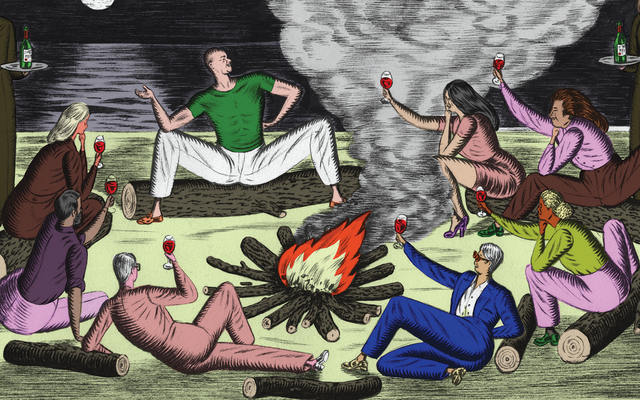
For the richest men on Earth, everything is free and nothing matters.
At the end of Paul Thomas Anderson’s 2007 movie, There Will Be Blood, Daniel Day-Lewis’s oil-baron character, old now and richer than Croesus, beats Paul Dano’s preacher to death with a bowling pin. Dano’s Eli Sunday, a nemesis of Day-Lewis’s Daniel Plainview during his seminal, wealth-building years, has come to sell Plainview the oil-rich land that he once coveted. But Plainview doesn’t need the land anymore, because—as he explains in one of the most famous monologues in modern cinema—he has sucked out all the oil hidden beneath it from an adjoining property, like a milkshake.
Desperate for money, Eli begs for a loan. Instead, Plainview chases him around a bowling alley and murders him with great enthusiasm. Once it’s over, a butler comes to see what all the noise was about. “I’m finished,” Plainview yells.
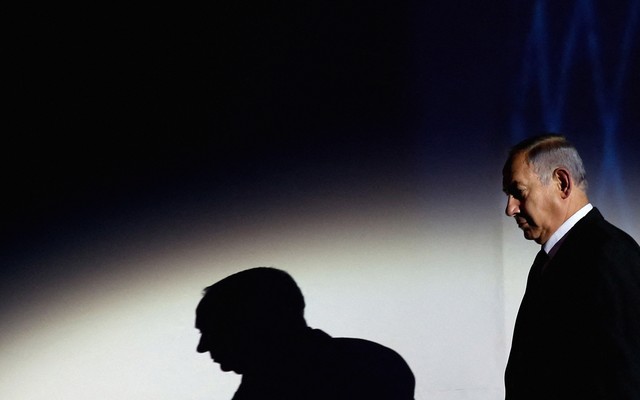
The Israeli prime minister’s focus is, as always, on himself and his near-term political needs. The plight of American Jews is simply not his concern.
The relationship between the United States and Israel is in crisis. Six in 10 Americans have a negative view of Israel, and a majority of those under 50 in both major parties view Israel as well as its prime minister, Benjamin Netanyahu, negatively. After the brutal Gaza war, a large percentage of liberal-leaning Generation Z considers Israel a pariah state. Democratic candidates are scrambling to distance themselves from Israel and its controversial leader; earlier this month, 40 of the 47 Democratic senators voted against a military aid package for the country. And hostility toward Israel is spilling over into hostility toward Jews. Liberal influencers, activists, podcasters, and even politicians are invoking age-old anti-Semitic tropes with frightening regularity.
The president is safe after chaos at the Washington Hilton, and a suspect is reportedly in custody.
Updated at 1:29 a.m. ET on Sunday, April 26, 2026
We were under the table before we knew what was happening. One moment, a military band was parading out of the Washington Hilton’s cavernous ballroom; hundreds of government officials, diplomats, and journalists, including more than a dozen of us from The Atlantic, dressed in our best or borrowed black tie, had turned to our spring-pea-and-burrata salads.
The next moment, armed agents—maybe Secret Service, maybe police, maybe hotel guards; it was hard to tell from where we were huddled under a tablecloth—were pushing their way through mounds of people, climbing over chairs, rushing to the stage, where President Trump and First Lady Melania Trump had shortly before been seated.
James Talarico is trying to sell a novel brand of Christian politics in a deep-red state.
Updatedat 11:25 a.m. ET on April 24, 2026
While some might pray for hope or peace in such dark times, others are praying for the death of Texas Democrat James Talarico, who is running for the U.S. Senate. During a recent episode of the right-wing Protestant podcast Reformation Red Pill, host Joshua Haymes told the pastor Brooks Potteiger that he prays that “God kills” Talarico, given that the politician seems to be possessed by demons. Potteiger agreed, offering that Talarico should be “crucified with Christ.” Both Haymes and Potteiger later insisted that their remarks were not sincere expressions of violent intent, but rather metaphorical calls for Talarico, a Presbyterian seminarian, to find salvation in their brand of Christianity. Talarico shrewdly responded by offering forgiveness: “You may pray for my death, Pastor, but I still love you. I love you more than you could ever hate me.”
Requiring schools to endorse biblical laws is both unconstitutional and counterproductive.
When you were in elementary school, did your mind occasionally rise above the smell of pencil shavings and the sound of squeaking desk chairs to contemplate whether you ought to commit murder? Did you ponder what it would mean to covet your neighbor’s wife? Ordinarily those aren’t questions addressed in grade-school classrooms, but according to legislators in Alabama, Louisiana, Texas, and Arkansas, they ought to be.
In those districts, state Republicans are rallying behind laws that would mandate posting the Ten Commandments in public-school classrooms and common areas, such as cafeterias and libraries. This fad began in 2024, when Louisiana Governor Jeff Landry signed such a bill, reviving a debate long silenced by the Supreme Court’s 1980 decision in Stone v. Graham to strike down a similar Kentucky law.Other states followed suit: Arkansas and Texas last year, and Alabama just this month. Although these laws pose a threat to the First Amendment rights of students and teachers, the trend is spreading, so far unchecked by courts. Opponents of Texas’s law suffered a defeat last week when an appellate court decided in the state’s favor. The ACLU and other organizations representing the plaintiffs—a multifaith group of Texas families—are expected to appeal this decision to the Supreme Court.
A New York Times podcast hosted Hasan Piker and a New Yorker staff writer for a discussion of lawbreaking, which they both endorsed as resistance to tyranny.
The late political scientist James C. Scott endorsed what he called “anarchist calisthenics”—the regular practice of small acts of lawbreaking and disobedience. Jaywalk at an empty intersection. Have a beer in the park. Smuggle a pudding cup past the TSA agents. The point, Scott said, was to keep the civic muscles strong. Without constant reinforcement, these muscles will atrophy, and when real tyranny arrives, the flabby citizen will be powerless to resist. Scott particularly enjoyed telling Germans to get their reps in, because their grandparents had not.
On Wednesday a New York Times podcast hosted the Twitch streamer Hasan Piker and the New Yorker staff writer Jia Tolentino for a discussion of lawbreaking, which they both endorsed not as a habit of mind but as resistance to actual tyranny, today. They agreed that shoplifting from grocery stores such as Whole Foods is laudable, because (as Tolentino says, without evidence) “every major grocery chain” steals from workers and customers. Streaming services—they specifically name Spotify, which carries the Times podcast—are bad for creators and, they say, worthy of being ripped off. Piker said he would steal cars, “if I could get away with it.” Channeling Abbie Hoffman, Tolentino encourages people to steal from her own employer, The New Yorker, but does not explain which high crimes David Remnick has committed to earn this comeuppance.
Traveling by plane anywhere is bad right now, but in some places, it’s worse.
This article was featured in the One Story to Read Today newsletter. Sign up for it here.
Airports—not sure if you’ve heard—are a mess. This is especially true this week, as a cascade of disasters (both preventable and not) have caused delays, outages, and long lines across the country. But the airport was a mess long before this week, and it will be long after. When I was first assigned to find the worst one in America, I felt for a minute like I’d been asked which Oreo flavor is the best, or which of my teeth is the toothiest: There are so many, and they all are.
But certain airports are more hated than others. Reagan, near D.C., because it has the most delays of any major airport; one in three of its flights was late in 2025, according to the Bureau of Transportation Statistics. Dallas, because it is the biggest—flight-missingly, leg-destroyingly big, bigger than the island of Manhattan, with an incredible 1.5-mile distance between security and the farthest gate. Meanwhile, Hartsfield-Jackson, in Atlanta, is the world’s busiest: On any given good day, more people than live in the entire country of Barbados trudge through it; this week, they were doing so very, very slowly, as security wait times crept up past two hours.
Thomas Massie is one of the few Republicans who is unafraid of President Trump.
Representative Thomas Massie, the renegade Kentucky Republican who fiercely guards his political independence, doesn’t love being on President Trump’s bad side. He would prefer not to have the president’s allies spend millions to defeat him in a primary. In fact, if Massie had his way, he’d be working for Trump right now.
In his telling, in the weeks after the 2024 presidential election, the two men talked about Massie, a farmer who champions raw milk, becoming Trump’s agriculture secretary. Massie had formally endorsed Trump late in the campaign, offering to help him win over libertarians who might be tempted to stay home or vote third party in key battlegrounds. Trump had been appreciative, and the two had chatted by phone to hash out the timing of the endorsement announcement. “Just tweet it. I’ll retweet you,” Trump had told him.
Silicon Valley venture capitalists are wining and dining 18-year-olds.
This article was featured in the One Story to Read Today newsletter. Sign up for it here.Updated at 8:22 a.m. ET on April 25, 2026.
When I was a freshman at Stanford University, I learned to shotgun a beer from a guy in a frat. Soon after, he dropped out and started an AI company. Six months later, it was valued at more than $1 billion.
For most students, Stanford is a normal competitive school, where people go to class and coffee shops and fall in love and freak out over finals. But a select few attend something else: a Stanford inside Stanford, where venture capitalists pursue 18- and 19-year-olds, handing out mentorships and money and invites to yacht parties in an attempt to convert promise into profit.
Priests and theologians want to shape the future of AI. Big Tech is listening.
In 1633, Galileo Galilei stood in the convent of the Santa Maria sopra Minerva church in Rome, where a tribunal of Catholic authorities forced him to “abjure, curse, and detest” his belief that the sun—not Earth—was the center of the universe.
Almost four centuries later, in 2016, the Vatican invited a group of the world’s most prominent technologists to the same church to discuss AI ethics. That was the start of the Minerva Dialogues, annual closed-door conferences in Rome that have become the centerpiece of a decade-long exchange between Silicon Valley and the Catholic Church.
The Valley and the Vatican seem like strange bedfellows: The oldest institution in the world meets secular upstarts bent on creating godlike technology. When the venture capitalist Reid Hoffman first attended the dialogues, he told me he was struck by the portraits lining the walls that depicted Catholic inquisitors like those who persecuted Galileo. “It feels a little bit weird to be walking in voluntarily past these,” he remembers thinking.