A U.S. military vehicle, which is a part of the Terminal High Altitude Area Defense (THAAD) system, arrives in Seongju, South Korea, on April 26.
Kim Jun-beom / Yonhap / Reuters
—The U.S. military began moving parts of the Terminal High Altitude Area Defense (THAAD) system to South Korea, a move that’s likely to anger both China and North Korea.
—Turkish police have arrested 1,000 people and are looking for another 2,000 in connection with last year’s failed coup against President Recep Tayyip Erdogan.
—We’re tracking the news stories of the day below. All updates are in Eastern Daylight Time (GMT -4).
White House Is Said to Prepare Order to Withdraw U.S. From NAFTA
Kevin Lamarque / Reuters
The Trump administration is preparing an executive order to withdraw the U.S. from the North American Free Trade Agreement (NAFTA), a senior White House official tellsThe Atlantic’s Rosie Gray. As presidential candidate, Donald Trump pledged to pull the U.S. out of the trade agreement that allows for the free flow of goods and services between the U.S., Mexico, and Canada—an agreement he called the “worst trade deal in history.” In an interview last week with the Associated Press, Trump reaffirmed he would “either renegotiate it or ... terminate it,” clarifying that “If [Canada and Mexico] don't treat fairly, I am terminating NAFTA.” This would not be the first trade actions conducted by his administration. In addition to withdrawing the U.S. from Trans-Pacific Partnership (TPP) negotiations, Trump imposed a 24 percent tariff on Canadian softwood lumber imports, a move some say could mark the start of trade dispute with the U.S.’s second-largest trading partner. More from Rosie’s story:
It’s still unclear what form this executive order will take by the time it is released. And the executive orders in which Bannon has had the largest hand haven’t had a great success rate; the first and second iterations of the travel ban targeting mostly Muslim nations did not stand up to legal challenges.
It’s also unclear whether Trump really can unilaterally pull out of NAFTA without Congressional approval; a recent study by a Canadian think tank concluded that he cannot. But politically, the order could be a signal that Bannon is not a spent force, the nationalist wing remains influential in the White House.
Reversing Course, U.S. Says It's 'Open to Negotiations' With North Korea
(Kevin Lamarque / Reuters)
The Trump administration says it’s “open to negotiations” with North Korea over its nuclear weapons program, just weeks after saying—and restating—the era of “strategic patience” with the North Korean regime was over. Here’s part of the statement from Secretary of State Rex Tillerson, Secretary of Defense James Mattis, Director of National Intelligence Dan Coats: “The United States seeks stability and the peaceful denuclearization of the Korean peninsula. We remain open to negotiations towards that goal. However, we remain prepared to defend ourselves and our allies.” The statement was a considerable softening of the Trump administration’s rhetoric toward the North’s regarding its nuclear and missile tests, which are in violation of its treaty obligations, and it came after the White House in an unusual closed-door meeting briefed U.S. senators, all 100 of whom were invited, on the threat posed by the North. Earlier today, Admiral Harry Harris, the head of U.S. Pacific Command, told the House Armed Services Committee the U.S. should act appropriately “in order to bring Kim Jong-Un to his senses, not his knees.” Six weeks ago, Tillerson said the U.S. would not talk to North Korea, adding “all options” were on the table regarding how the U.S. would deal with the country. That was followed by Vice President Mike Pence saying the era of “strategic patience was over.”
President Trump signed Wednesday an executive order to review national-monument designations made by previous administrations in an effort to return certain federal lands to private use. “The Antiquities Act does not give the federal government unlimited power to lock up millions of acres of land and water, and it’s time that we ended this abusive practice,” Trump said Wednesday ahead of the order’s signing. Under the 110-year-old Antiquities Act, presidents have the authority to unilaterally establish national monuments to protect cultural, historic, and natural resources on federal land—one which the Obama administration used more than any of his predecessors, creating the Bears Ears National Monument in Utah and expanding the Papahānaumokuākea National Monument in the Pacific. Under Trump’s latest order, both monuments, as well as any national monument designated after January 1, 1996, that spans at least 100,000 acres, could be subject to revision or lose their designation altogether. But rescinding a national monument could prove difficult. Such a move is unprecedented and would likely face legal challenges.
The Trump administration unveiled a plan it said would overhaul the U.S. tax code by reducing the number of tax brackets and deductions while providing tax cuts to corporations and individuals. One of the highlights of the plan is a reduction of the corporate tax rate from 35 percent to 15 percent, which President Trump has argued would make U.S. companies more competitive. (Gillian White wrote about it here). The plan would eliminate most deductions except for mortgage interest and charitable donations, and double the standard deduction that individuals can claim. Read more here.
Conservative Commentator Ann Coulter Cancels Berkeley Speech
Jonathan Ernst / Reuters
Ann Coulter, the conservative commentator, announced Wednesday she was canceling her talk at the University of California, Berkeley, after she lost the backing of campus groups sponsoring the event. In an email to Reuters, Coulter said “there will be no speech,” adding: “I looked over my shoulder and my allies had joined the other team.” The event was postponed last week by university officials amid safety concerns, citing the violent protests that broke out last month when former Breitbart editor Milo Yianopoulos visited the campus. Though school officials suggested to the event’s organizers that it be rescheduled for a later date, Coulter reaffirmed her plans to move forward with the event as planned, telling Fox News, “What are they going to do, arrest me?” The Young America’s Foundation and the Berkeley College Republics, which sponsored the event, announced Tuesday they could no longer sponsor the speech. The groups, in a lawsuit filed that same day, accused the university of trying “to restrict conservative speech.”
France Says There's 'No Doubt' Assad Regime Made Sarin Gas Used in Syria Chemical-Weapons Attack
A man breathes through an oxygen mask as another one receives treatment after the chemical attack in Khan Sheikhoun, in Syria’s Idlib province on April. (Ammar Abdullah / Reuters)
A French intelligence report released Wednesday concludes the sarin gas used in a chemical-weapons attack in Syria earlier this month “bears the signature” of the Assad regime. The report says the nerve agent matched samples taken during another chemical-weapons attack launched by Bashar al-Assad’s military in 2013, and came from the same stockpile of weapons the Assad regime was supposed to have destroyed under a deal brokered that year by the U.S. and Russia. “There’s no doubt that sarin was used,” Foreign Minister Jean-Marc Ayrault said Wednesday after presenting the report to the French defense council. “Now there’s no longer any doubt that the Syrian regime was responsible.” The April 4 attack in Idlib province killed dozens of people, prompting the Trump administration to launch missile strikes against a Syrian airbase from which the planes that carried out the chemical attack reportedly took off. Syria and Russia, Assad’s main backer, say Syrian rebels are responsible for the attack—despite evidence to the contrary.
United Airlines said Wednesday it’s investigating the circumstances behind the death of a large rabbit on one of its transatlantic flights. Annette Edwards, a rabbit breeder, toldThe Sun Tuesday that Simon, the 10-month old continental giant rabbit, was confirmed to be healthy three hours ahead of his flight from London’s Heathrow Airport to Chicago’s O’Hare, where he was traveling to meet a new owner. It is unclear when Simon died during the more than eight-hour journey, during which he was traveling in the cargo section of the plane, as is common with animals. Continental giants are considered one of the largest rabbit breeds, and Edwards said Simon, who was three feet long, was expected to grow to be the world’s largest. She added: “I’ve sent rabbits all around the world and nothing like this has happened before.” United Airlines said it was “saddened” by the news and would review the matter, adding in a statement “the safety and wellbeing of all animals that travel with us is of the utmost importance to United Airlines and our PetSafe team.” The incident follows weeks of global backlash against the airline after video surfaced of a passenger being forcibly removed off one of United’s flights by law enforcement—an event that left the 69-year-old traveller with a concussion, a broken nose, and two lost teeth.
Turkish Airstrikes Kill 6 Kurdish Militants in Iraq
Members of the Kurdish People's Protection Units inspect the damage at their headquarters after it was hit by Turkish airstrikes in Mount Karachok near Malikiya, Syria on April 25, 2017. (Rodi Said / Reuters)
Turkey struck targets Wednesday in northern Iraq, killing six Kurdish fighters in its second day of cross-border fire. The air strikes come a day after the U.S. expressed deep concern the strikes were being conducted “without proper coordination” with the U.S. and its coalition partners. In a press briefing Tuesday, U.S. State Department spokesman Mark Toner said the Turkish airstrikes “were not approved by the coalition and led to the unfortunate loss of life of our partner forces in the fight against ISIS that includes members of the Kurdish Peshmerga.” Iraq also condemned the Turkish strikes in its Sinjar region as a violation of its sovereignty. Turkish President Recep Tayyip Erdogan told Reuters Ankara informed the U.S., Russia, and Iraq ahead of its operations Wednesday, adding he would not allow the Kurdistan Workers Party (PKK), which Turkey, the U.S., and the EU regard as a terrorist organization, to operate in Sinjar.
China launched its first domestically built aircraft carrier Wednesday at the northeastern port of Dalian—a move that comes amid rising tensions over its territorial ambitions in the South China Sea. The country’s second aircraft overall, the new carrier joins the Liaoning, a Soviet-era carrier China bought secondhand from Ukraine in 1998. The launch of the new aircraft carrier, which is expected to be operational by 2020, comes amid ongoing tensions in the South China Sea, which China claims. Ma Xiaoguang, a spokesman for China’s Taiwan Affairs Office, told China’s state-run Xinhua news agency the aircraft “will help to strengthen our capability to safeguard national sovereignty, territorial integrity, as well as major and core interests.”
Here’s what the aircraft looks like:
Nearby ships blow their horns to salute China's newly-launched aircraft carrier at Dalian Port Wed morning pic.twitter.com/aCUuvINbmz
Turkey Arrests More Than 1,000 People in Latest Crackdown
Suspected supporters of Fethullah Gulen are escorted by plainclothes police officers in Kayseri, Turkey, on April 25. (Olcay Duzgun / Dogan News Agency / Reuters)
Turkish authorities have arrested 1,000 people and are seeking more than 2,000 others in connection with last year’s failed coup against President Recep Tayyip Erdogan. The move comes weeks after Erdogan, who has governed Turkey since 2003, was granted sweeping powers in a closely contested national referendum. Critics of the president say he has crushed dissent following the coup attempt, but Erdogan and his supporters allege the existence of a “deep state” that includes followers of Fethullah Gulen, a U.S.-based cleric. Indeed, today’s arrests were targeted at what authorities said was a secret setup within the police force. Hundreds of thousands of people have been arrested or lost their jobs since the June 2016 coup attempt against Erdogan.
U.S. Moves Part of THAAD Anti-Missile System to South Korea, Prompting Criticism
A U.S. military vehicle, which is a part of the Terminal High Altitude Area Defense (THAAD) system, arrives in Seongju, South Korea, on April 26. (Kim Jun-beom / Yonhap / Reuters)
The U.S. military began moving parts of the Terminal High Altitude Area Defense (THAAD) system to South Korea. The earlier-than expected deployment of the anti-missile defense system drew a sharp response from China, prompted protests in South Korea, and criticism from the leading candidate in the upcoming South Korean presidential election. It is also likely to provoke North Korea, which views any such move as an act of aggression. The U.S. and South Korea say THAAD is meant to deter North Korea, which routinely fires missiles that are capable of hitting targets in the South. But China, whose help the U.S. needs to influence North Korea over its aggressive military posture, says the anti-missile system compromises its own security. Geng Shuang, a Chinese Foreign Ministry spokesman, said the move worsens “regional tensions and harm[s] China’s strategic security interests,” adding: “China will resolutely take necessary steps to defend its interests.” Local residents in Seongju, South Korea, protested the arrival of the system Wednesday. Moon Jae-in, the center-left candidate who is expected to win the May 9 election, also criticized the move, saying the next government should have had a say when and whether THAAD would be deployed. The U.S. and South Korea agreed to deploy THAAD last year. The system is expected to be operational by the end of this year.
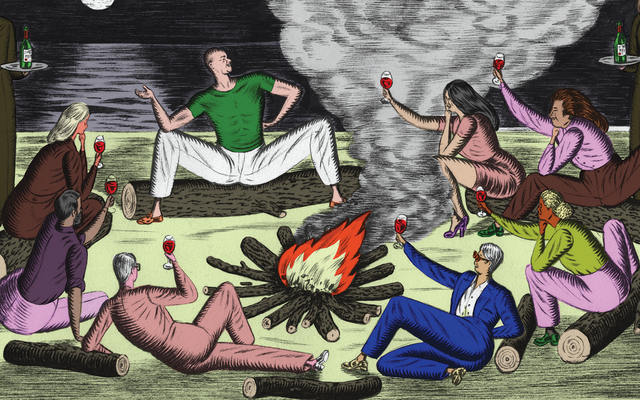
For the richest men on Earth, everything is free and nothing matters.
At the end of Paul Thomas Anderson’s 2007 movie, There Will Be Blood, Daniel Day-Lewis’s oil-baron character, old now and richer than Croesus, beats Paul Dano’s preacher to death with a bowling pin. Dano’s Eli Sunday, a nemesis of Day-Lewis’s Daniel Plainview during his seminal, wealth-building years, has come to sell Plainview the oil-rich land that he once coveted. But Plainview doesn’t need the land anymore, because—as he explains in one of the most famous monologues in modern cinema—he has sucked out all the oil hidden beneath it from an adjoining property, like a milkshake.
Desperate for money, Eli begs for a loan. Instead, Plainview chases him around a bowling alley and murders him with great enthusiasm. Once it’s over, a butler comes to see what all the noise was about. “I’m finished,” Plainview yells.
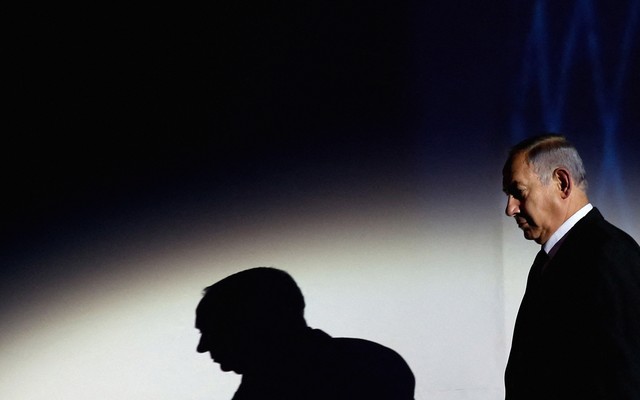
The Israeli prime minister’s focus is, as always, on himself and his near-term political needs. The plight of American Jews is simply not his concern.
The relationship between the United States and Israel is in crisis. Six in 10 Americans have a negative view of Israel, and a majority of those under 50 in both major parties view Israel as well as its prime minister, Benjamin Netanyahu, negatively. After the brutal Gaza war, a large percentage of liberal-leaning Generation Z considers Israel a pariah state. Democratic candidates are scrambling to distance themselves from Israel and its controversial leader; earlier this month, 40 of the 47 Democratic senators voted against a military aid package for the country. And hostility toward Israel is spilling over into hostility toward Jews. Liberal influencers, activists, podcasters, and even politicians are invoking age-old anti-Semitic tropes with frightening regularity.
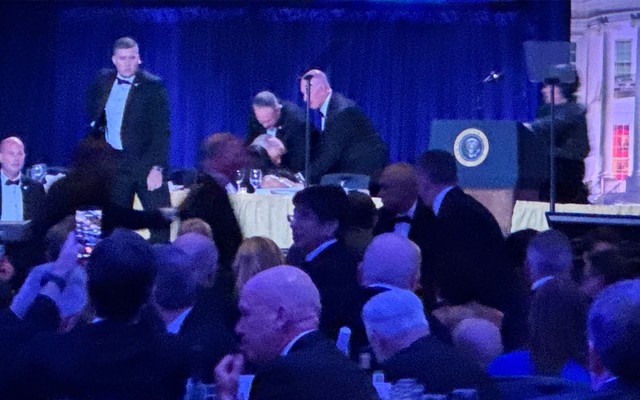
The president is safe after chaos at the Washington Hilton, and a suspect is reportedly in custody.
Updated at 1:29 a.m. ET on Sunday, April 26, 2026
We were under the table before we knew what was happening. One moment, a military band was parading out of the Washington Hilton’s cavernous ballroom; hundreds of government officials, diplomats, and journalists, including more than a dozen of us from The Atlantic, dressed in our best or borrowed black tie, had turned to our spring-pea-and-burrata salads.
The next moment, armed agents—maybe Secret Service, maybe police, maybe hotel guards; it was hard to tell from where we were huddled under a tablecloth—were pushing their way through mounds of people, climbing over chairs, rushing to the stage, where President Trump and First Lady Melania Trump had shortly before been seated.
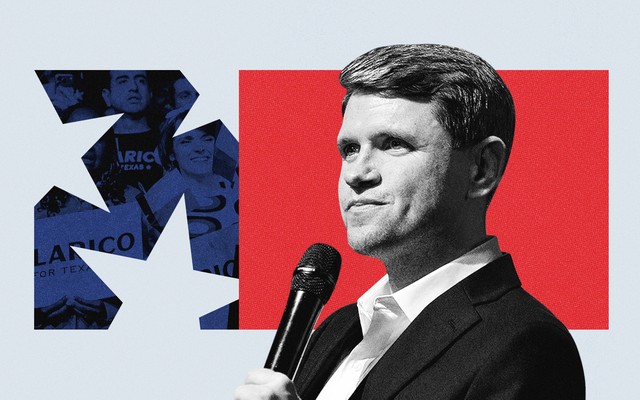
James Talarico is trying to sell a novel brand of Christian politics in a deep-red state.
Updatedat 11:25 a.m. ET on April 24, 2026
While some might pray for hope or peace in such dark times, others are praying for the death of Texas Democrat James Talarico, who is running for the U.S. Senate. During a recent episode of the right-wing Protestant podcast Reformation Red Pill, host Joshua Haymes told the pastor Brooks Potteiger that he prays that “God kills” Talarico, given that the politician seems to be possessed by demons. Potteiger agreed, offering that Talarico should be “crucified with Christ.” Both Haymes and Potteiger later insisted that their remarks were not sincere expressions of violent intent, but rather metaphorical calls for Talarico, a Presbyterian seminarian, to find salvation in their brand of Christianity. Talarico shrewdly responded by offering forgiveness: “You may pray for my death, Pastor, but I still love you. I love you more than you could ever hate me.”
Requiring schools to endorse biblical laws is both unconstitutional and counterproductive.
When you were in elementary school, did your mind occasionally rise above the smell of pencil shavings and the sound of squeaking desk chairs to contemplate whether you ought to commit murder? Did you ponder what it would mean to covet your neighbor’s wife? Ordinarily those aren’t questions addressed in grade-school classrooms, but according to legislators in Alabama, Louisiana, Texas, and Arkansas, they ought to be.
In those districts, state Republicans are rallying behind laws that would mandate posting the Ten Commandments in public-school classrooms and common areas, such as cafeterias and libraries. This fad began in 2024, when Louisiana Governor Jeff Landry signed such a bill, reviving a debate long silenced by the Supreme Court’s 1980 decision in Stone v. Graham to strike down a similar Kentucky law.Other states followed suit: Arkansas and Texas last year, and Alabama just this month. Although these laws pose a threat to the First Amendment rights of students and teachers, the trend is spreading, so far unchecked by courts. Opponents of Texas’s law suffered a defeat last week when an appellate court decided in the state’s favor. The ACLU and other organizations representing the plaintiffs—a multifaith group of Texas families—are expected to appeal this decision to the Supreme Court.
A New York Times podcast hosted Hasan Piker and a New Yorker staff writer for a discussion of lawbreaking, which they both endorsed as resistance to tyranny.
The late political scientist James C. Scott endorsed what he called “anarchist calisthenics”—the regular practice of small acts of lawbreaking and disobedience. Jaywalk at an empty intersection. Have a beer in the park. Smuggle a pudding cup past the TSA agents. The point, Scott said, was to keep the civic muscles strong. Without constant reinforcement, these muscles will atrophy, and when real tyranny arrives, the flabby citizen will be powerless to resist. Scott particularly enjoyed telling Germans to get their reps in, because their grandparents had not.
On Wednesday a New York Times podcast hosted the Twitch streamer Hasan Piker and the New Yorker staff writer Jia Tolentino for a discussion of lawbreaking, which they both endorsed not as a habit of mind but as resistance to actual tyranny, today. They agreed that shoplifting from grocery stores such as Whole Foods is laudable, because (as Tolentino says, without evidence) “every major grocery chain” steals from workers and customers. Streaming services—they specifically name Spotify, which carries the Times podcast—are bad for creators and, they say, worthy of being ripped off. Piker said he would steal cars, “if I could get away with it.” Channeling Abbie Hoffman, Tolentino encourages people to steal from her own employer, The New Yorker, but does not explain which high crimes David Remnick has committed to earn this comeuppance.
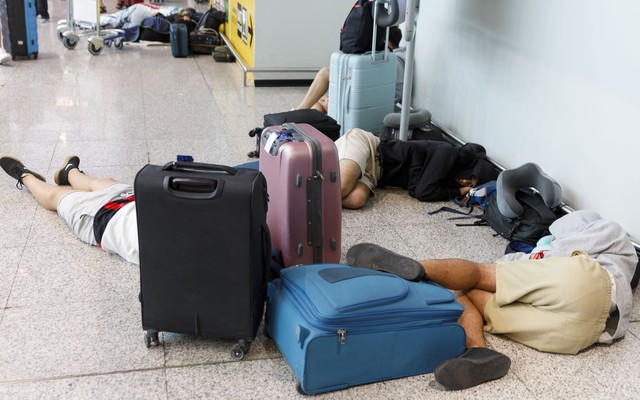
Traveling by plane anywhere is bad right now, but in some places, it’s worse.
This article was featured in the One Story to Read Today newsletter. Sign up for it here.
Airports—not sure if you’ve heard—are a mess. This is especially true this week, as a cascade of disasters (both preventable and not) have caused delays, outages, and long lines across the country. But the airport was a mess long before this week, and it will be long after. When I was first assigned to find the worst one in America, I felt for a minute like I’d been asked which Oreo flavor is the best, or which of my teeth is the toothiest: There are so many, and they all are.
But certain airports are more hated than others. Reagan, near D.C., because it has the most delays of any major airport; one in three of its flights was late in 2025, according to the Bureau of Transportation Statistics. Dallas, because it is the biggest—flight-missingly, leg-destroyingly big, bigger than the island of Manhattan, with an incredible 1.5-mile distance between security and the farthest gate. Meanwhile, Hartsfield-Jackson, in Atlanta, is the world’s busiest: On any given good day, more people than live in the entire country of Barbados trudge through it; this week, they were doing so very, very slowly, as security wait times crept up past two hours.
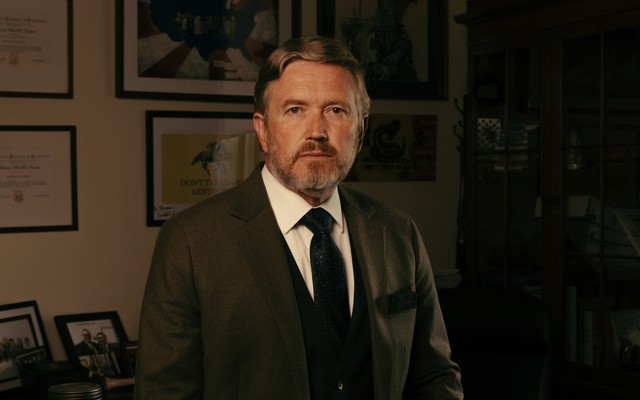
Thomas Massie is one of the few Republicans who is unafraid of President Trump.
Representative Thomas Massie, the renegade Kentucky Republican who fiercely guards his political independence, doesn’t love being on President Trump’s bad side. He would prefer not to have the president’s allies spend millions to defeat him in a primary. In fact, if Massie had his way, he’d be working for Trump right now.
In his telling, in the weeks after the 2024 presidential election, the two men talked about Massie, a farmer who champions raw milk, becoming Trump’s agriculture secretary. Massie had formally endorsed Trump late in the campaign, offering to help him win over libertarians who might be tempted to stay home or vote third party in key battlegrounds. Trump had been appreciative, and the two had chatted by phone to hash out the timing of the endorsement announcement. “Just tweet it. I’ll retweet you,” Trump had told him.
Silicon Valley venture capitalists are wining and dining 18-year-olds.
This article was featured in the One Story to Read Today newsletter. Sign up for it here.Updated at 8:22 a.m. ET on April 25, 2026.
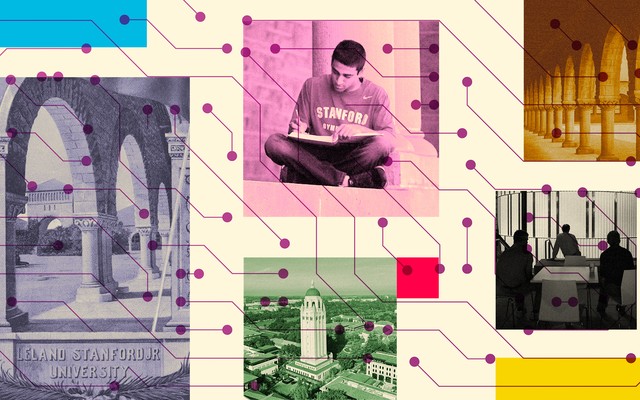
When I was a freshman at Stanford University, I learned to shotgun a beer from a guy in a frat. Soon after, he dropped out and started an AI company. Six months later, it was valued at more than $1 billion.
For most students, Stanford is a normal competitive school, where people go to class and coffee shops and fall in love and freak out over finals. But a select few attend something else: a Stanford inside Stanford, where venture capitalists pursue 18- and 19-year-olds, handing out mentorships and money and invites to yacht parties in an attempt to convert promise into profit.
Priests and theologians want to shape the future of AI. Big Tech is listening.
In 1633, Galileo Galilei stood in the convent of the Santa Maria sopra Minerva church in Rome, where a tribunal of Catholic authorities forced him to “abjure, curse, and detest” his belief that the sun—not Earth—was the center of the universe.
Almost four centuries later, in 2016, the Vatican invited a group of the world’s most prominent technologists to the same church to discuss AI ethics. That was the start of the Minerva Dialogues, annual closed-door conferences in Rome that have become the centerpiece of a decade-long exchange between Silicon Valley and the Catholic Church.
The Valley and the Vatican seem like strange bedfellows: The oldest institution in the world meets secular upstarts bent on creating godlike technology. When the venture capitalist Reid Hoffman first attended the dialogues, he told me he was struck by the portraits lining the walls that depicted Catholic inquisitors like those who persecuted Galileo. “It feels a little bit weird to be walking in voluntarily past these,” he remembers thinking.