The Universal University: An Education or a Technical Training for Any One, Anywhere and in Almost Any Subject
BEING THE STORY OF HOW A HUMANITARIAN IMPULSE GREW INTO THE GREATEST TEACHING INSTITUTION ON EARTH
BY DR. JOSEPH H. ODELL
It is not my purpose to offer any article or commodity for sale. What I am writing now to the intelligent American public has no commercial or financial end in view. One of the most remarkable educational and sociological institutions in the world’s history has grown to international fame and power in our midst and while multitudes of men have been benefited by it the leaders of national thought and enterprise have so far failed to realize its importance as a national asset.
An institution that has become a big factor in enhancing industrial efficiency, that has increased the earning power of hundreds of thousands of men and has become a social and moral lever to innumerable families is worthy of being understood.
Entirely free from the taint of charity and without adding a mill of taxation to the over-burdened taxpayer the International Correspondence Schools have succeeded in realizing many of the hopes and ideals of political economists and humanitarians. No thoughtful man should be willing to remain ignorant of the purpose, methods, and achievements of this institution.
A Fruitful Humanitarian Impulse
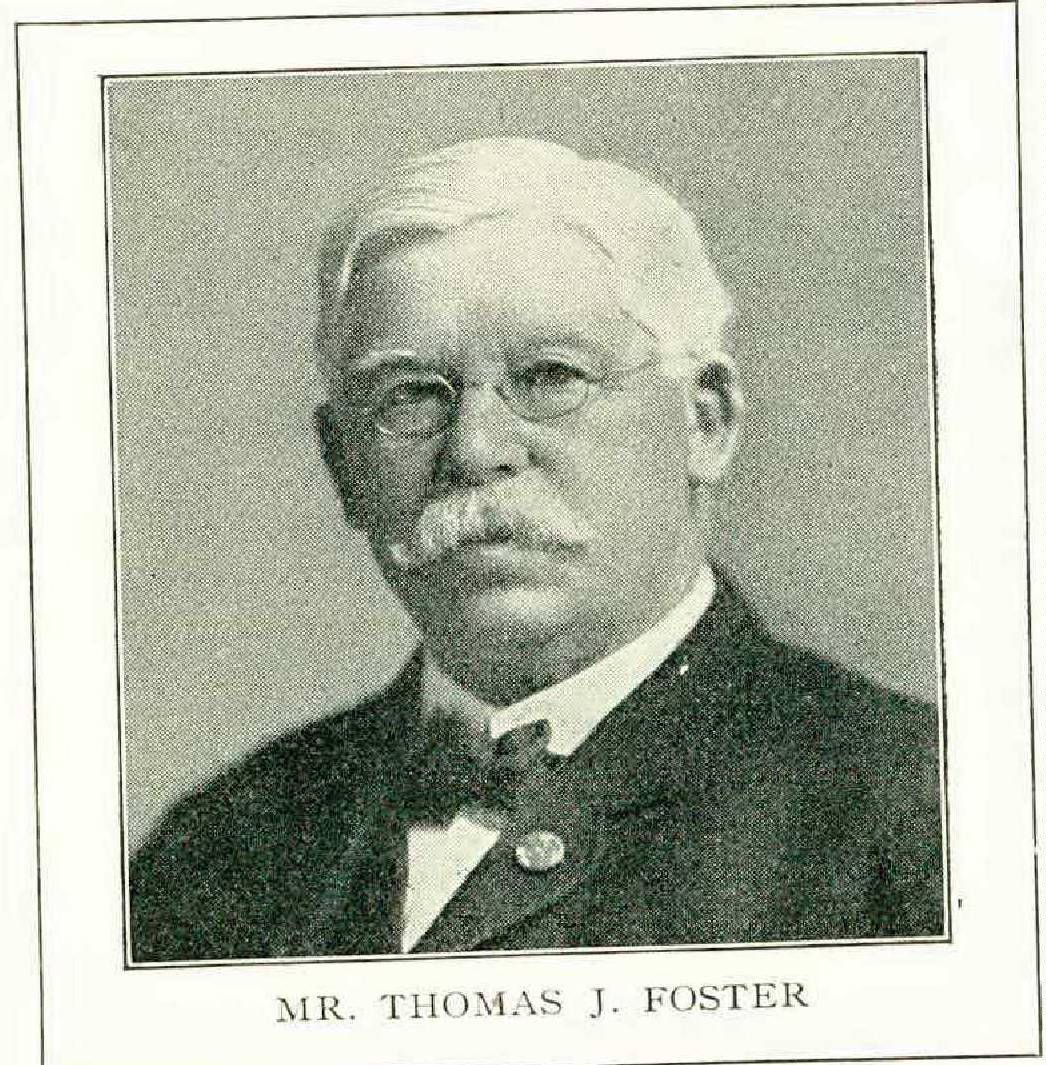
The International Correspondence Schools had their birth in a humanitarian impulse. Twenty-five years ago Mr Thomas J. Foster, then proprietor and editor of The Mining Herald, of Shenandoah, Pennsylvania, was appalled by the number of mine tragedies in the anthracite coal regions. He believed they were due chiefly to ignorance on the part of the mine owners, superintendents, and workmen. In order to furnish information to those engaged in the hazardous occupation of mining Mr. Foster began a series of “ Questions and Answers ” in his paper. At that time the only practical textbooks on the subject were published in England and by means of their contents Mr. Foster answered the questions that soon flooded his columns. It was quickly discovered that miners, mine foremen, and superintendents were willing to pay for a more extended course of study if such were available.
With the help of competent engineers Mr. Foster prepared a course of correspondence instruction in coal mining and his first group of students began serious work 22 years ago. That successful beginning stimulated not only the humanitarian but the educational confidence of the editor of The Mining Herald, and from that day to this Mr. Foster has been constantly adding new courses of correspondence instruction, until now the International Correspondence Schools offer 275 courses of study — a far greater number and variety than any university in the world.
Sound Educational Basis
If the International Correspondence Schools had been an ordinary educational institution they could have adopted textbooks prepared by class-room experts ; but it quickly developed that to teach by correspondence required an entirely new method. The institutions that have tried to carry on instruction by mail based on the ordinary textbook have failed. The I.C.S. textbooks are designed to meet the need of the student studying at home. They take practically no previous knowledge for granted; they proceed by easy stages and lead the student forward by natural and carefully graded steps; they foresee and meet the difficulties of the student by copious explanations, demonstrations, and illustrations; they eliminate all irrelevant matter, giving only such instruction as is essential to the mastering of the subject; the lessons are in brief units so arranged that the student is relieved from overstrain.
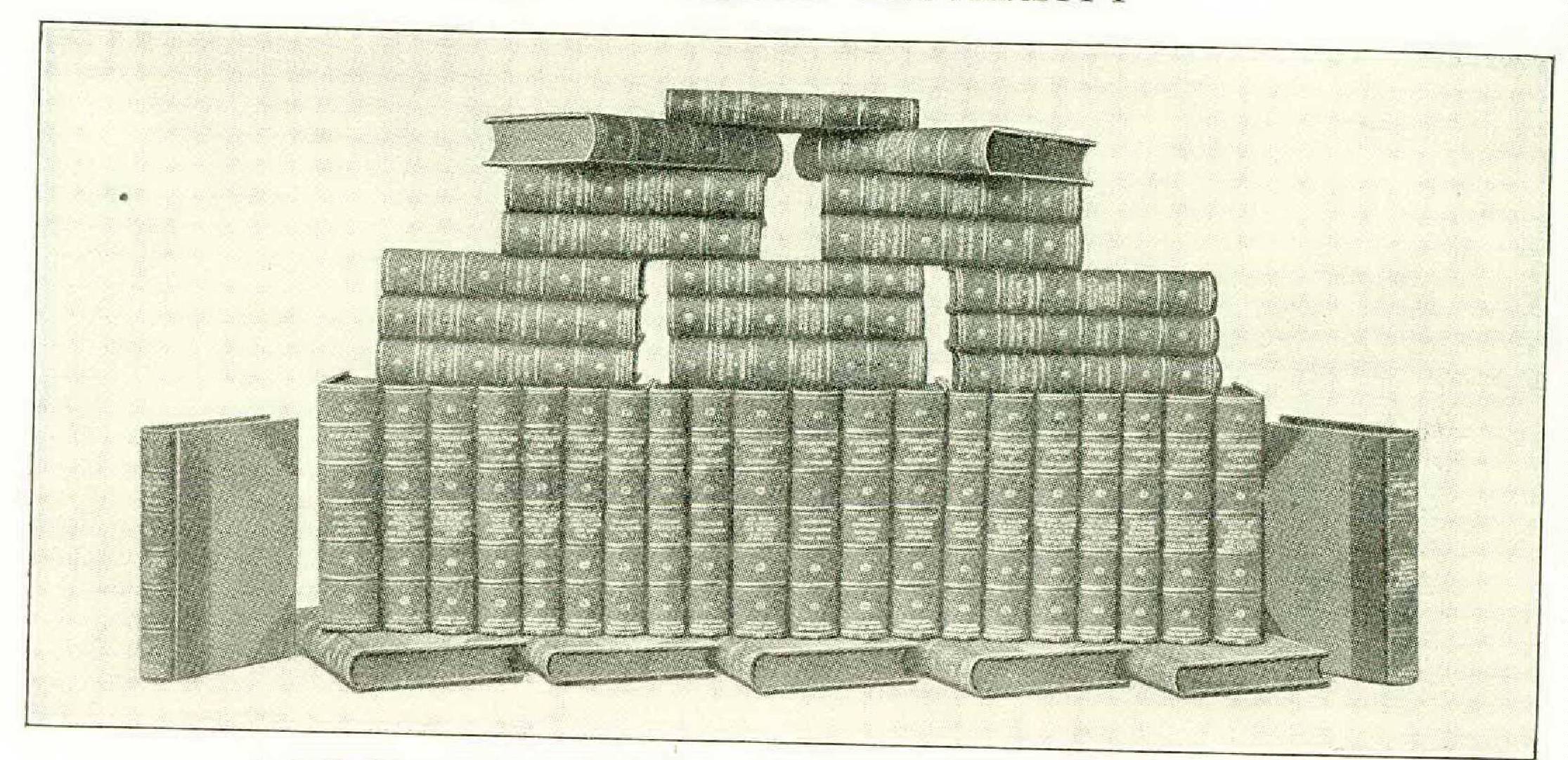
These textbooks form a library of 250 volumes and cost more than two million dollars ($2,000,000) to prepare. They are kept under constant revision with a view to meeting the difficulties of the student and to convey the newest knowledge or the latest methods of application. The costs of preparing a few of the courses are here given: Architectural, $98,178.06; Civil Engineering, $88,887.19; Textiles, $76,532.09; Coal Mining, $74,075.06. This expenditure upon textbooks certainly points to a solid and permanent foundation for the International Correspondence Schools.
The value of these textbooks is attested by the fact that they have been purchased and are being used for classroom work or for reference purposes in 167 universities, colleges, government schools, institutes of technology and vocational schools in America. The University of California has just discarded its textbooks dealing with the strength of materials and has had the International Correspondence Schools instruction papers on that subject bound into volumes, and has adopted them exclusively for the use of its students. The U.S. Navy Department has ordered 15,000 I.C.S. pamphlet textbooks for use in the new naval shipboard schools. This is about one-fifth of what will be required when the schools are in full operation. Several of the largest industrial corporations of the country are using I.C.S. textbooks and instruction papers in the classes they have formed for the training of their apprentices and employes.
The Universal University
Has this outlay been justified? The answer is that the International Correspondence Schools have enrolled 1,651,765 students in the United States and Canada during the past 22 years and are now enrolling new students at the rate of 100,000 a year. These figures are not given simply because they form an impressive total but for the reason that such an institution can only provide high grade and efficient instruction when working on a large scale. For example, one of the courses of study Electrotherapeutics — has a small enrolment because it is an advanced study for medical practitioners. The cost of conveying the instruction and correcting the papers results in a considerable loss each year to the institution. Salaries and overhead charges are just as great whether five or fifty papers are corrected per day. On the other hand, the Electrical Engineering Course has been taken by 224,188 students and so it is possible to handle the students’ work at the minimum cost.
In the place of classroom recitations the student is required to send written answers to the School Examiners of the Instruction Department, the questions being designed to test the actual mastery of the subject by the student and cannot be answered by a mere formal copying of the text.
These papers are very carefully examined by the expert examiners, all errors are corrected, difficulties explained, and the principles and processes made clear if they seem obscure to the student. Marks are given for each grade of work and no scholar is permitted to go on with his next lesson until the one upon which he is engaged is entirely satisfactory.
In order to prepare the student for serious work upon his Course, he is required first to pass an examination upon a preliminary pamphlet, entitled “ The Art of Study,” in which he is taught how to study to the best advantage.
Finding and Inspiring Students
While it may be acknowledged that advertising is one of the most important factors in modern life, it has been demonstrated that the International Correspondence Schools cannot secure enough students, even by means of the most elaborate and costly advertising, to insure the success of their enterprise, either upon humanitarian or commercial grounds. More than 20 years ago President Foster realized the force of Professor Huxley’s statement: “ I conceive that two things are needful. On the one hand, a machinery for gathering information and providing instruction; on the other hand, a machinery for catching capable men wherever they are to be found, and turning them to account.”
One of the chief differences between the regular college or university and the International Correspondence Schools lies in this: men who want an education seek the university, whereas the International Correspondence Schools find the men who need an education. No less than 1,346 agents of the Schools are scattered through the United States and Canada, whose one business it is to go into the homes, mills, factories, and workshops to persuade men that they can be benefited by a course of instruction. These agents create ambition, stimulate hope, and preach self-reliance. They tell men, and they prove their point by innumerable examples, that they can make themselves more efficient in their present occupations or qualify themselves for other and more congenial and more remunerative occupations by a course of study at home and in their spare time. In this way they have personal interviews with tens of thousands of persons each week and the contact thus established results in inspiration and encouragement to multitudes who have lost hope in the hard battle lor existence amid modern conditions. The International Correspondence Schools, as a part of their student enlistment work, also run instruction cars on a number of the most important railroads of the United States and Canada.
The cost of establishing and developing these agencies has been enormous, but the results have amply justified the investment from every standpoint. Up to the present the International Correspondence Schools have spent $1,703,965.20 in agency establishment, but the money thus invested must be regarded as necessary equipment just as much as the right of way cost of a railroad.
Keeping the Students Studying
No graver mistake can be made than to imagine that the International Correspondence Schools make a profit from lapsed students. Lapsing of students does not appreciably reduce the costs of the institution. As most of the enrolled students pay for their courses of instruction on the instalment plan the profits of the enterprise come from the instalment payments of the students. A student will not continue to pay unless he continues to study, therefore it is the best business policy of the Schools to establish the study habit. Once a month, at least, the representative or agent of the Schools calls upon the student, not simply to collect the instalment due, but to offer encouragement, advice, and even assistance with his studies. This constant contact of the International Correspondence Schools with the student-body makes the institution a bona fide educational agency rather than a merely commercial enterprise and insures a permanent future.
Indeed, no effort is spared to keep the student at his studies without intermission. Reside instructing the students in the most approved methods of acquiring knowledge prior to the first lesson of their course, and the periodic calls of the representative, a special department of encouragement and inspiration has been established by which sluggish or discouraged men are stimulated in their work. During the year 1913 no less than 805,079 individual letters were sent out to such persons, over and above 205,813 special letters dealing with particular difficulties encountered in the progress of their study. This resulted in an increase of 45 per cent, more study than was achieved before the department was put into force.
The International Correspondence Schools are faithfully, earnestly, and persistently trying to convey instruction by every method known to pedagogy and psychology and they are sparing no money in the effort.
Do the Students Profit?
Beyond a doubt. Every day the evidence accumulates and can be _ placed before any one who wishes to investigate. The International Correspondence Schools recently published a book giving the life history of 1,000 of their students, in each case furnishing the reader with the name, address, and occupation of the example cited. These were simply a cross-section taken from 26,000 letters, voluntarily sent to the institution, gratefully acknowledging the benefits received from the instruction of the Schools. It is no exaggeration to state that every city and fair-sized town, and almost every village in America, can furnish examples of men who have been lifted by this one institution from penury to comparative affluence, from obscure drudgery to honor and influence, from the precarious ranks of unskilled and illpaid labor to positions as skilled mechanics, foremen, superintendents, manufacturers, and men of large financial affairs. In fact many very successful and wellknown heads of big industries, engineers, architects, and corporation managers have been International Correspondence students and have reached their positions of eminence by means of the instruction and training provided by this institution.
No one can possibly estimate the economic and social and moral part that the International Correspondence Schools have played in our complex national organism during the last two decades. Behind all statistics there are visions of a new and healthier and happier environment for multitudes of families.
World-Wide Extension
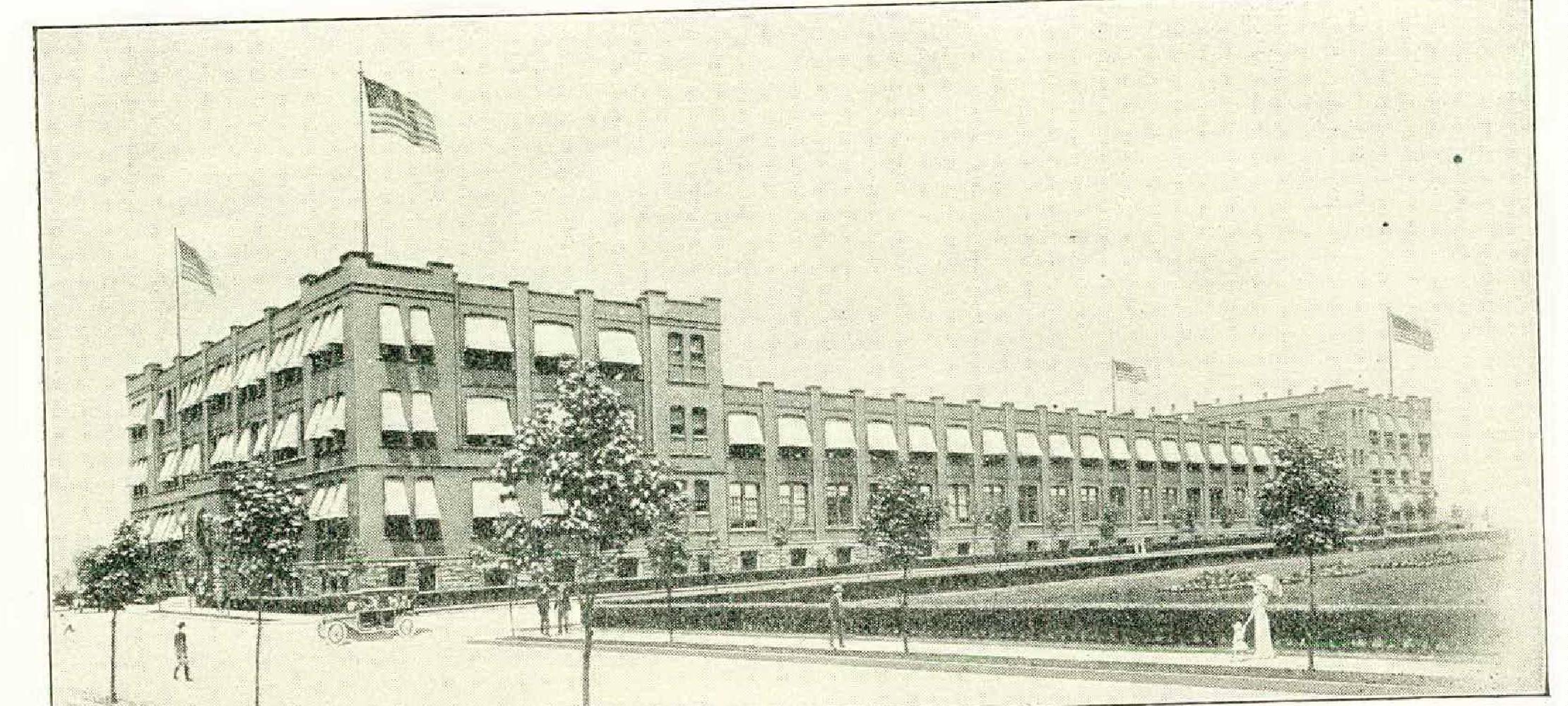
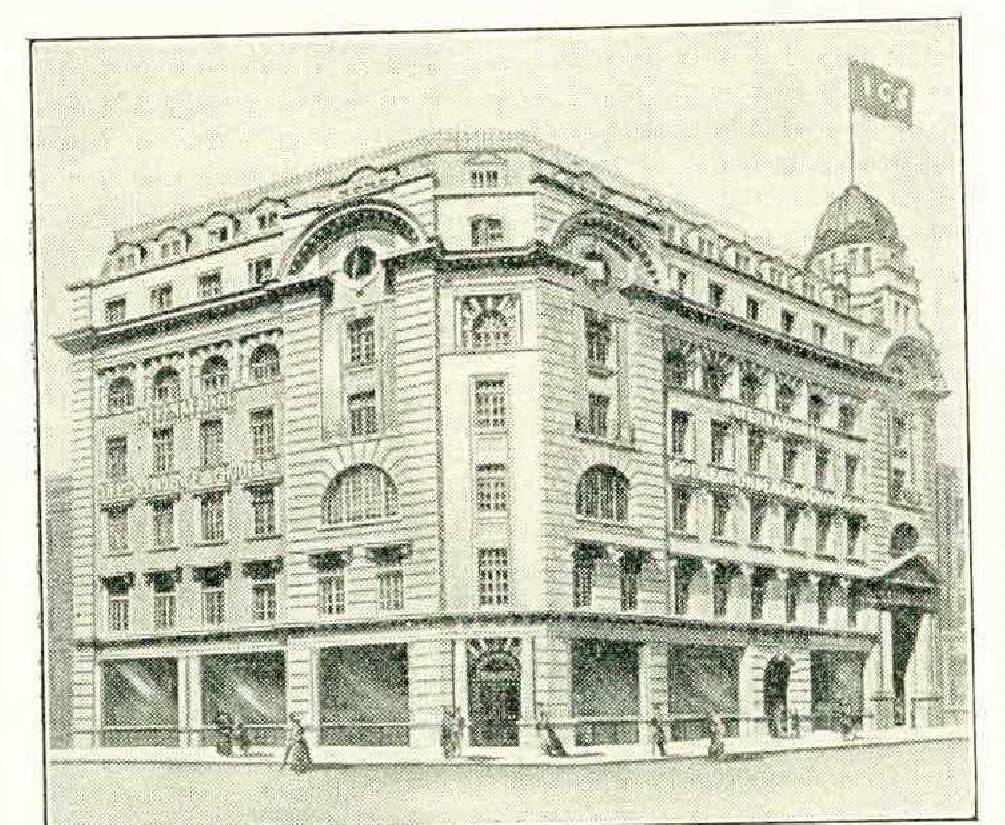
Fortunately the International Correspondence Schools are on a firm financial foundation. They have done a gross business amounting to $85,753,140 and have distributed cash dividends amounting to $7,025,372, and stock dividends of $1,875,000. Beside this they own buildings valued at $1,159,280.29, copyrights and plates estimated to be worth $1,864,404.25, and behind it all a substantial surplus. This has enabled the International Correspondence Schools to become genuinely international. Added to their 3,400 employes in America, they have started a branch school in London which promises soon to rival its parent in this land. Already there is a staff of 400 instructors, textbook writers, and clerical employes in London, with 700 men engaged in selling scholarships in the British Isles. More than 100 men represent the I.C.S. in the British Colonies and the movement has the indorsement and cooperation of prominent English officials and educationalists. Branches are being organized in Central and Southern America, Mexico, France, Spain, and China for which special textbooks are now being prepared.
The Man Who Feels, Sees and Does
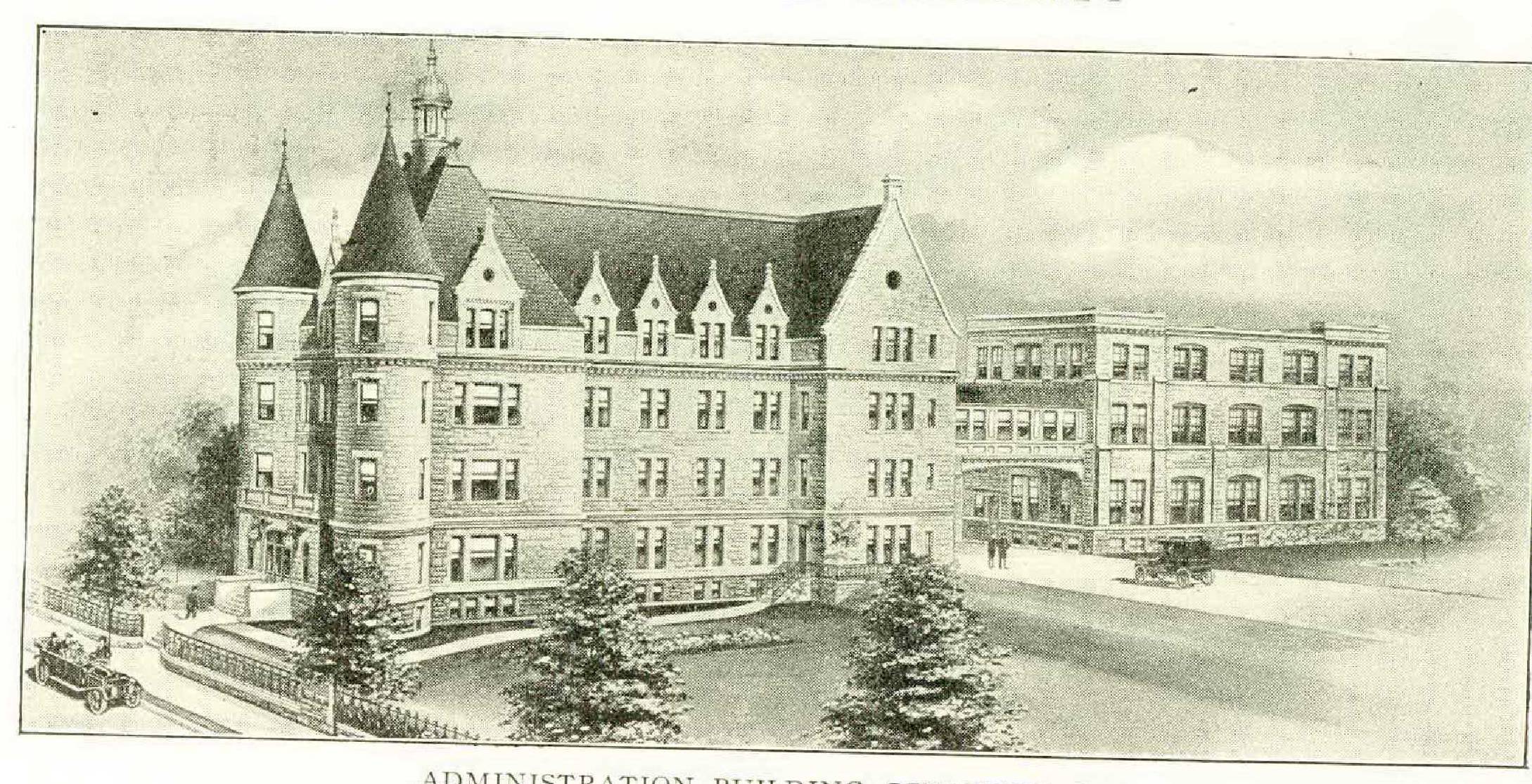
President Foster is a man of deep feeling, clear vision, and prompt action. From his office in the Administration Building in Scranton, Pennsylvania, he directs the energies of nearly 5,000 persons who are dedicated to conveying education and technical training to those who need it in any part of the world — even to the remotest corners of the earth, to places where the name of America is hardly known. He is pouring out thousands of tons of educational and inspirational literature every year, every page of which he hopes will open the door of opportunity to some one who now feels doomed to poverty and obscurity for the lack of adequate educational training. When men awaken to the facts and all of their far-reaching consequences in the advance of civilization and social progress, Thomas J. Foster, Founder and President of the International Correspondence Schools, will be hailed as one of the greatest and most honored of modern benefactors and educationalists.