The Contributors' Column--May Atlantic
There is another ‘ preparedness ’ beside that of battleships and great armaments. It is the preparedness of the mind — the clear knowledge of the sacrifices we Americans are about to be called on to make, and the readiness to make them intelligently. For this reason the Atlantic prints in the present issue two notable papers dealing with the bitterest of all the trials of war-time — the death of the country’s youth. The first of these, ‘ Four Bays,’ by Hetty Lawrence Hemenway, tells powerfully and without comment how the young manhood of England went to the ordeal; in the second, ‘ Juventus Christi,’ Anne C. E. Allinson interprets the profound spiritual truths underlying Horace’s ‘ Dulce et decorum est pro patria mori.’ Miss Hemenway is a young writer whose sure touch makes it difficult to believe that ‘ Four Days ’ is her first published story.
The delicate measures of George E. Woodberry have delighted the Atlantic audience for many years. The broad sympathies and sound judgment of Ida M. Tarbell stand sponsor for her reassuring conclusions concerning the ‘ shirtwaist crowd,’ — the steady-going millions of plain people who, after all, are the real Americans.
Endless are the vicissitudes of the foreign mails these days! Since we published the first part of William McFee’s fascinating narrative, a letter, weeks overdue, has arrived from the young engineer, who is stationed at a Mediterranean port. (The censor, censor-like, neatly cut the address from the top of each sheet, but left the postmark on the envelope. Our lips are sealed, however.) Mr. McFee has misgivings as to the fate of his manuscript:
‘I am afraid that article has been sunk,’ he writes, ‘ though I have had a most unusual good fortune in my correspondence. I was also lucky last year in having the friendship of the Chief Deputy Censor at—, and I was able to hand him my MSS. direct and avoid mutilation at the hands of some imperfectly cultured Armenian or Arab savant, whose idea of censoring is calculated to drive Christians mad. Unhappily I have not been able to explain matters to the commanders of enemy submarines, and it is possible that they have inadvertently sunk my article.
’My ship has been in collision and is now under repair. We are very pressed out here, as no doubt you are aware of the shortage of ships. Whether I ever get any real leisure before peace comes is very doubtful. You see, the War has taken me in a very real, firm, yet not unkindly, grip. It’s got me. I cannot do as I would like. I have to “endure an hour and see injustice done.” Just like everybody else, I have grievances which seem in my own eyes monstrous, and in the eyes of the boss microscopic. Nobody cares. Our eyes flash with indignation, we appeal to abstract elementary justice, and nobody cares. It’s a very curious feeling, being a cog in a wheel.
‘The war swamps one. Ideas get no show at all. Never in the whole “Christian” era has the Stock of art and thought been so low. It is curious to see how this has affected the ordinary man: where before the war he would defer to and speak with respect of intellect, literature, art, and so on. he now ignores it all. He meets novelists and artists in khaki and blue and finds them very, very common clay. The lieutenant, in charge of the corps here used to be a well-known novelist, and when we went ashore in Port Said to the canteen the man who sold the beer was one of the smartest journalists in Fleet Street or out of it. And I know neither of them was writing a line.’
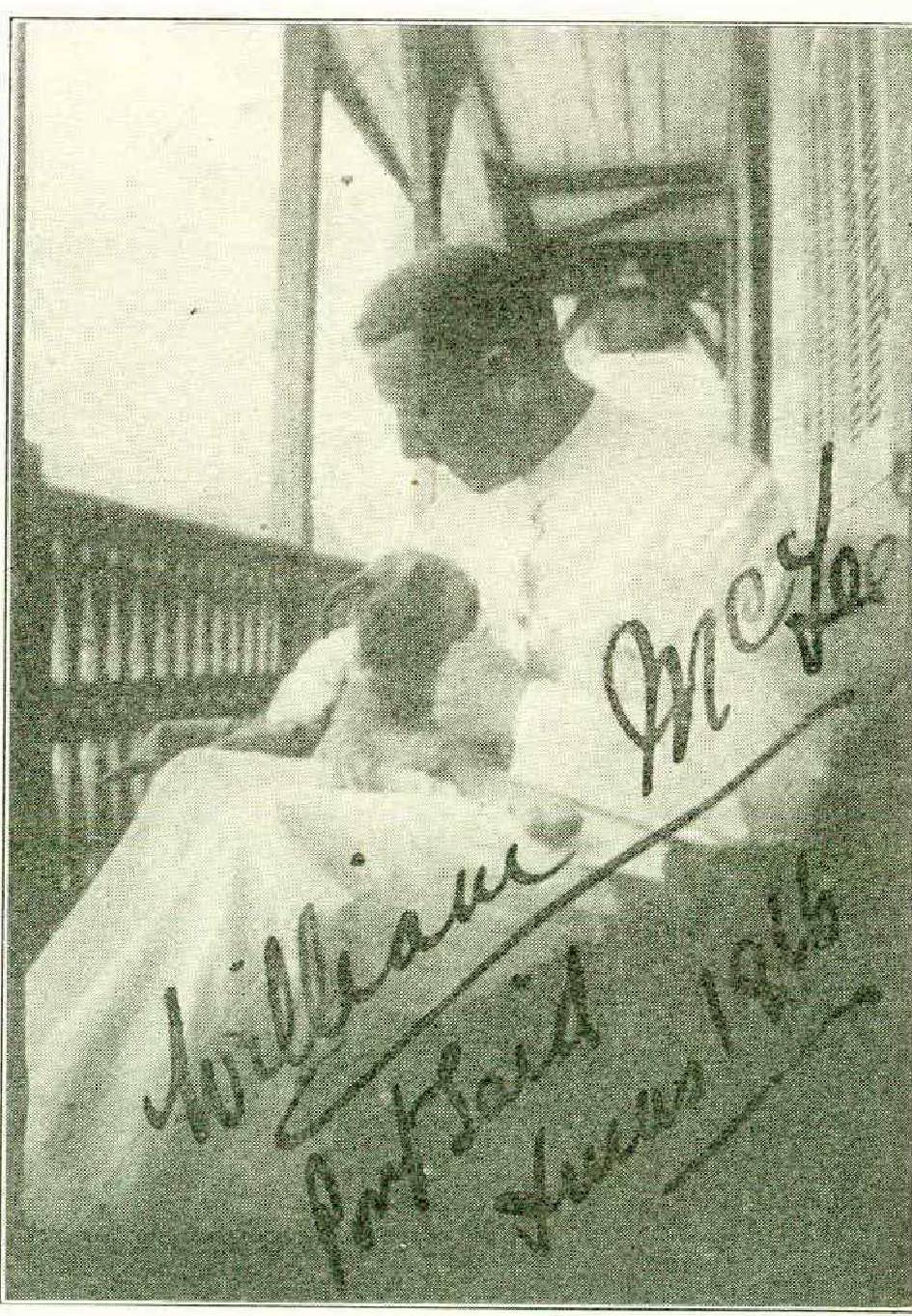
Of that small band of Englishmen who still hold that a man’s conscience alone should be the ultimate recruiting-agent, Bertrand Russell has spoken most insistentry. As the result of his activities in behalf of trial for ‘ conscientious objectors,’ he has been forbidden to leave England, and his movements are circumscribed by the police. This raises significant questions for Americans, now that the President has recommended universal military service. A host of listeners are always ready to draw up their chairs when William Beebe chooses to tell about the day’s work of the tropical Research Station at Kalacoon, British Guiana, where he has been gathering priceless notes on the home life of birds and beasts of the jungle.
Katherine Lee Bates is the head of the English Department at Wellesley College. The long series of wise and penetrating papers on social conditions by PresidentEmeritus Tucker of Dartmouth have, since their appearance in the Atlantic, been gathered into a volume of great and permanent value. Sir Frederick Pollock, one of England’s most distinguished jurists, has become personally known to many Americans in the course of his various visits to this country, and writes with a broad understanding of the American point of view. Edward Eyre Hunt, classmate at Harvard of Walter Lippmann, Alan Seeger, and John Reed, is one of that small army of Americans who gave of their best to stricken Belgium in the work of the ‘ C.R.B.’ His ‘news quarantine’ is now over, and he is free to tell what he saw of the fantastically terrible happenings in Flanders. Readers of ‘ St. Dympna’s Miracle ’ will be interested to know that a full account of the colony for the insane at Gheel — ‘ Where the Sick in Mind are Free,’by Alice Isaacson — was published in the Atlantic for June, 1912.
When he is not employing his keen critical scalpel to the profit of Atlantic readers, Wilson Follett is busy with his duties as member of the English Department of Brown University. K. K. Kawakami is a Japanese domiciled in San Francisco, whose close connection with the official organs of the Mikado’s government lends especial weight to his frank utterances on the estrangement between America and Japan. A term of office as chargé d’affaires of the United States at the capital of Nicaragua has qualified Cyrus F. Wicker to write from first-hand knowledge concerning the delicate problems now besetting our friendly relations with the sisterrepublics of Central America.
The miracle of Russia’s new-born freedom is so stupendous that we need just such a personal element as is contained in Catherine Breshkovskyletters to focus it, to bring it within the scope of our understanding. ‘ Babushka ’ is the epic, outstanding figurehead of the Revolution, personifying those scores of thousands of lesser martyrs for freedom who, as these lines go to press, are hurrying home in sledges across the trackless Siberian wastes, racing with the spring thaw.
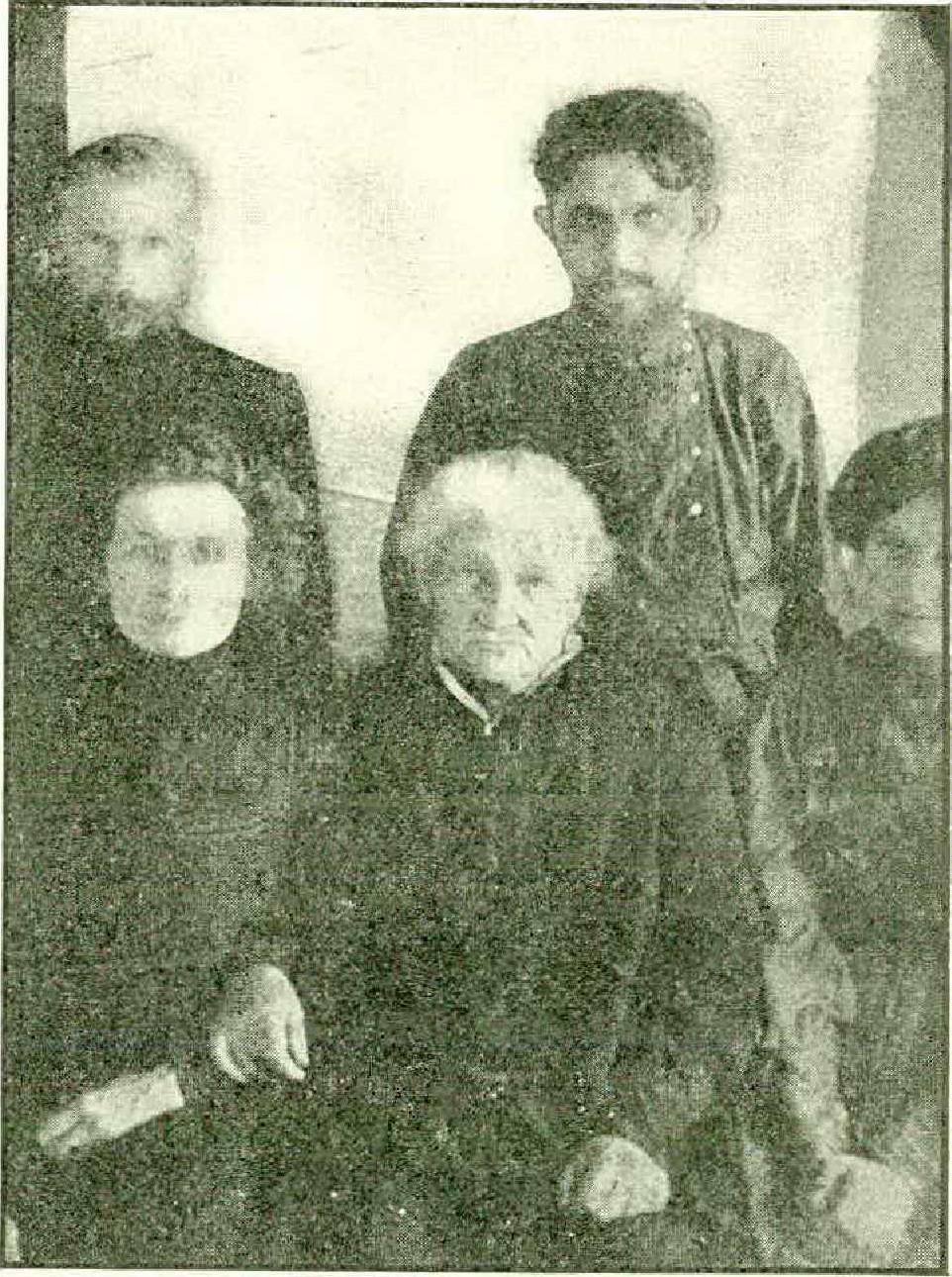
We greatly regret that the following letter from Mme. Breshkovsky to an American friend, setting forth her views on the great war, reached us too late to take its proper place in the body of the magazine: —
JUNE June 19, 1916.
Now, dearest, I will speak with you about the question that fills the hearts and minds of everyone now. You are right in your work of freedom. Certainly we must prepare, develop and inspire the love for peace and friendship between and among the peoples. At the same time we must explain to them by what means they shall attain the desired mode of life. One must prove them that ideals can be attained by idealistic means. One must teach them how to build the society that would not need to encroach on each others’ interests and existence.
But as much as we know the history of humankind we see that every race of people is apt to get asleep when left alone for a long time. It must be shocked and awakened from time to time, and as they will not or cannot let their mind work with enough energy and progress, the blows that history (or their own blindness and stupidity) sends them are necessary to make them more attentive to their own real profits. The forward individuals have to teach the masses how to arrange the mode of common life so rationally as not to be forced by insupportable circumstances, by too much abnegation, to strife and strike. We are not angels yet, and every creature feels his right to breathe and learn. . . .
Dearest girl, we must realize how dark is still the common brain. It needs thunder blows to be awaken and to begin to think about the matters before his own eyes. The masses are not vigilant; they continue to exist by routine. And when left alone, it is very difficult for them to promote initiative, energy, efficiency. Even less than forty years ago all the East,—Chinese, Russia and others — were thought dead people, crystallized in their ancestors’ prejudices. Now you see the mighty China acquires such ideas as we see on the top of the European civilization — and that after five thousand years of sleeping! The last thirty years China got heavy blows on its shoulders, back, and head, and very hastily she understood that no longer can she exist if not preventing the new-coming blows. China began to think, to analyze, to find out issues, only after hard and expensive experiences.
Now all of us never doubt the capacities of mind and the progressive efficiency of the ocean of people, that only yesterday were asleep. And now I am sure that all the blows, heavy and tyrannic as they are, are lessons for the lazy brain of the world-population in its whole.
Yes, the heart is sad, the sorrow profound, but we ought to understand that still we attain the moral and mental perfections through unspeakable fierce ways and mutilations. This fact does not disappoint us, not diminish our love for the mankind. On the contrary! This capacity to struggle through the most terrible difficulties is the testimony of our divine providence, and shows the infinity of our forces. We must only give them away, awakened, showing the right ways and means. There are more advanced and less advanced; the first are responsible for the development of the second. You know all that yourself, but the school of life you passed through was milder as that I passed. So my mildness, my sentimentalism gives place to my rationalism in questions like this. For the future glory of mankind we suffer bravely the losses of to-day.
I kiss your hands; I wish you always as brave and healthy as you are to-day. The world is not bad; it is only young and comes from one degree of comprehension to a higher one.
Your devoted friend
CATHERINE.
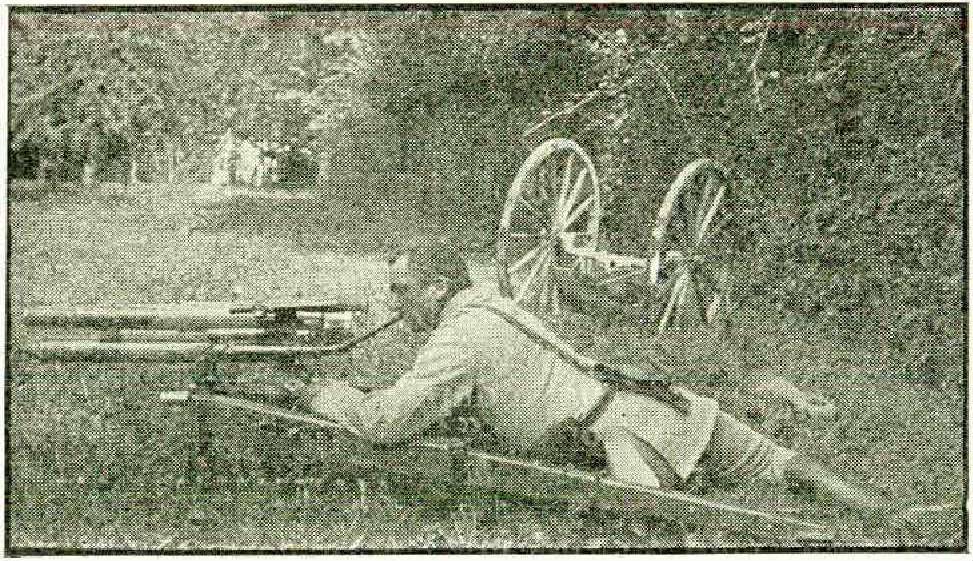
Lieutenant F. S., as our readers already know, is benefiting by that wise and merciful international agreement which permits disabled soldiers from both sides of the battle-line to convalesce in the life-giving sunshine and mountain air of Switzerland. Sergeant Louis-Octave Philippe, a French citizen-soldier, has already been much commented on in this column. His article in the present number was largely written on the battlefield; its conclusion and revision were accomplished at Hôpital Boucicaut, Paris, where a German sniper’s bullet had sent him. A recent letter from a friend in France tells us of his rapid convalescence, which was doubtless hastened by his citation before the whole army, entitling him to wear the ‘ palme ’ on the croix de guerre which he had already won.
There is something profoundly moving in this letter from young Lieutenant René Nicolas, well known to Atlantic readers through his austere narrative, ‘ The Lieutenant’s Story.’ Disabled by wounds, he has been discharged from the army of France after receiving the symbols of his country’s gratitude and respect. By courtesy of the American friend to whom the letter was written, we are permitted to share it with our readers.
PARIS, February 6th.
My dear Marraine and Ally: —
I should like to sing a hymn of joy and praise to America! At last you are our allies, openly, as you have so long been at heart. At last has come the official consecration of all the friendship and helpfulness America has never wearied in showing us. Germany has received a slap full in the face, and for us it marks the beginning of the terrible but victorious end. But in bringing it about, I shall have no share. My country has just given me my final discharge from her service, and before sending me out from under the flag, has made me a gift beautiful beyond my dreams — the médaille militaire. I am profoundly grateful. But you would not believe how childish I am. I find myself standing before the glass gazing at the splendid silver medal with its green and yellow ribbon. I keep caressing it and fondling it, and even now as I write, with each motion I feel it swinging on my breast, beside its humble little sister, the croix de guerre.
Do you want me to tell you about that first Thursday in February? Snow and bitter cold made them transfer the ceremony of presentation from the Invalides to the Grand Palais. So you may picture us in the great glassed-in hall where the Salon used to be held. A grayish light, the galleries black with people, among them my mother and Miss D. — on the floor those who were to be decorated, almost all wounded, some seated, the crippled, the blind, one man with his face partly gone. Officers hurry to and fro, forming us in ranks. It is very cold. Suddenly a joyous burst of bugles fills the Grand Palais, and with music and flags the guards of honor file to their places; various societies of veterans follow, each with its standard, schoolchildren, photographers, and a whole group of people in mourning — the widows, mothers, orphans of dead heroes, who have come to receive their croix. All form in line. I talk with an officer who fought at Verdun, or nod and smile to my mother. I try to discover Miss D., but without success.
The bugles sound again. Attention! We stand rigidly erect. That bugle call goes through and through you. Then the swelling notes of the Marseillaise fill the hall to the very roof. The general who is to decorate us arrives, passes before us, passes before the flag, salutes. A change in our position brings me in full sight of my mother, whom I scarcely dare look at, for I do not feel very sure of myself in the face of the flood of emotion that rises and rises and threatens to carry me off my feet. I fix my mind on the scene around me. In front of us stretches the long gallery; near by are troops with guns at rest, bands, flags, staff-officers. General Cousin and then — a little table on which lie the bright medals.
The general steps out from the group. He is a small man in a light blue uniform. He unsheathes his sabre and gives in a clear voice the order to present arms. All around us rises high a gleaming barrier of bayonets. ‘Play the ruffle,’ commands the general. The drum-major lifts his baton, and drums and bugles resound. It is beautiful. It is almost tragic. The flourish dies down and the ceremony of decoration begins. First come the croix d’honneur. The general walks down the line of officers in front of my row, and after reading the citations, embraces each man and touches his shoulder with the flat of his sabre. Soon he comes to my row. I see him pinning the silver medal on the men near me. Beside him is the officer who carries the medals and reads the names. I glance at my mother. She is leaning forward, with her handkerchief pressed to her lips. It is the turn of the man next me. It is my turn. My sensations, so clear up to that moment, become confused. A mist rises before my eyes, the citation reaches me as a jumble of words. I am conscious of a light quick touch on my coat. Something is fastened there — something I do not dare to look at. A clasp of the hand, and it is over. I cannot seem to move — can hardly think. At last I turn toward my mother, but see only her handkerchief which is hiding her eyes. Shall I confess that the barriers gave way for a moment? I followed my comrades to a place a little farther on, and then I dared to touch and look at my medal. It is so beautiful, my dear Marraine, so very beautiful, and how happy I am!
The ceremony was a long one. While the bands played, the general passed between the rows of soldiers, and his grave and uniform gesture was like a religious rite. When the last poilu had received his cross, it was the turn of the families of the honored dead. Women in black reverently received the little boxes containing the sacred mementos of the heroism of their dead. One tall old man opened the box, took out the cross, and after lifting it to his lips, gave it to his three little grandchildren, who kissed it one after the other, weeping.
Once more the stirring notes of the bugles. It is all over. And to the music of ‘Sambre et Meuse’ troops and flags filed before the newly decorated soldiers, the general passed along our front, saluting, and I saw my mother, her face transfigured, stretching out her arms to me from the tribune.
Subscribe for the Atlantic on the Attached Coupon
A.M. 5-17
3 Park St., Boston.
Gentlemen : Enclosed find S4.00 for my subscription to the Atlantic Monthly for one year, beginning
Name
Street
City
State