The Life and Death of a Spanish Town
by
[Random House, $2.50]
A VOLUNTARY expatriate, Elliot Paul brings an important book to focus on the beginnings of a civil war and on the contrast between a hideous moment of history and its idyllic yesterday. The Life and Death of a Spanish Town falls into two exactly equal parts. The first, ‘4000 B.C. to 1936 A.D.,’is an intimate picture of Santa Eulalia, a fishing town on the Balearic island of Ibiza, as it was just before the outbreak of the present civil war; and the suggestion of the half-title is that life there had not changed in a single basic essential since prehistoric time.
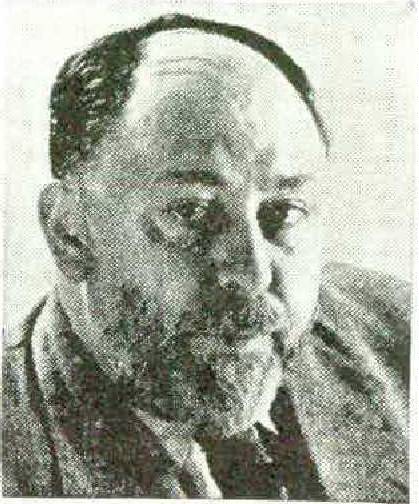
Mr. Paul had made his home on Ibiza because he wanted the tranquillity of life among a people content with forms of life adjusted to their capacities — people with no talent for readjusting their capacities to forms of life imposed upon them from without by doctrinaire interference or from within by competitive ambitions. In July of last year he returned to Santa Eulalia from a mainland visit. In the two months following the day of his arrival — the two months of which his second part is the almost unbearably vivid record —he saw all tranquillity destroyed, his beloved people gored and crushed between equally abhorrent extremes of fascist tyranny and anarchistic fanaticism, their life and their whole moral universe wrecked, death rained upon their innocents from sea and land and sky, their patriots murdered or driven forth to wander homeless, their simple hearts filled with dismay and unfaith. The life that he had shared with them had undergone more of disruption in those few weeks than in the preceding seven hundred years.
It is, I think, a pity that this beautiful and implacably terrible book, a book of transcendent value for our understanding of the deeper human meanings of the Spanish struggle, should be marred by lapses into post-impressionist incoherence and sheer rhetorical hysteria. For example: —
’Now it would never end. . . .’ The world with seven-day hash beginning, blood steam belching middle, and no end. In silence of hills, no end. In silence of men, no end. In chattering of women, caught, plugged, ripening, yielding, withering — no end. Then symbol of eternal life burst upon us, beauteous young girl en fleur. Maria, handsome pearl-flesh daughter of black clothes heap and handsome mariner, coming from well, so glad to see us, smiling. Not knowing the end of all things had been broken off and thrown away.
Any such forcing of the note is not necessary, and happily it is not typical of the book, which organizes its most moving effects with a deadly quietude out of sheer facts. Mr. Paul has written throughout with a deep undercurrent of hatred, the natural obverse and corollary of his love; and no reader with a heart can fail to respect and like him for it. But his hatred means most as that tidal undercurrent, and at the moments when it becomes a frothing turbulence on the surface we are distressed for him, for ourselves, and for this disfigurement of excess upon a great book that might also have been a perfect one.
WILSON FOLLETT