Reading the Future
THERE is an annual harvest in Literature, and this is a bountiful year. An editor knows that when the leaves fall, and when electricity begins to crackle in the autumn air, writers come to life. The drowse and vegetation of the summer are over. Ideas elamor for expression; stories begin to stir; the day is too short, the pen is too slow for all the writing that urges to be done. Manuscripts, the pick of the crop, pour in; the mail is potential with plans for the future. This harvest provides the Atlantic with good food for thought.
For the editor, as for the writer, the fall is the climax of the year. The new books have by then their full seasoning. Articles are keen-witted and prophetic; essays have the mellow flavor, short stories the juiciness of Indian summer. All of this produces a kind of heady excitement in an editorial office. The impact of new ideas enlarges the horizon and gives one fresh confidence of what is to come. And there is elation in ‘discovering’ literature which you know will entertain your friends. Thus, with expectancy and thanksgiving, the editor invites you to join with him in reading the future.
THE STATE OF THE NATION
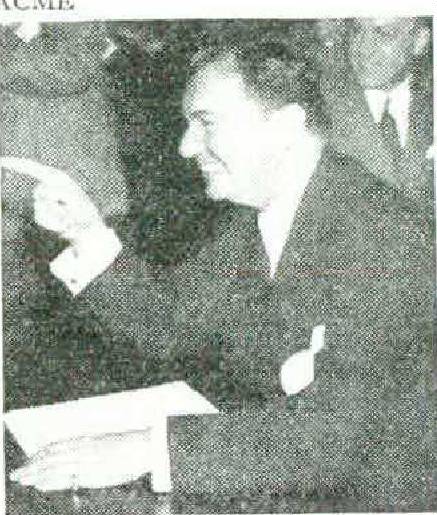
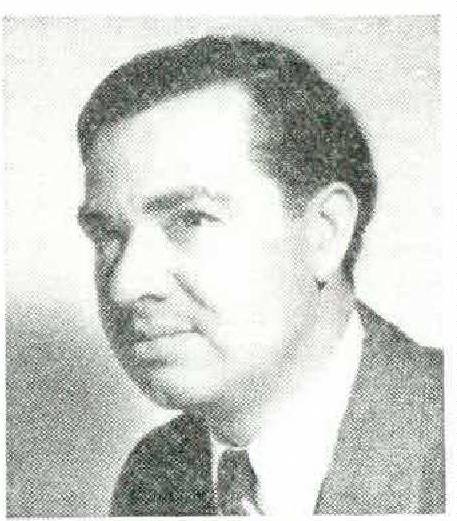
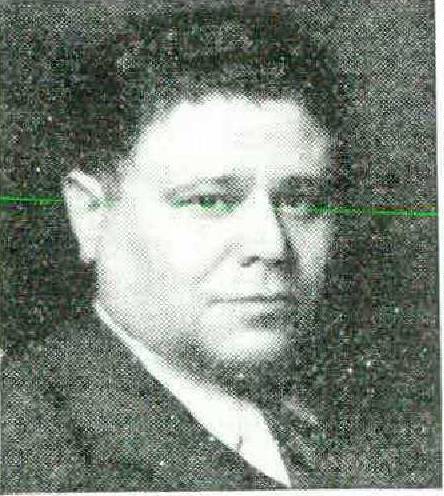
‘Laws and constitutions must go hand in hand with the progress of the human mind.’ So said Thomas Jefferson, who took the lead in making both. But is our government to-day hamstrung by the process of litigation? Must our American democracy surrender to the judges, or must the judges yield to democracy? These questions concern every thoughtful citizen; they are of particular importance to Robert H. Jackson, Assistant Attorney General of the United States. You will find his brilliantly unconventional conclusions in the Atlantic. Speaking of Washington, what about the flood of government reports, surveys, research memoranda for press and radio, which exert such increasing pressure upon public opinion? The federal reorganization plan now before Congress contemplates a central information bureau to control press relations of all departments. But do we need a Secretary of Public Enlightenment? Lawrence Sullivan, an experienced Washington correspondent, draws the line between public service and political propaganda. Everyone who has been tagged for parking will want to read Arthur Pound’s article, ‘The Control of City Traffic.’ John D. Biggers, who is directing the huge canvass, writes knowingly about the ‘Human Side of the Census.’ The January issue will contain the first of three articles by H. B. Elliston, Financial Editor of the Christian Science Monitor. Mr. Elliston is a Yorkshireman with years of experience on both sides of the Atlantic, who will review for us the economic aspects of Anglo-American relations. Of nation-wide interest are the articles in which Margaret Dana comes to the defense of the American consumer.
A FAIR DEAL FOR LABOR
As Congress assembles for the Special Session, there will be much talk about wages and hours and the possible reënforcement of the Wagner Act. Never before in history has the nation been so solicitous in its study of labor conditions. Atlantic readers may shift their point of view after reading Duncan Aikman on the National Labor Relations Board. Russell Bookhout, an ardent believer in the CIO, will give his first-hand picture of the ’Fight within the Ranks.’ Sumner H. Slichter, Professor of Business Economics at Harvard, speaks straight to the point in his paper, ‘Making Collective Bargaining Work.’ Having observed the prosecutions in New York City, George E. Sokolsky scrutinizes the evidence of Labor Racketeering in our great municipalities.
THE NEW SERIAL
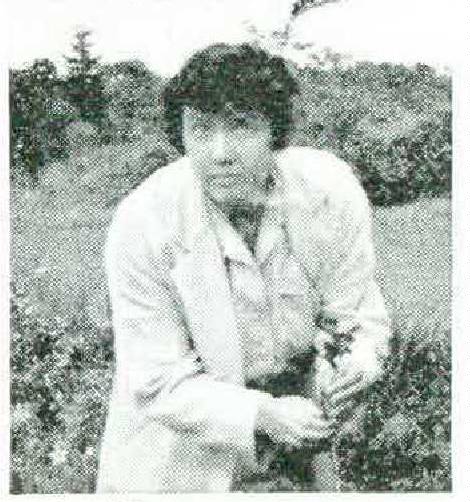
In September the editor made a new Atlantic guarantee. ‘Now,’ he promised the reader, ‘with each twelve months of the Atlantic you will receive three great books of the year.’ Enchanter’s Nightshade you already know. For the second serial, to begin in the January issue, the editor has chosen A Prairie Grove, by Donald Culross Peattie.
It is the biography of a small island of prairie in what is now Illinois. We see the prairie grove in its prehistoric wilderness, through the cold transformation of the glacial periods, and through its mature flowering when Indians and buffalo scarcely disturbed its fecundity. We see the coming of the white men — first the voyageurs and missionaries, then the New England ‘come-outers’ whose ploughs jumped out of the tough grass and gradually harnessed but never subdued its wide, waving wealth.
The narrative interest culminates in the story of the Goodners — a story in miniature of the settlement of the United States, its epic qualities warmed and sweetened with love. And through the whole book runs the wonderful wild life of the prairies — the mating of elk and doe, the travel of buffalo and wolf, the last sky-darkening flights of pigeons, with heartbreak and delight for all who look back upon them with the sharp and loving eyes of the naturalist Peattie. The book is eventually to appear under the imprint of those two wise men of Manhattan, Simon and Schuster.
ATLANTIC PORTRAITS
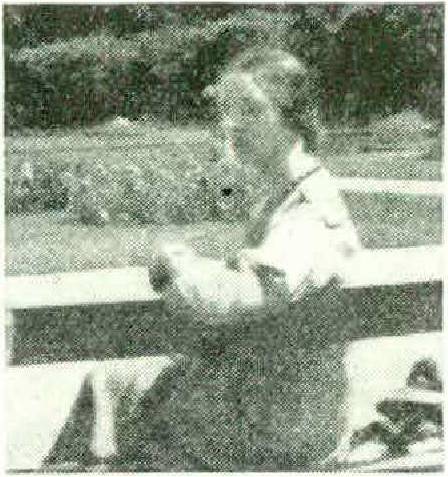
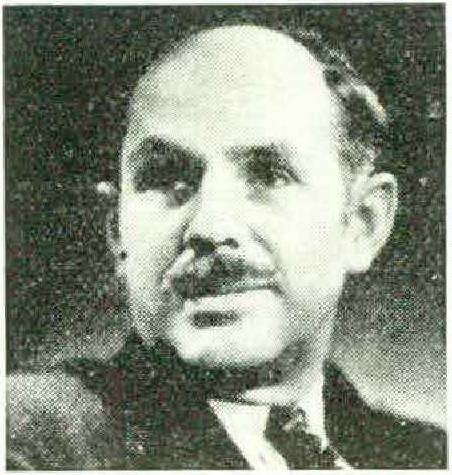
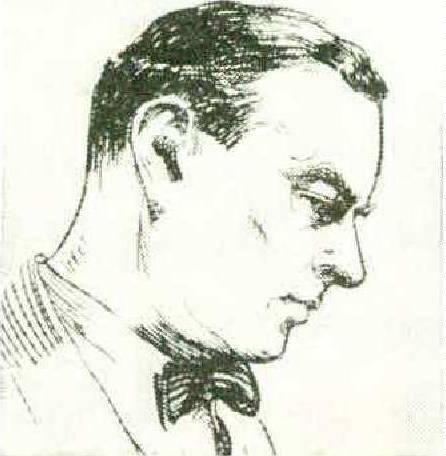
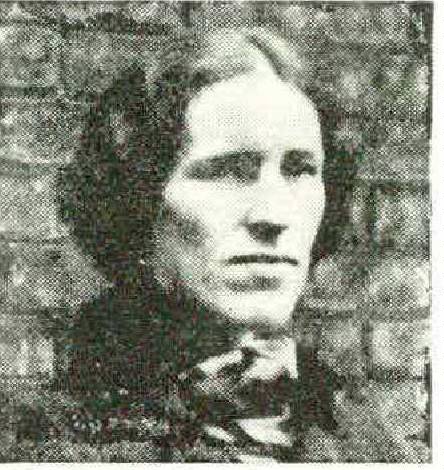
Each issue of the new year will contain a prose portrait of an individual who made his mark. The editor does not intend to give away too much about this important series. It is enough to say that Louise Bogan is now preparing an Atlantic Portrait of W. B. Yeats, that Walter Prichard Eaton is preparing the dramatic likeness of Forrest, that Albert Jay Nock is giving thought to his study of Thoreau, and that Karl Schriftgiesser is adding the finishing touches to his paper on La Guardia. Here come biographies as vivid and warm-hearted as Paul Moody’s beloved picture of his father, Dwight L. Moody, which appeared in the September Atlantic.
THE FAR PLACES
We have a very warm spot in our hearts for those contributors like Owen Lattimore in Peiping, William Henry Chamberlin in Tokyo, Robert Dean Frisbie in Puka-Puka, James Norman Hall in Tahiti, and Nora Waln — wherever she be. Newcomers to this group of Atlantic Travelers include Catherine Drinker Bowen, freshly returned from Moscow with her arresting paper, ‘Ballet with Red Flags,’ and Winifred Letts, the Irish poet, who tells us of Saint Patrick’s fastness in her essay, ’A Day on Lough Derg.’ A citizen of Holland until his twelfth year, David Cornel Dejong was thinking with nostalgia of his home place when he wrote ‘Only Fools Go to America.’ An essayist of extraordinary charm and curiosity is Glanville Smith, who, as the recipient of a Guggenheim Fellowship, is now traveling the far seas in search of those islands the world has forgotten.
THE UNEXPECTED
There is no telling when a manuscript totally without precedent will pop out of the mail. ‘Are Children Vegetables? ’ asks Wilson Follett in a pungent and provoking essay which will rouse all parents from complacency. From the New York psychiatrist Dr. Gregory Zilboorg come two manuscripts exploring the dark passages of the mind. The first will tell you what you little suspect about ‘Loneliness’; the second deals realistically with ‘the many psychological constellations which group themselves about Money. Why do avarice and hoarding give a sense of power to some people, while others perceive the same feeling of triumph only when squandering it? Why do so many people risk their lives and their happiness in the process of acquiring money only to throw it away in no time?’ This psychologist has an explanation — and it makes fascinating reading. George Lott, one of America’s First Ten before he turned professional, takes you into his confidence when he writes about ‘Inside Tennis’ and ‘The Tournament Temperament.’ Emil Ludwig is known the world over for his biographies, in his sensitive paper on ‘The German Mind’ he lays bare the motives and aspirations of a race. And what under heaven does Albert Jay Nock mean when he makes his irresistible plea for ‘The Art of Snoring’? Those who chuckled over Mr. Nock’s account of the Oxometer will want to read more.
THE ART OF REMINISCENCE
There are only a fortunate few who can write about themselves in a way to make you envious — and absorbed. Elsa Lanchester is one of them. She is the wife of Charles Laughton, the actor, and in her domestic journal, ‘Charles Laughton and I,’ she takes you into the world of film and footlights with effortless gayety. Upstate New York in the neighborhood of Syracuse is the setting for E. Alexander Powell’s spicy reminiscence of the Elegant Eighties. In ‘Good-Bye, West Country,’ Henry Williamson, English naturalist, lingers affectionately over his last months among the moors and streams of Devon, where he has lived (part of the time as a hermit) since the war. And did you ever go to Chautauqua? If so, do not miss ‘Morally We Roll Along’ — the backstage view of that great circuit by Gay MacLaren, herself a trouper.
LITERATURE AND NO MISTAKE
We mean by literature something which is neither academic nor forbidding. We mean Edmund Wilson’s discerning essay, ‘Shaw at Eighty’ — an evaluation written with perception and feeling. We mean ‘The Story of Tapiola’ by Robert Nathan, a fantasy complete in one issue. We mean the short Stories of William Saroyan, John Steinbeck, Storm Jameson, John Cheever, Geoffrey Household, Paul Horgan, Winifred Van Etten, and James Still. We mean criticism as scintillating as Conrad Aiken’s discussion of William Faulkner. We mean American humor as fresh and captivating as that distilled by Walter Brooks and Stephen Leacock. We mean the poems of Stephen Vincent Benét, John Holmes, Robert Nathan, Arthur Guiterman, George Allen, Theodore Roethke, and Harry Brown — to mention only a few of those we trust will be with us in 1938.
Indeed, it is the editor’s private opinion that every item he has mentioned comes within the range of literature. But why labor the point? The contributions will speak for themselves.
To yourself — to the friend who enjoys fine reading
GIVE THE ATLANTIC FOR 1938
(the December number will be sent without charge to all new subscribers)
OWN Subscription $4.00
($3.50 if accompanied by a Gift Order)*
GIFT Subscription $3.50
You will find a convenient Gift Order Form following Page 808