Two Fighting Books
THE belligerent titles of Paul de Kruif’sThe Fight for Life (Harcourt, Brace, $3.00) and Raymond L. Ditmars’s The Fight to Live (Stokes, $2.50) were invented, I suppose, to appeal to the mood of readers in a world full of wars and rumors of wars. The de Kruif book deals with doctors, nurses, and ‘healthmen,’ who are fighting to save the lives of sick human beings. The Ditmars volume treats of the struggle for survival among infra-human animals. The former is written in frenetic journalese by a well-known lay evangelist of the medical sciences. The latter is the cool and lucid description of observations made by a distinguished veteran of natural history.
Mr. de Kruif’s book may be described as important and provocative. I found it also irritating. The author straightway works himself into a lather of righteous indignation at people who allow other people to have diseases, at doctors who practise medicine for profit rather than from love of humanity, at governments which do not spend their tax returns lavishly upon public health service. I think that he is mainly right, exceptionally well informed, laudably humanitarian, but preachy.
The prologue deals with the personalities of various of Mr. de Kruif’s ‘microbe hunters,’with pellagra, with Raymond Pearl’s ideas on human biology — all in a forcible manner. The first section is concerned with the fight to save women from death in childbirth, and mainly involves the description of the work of the Chicago Maternity Center. It is full of dramatic incidents, medical facts and statistics which educated persons should know, and rhetorical questions.
The next part, ’Men against the Maiming Death’ (God forgive the author for that phrase!), is a splendid summary of the history of research upon infantile paralysis. I cannot vouch for its correctness, but I do not see how any parent of immature children can read it without deep interest and real profit. Another section describes the author and his pals drinking beer and planning a campaign against tuberculosis in Detroit, to be waged on the sound plea that it is more economical to diagnose and treat the disease in incipient stages than to hospitalize advanced cases. Lastly Mr. de Kruif explains recent advances in the treatment of syphilis and describes public measures which have been taken against it by Surgeon General Parran and others. Here again the author has produced a vivid and meritorious blend of reporting and propaganda.
The reviewer is really slightly ashamed of himself for not being more warmly enthusiastic over this useful, interesting, and well-intentioned book. Even if one does not believe that all human life ought to be saved regardless of its worth and cost, there is no justification for belittling a deserving and successful work and for sneering at its author. I therefore assert that The Fight for Life ought to be read and will be read by many persons with profound interest, and I hope that all of them will enjoy it more than I have.
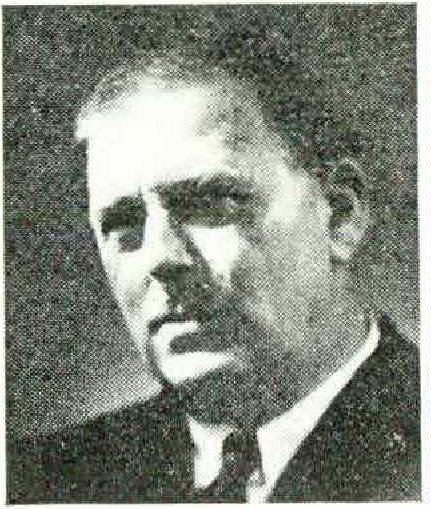
Dr. Ditmars’s calm survey of the weapons and defenses and methods whereby animals struggle to survive begins with a brief prologue on man, deals summarily with the apes and monkeys, and becomes more detailed as the author progresses through lower mammals, birds, reptiles, amphibians, fishes, and invertebrates. He is perhaps at his excellent best when writing about snakes, lizards, toads, frogs, and the like, since Dr. Ditmars is primarily a herpetologist. He presents an amazing variety of zoölogical facts and observations without befuddling the reader by the use of a technical vocabulary.
Dr. Ditmars is disinclined to moralize from zoölogical data. He creates no tension in the reader, because he himself is not in a perpetual emotional stew over a hypothetical ‘right to live’ on the part of animals. He recognizes as a scientist that life subsists upon, and at the expense of other life. His book is like a good dose of sodium bicarbonate to a reader who needs an alkalizer after his intellectual stomach has been fighting for life to digest de Kruif. The heroes of de Kruif fight to save the lives of other men, while Ditmars’s animals merely fight for their own lives. I do not suppose that either class clearly understands why it is putting up such a fight. However, Ditmars understands how the animals fight and de Kruif believes in the human fight. Both authors have written good books.
E. A. HOOTON