Time and Money
Two more novels of protracted, not to say inordinate, length will appeal to those who like to buy their historical fiction at wholesale. One superficially resembles Anthony Adverse, the other Gone with the Wind — as no doubt their authors and publishers were aware. It would be a mistake, however, to assume that readers who enjoyed the earlier robust best-sellers will find the new romances to their taste.
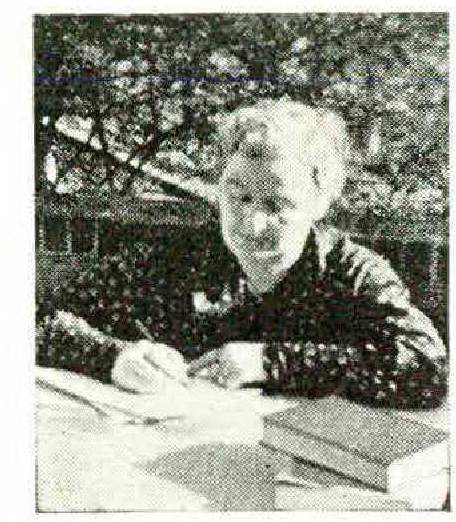
And Tell of Time, by Laura Krey (Houghton Mifflin, $2.75), is a nostalgic ‘memory of things past’ in the South after the Civil War. It is written lovingly and with sobriety, rising only now and then to exciting incident. It is essentially the history of a family; a dynastic saga, one might say, in view of the latent feudalism of the times. Cavin Darcy, of Virginian ancestry, migrates after the war from Georgia, settles on the Brazos River, founds a family, acquires vast acreage, engages in Texan politics, and helps to free the state of Carpetbaggers and desperadoes.
He is a man of impulsive and generous temper, fearless and progressive, and he has the good fortune to possess a wife who loves him faithfully enough to second him in all his designs, even to the acquisition o fmine children, only
two of whom are her own, the rest being orphans of relatives or friends. The friendships, loves, and marriages of this sizable clan form a maze of relationships that perhaps only a woman author or reader could wander in securely. But Miss Krey manages to keep them all distinct and interesting.
Her underlying purpose, however, is to convey a sense of the passage of time, the rhythm of life, the cycle of birth, growth, and death, expressed in her motto from Horace: —
All-changing Time now darkens what was bright,
Now ushers out of darkness into light.
Now ushers out of darkness into light.
Her success is such as to deserve admiration. Her novel has unusual charm and truth. There is some sentimental idealization of old times and persons, but her enthusiasm for the spirit of the pioneers is sound.
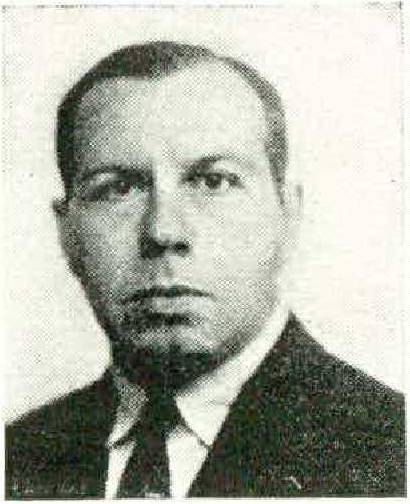
The World Is Mine: the Story of a Modern Monte Cristo, by William Blake (Simon and Schuster, $3.00), is singularly lacking in charm and only three or four times reaches any real power. It is the ironical portrait of the richest man in the world, and its theme is therefore money; but a great many of its pages are devoted to materials that have nothing to do with its hero’s accumulation of ten or twelve billion dollars in order to be avenged upon the men who ruined his father. The Monte Cristo plot — the use of immense wealth as a means of vengeance — is involved with a politico-propagandistic purpose that at times makes heavy going for a reader who is bored by financial manipulation or feels that in the story tremendous machinery is set in motion for no adequate conclusion.
When Cristobal brings about the annihilation of his father’s four enemies, one has the sense of having watched the Car of Juggernaut rumble a hundred miles to squash four beetles. These are poor villains. It is quite likely, of course, that this is a part of the author’s ironical purpose; and throughout the novel there is none of the Gallic pose, gesture, and rodomontade that make Dumas so amusing. The author, in fact, appears to care so little about his inventions that the reader may be excused if he cares nothing about them. Indeed, all seems manufactured. It is only in the parts that deal specifically with anarchism that the story warms and catches up the emotions: the episode of Conchita and the final striking account of the siege of the city of Ronda. For the rest, the author seems always in a hurry. He misses his chances. When a scene needs preparation and suspense, it is fobbed off. Occasionally a character — Lady Joan, for example — is preposterous.
One feels that the author has tried to ride two horses at once and that they are not well broken. As a satire on capitalism and a history of intellectual anarchism the book is at times masterly, though the display of knowingness about politics, science, art, places, peoples, foods, strikes one as a little pretentious. There can be no doubt, however, that the author does know a great deal. As a study of the degenerative effect of immense wealth upon a soul the story is impressive, and Cristobal’s inability to use his wealth to any valuable purpose is finely ironical. There is, however, always something vulgar about money in large quantities; and even when, as here, money is used as a means to power, there is also something vulgar about power. If one took Monte Cristo as serious, that book would be vulgar; and perhaps some of the unpleasant taste that The World Is Mine leaves is due to the fact that the endless talk about money, sex, and luxury contrasts with a background — the breakdown of a world-order — that is deadly serious. The author’s anarchism is no doubt sincere (and does not every idealist dream of it as the only logical solution of social ills?), but his criticism of things present and hope for things to come gain nothing by being presented in a parable that no one can even imaginatively accept, acted by characters that no one can like.
R. M. GAY