Exploring the Dangerous Trades
The autobiography of
DOCTOR ALICE HAMILTON

CHAPTERS VII-XVI
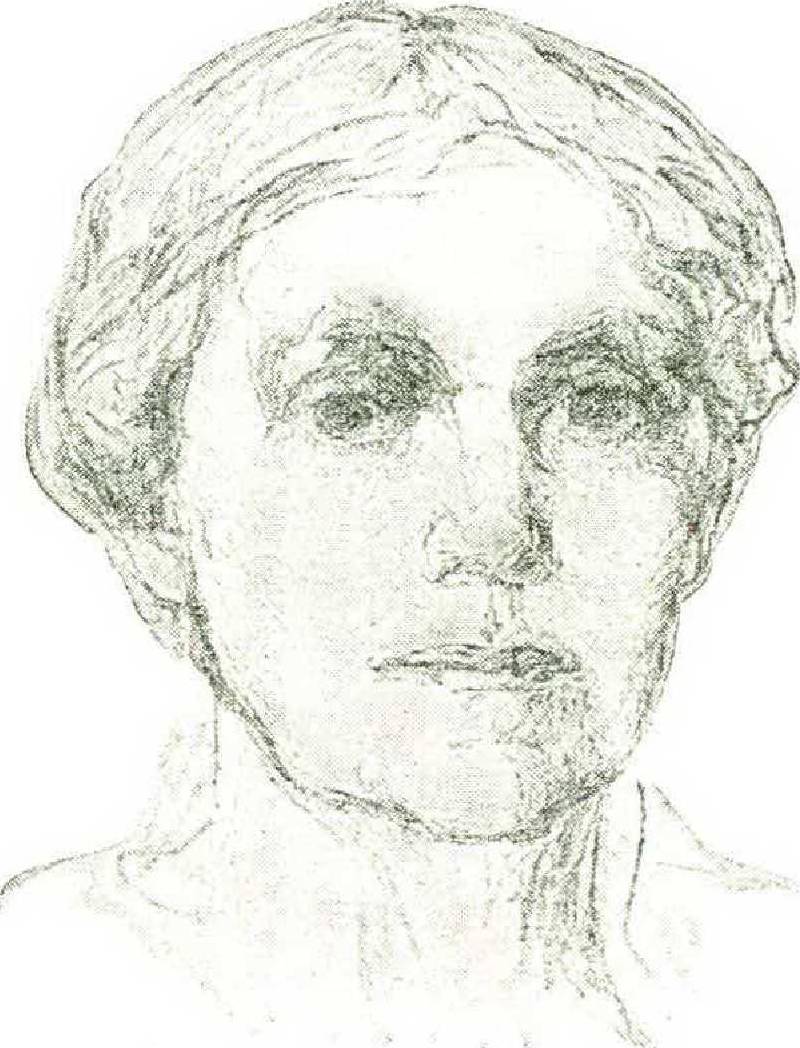
“Protection of workers in the dangerous trades,” writes Dr. Alice Hamilton, “is the chief but not the only subject of this book. Other things have played a great part in my life. I should never have taken up the cause of the working class had I not lived at Hull-House and learned much from Jane Addams, Florence Kelley, Julia Lathrop, and others. Living as I did with Jane Addams, I could not escape being drawn into the peace movement and the efforts to reconstruct Europe after the Armistice. So that too enters into mV story. I have tried to paint a picture of life as I have seen it under the period of passionate and hopeful idealism in the nineties; of slowly increasing disillusion culminating in the shock of war in 1914; of the war years with their intolerance and bitterness and wave of reaction; of the ‘giddy twenties’ where, underneath the surface froth, I saw unemployment and exploitation; the soberer thirties with the increasing movement toward social justice. During those years I saw Europe at war, I saw the result of the starvation blockade of Germany and Austria, and the Quaker work of relief; I joined the League of Nations committee to fight disease; went to visit Russia under Lenin; took part in the Sacco-Vanzetti case; saw Germany under the early months of Hitler’s rule, Germany and France during the ‘Munich betrayal. All these go to make up my book.”
Alice Hamilton, M.D., was a warmhearted, attractive young American when she began her exploration of industrial poisons thirty-two years ago. She had been rather sheltered during her childhood in Fort Wayne, Indiana. Not until her graduation from Miss Porter’s School in Farmington, Connecticut, did she begin to show that scientific bent and unshakable courage which were to sustain her in her pioneering. She earned her medical degree at the University of Michigan, did graduate work in Germany and at Johns Hopkins, and then enlisted under Jane Addams at Hull-House. Her autobiography resumes at this point.
EXPLORING THE DANGEROUS TRADES
by ALICE HAMILTON
7
THE last decade of the nineteenth century (how amusing now to recall that the phrase fin de siècle used to connote extreme modernism, sophistication) was simpler in many ways than any period which followed it. Perhaps Edith Wharton was right when she called it “The Age of Innocence.” We had more uncertainty then, but on the other hand we had more faith. We were far less certain of what was needed to make society over. We were groping and seeking. We, ordinary Americans, had no ready-made system into which we could fit, which we could accept in its entirety as a communist accepts Marxian dialectics, with an end after that to all questioning. On the other hand, we had more faith in human nature then; we really believed in a steady progress of mankind; we never dreamed that the pendulum would swing back and an age of barbarism would return — and in our own time.
Hull-House was founded in 1889, two years after the terrible Haymarket riot and the trial and executing of the anarchists which had stirred Chicago to its depths and implanted in the minds of ordinary people a horror of radicalism, — then called anarchism, — a horror which every now and then broke out in blind panic and cruelty.
It is hard for a Chicagoan to realize that most Americans now living have never heard of the Haymarket bombing which affected Chicago so deeply for decades after its occurrence. But since I am assured that this is true, I must describe as briefly as possible that shattering event in the spring of 1886. For some time there had been a growing movement among Chicago’s tradeunionists in favor of the eight-hour day. This cause had been taken up by radicals — anarchists — who, though a small group, made a great noise. They openly advocated “direct action,” the “propaganda of the deed.” Then there came a strike and a lockout in the great McCormick Harvester works, in the course of which several workmen were shot by the police.
This affair led to a protest meeting in Haymarket Square, a big market place on the West Side about a mile north of Hull-House, where a great crowd of strikers and sympathizers assembled one evening. Toward the close of the meeting a group of policemen suddenly marched into the Square as if to disperse the crowd, and at that moment someone threw a bomb. It killed seven policemen and wounded several others. A wave of terror and anger swept over Chicago. Nobody knew who had made or who had thrown the bomb, but the anarchists who had advocated violence were promptly arrested, eight of them. One of the group, Parsons, felt so confident of acquittal that he came back to Chicago and gave himself up to share trial with his comrades.
But so intense was the feeling against these men that all the usual rules about selection of jurymen and about court procedure were abrogated. The demand for conviction spread over the whole country, and though none of the eight men could be shown to have had any part in the crime, all were found guilty. Four were hanged, one committed suicide, three went to the penitentiary. Six years later Governor John P. Altgeld pardoned those three, in the face of bitter denunciation not only by the conservative press but by such men as Lyman Abbott and Theodore Roosevelt. Sigmund Zeisler, a young lawyer then, set back his professional career for many years, I was told, because he espoused the cause of the anarchists. The Haymarket riot cast its sinister shadow on all of us working at HullHouse in the late nineties.
Miss Addams has given so fully the history of Hull-House, of the birth of an idea and of its fulfillment, that I can make only a modest addition to the picture. As one reads her earlier writings one sees that she was moved not only by the greater inequalities and injustices of society but perhaps even more by the less evident, more intangible, and rarely voiced evils from which men and women suffer but which sociologists often miss. She knew, because she understood people, that political equality meant little in comparison with social equality; she knew that the social exclusiveness of the well-to-do, the social ostracism of the “Dago,” “Polack,” “Hunky,” “Greaser,” Negro, was harder to bear than political corruption and rotten city government. Bad government led to wretched conditions, but it did not degrade the poor man in his own eyes; on the contrary, the clever political boss flattered the voter’s self-respect, made him feel himself of importance. Contempt, she said, is the greatest crime against one’s fellow man.
When I look back on the Chicago of 1897 I can see why life in a settlement seemed so great an adventure. It was all so new, this exploring of the poor quarters of a big city. The thirst to know how the other half lives had just begun to send people pioneering in the unknown parts of American life. Now, when we have floods of books and plays on every aspect of that life, — from Southern sharecroppers to Pennsylvania coal miners, from Scandinavian farmers in the Northwest to the Cajun fisher folk of Louisiana, — it is hard to believe that when Miss Addams came to Chicago the first book of that kind was still to be written. Jacob Riis wrote his How the Other Half Lives in 1890.
My first evening there is still clear in my memory. There was a large company at dinner that night and former Governor Altgeld was the guest of honor. I saw the admiration and appreciation with which he, the defender of the Pullman strikers and the pardoner of the imprisoned anarchists, was greeted by Miss Addams, Mrs. Kelley, and Miss Lathrop. I listened while Mrs. Kelley talked with him about her experience as Chief State Inspector of Factories under his administration, when for the first time such inspection was enforced. She had carried out the shortlived eight-hour law for women (declared unconstitutional two years later), had worked for the control of sweatshops and child labor, and had always been able to count on his backing. I heard them discuss also his attack on the Supreme Court for declaring a Federal income tax unconstitutional, and I listened to his denunciation of the Carnegie Company’s actions in the bloody Homestead strike in 1892. But I was not allowed to overidealize Altgeld, for while to Mrs. Kelley he was the champion of labor, to Julia Lathrop, who admitted his achievements there, he was the man who sacrificed the insane asylums to politics, starting the long demoralization in their service which she had to struggle against for many years.
8
In those early days at Hull-House the group of residents was rather small and we had a fairly intimate life, if one can use such a word to describe a relation which was almost entirely devoid of personal intimacy. We knew each other’s opinions and interests and work and we discussed them often and freely, but the atmosphere was impersonal, rather astonishingly so for a group composed chiefly of women. Miss Addams was warm and outgoing, but she never tolerated the sort of protecting, interfering affection which is so lavishly offered to a woman of leadership and prominence. Nobody ever ventured to refuse her to visitors, or even to take her telephone calls unless authorized to do so. She was impatient of solicitude, and her attitude brought about a wholesome, rather Spartan atmosphere.
Mrs. Florence Kelley, Julia Lathrop, and Alzina Parsons Stevens were all there when I came. Mrs. Kelley was one of the most vivid personalities I have ever met. She used to make me think of two Bible verses: the one in Job about the war horse who scents the battle from afar and says among the trumpets, “Ha, ha”; and the one where the Psalmist says, “The zeal of thine house hath eaten me up.” It was impossible for the most sluggish to be with her and not catch fire. A little group of us residents used to wait for her return from the Crerar Library, where she was in charge evenings, and bribe her with hot chocolate to talk to us. We had to be careful; foolish questions, half-baked opinions, sentimental attitudes met with no mercy at her hands. We liked to hear her and the Scotch lawyer, Andrew Alexander Bruce, discuss the cases they had had under Governor Altgeld’s administration.
Mrs. Stevens came of a good Maine family, a Parsons of Parsonsville, but her father’s death in the Civil War reduced the family to poverty. She had had to go to work in a textile mill at the age of thirteen, and had lost one of her fingers in the machinery. She had gone into the labor movement from the bottom and had thrown all her energy and intelligence into it. I remember her as equally intolerant of opposition to the labor movement and of sentimentality about it. Once, when one of the residents stood up for a notoriously crooked labor leader, Mrs. Stevens turned on her fiercely. “That is the worst kind of snobbishness,” she said, “to assume that you must not have the same standards of honor for working people as you have for the well-to-do!”
It was Mrs. Stevens who introduced me to Eugene Debs, that lovable, warm, vivid personality whom I remember as I do few men. She was a close personal friend of his, one of the little group who used to stand by him during the hours of dark discouragement in the Pullman strike — keeping him from drowning his depression in drink or, when he could bear it no longer, shielding him till he came back to himself. She did not live to see him sentenced to prison for opposition to the war; but those of us who admired him felt deep indignation over this act of intolerance and over Wilson’s refusal to release him when the Socialists nominated Debs for the Presidency, although by then the war was over.
When I try to describe Julia Lathrop, the word that comes first to my mind is “disinterest.” It is a rare quality even in philanthropists, in people who are devoting their lives to others, for sacrifice and devotion often go with a certain kind of self-centeredness. Julia Lathrop did not see herself as the center of what she was doing; she really was not thinking at all of her relation to it. Julia never roused one to a fighting pitch, for fighting was not her method. Nor was it mine. I have always hated conflict of any kind, but with me this led to shirking unpleasantness. Never with her. She taught me a much needed lesson: that harmony and peaceful relations with one’s adversary were of value only if they went with a steady progress toward what one was trying to achieve. So often when I have succeeded in breaking down the hostility of an employer and in establishing a pleasant relation with him I have been tempted to let it go at that, to depart without risking any unpleasantness. Then I have remembered Julia Lathrop and have forced myself to say the unpleasant things which had to be said.
It was during my early days at Hull-House that I went with her to visit one of the large insane asylums of Illinois. The superintendent was at first distinctly hostile; but Julia’s tact gradually softened him until at last he was pouring out all his grievances and difficulties, and they were many. She listened with sympathy and I thought that would be the end, that we should depart feeling we had won him over and left him friendly and well-disposed. But to Julia that was only the preparatory spadework. She then proceeded to tell him gently, but with devastating clarity, what was wrong with his administration of the asylum for which he, after all, was the only one responsible. He took it with startled meekness, and I learned a lesson I never forgot.
Julia Lathrop had more than her share of human wisdom. I think women have more than men. I know that when I have wanted a solution of an intellectual problem, I have taken it to a man, but when it was a problem concerning people, I have gone to a woman for wisdom — most often to Julia Lathrop, Jane Addams, or Mary Rozet Smith.
9
I cannot describe Jane Addams. When I try, I get only bits of her, pieces that should be fitted together in a pattern of great beauty, but it is a pattern that I am unable to produce. All I can do is to give something of the impressions made upon me.
She had intellectual integrity; there was nothing of what George Meredith has called “merciful muddle” about her. She never sentimentalized the poor, or labor, or the half-baked young radicals, or the conscientious objectors; and so she could never be disillusioned or disappointed, because she had no illusions to start with. She never shrank from painful facts; she never refused to listen to damaging evidence. I well remember how indignant I was when she told me that she had invited a grief-stricken young couple to come for a visit, and I knew that those very people had treated her with a contemptible injustice born of panic and fear. When I reminded her of it, she said vaguely, “Why yes, that’s true, they did. Strange, wasn’t it?” And then she dropped it. She did not excuse them, for there was no excuse, but her pity was just as tender as if she had shut her eyes to the facts.
She was a pragmatist in the best sense before that word was popular. She held that anything one had learned in college and from travel must be tried out in actual life. “Truth must be put to the ultimate test, the test of the conduct it dictates and inspires.” Her young womanhood was passed largely in study, reading, travel, for she was a semi-invalid for years; and she had had more than her fill of theoretical knowledge — it made her rather impatient. She turned from it eagerly to practical application, to action. As was natural, John Dewey, then in the University of Chicago, became one of her closest friends and counselors.
This practical approach, together with her complete absence of personal pride, made her ready to try out a new scheme and equally ready to drop it if it proved a failure. Always she held that a settlement should be a place for experiment and when a new enterprise had proved its worth the settlement ought to try to make the city take it over and go on to other new fields. And this happened again and again. Our playground, our public baths, our kindergarten, our volunteer probation officers and truant officers — all were taken over by the city; and though sometimes it seemed to us that we had managed these services better and more disinterestedly than the city did, Miss Addams insisted that it was a step forward from private charity to public responsibility, even when it was poorly done.
She never took a stand for the sake of consistency; she was no slave of her own theories. When we were in Paris just after the war, she shocked the French women of the pacifist group by accepting an invitation to a reception given her by a group of American doughboys who were waiting to be demobilized. The women begged me to remonstrate with her, to make her see that this would be a public abandonment of her principles. I labored in vain to convince them that she had no principles against conscripted men, whatever she thought of conscription, and that to hold herself aloof from them would require a fanatic belief in her own rightness which she never possessed.
She had two conflicting traits which sometimes brought her great unhappiness. She was very dependent on a sense of warm comradeship and harmony with the mass of her fellow men; but at the same time her clear-sighted integrity made it impossible for her to keep in step with the crowd in many a crisis. Most reformers I have known have enjoyed, more or less, the sense of being in advance of their times, of belonging to a persecuted minority. Nothing of that was ever true of Jane Addams. The Pullman strike, the rise of the I.W.W., the war fever of 1914-1918, the sudden, panicky persecution of the radicals after the war, — to mention only a few incidents, — were for her the most painful of experiences, because she was forced by conviction to work against the stream, to separate herself from the great mass of her fellow countrymen. Nor did she ever fall into the mire of self-pity or take refuge in a sense of self-righteousness; she simply suffered from the spiritual loneliness which her farsighted vision had imposed on her.
One supremely lovely figure rises to my mind whenever I think of Hull-House in the years from its founding to 1934, and that is the figure of Mary Rozet Smith, Jane Addams’s closest friend and the most universally beloved person I have ever known. She left no mark on history but she left a deep mark on all who knew her even slightly, for she had a genius for personal relations. I suppose that means quick insight, warmth, and a “heart at leisure from itself.” She was one of those persons whose biographies are never written but who have a deep and abiding influence on their time. Her large, gracious home on Walton Place was a refuge for Miss Addams — who could hardly have carried on had she not been able to slip away from the West Side to it now and then — and a place of refreshment for many of the rest of us. And to HullHouse her coming was not only a joy but a sustaining help in time of trouble and perplexity for all the years up to her death in 1934. Miss Addams survived her by only one year.
I did not know Louise de Koven Bowen in those early days. My intimacy with her began in 1912 in connection with the Pullman incident, which I shall relate in due course. Mrs. Bowen was one of the earliest friends of Hull-House and is now its oldest friend, for she still guides its destinies when all the others are gone. She was always a prop and a stay to Miss Addams, even when, as in 1917, she did not take Miss Addams’s anti-war stand, for her generosity is of the spirit as well as the purse.
10
Hull-House was a very attractive place. It was built in 1846 and on much the same plan as my grandfather’s Fort Wayne house, which was five years older. There were the same hall and stairway, long drawing room with carved white marble mantelpieces, French windows at both ends, and the same lofty ceilings with elaborate cornices.
Life at Hull-House was very simple so far as luxuries went, but it was full of beauty. The two founders had brought with them many charming furnishings, and whatever they bought later had the two qualities of durability and beauty. Our food was inexpensive, but dinner was served to us in a long, paneled dining room, lighted with chandeliers of Spanish wrought iron; breakfast, in a charming little Coffee House built in imitation of an English inn. To me, the life there satisfied every longing — for companionship, for the excitement of new experiences, for constant intellectual stimulation, and for the sense of being caught up in a big movement which enlisted my enthusiastic loyalty.
My part in it was humble enough. At that time there were few of the social services which now we take as a matter of course. Hull-House had to run its own day nursery, kindergarten, public baths, playground, as well as all the other activities which settlements still carry on. There were no baby clinics, and though I did not feel at all competent to treat sick babies I did venture to open a well-baby clinic, which very soon was taking in all the older brothers and sisters up to eight years of age. Miss Addams let me use the shower-bath room in the basement of the gymnasium and provided a dozen little bathtubs, soap, bathing towels, for most of the work of the “clinic” was bathing the children.
Some of them came all sewed up into their clothes for the winter, but I found I could get past the Italian mothers’ dread of water if I followed the bath with an alcohol rub and anointing with olive oil. Then I gave what I had been taught was the best advice about feeding babies: nothing but milk till their teeth came. When I see the varied diet modern mothers give their babies, anything from bacon to bananas, I realize that those Italian women knew what a baby needed far better than my Ann Arbor professor did. I cannot feel I did any harm, however, for my teachings had no effect. I remember a young mother who brought her fine specimen of a three-year-old son to me and told me of his difficulties when he was a baby. “I gave him the breast and there was plenty of milk, but he cried all the time. Then one day I was frying eggs, and just to make him stop I gave him one and it went fine. The next day I was making cup cakes and as soon as they were cool I gave him one, and after that I gave him just whatever we had and he got fat and didn’t cry any more.”
So now when I see an Italian baby sucking a slice of salami I feel quite serene. Garlic, we are told, is full of most valuable vitamins, and salami is full of garlic.
The Italians around Hull-House were from Calabria, Naples, and the Abruzzi — parts of Italy which then must have had few if any schools, for many of the men and most of the women were illiterate and quite appallingly ignorant of what life in a large modern city necessarily requires. Keeping the nanny goat in the tenement, throwing the slops out of the window, using the gutter as a water closet, were all accepted ways in Calabria, and so was sending children to work as soon as they were big enough to get a job. Employers in Chicago were none too scrupulous and factory inspectors few and far between.
I had a struggle over a ten-year-old boy whose widowed mother simply could not understand my protest against sending him to work in the big biscuit factory near-by. So I went to the factory and reported to the office that a child was being employed there illegally. The officials were shocked and sent for a foreman, an Italian, who swore that no Tony Calabrese had a job there. Since this did not convince me, the manager told me to go through the departments in which young workers were employed and see if my boy was there under another name. I looked over all the Italian boys and girls, many of whom greeted me with excited smiles, but there was no Tony, so I made my apologies and withdrew.
That evening Teresina and Assunta came over, bursting with glee, to tell me that Tony was there all the time. “Where?” I demanded. “In the sugar barrel. When they sent for the foreman he picked Tony up and dropped him in the sugar barrel and told him to keep quiet or he’d lose his job.” It was a long time before I could eat any of that company’s biscuits. The vision of filthy little Tony squatting on the sugar was too much for me.
I had more to do with Italians than with any other foreigners and I learned to speak a sort of peasant Italian, which was useful though far from cultivated. They had, as all European peasants have, a hard time adjusting themselves to American ways and American ideas. A very fine couple from Cosenza kept a saloon near-by and had their unusually pretty daughter Cristina act as barmaid. Mrs. Fortunato came to me in great distress because her Irish and German neighbors were saying she was turning Cristina into a bad girl. “ They send their daughters away from home to work in a factory with strange men; I keep Cristina under my own eye and I know all about the men she talks to, for they come from outprovince. In Italy a wineshop is the nicest place in the village, but here they think it is wicked.”
Many Italian girls went into the factories without gaining economic freedom, or indeed freedom of any kind; parental authority was as strict as ever and marriages were made by the parents. That was a hard time for Italian girls, seeing the liberty of other girls and helpless under the iron rule of their fathers. And then slowly the change began to come. I remember one family where the oldest daughter had led the life of a slave and been married to a man she had seen only twice. Her two younger sisters, born after a succession of five brothers, went their own way gayly and saucily, opened their pay envelopes and gave mother what they considered fair, spent the rest on clothes and fun, and when the “old man” made a scene they “told him where he got off.” I rejoiced in their emancipation, yet I could not help seeing how much more lovable and dependable the older sister was. The early stages of revolt do not produce a lovely type.
Now when I go back to Hull-House I meet the daughters of these girls, of the submissive ones and the rebellious ones. They are modern Americans now, capable, independent, up on the latest newspaper and radio teaching on child hygiene and psychology, and even interior decoration; their homes are pleasant and hygienic; their conversation is interesting. They have even broken through the strong taboo against hospital nursing which obtains in all Latin countries. Up to some twenty years ago an Italian would fly into a rage if I suggested that his intelligent and attractive daughter become a trained nurse. That was a profession so loathsome and so fraught with moral dangers that only holy nuns, dedicated to a life of chastity and service, might undertake it. Now there is more than one Italian hospital in Chicago and they are full of Italian nurses.
11
Living among the foreign-born makes one aware of ancient wrongs and oppressions which have left deep scars and lasting hatreds; and we Americans arc the innocent inheritors of these hatreds and loyalties, which often complicate our national life. Of all the foreigners we met at Hull-House the Poles were most difficult to deal with, for they were suspicious and hostile toward all outsiders. They thought any approach, no matter how friendly, meant some kind of governmental interference, and this attitude was easy to understand in a people who for centuries had known only oppressive government. They hated their Austrian rulers least, their German masters most. The Russians, they said, were cruel but they came down on you only at intervals; in between they forgot, you and let you go your own way, but the Germans never.
The Poles were naturally fanatic Catholics and nationalists and they sent their children to the Polish Sisters’ schools, not the public schools. I remember a German expert on primary education expressing to Miss Addams his amazement that this should be allowed. “Surely you should do everything to detach them from Poland, to make them Americans,” he said. Miss Addams answered that if we attempted to force Americanization we should get the contrary result, and that as it was, the children learned English as fast as they could, dropping the old ways and adopting the new with almost incredible speed.
Hull-House had once been the center of a large Bohemian colony, but by the time I came most of these immigrants had moved to the far West Side, to what is called Pilsen, the largest Bohemian city in the world, we are told, except Prague. The few Bohemians I knew were fine people. They reminded me in many ways of New England Puritans, for they had the same respect for hard work and thrift, they were inclined to be strict with the children, not encouraging pretty clothes or dances or other extravagances, but ready to make many sacrifices to keep their youngsters in school. Protestant missions flourished in the Bohemian quarters as they did nowhere else, for Bohemians seem to be instinctively Protestant, even after three centuries of Catholic rule.
There were many Jews, Russian and Polish, in our neighborhood and always they made up the majority of the adult education classes which Clara Landsberg ran in those days — at least of those that went beyond elementary English. The Jews more than any others loved learning for its own sake and were ready to plunge into the study of Shakespeare, Browning, Ibsen, after a long day of factory work. Some of the Bohemians and Irish studied also, but the immigrants from Southern Europe cared more for the other things Hull-House had to offer — dramatics, art, music, and social clubs where they could dance.
Settlement life shows clearly how deep and fundamental are the inequalities in our democratic country. The belief, so dear to Americans, that opportunity is open to all, that the exceptional child can rise to the highest position in the community if he will, is true in certain fields only; in politics, in business, even in the learned professions, but certainly not in the arts. One of the saddest things in the lot of the poor is the crushing down of artistic talent. “Chill penury” still freezes “the genial current of the soul,” in spite of public schools and art museums and free concerts. My sister Norah, who had art classes in Hull-House for several years, used to suffer again and again the grief of seeing some promising young artist, Italian or Mexican or Bohemian, leave school for the barren monotony of factory work, too tired after hours of it to do anything creative, his gift wasted. Yet everyone must admit our need of just those gifts which the immigrants could bring us from countries with an artistic life more widely developed than ours.
As I look back I can remember the indignation I used to feel over the unfair and even cruel treatment I so often saw meted out to these immigrants; it was a feeling so strong that it even perverted my attitude toward my own country. When a visitor from uptown would glow with enthusiasm over a group of Hull-House neighbors singing “America,” I would feel only impatience. What reason had they to feel devotion to a country that treated them with callousness and injustice? My excursions into the dangerous trades only strengthened this feeling. And when we entered the war in 1917, that impression was so strong at the back of my mind that I could not join in the outburst of patriotism sweeping over the country.
I stopped over in Fort Wayne that May to visit my cousins. As I listened to their talk, full of deep devotion and admiration for our country, I realized that there was another America than the one I had been seeing for so many years; that my picture was one-sided, narrow. I must take a larger view. And as I looked back over my years at Hull-House I could see that, hard as life had been for those uprooted Europeans, their path almost always had gone up, not down. I could hardly think of any family that had not, sooner or later, moved to better quarters, made its way up.
The Greeks moved fastest. They were singleminded in their pursuit of business; they came to our classes long enough to get a working knowledge of English, but they wasted no time over unpractical subjects. The Jews came next, for though they too were good in business, even then they had a wide range of other interests and some of them were dreamy idealists. Bohemians soon took the upper jobs in industry; Italians and Poles were slower to reach prosperity, but they too climbed up.
The only exceptions I ever met were a few Irish families which were wrecked by drink and went steadily down from bad to worse. An Irish policeman once said to me, “There’s nothing better than a good Irishman and there’s nothing worse than a bad one.” It is true. Among the Irish I met in the slums were poets and artists. They had the manners and the charm of an old aristocracy — and they could sink to lower depths than any other immigrants. I wonder if those two things go together — that to be capable of the highest carries with it a capacity to fall the lowest. Certainly among the Irish wrecks from drink were some of the warmest, most generous, and most lovable people I have known.
Two things I acquired from my life at HullHouse were certainly undesirable: a deep suspicion and fear of the police and a hostility toward newspaper reporters. At long last I have rid myself of both feelings, but they had plenty of foundation in experience. Chicago’s police were Tories in their political thinking and they treated those they considered rebels against the social order with little consideration for the Bill of Rights. Also, though many were foreign-born, they despised the foreign-born of other nations.
My first experience with the Chicago police came during my first year at Hull-House. At that time our neighborhood streets were lined with big wooden garbage boxes, very convenient seats on a pleasant day. At the noon hour two Italian workmen were sitting talking on the one in front of their tenement when a Polish-born policeman told them to move on. The command was senseless; it was their garbage box and they refused, whereupon he drew his revolver and shot them both. I came by a few moments later to find an angry mob of Italians storming our little playground house where the policeman had taken refuge (he was soon rescued by a patrol wagon), and the wounded men with their weeping wives waiting for the ambulance. One of them died in the County Hospital from a wound in the lungs.
This was so shocking a deed that we felt we could not let it be passed over in silence, as the Chief of Police had decided was best. When a delegation of Italians came to us to appeal for some sort of action we asked Clarence Darrow, then living not far from Hull-House, to bring charges against the Polish policeman, and we collected in nickels and dimes some four hundred dollars for a retaining fee. But nothing came of it. Darrow never pushed it, explaining that his role was that of defender, not prosecutor, and the policeman was never even suspended.
At our mass meetings the sight of an officer in uniform, instead of bringing a sense of security, would fill us with dread of some violent deed on the part, not of the audience, but of the police. There was a big meeting of Russians one evening, Mensheviks and Bolsheviks, gesticulating furiously and shouting at each other, but I knew nothing worse than that would happen if the police would let them alone. A panicky resident had called up the Maxwell Street station, and a group of burly Irish policemen stood in a corner muttering to each other. I went up to them and said that it was only a discussion of two theories of government and that I was sure it would end peacefully. “Lady,” said one of them, “you people oughtn’t to let bums like these come here. If I had my way they’d all be lined up against a wall at sunrise and shot.” I lived through an hour of wretched suspense, but luckily there was no chance for the use of police clubs. The meeting broke up without any incident.
But I feared the newspaper reporter almost as much. My fear was shared by all the residents, because we knew that anything that went wrong at Hull-House was a “story,” that ingenious twisting might turn the most innocent answer into a ridiculous or a damaging statement, and, of course, that there was no redress. To write a protest only made matters worse by giving added publicity to the story. It was an unwritten rule that these gentry were not to be handled by anyone but Miss Addams or Miss Lathrop, a rule we were all thankful to follow.
One of our worst experiences was over the Averbuch murder, a story that Miss Addams has told in her Twenty Years at Hull-House. Averbuch was a young Russian Jew, an anarchist, who had been in this country only a short time. He went, on some errand never explained, to call upon the Chief of Police, who when he saw a swarthy foreigner facing him lost his head and emptied his revolver in the lad’s body, most of the bullets entering from the back. Averbuch had no connection with Hull-House. He was studying English at the Maxwell Street Settlement— but Hull-House had more news value, so the reporters came in swarms to interview us and to prove that Hull-House was a nest of anarchism.
I learned then the deadly use the papers can make of the word “admit.” Clara Landsberg, who was in charge of our adult education department, insisted that Averbuch was not among the students. “Would you have accepted him if he had applied and you knew he was an anarchist?” “Certainly,” she said. “We do not ask anyone what his political theories are.” But the reporter’s words read: “Miss Landsberg admits that there are anarchists in the classes at HullHouse.” Miss Addams was in bed with tonsillitis just then, and Julia Lathrop was away. I struggled in vain with a relentless young man and finally in despair took him up to Miss Addams. He listened to her in silence and then, blinking his colorless eyes behind his thick spectacles, he remarked, “I may as well tell you, Miss Addams, that I have orders from my paper to link Averbuch up with Hull-House and that is what I’m going to do.”
12
At Hull-House one got into the labor movement as a matter of course, without realizing how or when. As I look back I can remember a few startling experiences which must have pushed me farther along the way, but I cannot remember when I began to see the working world through the workers’ eyes.
One of these experiences came to me through an Italian girl whom I was helping with her English. Filomena was the eldest of a large family and, as used to happen fairly often, she was sent to this country to pave the way for the rest, to earn money for the family’s passage. It was hard to understand an Italian family sending a young girl out into the world alone, especially when one knew how strictly she would be guarded as soon as her family arrived. Only complete ignorance of what such a journey meant and of the difference between Chicago and a Calabrian village could explain it.
Filomena had but one purpose in life, to earn money. She worked in one of the great men’sclothing factories and soon rose to the skilled job of making buttonholes on the lapels of men’s dress suits. This was shortly before the great strike of 1910, Sidney Hillman’s strike, and the work in the factories was let to subcontractors who acted as foremen and whose one idea was to push the work as much as possible. There was talk of revolt among the girls in Filomena’s department, but she told me she paid no attention to it. She stuck to her buttonholes and the girls called her a mean pace-maker.
Then one day the boss said to her: “How many needles of thread do you use in a day, Filomena?” “About three hundred,” she answered. “Why don’t you take your needles home with you and thread them evenings?” he suggested. “You’d make a lot more if you did.” Filomena was much impressed. She followed the suggestion, and that week she made more buttonholes than she had ever dreamed of. The foreman let all the other girls know what Filomena had drawn in her pay envelope, and one after another the girls began threading their needles at night. Then, when nearly all were doing this, he cut the pay so that they would make just what they had before. That was at last too much for Filomena. When the strike broke she went out with the others.
Another memory concerns a young Irish girl of sixteen, gentle and shy, with the natural good breeding one finds often among the poorest Irish. Celia was a waitress in an all-night restaurant, for at that time a girl might work ten hours a night, seven nights a week, in Illinois. For her own protection I had her join the waitresses’ union, and when her place went on strike she took her turn picketing.
Chicago police have never felt it part of their duty to observe the law toward strikers, and violence, often needless and unprovoked, has been the rule. I felt personally responsible for Celia and made my way through the crowd outside the restaurant just in time to see her dragged along, unresisting, by a huge policeman and hustled with abusive words into a police van. We got her off without a jail sentence but not till the next day. Only those who have had to look on helplessly while servants of one’s own government treat humble people with brutality can realize what rage it arouses, how all one s love and pride of country vanishes.
Another time this bitter anger came over me was during the Kuppenheimer strike in Chicago. I told Miss Addams I had seen nothing in occupied Belgium that so enraged me. I had undertaken to picket in that strike and had just reached a factory on the far West Side when I saw a little group of men running wildly in all directions. They were the pickets — thin, stoop-shouldered young Jews and Italians — and they were pursued by big thugs hired by the company, who struck and kicked them as they ran. A little knot of uniformed policemen, sent there “to keep law and order,” looked on idly.
In the great Hart Schaffner & Marx strike of 1910 I did not picket but went on a citizens’ committee formed by Miss Addams, which met at Hull-House. She has told the story of that strike and how wisely it was settled, with a joint board of arbitration composed of employers and employed with an impartial chairman, a method which has helped to avert strikes ever since. Sidney Hillman emerged as leader of the new union. I met him in the course of the strike when Julia Lathrop and I called on him in a tiny hotel bedroom with only one chair. He was a slender, very youthful-looking man, quiet and a bit shy, but wise and steady beyond his years.
Picketing in different strikes was no unusual job in those days. I used to volunteer for the early morning picket usually, because the police were much less in evidence then and I was in mortal fear of having one seize me and drag me about. The fact of arrest was not so bad as the way it was done. But late one winter afternoon I found myself marching up and down in perfect safety because I was with Professor Hale, head of the Latin Department of the University of Chicago. We were discussing the poems of Catullus, his favorite Latin poet. He was tall and very impressive, every inch a scholar and a gentleman, yet he could not understand why the police would not arrest him. “I am doing exactly what those poor fellows are doing,” he said, “but they pay no attention to me.” Of course the police had too much sense to provide such headlines for the papers.
13
It was while I was working at the Memorial Institute in the fall of 1902 that an opportunity came for me to bring my scientific training to bear on a problem at Hull-House. (My efforts in the baby clinic could not be called scientific.) I came back from Mackinac to find Chicago in the grip of one of her worst epidemics of typhoid fever. At that time the city water, drawn from the Lake, was not chlorinated. The only precaution taken against dangerous pollution was to make cultures daily of samples from the different pumping stations. The next day, when the cultures had had time to develop, the results would be published and the public told whether or not to boil the water. It was assumed that housewives would look up these instructions every day and act accordingly, but the actual result was that typhoid was endemic in Chicago and periodically reached epidemic proportions. On this particular occasion Hull-House was the center of the hardest-struck region of the city — why, nobody knew. Miss Addams said she thought a bacteriologist ought to be able to discover the reason.
It was certainly not a simple problem. The pumping station which sent water to the Nineteenth Ward sent it to a wide section of the West Side; the milk supply was the same as that for neighboring wards. There must be some local condition to account for the excessive number of cases. As I prowled about the streets and the ramshackle wooden tenement houses, I saw the outdoor privies (forbidden by law but flourishing nevertheless), some of them in back yards below the level of the street and overflowing in heavy rains; the wretched water closets indoors, one for four or more families, filthy and with the plumbing out of order because nobody was responsible for cleaning or repairs. Swarms of flies were everywhere. Here, I thought, was the solution of the problem. The flies were feeding on typhoid-infected excreta and then lighting on food and milk. During the Spanish-American War, when we lost more men from typhoid fever than from Spanish bullets, Reed, Vaughan, and Shakespeare had made a study of conditions in camps — open latrines,unscreened food — which led them to attribute an important role in the spread of typhoid fever to the housefly. That was what started the “Swat the fly” campaign.
Naturally, my theory had to be put to the test, so with two of the residents to help me, Maude Gernon and Gertrude Howe, I went forth to collect flies from privies and kitchens and filthy water closets. We dropped the flies into tubes of broth and I took them to the laboratory, incubated the tubes, and plated them out at varying intervals. It was a triumph to find the typhoid bacillus, and I hastened to write up the discovery and its background for presentation before the Chicago Medical Society. This was just the sort of thing to catch public attention: it was simple and easily understood, it fitted in with the revelations made during the Spanish War of the deadly activities of houseflies, and it explained why the slums had so much more typhoid than the well-screened and properly drained homes of the well-to-do.
I am sure I gained more kudos from my paper on flies and typhoid than from any other piece of work I ever did. Even today I sometimes hear an echo of it. In Chicago the effect was most gratifying: a public inquiry resulted in a complete reorganization of the Health Department under a chief from the Public Health Service; and finally, an expert was put in charge of tenement house inspection.
But unfortunately my gratification over my part in all this did not last long. After the tumult had died down, I discovered a fact which never gained much publicity but was wellauthenticated. My flies had had little or nothing to do with the cases of typhoid in the Nineteenth Ward. The cause was simpler but so much more discreditable that the Board of Health had not dared to reveal it. It seems that in our local pumping station, on West Harrison Street near Halsted, a break had occurred which resulted in an escape of sewage into the water pipes — and for three days our neighborhood drank that water before the leak was discovered and stopped. This was after the epidemic had started.
The truth was more shocking than my ingenious theory, and it never came to light so far as the public was concerned. For years, though I did my best to lay the ghosts of those flies, they haunted me and mortified me, compelling me again and again to explain to deeply impressed audiences that the dramatic story their chairman had just rehearsed had little foundation in fact.
As the years went on — my life there covered twenty-two years — Hull-House grew till it covered more than a city block. Its activities increased in variety as the little group of residents expanded and came to include many people of many interests. We had Gerard Swope and his wife Mary Hill, Frederick Deknatel, whose son now continues his father’s devoted service, George M. R. Twose, Edward and Charles Yeomans, William L. Chenery, Edith and Grace Abbott, Sophonisba Breckinridge, Harriet Monroe, the Robert Morss Lovetts, and many others. Once when I expressed to Mrs. Kelley my wonder that a group of people so individual and so different could be held together, she answered, “We have a common cult.” She meant the personality of Jane Addams, but there was something more than that.
Hull-House still lives on, still works along the lines Jane Addams laid down fifty years ago. New features have appeared, some of the old ones have vanished, the old order changeth, yielding place to new, but the spirit remains much the same. Miss Addams always said that if after she was gone we opposed changes because “Miss Addams never did that,” it would mean that a dead hand was crushing out the life of what should be a growing plant. Each generation should approach the problems of its day with fresh ideas, perhaps building on the foundations of the past, but following the lines of its own inspiration.
Under the wise guidance of Mrs. Joseph G. Bowen and the warm and vivid leadership of Charlotte Carr, Hull-House is doing that. It is still a place for experiment in new ways, still a place where problems are studied not theoretically but with firsthand, intimate observation, a place where no one political or religious creed is followed but where all may be discussed under a hospitable and tolerant roof, where the rare gifts of musical and artistic talent which are hidden by poverty can be discovered and fostered, where the young can come for pleasure and the old for comfort.
One often hears it said that settlements have had their day, that they belong to the sentimental era of the nineties, that there is no longer a place for them. I do not think that is true. I think that now, when the tendency is away from the individual toward the mass, the intimate, personal touch is much needed. We have no longer the same sense of the supreme importance of every human being; rather our tendency is to absorb the individual in the state or the class or the movement. There were many evils in the old, unrestrained individualism, but the new collectivism is not without its dangers. After all, was not the great gift of Christianity just that — the declaration of the supreme importance and worth of every soul in the sight of God? If we lose that, we shall have lost greatly. In all the multitude of organizations which work for the betterment of society, the settlement movement still has its place.
14
My experience at Hull-House first aroused my interest in industrial diseases. Living in a working-class quarter, coming in contact with laborers and their wives, I heard many tales of the dangers that workingmen faced, of cases of carbon monoxide gassing in the great steel mills, of painters disabled by lead palsy, of pneumonia and rheumatism among the men in the stockyards. Illinois then had no legislation providing compensation for accident or disease caused by occupation. A striking tragedy about this time in Chicago brought vividly before me the unprotected, helpless state of workingmen who were held responsible for their own safety.
A number of men were sent out in a tug to one of Chicago’s pumping stations in Lake Michigan and left there while the tug returned to shore. A fire broke out on the tiny island and could not be controlled; the men had the choice between burning to death and drowning, and before rescue could reach them most of them were drowned. The contracting company which employed them paid the funeral expenses, and nobody expected it to do more. Their widows and orphans could turn to the county agent or private charity — that was the accepted way back in the dark ages of the early twentieth century.
William Hard, then a young college graduate living at Northwestern Settlement, wrote of this incident with a fiery pen, contrasting the treatment of the wives and children of these men whose death was caused by negligence with the treatment they would have received in Germany. His article and a copy of Thomas Oliver’s Dangerous Trades, which came into my hands just then, sent me to the Crerar Library to read everything I could find on the dangers to industrial workers, and what could be done to protect them. But it was all German, British, Austrian, Dutch, Swiss, or even Italian or Spanish — everything but American. In those countries industrial medicine was a recognized branch of the medical sciences; in my own country it did not exist. When I talked to my medical friends about the strange silence on this subject in American medical magazines and textbooks, I gained the impression that here was a subject tainted with socialism or with feminine sentimentality for the poor. The American Medical Association had never had a meeting devoted to this subject, and except for a few surgeons attached to large companies operating steel mills, or railways, or coal mines, there were no medical men in Illinois who specialized in the field of industrial medicine.
Everyone with whom I talked assured me that the foreign writings could not apply to American conditions, for our workmen were so much better paid, their standard of living was so much higher, and the factories they worked in so much finer in every way than the European, that they did not suffer from the evils to which the poor foreigner was subject. That sort of talk always left me skeptical. It was impossible for me to believe that conditions in Europe could be worse than they were in the Polish section of Chicago, and in many Italian and Irish tenements; or that any workshops could be worse than some of those I had seen in our foreign quarters. And presently I had factual confirmation of my disbelief in the happy lot of the American worker, through reading John Andrews’s manuscript on phossy jaw in the match industry in the United States.
Phossy jaw is a distressing industrial disease. It comes from breathing the fumes given off by white or yellow phosphorus at room temperature, or from putting into the mouth food or gum or fingers smeared with phosphorus. Even drinking from a glass which has stood on the workbench is dangerous. The phosphorus penetrates into a defective tooth and down through the roots to the jawbone, killing the tissue cells, which then become the prey of suppurative germs from the mouth, and abscesses form. The jaw swells and the pain is intense, for the suppuration is held in by the tight covering of the bone and cannot escape, except through a surgical operation or through a fistula that bores to the surface. Sometimes the abscess forms in the upper jaw and works up into the orbit, causing the loss of an eye. In severe cases one lower jawbone may have to be removed or an upper jawbone, perhaps both. There are cases on record of men and women who had to live all the rest of their days on liquid food. The scars and contractures left after recovery were terribly disfiguring and led some women to commit suicide. Here was an industrial disease which could be clearly demonstrated to the most skeptical. Miss Addams told me that when she was in London in the 1880’s she went to a mass meeting of protest against phossy jaw, and on the platform were a number of pitiful cases, showing their deformities.
All this I had learned, but I had been assured, by medical men who claimed to know, that there was no phossy jaw in the United States because American match factories were so scrupulously clean. Then in 1908 John Andrews came to HullHouse and showed me the report of his investigation of American match factories and his discovery of more than 150 cases of phossy jaw. It seems that in the course of a study of wages of women and children, made by the Bureau of Labor under Carroll D. Wright, investigators came across cases of phossy jaw in women match workers in the South. This discovery impelled Wright to institute an investigation in other match centers. Andrews was asked to carry it out and did so, with a result most disconcerting to American optimism. Some of the cases he discovered were quite as severe as the worst reported in European records — the loss of jawbones, of an eye, sometimes death from blood poisoning.
15
This episode in the history of industrial disease is very characteristic of our American way of dealing with such matters. We learned about phossy jaw almost as soon as Europe did. The first recognized case was described by Lorinser of Vienna in 1845; the first American case was treated in the Massachusetts General Hospital only six years later, in 1851. All over continental Europe and England there was eager discussion of this new disease; many cases were reported and all sorts of preventive measures proposed — but practically nothing was published in American medical journals from 1851 to 1909. Both laymen and public health authorities here contented themselves with the assurance that all was well in our match industry. When, however, the facts were at last made public in 1909, action was prompt. A safe substitute for white phosphorus, the sesquisulphide, had been discovered by a French chemist. The Diamond Match Company had bought the American patent rights for it. This company waived its patent rights with rare generosity and allowed the free use of sesquisulphide to the whole industry. This move made it possible for Congress to pass the law which imposed a tax on white phosphorus matches high enough to cover the difference in cost between them and sesquisulphide matches. In this way phossy jaw disappeared from American match factories.
There were few other voices in the wilderness. I remember a trip to Washington, to a medical meeting, when Frederick Hoffman of the Prudential Insurance Company gave us a demonstration, with statistics and charts, of the relation between occupation and tuberculosis. It was a startling eye-opener to me and I feel sure that I was not the only one who was hearing such facts for the first, time. Dr. George M. Kober of Washington and Dr. William Gilman Thompson of New York were two other pioneers in this field, and only a few years later Josephine Goldmark published her famous brief on the employment of women in industry. So with stirrings here and there, the flood was rising slowly.
Professor Charles Henderson was teaching sociology in the University of Chicago at the time I am speaking of. He had been much in Germany and had made a study of German sickness insurance for the working class (the Krankenkassen), a system which aroused his admiration and made him eager to have some such provisions made in behalf of American workmen. The first step must be, of course, an inquiry into the extent of our industrial sickness, and he determined to have such an inquiry made in Illinois. Governor Deneen was then in office, and Henderson persuaded him to appoint an Occupational Disease Commission, the first time a State had ever undertaken such a survey. Dr. Henderson had some influence in selecting the members and, as he knew of my great interest in the subject, he included me in the group of five physicians who together with himself, an employer, and two members of the State Labor Department made up the Commission. We had one year only for our work, the year 1910.
We were staggered by the complexity of the problem we faced and we soon limited our field almost entirely to the occupational poisons. At least we knew what their action was, while the action of the various kinds of dust, of temperature extremes, and of heavy exertion were only vaguely known at that time. Then we looked for an expert to guide and to supervise the study, but none was to be found. In the end I was asked to do what I could as managing director of the survey, with the help of twenty young assistants, doctors, medical students, and social workers. As I look back on it, our task was simple compared with the one that a State faces nowadays when it undertakes a similar study. The only poisons we had to cover were lead, arsenic, brass, carbon monoxide, the cyanides, and turpentine. Today the list involved in a survey of the painters’ trade alone is many times as long as that.
But to us it appeared far from a simple task. We could not even discover what the poisonous occupations in Illinois were. The Factory Inspector’s office was blissfully ignorant, yet that was the only governmental body concerned with working conditions. There was nothing to do but to begin with trades we knew were dangerous and to hope that, as we studied them, we should discover others less well known. My field was to be lead; Dr. Emery Hayhurst took brass; and Drs. G. Apfelbach and M. Karasek carbon monoxide in the steel mills. Caisson disease had appeared in the State, in connection chiefly with the construction of tunnels in Chicago. This is a disease caused by work in compressed air when the return to normal air pressure is too quick. If the pressure is released too suddenly, the air absorbed by the body under pressure expands and causes damage especially in the delicate tissues of the brain and the spinal cord. Violent pain in the limbs (known as “the bends”) and brain disturbances (called “the blind staggers”) result if the worker passes too quickly into normal air pressure. Dr. Peter Bassoe undertook the study of the 161 cases of caisson disease which had occurred up to this date. Dr. George Shambaugh contributed a chapter on boiler makers’ deafness, and Drs. F. Lane and J. B. Ellis one on the rhythmic oscillation of the eyes of coal miners, known as nystagmus.
While we were visiting plants, we set our young assistants to reading hospital records, interviewing labor leaders and doctors and apothecaries in working-class quarters, for we had to unearth actual instances of poisoning if our study was to be of any value. I set out on the trail of new lead trades — for instance, making freight-car seals, coffin “trim,” and decalcomania papers for pottery decoration; polishing cut glass; brass founding; wrapping cigars in so-called tin foil, which is really lead. Hospital records yielded cases of poisoning from these and from many other jobs which were not mentioned in foreign textbooks.
One case of colic and double wrist-drop, which was discovered in the Alexian Brothers’ Hospital, took me on a pretty chase. The man, a Pole, said he had worked in a sanitary ware factory, putting enamel on bathtubs. I had not come across this work in the English or the German authorities on lead poisoning, and had no idea it was a lead trade; but the factory was easy to reach on the near West Side and I stopped in to ask about the man’s work. The management assured me that no lead was used in the coatings and invited me to inspect the workroom, where I found six Polish painters applying an enamel paint to metal bathtubs. So ignorant was I that I accepted this as the work of enameling sanitary ware, and did not even notice that all the men were painting the outsides of the tubs. I did note the name of the paint and went to the factory which produced it, but there I was told that enamel paint is free from lead.
Completely puzzled, I made a journey to the Polish quarter to see the palsied man and heard from him that I had not even been in the enameling works, only in the one for final touching up. The real one was far out on the Northwest Side.
I found it and discovered that enameling means sprinkling a finely ground enamel over a red-hot tub, where it melts and flows over the surface. I learned that the air is thick with enamel dust, and suspected that this dust might be rich in red oxide of lead. From a workman who said he often took some home to his wife for scouring pans and knives, I secured a specimen which proved to contain as much as 20 per cent soluble lead — that is, lead that will pass into solution in the human stomach. Thus, I nailed down the fact that enameling of sanitary ware was a dangerous lead trade in the United States, whatever was true of England and Germany.
16
It was exploration in an unknown field. Everything I discovered was new and most of it was really valuable. I knew nothing of manufacturing processes, but I learned them on the spot; and before long every detail of the Old Dutch process and the Carter process of white-lead production was familiar to me, as well as the roasting of red lead and litharge, the smelting of lead ore, and the refining of lead scrap. From the first I became convinced that what I must look for was lead dust and lead fumes, that men were poisoned by breathing poisoned air, not by handling their food with unwashed hands. Nowadays that fact has been so strongly established by experimental proof that nobody would think of disputing it. But in 1910 and for many years after, the firm (and comforting) belief of foremen and employers was that if a man was poisoned by lead it was because he did not wash his hands and scrub his nails, although a little intelligent observation would have been enough to show its absurdity.
Lead is the oldest of the industrial poisons except carbon monoxide, which must have begun to take its toll soon after Prometheus made the gift of fire to man. Lead poisoning was known in Roman days, for Pliny the Elder includes it among the “diseases of slaves’ potters and knife-grinders’ phthisis, lead and mercurial poisoning. Men have used this valuable metal in many ways throughout all the succeeding centuries; and from time to time an observant physician has seen the results and described them, notably Ramazzini in the eighteenth century, and early in the nineteenth century the great Frenchman, Tanquerel des Planches. It is a poison which can act in many different ways, some of them so unusual and outside the experience of the ordinary physician that he fails to recognize the cause. I could never feel sure that I had uncovered all the cases in any community, no matter how small, even after I had talked with all the doctors and gone through the hospital records, for some doctors would not pronounce a case to be lead poisoning unless there was either colic or palsy — which is as if he refused to recognize alcoholism unless delirium tremens accompanied it.
It is true that a severe attack of colic is the most characteristic symptom of lead poisoning, and palsy — usually in the form of wrist-drop — is the one most easily recognized; but there are many other manifestations of this protean malady, as every physician knows today. Thirty years ago it was easy to find extremely severe forms, such as could come only from an exposure so great as to seem criminal to us, although then it attracted no attention. Here are four histories picked at random from my notes of 1910: —
A Bohemian enameler of bathtubs had worked eighteen months at his trade, apparently without becoming poisoned, though his health had suffered. One day he fainted at the furnace, and for four days he lay in coma; then he passed into delirium, during which it was found that both forearms and both ankles were palsied. He made a partial recovery in the course of the next six months, but when he returned to his home in Bohemia he was still partly paralyzed.
A Hungarian, thirty-six years old, worked for seven years grinding lead paint. During this time he had three attacks of colic with vomiting and headache. I saw him in the hospital — a skeleton of a man, looking almost twice his age, his limbs soft and flabby, his muscles wasted. He was extremely emaciated, his color was a dirty grayishyellow, his eyes were dull and expressionless. He lay in an apathetic condition, rousing when spoken to and answering rationally but often with an appreciable delay, then sinking back into apathy.
A Polish laborer worked only three weeks in a very dusty white-lead plant at an unusually dusty emergency job, at the end of which he was sent to the hospital with severe lead colic and palsy of both wrists.
A young Italian, who spoke no English, worked for a month in a white-lead plant but without any idea that the harmless-looking stuff was poisonous. There was a great deal of dust in his work. One day he was seized with an agonizing pain in his head, which came on him so suddenly that he fell to the ground. He was sent to the hospital, semi-conscious, with convulsive attacks, and was there for two weeks. When he came home, he had a relapse and had to go back to the hospital. Three months later he was still in poor health and could not do a full day’s work.
Life at Hull-House had accustomed me to going straight to the homes of people when I wished to learn something, and talking to them in their own surroundings, where they had courage to speak out what was in their minds. They were almost always foreigners—Bulgarians, Serbs, Poles, Italians, Hungarians — who had come to this country in search of a better life for themselves and for their children. Sometimes they thought they had found it; then, when sickness struck down the father, things grew very black and there were no old friends and neighbors and cousins to fall back on as there had been in the old country. Often it was an agent of a steamship company who had coaxed them over with promises of a land flowing with jobs and high wages. Six hundred Bulgarians had been induced by these super-salesmen to leave their villages and to come to Chicago. Of course they took the first job they could find, and if it proved to be one that weakened and crippled them — well, that was their bad luck!
It sometimes seemed to me that industry was exploiting the finest and best in these men, their love of their children, their sense of family responsibility. I think of an enameler of bathtubs whom I traced to his squalid little cottage. He was a young Slav who was once so strong he could run up the hill on which his cottage stood and spend all the evening digging in his garden. Now, he told me, he climbed up like an old man and sank exhausted in a chair. He was so weary that if he tried to hoe or rake he had to give it up; his digestion had failed; he had a foul mouth; he couldn’t eat; he had lost much weight. He had had many attacks of colic, and the doctor told him if he did not quit he would soon be a wreck.
“Why did you keep on,” I asked, “when you knew the lead was getting you?” “Well, there were the payments on the house,” he said, “and the two kids.” The house was a bare, ugly frame shack; the children were little underfed things, badly in need of handkerchiefs — but for them a man had sacrificed his health and his joy in life. When employers tell me they prefer married men, and encourage their men to have homes of their own because they are so much steadier, I wonder if they have any idea of what that implies.
(To be continued)
With each twelve months of the Atlantic
THREE GREAT BOOKS OF THE YEAR