Ten Years in Japan
By JOSEPH C. GREW
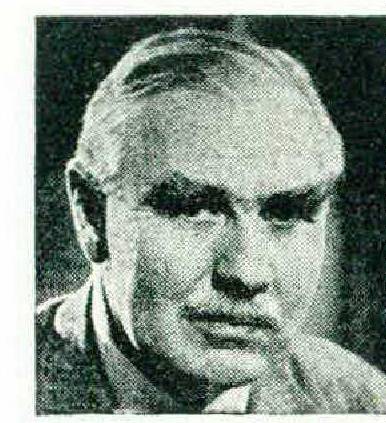
THE dragon’s teeth had been sown but it was ten years before the harvest would be white for reaping. From the beginning Ambassador Grew’s mission was hopeless. The event was certain but none knew it. President Hoover declared that the Japanese must quit Manchuria bag and baggage, but when told straight that that meant war, he recoiled. Chinese soil must be free, but as for war — that was unthinkable. Righteousness without responsibility was a policy perfectly suited to the temper of the people. America would be right but America would not fight. Yet without the determination to fight if we must, the expulsion of the Japanese from Manchuria was summer moonshine.
Until the end Mr. Grew did not lose hope, but he was acutely conscious how the cards were stacked against him. He knew how justly resentful the Japanese were against our immigration laws, and how a sensible attitude on our part could mitigate the insult without injury to our essential interests. When a tried friend of America like the philosopher, Dr. Nitobe, — married to an American wife, — could declare that until that insult was withdrawn, never again would he set foot on American soil, all fair-minded men knew that Japan had a grievance such as we should never stomach.
Mr. Grew realized also that in the Far East the Japanese had a case. The population was outgrowing its subsistence. Moreover Japan is an orderly country, and its close neighbor, China, was in chaos. Into Manchuria after the conquest Chinese peasants by millions flocked voluntarily, paying Japan’s heavy taxes but escaping the robbing and plundering of Chinese war lords. Yes, Japan had a case but her methods destroyed it.
Courage apart, the most important quality of an ambassador is insight. As a psychologist Mr. Grew is a natural. He understands men white and yellow. He likes to like them, and when he can he does, for it is sympathy that brings understanding, and understanding is the ambassador’s trade. But behind individuals lies the infinite problem of the masses. A fascinating thread of speculation runs through Mr. Grew’s journal. He comes to Japan in the era of Showa, Enlightened Peace, so named by the Emperor himself. Yet beneath the peaceful surface was a furious clash of irreconcilables: firebrands of young Japan, the War Party, the Army hot for “co-prosperity in the East,” the moderate Navy, the prudent and knowledgeable businessmen, politicians honest and not so honest, the calm of Buddhism, the yeast of Shinto, and over all the shibboleth of “immutable policy.”
Mr. Grew appraised the elements with a judicious penetration which will remain a classic example of the complete ambassador. Sir Henry Wotton defines an ambassador as an honest man sent to lie abroad for the good of his country. This ambassador of ours is a transparently honest man. Even his enemies testify to that. He spoke to the Japanese words of friendship, firm words of truth and wisdom. He would not evade or misinterpret. When truth was most difficult he told it. He held and still holds the respect of the Japanese.
In a revealing passage, Mr. Grew writes his conception of an ambassador’s duties. “He is an agent of mutual adjustment between the ideas and forces upon which nations act. International friction . . . is often based not so much on radical disagreement as on nebulous misunderstanding and doubt. How little of all this can be done by the written word without oral discussion is patent to all members in our profession . . . our language — indeed, all spoken and written languages — seems thin and superficial. We have to depend . . . on a sort of X-ray language which vibrates underneath the surface and is more effective than anything we can write or say. That . . . comes only from personal contacts.”
It is this X-ray language which underlies Mr. Grew’s judgment, and wise judgment it is. He pretends to no spirit of prophecy, but was it not at least a minor prophet who telegraphed on November 3, 1941, that national hara-kiri was not only possible but probable and that “war between Japan and the United States may come with dangerous and dramatic suddenness”? Simon and Schuster, $3.75.
ELLERY SEDGWICK