Everybody's Political What's What?
By
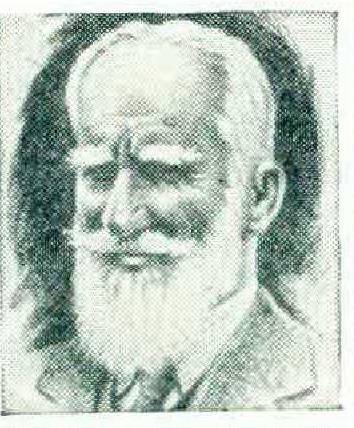
CONVINCED that Western society must become socialist, — in fact, that in large measure it already is socialist, — Mr. Shaw devotes this vigorous volume to the nature of the just state and its services to the common welfare. He is mainly concerned about the character of government contact with the non-political activities of the community, economics and religion, health and science, education and the arts. Discarding egalitarian democracy and liberalism, he envisions rule by an elite created through a system of examinations, with the role of the masses limited to criticism. For the guidance of future governors, he maps out, along the way, a program of legislation on subjects as diverse as vivisection, vaccination, prison reform, the Book of Common Prayer, and the nationalized land system.
Anything Mr. Shaw writes is worth reading; and the way he writes it makes reading effortless. Even on subjects of which he is ignorant, — children, the history of insurance, and the law of juries, for instance, — he is never foolish. But intelligence is not wisdom, just as knowledge of facts is not learning. And though there is much that is instructive as well as entertaining in these pages, this is not a wise book and few will read it all the way through with satisfaction.
The dramatist’s career is poor training for the political thinker. The striking presentation needed to project a point across the footlights becomes a handicap in tracking a concept down to its logical conclusion.
One who believes that “it is always necessary to overstate a case startlingly to make people sit up and listen to it” tends to become ashamed of nude ideas, and to clothe them with wit and parados by way of making them respectable. Here the author of Mrs. Warren’s Profession justifies the ecclesiastical suppression of Galileo, proclaims himself at once freethinker and mystic, and advocates a dogmatic system of education because “the State must tell its citizens lies of some sort to keep them in order.”
At the same time he vociferously protests against indoctrination by the medical schools, which continue to teach the doctrines of Jenner and Lister. Such writing is dangerous, first, because the attractiveness of the paradox sometimes obscures the necessity for resolving the contradiction; and more important, because there is no way of knowing which end of the paradox will be more pleasing to the reader. It would be unfortunate indeed if the proposal for reviving the Inquisition should overshadow the sensible things here said about the present war.
Nor is the reformer’s life conducive to an understanding of the people who are the subjects of political action. Mr. Shaw naturally is unwilling to trust those who, for a half century, have stubbornly refused to accept what he thought good for them, turning down alike Fabianism and vegetarianism. Instead his hopes rest on the Coming Race of Back to Methuselah, the supermen who will sit upon his governing panels of intellectuals. If humility were not so conspicuously lacking in the qualities of those who do good for their fellow men, it might drive them into the streets to make acquaintance with the human beings for whose benefit they legislate. Men whose contacts with the ignorant mob have been closer seem to have more faith in the virtues of “promiscuous democracy. Dodd, Mead, $3.00.
OSCAR HANDLIN