Victory-Garden Victory
By HERBERT COGGINS
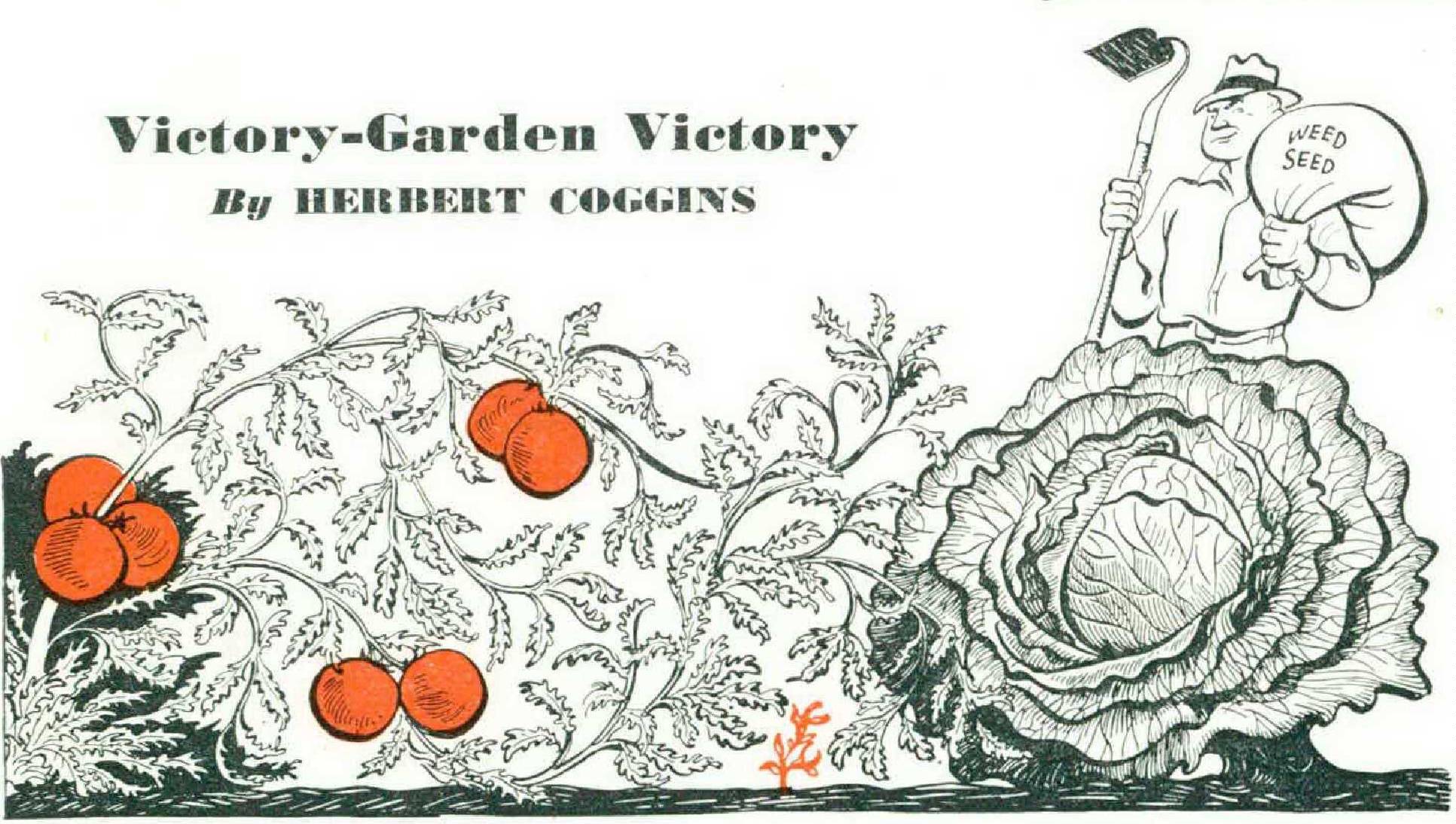
OUR whole present theory of farming is wrong. We coddle the things we want to grow. Instead of developing them and making them stronger, we undermine their resistance. We take from them all incentive for success. At the same time we combat weeds and unintentionally strengthen them and train them to survive.
I learned this from my first Victory Garden. I decided that the next year I would pamper the weeds and debilitate them, I would build up the stamina of my vegetables with adversity.
So the second year I left all the old vegetable plants in the ground, but I had the whole garden plowed up and cultivated to a point of luxurious fineness. I didn’t waste any money on vegetable seeds or plants. Instead, I gathered and planted row upon row of lusty young thistles and wild mustard and tarweed.
These I cultivated tenderly, treating them to the best fertilizer and watering them daily. At first. I weeded out any sprouting vegetables that tried to encroach upon them. My weeds shot up to unheardof heights, and it looked as if I might develop some giant varieties. Then, as I foresaw, they turned soft and droopy. My theory was correct. I had undermined them.
At the same time aggressive tendencies were developing in the old vegetables left in the ground. They not only resented my neglect, but they became angry with the weeds for taking their place. Their stalks and leaves shot up determinedly. I wisely pinched off the first sprouts to make the plants more combative. With that, nearly all last year’s roots and seeds, like a reserve army, rose up and forced their way here, there, and everywhere, and in many places crowded out the weeds.
The next season I was sure of myself. I planted great numbers of weeds and pampered them more than ever. They became sickly from the start. Beets, carrots, and lettuce ganged up on them. Squash developed a most devastating characteristic; winding their stems about the weeds, they choked them — and in some instances actually pulled them up by the roots. One plant reached out in many directions like an octopus and strangled five different thistles to death at the same time.
As anyone can realize, my plan makes farming so simple and efficient that the increased production might well have a bearing on the outcome of the war. In my own garden now, the great problem is to keep the vegetables within bounds.
With no labor on my part, the garden is so overgrown with vegetables that it is impossible to cross it without crunching radishes, carrots, and beets beneath the foot. Weeds are so scarce that I shall have to borrow some from the neighbors for next year’s planting.
But if the neighbors adopt my method, they will need all their own weeds. In any event, in the fut ure I must have a supply of noxious plants on hand as a threat and stimulus to my vegetables. So I am permanently setting aside a patch of my best soil for seeding mustard and thistles. I’m building a heavy wire screen fence about it. Otherwise the vegetables will get in among my weeds and destroy them.