Tenors Are Different
by
WHILE others in these columns occupy themselves with beautiful letters, novels, histories, and biographies, it is becoming more and more my happy duty to pay tribute to those works which are calculated by their authors to bring wisdom and more gracious living to large sections of the human race. Such messages of help and hope are by no means confined to the practical arts of living— how to be healthy and rich, how to pick a mate and divorce same, how to make friends and use them, and other similarly useful hints; they also bring to our enormous reading public the opportunity to absorb the arts and sciences painlessly and in a pure form.
In this connection, it is my privilege to pay due homage to the firm of Simon and Schuster. Some years ago, one recalls, they made it possible for the American public to become familiar with Art through the publication of A Treasury of Art Masterpieces. Many good Americans have neither the time, the money, nor perhaps the inclination to saunter through the galleries of Europe and America.
A Treasury of Art Masterpieces made it unnecessary for them to do so. It brought part, at least, of the galleries to them and told them — in part — what to think about the samples offered. Now Simon and Schuster have done a similar service for the potential American music-lover. Instead of insisting that he should spend his savings and his hard-won leisure attending grand operas, or even in listening to rare opera records, they have brought opera to him. Having dusted off their magic wand and waved it in the face of a million or so juke boxes, they now offer to an eager public A Treasury of Grand Opera, edited by Henry W. Simon, price $5.00 — and very cheap at the price. This fine volume, bound in a limp cover for the convenience of the pianist, and very attractively illustrated in color and black and white, contains over 300 pages of musical text, covering the principal overtures, arias, duets, and other numbers from the operas Don Giovanni, Lohengrin, La Traviata, Faust, Aïida, Carmen, and Pagliacci. It explains the plot or story of each opera coherently — no mean feat — and offers both the original text and translations into English which can be easily understood.
The outstanding merit of this volume, however, is that these operatic pieces have been presented with simple, ingenious piano accompaniments and that “the vocal line is given separately, and when the range is too high for the average drawing-room singer, the numbers are transposed to a lower key.”In this easy fashion, Grand Opera is introduced into the American Home, wherever that Grand Old Institution, plus a piano, still exists.
The more timid of our citizenry may view with alarm this possible invasion of the hearth. They may conjure up a sound-picture of Grandma singing and dancing Carmen’s number — you know, the one with the typical Spanish refrain “La-lala-lá, la-la-la-lá,” and fear the morbid effect such an aria might have on a young or, for that matter, an unborn child who happened to be present. They might well dread the hours dedicated to hearing Cousin Henry’s diabolic laughter as he interprets Mephistopheles to the family circle, particularly the passage where he “ranges over three whole octaves of demoniac ha-has” — or tries to.
A careful study of this volume convinces me that such fears are almost groundless. The family as a whole will be quite incapable of rendering these vocal selections. The range required, in spite of transposition, is too great. Only the talented member of the family — the one, male or female, who sings — will be competent to present them, and every family knows, or should know, what measures to take in that event.
Indeed, if I were to make one criticism of this really admirable book, it would be that, although concessions have been made to the drawing-room singer, far too little consideration has been given to that backbone of American vocalization, the ManWho-Sings-in-His-Bath. Perhaps the reader will allow me to cite my own situation as a case in point. The possessor of a fine, resonant voice which varies
with the seasons, from a basso cantante to a baritone robusto, I find that my repertoire is limited by the fact that few arias in grand opera are written for my particular range. It is true that this
range itself is limited.
From
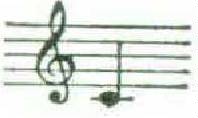
to
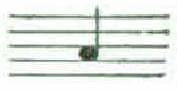
my
singing leaves little or nothing to be desired. Sometimes on a warm evening in the spring of the year, when the bullfrogs are booming, I can achieve a
very creditable
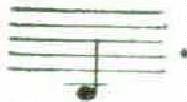
Anything lower than that
under any climatic circumstance — has a tendency to sound like a rather disorganized whispering campaign. On the other hand, I can occasionally, when the bathroom is filled with steam,
reach
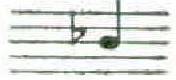
without
discomfort.
In fact, some-
times when I am aiming at
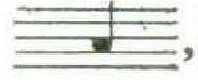
I hit
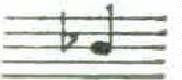
without meaning to, and vice versa.
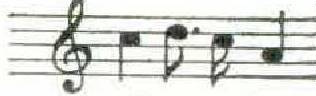
Toréador
But notwithstanding these abnormal extensions of my range, it is indisputable that my voice, good as it is, lacks vehicles for its best employment, particularly operatic vehicles. My fellow baritones will bear me out that, in leaving the Toreador’s song from Carmen in its original key, the editor of the Treasury has played us a scurvy trick. He actually begins our chorus — we usually pass up the dull preceding passages which are only suitable for foreign mountebank singers — with — which leaves us with nothing to sing except the single syllable dor. OrToreador dinarily, of course, we do our own transposing, and
our rendering, beginning with
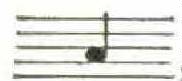
Tor
,goes:—
“ To-ré-a-dor! Tra la, To-ré-a-dor! To-ré-a-dor!”
(The final dor in this line is usually indicated by a facial expression rather than a musical sound.)
“Traa, la la la la la la, Boom, Boom, Boom, Tra la La la la fa. To-ré-a-dor, La la Boom!
To-ré-a-dor! To-ré-a-dor!”
It matters little that we are now provided with the words, both in French and English, if we are obliged to mouth them in an unnatural falsetto.
Or take another of my favorites: “Celeste Aida.” Mr. Simon has kindly altered the original and highly unpleasant key of B-flat to G, but where does that leave us? Frankly, utterly unable to complete our best — and often our only selections from Radamès’ solo — I refer, of course, to the first four bars: —
Ce-le-ste A-i-da, for-ma di-vi-na.
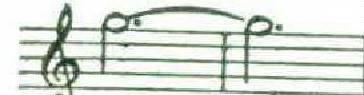
Even if we illustrate these lovely lines with appropriate hourglass gestures, we are desperately handicapped by the brutal fact that the da of A-i-da and the na of di-vi-na are both supposed to be
Frankly, Mr. Simon, this will not do. To
hit that note, really hit it, we need oxygen. Personally, I would feel the altitude like a too, too elevated flagpole sitter. I need make no further comment on this arrangement other than to point out that the solo — if continued, would end thus:
— with the entirely unnecessary notation above the musical text: “dying away.”
sol
What does Mr. Simon think we are? Coloratura
sopranos ?
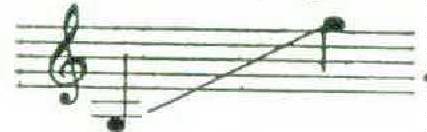
I am well aware that there is another school of thought as to desirable ranges for different voices. Mr. Ralph M. Brown in The Singing Voice (Macmillan, $2.50) gives the “safe" range for a baritone
as
In this we do not see eve to
eye; I know many baritones for whom this range would be virtual suicide. Otherwise I commend Mr. Brown’s helpful book to my fellow musicians. It is tilled with information, often couched in epigrammatic form. Thus we read: —
The mature female cords are approximately fivetwelfths of an inch long, and vibrate from considerably less than two hundred to much over eight hundred times a second. This is roughly twice as fast as the male cords vibrate. The average male cords are approximately seven-twelfths of an inch in length.
A tenor’s cords may be longer than those of a bass.
After this informative introduction, Mr. Brown advises the singer: “There is a slightly humorous but quite respectworthy saying: ‘Get on the cords and stay there.’ ”
Ah, yes, but how?
Our author quotes from the Encyclopædia Britannica to illustrate the difficulty of explaining what goes on inside the singer’s gullet when he goes from low to high: “There is a remarkable diversity of opinion as to what happens in the larynx when the voice passes through the various registers.” This is true. Mr. Brown is entitled to his opinions and I to mine. It is my contention and that of my school of bassi robusti that nothing happens to our larynxes, because we calmly refuse to change from our natural register to an artificial one, either higher or lower. Our voices may be muffled by sponge or towel, or our attention diverted by soap in the eye, but we never cross that point of transition between registers which “three hundred years ago Italian singing teachers termed il ponticello, the little bridge.”
In spite of the criticisms which, on behalf of Bathroom Baritones, I have felt it my duty to put on the record, these two books may be heartily recommended to amateur musicians and singers. Mr. Brown tells us not only about the singing voice, but about singers. “The lyric soprano is not always at first easy to diagnose,” he says. And he sounds a note of warning about mezzo-contraltos who have warm and sympathetic voices: “One may perhaps be pardoned seeming lack of gallantry, if he warns a young instructor against being led astray as to the kind and gentle nature of the fortunate possessor of this voice.” As for tenors, they are something else again: “A tenor is essentially different in nervous sensitiveness, energy, and reactions of mind and body, from a baritone or a bass.”It is certainly true that relatively few tenors excel as bathroom singers. They are different.
Even those of us who take our opera in a very calm, relaxed way, will find pleasure in Mr. Simon’s knowledgeable and pointed comments. Some of the perplexing moments like the one in Aïda when eighteen vocal lines are being rendered simultaneously are now made strangely clear. That basso profundo, upstage left, gesturing toward the hilt of his sword, who is seen, but not really heard, making Oompah! Oompah! noises through his beard, now takes on a rational significance.
I hope that another Treasury will be published in the near future to bring more operas to our homes.
I am still terribly confused by Rosenkavalier.