The Hollywood Bowl
by
The Golden Egg, by James S, Pollak (Holt, $3.00), is the story of the rise and fall of a Hollywood dynasty, the characters playing the principal parts being commonly alluded to in ephemeral writings like this as “thinly disguised.”I have always regarded this phrase as an insult to a writer: anyone who has ever tried to put a real person on paper knows why. The story is concerned with the growth of the motion picture business from its shoestring tackles at Fort Lee to the suburbs of Los Angeles, then a pretty corny locale, to the coming of sound, the building of great studios and vast distribution organizations, the glacier-like infiltration of the bankers, the errors, the sins, the triumphs, the decay, and the final terse bounce off the lot. It is told, as stories are, and insofar as stories like this may be, through the medium of characters. They are pretty stock, but that doesn’t mean they never lived. The splendor and delusion of tough Moe Korn and not quite so tough Louis Levinson and his son Willie are also rather stock by this time, as also are the wives and mothers, the sweethearts and paramours, some of them lush and some of them loyal, some of them tough and some of them true. There is the usual — or perhaps only usual to me — assortment of studio characters, technicians, hangers-on, grafters, and occasionally a guy with the gleam of vision in his eye.
Mr. Pollak has been around the picture business since 1930 and has probably lapped up as much of Hollywood as he can digest, and far more than he can put on paper. The book is written in what the jacket calls a “deceptive, last-paced, racy and unpretentious style.”I missed the deception, but I am a rather slow thinker. Fast-paced and racy are a matter of taste and definition. I found the style flat-footed. As for unpretentious, I think I should substitute unaware: an unawareness that the artistic use of language has been going on for a couple of thousand years. I do not ask for purple, but there is a lot of difference between a calculated economy of words and a ten-cent dictionary. Good writing, however spare, is like an iceberg. Only one ninth of it shows, but you know what lurks deep in the black water.
It would be insincere of me to suggest that this compilation contains no accurately reported speech, no fairly sharp little scenes, no credible events, no purpose, no hard work, and no lonely hours of doubt it would be equally insincere of me to suggest that the result comes much closer to literature than butcher’s paper comes to illuminated vellum. And by literature I mean quite simply any sort of writing at all that reaches a sufficient intensity of performance to glow with its own heat. That leaves out a lot of celebrated cold cuts that are still being peddled in full calf. It leaves out a great deal of contemporary literary art by whose standards Mr. Pollak might be proud to be judged. I can’t help that; neither can those of the professional critics who have long since given up the pretense of reviewing such work with any other real purpose 1 ban to exploit their own very considerable virtuosity in writing around things which are not really worth writing about.
That tips off what I am trying to do now. For my real interest is in the Hollywood novel as a type. It interests me because it has never been licked and I want to suggest my own idea of why it has never been licked. It is invariably about the wrong things. The novel (I don’t care how long it is) deals with persons in confined spaces, just as does the play. These persons, the characters, are oversimplified for emphasis and oversharpened for effect. That is to say, they are played in an artificial perspective. But the instant you make a huge and complicated industry the background of such an affair, your perspective is lost. You cannot write a novel about United States Steel and at the same time deal with the week-end binge of a third vicepresident. You cannot make a close-up and a long shot in the same “take.” There is no lens that will photograph it. And you cannot show the inner workings, the superb skills, the incredible idiocies, the glory, the opulence, the grandeur and the decay, the poignant humanity and the icy heart - lessness of this magnificent yet childish colossus, the movie business, in the terms of a hot-pants actress, an egomaniac director, a snide executive, four frantic secretaries, and a sweet young thing in an open Cadillac.
You can only write about the waste, and the waste is not the story. The Last Tycoon, by far the best of them all, most clearly (perhaps for that very reason) reveals this futility. Monroe Stahr, its hero, is magnificent when he sticks to the business of dealing with pictures and the people he has to use to make them; the instant his personal life as a lovehungry and exhausted man enters the picture, he becomes just another guy with too much money and nowhere to go. Perhaps, had Scott Fitzgerald lived, he might have written the story and thrown out the nonsense, f do not think so, but the hope lies with his dust.
The story that is Hollywood will some day be written and it will not primarily he about people at all, but about a process, a very living and lerrible and Iovely process, the making of a single picture, almost any hard-fought and ambitious picture, but preferably a heartbreaker to almost everyone concerned. In that process will be all the agony and heroism of human affairs, and it will be all in focus, because the process will be the story. Everything that matters in Hollywood goes into this process. The rest is waste. Above all the vice is waste, and the vicious people, of whom there are many and always will be, because Hollywood is starved for talent, for a single facet of a single talent, and will pay the price in disgust, because it has to. Why should it not? The theater always has, and the theater is a pygmy compared with Hollywood.
To Scott Fitzgerald alone, so far as I know, goes the honor of having written a few brilliant, literate, and incisive chapters that showed where the story was. To Mr, Pollak goes the satisfaction, and I trust the reward, of having written 493 pages of what some persons may regard as absorbing fiction. As a fellow oarsman in the long galley I regret that I may not be numbered among them.
About the Author
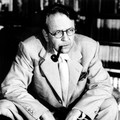
Raymond Chandler was an author and a screenwriter. He is best known for his detective novels and their protagonist, the private detective Philip Marlowe.