Tourist in Ireland
TRAVEL
ByGRIFFIN BARRY
I TOOK ship for Eire by way of England last March, the only route available, and in the only craft. Once she had gone on world cruises, lately had been a troopship, and now the hoofprints of a returning army were on her. Furniture sagged, paneling was notched; but on this eastward voyage the tourist trade put out an early tendril. A few of us were civilians, out to rediscover a cockeyed world. We paid $176.50 for a single eastward passage; no roundtrip ticket was available and a warning was given that Army priorities would block our way home until late in 1946. A thousand war brides, many with nursing babies, waited in Europe to take our places on the way back.
Visa applications had been received doubtfully. Errands had to be made very clear; wartime suspicion still held as to who traveled and why. Moreover, tourists are notorious consumers, and consumers’ goods were in short supply everywhere. So was the American dollar. Even in the late neutral countries, relatively well stocked, it was an open debate whether to part with goods that a rationed public wanted, or to annex as many tourist dollars as possible for uncertain days to come.
I had seen tourist literature from Eire that beckoned, decidedly. The Irish Tourist Board is not the Irish Ministry for External Affairs however, though both are government organs. Twice at my expense my credentials were cabled to Dublin, once from New York and once from London. I waited a fortnight, in London for the Dublin bureaucrats to get together and was then grandly offered either a $2 visa or a $10 visa, one for three months, one indefinite. I crossed the Irish Sea in a local rush of the rationed British, bound for the Irish larder.
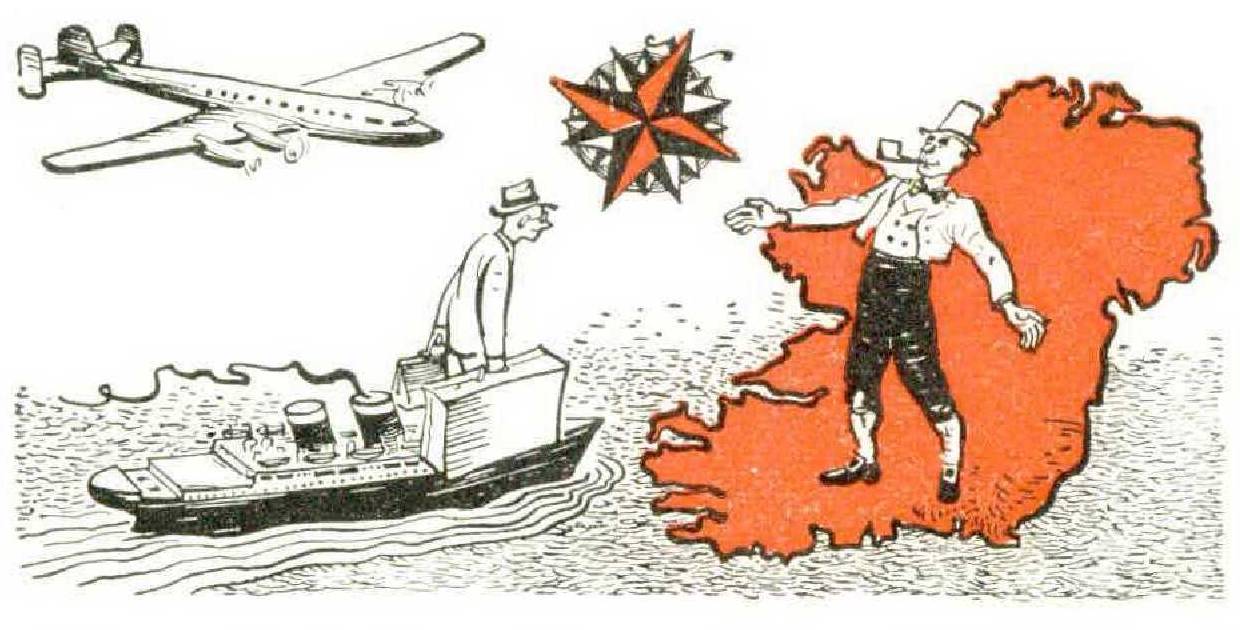
One watched the rise of world circulation from Dublin thereafter. In May the Argentina put into Cobh on her first post-war call. Passengers had paid $225 for a single journey on this ex-troopship, somewhat cleaner than mine had been. Soon other carriers, released by the United States Army for the eastward trip only, turned up at Irish ports every day or so, American faces at the rail. The Dublin branch of Thos. Cook & Son extended its work hours. The American Express would reopen, someone said. Pan American Airways quoted a round-trip rate of $515.43, New York-Shannon Airport—more than $100 under the round-trip rate New York-London, fixed by the Civil Aeronautics Board. Eire’s dissent from that international pact was showing results. In September, from a third to a half of the transatlantic passenger traffic terminated on the Shannon, I was told. Passengers to other points in Europe often pause in Eire, too, profitably to the Irish.
Other visitors than American put in an appearance as the summer came on — early birds on a westward flight. The Europeans were slightly gaunt — at first. Clothes were pre-war, until the Dublin shops were visited. Escape from this or that immured nation had been early for these privileged people. Switzerland, though stocked, is costly to stay in. Portugal and Sweden are not on the main thoroughfare. Eire lies between hemispheres — a crossroads. Paris became three air hours away in July as the lines linked up; New York remained at about twelve. Three transatlantic American lines competed for custom. Five cross-ocean European lines, subsidized by their governments, scheduled stops at Shannon Airport in September.
Rationed England will be uncomfortable, while confusion lasts in Europe, for a world crossroads community. But one was growing in pretty Eire.
Here are a few findings: —
Controlled hotel rates, moderate; food bountiful and coarse; a peasanty comfort in most hotel rooms but no heat — and even in summer look out for a chill mist that reaches the bone. Bus or train transit everywhere but to the more remote boglands, in equipment that very largely dates from an era preceding the last world war but one. Private motor transportation, too, on main roads that are fairly good, though beyond these the going is rough. A Dublin “Drive Yourself” concern lets you have a vehicle, for not less than a week, at a weekly rate of $34 to $42, depending on the size of the car. A roomy limousine is at your disposal for 27 cents a mile. (Make your own bargain with the chauffeur for his keep while you are en route.) You can bring in your own car. Gasoline sells at 22 cents a gallon now. The monthly ration is at the rate of 20 gallons for a 16 hp. car.
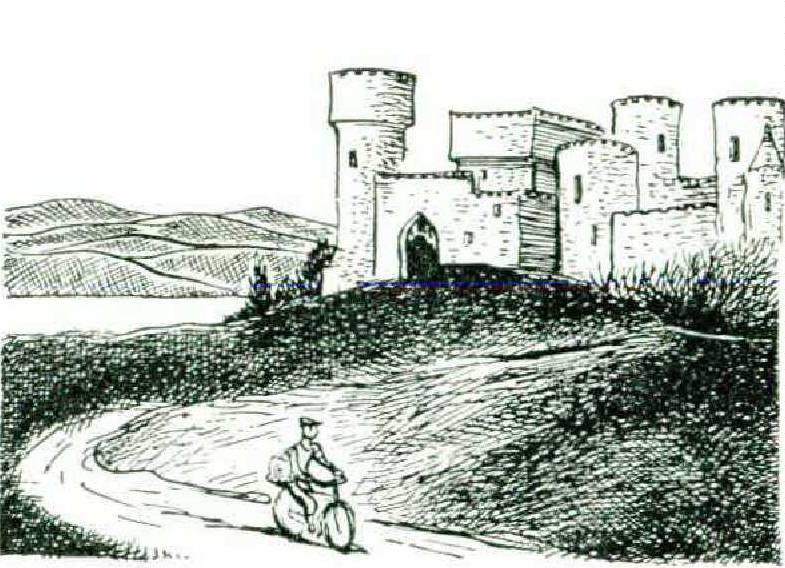
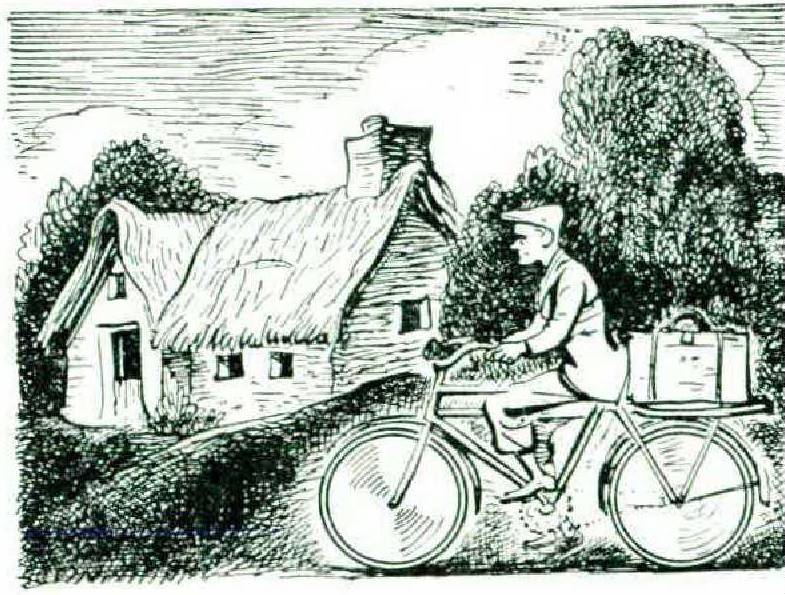
If you would see the country as the Irish do, bring a bicycle or rent one here. Cyclists are on every road. Customs will make sure, of course, that any vehicle you bring is not for sale.
Society is stratified; the nineteenth century is still with you; physical equipment is back there, mostly, too. In places the scenery is heroic. History (Irish) is unforgotten. From recent eruptive phases of the world’s history, all but a few eyes are turned away. The government intends this isolation; it has been skillfully managed. Note, along with that, an eagerness to get at the foreigner’s mind and person. Invitations from strangers to share their own pockets of comfort are not unknown when, on a public vehicle, your accent identifies you. Payment will be expected not in money, but in talk. Note the prevalent bright eye and red cheek. Not all the Irish eggs and meat and butter were sold to England during the war. For some time butter, tea, and sugar have been the only food rationed — and liberally.
A confusion-worn London friend warned that in Dublin I might find myself unloading possessions from train to hand-truck and pushing the lot to a hotel. Not so. A taxi stood in rank; bags and a trunk were conveyed across the city with their owner for $2.20, including tip. I had wisely reserved a room through a London tourist agency. It turned out to be in a clean middle-class hotel; prices came to $1.90 a day for bed and breakfast, with other meals at 60 to 90 cents each. Hot water flowed into a room basin, a hot bath was available down the corridor, the bed was huge and soft. Breakfast, ample and sometimes hot, I had in my room without extra charge. I booked a room for English friends at the best family hotel in Dublin (the Royal Hibernian) for a July holiday. That weekly rate was $36 and covered three meals a day out of an international cuisine.
In hotels which the Irish frequent, ham or bacon and eggs, coffee or tea with cold toast and jam, are the time-honored breakfast; flanks of the cow or sheep invariably appear at other meals, with insufficient vegetables, badly cooked. (Don’t expect much of any Irish cooking.) A middleclass Dubliner pays for his restaurant dinner about 55 cents today, and he adds a 5-cent tip. In the two fancy Dublin restaurants— one French, one Austrian — a tasty repast, offering fresh salmon or game in season, will cost you between $1.50 and $2.75 to $3.00.
Wine is obtainable, from standard marks like Chateauneuf-du-Pape at about $3.00 a bottle to a memorable Burgundy for which I paid $3.80 at the old Shelbourne Hotel in the capital. Sherry and port are plentiful. At any bar you’ll get an outsize portion of Irish whiskey, but not much Scotch, for 40 cents. Guinness’s Stout, the bitter yeasty beer that has gone round the world for generations from a Dublin brewery owned by a family of peers, costs 11 cents a bottle.
Here are the chance events of a tourist’s day in the summer of 1946 — leading, as things turned out, to a view of national preparations for the tourists of 1947. The biographer of W. B. Yeats had given us tea in his walled garden. The invitation came on casual acquaintance, usual in a country where tradition is looked to and hospitality is the tradition. We emerged on a hill overlooking Dublin, wanting supper.
A sign pointed to a pretty whitewashed farmhouse that called itself a hotel; from this garden the voices of English trippers arose. These we avoided. However my companion, a native of Cork, came upon one of the friends who await Corkmen on all the corners of Eire. He was a Dublin doctor, son of a peasant farmer, like many newly successful men here. Up came the farmer. All his life he had harrowed this hilltop. With him was an American son, also doing very well, just in by air from East 58th Street, New York. Father and sons were hugely proud of one another. Whiskey wetted the meeting of two Americans, myself and the other. Soon all were borne in the doctor’s car to a “club” on the next hill. There perspectives opened as to the operation of assisted free enterprise in 1946 Eire.
My neighbor at dinner, an hôtelier who acts for the government, explained. Early this year the Dail voted £125,000,000 to establish — particularly in Eire’s sightly parts — hotels that will be tourist bait. Standards were set up and circulated, training schools opened for hotel workers. The Dail appropriation is drawn on by businessmen who can convince the Ministry of Industry and Commerce that an enterprise will pay for years to come.
So far, mainly luxury establishments have drawn the subsidies. Six are open. Next year there will be ten or twelve more. We were dining at Kilcroney Club, the one nearest Dublin. It is a many-roomed chateau, gaudily designed in the Victorian age; it has a wide-stretching sea view, a golf course, a swimming pool, grass tennis courts. A small initiation fee makes the place a club. Foreigners pay a monthly fee of $12.30 for the use of the amenities; for a weekly $42 a room and good meals are added. Rates are pegged at that level in other top-grade establishments. The enforcing agency, with legal powers, is the Irish Tourist Board.
The ITB stretches a wing over the historical estates and over the country places of the departed rich. Where legends, old-fashioned private elegance, and modern comfort have not yet met, they are brought together. On the Lake of Killarney, Sir Maurice O’Connell, Bart., descendant of the “Liberator” of the last century, has turned over his mansion and estate. There’s a delightful smallish place called Cahir House Lodge on the salmon-packed River Suir in County Tipperary. In a corner of this parked estate the owner, a Londoner, still lives and allows fishing rights to the hotel guests. A friend recently paid 90 cents for a bottle of Liebfraumilch 1934 there.
There’s Ballynahinch Castle on the Galway coast, where the Indian cricket champion of another day, Ranjat Singh, once filled his fifty bedrooms with guests. The country was Ireland then, and a playground for the British Empire’s rich men, a state of affairs to which Eire is returning. Ashford Castle at Cong, also in County Galway, is a restored medieval pile whose owner, the Earl of Iveagh, incontinently fired the game beaters that wanted more pay on the eve of a hunt arranged for George V and, in the twenties, turned over his estate to the nation. On the northwest coast of Connemara, overlooking the Atlantic, is Renvyle House, where the proprietor is Oliver St. John Gogarty, the Dublin wit and surgeon. Dr. Gogarty built the hotel with the compensation he received from the Cosgrave government of the twenties for the burning of his country house by the Irish Republican Army — whose parliamentary leader, then in hiding, was Eamon de Valera.
Seclusion is one thing, mobility another. It is the mobile who get to know the Irish. For their accommodation the Irish Tourist Board registers modcrate-priced hotels through the country. Not many good hotels in Eire are off this register. Often a student from the government schools for hotel workers supervises these places. I took a day’s ride — $3.20 worth — in a cross-Eire bus recently; talkers abounded and I drank deep of the Irish mind. At night I put up in what they called the station hotel. ITB-registered, in a Mayo market town. Bed and breakfast came to $1.70, daily rates with all meals were $2.90. Station hotels in the United States and Britain are grim places, but in Eire they are the best. A chain of them was built, shrewdly enough, away from the railroad yards, years ago by the railroad companies.
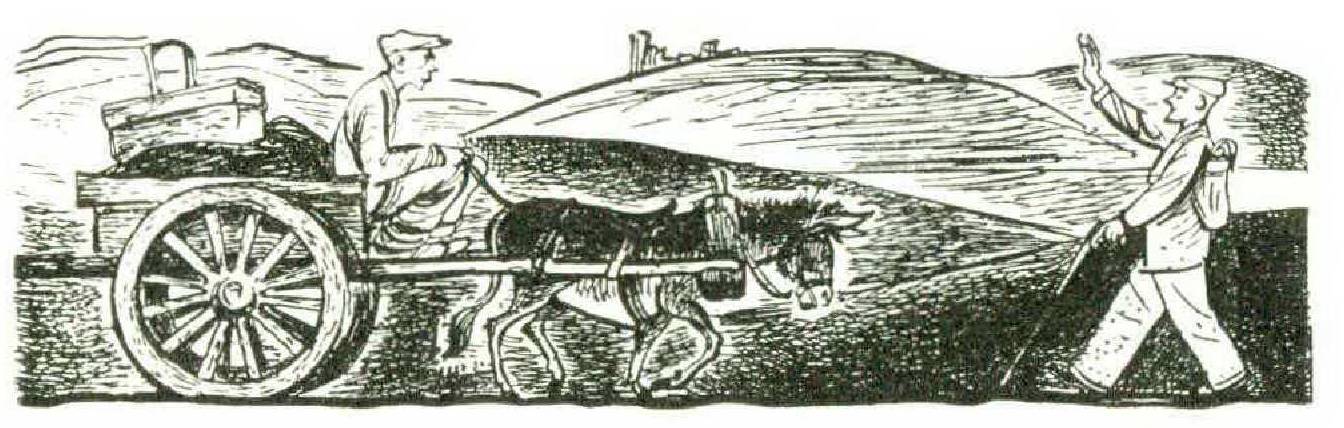
Urban intelligentsia show a marked homesickness for the mud always, and the ould sod stays on Irish boots. Writers and painters flock to this country in the summer — to the western counties, facing the ocean, where life is timeless and the people are poor. Tiny green farms are at your back and in front is sheer Atlantic distance, peered into from great cliffs. The station hotel at Mallaranny, County Mayo, became a Poet’s Pub in 1946, cycled to in the evenings over the long hills. Writing and painting folk lodged with cottagers along the Mayo and COnnemara coast as far as Achill Island, a thrust of land far to the west, paying $6 to $10 a week in 1946, all found. City people fetched water from a well, watched a woman with features stylized like a face on a coin cook over a turf fire. Turf burns silently, without a whisper. The woman wore a skirt spun from her own sheep, spoke a strange English thickened with Gaelic.
One Irish trick, known to their poets for ages, is a sudden flight into a forgotten dimension. Hardly any newcomer is immune.