The Peripatetic Reviewer

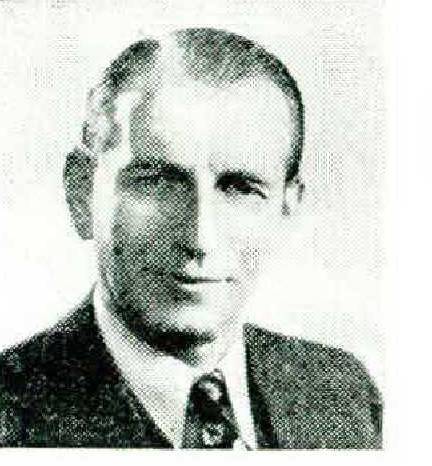
BY EDWARB WEEKS
THERE is a great pond not far from our summer house, whose changing moods it is a delight to explore. The body of water is surrounded by conifers out of which tower the landmark pine, and is accessible only to those who will bring their own boat. No house, dock, or open road mars its shut-in tranquillity. Because it is little used, it is well used. Here are no eggshells, broken bottles, and stray papers to remind you of those American travelers who love to litter. One deeply wooded point (known to us as Pulpit Corner because of the angler who still-fishes there for hours in his little high-seated skiff like a pulpit) has a rock-laid fireplace, and chunks of birch neatly cut and stacked for the newcomer. The few who use this water do so with vigilance and with the apprehension that it cannot remain forever inviolate Irom the metropolis which lies only twenty-eight miles away.
With canoe lashed on the top of our car or in a borrowed truck, here we have come for innumerable family picnics. Noon is a good time to start, but even so, the hours are not long enough to satisfy the anticipation which begins to grow in the mind the day before. We lower the canoe gently into the little path through the reeds; we mount the spinning rod and the fly rod; Twelve takes his place in the bow; the mate seats herself against the thwart, with the lunch basket and Mickie, the spaniel — still shivering with excitement for all his sixteen years: the worms and the fishing box are placed under my seat; and then we probe and battle our way through the path and out into the miniature lake. Mickie, hindquarters trembling, peers intently over the gunwale as the water slides back. When he lets out a half-eager yelp he speaks for us all; whereupon Twelve, who is just as eager as he is, pokes him with the paddle.
With three years’ familiarity we have imagined the ground plan of this hidden water. Along this left bank the white perch have their habitat (or had — have they moved?); Pulpit Corner is the private hunting ground of one or two big bass (we have seen and hefted a 4½-pounder landed by the Pulpit Corner fisherman); half a mile away among those rocks lie the bass beds; the yellow perch are thick in the marsh water by the Outlet; the pickerel congregate in White Pine Cove; and there are one or two other dens — which I would rather not disclose — where my flies have disturbed the sun-andshadow siesta of the sly and cautious bass.
This body of water, less than a mile long, is full of the unexpected. I have yet to learn the name of the small scarlet high-stemmed flower which rises close to shore, and whose reflection is so lovely against the green. I have yet to know with any certainty which fly is the best for this water in July: I have seen a big bass come clear out of water for my Gray Ghost, and again and again I have seen bass follow that fly when I had found their lair, but too often it is the pickerel, not the bass, which takes. I have seen the entire finny tribe put down by a thunderstorm and remain dormant in those tranquil hours which follow. I have learned that the excitement of fishing, like that of lecturing, shrivels the stomach, and that the sandwiches taste like sand (except to Mickie) if eaten in the canoe, while if eaten ashore the fever to be out paddling makes two of them a meal.
I have been caught — alone this time — in one of those magical sunset hours when what seemed like a million fish were feeding on the flies which strewed the calm water, and when no artificial fly I had to offer distracted them for an instant. For solace I have gathered the waxy water lilies at the day’s end when the big one got away, and more than once, as we turned into our home path between the reeds, have disturbed in that warm shallow water a fish which would have gladdened our hearts could we have found him earlier at his address.
As we fish and picnic on the pond this summer, our campaign for Mr. Smallmouthed will be guided by that wise and well-written new book of Ray Bergman’s, With Fly, Plug and Bait. Here is the kind of experienced thinking which brings you to a new understanding of the topography; here1 is advice calculated upon the time of the year, the temperature of the water, and the temptation of the lurker. Again and again Mr. Bergman cautions the angler not to rush. Play the plug or the fly more slowly. Let that wise big-shouldered bass make up his mind that here is something to follow before you draw it. away and thrash out in a new direction. Like the best of our angler-authors, Mr. Bergman enjoys writing. He brings to his pages not only the incidents of four decades of skillful fishing, episodes to make your mouth water, but also the alertness, the forethought, and the fresh expectancy with which every fisherman should come to the water in ihe prime of the year.
Southern demagogue
It was my fault that I missed Robert Penn Warren’s best novel when it appeared. Friends had told me long before it received the Pulitzer Prize that All the King’s Men was an exceptionally well drawn narrative of the South; that it. caught, with far more accuracy than It Can’t Happen Here and Dos Passos’s Number One, the aspiration, the corruptibility, and the sheer cussed vitality which go into the making of an American demagogue. Belatedly I took up the book, and have found it a story to be enjoyed in sips like a julep, not in gulps.
Writers, like David Cohn, who once worked in the Kingdom of Huey Long, while acknowledging his damage and his vulnerability, have added that he rose in answer to a local need, that in a measure he did serve the poor and ignorant, and that if he had been aimed right, if he had been helped instead of thwarted by those he had to buck in his formative career, he might have been a better public servant. It is this mixture of the good and the bad which Mr. Warren makes so plausible in theriseofW illie Stark, the back-country lawyer in a Southern state who is flimflammed by the boys in the smoke-filled room in his first earnest, bid for political office. Willie wakes up to realize that he knows the needs and can speak the language of the electorate far better than those who have grown old in office, so he goes out to settle his score and, when he has won the election, to make the state over in his own likeness.
Willie has the sympathy of a missionary and the lust of the hot-blooded. He has a rhetorical power which can be coruscating and magnetic. He has an eye for any woman and a spectacular command of the mob. With his remorseless love of power and his cynical knowledge of men, he proves to be irresistible in his home state. All of this is a familiar story and one which could easily have been overdone, but in Air. Warren’s skillful human treatment it comes to us with the force of something authentic and dangerous; it enlarges our knowledge of a demagoguery which feeds too often on the susceptibilities of our home-grown democracy.
The rise and the reign of Willie Stark are seen through the eyes of Jack Burden, a seedy, cynical journalist who is one of his inside men and who, in attaching himself to Willie, has rebelled against the semi-aristocracy of the big houses set. back in the magnolias and oaks of Burden’s Landing, where he was born. Jack’s nearest and dearest, his hollowcheeked, man-hungry mother; his Roman senator, Judge Irwin; his boyhood love, Anne Stanton; and his best friend, Adam, the great surgeon-to-be — these are creatures of romanticism drawn too evidently from the “Colonel Massa” school and made to seem doubly romantic through the inverse cynicism of Jack’s observations. All of them are to me highly colored and all of them slightly incredible when compared with such a sinister trio as Willie Stark, Tiny Duffy, and Sadie Burke.
I think Mr. Warren was wholly right in employing the romantic as a counterfoil to the ugly realism of the politicos, but I wish he did not indulge in it to such great length. The long account of Jack Burden’s Ph.D. thesis is an instance of this romant ic overindulgence. It. contributes nothing to the central theme and, as it rambles on, it becomes one of those egocentric disquisitions which mar the pages of Thomas Wolfe. All the King’s Men would have gained from a higher power of selection; it would have gained, as Sinclair Lewis has pointed out, from the open recognition throughout tboston that there were also Negroes in the Kingdom of Willie Stark. But take it. for what it is — a superb portrait of the Southern demagogue, a man and a type, who has it in his power to do irreparable harm to the country we love — and you have an exceptionally good novel.
The brass hat
In his widely read t rilogy about Captain (later Sir) Horatio Hornblower, C. S. Forester took us back to the days of the British Navy of Nelson, to participate in the career of a shy and frosty officer who had much more charm for the ladies than he ever suspected, and much more naked courage in handling men than he ever dreamed of, the night before his battles. The Hornblower stories establish Forester as one of the ablest sea narrators of our time, on a par with Masefield and Nordhoff and Hall. Indeed, the success tended to obliterate for American readers the very real value of his earlier novel The General, which I am glad to say has been recently reissued.
The General is the most stern and unimpeachable picture of a brass hat to emerge from the First World War. In its story, it sums up the half-affectionate and half-condemnatory attitude of the British public and, more particularly, of the British volunteers of Kitchener’s Mob toward the traditional officer of the old British Army unable to adjust himself to the conditions of modern warfare. General Curzon, the hero of this story, is a kind of older brother of Captain Horatio Hornblower: he is a fine Cavalry officer of the old school, dedicated to his profession and possessed of all military virtues except a nimble intelligence. In short, he is brave and woodenheaded, where the young mariner is brave and resourceful.
For a long time luck favors Curzon. He wins his first reputation and his D.S.O. in the Boer War, when, groggy from a wound, he has the good luck to lead his squadron to the unprotected flank of the Boers. In 1914 he is part of the Cavalry Brigade which is almost annihilated in the retreat from Mons, and in that action he wins his second reputation for holding on at all costs.
Curzon’s rise from Major, in 1914, to Major General, and then to Lieutenant General by the Battle of the Somme, is accomplished partly by reputation, partly by the superb care he takes of his troops, partly by his ruthless discipline, and partly by his lucky, if awkward, marriage. But his incapacities as a soldier are as close to the surface as they were when he was twenty. His love of horse and lance, his inability to grasp the meaning of machine gun and tank, are more than the indictment of a brave woodenhead. Tins story is an ironic, affectionate, deeply probing analysis of that military mind which, by its bullheadedness, lost England the best army it had ever trained and which, when the Germans broke through in 1918, had no other answer than to mount its horse and ride straight to suicide at the closed crossroad.
The target of this criticism was once essentially British, but there is a wider interest in it for us all now.