Reader's Choice
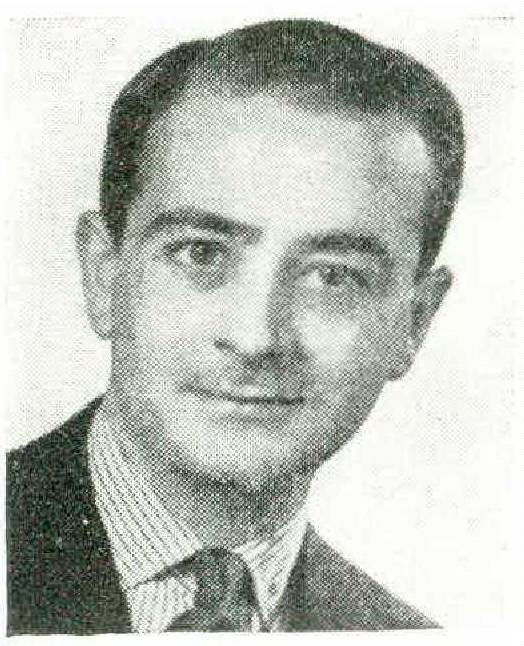
A NEWCOMER certain to create a stir has just appeared on the scene. Norman Mailer’s first novel, The Naked and the Dead (Rinehart, $4.00), strikes me as being by far the most impressive piece of fiction to date about Americans in the Second World War. The author, a veteran of the Pacific, is twenty-five years old.
Mailer’s concern is with the individual and the way of life that formed him. He uses the shocks and tensions of war as a corrosive agent which bit es through to the hard core of truth about men. The Naked and the Dead is vastly more mature, intellectually, than the war novels of the twenties, with their romanticization of chronic mutiny. Artistically, it rates comparison with the best of them.
Out of the campaign for the Pacific island of Anapopei, Mailer has forged an electrifying narrative whose descriptive passages stretch your nervous system on the rack of war. You are immersed in the unmentionable dread that permeates the convoy, sweating out the night hours before bombardment. You’re on the beach, shuddering and cursing as the mortar shells come slapping down like a fly swatter. You’re in Sergeant Croft’s jungle foxhole, numbly firing a machine gun at waves of howling Japanese weirdly etched in the lightning of a flare. These episodes and others are realized with a terrible intensity: the cold-blooded killing of a prisoner; a drunken hunt for souvenirs in a corpse-strewn cave; a reconnaissance platoon s protracted, nightmarish battle with jungle and mountain, with sickness and tort uring fatigue and a dying man who must be carried back. This is an exceedingly tough book. The soldier s vocabulary, some of the combat details, will make t he squeamish reader wince.
Mailer’s signal achievement lies in the characters he has created, a dozen superbly individual figures. Each of them is sharply visualized. Each is gradually synthesized, through speech and conduct, through their unspoken thoughts and emotions, under varying conditions of stress. What formed them, what motivates them, are brilliantly disclosed or suggested in their personal histories (reminiscent of the profiles in Dos Passos’s U. S. A.), which are interpolated between chapters. There’s Gallagher, “the revolutionary in reverse,” an litterly convincing portrait of the smalltime crackpot fascist; Polack, dead-end kid and petty gangster; Martinez, nicknamed “Japbafi,” the little Mexican whose fierce pride has to wrestle with the know ledge that his nerve has cracked. To these and the rest of them, war has given a. community of hates and fears, a boundless resentment, and, though they don’t know it, a compelling sense of duty.
Mailer’s key figures are Major General Cummings, Lieutenant Hearn, and Sergeant Croft. Cummings, a military genius, is the intellectual prophet of a new, icily reasoned American fascism, which will reach for power masquerading as “conservative liberalism.” He is the nearest thing in American fiction to the Commissar in Koestler’s Darkness at Noon. Expounding his credo to Hearn, his aide, he declares: “This is going to be a reactionary’s century.” The present machine techniques demand a consolidation of power, “and with that you’ve got to have fear, because the majority of men must be subservient to the machine. . . . The natural role of twentieth century man is anxiety.” He has his officers fitted into a “fear ladder,” and exploits privilege to “break down” the men. Cummings’s goal is total cont rol. Enable to convert Hearn, he humiliates him atrociously, then sends him out on a dangerous reconnaissance at the head of Sergeant Croft’s platoon. Croft is the born killer, filled with impersonal hate, the future vigilante of the general’s new order.
Hearn, renegade son of a Midwestern nouveau riche, has been the Manhattan-out-of-Harvard radical dilettante. Now, disillusioned, conscious of his own deep impulse to control men, he feels empty of belief. Cummings suggests the clue to his contradictions— a perfectionist who wants to remake the world in his own image, “Not a phony but a. Faust.” These three figures and the men under them (the anonymous masses’) are embroiled in a subtle conflict, resolved in an unexpected and ambiguous conclusion, which, I think, reflects the ambiguous currents of our time.
The Naked and the Dead has its faults: the structure is slightly anticlimaetic; the men’s talk, laden with expletive, tends to grow repetitious; the story is overlong — 721 pages. What matters infinitely more is that it is a work of remarkable power, of amazing penetration, both into people and the determining forces in American life. Mailer has made his start with one of the most exciting American novels published since the end of the twenties. No one in search of first-rate fiction should pass it by. The Naked and the Dead is not just a good book, it’s almost a great book.
A-bomb on America
The scene: a cottage in New England. The time: tomorrow. Mark Ferry, his wife Bianca, and two neighbors, casually turning on the radio, hear that an atom bomb has fallen on New York. This doomsday event is the opening of The Invaders (Duell, Sloan, and Pearce, $2.75), a novel by Waldo Frank.
A short time earlier, Mark Ferry, renowned authority on city planning, had retired to do some hard thinking about the causes of the world distemper. It was his belief that atomic destruction was implicit in the logic of present leadership and instil ut ions; that the atom bomb was the expression of lethal elements deeply rooted in our private lives. When the bomb falls, Mark’s former wife, Mara, phones to ask shelter for herself, their teen-age twins, and her lover. Bianca, terrified of Mara’s vengeful hate for Mark, begs him to refuse. Here, Mark perceives, are the very elements — fear and hate — destroying the world. If responsibility for them is acknowledged, can they be transformed with love? Mark opens his home to the invaders.
Such is the situation dramatized by Waldo Frank. Tableaux of New York at the moment of the bomb blast—interspersed through the narrative — provide an elemental counterpoint to Mark’s private crisis. That crisis is heightened by the arrival of another visitor, Clare Locke, a disfigured war veteran, once in love with Bianca.
The Invaders has serious blemishes. Its whole mise en scene is awkwardly contrived. There s a droll pomposity about the notion that Mark, rusticating in connubial bliss, is “gathering the data” for the salvation of mankind. It’s transparent that the author, not the atom, is responsible for the visitors’ convergence on the cottage. The characters, with the exception of Locke, the young man frozen in bitterness, are not quite credible, not quite life-size. The writing is flecked with sententiousness; and talk such as Bianca s belongs better on the lips of Helen Trent.
For all this, The Invaders is a book which I found worth reading. What gives to it more force and interest than the average novel is not simply the urgency of its theme, but its sustained moral tension. Mr, Frank’s reflections—on “the dialectic of fear,” the “separateness” of modern man, his flight from the reality of pain and death, and the flowering of the death-wish in disguise — are a challenging reading on the troubled text of our time. These ideas take concrete shape in the private dramas between the protagonists, in the swirls of love and hate which form the storm center of The Invaders. And the several human dramas are drawn together in a destructive climax of awesome intensity, from which Mark wrenches the understanding he has sought.
Babes on the air
All hell breaks loose in another fictional cottage, but this time it has to do, not with the A-bomb, but with a balm for babies. The fracas has been devised by Marion Hargrove, whose blithe report on Basic Training endeared him to two and a half million readers, thereby placing him in a tie with another Army man, General Lew “Ben Hur” Wallace, as fifth best-selling author in American history. (Dale Carnegie runs fourth, Fannie Farmer sixth.)
In Something’s Got to Give (Sloane, $8.00), Mr. Hargrove treads on well-plowed territory: the radio business. He adds nothing new to the folklore of hucksterism, nor is his humor us pungent as in See Here, Private Hargrove; in fact it’s generously laced with standard gags and gambits. Something’s Got to Give is inconsequential fare. But Hargrove’s geniality is contagious. His wry sanity, his freedom from pretentiousness, are pleasantly bracing.
Joe Dobbs and Chuck Bartlet are refugees from well-paid jobs in radio and movie advertising. Experience has convinced them this de luxe world is a concentration camp tenanted by psychopaths. They want no part of it or of the Big Money. Each is snugly fitted out with a home in the country, a battered automobile, a wife and two babies. Their supreme ambition is to duplicate in civilian life the ideal social status they achieved in the Army. What they aspire to be is civilian corporals.
Although neither earns a corporal’s stipend — Joe sells an occasional murder story, Chuck just writes — both of them are vastly contented. Their wives, Carolyn and Betsy, are not. They talk wistfully of “more security,” deep-freeze machines and such. The shenanigans begin when Carolyn wakes up with an idea for a radio program which will earn them all a mint: she and Betsy will discuss their baby problems on the air for the benefit of eight million young mothers less resourceful than they are. All the husbands need do is help to sell the program. Chuck and Joe eventually agree, with wild reluctance. The selling proves a cinch. T. Cranson Lvdecker, maker of a baby lotion, signs up the quartet at $8000 a week — on condition Joe writes the program.
“Airing Our Children” goes over with a bang. The husbands’ peace of mind goes bang with it. Joe’s study becomes a studio, Joe a sullen bondman to the daily script, Chuck spends his days chasing after baby experts or cribbing from the back files of Baby Talk magazines. At sundown Carolyn and Betsy take off for the city to do the rounds with T. Cranston Lydecker, or they drag Chuck and Joe to parties infested with repulsive People of Distinction. The babies darn near die of neglect.
All ends well, of course, with Chuck and Joe back in business as civilian corporals and the waves cured of ambition. There’s one jarring note in the serene finale: the movies purchase one of Joe’s stories. Looks to me like he’s in danger of another dizzy promotion.
Postscript on policy
Two of the most controversial facets of our foreign policy have been, and still are, U.S. relations with General Franco and Chiang Kai-shek. Fresh light on the record is contained in The Spanish Story by Herbert Feis (Knopf, $3.50), and in The Stilwell Papers (Sloane, $4.00), edited by Theodore H. Wite.
The chief interest of the Papers lies in Stilwell’s picture of the Chiang Kai-shek government. It is a searing indictment of Chiang (“Peanut”) and his rule by “fear and favor.” Chiang systematically evaded fighting, Stilwell charges, in order to pile up American supplies for defense of his regime, which “is not taking a single step forward or doing anything to improve the position of China.’ Of Madame Chiang, Stilwell writes: “Direct, forceful, loves power, eats up publicity and flattery, pretty weak on her history. No concessions to the Western viewpoint. . .
Stilwell’s views on the Chinese civil war, coming from a man dead set against Communist expansion, are something to ponder: —
I judge Kuomintang and Kungchantang (Communist Party) by what I saw. . . . Communist program: Reduce taxes, rent, interest. Raise production, standard of living. Participate in government. And practice what they preach. Chiang Kai-shek is . . . bewildered by the spread of Communist influence. He can’t see that the mass of Chinese people welcome the Reds as being the only visible hope of relief from crushing taxation, the abuses of the army and [the terror of] Tai Li’s Gestapo. Under Chiang Kai-shek they now begin to see what they may expect. Greed, corruption, favoritism, more taxes, a ruined currency, terrible waste of life, callous disregard of all the rights of men.
Few commanders had a more heartbreaking assignment than Stilwell’s; his devotion to the task, his leadership in combat, were superb. But it must be said that the Papers suggest, a one-track mind, irremediably convinced that its own way is the only way; a bitter, uncooperative personality. The book’s central theme is Stilwell s fight to carry through his ruling idea — namely that, to keep China supplied, a land route must be reopened across Burma. The general inveighs against Chennault for claiming that China could be supplied over the Hump. (“There is a deliberate plan in the Fourteenth Air Force to belittle everything I do.”) He abuses the British command, which believed that offensive action in Burma was useless until large-scale amphibious operations could be mounted. He harps on the Hearst-McCormick refrain that Churchill had browbeaten Roosevelt, into neglecting the Pacific. Events seem to have proved him wrong.
The general’s insulting verdict on almost everyone he had to deal with—Wavell, Mountbalten, Roosevelt, and others —his venomous hostility to the British fighting alongside of him, make pretty sorry reading. “If we get to Kamaing, he writes (during the final Burma campaign), “we tell the Limeys to go to hell”; and he speaks of a victory by his men as “a bitter dose for the Limeys. The inflated impression given of his contingent s role in the reconquest of Burma does flagrant injustice to his allies. Mr. White’s otherwise helpful editorial comment is no corrective on this score.
Herbert Feis, author of The Spanish Story, was economic adviser to the State Department from 1931 to 1944, then became chairman of the committee in charge of wartime economic dealings with Spain. He has now given us an authoritative — and notably objective — chronicle of the Allied maneuvers to keep Franco neutral, and of Franco’s relations with the Axis. Mr. Feis’s skillful handling of the diplomatic battle of Spain, though dryly factual, makes fascinating, at times exciting reading. His book is a model of its kind.
There were some in t he Stat e Depart ment anxious to bolster the Franco dictatorship. But Mr. Feis gives cogent proof that the sole focus of debate on economic aid to Spain was: would such aid help to keep Spain neutral? The British thought so, and there was friction between Churchill and Hull, who insisted — and rightly — that Franco’s demands could be drastically scaled down. “We had no thought of nursing Spain’s friendship,” says Mr. Feis, noting that stiff reproof was needed to impress this on Ambassador Weddell’s successor, Carlton Hayes.
Axis documents cited in The Spanish Story show that the only brake on Franco’s eagerness to join the war was Spain’s critical lack of food and fuel, which Germany would not and later could not supply. With Spain’s very life dependent on British and American shipments, especially of oil. Franco settled on the course of taking all he could get, while giving Hitler every aid short of war. He cheated on agreements with us wherever possible.
Feis’s meticulously documented account compels the conclusion that our Spanish policy, pursued in constant fear of strengthening an enemy, was a decisive factor in Spain’s neutrality, which in turn swung the balance in the Mediterranean. But that policy has had an ugly by-product. Mr. Feis shows that our dealings with Spain, by revitalizing its economy, saved Franco’s sordid regime from certain collapse.
Marriage à la mode
Statisticians claim that if divorce goes on increasing at the present rate, in ten years there will be a divorce for every new marriage. The trouble has been blamed on a lot of things, including the institution of marriage. This month marriage gets a boost from an unexpected quarter, a noted Freudian psychiatrist. There’s nothing the matter with marriage, Dr. Edmund Bergler declares. The reason so many marriages end in court is simply that so many people who marry are neurotic.
A high percentage of present-day divorces, says Bergler, are “a neurotic solution,” and one which solves nothing. What needs changing is not external factors but the inner conflicts. This thesis is expounded, with pertinent ease histories, in Divorce Won’t Help (Harper, $3.00) — a lucid, provocative, and, I think, important book written for laxmen. Bergler stresses that he is not speaking here of the well-adjusted person, who turns to divorce only as a last resort.
“The common denominator of all neurotic conflicts in marriage,” Bergler writes, “is this: The neurotic leaves his or her early childhood with a set neurotic pattern which tends to repeat itself endlessly. Without the slightest awareness of this . . . the neurotic chooses someone for his conscious pursuit of happiness.’ That innocent, victim is used unconsciously for the repetition of the infantile conflict. . . . The same holds true for the person he chooses. [Bergler claims that, neurotics seek each other out with “uncanny regularity.”] Each person is used as a movie screen on which the unconscious pattern of the other is reeled off. The resultant conflicts are thus impersonal, though both lake it [since they don’t know the unconscious pattern] very personally. ”
“Divorce,” says Bergler, “is a strategic retreat in the great battle of the neurosis ... a specific position has become untenable. . . . One marriage partner sacrifices the other in order to retain the possibility of repeat ing the inner conflict, with somebody else.” Here are a few of the other ideas he puts forward: Neurotics are incapable of “tender love”; “frigidity accounts for nine-tenths of all cases of female marital infidelity”; so-called “Wolves” (“inflated sissies”) are sexual weaklings who conceal that bitter fact from themselves by constantly changing partners. There are chapters analyzing patterns in neurotic marriages; the live most common illusions that form the basis of divorce; the “hangover after Reno”; the “myth of the superior male”; the “minimum requirements for a good wife”; and “the case for monogamy” — one that most laymen will find brand-new.
Dr. Bergler concludes that neurotics should “consult a psychiatrist before running to a lawyer.”