This Month
Does the average radio “forum” serve to enlighten the public on the issues oi the day? Or does it leave the impression oi an insoluble controversy in which the best authorities stand in bitter disagreement? Is a verbal battle royal the main purpose of debate on the air waves?
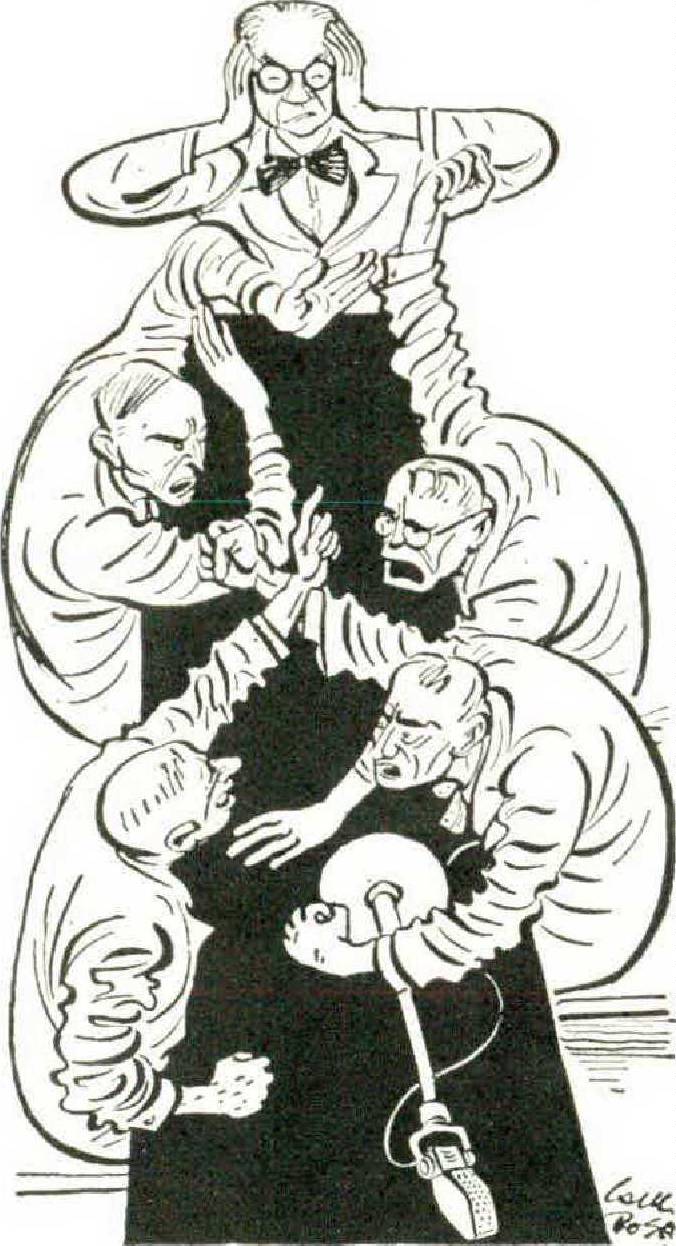
As a vehicle for the rough stuff in American life, the radio forum is rapidly coming to the fore. Voices, personalities, and language, as the combatants pool their ideas on reforestation or foreign policy or modification of the divorce laws, already approximate the goings-on in the Silver Dollar Saloon when Cactus Jack and his ruffians blow in of a Saturday night to tree the town.
The uproar is presumably in the name of free speech — that is, speech free from an ordinary minimum standard of intelligence, honesty, and manners. The debater who goes on the air crippled by such a standard finds himself outshouted, out gestured, interrupted, cheated by every tactic of forensic bullyragging.
On almost every program the forum tries to include one or two of the most rabid extremists who can be found on a given issue, and to pit them against more normal folk. The more preposterous their ideas, so the theory goes, the more interesting to the listener will be their collision with saner minds. It would be hard to think of any prominent quack or eccentric ol the past ten years who has not been served up by one or another of these forums. Discredited politicians, paid propagandists, obsessed fanatics all seem to be entitled to the microphone. Against them, a speaker of courtesy and conscience can scarcely make himself heard. Through the tumult are repeated, to small effect, the cries of the chairman or discussion leader, “Wait a minute, give him a chance, please, please, you’ve had your turn, WAIT A MINUTE!”
The radio forum needs its own set ol Queensberry rules, also some general eligibility requirements and a blacklist: —
1. No more psychotics to assert that anyone who disagrees with them is trying to destroy the American way of life and civilization itself.
2. No more rogues brazenly misstating the point of view just expressed by another speaker and demolishing the false case.
3. No more shrill females who won’t stop talking. The participants who survived this first screenout would be subject to a few simple platform rules. No one would speak up except at the invitation of the discussion leader. An interruption would draw a warning; if continued or repeated, the interrupter would be cut off the air. The same thing would befall speakers of ill temper or bad manners, and those making snide remarks about other speakers. If the chairman does not recognize bad manners or know a snide remark when he hears one, a substitute chairman would be rushed into play from the dressing room. During any intervals of expulsion, a studio organist would supply an obbligato for explanations and apologies by a representative of the network. A capable bouncer would be in attendance on the platform at all times. Police waiting offstage would arrest all ejectees and whisk them away to Night Court on charges of disorderly conduct and creating a disturbance in a public meeting.
Improvements along these lines would show up wonderful novelties to the radio listener. He would learn, for instance, that a fair middle ground can often be staked out on most problems of the day. It could be demonstrated that the weightiest experts can exchange ideas without brawling. On rare occasions, one of the pundits might even confess an error or change his mind and admit it. The audience might gather bits of information in place of noise. Short of this, the forum had better hire the two chaps who broadcast Madison Square Garden lights, to report from the ringside the roundby-round content of the “discussion.”
CHARLES W. MORTON