A Girl's Best Friend
An expert on mothers from the daughter’s point of view, MARJORIE RIDDELL is the author of many light articles and the thoroughly entertaining book, M Is for Mother.
by MARJORIE RIDDELL
MOTHERS often believe their daughters to be more intelligent than everyone else and, at the same time, sillier than everyone else. A mother who sees her daughter off to college for the first time believes firmly, for instance, that her offspring will not only be top of her class but will also stick her head out of the window just as the train reaches a tunnel and not even get there.
A mother will believe her daughter the most brilliant in the medical profession but will never be convinced that she is capable of treating herself when she catches cold.
A mother whose daughter has been rearing her own family for twenty years will not only boast of her daughter’s capabilities but will believe, undeterred and undeterrable, that she can’t cook even an egg.
The reason for this particular form of contradiction lies deep, not in mother’s childhood, but in her daughter’s. The first daughter, at the age of three, did try to stick her head out of a train window. The second, at the age of ten, couldn’t understand why she wasn’t allowed to go swimming when she had a cough and a sore throat. The third, at the age of twelve, baked a cake no one could cut. And mothers never, never forget.
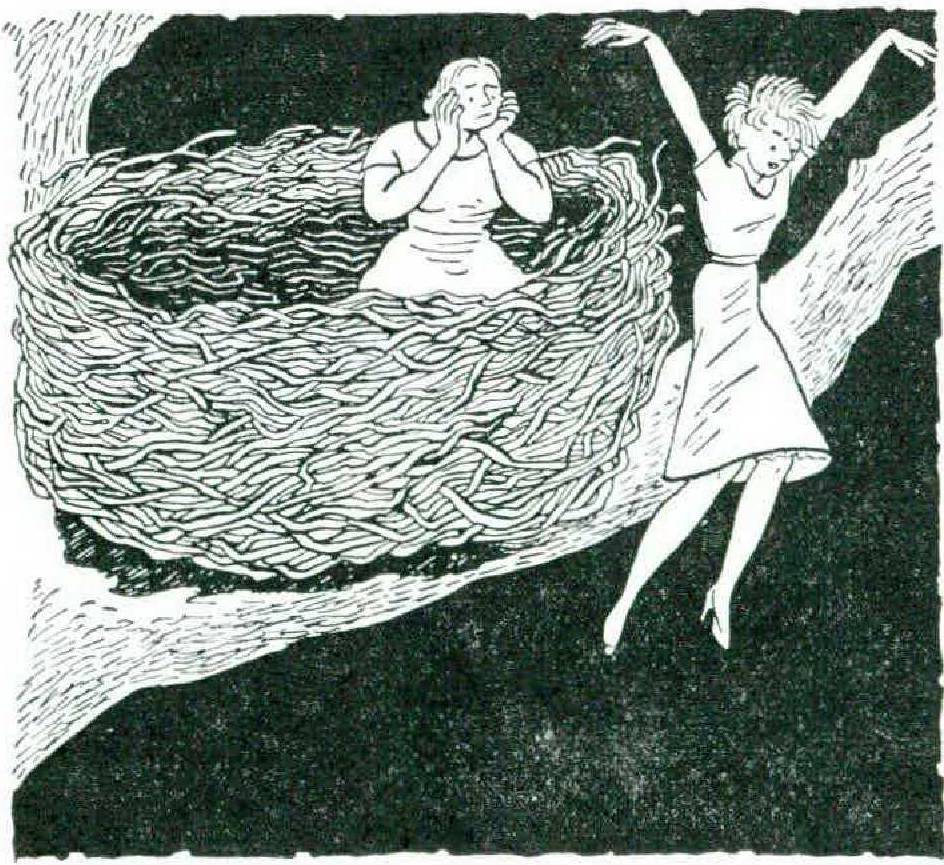
Mothers who eventually come to terms with the inevitable and recognize that daughter is not top of the class, nor the most brilliant doctor, nor the most admirable wife and junior mother, believe she is the most charming member of the class and the best-loved doctor and should have married Henry anyway. Mothers, being unpredictable, can be adaptable.
Mothers who honestly recognize that their daughters have accomplished nothing and will accomplish nothing don’t exist, and when they laugh gaily and say they know their daughters are never going to set the world on fire they are either fooling themselves or being crafty.
Another contradiction — or perhaps it is an extension of the first — is that mothers always expect the best and always expect the worst, which means they always win.
Earn a medal for the best hive of bees and mother will be standing around saying she always knew it. Get stung and mother has always told you so.
Go abroad and have a wonderful time and mother will always have known you were sensible and selfreliant. Fall into a canal at Venice and mother always knew no good could come of it.
The unpredictability of mothers can constitute a really sizable trap. Those who for years have praised the independence of girls who leave home to make careers can be horrified when their own young want to follow suit, while those who have always condemned such recklessness are often not only calm but even enthusiastic when faced with it themselves. Once a daughter has actually left home, however, both types of mother think their daughters are being wise, sensible, and intelligent. Daughters who don’t want to leave home are considered by their mothers to be wise, sensible, and intelligent.
Mothers who believe in daughters going away if they wish are considered by other mothers to be unnatural, and mothers whose daughters are not allowed to go away when they wish are considered by the first lot of mothers to be unnatural. Aunts think that both situations are a great pity.

Mothers who prevent their daughters from leaving home tell everyone that they are perfectly willing to allow it but their daughters are too unselfish to leave, and mothers who try but fail to prevent their daughters from leaving say what a good idea they’ve always thought it. Mothers who prevent their daughters from leaving home do it with gastric ulcers and all the sacrifices they made when their daughters were children.
When they’ve left home, daughters are expected to die of starvation in a week or two, because, although they have been wise, sensible, and intelligent to strike out on their own, they are not like other people’s daughters, who have always been so wise, sensible, and intelligent. Mothers who live near the big city ring up their daughters at 8 A.M. and ask what they are having for breakfast, and mothers who live far away ask fathers what they think their daughters are having for breakfast. Mothers only ring up when their daughters have overslept.
Daughters who don’t tell their mothers very much in their letters take a big risk, for mothers hate to be the only ones with not much to talk about and some of them, with no alternative, draw upon their imaginations, which possibly serves the daughters right. Those, on the other hand, who tell their mothers a great deal in their letters also take a big risk, for the first part of the same reason.
Some mothers will never understand that their little girls’ affairs should not be broadcast far and wide, and some mothers who do understand it will keep secret the most trivial incidents and broadcast everything else. Mothers who really can keep important things to themselves have to pretend not to for friends and relations, which sometimes leads to even more trouble than other mothers get. It is important to decide as soon as possible which kind of mother you have.
Mothers’ ideas about careers are interesting, and their reasons for those ideas arc fascinating. Some mothers want their daughters to be teachers because they themselves were teachers, others because they themselves were not teachers, others because they themselves always wanted to be teachers. Lots of mothers, as a matter of fact, want their daughters to do things they themselves always wanted to do, and they tell their daughters how, when Papa said NO, they said to themselves, very well then, my daughter shall do that. Mothers who did do what they wanted, and still do it, and do it brilliantly, and have reached the top, can be very tiresome.
Other things mothers want their daughters to become are civil servants, doctors, secretaries, bank clerks, or what father is. Daughters who turn out to be glider pilots or psychical research workers amaze their mothers, who go about saving they’re not surprised. Aunts are always very triumphant about this.
Some mothers don’t want their daughters to have careers at all, and to any such suggestion by other mothers reply patronizingly that it wouldn’t be worth it because their daughters arc bound to get married soon. This causes strong feelings all round, which become stronger when their daughters do get married soon, and stronger still when they don’t.
Sometimes fathers think they’ve chosen their daughters’ careers.
But it’s on the subject of boy friends, engagements, and marriages that mothers reach their peak. They believe in lots of boy friends, a few boy friends, no boy friends; they believe in daughters having boy friends at an early age or at a later age; they believe in early engagements, late engagements, in long engagements and short; they believe in no engagements at all; they believe in early marriages and late marriages; they believe in any or all of this at one time or another according to circumstances. Wise mothers don’t issue statements on their views until the circumstances are settled, however; and really cunning mothers keep quiet altogether.
Unwise mothers can get into an awful mess, and circumstances that change sometimes cause a stir that reaches the remotest acquaintance and the most ostracized relative. And it is then that the true genius of mothers makes itself felt. Whatever mothers believed in before, now turns out not to be what they believed in at all, after which — circumstances often being unstable — it might even develop that what they really believed in all the time is what they believe in now, and very soon everybody knows that however the circumstances have developed they are exactly what mother has wanted all along. Some mothers think their daughters do it on purpose.
Lots of mothers aren’t at all like this, of course, which makes them more unpredictable than ever. Lots of mothers aren’t like any other mothers, and in view of that it’s very curious how all mothers are the same. And in at least one respect there has been proof, many, many times over, that there is nothing to choose between them — they stand loyal to their daughters. Rob a bank, commit murder, blow up the government, and nothing will shake mother’s conviction that in the first place you didn’t do it, and in the second place somebody made you.
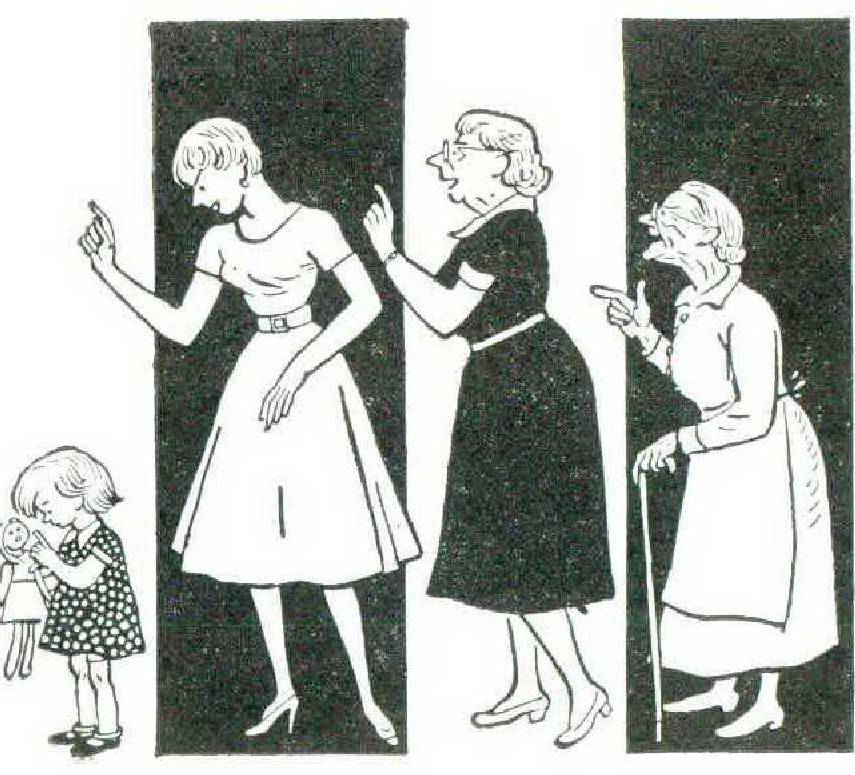
But try telling her you always wear sufficient underclothes and see if she believes you.