The Haydn Country
JOHN M. CONEY
A HAYDN pilgrimage, if it is not to be time wasted, should be undertaken in a spirit very nearly Chaucerian. The goal may be sensed as holy, but the going must be fun.
This fits the nature of the man we honor this year, who died just a century and a half ago. In his inventive symphonies, antic violins dance with themes of Gregorian Chant. In his great Masses, trumpets blaze an outright joy strange to today’s dark-clad devout. And, most of the while, Croat folk tunes caper within earshot, to keep us from taking our souls too soberly. That was Haydn.
The place to go on a Haydn pilgrimage, this Haydn year, has been the Austrian town of Eisenstadt, which the Hungarians once called Kismarton, where a charmingly small music festival began in March and continues halfway through October. It was in Eisenstadt that Haydn first took service, in 1761, with the Esterházys, rootless princes of fabulous wealth, to whom he ministered musically for nearly all his days. The Esterházys moved five years later to Prince Nicholas’ incredible construct in the Hungarian marshes, the wilderness Versailles known as Esterháza. Still Haydn kept a house in Eisenstadt for wintertimes, and it was in Eisenstadt that he launched himself as first master of the symphony.
The direct route to Eisenstadt is the Budapest road, southward out of Vienna and not much traveled now, for obvious reasons. However, on a sunny Austrian spring day no one in his right mind would take a direct route anywhere, so for the opening concert we went southeast, toward the wine country and the juncture of the Czechoslovakian and Hungarian borders. For the record, our conveyance was a yellow Opel convertible, and we had as fellow passenger the prettiest newspaperwoman in Vienna, the Countess Else von Hacker zu Hart.
Our pilot was the best of all possible guides on a Haydn pilgrimage, H. C. (Howard Chandler) Robbins Landon, a thirty-three-year-old cxBostonian now pretty widely regarded as the world’s leading Haydn scholar. He decided in his thirteenth year to devote his life to Haydn. Preparatory school officials, at Asheville and Lenox, wrote direly to his parents of this obsession, but without avail. He put aside a family Harvard tradition to study under Karl Geiringer at Boston University. At twentytwo he founded the Haydn Society, a Boston-Vienna endeavor that financed research in Europe by selling LP records in the United States. Landon went to Vienna to handle matters there, directing recording sessions and digging up Haydn lore. The society was successful to start with, prospering even when Landon entered American military service (in Vienna, whereby he escaped basic training, quite a feat), but in the early 1950s the Boston or business end of die venture collapsed. Eandon kept working. The best-known fruit of his labors is a gigantic (863 pages. Universal Edition, RocklilF, London) and fascinating book, The Symphonies of Joseph Ilaydn, which is now a sort of Haydnist biblc.
A large and tireless young man with a formidable chin, Landon drives like any other Bostonian, with his right foot flat on the floor board. Wise Austrians scattered from our path, and in nearly no time we were in Bruck an der Leitha. This is close by Rohrau, where Haydn was born to a wheelwright father. Bruck was (and is yet) the home of the Counts Harrach. It was the Count Harrach of 1790 who headed the first real Austrian show of appreciation for Haydn (after He had taken London by storm) and who led him, on his return from England, to the park on the Leitha where Haydn confronted a sculpture of himself, his first monument. The rest of the town is a sort of monument to certain other folk, not loved: the dread Turkish armies seldom out of mind in the sixteenth and seventeenth centuries. Its main feature is a milelong moat and grim fortress wall of gray-yellow masonry. It looks peaceful now, with cottages stacked against it and laundry fluttering in the breeze.
It is possible, I suspect, to go straight from Bruck to Eisenstadt, but we didn’t. There was a need for wine. Austrian wine is drunk young, and Viennese commonly go into the countryside, bearing bottles, to buy it. We sped past miles of grasstopped mounded cellars, each with a wreath hung to advertise its wares. The favorite vintner of Landon and the Countess was beyond the town of Gols. This is an Austrian town by virtue of a plebiscite, but Hungarian in all other ways, including its layout: close-knit houses lining the main street and almost none elsewhere. It is nearly unique in Europe as an attraction for storks. They stand on all chimneys above the red tile roofs, looking like silly sentinels and paying absolutely no attention to anything.
Entering and leaving Gols, one skirts flic Xcusiedler See, the strange border lake beyond which Estcrháza sits and the plains stretch out.
“Neusiedler See is very unusual,” said the Countess in a sudden burst of lingual valor. “In some years when it makes wet he is very big, long, wide; many miles. When it makes dry he becomes like nothing; he is so small. He is only feets deep.”
“You mean it, not he,” said Landon, heartlessly stoppering this poetry, and went on: “This place is a kind of continental crossroads. Europe ends here. Over there the East begins. Hundreds of peoples have passed this way, each with their own freight of tunes and rhythms. Haydn was their treasurer; listen to his minuets. Formal Germans haven’t liked this much. In fact, during the nineteenth century it wasn’t unusual for German performers to edit Haydn scores before playing them, to take out the Balkan or Slavonic parts.”
Meditating upon this sin, the world’s leading Haydn scholar hit the accelerator anew. We curved superbly past a crouched motorcyclist, who waved in admiration as we went by. The Countess smiled the kind of smile that can only be learned in Vienna. Downhill in the dusk ahead the lights of Eisenstadt came on.
“Gulyas Suppe!” said the Countess at once and with authority. She won friends, since the concert was to start at seven thirty, an hour awkward for people used to metropolitan dining schedules. To keep the inner man happy and the mind from distraction, a sup of goulash soup was clearly indicated.
At the Schwechaterhof in Eisenstadt, a friendly small hotel, it was forthcoming and delicious, too. As we rejoiced in it and the local red wine, a little Grundig tape recorder, over in the corner, ground out for us a grotesquely homey touch. It played Tom Dooley in German.
“No lingering.'’ said Landon. “I have to be there for the speech by the Landeskulturreferent Landesrat, Herr Bogl.” Everyone gulped obediently, and the goulash soup disappeared.
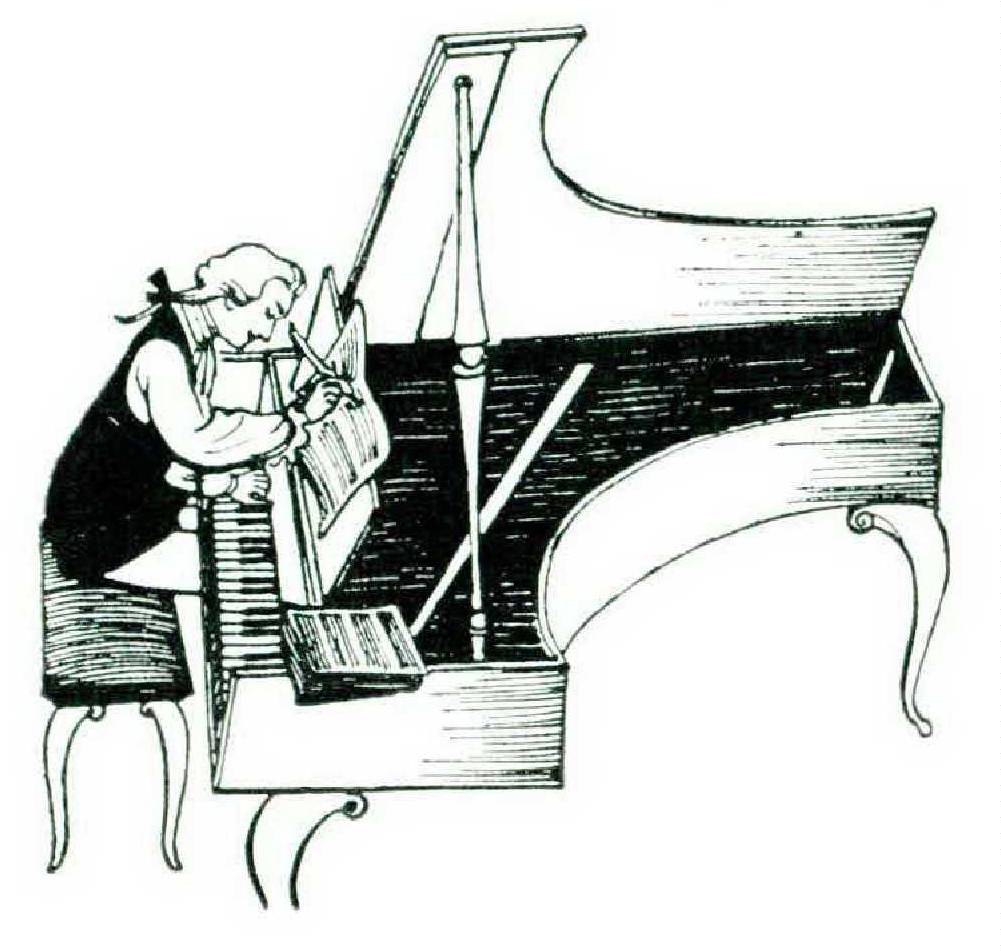
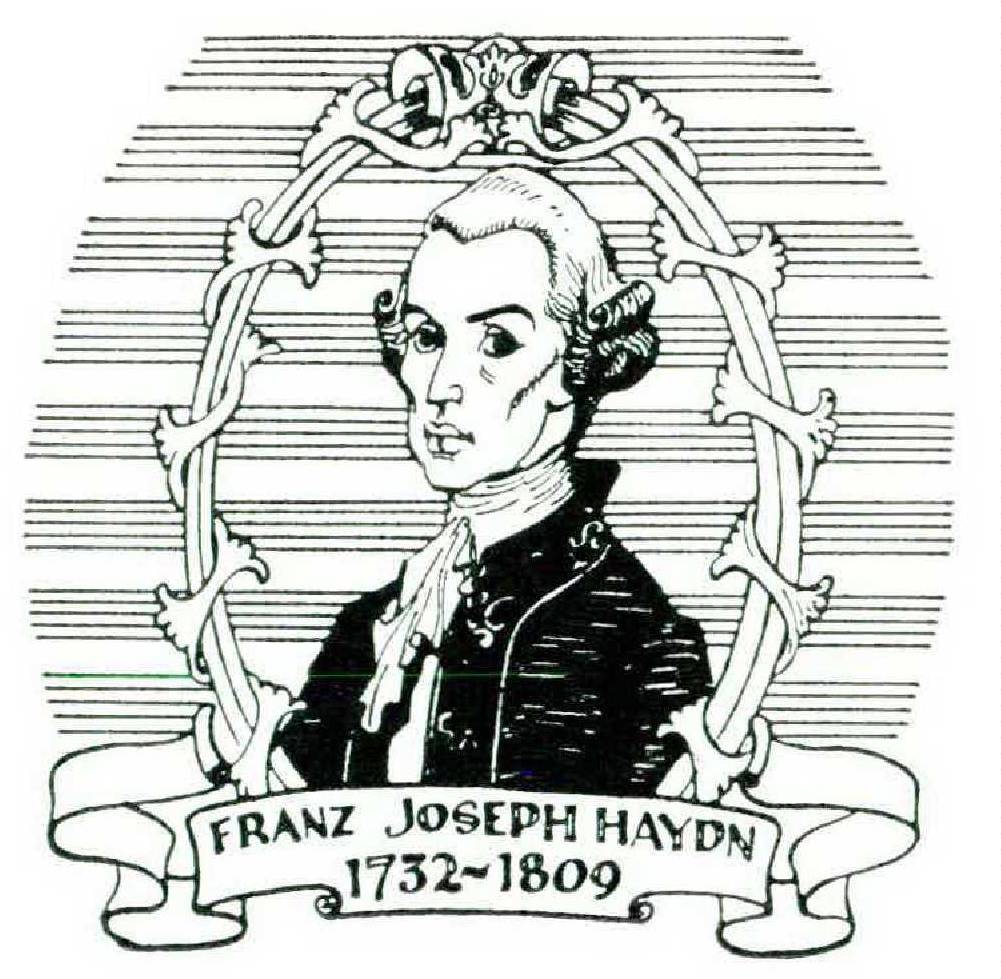
Just the same, from the Schwechaterhof the yellow Opel pursued a somewhat devious route, taking in the Haydngassc, Eisenstadt is almost circumscribed by old Esterházy buildings: the palace, the stables, the enormous commissary, the street of dwellings for the princes’ staff. The last mentioned now is called the Haydngasse. Haydn’s house is there, looking much as it must have when he left it. You may walk in his courtyard, surely one of the pleasantest in Europe.
“That’s where Haydn used to hurry out every morning,'’ Landon remarked, “dressed in his uniform, to present himself in the prince’s bedchamber and ask if His Highness required any masterpieces that day.”We drove on, through curling cobbled streets.
“Spitalkirche,” said Landon, thumbing at a dark sturdy spire against the night-blue sky. “Haydn’s baroque organ is still there. It has no pedals. He was the last great religious composer, except for Bruckner.
The first Haydn Festkonzert was to have been given at the Schloss Esterházy, in the reception hall now naturally called the Haydnsaal. Most of the summer concerts have been held there. However, an icy March wind had prowled down out of the Alps, defeating all efforts to heat the huge room, so the orchestral opener had to be moved to the ageless town’s only modern-styled building, the new Gymnasium. No matter: new or not, the place was haunted that evening, and the haunter was Haydn.
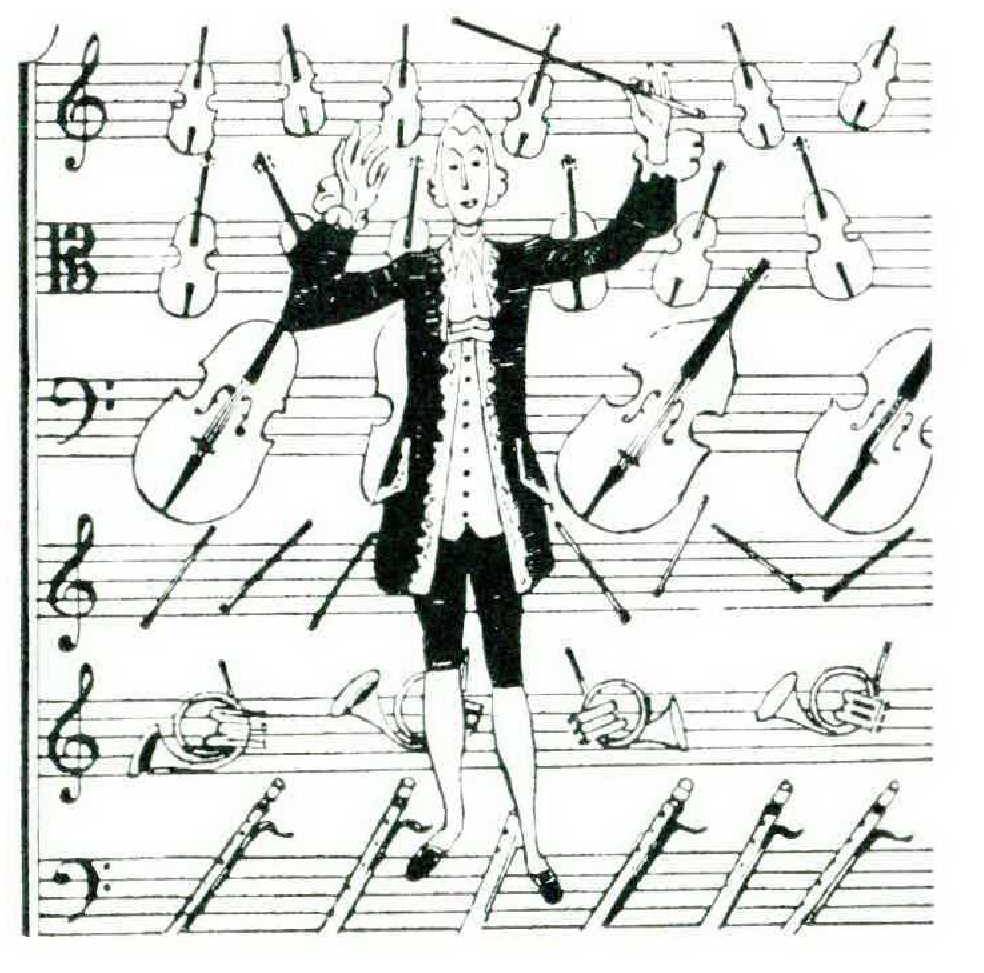
The conductor was Hans Swarowsky, who had flown from Scotland for the occasion, almost surely spending more than he was paid. He is a real Haydn man, though; when he isn’t leading the music, he whistles it. The orchestra was a sort of miracle ensemble, as anyone who has heard it in the summer’s course can testify. It was made up of select students from the Vienna Academy and might be called the Vienna Philharmonic of 1970. All the violinists qualified for appointment by playing (to their masters’ satisfaction) the solo part in the Beethoven Concerto. None of them looked more than twenty. They were positively alight with the joy and honor of their task. Haydn would have loved them, and they knew it. The music flashed around the stage like something alive. Swarowsky remained in good control, but I think even he was surprised at his results. The “Drum Roll" Svmphony and No. 88 came and passed over us, and the only analogy I can think of is summer lightning. Unseasonable, I know, for a cold March night, but that’s the way it was.
Afterward everyone, or nearly everyone, including the Burgenland
officials and the orchestra, went for a celebration dinner in the Stadtkeller, a snug, stony place. The musical contingent was in a glow of mutual appreciation, as they deserved to be. Indeed, when the demand for wine and goulash soup began to outrun the supply. Dr. Swarowsky arose to help the waiters. He got a very good hand from the orchestra, who were not only happy but hungry.
We went back to Vienna by the main road, lined nearly all its thirty miles with poplars.
“Napoleon’s trees,”said the Countess, who was getting sleepy.
“That’s right,” said Robbins Landon, who never gets sleepy. “NapoIeon had main military highroads planted with poplars all over this part of Europe, so imperial soldiers in the future would know when they came to important tactical routes. That future never came, of course, lint we still have the poplars.”
“Do you think Haydn is stiil an underrated composer today?” I asked — a banal question, but the night was late and the trip was coming to an end.
“Underrated, perhaps not,” Landon answered thoughtfully, eyes on the road ahead. “Misunderstood, yes, of course. I’ll give you a question. Why should the man who mastered and molded the symphony have stopped writing symphonies at the top of his powers? People hear and applaud No. 104, but why was there no 105?”
No answer.
“That’s what I mean by a lack of understanding. The symphonic writing did not stop. For him, or rather by him, there was nothing more Lo be said in this form. He was not the man to write the Eroica. What he was to write instead began in 1796: a series of six Masses, wonderful things which are in their structure symphonies, and perhaps bigger ones than he ever had written before. This is the kind of testament every great musician comes to at last, when he explains himself. Haydn’s last duty was that of a Christian coraposer.”
There were other questions in my mind, about stereo and about the possible revival of the Haydn Society, but somehow they never got asked. Vienna rose shining out of the dark to take us in, and anyway. I found myself whistling something in G Major, allegro con spirito. which seemed much more interesting than anything I had to say. That’s the trouble with Haydn.
Record Reviews
Bach: Keyboard Concertos Nos. 1, 4, and 5
Anton Heiller, harpsichord; Miltiades Caridis conducting Vienna Volksoper Chamber Orchestra; Vanguard BGS5009 (stereo) and BG-588 The treasure here is No. 5, a princely thing terribly neglected on records; it has not been played properly for the phonograph since Edwin Fischer did so about fifteen years ago. Heiller is not quite up to Fischer, and Caridis sometimes threatens to turn the slow movement into a pizzicato pie, but success finally is achieved for Bach. One can listen very happily to this and to the other pair of concertos, which apparently are easier to play right.
Beethoven: Symphony No. 9; Selections from the Incidental Music to Egmont
Otto Klemperer conducting Aase A ordmoLovherg, Christa Ludwig, Waldemar kmentt, Hans Hotter; Birgit Nilsson (in the Egmont songs); Philharmonia Orchestra and Chorus; Angel 3577-B (stereo and monophonic): two records
Klemperer’s Ninth has been hailed in some quarters as millennial. To my mind it is far from it. One does not lightly criticize a conductor of Klemperer’s earned repute, but surely he has given us here a rather odd job. The whole symphony takes on a sort of churchly air. The first and third movements are made to sound almost as if they were parts of Parsifal. The scherzo is slowed from its gallop into the pace of a Stokowski arrangement of a Bach fugue. The choral finale is fed out with reverence which might better fit The Seven Last Words. The Angel sound, especially in the stereo edition, is pure and majestic, but that is no substitute for Beethoven’s intent. The Ninth is not an act of worship, it is a battle order. I shall stick with my old, fiery, monophonic Toscanini reading until, perchance, Bruno Walter rides up with reinforcements, as it is rumored he will. The “Egmont” excerpts — the overture, Clarchen s two songs, and her death music — are tolerably well performed.
Gesualdo: Canzonettas, Madrigals, Gailliards, Sacred Songs
Robert Craft conducting madrigal group and string (pairlet: Columbia MS-6048 (stereo) and AIL-5341
Carlo Gesualdo, Prince of Venosa, was best known during his lifetime (1560-1613) for having murdered his wife and her lover, caught in flagrante delicto. He seems to have .spent the rest of his dark neurotic existence meditating on this act and on the fact of death itself, which his music reflects. I he music is astonishing. It is not all shadowy there arc points of almost happy brilliance — and it has a startling modernity. Some of it puts one in mind of Ravel: it is Impressionist, though the word was not to be coined until three centuries later. The record was produced, with great taste and feeling, by Robert Craft and some dedicated young singers, and Columbia has contributed flawless sound. Seven of the eighteen works are accompanied by Aldous Huxley translations; the others have no translations.
Handel: Water Music
Eduard van Beinum conducting Concertgebouw Orchestra; Epic BC-1016 (stereo) and LC-3551
This has less rigor about it than most German performances and less jollity than most British performances, which makes it almost ideal for home listening. It is never still and is often intimate, an effect enhanced by the use of a harpsichord with the orchestra. Just the same, there is plenty ol space in the sound, particularly in the stereo version, and no stress.
Mozart: Four-hand Piano Music
Ingrid Haebler and Ludwig Hoffmann, piano; Vox I)L-432-1 (Volume I) and DL-432-2 (Volume II): two separate records
Mozart began writing four-hand piano music to use on tour with his sister Nannerl when he was nine. One sonata from his ninth year (K. 19-D) is given here in Volume I, and it will surprise you. There are three other sonatas in Volume I and two more in Volume II. They comprise some of Mozart’s liveliest social music, not deep but endlessly captivating. The two young performers patently love the stuff and, indeed, why not?
Wagner: Has Rheingoid
Georg Solti conducting Kirsten Flagstad. George London, Claire Watson. Set Svanholm, Jean Madeira, Kurt Bohmc, other soloists; Vienna Philharmonic Orchestra; London OS A-1309 (stereo): three records
Jt is silly to try to assign the title “greatest opera recording” to any album. However, this London effort would necessarily be among any possible nominees; never has music drama been brought into living rooms with finer taste or shrewder force. Main credit goes to Solti and to recording director John Culshaw, but all performers deserve a share. The singers make Wagner’s supernatural people real in the very best sense. Flagstad’s Fricka is queenly and troubled; London’s Wotan is majestic and bemused; Bohme’s Fafner is a most reasonable ogre; Svanholm’s Logo is the sincerest of plausible villains. And Culshaw actually assembled a battery of tuned anvils to equip his Nibelheim. This joyous competence seems somehow to straighten out the complexities of Wagner’s condensed myth, and the story stands up as a genuine thriller. The recorded sound matches its burden — it is out of this world.
Beckett: EndGame
Alan Schneider directing the original off-Broadway cast: Evergreen EVR-003 (stereophonic): two records
The world is ending as EndGame begins, a situation fraught with endless possibilities for the author of Waiting for Godot, who starts right off by pointing out that nothing is funnier than unhappiness. The characters are our species’ last four survivors. One. a blind tyrant, cannot stand up. Another, an impertinent servitor, cannot sit down. The other two huddle in ash cans their protection, presumably, against doomsday radiation or something of the sort. The conversation among them ranges from poignant to desperate to cynical. taking in some, if not all. of the suicidal bents of the civilization they had lived in. Mr. Beckett is not a cheerful man, but he is certainly witty: you keep listening. The stereo recording puts the whole action right in the middle of your livingroom rug.