Reader's Choice
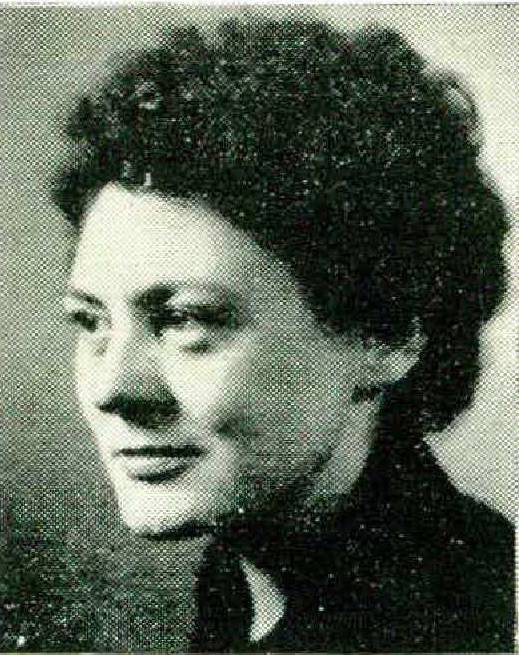
CHARLES NORMAN, the author of excellent lives of e. e. cummings and Kit Marlowe, has written a biography of EZRA POUND (Macmillan, $6.95), a gallant attempt to define one of the more mystifying characters of our time. It is not an authorized biography, although Pound knew of Mr. Norman’s project and even provided him with some information, nor is it a defense. Mr. Norman has tried to determine how it came about that a distinguished poet, a shrewd and generous critic, a notoriously kindly man, and a United States citizen whose thirty years’ residence abroad had left him still incorrigibly and unmistakably American ended up spouting antiAmerican scurrilities over the enemy radio in wartime.
Mr. Norman has on his side in the campaign the fact that Pound knew, or corresponded with, an enormous number of intelligent and articulate people who willingly confided their memories and lent material to the biographer. The author is hampered by his inability to get at the oflicial Italian side of Pound’s radio career, by a dearth of information on Pound’s finances, and by the limits of each individual’s knowledge of the man. Some of Pound’s friends, like Ford Madox Ford, were dead before his aberrations occurred. Others, like Dr. William Carlos Williams, had had no prolonged, face to face discussion with him for years. Nothing in their accounts of the flamboyant poet and peppery expatriate really explains Pound’s activities on behalf of Mussolini’s government. Pound, of course, contends to this day that he was exercising an American citizen’s normal right to criticize the United States authorities, and that the circumstances under which he exercised it are irrelevant. The kindest thing to be said of this claim is that it reveals a notable lack of common sense.
Pound’s career as a writer and a promoter of new talent has been reconstructed by Mr. Norman with great success. Well before World War I, Pound was an established literary figure in London and already busy at his self-invented task of finding authors for publishers and publishers for authors. He left a well-blazed trail through all the little magazines and artistic salons of the day.
Pound’s private life, on the other hand, seems to have proved fairly impervious to curiosity. Dr. Williams found him, as a young man, annoyingly reserved about his personal affairs, and later friends seem to have encountered the same ambiguous silence. The book contains no anecdotes of flirtation, courtship, or domestic life, no word of Pound the father, no reports of bouts of temperament, of exceptional depression or exuberance. These omissions are no fault of Mr. Norman, who complains, testily and more than once, that he has been unable to find any person able, and willing, to tell him of anything but Pound’s public character.
Mr. Norman has been forced to try to deduce from the façade the inner structure of the building, an impossible task. He can trace a rather flimsy thread of anti-Semitism through Pound’s earlier work, and a steady exasperation with the lack of support accorded the arts in this country, but neither of these elements looks strong enough to account for the hysterical vituperation that Pound babbled into the microphone during the war.
Despite the unpleasantness of the material, I wish that Mr. Norman had quoted more of Pound’s broadcasts. What he does quote has a familiar ring to it. It conjures up the ghost of a type that could be found at many respectable dinner tables twenty years ago, the die-hard Republican who combined a virulent hatred of President Roosevelt with an equally virulent hatred of Jews and both with a foggy nostalgia for the noble simplicities of life in 1875.
If the broadcasts quoted by Mr. Norman are typical of the lot, then Pound was typical of a fragment of his particular generation of Americans. He blabbed over the radio in Italy what many another old gentleman growled over the duck in his own dining room, and the explanation of this lunatic conflux of ideas may lie somewhere in Pound’s early youth and not, as Mr. Norman gloomily suspects, in those areas of his later life which have eluded his biographer’s investigations.
Although Mr. Norman has not succeeded in explaining Ezra Pound, his book is far better reading than many of those definitive biographies that perfectly elucidate a subject who is safely and silently dead. The description of literary London before 1914 is delightful, and so is the tale of the great imagist war; the quotations are almost all from people who write brilliantly; the legal and psychiatric proceedings surrounding the charge of treason brought against Pound are as fascinating as a good detective story. Mr. Norman himself writes in a colloquial, idiosyncratic style that has great charm and vitality. As to explaining Ezra Pound, let us be patient. Benedict Arnold was a far more clear-cut case, and nobody has explained him yet.
NO HEIGHTS, NO DEPTHS
VANCE BOURJAILY’S latest book, CONFESSIONS OF A SPENT YOUTH (Dial, $4.95), is told in the first person and pretends to be a novel pretending to be an autobiography. Presumably much of it really does have an autobiographical base, for a number of episodes parallel events in the author’s earlier books. I hope Mr. Bourjaily is not now at work on an autobiography that pretends to be a novel pretending to be an autobiography pretending to be a novel, because this sort of thing can easily go too far.
Taken as itself alone, Confessions of a Spent Youth is the story of U.S.D. Quincy and his adventures with women and the war. Summing it all up on the last page, Quince confides that he would like to consider “this document . . . not as a record of unusual and exotic events, but as a specimen account of how a contemporary youth was spent — not misspent nor well-spent, merely spent — exhibiting no special depths of degradation, nor special heights of intellectual or sensual joy. . . .”
This statement indicates a moderate target, and the author has scored a bull’s-eye on it, for Quincy is about the most unremarkable youth that ever held a novel together. He has no beliefs, no emotions, and no desires. When Quince makes love to a girl, the reader is likely to feel surprise and a mild, never to be satisfied curiosity as to what put such an ambition into his head. Normally, Quince drifts along with any friend who has a project, whether lying to a court-martial or smoking hashish. He is sometimes inconvenienced by the aftereffects of these enterprises, but bears no malice and feels no remorse. He is about as close to a dead duck as anything can be and still breathe.
It is a great achievement on Mr. Bourjaily’s part to keep up one’s interest in this vegetative youth for fifty pages, let alone four hundred, and I have nothing but admiration for the skill with which he does it. But is the trick worth all that effort? There is no attempt to relate Quincy’s numbness to the state of the world, although Mr. Bourjaily implies that it is a general condition of his hero’s generation. The fellow’s background has so little to do with his attitude that it is not until he hits Lebanon with the ambulance corps that one discovers Quincy is of Lebanese descent. It seems a little unreasonable to ask a reader to take an interest in the experiences — amorous, comic, brutal, and bloody though they are — of a young man who takes no interest in them himself; it’s like asking the spectators at a football game to attach their support to the ball instead of the team.
The book is exceedingly well written, ingeniously constructed by topic rather than by chronology. Single scenes like the great hashish jag, single episodes like Quincy’s frontline ambulance driving are highly effective. But these sections are never truly about Quince or any other individual. They are detached reporting about conditions in various areas too circumscribed, for the most part, to have any general applicability. The most memorable episode in the book is the first, a selfcontained story about an ex-ballplayer and smalltime crook who likes nothing so much as girls and corn whisky, and is too far gone with tuberculosis to enjoy these items when they fall into his hands. Cowboy Harris may be a sentimental hangover from the nineteenth century, a Sunday School version of Doc Holliday, but he cares about something enough to be hurt by it, and consequently, out of all this long, clever book, he is what sticks in the memory.
UP THE SOCIAL LADDER
ELICK MOLL’S MEMOIR OF SPRING (Putnam, $3.00) is another novel masquerading as reminiscence, or possibly reminiscence masquerading as a novel. The narrator is a successful composer of musical scores for motion pictures who, in late middle age, has bolted from his young wife and his new swimming pool to brood over the scenes of his childhood.
The book is actually a series of sketches of a Jewish boyhood in New York, all a little sad because being an immigrant was a serious business and being in the ladies’ garment trade was an invitation to disaster, but also funny, surprising, and with a curious touch of acid poetry about it. There is a race between two broken-down peddler’s nags, a summer hotel thrown into panic by the presence of a light lady, a horseplaying uncle, and a fat aunt with social ambitions, The narrative bubbles with deadpan wit. Bogged down on a score, the narrator complains that “you need a certain amount of inspiration even to steal effectively.”
Mr. Moll’s rambling little book has a perfectly clear intention. It is a tribute to all the immigrant families who worked like fiends and scrimped and connived in order to give their children education and a boost up the social ladder. It is also an oblique lament for the disproportionate results of their efforts. The narrator, on the toil and real anguish of his relatives, became a musician and a good composer. But he is not composing good music. He is thieving from Rachmaninoff to pay for a swimming pool, and no concluding dithyramb about spring can disguise it.
FREEDOM WITH THE BRUSH
The HISTORY OF SURREALIST PAINTING (Grove, $17.50) is a thoroughgoing, heavily illustrated account of the surrealist school by MARCEL JEAN, who was himself involved for years in this artistic movement. Since the author has no doubt at all of the merits of surrealist painting and sculpture, he wastes no time on defending it, but goes briskly about the task of recording the names, styles, and achievements of the various artists.
Mr. Jean’s matter-of-course approach to his subject is a great relief from the explanatory proselytizings that disfigure so much writing about modern art, and ought to win more admirers for surrealism than ten volumes of aesthetic sermons. The book appears to have been intended for enthusiasts, but its direct language, its anecdotes, its sketches of the chaotic surrealist party in action and of the more spectacular members at war among themselves, its clear distinction between serious psychic exploration and plain prankishness, make it equally admirable as an introduction to the whole school.
The author has chosen to ignore the early foreshadowings of surrealism, although dream, trance, and symbolic representations of states below, or beyond, normal consciousness can be traced in European art as far back as Da Vinci. He begins with Seurat and Böcklin and works straight up to the present day, leaving no canvas unturned. He has unearthed, among other wonders, a painter who carries his rejection of ordinary reality so far that he refuses to sell or even to show his work — a pity, since the sample reproduced by Mr. Jean is an extraordinary combination of bone yard and burlesque show.
Mr. Jean’s manner remains sober, scholarly, and demure throughout, with a heavy ballast of footnotes, but much of his material is riotous, for the kind of imaginative freedom required for the production of surrealist art seems frequently to carry with it high spirits, hot temper, and a magnificently loony sense of humor.
The illustrations in The History of Surrealist Painting are splendid, but the print, I regret to report, is villainous.
LANDSCAPE AND LIGHT
HIROSHIGE, by WALTER EXNER, (Crown, $10.00) is an attractive presentation of the work of one of the last of the great Japanese wood block artists of the Tokugawa period. There is probably nothing new to be said about Japanese prints, which are one of the most instantly and generally attractive art forms in the world, and consequently have been overhauled time and again, and Mr. Exner has wisely confined his text to the facts of Hiroshige’s life and times.
His time was the early nineteenth century, and the facts of his life are few and unexciting. The book is nevertheless interesting and entertaining reading, because Hiroshige kept a diary. He was a minor government official, having something to do with waterways, and in this capacity, and also in the execution of commissions as a painter, he traveled a good deal. His diary, quoted at length, is a record of landscapes, his fellow travelers, conversations, gifts and payments from clients, good food, and bad inns. He seems to base had chronic ill luck with inns, and it is amusing to discover that Japan in the old days maintained hostelries as scruffy as anything in Dickens. Hiroshige threw little poems into his diary, most of which Mr. Exner omits on the unkind grounds that literature has yet to take any notice of Hiroshige. Those that survive are, frankly, no worse than most Japanese poetry converted into English, however bad they may be in their original tongue. Altogether, Hiroshige’s text produces a definite impression of a busy, varied, pleasant coming and going on the high road, and of a man with an eye for landscape and light and an interest in ordinary people. Hiroshige was quite capable of running like mad from a bore, however.
The main purpose of the book, of course, is the pictures, which would stand without any text whatsoever if necessary. They are delightful, even though, being printed on glossy Western paper, they do not look quite like anything Japanese. Neither can they represent more than a drop in the bucket of Hiroshige’s work, which is estimated at something over eight thousand separate paintings. The artist was particularly esteemed for his landscapes, and there are plenty of these — mountains, rivers, bridges, and temples, romantic twilights and heavy snowstorms, with fat flakes like polka dots settling on the umbrellas of scurrying travelers. There are other subjects, too — birds, fish, ships, legendary lovers, and one stubtailed white cat who manages, for no discernible reason, to be immensely funny.