A Pennsylvania Inn
Try the Hotel Fauchère in Milford, Pennsylvania, which must be the prettiest county seat in the nation and is surrounded by the lovely Poconos to boot; it is across the Delaware from Port Jervis, New York, on U.S. Highway 6. If you are edgy from city living, or tired of modern design with all its angularities and sleaze, or are merely looking for delicious food admirably served at reasonable prices, try the Fauchère for a weekend or a day or even a single meal. Time actually may not have stood still at the Fauchère, but it has dawdled engagingly.
The founder, Louis Fauchère, a thickset, bearded Swiss master chef, was born in Vevey, a resort town on Lake Geneva, in 1823. With his friend and compatriot Louis Mouquin, who was to grow famous as a New York restaurateur, he arrived in America in 1851 during the administration of Millard Fillmore, the almost forgotten President who looked like W. C. Fields. In 1867, after sixteen years of brilliantly practicing his craft in his adopted country, Louis bought a run-down inn-cumsaloon at Milford, improved it enormously, then in 1880 built the present establishment on its site. He died in 1893, a stanch Democrat and a leading citizen of solidly Republican Pike County. The residents had long ago put him down as a “crazy Frenchman” and forgiven him, for his talents and his good heart.
He was a perfectionist, with a hot temper. When a chef had missed on a sauce, even in the slightest degree, Louis would throw it in the garbage and make him do it over. Once a member of the local gentry stopped by the hotel to order a dinner for twenty-four, specifying what courses there should be and what wines. Louis told him it would come to $2.50 a head; the cotillion leader accepted the figure after much grumbling, but then began dictating what extras would have to be added for the money. Louis flared. “Étoufez, monsieur. If you make the menu, I make the price.
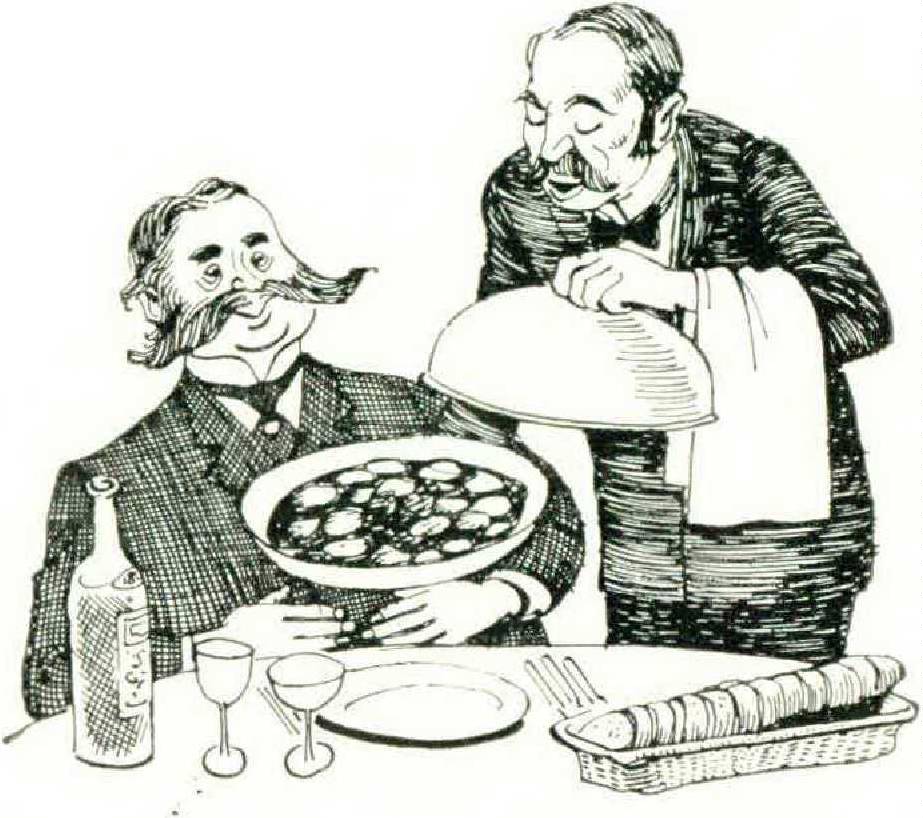
If you make the price, I make the menu.” Being such a peppery man, old Louis did a good deal of cussing in French around the place; his pet parrot picked up a lot of bad language and had a loud voice. As there were often guests who understood French, the parrot finally had to be banished to the stables.
In his will, old Louis expressed the wish that his descendants not only continue the business but run it personally and hand it on from generation to generation. If, since his passing, he has been looking down from some secret cloud, he must be delighted by the zeal with which they have carried out that wish. Three of his great-granddaughters — sisters and married ladies in mature years — run the Fauchère today, while a young member of the fifth generation, Louis Fauchère Chol, Jr., who was just graduated from Michigan State University’s School of Hotel Management, is being groomed to take over when the time comes.
The hotel is essentially as it was when old Louis left it in 1893. It is still housed in the handsome threestory white frame building; the ebony plate with “L. Fauchère” engraved in script is still on the front door; the glass-enclosed rear veranda is still a spacious adjunct to the dining room. Much of the Fauchère’s furniture today was Louis’s. None of it looks bad, all of it is sturdy, some of it is beautiful, and everything to lie or sit on is comfortable.
A number of Louis’s recipes are still in use, executed by Caesar Chiappini, who has been presiding in the kitchen for thirty-five years and is descended from one of Louis’s old chefs. As Louis prescribed, steaks and chops are broiled over good Pennsylvania anthracite, not charcoal; first-rate whisky still goes into the batter for the little dessert cakes which it is almost impossible to stop eating. At the request of Louis’s widow, however, Chicken Marengo was permanently retired from the Fauchère’s repertoire: “Nobody would ever be able to make it as your poor father could.”
Louis kept in touch with the latest Continental gastronomic ideas and techniques by closing the hotel every winter and going to Europe for three months. He loved wine, and, to keep himself in shape to drink as much of it as he wanted, he devoted part of these European pilgrimages to having himself bled. But he also found time for shopping; every spring he would bring back what seemed to Milford people a whole boatload of hotel equipment. From one trip he returned with the first billiard table ever seen in the county. A high percentage of the hotel equipment came in bottles and casks.
Louis started his American career in fast company, as chef at Delmonico’s; though he was only twenty-eight years old, he must have built up quite a reputation in Europe before he arrived. The Delmonicos, Lorenzo and his uncles Peter and John, had come from Switzerland in 1832 and opened their restaurant on William Street in the financial district of New York. Until then, publicly purveyed food in America had not been distinguished for its sophistication; it was, for the most part, plain and monotonous. The Delmonicos introduced luscious European dishes; they also developed previously unrealized potentials in our culinary raw materials — fish, shellfish, game, vegetables — and they ushered in salad, which became the rage among the affluent. One of their inventions was Lobster Newburg, originally christened Lobster Wenburg in honor of a sea captain of that name who was a client. The honor made him give himself airs, and he eventually picked an absurd quarrel with the Delmonicos. To express their contempt for him they rechristened Lobster Wenburg and made it Lobster Newburg. The change upset Wenburg terribly, but his tears and entreaties were of no avail. If you visit the Fauchère, don’t skip its Lobster Newburg.
During the racing season, Louis would go on leave from Delmonico’s to preside over the kitchens of Saratoga’s Grand Union Hotel, a palace of fashion and frolic razed only a short time ago. It was in Saratoga that he got to know August Belmont, the European-born banker, diplomat, president of the Jockey Club, and a feinschmecker from way back. Belmont told his friends about Louis’s prowess at the stove; they tested it and told their friends, and geometric progression ensued. From the trout season in spring through the fall deer season, the Fauchère did a turnaway business. The elegant and the genteel and the sporting swarmed to Milford in carriages and tallyhos, in mounted and cycling groups; later in the type of car in which the men wore goggles and dusters and the womenfolk were heavily veiled. The New York Riding Club signed in: “9 members & 3 grooms — Patrick, Thomas, Alphonse”; one weekend the Century Wheelmen of Philadelphia look the Cottage (twelve bedrooms).
Old Louis’s three great-granddaughters in charge today are Mrs. Marie Chol Olsen, who supervises the dining room and kitchen: Mrs. Margaret Chol Spotts, whose province is the pantry and logistics; and Mrs. Anna Chol Metzger, who presides at the reception desk, makes drinks in the cocktail room, and coordinates things generally. They work very hard, and the place shows it. Nothing is faded or dingy or run down at the Fauchere; everything is bright and shining; even the oldest horsehair settee is, so to speak, on its toes, and there are fresh flowers everywhere, even during the winter. Clearly the ladies have inherited their progenitor’s talent for hotel keeping.
The kitchen can make just about anything you’d care to name, though naturally it no longer gets requests for such lavish productions as were common in old Louis’s time — patés shaped like snoozing rabbits, cathedrals in spun sugar, still lifes in aspic. “People eat so much less these days than they used to,” Mrs. Olsen explains, though business is still good. “We’re very easy and happy here with our old friends who have remembered us.” What about the heir apparent, Louis Fauchèere Chol, Jr.? Well, he not only went through Michigan State but worked vacations in big hotels and restaurants. “We hope he hasn’t outgrown us,” Mrs. Olsen adds, a little anxiously. To which a countless throng of aging Fauchèrites would chorus out “Amen!”