Salazar in Trouble
BENJAMIN WELLES has been the New York TIMEScorrespondent in Portugal and Spain for almost six years. In a letter to the editor of the ATLANTIC, he writes,“I have developed a deep respect and affection for the Portuguese people and think that if their younger leaders — both in and out of the regime — are given a chance,Portugal can evolve from a 34-year-old dictatorship peacefully and progressively into the age of European economic-political integration.”
ALL over the world the winds of change are sweeping away the remnants of empires, but Portugal, the world’s last empire, drives stubbornly ahead into a roaring gale, convinced of the righteousness of its “Christian, civilizing mission” to eleven million African and Asian natives.
Neither the advice of NATO allies like the United States and Britain, the censure of the Communists, the anger of the Afro-Asians, nor the pleas of Portugal’s own liberals are altering Prime Minister Antonio de Oliveira Salazar’s colonial policy. To the 72-year-old economist-dictator, reforms are the “opening breach for subversion.” He stated his policy three years ago in a speech to his party chieftains in Lisbon when his troubles had only begun, and he has never wavered. “Stand firm! Stand firm!” he said. “That is all that is needed for the storm to subside and for justice to be done us.”
Salazar’s Portugal regards itself as the object of “aggression,” and in the past two years the Portuguese have taken increasingly to bitter gibes at the West, particularly the United States and Britain, for its alleged indifference to Portugal’s fate.
“We are few and honorably poor and scattered haphazardly over the four quarters of the earth,” said a Portuguese cabinet minister last summer, describing an empire which stiff embraces Madeira, the Azores, the Cape Verde Islands, Principe and Sao Tome, Portuguese Guinea, Angola, Mozambique, Timor, and Macao. Last December, India slightly reduced Portugal’s responsibilities by grabbing Goa, Damao, and Diu, three historic little enclaves on its west coast. To many this surrender, the first in several centuries, seemed like a bell tolling disaster ahead.
Salazar’s regime is still hurrying more troops out to the colonies, but nationalistic movements are mounting, not diminishing. In north Angola, rebel bands are still killing arid burning, despite the large Portuguese reinforcements in recent months. On April 6, Holden Roberto, leader of the rebel UPA movement which began the rebellion last year, announced the formation of an Angolan government in exile at nearby Leopoldville.
On April 8 Portugal’s able young Foreign Minister, Alberto Franco Nogueira, told visiting British journalists that recent incidents in Mozambique could be attributed to instigation by newly independent Tanganyika next door. On April 14 it was learned that out of fourteen Portuguese accused of crimes against state security in the Gape Verde Islands, three had been imprisoned and eleven acquitted.
At home, too. Dr. Salazar’s problems are mounting. On New Year’s Day a carefully laid plot to seize the undermanned army barracks at Beja failed at the last moment only because a ringleader, Captain Joao Varela Gomes, was accidentally shot. Two aspects of the abortive coup won attention. Captain Varela Gomes, in the hrst place, had run as a candidate for the Catholic Action opposition in last autumn’s parliamentary elections. He was known to have had close ties with Catholic Action, which had also been involved in another abortive plot in March, 1959.
Second, within six hours of the predawn attack, Spanish army tanks at Merida, thirty-five miles inside Spain, were reported rumbling ominously toward the frontier city of Badajoz. Their move was never explained, but many in Portugal believe that Franco will immediately send his army into Portugal should Salazar’s regime be threatened by violent overthrow.
In recent months anti-regime protests have continued. On January 31, and again on March 8, civilian demonstrators clashed with police in Oporto, while in Lisbon University more than 10,000 students began a strike on April 8 against the clumsy repression of their campus activities by Education Minister Dr. Manuel Lopes de Almeida, a Cabinet neofascist. Over and over again Lopes de Almeida has authorized police to invade the university grounds and disperse the teen-age students — including girls — with clubs, gun butts, and mass arrests.
The regime’s preference for force instead of conciliation has not only fanned student resentment but has provoked fresh resistance from the universities of Coimbra and Oporto as well. More serious to the regime, however, has been the resignation of Dr. Marcelo Caetano, Lisbon University rector and for many years Salazar’s closest political aide. Men of Dr. Cactano’s prestige in presentday Portugal do not resign lightly; and his act has been taken not only as a tacit warning to Salazar to discard police tactics but as a signal that Caetano himself may be throwing his hat into the political ring for the day when Salazar disappears.
UNDERFED, UNDEREDUCATED, UNDERPAID
The European Common Market poses a new threat to Portugal’s flagging trade, its sluggish industry, and its underdeveloped agriculture. Imports exceeded exports in the first nine months last year by $232 million, about 40 percent of its total foreign trade. The average yearly income per head is still $245, the lowest in western Europe. After thirty-four years of Salazar’s economic “genius,” the average farm worker in the Alentejo receives — when he works — 30 cents per hour. A suit costs him 166 hours of labor; a pair of shoes, 25 hours.
Portugal still has the highest rate of illiteracy, of infant mortality, and even of tuberculosis in western Europe, and the lowest standard of living. The population is underfed, undereducated, underemployed, and underpaid, and about 37,000 of the nation’s young men — one third of the annual population increase — emigrate abroad each year to flee starvation wages, the PIDE (political police), and the monopolies, whose grip on business is their reward for political conformity.
Because it would be reduced to insignificance without its colonies, and because it fears Spain, Portugal goes on pitting its small resources and its gigantic stubbornness against the nationalistic world of today. It has robbed its farms and factories of 40,000 young men, trained them hurriedly, and shipped them out to patrol Angola, Mozambique, and Guinea.
Many in Portugal secretly believe that the young veterans serving twenty-four months in the African jungle may one day provide the leadership for separatist movements that will wrench the colonies from Dr. Salazar’s grasp. The movement that topples Salazar from power will probably start in a colony like Mozambique or Angola, where rugged settlers, with their frontier mentality, will burst Lisbon’s bonds as Brazil did 140 years ago.
“If our overseas provinces break away from the motherland, it won’t be pleasant for you Americans,” warned Foreign Minister Franco Nogueira. “Each will probably turn neutralist and join the United Nations. Then, instead of one Portuguese vote for the United States, you will find six votes against.”
OPPOSITION IN THE OPEN
In the past four years the Salazar regime has suffered bitter blows to its prestige. In June, 1958, the process began with the surprise protest vote won by Lieutenant General Humberto Delgado, the opposition candidate, in the presidential elections. To the Portuguese public it made no difference that Delgado had long been a Salazar backer, that he had no political experience, that he had but a vague mishmash of reforms to offer. To peasants scratching a living from the arid hills of the Minho, this was a man of prestige, a general, who criticized Salazar!
Seizing upon the one-month pre-electoral period of freedom, Delgado crisscrossed the country assailing the Salazar dictatorship for repressing democratic liberties, for stagnant economic policies, and for graft and nepotism. Hurt and angry, Salazar ordered his police to hit back. But despite harassment and chicanery, when the voting ended Delgado had polled 22.5 percent of the votes. It was a blow to Salazar’s legend.
“The electoral campaign has taught me nothing, nothing but abuse,” Salazar told me bitterly a few days later. In Salazar’s mind, Delgado’s criticisms were to be brushed aside as the ravings of a madman, or worse, of a dangerous political subversive. Few were surprised when the defeated Delgado chose asylum in the Brazilian embassy residence and later fled to Brazil to carry on the fight from overseas. He soon joined hands with Captain Henrique Galvao, a former high colonial official whose now celebrated report to the Parliament in 1947 exposing colonial brutality and graft was to lead him to a sixteen-year prison sentence, from which he escaped in January, 1959.
Nor were many surprised when Salazar slipped a new voting law through his tame National Assembly in 1959. No longer would the Portuguese people vote directly for their President, he decreed; henceforth voting would be “indirect" — that is, controlled by the regime.
After the blow to Salazar’s prestige in 1958, the political police kept the opposition off-balance by periodic mass arrests. Overseas, on the other hand, Portuguese exiles took heart from the mounting criticism of Salazar by the new AfroAsian members of the United Nations.
Beginning in January, 1961, three major blows in rapid succession jolted the Portuguese from their complacency and shattered the legend of a “southern Switzerland” basking contentedly in the sunshine of Salazar’s paternalism.
On January 23, 1961, twenty-four armed Portuguese (plus some Spanish) rebels, headed by Salazar’s archfoe, Captain Henrique Galvao, seized the luxury liner Santa Maria between La Guaira, Venezuela, and Curasao, Dutch West Indies. For thirteen days, as Salazar’s government pleaded and raged, the rebels kept the world’s newspapers, radios, and television circuits filled with the news that a spectacular opposition to the dictatorship was very much alive.
ANGOLA IN ERUPTION
On March 15, 1961, the native rebellion in north Angola erupted. Early in the month, minor disturbances had already taken place in the native shantytowns, or muceques, around Luanda, sparked by news of the daring Santa Maria episode and by the sudden influx of a hundred foreign journalists who thought Galvao might sail to liberate Angola. But no Portuguese were prepared for the violence of the revolt that came like lightning on March 15, the day that Ambassador Adlai Stevenson placed the United States side by side with the Soviet Union in condemning Portugal in the United Nations.
Within two days the revolt had spread 75 miles from the border of the ex-Belgian Congo almost to the gates of Luanda. At least 1000 Portuguese white planters, their wives, children, and uncounted loyal natives were massacred, often with appalling butchery, and another 4000 whites fled panic-stricken by air, car, truck, or foot into Luanda for safety.
Soon the 450,000 innocent natives in the northern districts found themselves in a cross fire between murdering rebels on the one hand and vengeful Portuguese troops and white-settler bands on the other. Bombed from the air by napalm fire bombs, shot on sight by fear-ridden Portuguese, or menaced by the rebels, tens of thousands of natives fled for safety over the jungle frontier into the Congo. The number of innocent natives slain in the first few days of the revolt was somewhere between the official figure of 8000 given me last May by Overseas Minister Andriano Moreira and the 50,000 claimed by Salazar’s enemies. Probably the truth will never be known.
Salazar sent 25,000 young conscripts from home to pacify the region and eventually to “colonize” the sparsely settled possession, as did the Roman legions in Portugal some 1700 years ago. Foreign Minister Franco Nogueira recently said that the revolt had affected only 8 percent of the whole of Angola and had involved only 2000 or 3000 out of 450,000 in the border area. Moreover, the Portuguese claim that 200,000 natives have now voluntarily returned to Portuguese protection, and that the key centers of Carmona, Negage, Sao Salvador do Congo, and Maquela do Zornbo, with their interconnecting roads, are again under control. But the revolt is still simmering.
On January 30 the United Nations General Assembly, by 99 votes to 2, called on Portugal to end its “repressive” measures and to prepare the territory soon for “self-determination.” Only two nations sided with Portugal — Spain and the Union of South Africa. But to Salazar the Angolan revolt is a crystal-clear case of outside aggression.
Just before Christmas, the third blow fell. On December 17, Indian infantry and armored troops, reinforced overhead by jet bombers and offshore by cruisers and destroyers, began the long-threatened invasion of Goa and the two other tiny Portuguese enclaves, Damao and Diu.
“We have sent orders to fight to the end,” Foreign Minister Franco Nogueira told me grimly as we sat in his richly carpeted office while a clock ticked loudly in the silence. “The Goanese will die alongside us in thousands. They are a hundred percent pro-Portuguese.”
What happened? In three to four days, with 37 out of 4000 Portuguese customs guards and soldiers killed, Portugal’s garrison surrendered. The Indians marched in proudly, cheered on by Goanese crowds throwing bouquets. Portugal’s possession and its pride both fell victims.
Now, neutral observers who have recently emerged from Goa report that trade is slackening, the once relatively high standard of living is declining to the level of surrounding India, and tensions are growing between the Indian “liberators” and the Portuguese-Goanese “liberated” as the honeymoon ends and the two partners face married life.
Once more seeking a scapegoat, some Portuguese officials privately blamed Monsignor Jose Vieira Albornaz, archbishop of Goa, for allegedly having counseled Governor General Manuel Vassalo e Silva to surrender so soon. They denounced him privately for praying on Christmas Eve in Goa’s cathedral for “mutual understanding” between the Indian victors and the Portuguese vanquished a charge which the ailing, elderly prelate has since denied. Noting that he had recently returned from a visit to the Vatican, several of them observed woefully, “Even the Holy See has turned against us.”
Brazil is always cited by the Portuguese as their ideal. Brazil, the daughter who grew richer, taller, and more beautiful than her mother, is the model on which Portugal claims to be shaping Angola and Mozambique. Yet the same Portuguese who call Brazil their ideal dodge the fact that Brazil cast off Lisbon’s flaccid rule 140 years ago in order to develop. Even Brazil’s current disapproval of Portugal’s colonial policies has only confirmed Dr. Salazar in his dogged refusal to yield. “Portugal cannot think in terms of selfdetermination for the overseas territories,” said his aide, Dr. Jose Goncalvo Correia de Oliveira, on March 29. “This would be equivalent to immediate secession from the mother country.”
The Portuguese would resent bitterly the sight of Spanish troops in their land, but it is highly likely that Franco would send his crack, Americanequipped 11 th Division to occupy Lisbon, Oporto, and Coimbra rapidly, rather than see Salazar toppled by a left-wing revolution. A revolutionary Portugal would become a bridgehead for Spanish revolutionaries. And furthermore, violence anywhere in the Iberian Peninsula would jeopardize the Pentagon’s important defense installations at the Mediterranean’s mouth. Washington’s pressure on Salazar in recent years has only served to stiffen the dictator, who coldly reminds American Ambassador C. Burke Elbrick that Portugal holds the strings to our military rights in the Azores.
PORTUGAL AND THE WEST
Since May, 1959, when President Eisenhower visited Lisbon after the summit collapse and called Portugal a “tremendous friend and ally,” U.S.Portuguese relations have steadily deteriorated. The advent of the Kennedy Administration, with its sharp emphasis on decolonization, has seen the United States siding increasingly with the AfroAsian world against Portugal. Kennedy and especially Adlai Stevenson are regarded today in Lisbon as politicians prepared to sell their small NATO ally down the river for Afro-Asian votes at the United Nations.
Even England, Portugal’s oldest ally and its chief customer, has also seen its influence wither. In May, 1961, British Foreign Secretary Lord Home visited Portugal and talked at length with Dr. Salazar. Home was astonished when Salazar asked him if he really believed in African nationalist aspirations. With new African nations being born virtually every month and nationalist clamor steadily rising, such a question in 1961 seemed to Home almost naive. Not to Dr. Salazar.
After thirty-four years of Salazar’s Novo Estado (“New State”) Portugal remains a land of a few rich and many poor. It is not important that slums disfigure the outskirts of lovely Lisbon. There are slums in New York, Boston, and Washington. What is important is that bureaucratic lethargy, the indifference of the powerful monopolies, and Salazar’s complacency have kept Portugal from political, intellectual, or economic growth.
To Salazar this lack of growth is not a true picture. Immolated in his tower of contemplation, living his simple austere life, poring over his reports and charts from dawn to dusk, Salazar argues that what really matters is not piped water or rural electricity, schools, jobs, or calories, but tranquillity. “The West is in a ferment,” he told me four years ago. “Social development is the current. New hospitals, schools, houses arc wanted everywhere, but this depends on the economy; the economy depends on finance; and finance depends on stable politics.”
Here is the Salazarian creed: stable politics, not growth. For Salazar, a growing population with rising demands for higher living standards poses a danger to the nation’s tranquillity. One understands why Salazar’s opponents call him a “sworn enemy, not merely of Communism, but of progress, of parliamentary government, of democracy, equality, and universal suffrage.”
Yet, although one third of Portugal’s young men flee the land each year to find opportunities in Brazil, in Venezuela — and in the United States, where the annual quota is only 300 — there is a small, sleek band of socially captivating Portuguese whose profits rise in proportion to their political fanaticism. These are the monopolists, who are wedded to the twin dicta of cheap labor and high earnings, regardless of colonial exploitation or domestic stagnation. They have lately hired a well-known American public relations firm to regild their image, but the day is late.
Last year’s revolt in Angola sprang, like so much native unrest in the world, more from fury at monopoly exploitation than from any native desire for political independence. Two months before the revolt began, for instance, Portuguese Air Force planes napalm-bombed natives near the inland town of Malange for protesting over slavelabor conditions and chicanery by the local cotton monopoly. Monopolies have done much to develop the Portuguese colonies, but few would contend that they have beggared themselves by improving their workers’ standards. Ninety-nine percent of Angola’s natives cannot read: but in recent years the Bank of Angola; Comgeral Purifina, the petroleum monopoly; Diamang, the diamond monopoly; and the Sociedad Agricola do Gassequel, for instance, have been earning an average yearly profit of nearly 50 percent on their capital.
In a small, monopolistic fief like Portugal, it is significant that one monopoly alone controls soap, beer, cattle, fertilizers, matches, electric goods, ships, carpets, garden hoses, iron, steel, and the Jose Henriques Totta Bank, and has major diamond and mining interests in Angola. It is noteworthy that Nicholas Franco, the dictator’s brother and for seventeen years Spanish ambassador in Lisbon, is said to have vast holdings in Angola.
Over the past year and a half, since the Angolan revolt began, Overseas Minister Adriano Moreira has begun forcing the Portuguese monopolists — often against their intense resistance — to plow back profits into the colonies; to transfer their bloated office staffs from comfortable Lisbon to tropical Luanda; to use their dividends to build schools, hospitals, homes, and clinics for their native laborers. Some have seen the light, some not: and there is still a long way to go.
SALAZAR’S SUCCESSOR
Who will follow Salazar? This is the key question in Portugal today. The Portuguese Army without question will cast the deciding vote. It may not pick Salazar’s successor, but the army will veto any candidate not to its liking.
Yet the Portuguese Army itself is politically divided into rival cliques. Whether by coincidence or by Salazar’s tactics, moreover, the bulk of the army has been shipped out to defend the colonies. Since the Angolan rebellion broke out in the spring of 1961, Portugal has become a vast military training area, and Salazar has sent thousands of soldiers to the colonies.
This drain on the army’s strength inside Portugal has had a significant political effect. It has shifted power more firmly into Salazar’s hands, for already the old dictator controls the political police and the 60,000 handpicked, well-equipped men of the Guarda Republicana Nacional and the paramilitary Portuguese Legion. The Republican Guard, with its own light tanks and armored cars, and the SS-type Legion are both commanded by officers of tested loyalty.
Opposition to Salazar has been growing inside the Portuguese Army itself as troubles have increased. In March, 1959, the police smashed a widespread plot of military officers and members of Catholic Action who wanted to oust Salazar. Within a month after the Angolan rebellion had broken out, Salazar crushed a still more serious army plot led by Defense Minister General Julio Botelho Moniz, took over the ministry of defense himself, and purged half his Cabinet.
There are no heirs-apparent to Salazar in Portugal now, but if he died tomorrow, his successor would be chosen by President Admiral Americo Tomaz on the advice of the chiefs of the armed forces, the Roman Catholic hierarchy, the singleparty National Union, and big business. Whoever succeeds Salazar will probably have to be experienced in the regime and loyal to the system. Those in power want no rapid changes to threaten their control. The men around Salazar will almost certainly remain loyal to him until he dies. Yet one senses, particularly in the younger ministers, an impatience to begin reforms and to modernize Portugal’s feudal system. Many of these young officials know, however, that Salazar is too old to accept real reforms, and so they patch, mend, and mark time while he lives.
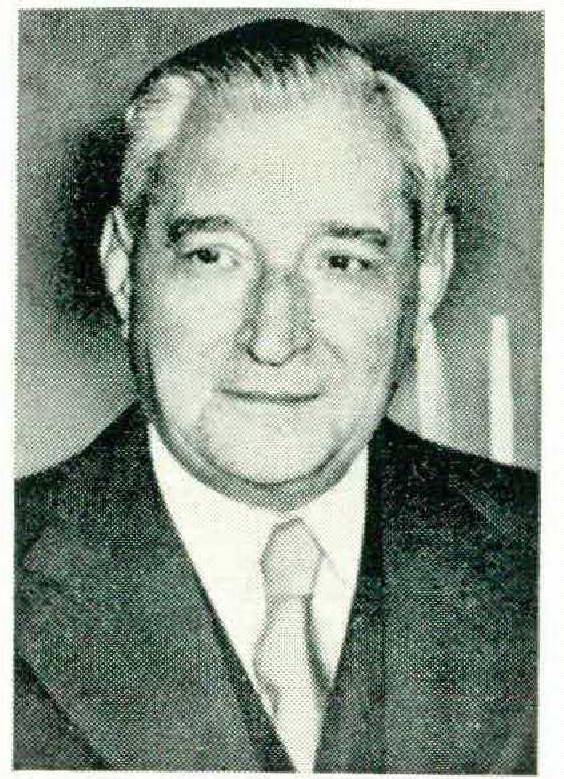
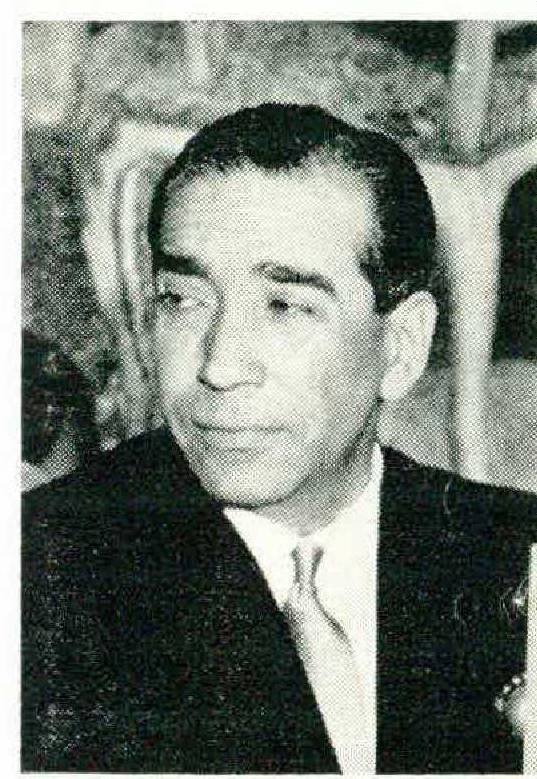
Two of the younger men around Salazar especially bear watching, for they are likely to continue in high office in whatever regime succeeds. Dr. Adriano Moreira, the Overseas Minister, is a darkly handsome young colonial expert who is fired by ambition. The son of a retired policeman, with whom he still lives, Moreira has so far avoided marriage and devotes at least sixteen hours a day to his office. He has confounded critics who predicted his downfall when Salazar dumped the ticklish colonial portfolio into his lap more than a year ago. Instead, Moreira has grown with the job: visiting Angola, Mozambique, and Portuguese Guinea, streamlining the cumbersome colonial bureaucracy, and stamping out exploitation of the natives by Lisbon monopolies.
His reforms have won him mixed gratitude from the natives and resentment from the bankers, who see the days of cheap colonial labor doomed. Yet Moreira seems indifferent to the hostility of the wealthy backers of Salazar. He is quietly cultivating a political clientele in the Portuguese colonies, in the armed forces, and among the domestic masses; and the enmity of the extreme right may one day bring him political dividends.
Fifteen years ago Moreira’s political flirtations with the anti-Salazar underground earned him a two-month sentence in one of Salazar’s jails, and the experience seems to have taught him discretion. His prestige still remains high in opposition circles; yet at the same time, he has risen in Salazar’s esteem and service as high as he can go. Of all the younger ministers queuing up for the succession, he is the first to watch.
Moreira’s chief Cabinet rival, and personal friend, is Dr. Alberto Franco Nogueira, at fortytwo one of the youngest foreign ministers in Europe. Franco Nogueira has little of Moreira’s personal flair, but what he lacks in dash he makes up in a deep knowledge of both the United Nations and NATO, and in a wide range of international contacts.
He is convinced that Portugal’s troubles stem not from bad policies but from a combination of left-wing subversion, bad propaganda, and failure to publicize Portugal’s own case before the world. Fighting an uphill struggle against Salazar’s wellknown contempt for public opinion, foreign and domestic, Franco Nogueira is striving to improve Portugal’s world image. His hands, however, will remain tied so long as Portugal’s National Secretariat of Information remains a haven for political castoff’s and second-rate ex-journalists.
Widely traveled, fluent in both English and French, Franco Nogueira has impressed such Western statesmen as Dean Rusk and Lord Home, who have emerged from private talks with him far less critical of Portugal than before. He likes, for instance, to cite his own petite half-Portuguese, half-Chinese wife Vera as an example that the Portuguese are free of racial bias.
Salazar’s PIDE is charged with the constitutional security of the state from foreign and domestic subversion, and opponents of the old dictator, ranging from Communists on the left to monarchists on the right, are likely to have their mail opened, their telephones tapped, their activities watched, and their contacts questioned. They themselves are frequently detained for ‘’questioning” and are committed to jail, regardless of age, health, or prestige, for as long as PIDE’s investigators choose to hold them.
Not many months ago, Lieutenant Colonel Homero dos Matos, the stiffly correct army officer who then commanded the PIDE, told me in answer to a blunt question that there were precisely 242 political prisoners in Portugal awaiting trial or under sentence. In 1952, during the NATO conference, Salazar told the late Anne O’Hare McCormick of the New York Times that he had in jail 55 prisoners who could be called “political.” The true figure will perhaps never be known except to PIDE’s own officials, but opposition sources allege that several thousand are confined in metropolitan Portugal for political activities, and even larger numbers in the colonies.
Fear of PIDE’s interrogating methods has largely silenced the political opposition to Salazar today, opposition leaders themselves admit. However, such as it is, the opposition to Salazar in Portugal falls into two main categories: officials now, or formerly, serving the regime who want minor, gradual reforms, but who want to retain Salazar for his prestige value; growing numbers outside the regime, such as industrial workers, students, intellectuals, and the middle-aged professional classes, who want sweeping reforms and the immediate dismissal of Salazar. Some of these want tactical collaboration with the Portuguese Communist Party, although most do not.
Most of the informed believe, however, that Salazar will be succeeded peacefully by a noilcontroversial figure — at least in the beginning. Only after a year or so would the clandestine socialist, Catholic, Communist, and monarchist formations start to show their strength. But the chances of exiles like Humberto Delgado or Henrique Galvao returning to power seem poor, short of violent revolution, which few if any Portuguese want today.
Opposition movements have also begun emerging in the colonies, of which the most publicized is Holden Roberto’s UPA (Union dos Povos Angoleses), a non-Communist nationalist movement, variously financed by the late Patrice Lumumba, by President Nkrumah of Ghana, and also, according to Portuguese sources, by the American Committee on Africa and the AFL-CIO. The UPA has begun fighting with its Communistinspired rival. MPLA, directed by Mario de Andrade and Viriato Cruz. This organization, which has close links with the Casablanca group of left-wing African neutral states, recently accused the UPA of massacring 8000 of its native followers inside Angola.
Mention should also be made of the Unidad Democratica Portuguesa in Sao Paulo, Brazil, headed by Sarmento Pimentol and engineer Carlos Cruz; of the Junta Patriotica Portuguesa, created by Luis Calafate in Venezuela; of the Grupo de Portugueses Democraticos, directed in London by former BBC announcer Antonio Nogueira Santos; and of the Exilados Politicos, a Portuguese exile group in Paris about which little, so far, is known.
The Salazar regime seems, however, to be indifferent to the rising tensions. If it does collapse in violence, the results will be tragic for the brave, patient, honest, and likable Portuguese people. And for the United States it would be a strategic defeat. For then a Castroist, if not Communist, regime would almost certainly take over the mouth of the Mediterranean, just across from left-wing Morocco.