The Pride of the Morning
A graduate of Vassar and the mother of a small son, SUE KAUFMAN is married to a doctor and lives in New York City. She is the author of two novels, THE HAPPY SUMMER DAYS and GREEN HOLLY, both published by Scribner’s, and is now working on short stories.
BY SUE KAUFMAN
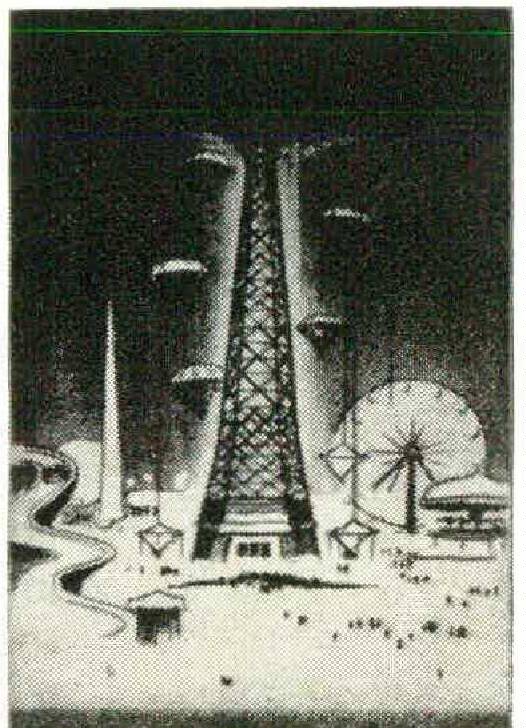
SHE ISN’T coming,”Fiona announced from the top step, then came bounding down the other three; opening the door, she squeezed into the coupe, joining Bessie on the back seat.
Fiona’s father absorbed this, hands on the wheel, a questioning profile turned toward the white house. It was just past mid-May, but the Vierecks already had put up all their screens. Most windows were pushed up. the front door stood open, and from the dim hall behind the screen came a mirror’s mute flash and the rich beesy smell of freshly waxed floors. “Not coming, eh?" said Mr. Viereck at last.
“No,” said Fiona, precise, and settled back close to Bessie, waiting for him to start the car. He turned the key in the ignition, the motor turned and coughed. But then, instead of releasing the hand brake, he gave a stagy remembering shake of the head; reaching over to snap open the glove compartment, he began to rummage through the junk inside.
Why, he’s just stalling, realized Bessie, startled, as he groped past a flashlight, whisk broom, heap of rags. He’s hoping she might still come running out and say she’s changed her mind, she’ll come. But she won’t, because they’ve been having a fight, which is just what’s been happening all this time. Bessie thought this over. It was now twenty minutes to ten. She had come on the dot of nine, as asked, to find Fiona waiting outside.
“Mother may not come,” she said by way of greeting, waving to Bessie’s father in the Ford; Bessie’s father, who had met Fiona just once, neither returned her wave nor smiled. Then, as though she had explained something, which she hadn’t, Fiona led the way into the house, going through the living room, where they usually sat, to the glass-enclosed porch at the side of the house. As a room it always disconcerted Bessie, for unlike all the sun parlors and solariums she knew, it had no wicker chairs, straw rugs, or rubbery jungle of potted plants; here the floor was thickly carpeted in green, the chairs and couches had walnut frames, and the only thing blooming was the roses on the slightly faded chintz.
For ten minutes she and Fiona went over, once again, the list of things they wanted most to see at the fair. As they wrangled about the order of their choices, the Vierecks’ voices, unwrangling, low, and the restless tread of someone’s feet drifted down from the room overhead.
“Is she sick?” Bessie finally ventured, impatient to start and growing annoyed; she’d had to wake her father from his Saturday sleep to get there on the dot of nine.
“Oh, no,” said Fiona, very cool, getting up. “She’s just been asked to lunch at the club. Come on, let’s go and wait outside.”
The glass-paned door opened onto the garden, a large old-fashioned garden that Bessie loved, with straight turfy paths between the beds, a birdbath, a rose arbor at its far end, and in the center, at the crossing of the paths, a silver ball on a classic stone column which mirrored the world in miniature. On its right side was a netted steel fence over ten feet high, which Bessie had always assumed was there to protect the house and garden from any wild balls winging in from the greens. The Vierecks’ house stood uncomfortably close to the fourteenth hole of a private course whose clubhouse topped a distant hill. Neither girl’s parents belonged to this club. Fiona’s had once, but no longer did, just as Fiona had once gone to a private school three towns away, but no longer did. Though with Bessie’s parents it would also have been the money, this had never come up; they had not been and were not ever likely to be asked to join the club.
For ten minutes they wandered about the garden, trying not to muddy their shoes. It was the first sunny day after two weeks of rain. The earth was spongy, the air soft and moist; the flowers seemed to lean up toward the sun. Beyond the fence tiny golfers trailed up and down the rolling greens, thick as carpets, stuck with flags. Maple seedlings floated down from the big tree, looking like pale-green shiny moths. From an upstairs window came the ringing of the phone. Fiona stopped in her tracks, looked up, then wandered away from Bessie, going to an apple tree just in bloom. Perplexed, Bessie watched her break off some fat buds, shred them, fiercely grind them into the sod. Then at last there was the crunch of tires on gravel, a honk from the front of the house; they went around and found Mr. Viereck alone in the little gray coupe. As they came to the car he rolled down his window. “Fiona, will you please run upstairs and see if your mother is off the phone.”
Now, clutching a road map, Mr. Viereck slammed the glove compartment shut and, releasing the brakes, let the car roll down the gently graded drive. Both girls looked at the road map he was shaking open with his right hand, and then both looked quickly away: Fiona’s father had lived on Long Island all his life. As the car jolted over the muddy ruts of the lane which led to an asphalt boulevard, Fiona rolled down her window and leaned out, sniffing, taking the air like the family spaniel out for a drive. Mr. Viereck began to whistle gaily, but Bessie, like Fiona, was not deceived — he was clearly shaken by her not coming, by their long and secret fight. What she could not accept was their fighting at all, and with such artful softness to boot; when her own parents fought, which was always, doors slammed, choking voices strained and rose. What could be so important about lunch at the club? she pondered, knowing very well Mrs. Viereck went there too often to make this any sort of special event. Or who could be so important? Then, inexplicably, she began to sneeze.
“Sundheit,” said Mr. Viereck up front.
Bessie groped wetly for a handkerchief.
“What’s that?” asked Fiona, peering into Bessie’s opened purse, seeing very well that it was a crisp new ten-dollar bill.
“Some money,” said Bessie casually, but blushing.
“Some money.” Fiona laughed, and explained to her father: “It’s a ten-dollar bill.”
Mr. Viereck caught Bessie’s eye in the rearview mirror and winked. “You planning to treat today?”
“Mother thought I ought to have it,” she mumbled, for the moment hating both of them, particularly Mr. Viereck, for hitting unerringly on the truth. “You should offer to treat for something,” her mother had said, her brow earnestly furrowed. “It’s only right after they’ve been so nice to you all the time.” Bessie, knowing very well that it was not right at all, had taken the money rather than hurt her mother’s feelings.
“Your mother’s quite right,” said Mr. Viereck, turning off the asphalt boulevard and entering a freshly paved highway that branched away from the town. “It’s a good thing to have. It would come in awfully handy if you were to get lost.”
Bessie smiled grudgingly. Fiona said, “Imagine getting lost in a place like that.”
Mr. Viereck stuck a cigarette between his lips, then punched the dashboard lighter in. “I gather the trylon and perisphere are first. Then where do we go from there?”
Fiona, perking up, rattled off their list, but to Bessie’s surprise, concluded with something they hadn’t discussed.
“The parachute jump!” Her father laughed. “What on earth is that?” He patiently listened while Fiona explained, then said, “Oh, I think we can pass that up.”
“But why?” Fiona demanded, frowning.
“It just doesn’t sound very special to me. Cheap thrills. All that. There are hundreds of better things to see.” To show that the subject was closed, but completely, he turned on the car’s little radio. A barrage of static, then the coupe was afloat with melting trombones, loud and sweet. Benny Goodman? wondered Bessie, who had just been given a bedside radio; she listened happily, waiting for him to change it, but to her surprise he left it on. Fiona sniffed disdainfully at the music and sulkily slid down on the seat. “Oh, don’t let them fight now,” Bessie prayed. Seeing her lovely day slip away, filled with forebodings, she stared out the window on her side, scanning the muddy marshland, too soon, for a reassuring glimpse of sunstruck white towers rising, like some New Atlantis, from Flushing Bay.
HE KEPT several paces ahead of them, hands bunched in pockets, shoulders sloped, never moving his head to look at the wonders freshly unfolding on every side. The air was a singing blue, alive with fountains, flags, birds, musical horns. On the ground, flowers bloomed in brilliant mats, their unfurling petaled heads packed so close they could not stir in the faint warm wind that fanned the beds. People walked the newly paved streets wearing tremulous smiles, blinking in sun; wearing the dizziest smile of all, Bessie walked like someone in a dream.
Suddenly he stopped and waited for them. “You hungry, girls?” he asked when they caught up. Shocked, Bessie could only stare at his face, gone a waxen yellow-white, glistening on the brow and upper lip.
“Not really. Not yet,” answered Fiona, thoughtlessly speaking for Bessie, who had had breakfast at seven and who suddenly realized she was starved. To Bessie’s further annoyance, Fiona now reached out and, picking up Bessie’s arm as though it were some sort of object, pushed back her sleeve to peer at the Mickey Mouse watch she wore on her wrist. “It’s only twenty past eleven. Could we wait a little while?”
“Anything you want. It’s your day,” he said with false heartiness, to Fiona alone, and began to look searchingly about. They had come into a large dazzling square, formed by four white buildings soaring high, aflutter with blue, red, and yellow flags. In its center was a large round fountain, where arcing stone fishes jumped through golden hoops and sent fizzing jets of water, which crisscrossed in rings, from their open mouths. Nestled against one of the large buildings across the square, through polychrome mist, was a small squat structure of glass and brick which Mr. Viereck spied with relief. “I tell you what,” he said. “You two go and sit on the edge of the fountain there and wait for me. I’ll only be a minute, so don’t you dare move or talk to anyone — you hear?”
He glared at Fiona as he spoke, as though trying to force her to drop her eyes, narrowed, piercing, from his own pale face. “Yes, Daddy,” she answered sweetly. “Of course.” And while he watched she marched, docile, to the basin’s rim.
Bessie followed, and in a strange tense silence the two girls sat down. Fiona began to hum to herself, keeping time with her feet, letting her rubber heels bounce with an annoying resilient thump off the stone. In an anguish of indecision, Bessie finally felt she must speak, acknowledge what she had steadily tried to ignore for over an hour. “Fiona, are you mad at me? Is there something I’ve said or done?”
“Don’t be silly,” said Fiona lightly, devastating Bessie, who had needed the complete acquittal of, “Mad? Why should I be mad?”
Bessie stared at the couple ambling by, wistfully noting the open pleasure on every face. Determined, she tried another tack, and with grim brightness said, “It’s really like another world. Don’t you think it looks something like that place in Lost Horizon?— I forget its name.”
“I wouldn’t know,” said Fiona, heartless. “I didn’t see it. Mother wouldn’t let me go.”
Bessie, whose mother had all too willingly let her go alone to a Saturday matinee, sat frozen, mute, finally letting herself see what she had sensed Fiona was doing all along. But how hurt she must be to sink to this, Bessie thought, trying to be fair. The miracle of her friendship with Fiona had been that this had never happened before. Up until now she had been spared all corrections that might have been made, the endless differences that might have been pointed out. She couldn’t blame me for their fight, thought Bessie. Does she think she stayed home because of me? She wouldn’t. She likes me, thought Bessie, immediately hating herself for the lie. The truth, which was negative, was simply that Mrs. Viereck did not dislike her actively. She tolerated Bessie as the one new friend Fiona had made at the public school, as she tolerated many other irksome things that Fiona brought home — a mania for reciting “knock, knocks,” a craze for collecting playing cards, an insistence on owning a “beer jacket” where she could crayon witty maxims like “Vas You Dere, Charlie?” In her case, Bessie had clearly seen that Mrs. Viereck was surprised — she could have been worse.
Though she fell in love with the Vierecks, Bessie never expected them to love her back; she was at an age where the unrequited crush is a law unto itself. The months she had spent as Fiona’s friend, a person privileged to glimpse her home, her parents and their way of life, had kept Bessie happy, but she had always known it would end. She had just not expected it until next fall, when by some mysterious means Fiona would be sent away to boarding school. Seeing the end loom threateningly close, Bessie thought: She is angry with me because for the first time I can see it’s not what I thought — and what she needed me to think. It’s not at all perfect; there is trouble, real trouble, and probably always was.
Spray, lifted by gentle winds from the basin, mirrored sunlight, made rainbow mists. Bessie faintly shivered and stood up, announcing, “I’m getting wet.”
“What do you care?” asked Fiona flatly, staring off.
“I care. My new suit will get spoiled.”
“Oh,” said Fiona politely, and looked away from Bessie’s suit. It was pale Junket-pink with a dotted swiss blouse whose piping and furry dots were pink too; on her thirteenth birthday Bessie had at last been given permission to help pick out her clothes. Without envy or rancor Bessie stared at Fiona’s blue cotton dress and Shetland cardigan; she had long ago seen that neither she nor her mother could ever arrive at the rightness of what Mrs. Viereck chose. But she could not let Fiona do this. She sat back down and, turning half around, peeling off a cotton glove (another mistake), trailed two fingers in the basin. The water was as cold as her heart. “Do you suppose your father’s all right?” she asked idly, watching her fingers’ miniature wake.
“What do you mean? He only had to go to the john.”
“He’s taking so long,” said Bessie, hating what she was doing, yet unable to stop. “And I did think he looked rather funny when he went in.”
“Funny how?”
“Oh, pale. And sickish.”
“Oh, that,” drawled Fiona, then gave an arch laugh. “Haven’t you ever seen anyone with a hangover before? No, I don’t suppose you have,” she went on, much too rapidly. “They were at a dance at the club. When I woke up at two to get a glass of water, they still weren’t home. It’s a wonder he got up at all.”
Bessie, not listening really — she knew the signs of a hangover well, and Mr. Viereck had none of them — sat fidgeting, then finally rose. “I’m going in there too. You want to come?”
“No. I don’t have to. Besides, one of us has to wait. If Daddy found us both gone, he’d have a heart attack.”
FIVE minutes later Bessie came out through the swinging door, blinking at the blinding sun, pulling her gloves back on over hands that reeked of liquid soap.
“There you are!” cried Mr. Viereck, pouncing on her breathlessly. “You thoughtless girls— didn’t you know you might give me a terrible scare?”
Behind him Bessie saw the fountain, fizzing spray; on the rim where she had left Fiona sat two fat women massaging their feet.
“I’m really surprised at Fiona,” he went on, looking past her, still watching the opening and shutting door. “She’s really so considerate —” He trailed off, taking Bessie in. Wheeling about, he stared at the fountain, then wheeled back on her furiously. “Where did you leave her?”
“Sitting on the fountain rim. She wouldn’t come just because she didn’t want you to be upset.” Remembering precisely what Fiona had said, she wondered if he had trouble with his heart.
For a moment they both stared, rather dully, at the fountain basin, ruffled by wind, where the bright blue water was clearly not more than four feet deep.
“Are you sure she didn’t follow you?”
“Well, no. I’m not quite positive. She may have decided she had to after all,” said Bessie, and confusedly blushed. “She could have been in the other room while I was washing my hands.”
“Would you please go back and have a look,” he said through his teeth.
For five minutes Bessie stood in the center of the room, deafened by rushing water, gabbling women, slamming doors, turning like a top to scan the basins, mirrors, scales, towel machines in turn. Afraid of the man outside, she went back out reluctantly, but found, to her relief, he had already decided she would come back alone. “Though it isn’t like her, she’s probably gone into one of these buildings to have a peep. This place has really bowled her over; she can’t seem to bear to miss a thing. No sense in trying to guess which one she’s in—we’ll just sit down here and wait for her.” With this he went to the fountain and sat down on the rim exactly where Fiona had been; the two women had put on their shoes and tottered away. Bessie threw a longing look at a dry blue and orange bench, but followed him. As she sat down he lit a cigarette, and from her careful three feet away, she could feel his dislike and blame fuming at her like the smoke he exhaled through his nose. The unfairness of his blaming her for leaving Fiona, self-possessed, cool Fiona, all alone filled her mouth with a bitter taste like tinfoil. He smoked in nervous jerky puffs, the way his mind, Bessie thought, would be jouncing from one explanation to another of where Fiona might really have gone.
“Did you two talk to anyone?” he asked at last, reaching around in back to douse the cigarette in the water of the pool.
“No, we didn’t, Mr. Viereck.”
“Did you notice anyone hanging about?”
“No, Mr. Viereck. No one at all. Fiona and I both know about that.”
“Fiona knows about what?”
“Strangers that try to talk to little girls.”
With a look of utter repugnance he took her in, all eighty-five beginning-to-change pounds of her. “You’re thirteen. Fiona’s only twelve and a half. Fiona knows nothing about the things you claim to know about.”
Seeing how he already hated her, Bessie saw no point in contradicting him. Clearly he did not know that other Fiona, the one who could tell without a blush or giggle or smirk about the man on the bus, the man in the shoestore, the old Russian dancing master who had taught her ballet. He’s nothing but a bully, she thought, maddeningly close to tears, beginning to hate him reciprocally. She was now so hungry she had faint cramps, and not at all ashamed to have an appetite under the circumstances; wherever she was, Fiona was quite all right — she was certain of it.
“I don’t see any sense in going to the police,” he was muttering, reasoning with himself. “It’s only been about twenty minutes. No sense in making a fuss. She’ll be along any second now. And when she does, I’ll give her a thrashing she’ll never forget.”
No you won’t, thought Bessie wearily, and watched him light another cigarette. Where was the face, the fine, composed face she had once thought so remarkable for anyone’s father to own? The cheeks suddenly looked too full, pallid, and puffy, the broad mouth never stopped working as he licked his lips or chewed on the cigarette, the smooth brown hair was raked into tufts by his hand. How weak he is, she thought, astonished. He is weak, and she — she is cold and proud and cruel, as Fiona is going to be. With sudden strange longing she thought of her own mother, dowdy with tears and rage as she cried, “I called there. You weren’t there. Think of something better this time!” But what they do is worse, Bessie thought, ashamed of her own shame in the past, her intricate schemes for keeping Fiona from her house.
Feeling almost giddy, she got up and stood in front of him. Unwillingly he looked at her. “I think I know where Fiona might have gone.”
He said nothing, waited with narrowed eyes.
“I think she might be at the parachute jump. It isn’t far. You could see it in the sky as we came into the square.”
Though he deeply flushed, she saw that he knew this was precisely where Fiona could be, and would never forgive Bessie for being the one to think of it. “She wouldn’t do that,” he said, but knowing better than Bessie that she would, rose and for a moment squinted helplessly about. She watched him consider what would happen if their paths crossed, if Fiona came back to find them gone, and finally offered, “I could wait here while you went.”
“You will come along with me.”
Fiona stood with her back to them, fingers curled through the loops of wire fence that separated idle spectators from those who wished to jump. She was a little to the right of the ticket turnstile, her head thrown back as she looked up, up at the moving wires, taking a new load of adventurers to the top. A few already regretted their daring; tentative shrieks and moans floated down from the blue. Mr. Viereck’s voice carried above them; Fiona started, slowly turned.
Unblinking, blank-faced, she took them in, barely glancing at Bessie, watching the man coming at her, fast. From over the shoulder that came down to her level, held her pinioned, immobilized, she stared at Bessie with cold and vacant eyes. Hit her, Bessie silently urged, seeing Fiona desired it with all her heart. Hit her hard — it’s your only chance. But he finally stood up and brushed at his eyes with the back of his hand and, breathing hard, said, “Do you know what a fright you gave us? Do you have any idea of what you’ve done?”
“I’m sorry,” said Fiona, simply, offering nothing else.
“Sorry?” he repeated, his voice now cracking. “I ought to give you the whipping of your life!”
Patiently standing, Fiona nodded.
“Why did you do it?” he went on, damning himself forever.
As Fiona shrugged, her beige Shetland cardigan boxily jerked up and down. Bessie saw that she had removed her arms from the sleeves and now wore it as her mother always wore hers, jauntily thrown about the shoulders, one fastened top button holding it in place. “I don’t know,” Fiona said irritably. “I just felt I had to. You said we couldn’t. It’s not at all cheap. It’s loads of fun.”
“Just felt you had to.” Mr. Viereck’s laugh was as bad as Bessie feared. “Just wait until your mother hears that explanation of —” He stared at the two estranged girls. “But she won’t. She’d never forgive you, Fiona, you know.” You mean you, thought Bessie, listening because she was there but feeling as remote as the jumpers silently dangling overhead. “No. There’s no sense in making a fuss. We simply won’t tell her about it, that’s all. It never happened, the whole foolish thing — you hear?” He glared at Bessie, his last words drowned in the screams of the jumpers, dropping like stones until the silken blooming of their chutes.