On Dealing With De Gaulle
“What can you do with a man like that?” President Kennedy would remark in quiet exasperation over some new maneuver by French President Charles de Gaulle. For eighteen months, General Gavin, as U.S. Ambassador to Paris, was most intimately engaged in trying to provide John Kennedy with some useful answers to the problems of doing business and meshing American interests with those of the enigmatic man who seeks the return of France’s grandeur.
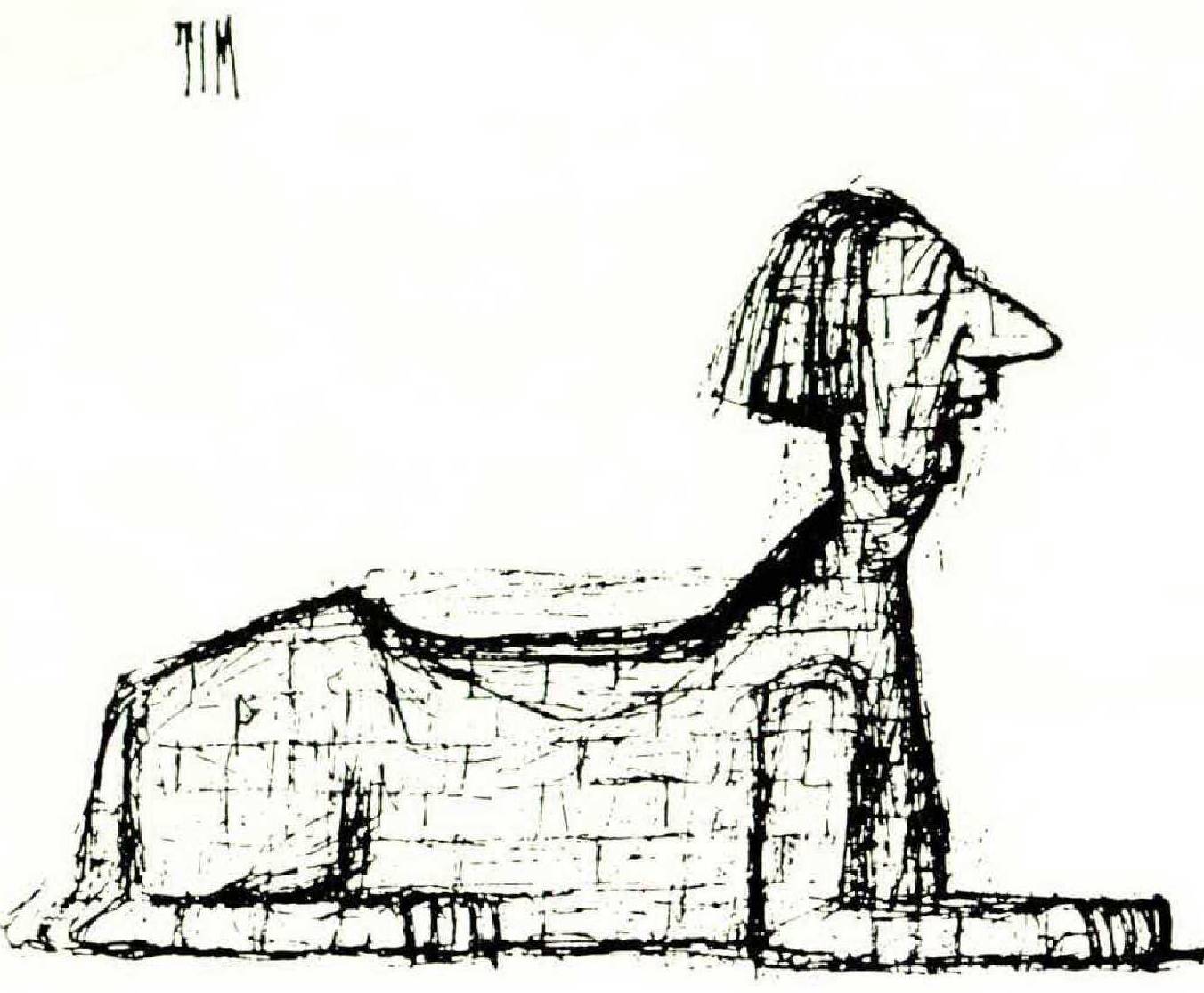
by James M. Gavin
HE is a bastard who is out to get us,” I once heard a State Department officer describe General de Gaulle. I was a bit shocked, but in that description is all the frustration, anger, and misunderstanding that have characterized our relations with General de Gaulle since he became President of France.
I think that President John F. Kennedy understood De Gaulle as well as anyone in public life did. When the President came to Paris in May of 1961, he and General de Gaulle got along very well from the outset. I attended almost all their meetings as well as the usual round of social affairs, and the impression that I gained from their first meeting was that De Gaulle admired him as an intelligent young man who had accomplished a great deal in his chosen field while still young. De Gaulle always spoke to me about the President with warmth and evident affection, even when he may have had reason to feel otherwise.
Following lunch at the Elysée Palace one day, after I had been in Paris more than a year, General de Gaulle and I had a conversation about conditions in Europe. There had been much speculation in the press about the likelihood of American troop withdrawals. The Khrushchev-inspired Berlin crisis of late 1961 had quieted down, and Washington was concerned about the gold flow and the high cost of maintaining sizable forces abroad. I thought, therefore, that it would be a good opportunity to discuss our intentions in Europe.
I told General de Gaulle that we were most sincere in our intention to participate in the defense of Europe from the very outset if hostilities were to occur. Further, that we would regard an attack upon Europe as an attack upon us, that we had no thought of withdrawing from Europe, that indeed this would be a return to isolationism. And we were not going back to that. I added that thousands of American young men who died in combat were buried in Europe and that we had a moral obligation to them, and to Europe, which we meant to fulfill.
He said that he knew both World War I and World War II from experience. In World War I, we waited until France had been at war for almost three years, had been bled white, and was on the brink of disaster before we came to its aid. In World War II, France had been overrun and occupied by the Germans, and then we recognized the enemy-established Vichy government. Further, he said, he was well aware that we did not enter the war until United States territory at Pearl Harbor was attacked. He went on to imply that it must be assumed that we would always act in our own self-interest.
I made a report of the conversation to our President and a short time later called on him in the White House. He was still angry about it and told me, in no uncertain terms, what I should say to General de Gaulle. He pointed out the great financial burden that the United States was continuing to assume by maintaining the Seventh Army on a war footing in Europe. He talked also of the Marshall Plan and continuing aid that restored the economic health of Europe. Pointing out his prompt reaction to Khrushchev’s threat to Berlin in 1961, he made it emphatically clear that the defense of the United States begins in Europe and that he intended to see to it that it remains there.
As I was leaving his office, a member of the White House staff said to me, “You are not going to say that to General de Gaulle, are you:’” and I assured him that I would. Actually, I made a brief memorandum at once, and when I called on General de Gaulle several days later, I read it to him. He merely blinked, thanked me, and asked me to give his best to President Kennedy. Later, when I was discussing our policy on nuclear matters, De Gaulle stated that while he, of course, did not agree with us, if lie were in our position, he would probably pursue the same policy.
On more than one occasion when President Kennedy became quite exasperated with General de Gaulle’s attitude, he would say, as though to himself, “What can you do with a man like that?” To an increasing extent, however, he came to understand why De Gaulle took the view he did of some fundamental problems. President Kennedy always liked to discuss ideas and opinions at odds with his own, and I had the impression that he seemed increasingly willing to concede that De Gaulle may have been right on some of the issues on which we had different views. I think, also, that he particularly appreciated General de Gaulle’s strong anti-Communist support, even though at times his views were a cause of difficulty for us and our allies.
For example, in the fall of 1961 when Khrushchev threatened to cut off Berlin, President Kennedy, after reinforcing our Army and Air Force units in Europe, sought to find a basis for negotiating. De Gaulle refused to go along with us, believing as he did that our position was a just one and that any offer to negotiate on our part would be considered a sign of weakness. He felt that it would be misunderstood by Khrushchev, and that if we allowed ourselves to plunge deeply into serious negotiations, Khrushchev would at once turn to the West Germans and offer them unification of Germany on his terms. The Russians would insist that they were realistically dealing with “the overall problem of European security,” which means getting the United States forces out of Western Europe.
Khrushchev made a move in this direction in December of 1961 when he handed a ten-page memorandum to Hans A. Kroll, West Germany’s ambassador to the Soviet Union. A reborn Reich is an ever-present and worrisome preoccupation not only of France but of all Europe. It is conceivable that as a result of Soviet diplomatic skill and threats of force, Germany would find it advantageous to accept a program of unification and neutralization. Such a treaty would be similar to the one which neutralized Austria, except, of course, that we and our allies were party to that treaty. If this were to occur, all U. S. forces would be withdrawn from Europe, and, as a French minister expressed it to me, “France would be next.” On the other hand, remote as it may seem, if the U.S.S.R. were to succeed in exploiting the great industrial and military potential of a united Germany, then free Europe would be in grave danger.
Today, in retrospect, our exploration of a basis for peace on the Berlin issue appears to have been successful; at least we are talking, not shooting. But General de Gaulle will always be extremely reticent about entering into negotiations with the U.S.S.R. about anything that is rightfully ours, such as access to Berlin.
On these and other issues both Presidents exchanged views from time to time as they sought to attain national goals, knowing that although their short-term objectives may have been different, their final objectives were much the same. I think that they slowly began to acquire a better understanding of each other’s point of view. It was my impression that this was particularly true of President Kennedy, and I know that he began to realize too that the trouble was not entirely in Paris, that indeed much of it was in our own State Department. When I last talked to the President, in late October, about three weeks before his assassination, he said to me, rather happily, I thought, “Well, I am going to see the General in the next few months, and I think that we will be able to get something done together. In the meantime, though, I must get something done about that State Department.”
I WAS given the usual round of briefings by the State Department before going to the Paris post early in 1961, and I was rather dismayed by some of the views that were expressed. I think it is fair to say that at the so-called “desk level” in the Department there were three prevailing illusions about France at that time. The first was that General de Gaulle, like his predecessors, would not be long in office. Between World War II and De Gaulle’s election to the presidency in 1958, France had had many presidents, some of them only days apart. A corollary to this premise was that if our policy did not match De Gaulle’s views, this should not be of too great a concern to us since his successor, whom we could expect momentarily, might have views more compatible with our own.
The second illusion was that he was developing his nuclear force for the sole purpose of gaining prestige. It was considered to be too expensive, not popular with the French people, and of little or no military value. It was expected that it would be discontinued at almost any time. When I questioned this, I was urged by the Department briefing officer to read the arguments against the Force de Frappe that had been presented in the Chamber of Deputies. The principal arguments were that it was entirely too costly, that it was not necessary since the United States had an adequate nuclear arsenal to defend the free world, and that there were many more compelling needs in France.
Finally, there was serious doubt that De Gaulle had any solution to the Algerian situation. The belief wets that the almost one million Europeans in Algeria simply were not going to be deprived of their land and property, and thus that the fighting, in some protracted form, could be expected to go on indefinitely. While these were not the opinions of everyone in the State Department, they were the opinions of many in key positions where our policy was drafted.
Actually, the Algerian situation proved to be one of the most difficult of all for us to deal with. From the moment of my arrival in Paris on March 19, 1961, the GAS bombings continued to increase, and there was much sympathy in America for the Algerians. France itself was bitterly divided. I had numerous conversations with Louis Joxe, the minister appointed by De Gaulle to deal with Algeria. Fie was a very intelligent, hardworking man who was determined to solve the problem, and convinced that he could. At one time he considered the possibility of setting up enclaves around several of the principal cities into which all Europeans would be moved. It would have been an expensive program, but it might have worked.
I had a long conversation with General de Gaulle one day about his thinking on the situation. He pointed out the very great cost of continuing the war, and said finally that if he had to, he would bring all Europeans back and put them on a dole for the remainder of their lives, and it would cost him less than continuing the war. I asked him about the oil in the Sahara, pointing out the tremendous research and development investment that France had made. He replied that as far as he was concerned, if it cost one more franc to take the petroleum out of the Sahara than the petroleum was worth, he would leave it there. With a characteristic gesture of his hand, he seemingly waved the problem aside saying, “There is lots of petroleum in the world anyway.”
As it became increasingly clear to the Europeans that De Gaulle meant just what he had been saying publicly, a serious uprising occurred. Late in the spring of 1961, General Challe and his followers in the OAS announced their takeover of Algeria. The United States was, at once, accused by the Communist press of supporting Challe. Within twentyfour hours, newspapers normally friendly to us began to repeat the Communist charge. On Sunday evening. April 23, 1961, Prime Minister Debré spoke on television, urging the people of Paris to go to Orly Airfield to persuade the Challe parachutists, if they landed, to turn back. The situation was becoming critical, and our own position a most difficult one. To do nothing would lend support to the rumors of both the right and left alleging U.S. participation. To offer support to the French government might well be considered interference in its internal affairs.
Nevertheless, the latter seemed to be the proper course of action to pursue, and I therefore cabled President Kennedy, asking permission to do so. He promptly authorized me to offer our assistance to General de Gaulle, and I went to the Elysée about midnight. General de Gaulle, with characteristic aplomb, had already retired. But the following morning he replied warmly, expressing his appreciation for our offer of assistance. In a few days the rebellion ended, and from then on he and Minister Joxe continued to press for a final solution. He succeeded at last; the Evian Accords were signed and by referendum overwhelmingly approved by the French people. The negotiations had called for all his skill. But to the colons and to many in France it was a disaster, and many Frenchmen felt that they had been betrayed.
Even though some of the top policy makers around the President shared his more detached and objective view of General de Gaulle, it is not surprising, when I recall the attitudes I found at the operating levels of the State Department, that the past four years have been rather sterile of accomplishment in our dealings with France and the Common Market countries.
IF WE are going to find a way of dealing with De Gaulle, we should first, try harder to understand him, and second, take a more realistic view of the problems that now confront our two nations.
De Gaulle is a very complex individual, and it is my impression that he likes to be enigmatic, and at times deliberately difficult. One of his close associates in London, his Minister of Interior, Emmanuel d’Astier, wrote of him, “De Gaulle was to make of Nietzsche, Charles Maurras, and Machiavelli a very personal salad.” De Gaulle himself, writing in Fit de l’Épée, described the ideal head of state as one having “une forte dose d’égoïsme, d’orgueil, de dureté, et de ruse” — a strong dose of egoism, pride, endurance, and a sense of cunning, or ruse.
It is to this latter, a sense of ruse, that most Elyséeologists attribute his famous comment to the assembled crowd in Algiers shortly after taking over the French government. “Je vous ai compris” (“I have understood you”). Tattle did they realize that in a few years he would turn over Algeria, lock, stock, and barrel, to the Algerians, and from that experience would emerge as the strong man of Europe. As one British writer put it, “Machiavelli was right: the Prince, after double-crossing everyone, was stronger at home and abroad than ever before.” There is no doubt that De Gaulle believes that egoism, a certain sense of self-esteem, is becoming to a head of state.
One of the favorite French stories about him is of an incident that took place on a campaign trip in the provinces. Upon being asked what France would do if anything were to happen to him, he replied thoughtfully, “You would have to find another De Gaulle.” His pride is well known, He surprised me at one of my early meetings with him by saying, without any query on my part, ”I want you to know that I have never asked your country for nuclear aid despite the reports in the press to the contrary.” I assured him on this point. Nora Beloff, in her excellent book The General Says No, states flatly, ” The General is too proud to ask for what he wants.” Perhaps this is true, and explains in part why the nuclear question was never raised in the discussions with Prime Minister Macmillan prior to the rejection of the United Kingdom’s attempt to enter the Common Market.
All of us who followed those discussions closely knew that the nuclear problem was at the heart of the United Kingdom’s acceptability. The British press urged that the subject be raised. For example, the Economist counseled Prime Minister Macmillan, “He should make it quite clear that —once in — Britain will regard itself, atomic bombs and all, as wholly committed to Europe and not just a parttime representative from another Anglo-Saxon world.” But the nuclear question was not raised. Instead, the United States and Britain signed the Nassau Pact, reassuring Macmillan of what he considered to be an independent nuclear capability. It also made clear his intention of keeping special ties with us. The nuclear question was critical and should have been discussed, but De Gaulle was too proud to raise it, and, indeed, believed that if the United Kingdom were sincere in its efforts to join the Common Market, it was Britain’s responsibility to introduce it.
De Gaulle’s periodic moves in foreign policy are perhaps the most vexatious problems that our foreign policy people must deal with. The Bizerte crisis in 1961, the recognition of Red China, the proposed neutralization of Vietnam, and the more recent recommendation that we return to the gold standard all are initiatives that are, at least, irritating and at odds with our own policy. When the Bizerte crisis broke in the summer of 1961, Adlai Stevenson hurried to Paris in an urgent effort to settle the difficulties between Tunisia and France and thus avoid an embarrassing showdown in the United Nations. De Gaulle refused to budge from his position and even refused to defend himself in the United Nations, leaving that to the United States. This adamancy is particularly irksome to our foreign policy experts, since they believe that De Gaulle’s independence has been gained, and can only be maintained, under the umbrella of our nuclear strength. But De Gaulle has always acted independently, as though he were dealing from a position of great strength, and his policies have been consistent with his writings. For example, in his book of memoirs, which was published in 1959, he described his goals for Trance in these words:
Ensure security by preventing; the birth of a new Reich. Maintain contacts with both East and West, if necessary making alliances on either side without ever accepting anv kind of dependence. . . . Lead the states bordering on the Rhine. Alps, and Pyrenees, to unite politically, economically‚ and strategically. Create out of this entity the third planetary power and. if necessary, become one day the arbiter between the Anglo-Saxons and the Soviet camp.
He has consistently adhered to this policy. One of his most bizarre and most interesting undertakings was his journey to Moscow in 1945. In his conversations with Stalin and Molotov, he indicated clearly that he was ready to make a deal in the interest of France, despite any views that might be held by Roosevelt or Churchill. His recent recognition of Red China is consistent with this.
CLOSER relations with Red China will fill two needs in French foreign policy. They will provide a basis for understanding, and negotiation, in the event of our withdrawal from Vietnam. They will confront the U.S.S.R. with a potential enemy on another front if it ever launches an offensive war against Western Europe.
The urging by General de Gaulle that we accept a neutralization of Vietnam does not reflect increasing benevolence toward the United States; nor is he trying to help us out oi a difficult situation. Quite the contrary; he is looking out for France. But I do believe that we should seek to negotiate a plan that will provide for an enforced neutralization, supervised by an impartial commission, possibly the UN. And my reasons are entirely different from those of the General.
I was Chief of Plans and Operations in the Department of the Army at the time of the fall of Dien Bien Phu. Because of the tremendous volume of military aid that we were providing, I followed the events in Vietnam very closely. Shortly after the fall of Dien Bien Phu‚ I flew to Saigon to confer with the heads of the principal missions: General O’Daniel of the U.S. mission and General Ely of the French mission. I also had an opportunity to talk to Diem, who was later to become president. I was anxious to learn of conditions firsthand because we had been seriously considering deploying major forces into North Vietnam and we might, in the not too distant future, find it necessary to do likewise in South Vietnam. The Chief of Staff, General Ridgway, had sent a team of officers to look into the situation, having in mind the possibility of our intervention with ground troops.
Upon our return, long discussions took place in the Pentagon about the nature and extent of the war that might follow. Some things were clear. We would be going to war with China. All the weapons, trucks, artillery, medical supplies were being supplied to the Viet Cong by China. Further, in the event of our entry into Vietnam with ground forces, we could be reasonably sure that the Chinese would reopen the Korean War. (It is interesting now to note that a spokesman for China recently stated that China would reopen the Korean War if we intervened in North Vietnam.) Finally, if we were to go to war with China, the place to do it was not in Vietnam, where China would obtain sanctuary, as it did along the Yalu in the Korean War, and where the war would be thousands of miles from China’s real source of war-making potential — the mineral and industrial resources of Manchuria. If we were to win, the war would have to be waged in north China, with the occupation of Manchuria as the objective. And it would have to be undertaken with the support of our allies and the United Nations. This was and is impossible.
On March 16, 1965, it was announced in Paris that France would once again extend credits to the North Vietnamese government. At the same time it was pointed out that both France and North Vietnam maintained commercial missions in each other’s capitals. The State Department reaction to this was characteristic and prompt. Speaking at a national foreign-policy conference in Washington on March 16, 1965, Undersecretary of State George Ball, in a thinly veiled reference to France, accused that nation of actions designed toward “weakening or dismantling the institutions and arrangements through which America and Europe cooperate.”
There is another aspect of the French recognition of Red China that has significance. France has survived as an independent political entity because, among other things, it has confronted its most dangerous foe, Germany, with the prospect of a twofront war. Its diplomatic relations with Russia have had many ups and downs, but twice in our time Germany was caught and destroyed in the vise it feared most: a two-front war. Now in an age of nuclear-power politics, France looks to the East again, but this time to regard apprehensively the Soviet colossus. De Gaulle is determined that France shall have the capability to defend itself even in a nuclear war. As he expressed it to the French people in a television broadcast of December 27, 1961,
Who in good faith can dispute the fact that France, directly threatened as she is and seeing that other nations have the means to destroy her in a second, should also be armed so that no state can contemplate killing her without itself risking death?
In terms of diplomatic achievement he has, with his China policy, made clear that he has a potential friend in the East, on the back side of the U.S.S.R.
These are De Gaulle’s principal reasons for recognizing Red China. They bear little relation to our interests. Of course, there is the obvious attitude that Frenchmen have often expressed to me: after all, China is a huge nation and exists, so why act as though it does not? Recognition merely reflects this.
BUT it is in Europe that we find our most serious problem, as well as our most challenging opportunities. Western Europe, that small cape on the Eurasian land mass dominated to the east by the Soviet giant and to the south by the turbulent continent of Africa, is the source of our civilization and of our hope for the future. Since World War II we have thought of Western Europe as part of the Atlantic community. Now we must do more than think about the Atlantic community; we must act, provide leadership and guidance, in order that we have a true community of equals. Since World War II we have acted as though it were our community, as though we were to do the bidding and our friends respond to our every wish. As a consequence, we are today faced with some very troublesome problems. What are some of the more serious ones?
The basic one is the defense of Europe. Shall its defense be organized in the context of presentday NATO or on the basis of the growing economic strength of Europe itself? This is the fundamental question. We Americans are inclined to think in terms of grand coalitions: NATO, SEATO, CENTO, ANZUS — the alphabetical possibilities are unlimited. De Gaulle, however, believes in beginning with each nation as a strong and independent building block. He believes that a nation must have a will to defend itself and must develop all its resources to support that will. Only thus can it survive.
It is obvious that this view stems from France’s experience in World War II, when, as a member of a coalition, it was overrun, occupied, and saw the occupation government recognized by its former allies. Never again will De Gaulle depend upon a coalition to defend his country. He believes that even in this nuclear age it should look to its own defense first. Only tints will it be a worthwhile member of a coalition. Hence, France, hopefully a strong France, will seek to organize a confederacy of nations—those bordering upon the Rhine, Alps, and Pyrenees — as a bloc within NATO.
In the euphoria following World War II most people believed that the U.S.S.R. would remain within its pre-World War 11 boundaries, and that the free nations of the world could pursue a normal, peaceful way of life. It soon became apparent, however, that the Soviet Union had no intention of respecting the independence of those countries that it occupied after V-E Day. The coup in Czechoslovakia was particularly alarming. Throughout Western Europe an awareness of the need for a union of the free nations began to grow and manifest itself, first through the organization of the Western Union, and then through the North Atlantic Treaty Organization. The NATO treaty was signed in Washington on April 4, 1949, and it provided that “an armed attack on one or more of the bodies is deemed to include an armed attack on any of the bodies of Europe or North America. . , .” As conceived, it served a good purpose, since at that time Europe was particularly weak. For example, the United States had only lightly armed constabulary forces in Germany, and Germany itself had nothing more than internal security forces. Today Germany has sixteen divisions, and the Common Market is enjoying unprecedented prosperity. Conditions are dramatically changed from what they were immediately following World War II.
Any organization with the responsibility of planning the defense of Europe must recognize these facts. Further, since the basis for military strength is economic strength, the inevitability of the Common Market’s assuming political and military strength is obvious. And we should not be concerned when this takes place, for it was our expressed view when the Mutual Security Act was passed in 1951 that Europe should integrate politically and militarily as well as economically. Only De Gaulle with his ultranationalism has caused us to doubt the wisdom of that judgment. NATO should be reorganized so as to give the Common Market countries — the “United States” of Europe — the same position in its councils as the United States of America enjoys today. NATO’s independent posture should be recognized, and Europe should be given an opportunity to provide the commander as well as some of the lesser command positions.
In many ways it is unfortunate that the strong nationalism of De Gaulle, in turn translated into Europeanism, arrives on the world scene coincident with the great economic strength of the Common Market and the first successful fifteen years of NATO. We have spent generously of our national wealth to enable Europe to recover from World War II and grow strong, yet now this very strength, if responsive to the leadership of De Gaulle, appears to be a threat to NATO itself. For many years we wanted a strong integrated Europe; as I once heard a diplomat describe it, “We want a Europe so strong it will stand up and spit in our eye; we won’t like it, but that is what we want.” This is what we now have, and there is no harking back to the good old days when the United States could deal with each European country separately and in a manner calculated to serve our own best interests. Now we must deal with them collectively, as a loosely woven “United States” of Europe.
Unfortunately the Common Market lacks an administrative procedure for providing a spokesman from among the heads of state. The Common Market countries seriously need an administrative mechanism for electing a spokesman from time to time from among members. As it is, they depend on the random processes of politics and prestige to bring forth one man who assumes the role of spokesman. In the early days of the Common Market, Paul-Henri Spaak of Belgium was widely considered “Mr. Europe,” but the economic facts of life in the Common Market today suggest that its future leader will be either French or German. Memories of World War II are still too vivid in the minds of too many to accept German leadership hence De Gaulle’s assumption of the role of spokesman. And now this is the man with whom the United States must deal, complex, clever, proud, and a great patriot in his own country. He is a man who, from the day he passed through the portals of St. Cyr, has served free men and their interests well. He is a staunch supporter of the free world and a good friend of the United States, although always first a friend of France. It will take understanding and forbearance, as well as intelligence and skill, to work with him.