The Worst Drivers
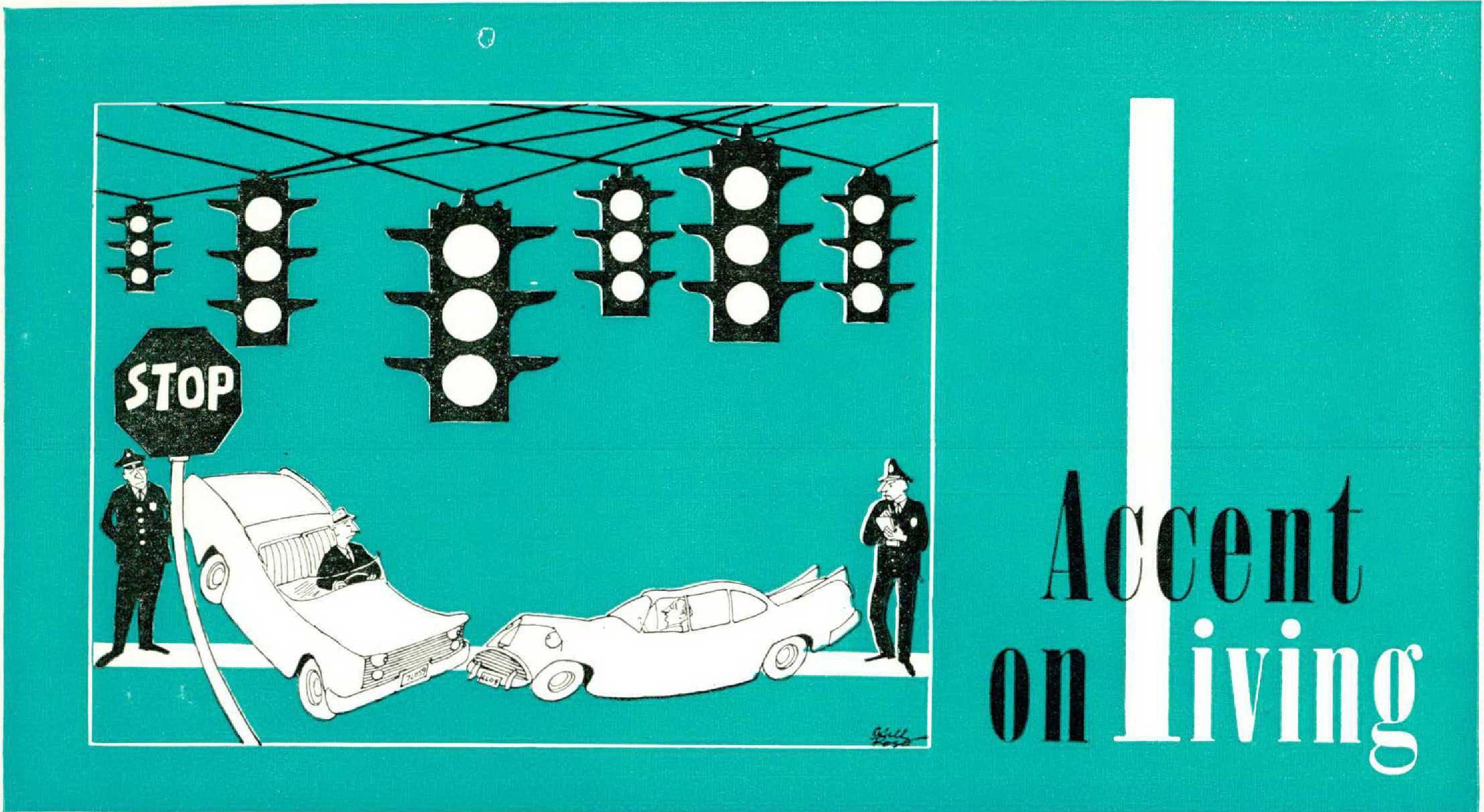
Almost anyone who drives a car is convinced that there are more bad drivers in his own community than anywhere else in the land. This is only natural, one supposes; as long as driving depends on individual judgment and skill, some will drive well and others badly. If the ingredient of manners is added to the driver’s makeup, these variables lead even more briskly to hard feelings, and the driver reaches home of an evening with the sense of having survived a virtual conspiracy against himself by the others on the road. He has escaped only by outwitting them.
However bitterly the local driver may regard his fellows, there are great areas in the United States where the driving is phenomenally good. The local driver will hoot at the statement, but I believe that California, Chicago, and New York City drivers, in the total environment they create for traffic, are unsurpassed.
Boston is deservedly celebrated, by all who have ever driven here, as the home of the worst driving. Even as I typed these words I could see from my office window a driver backing against the one-way traffic on Arlington Street preparatory to backing around the corner into oneway Marlborough Street against its traffic, and then putting his foot down hard and backing at a good 25 mph for most of the long block to a point where he had glimpsed a vacant place to park.
Backing—fast — against oneway traffic is a daily occurrence in Boston. What Los Angeles authorities would do to this kind of driver fires the imagination, but I have yet to see one flagged down here. Traffic police are in fact rather scarce around Boston. On the July 4 holiday a year ago, in heavy traffic all the way, we drove from Cambridge through Boston to Kittery, Maine, and back without sighting a single police officer of any kind, while the local drivers kept in trim by fast driving in the breakdown lanes and cutting back into line whenever they had to.
In Boston, the police are preoccupied by parking violations. Almost anything else goes, especially on the highways outside the city, and to cross the state line into Connecticut is to leave behind, suddenly, the constant sense of crisis that Massachusetts driving generates. Being overtaken on the wrong side, at 60 mph in a 50-mile zone, by a trailer truck doing 70 should not be unexpected in Massachusetts, but it does become fatiguing.
New York seems to believe in live-and-let-live, and the driving is expert more often than not, but a great deal of pent-up meanness— combative motoring at its worst — is directed against the car with out-ofstate plates. One could concede the New Yorkers a reasonable wish to revenge themselves on Massachusetts drivers for ancient wrongs around Boston, but even the cabdrivers in New York want to make plain their superiority to drivers from anywhere else.
California makes the visitor immediately aware of roads heavily patrolled. Plagued by an ever greater volume of traffic that must move over odd combinations of the superhighway and the archaic roads of pre-war days, the California community seems to believe in the function of traffic police. Without enough police, California would become immobilized. One can gauge the efficacy of the traffic police and their prestige among drivers by what happens at a sign calling for a full stop. Even if it were plain that no other car was on the road, I believe most California drivers would stop, simply to make sure of not being arrested, somehow, for failing to do so. Chicago is equally cowed by its cops. I was with a man who was driving out the North Side and inadvertently went through a red Light. No more than semirespectable himself, he was a Chicagoan of great wealth and power, so much so that his armed bodyguard was following us in another car as protection against kidnappers. I should have thought such a personage could deal with traffic police as he saw fit, and I was not prepared for his fright on his realization of what he had done. After getting clear of the intersection, he pulled over to the curb and stopped. He waited for the blast of a whistle or harsh words, but nothing happened. No police were at hand, but he waited at least a minute more, as if performing a sort of penance. “I wouldn’t have wanted the police to think I did it because I was in a hurry,” he explained to me as we set off once again.