Reader's Choice
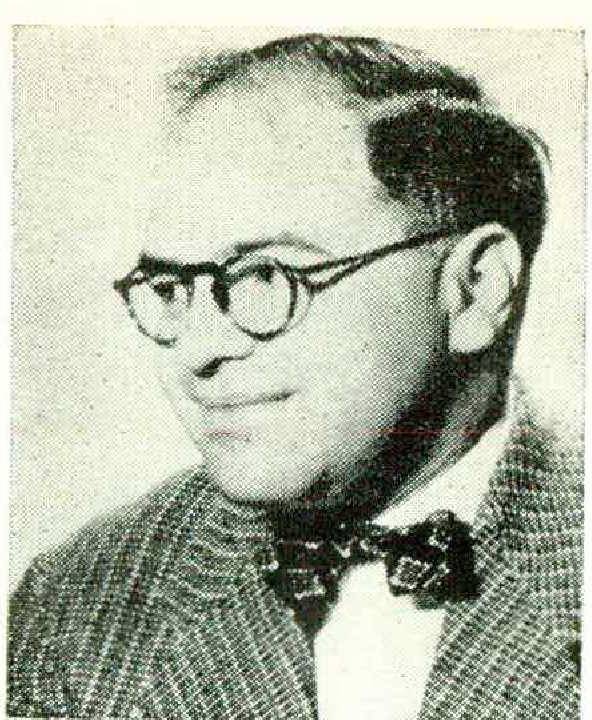
Only incest is lacking in the June selection of the Literary Guild. The adolescent, caught masturbating by his mother, does not carry through in his desire to rape her. But THE DETECTIVE by RODERICK THORP (Dial, $5.95) has almost everything else, the luxuriant details accompanied by sniggering parenthetical moralizing. It is not nice criminally to assault seven-year-old girls, and homosexuals are dirty, nasty people. But now this is how it is done.
Readers who enjoy such thrills will find the price cheap. It is not necessary to plow through the 598 pages of turgid prose to get at the stirring passages. The book is made for the browser; the flimsy plot and the inane characters are unlikely to distract the attention of the skim-and-dip reader.
No doubt The Detective will supply useful material to the social historian of the future, who will have to judge whether it really does reflect the taste of the 1960s. Learned scholars too will puzzle over the portrayal of its hero. Joseph Leland is an honest cop and a former air force pilot. He stumbles into a labyrinthine network of civil corruption, sexual perversion, and violence. He has to deal with three beautiful neurotic women, and he is not so stable himself. Yet he does not get beaten up; he holds a gun only once as a detective and then does not use it; the girl comes to his bedroom, and the telephone rings just as he gets to the buttons.
His is a curiously static role. He does his detecting in a novel fashion — by listening. The ladies take turns in pouring their little stories out, the psychologist and accountant explain the knotty points of the problem, and the denouement comes by way of a tape recording. The hero is the patient recipient of true confessions.
Joe Leland is thus a much reduced version of the detective who held the imagination of Americans in the 1930s and 1940s. The Bogart-figure was a man of action, tough, decisive, clear of illusions, and ready to stand as an individual against the world. He encountered violence, sex, and corruption at firsthand and not through the babblings of others. Yet he was unambiguous in his response to a disorderly environment, for he was guided not by conventional morality but by the personal integrity which was his sole possession.
DASHIELL HAMMETT, more than any other writer, established the identity of that character, THE BIG KNOCKOVER (Random House, $5.95), an interesting collection of his lesser known stories, comes to us with a moving preface by Lillian Hellman. The book also prints the fragment of an unfinished novel, Tulip, which contains striking autobiographical elements.
The individual pieces are uneven in quality, but none are dull; and the volume is worth reading for its vivid sense of Hammett’s work and indirectly of his personality.
The detective, before Hammett transformed him in the 1920s, had been the guardian of good against evil, a knightly character, pure and without reproach, the urban equivalent of the cowboy. Hammett’s world blurred the distinction between good and evil, and his heroes were not without blemishes of their own. Their virtues were distinctly personal courage, dignity, and patience; and to them the hero clung for their own sake, not because the client for whom he fought had any worth. Honor to Sam Spade was conformity to a code of rules which he himself invented, a means of demonstrating his own worth against the world.
The character he created corresponded to the felt needs of Hammett’s personality. The detective in almost all his stories was “I"; and it was no coincidence that he gave the first name he himself discarded (Samuel) to his best-known hero. He took his writing seriously no matter how trivial the subject because through it he projected his experience.
Hammett was almost thirty when he began to write. He had fought in the First World War, been hospitalized, and was left with illnesses which plagued him throughout life. He worked for a while as a private detective and then took to the pen, cutting himself off from his family and drifting into a bohemian existence in San Francisco. A wife and children, money and possessions were impediments to him, as they were to his detectives. His writing, whether for the pulps or in the novels that earned his literary reputation, was hard and tough, the product of a rigid discipline. “The care for every word, the pride in the neatness of the typed page itself, the refusal for ten days or two weeks to go out even for a walk, for fear something would be lost” were parts of the regime he imposed on himself. Integrity demanded a job well done.
He conformed to his own image. His badly cut leg was a constant reminder of his encounters with violence, which revolted him but which he nevertheless knew was a necessary feature of modern life. Gentle in manner, elegant, well educated, he looked on life with resigned compassion.
Hammett was a Marxist in a sense that left him free to criticize the Soviet Union and the American Communists, but that also offered him an outlet for his disquiet about his own society and thus a means of expressing his code. In 1951 he went to jail for refusing to divulge the names of contributors to the Civil Rights Congress. He did not take the Fifth Amendment; indeed, he could readily have escaped penalty by revealing the fact that he did not know the names. But his code demanded that he go to jail, as part of the protest. “If it were more than jail, if it were my life, I would give it for what I think democracy is and I don’t let cops or judges tell me what I think democracy is.” The same impulsive desire to assert his individuality had drawn him, at the age of forty-eight, to enlist in the Army to help fight the Second World War.
The later years of his life were uncreative. After the peace, alcoholism brought him to the verge of death. But he succeeded in the sustained effort to stay away from drink. Five years after the crisis, Miss Hellman told Hammett that the doctor had doubted that he could stay on the wagon. Dash looked puzzled. “But I gave my word that day,” he said. “Have you always kept your word?” Lillian asked. “Most of the time,” he answered; “maybe because I’ve so seldom given it.”
The collection gains immeasurably by Lillian Hellman’s tender account of the thirty years of their friendship. This may be the best piece of writing Miss Heilman has ever done. Deeply felt and therefore deeply moving, it conveys the sense of a relationship between two human beings, private and undemanding of one another, and yet capable of lending each other strength and warmth.
BRAZILIAN FICTION
Translations from Latin America dribble northward so slowly and so sporadically that few readers in the United States acquire a coherent picture of the literary life of the rest of the hemisphere. Two recent works from Brazil are therefore welcome; they add substantially to the range of books from that country available in English. And they are worth reading in their own right.
PLANTATION BOY by JOSÉ LINS DO RÊGO (Knopf, $6.95) brings together, in a smooth translation by Emmi Baum, three short novels by a key figure in modern Brazilian literature. Its subject is boyhood and youth on a great sugar plantation in the northeast. Carlos de Melo grows up in the complex family establishment which forms an ordered world of its own. At the age of twelve, sent off to boarding school, he discovers a new environment and must rethink his relationships with others while suffering the usual pains of adolescence. As a young man, he returns to take over the plantation, but is unable to carry on the patriarchal tradition of his grandfather. He fails because he cannot meet that society’s psychological demands on him; he is too much an individual to adjust, and the attractions of the city ultimately lead to his departure.
The casual, direct prose carries the narrative but opens into lyrical passages that convey the emotional tensions of plantation life. There is often humor in the delineation of individual character, sometimes ironic, sometimes compassionate. These men and women come alive, and with them the manners and attitudes of an archaic Luso-Brazilian society.
Plantation Boy is, in part at least, autobiographical. Born in 1901, José Lins do Rêgo was reared on a plantation and studied law in Recife. Before he died in 1957 he had written twenty-three books. If this is a fair sample, we should see more of them in English.
JOÃO GUIMARÃES ROSA represents a more recent generation of Brazilian writers, and he treats a totally different part of his vast country. He was born in Minas Gerais, became a country doctor, and practiced for years in that primitive frontier region. Although he later entered the Brazilian diplomatic corps, his writing continued to deal with the life of the frontier on which he grew up.
SAGARANA (Knopf, $5.95) is a collection of nine of his short stories. An earlier work than the novel The Devil to Pay in the Backlands, translated a few years ago, it shows some of the same qualities. These carefully worked out tales have rich, convoluted plots which focus on colorful characters described in leisurely detail. The stories do not make easy reading. Harriet de Onís has given them an expert translation, but one that nevertheless makes demands on the reader’s attention. The effort is worth it; the dense prose and the tricky shifts of chronology and setting are the means for re-creating a vibrant society.
Guimarães Rosa’s is a world of untamed nature. The people are cowboys, backwoodsmen, and landowners; and animals share with humans the vast spaces of the region. A cattle drive has features reminiscent of the frontier of the United States. But the differences are more important; the Brazilian frontier accommodates a society of stratified classes, of Negroes, mulattoes, and whites, and of Catholicism and magic.
The two Brazilian novelists deal with very different aspects of the life of their country. Still, to the foreign reader the similarities are also impressive. In that thickly peopled country passions are close to the surface; violence erupts casually and brutally, and men and women are rarely far from candid sexuality. At the age of twelve Carlos de Melo had already recovered from a bout with venereal disease.
THE BURDEN OF VIETNAM
When it comes to American policy in Vietnam, the war of words grows in intensity as the fighting in the field does. Not in a century has a military enterprise, once launched, evoked such dissent in the United States. The sustained debate on television and on the printed page reflects the disquieting uncertainty of a nation moving along a course for which it is ill prepared by history. In this conflict there can be no illusions about an early total victory, and responsible discussion, whatever the criticism of existing policy, emphasizes the absence of any easy way out. Yet patience is the quality Americans are least likely to display. Hence, the mood of frustration.
Significantly, the debate has rarely considered seriously the genuine alternatives to the Administration policy — rapid decisive escalation with all its risks, or complete withdrawal with all its penalties. Instead, the discussion that is not purely defensive drifts toward wishful thinking: if only somehow the United States would try hard enough, peace would be there for the asking. That the adversary may not really wish the fighting to end is a possibility too cruel to contemplate. When the first halt in bombing brought no peace, it seemed reasonable to suggest that the pause was not long enough. Since the second suspension proved Hanoi still intractable, emphasis has shifted to the desirability of negotiating directly with the Viet Cong. Two influential books state that case forcefully.
JEAN LACOUTURE’S VIETNAM: BETWEEN TWO TRUCES (Random House, S5.95) outlines as the acceptable condition of peace a truce that would admit the National Liberation Front (Viet Cong) to the government of South Vietnam, which would retain its separate identity and which would, with North Vietnam, be permanently neutralized. Lacouture is a prominent French journalist, who served both his government and the press in Vietnam and in North Africa. His knowledge of the country and its people lends plausibility to his argument.
His account contains the record of some interesting interviews, although it is always difficult to evaluate the worth of inside information of this sort. Despite a poor translation and a confused organization, the book contains a competent narrative of events down to the outbreak of hostilities.
The stated premise of his prescription for peace is the proposition that the NLF is truly independent of Hanoi and is engaged in a genuine civil war. Americans who recall the assurance of other experts less than a decade ago that Mao too was an agrarian reformer may be unduly skeptical; but the credentials Lacouture supplies its leaders carry no conviction that the NLF is more than a front for the Communist Party of North Vietnam.
More significant is the unexpressed premise of the argument. Lacouture believes that negotiations with the Viet Cong would lead to a truce if it were allowed to “carry the decisive weight in the country’s future political development.” That is almost the identical formulation by which Hanoi has stated its demand for surrender. An independent South Vietnam, it proves, is for Lacouture only the prelude to ultimate reunification on Ho’s terms. Neutrality means the integration of Vietnam into a restored Indochinese union which would subject Cambodia and Laos to the same influence.
The truth is that the terms thus proposed amount to a demand for the withdrawal of the United States, which Lacouture regards as the consistent aggressor in the area. To make his case he does not flinch at gross distortion. The liberal use of rhetorical questions and innuendo convey the impression that American retaliation for the attack on Pleiku was designed to prevent a “missed rendezvous” between Premier Kosygin and McGeorge Bundy that might have led to peace.
Better the Communists than the American puppets! Although Lacouture has been north of the Seventeenth Parallel, he wastes no tears over the economic failures there or over the victims of Ho’s purges.
BERNARD B. FALL’S VIET-NAM WITNESS 1953-66 (Praeger, $6.95) is a very different kind of book. It shows at least an awareness of the price that would be paid in a deal with the Viet Cong.
The volume contains a collection of thoughtful essays, written in the last thirteen years by a competent scholar. The collapse of French control, the liquidation of colonial government, the Geneva accords, and the outbreak of fighting supply the subjects of these informative analyses. It is useful to have these essays republished without emendations in the light of hindsight. They reveal the gradual evolution of policy, the difficulty of predicting the consequences of decisions as they were made, and the narrow range of alternatives open to Americans since 1954.
Fall, at least, has no illusions about North Vietnam. He recognizes that its government is totalitarian and oppressive; and although he insists upon the local origins of the Viet Cong revolt, he concedes that its control and direction come from Hanoi. In the end he favors concessions to the Viet Cong only because he sees no other way of bringing the fighting to an end.
Peace may not, however, be that accessible. There is nothing in these books to quiet the fears expressed by Dean Rusk that a yielding in Vietnam would only shift the scene of the fighting to other areas of Southeast Asia.
Doubts about the military outcome, in the case of both authors, reflect their French background; their thoughts run to the disaster at Dien Bien Phu and to the miserable Algerian campaigns. Those precedents may not be apposite. The depletion of French power made a political accommodation inevitable, no matter how disagreeable. The quite different American problem is how to modulate the use of the immense power still available in order to attain a desirable political outcome.
MARGUERITE HIGGINS’ OUR VIETNAM NIGHTMARE (Harper & Row, $5.95) is overdrawn in the opposite direction. She sees no limit to what the Americans could do if only they wanted to. She therefore ascribes many of the difficulties to the failure of the Americans wholeheartedly to support the Diem regime. She exaggerates. Yet the late Miss Higgins was a knowledgeable reporter and wrote with verve; and her incisive account of the Buddhists reveals the political implications of the forces mobilized from the pagodas.
THE CRUSADES
ZOÉ OLDENBOURG deals with an earlier encounter between East and West in THE CRUSADES (Pantheon, S6.95), the century-long effort of European Christians to establish a foothold in the Holy Land. Miss Oldenbourg is a skillful novelist whose fiction has been notably successful in re-creating the medieval past. Here she turns her attention to straight narrative history.
This book lacks the feeling for intimate personal detail that enlivens her novels, but she has mastered her material, and she tells an interesting story. The Crusades, she shows, undermined the Byzantine empire but provided the young nations of the West with a common ideal in which material and spiritual aspirations fused. Modern Europe owes much of its character to the result.