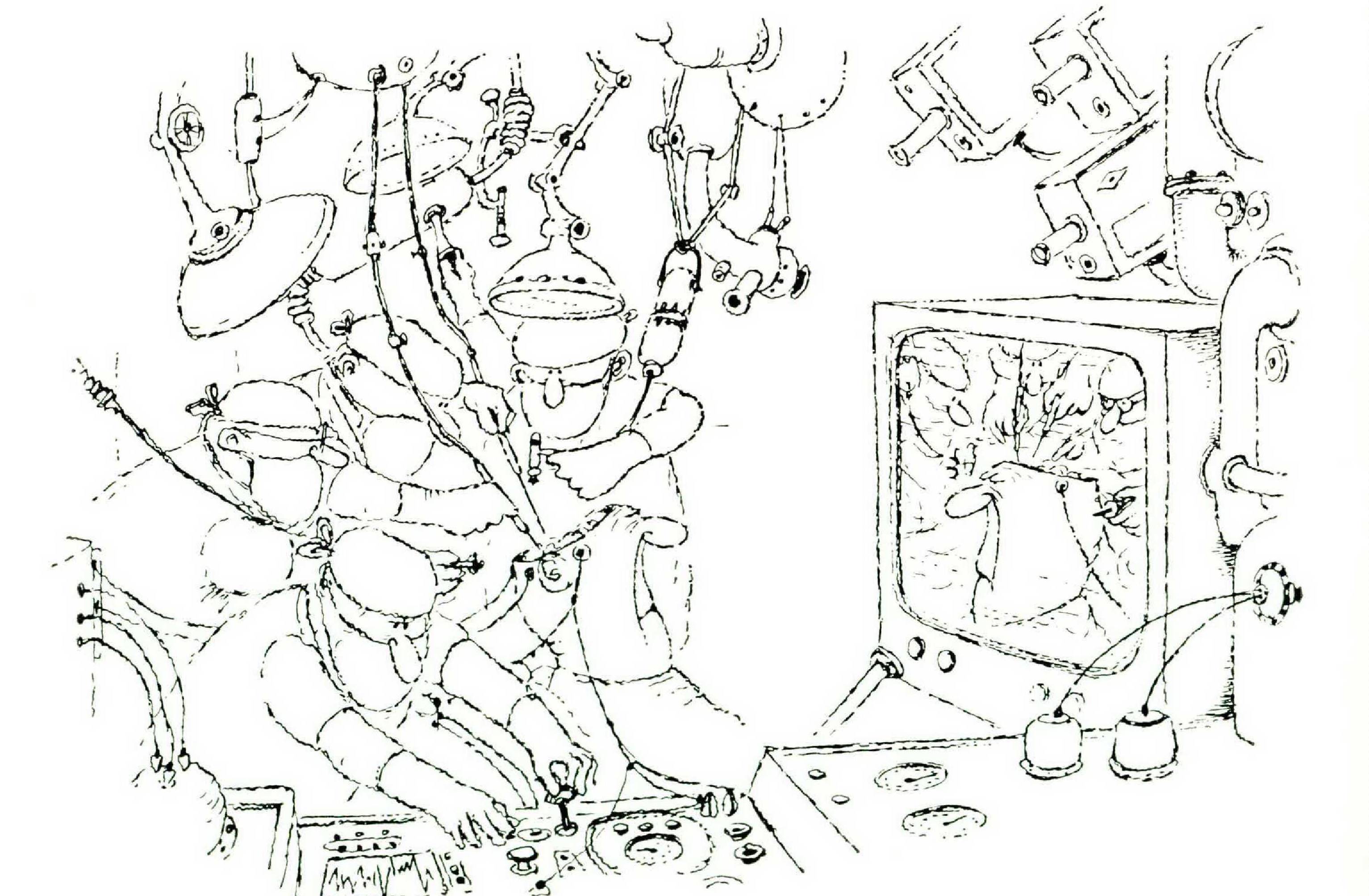
The Emergency Ward
As a young doctor newly assigned to “the E.W.,” Dr. Knowles in 1951 saw in the growing traffic through the emergency ward how the functions of, and demands on, the American hospital were changing. Now general director of Massachusetts General Hospital, one of the world’s great medical complexes, he reflects on how far the changes have gone.
by John H. Knowles, M.D.
WHEN I first came to the Mass. General Hospital in 1951, I was assigned to the emergency ward for a two-month stretch. There were two interns and two residents covering the area during the day, and only one intern on at night. My initial feeling on being thrown into the “pit,” as it was called by the house staff, was one of trepidation, a feeling of agitated anxiety about the unknown situations which might demand decisions involving life and death. My shakiness was calmed by the residents who supervised my work, and after a month or so I began to look forward to each new case as an exciting challenge.
The first night that the resident left me in charge, I was awakened by the clerk at 2 A.M.
“Ya got one, Doc! Young kid, coughing up blood, says he’s got a fever!”
The patient was a haggard twenty-five-year-old who coughed incessantly. He complained of pain on the left side of his chest aggravated by deep breathing. He had had a cold the week before, followed by the development of his cough, chest pain, chills, and high fever. I examined him and heard the noises of pneumonia and pleuritis on the left side of his chest. I quickly obtained a sample of his sputum, smeared it, and stained it. I found abundant gram-positive, biscuit-shaped diplococci, characteristic of pneumonia. Another smear showed no tubercle bacilli. A urine sample failed to indicate infection in his urinary tract, and I pricked his finger for a blood sample, to see if there was corroborating evidence for bacterial infection in the number and type of white blood cells. The urine was normal, and his blood count and smear showed the changes of bacterial infection. I quickly drew several specimens of blood for culture and smeared a sputum sample on the culture plate. Although I could make a presumptive diagnosis of pneumococcal pneumonia, I needed final proof.
It was now 2:45 A.M. My initial work was complete. I began his treatment by giving him 600,000 units of long-acting and 300,000 units of rapid, short-acting penicillin. I sent him upstairs for a chest X ray, wrote the nursing orders for the next twenty-four hours, and took them to the night nurse on the short-stay ward, expecting to transfer him from there in the morning.
The patient was wheeled past me en route to the X-ray department as I sat down. The most wonderful feeling of accomplishment came across me. The exhilaration of meeting the first “crisis of responsibility” in my professional life warmed me. I had taken this man on at two in the morning, all by myself. I had covered him completely; I’d done it with dispatch, and produced a neat package. His therapy was under way; I knew the man, and I knew the man’s enemy.
Not all cases were this successful. Several nights later, I was called to the phone by one of our senior staff physicians, who was at the Christian Science Home, where he was examining an eighteen-year-old boy with a congenital heart disease.
“The boy is very ill,” my colleague said. “He has heart and kidney failure, and I’m sending him right in. Get busy on him as soon as he gets there, initiate his treatment, and then call me.”
The patient arrived thirty minutes later, by ambulance. I recall to this day his yellow, sallow skin, his watery eyes with that far-off death look, his fine blond hair which stood out in sharp contrast to the deep-blue color of his lips. He smelled of urine. His belly was distended with the fluid of heart failure. His voice was weak and sad, and yet he seemed to have hope.
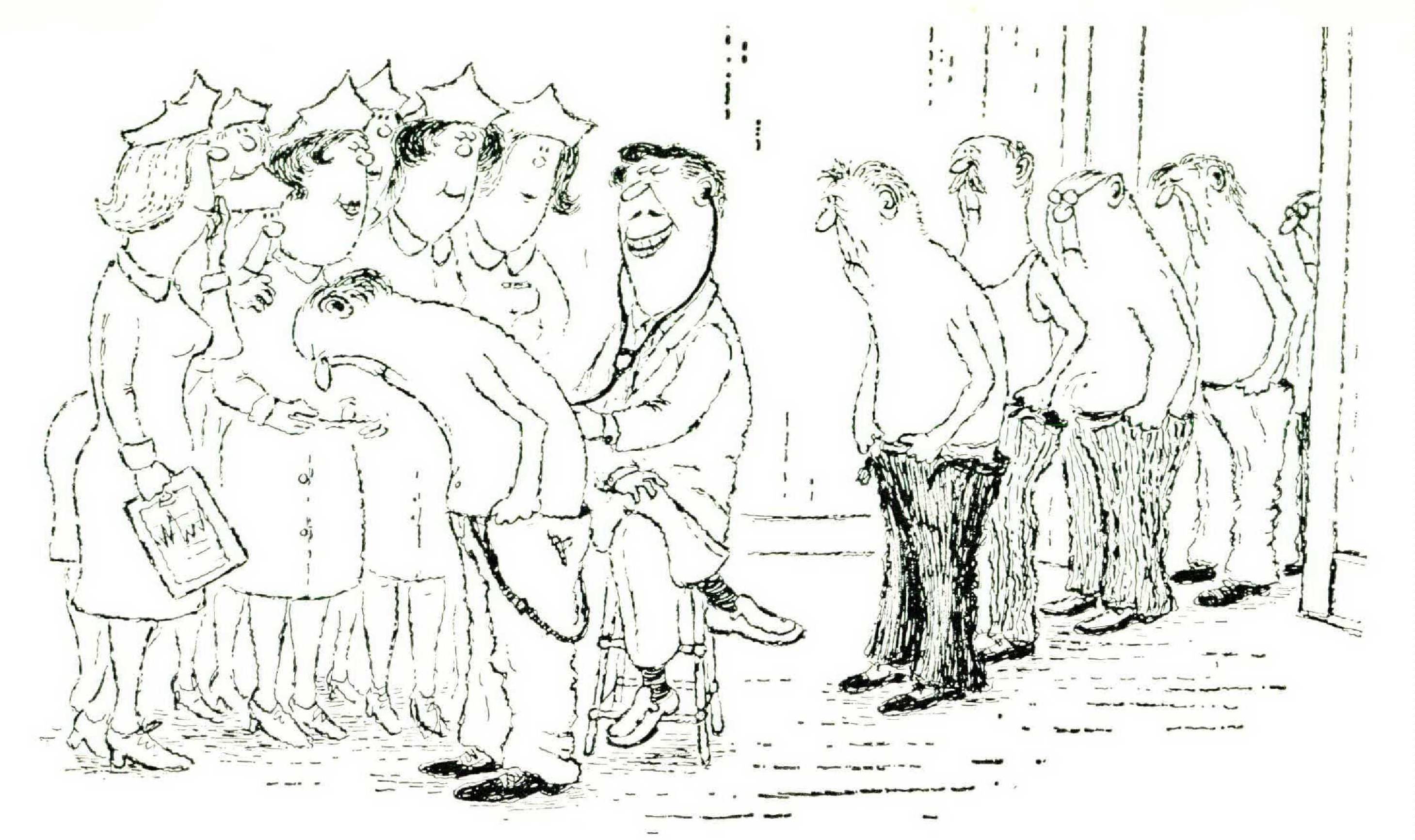
“Don’t you worry, my boy, let me do the worrying. We’re going to get busy here and make you feel better. I know you feel like hell, and we’re going to help you.” I was whistling in the dark. He was deathly ill, and both of us knew it.
After various procedures to corroborate the diagnosis of heart disease, heart failure, and kidney failure, I removed a pint of blood from him to relieve the load on his heart. He seemed to look better following this, but maybe I just hoped he did.
I then asked the nurse to bring me a syringe with digitalis in it. I found a vein in his arm, put the needle in the vein, and began to inject the drug slowly. Half of the contents of the syringe were in the vein when, suddenly, his body stiffened, his eyes rolled up, and he gave a great rasping, throaty cry, and then, nothing. He was dead, and he had died while I was treating him! I was horrified and depressed. To witness the death of one so young and during my active therapeutic attempt was extremely upsetting.
I immediately called the referring physician, told him the distressing news and how sorry I was that I was unable to do anything for him. Indeed, I was worried lest I had hastened the patient’s demise by my treatment.
He answered, “No, we can’t help that. He was terminally ill, and nothing could have saved him. But remember, if you take credit for your therapeutic successes, you must also be willing to take the blame when you aren’t successful. In both instances, more often than not, you are equally unjustified in taking blame or credit.”
This was an important, helpful statement by a senior physician; it was philosophy which I have never forgotten, and it proved to be true time and time again.
I learned many lessons during my stints in the emergency ward. Very early I found out why emotional involvement can distract the mind and becloud the issues, preventing proper diagnosis and therapy. The occasion developed the last day the circus was to be in town, whence it was to go to Baltimore. At 2:30, one of the prima donnas of the high-wire act was sent to the emergency ward by the circus manager because she had developed a mild fever and a rash and was not well enough to go on with the matinee. She was a lovely young lady in her twenties, and the romantic gypsy life of the circus came to my mind as I set about my work. She did indeed have a diffuse red rash over her entire body, and an enlargement of lymph nodes behind her ears. I could also feel her spleen. I conjured up the notion that the “ballerina” might have leukemia, a rapidly fatal disease. It might also be infection, but there would have to be more tests and admission to the hospital.
The circus manager now arrived and insisted that the whole troupe and our patient move on the next morning to Baltimore. I was finally persuaded to allow her to go on the condition that she be isolated during the trip and that she report immediately to the Johns Hopkins Hospital and to a doctor I knew there, whom I would contact.
Several weeks later, I received a letter from my doctor friend in Baltimore, stating he had been happy to see the patient, and notifying me that she had had German measles and was now fully recovered! I made two mental notes to myself: 1) do not let age, sex, or occupation interfere with objectivity of approach, and 2) common situations occur commonly, and although leukemia can display the manifestations of German measles, leukemia is the much less common.
I CAME to know the police well and used to enjoy the repartee surrounding their delivery of the sick and injured. I remember several specific episodes. The first was concerned with the daylight robbery of a finance company in downtown Boston, in which one of the bandits had shot his way out and a bullet hit a policeman. I remember my feeling of abject horror at the sight of such wanton, happenstance destruction, my feeling of anger over mad dogs allowed to carry guns, and a transient feeling of uncertainty and insecurity. Here was law, order, and civilization struck down by the bandit. The man had been hit in the chest and the jaw. He needed rapid emergency surgery, and within minutes he was rushed up to the operating rooms. He survived. Others didn’t. I developed new respect for policemen.
A second episode occurred one evening about five o’clock when the doors swung open and in rushed one of the largest Irish cops I had ever seen. His face was frantic, and he was breathless. Buried in his arms was a very small five-year-old boy, wrapped in a blanket.
“I was driving along the Charles River, when over I looked and saw this little kid fall into the water. I pulled him out. Is he OK? Is he OK?”
The policeman was becoming more emotional by the minute, his breathing heavier, and his face more intense.
I looked at the child, took his blood pressure, and listened to his chest. He was cold and scared, but perfectly all right.
The policeman hovered over us, and finally, as I could feel the tension mount, he blurted, “Doc! Doc! Do you know what the kid said when I pulled him out?” His breathing increased in rate and depth, and he was straining at every word. He was howling now. “Doc! Doc! He said, ‘I love you!’ ”
The third episode involved a mob of policemen and a young man in an incredible predicament. The first man to enter the emergency ward was a policeman, walking backward carrying the end of a board roughly six feet long and two feet wide. The next man was walking alongside the board, midway in its length, with his arm up to the elbow encased by what appeared to be a massive piece of silver-painted metal with a large snout, about three feet high and fixed firmly to the board. The man was able to walk and was surrounded by two more policemen helping him along. At the other end of the plank was another policeman supporting that end. The patient worked in a commercial meat company and had been putting meat in a grinder. His hand had been caught in the blades of the grinder.
How in heaven’s name do you get a hand out of a commercial meat grinder, I asked myself. I called the surgical resident, and we accompanied the patient to one of the two emergency operating rooms. The immediate problem was to determine which way the wheel turns on a large meat grinder so that we could turn it in the right direction while pulling the hand out. If turned the wrong way, it could cut and damage more of the hand. Neither one of us knew, and all of us, which now included about twelve people — policemen, doctors, nurses, clerks — stood there dumbfounded. The patient was relatively comfortable, his hand tightly enmeshed in the blades. There was almost no bleeding, as the blades were still implanted in his flesh.
Someone suggested that we call the M.G.H. maintenance department and ask one of the maintenance men to help us. He arrived within minutes, and after a few moments of study, told us which way to turn the wheel as we gingerly removed hand and arm from the jaws of the grinder.
The hand emerged in relatively good condition, only one fingertip unaccounted for, although there were deep cuts across the fingers and hand. The surgical resident called one of the senior hand surgeons, and they took the patient up to a regular operating room. Ten days later, the patient was discharged with his hand well patched together.
This was a team effort and everybody helped — the policemen who had the sense not to separate patient and meat grinder, the maintenance man at the M.G.H. who told us how to extricate the hand, and finally, the hand surgeon, anesthetist, and nurses who restored the hand to useful function.
I learned many things in my four years on the intern and resident staff at the M.G.H. — things about sick and injured people and those who accompanied them, things about the police and about the people who worked around me, and things about myself. Medically speaking, the experience in the E.W. trained us to approach, manage, and solve problems rapidly and successfully. It taught us to be decisive in emergent situations. It taught us compassion and understanding, and it gave us confidence to face other problems of medicine. It made men out of boys, or it broke the boys. It taught us how to be good administrators — how to get many people and many things going for the patient, with minimal expenditure of energy, and maximal speed and efficiency.
THAT was 1951, and 18,000 patients were seen in the emergency ward that year. In 1953 I entered the Navy Medical Corps in the doctor draft and served two years, returning to the M.G.H. in 1955 as a resident. I came back just in time to work in the emergency ward during the polio epidemic. Literally hundreds of frightened patients and their families rushed to the E.W. that summer with fever and headache, either with or without established paralysis. I remember doing one lumbar puncture after another to determine whether evidence for polio was present in the spinal fluid.
Many more people were coming to the E.W., and perhaps only one quarter to one half of them had conditions requiring emergency facilities and treatment. They were referred by their local doctors at odd hours, at night or on weekends, frequently without having been seen by a doctor, or they came because they had no local doctor or were unable to reach one. They were sent from community hospitals because their conditions were too complicated to be treated there or because they could no longer pay their bills. Our own staff doctors saw more and more of their patients in the E.W., where expensive technical facilities absolutely necessary to proper diagnosis and treatment are available. More people were coming with social and psychic problems — alcoholics, people in an acute state of anxiety, attempted suicides, and people in crisis situations such as the loss of a job or a death in the family. There were more automobile accidents.
Several other experiences stand out in my mind. There was the lady who used too much chemical hair curler one night and came in with her hair shriveled down into little orange balls of denatured protein sitting on top of her head. The two of us picked and combed it out until she was virtually hairless. Then we looked into the mirror together at 2 A.M., and both of us sat down and laughed. As she said, better to be laughing than crying.
One frequent visitor was an elderly man with mild paranoid schizophrenia, who found he could gain admittance to the hospital (to escape his imaginary enemies) by complaining of chest pain. The intern would then take an electrocardiogram and find an abnormality, which could have been there for years or could signify a recent heart attack. The old man would then have to be admitted for observation. Ultimately we caught on to him, for he never changed an old pair of mismatched Argyle socks. We kept a list of such individuals under the blotter at the front desk — people who required help but not for the initial complaints that they described. Malingerers, psychopaths, walking schizophrenics, and narcotic addicts were included in this group.
Certain conditions came in bunches. I saw two patients within four hours of each other, both with serious brain hemorrhage due to head injury. There are relatively few situations where a matter of minutes can mean the difference between life and death, but this is one of them, and every intern must know how to diagnose such cases and take immediate action.
The first patient was a young man who had been struck a grazing blow on the head by the block and tackle of a crane. He had been knocked unconscious for several minutes, after which he awoke and asked to be relieved to go home for the day. As he started walking, he felt progressively sicker, so much so that he rang the citizen’s alarm and was brought to the hospital by the police. He was carried in on a stretcher. When I heard the above history of his accident, I immediately thought of acute epidural (meaning on top of the covering of the brain) hemorrhage, particularly because of the characteristic “lucid interval” — the period of recovery between the initial injury and unconsciousness. As I talked to him, the right side of his face began to droop and become paralyzed. His speech became mushy and incoherent. I asked him to raise his arms. His right arm swayed and fell to his side. I knew immediately that he was bleeding in the space between brain and skull and that a massive collection of blood was pressing on his brain, giving him a rapidly increasing paralysis.
Within fifteen minutes, the patient was seen by the surgeon, taken to the second floor for an X ray and up to the operating room, where his skull was opened, the blood clot removed, and the bleeding stanched. He did indeed have epidural hemorrhage, and his life, which could have been snuffed out at any moment, had been saved. He was discharged one week later, a normal, healthy man.
Four hours later on the same day, we repeated the episode with an elderly woman who had fallen downstairs and hit her head. The clot was removed, and the bleeding was stopped, but because of a longer time before surgery, she retained a mild degree of permanent paralysis.
There were patterns of utilization of the E.W. which we all noted. Children were brought in by one parent in the evening, while the other stayed home with the rest of the children. Occasionally, a doctor had been called and either refused the house call or told the parent to take the child to the emergency ward.
Saturday mornings were notable for young married couples bringing in an elderly father or mother for whom they were caring. “Dumping” was the term we used, lor frequently the young people wanted to be free for a weekend without having to care for the parent. Sometimes they admitted they needed a rest from grandpa. More often they would conjure up stories guaranteed to gain admission, like “Father has had blood in his stools and has lost a lot of weight,” or “He had a severe pain in his stomach, won’t eat, and hasn’t passed his water for a week.” Similarly, some nursing homes would dump patients at the hospital by ambulance when they were tired of caring for them for a variety of reasons.
Sunday noon and afternoon, after church and on holidays, many people would come to the E.W. for the solution of problems that had plagued them all week. Monday mornings could be tranquil. Saturday nights were always wild occasions because of alcoholics and automobile accidents.
The number of patients seen in the E.W. increased from 18,000 in 1951 to more than 65,000 in 1965 — roughly one patient every eight minutes around the clock. In the same period of time, the budget for this single area has increased more than tenfold, to greater than $1 million annually. There are now eight to fifteen house officers on duty and on call at all times, and nearly the same number of nurses and of technicians. An X-ray unit has been installed at a cost of $500,000 to expedite the X-ray examination. People continue to come in growing numbers with growing hopes and expectations to a growing army of people working in the area. More and more come because of social and psychic dis-easce but they are matched by those with disease and injury — heart attacks, ruptured blood vessels, accidents, suicides, accidental taking of poison, strokes, cancer, and so on. Whatever the need, the people and facilities are combined in the emergency ward to give the best care to the injured and to the sick, whether the problems are social, psychic, or somatic in origin. It is an incredibly successful function of the modern hospital.
One of the best measures of a hospital’s concern for serving its community is the status of the E.W., its staffing, its technical facilities, its willingness to serve as a sanctuary for the sick and suffering seven days a week. The present form of the hospital has been or should be shaped by the wants and needs of the society. As one of the community’s most important institutions it must reflect those needs. Both patient and doctor need such a facility, and no hospital worthy of the name is without emergency coverage today.
As the director of a large urban teaching hospital, I am now concerned with the organization, utilization, and distribution of all services within the hospital so that a patient will receive the appropriate care in the appropriate area — all with the least inconvenience to patient and hospital staff, at maximal efficiency and least cost. I am concerned with our services as they relate to the other hospitals and caring institutions (churches, united community services, state public health and welfare departments) so that we can avoid costly reduplication of services and facilities and provide among us a comprehensive, rational plan of health services for the entire region.
I am also concerned with the internal balance of functions, which in a teaching hospital encompass patient care, the teaching and training of doctors, nurses, social workers, dietitians, and other health and hospital workers, and biomedical research. The articulation of all this work with public wants and needs, so that the public interest is protected, defines the work of any teaching hospital. Our first function is to take the best possible care of the sick and injured today. Teaching and research improve the immediate function of caring and provide for tomorrow’s health needs.
People have discovered that their needs are attended to quickly and with minimal inconvenience in the hospital emergency ward. Although many do not need emergency care, they obviously cannot know what is and what isn’t a dire emergency. Fever in a child can be “just a cold,” or it can also be life-threatening pneumonia. Both doctor and patient need the diagnostic accuracy of the expensive technical facilities available only in the hospital medical center. To a certain extent, this also explains why home visits have become a thing of the past. Both doctor and patient have to, indeed want to, meet in the emergency ward when acute illness strikes. The technology is readily available, as are teams of specialists and experts. The chief reason for the ever expanding use of the emergency ward is simply that it is today the best possible place in which to solve a medical problem quickly and accurately. The public knows it, and so does the doctor.
The major failing of the hospital and the medical profession has been their inability to structure other ambulatory facilities as successfully. The doctor has solved his problem partially by moving his office closer to or into the hospital or medical center. If emergency diagnosis and care are needed, the patient has only to be taken across the street or downstairs to the emergency ward for ultimate decisions about his best care. Doctors’ office buildings adjacent to the hospital have sprouted like mushrooms. This is fine for private patients, but does not take care of the indigent sick, who view the hospital as their doctor.
Urban hospitals, in their necessary preoccupation with acute, curative medicine, practiced on inpatients, have neglected their outpatient departments (ambulatory clinics), as well as their departments of social service. Improvement of these two areas would allow a redistribution of patients from the emergency facilities, would maintain the high quality of care, and would free the emergency facilities for those who really need them. Ambulatory clinics could be run in the evening and on weekends and would care for patients who come to the E.W. because they have nowhere else to go.
A case in point is the care of alcoholics, who can tie emergency ward personnel in knots, distracting them from the care necessary for other patients. The alcoholic may be combative, recalcitrant, noisy, and may throw up in the middle of the floor at any time. The M.G.H. has now developed a special area away from the center of our emergency facilities where these patients can be
observed and cared for. In addition, an alcoholic clinic has been developed, which assumes responsibility for these patients on an ambulatory basis. Alcoholics need help — psychiatric, social, and medical — but the work of the emergency ward must be reserved for those in dire, immediate need.
In short, hospitals must distribute the patients so that appropriate care can be rendered at the least cost — in terms of money, people, and facilities. We must improve and expand ambulatory clinics and social service departments; we must educate the public to make the best use of medical facilities: and we must develop with the community a better, integrated system of earing agencies so that the “right" patients will be using the “right" facilities. To accomplish these objectives, we need the help of an enlightened community. The most vocal segment of society today seems to be the destructive, ill-informed, malcontented complainers. They distract, but offer little help. As Abraham Lincoln said, he has die right to criticize who has the heart — and the head, I might add — to help.