A Tale of Two Juliuses
by Herbert Kupferberg
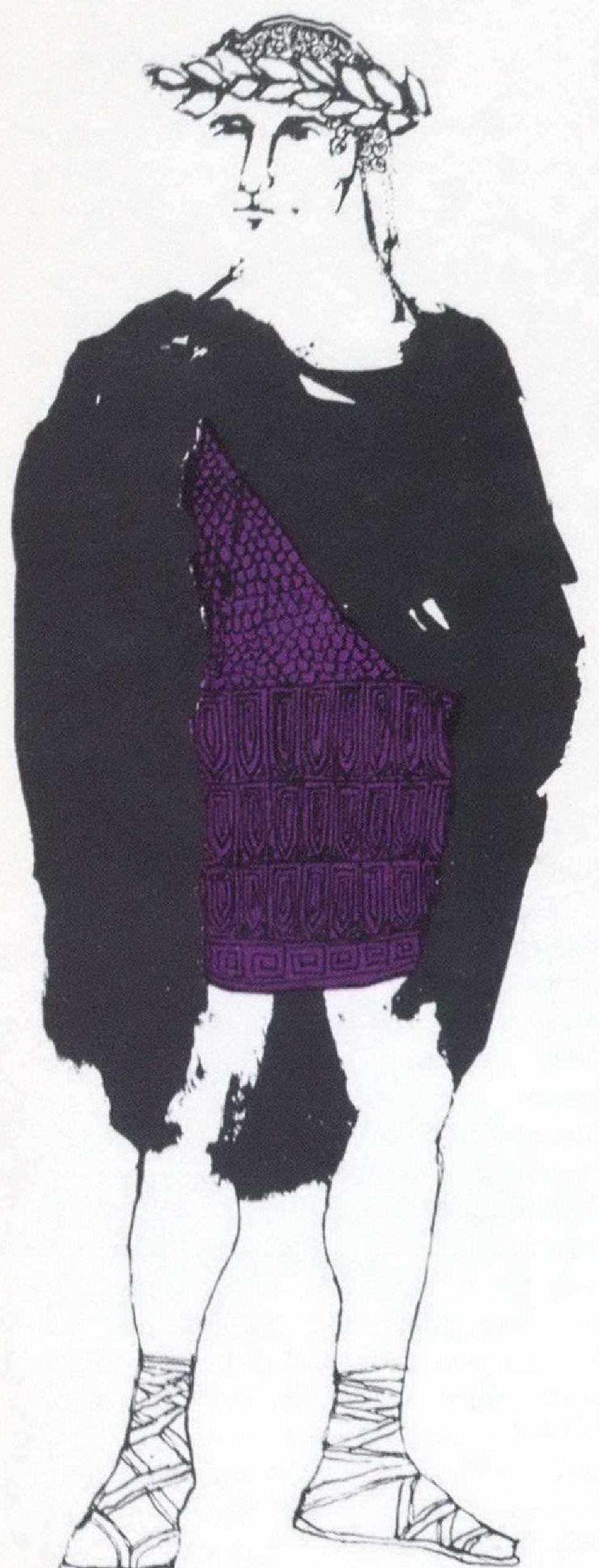
At the threshold of the Metropolitan Opera in Lincoln Center stands an institution called the New York City Opera Company. Although it has been in existence more than twenty years, presented some 121 different operas, and toured extensively, its renown has remained largely local, perhaps because of the geographical limitations suggested by its name.
This year, however, the New York City Opera not only has become the “in” company in New York musical circles, but it has made a spectacularly successful recording for RCA Victor of a baroque operatic masterpiece, Handel’s Julius Caesar (LSC-6182, stereo; LM - 6182, monaural: three records).
Actually, the New York City Opera, which is directed by the brilliant and adventuresome conductor Julius Rudel, has been generating musical excitement almost since its inception. But it has always operated in rather shabby quarters: an abandoned Shriners’ temple on West Fifty-fifth Street, side by side with George Balanchine’s New York City Ballet Company. Now both groups have moved up to the elegant New York State Theater at Lincoln Center, flanking the entranceway to the Met. It’s no secret that Rudolf Bing, the Met’s general manager, while welcoming the ballet as a neighbor, did all he could to forestall the move by the City Opera to Lincoln Center.
Although both Bing and Rudel deny for the record that their companies are in any way competitive, the fact remains that a keen and at times open rivalry exists. When the Met put on a Magic Flute designed by Marc Chagall in its opening Lincoln Center season, the City Opera staged one with decor by Beni Montrésor; when Bing’s company gave a new production of Verdi’s L.a Traviata along traditional lines, Rudel’s countered with a novel interpretation, in which Violetta’s normally sedate Act I party, for instance, almost turned into a drunken brawl. The critics loved it.
Previous recordings by the New York City company have been generally limited to new American operas, the species in which it specializes. It is responsible for the only available recordings of such works as Douglas Moore’s The Ballad of Baby Doe, Robert Ward’s The Crucible, Marc Blitzstein’s Regina, and Jack Beeson’s Lizzie Borden, all of them highly prestigious, but none the kind an opera company, or a record manufacturer, gets rich on.
Presumably nobody gets rich on Handel either, except for the inevitable Christmastime recordings of Messiah. But Julius Caesar has proved a box-office smash for two seasons at the State Theater now, and RCA Victor has invested $100,000 in recording it. In fact, it is one of the few operas in recent years to have been recorded in its entirety in the United States, where costs are far higher than in Europe.
Whether Julius Caesar, which to most of the world’s great opera houses, including the Met, represents the early Pleistocene period of music, will prove a financially remunerative recording is a matter to be decided by time and the ledger. But that Caesar is a musical triumph, indeed, that it is one of the most fascinating operatic recordings ever made, there is not the slightest doubt.
True, certain adjustments have to be made by the listener. The work, which deals with Caesar’s romance with Cleopatra, is in Italian (it might have been more accurate to call it, as Handel did, Giulio Cesare); it is lacking in dramatic action; it has few ensembles; and even its choral numbers, that great Handelian specialty, are sparse. Nevertheless, such are its boldness of line and beauty of melody that after a time one becomes dazzled by its vocal brilliance and caught up in its musical characterization.
To a considerable extent this Julius Caesar represents a collaboration across the centuries between George Frideric Handel and Julius Rudel. For one thing, Handel wrote the music of Caesar for a castrato, a kind of singer now extinct, or at least not numbered on the New York City Opera’s roster. Rudel changed the role from a male alto to a bass-baritone. He also wrote out a set of embellishments to be used by each singer in embroidering his or her musical lines. These vocal ornamentations lie at the heart of baroque opera, and this is the first recording I have encountered which gives a sense of their musical vitality, and enables one to understand why they so delighted and excited the audiences of Handel’s day. Although most of the arias in Julius Caesar have repeat sections, nothing is repeated exactly. Instead there are roulades, trills, appoggiaturas, and other vocal variations to freshen the interest and sometimes even add dramatic point and characterization — as when, for instance, Cleopatra’s seductively lovely aria ”V’advro, pupille” is overlaid with an array of vocal fiorature that glitter like a queen’s diamonds.
Obviously it takes singers of unusual gifts, both vocal and temperamental. to master this kind of singing nowadays. Rudel’s company fortunately is richly equipped with them. This is especially true of Beverly Sills and Norman Treigle, who have sung Cleopatra and Caesar in every Julius Caesar the company has given so far, and who shine forth brilliantly in the recording. Miss Sills, who says she worked out her ornamentations with Rudel during a summer at West Chop on Martha’s Vineyard — a most un-Handelian locale — sings with tones at once pearly and pointed, and Treigle is a Caesar vocally virile and agile, a kind of coloratura basso.
But the triumph of Julius Caesar is more than a matter of vocal acrobatics; this is a production in which every singer creates a musical personality — Maureen Forrester as Cornelia, Beverly Wolff as Sextus, Spiro Malas as Ptolemy, and Dominic Cossa as Achillas. The chorus and orchestra are excellent and the recorded sound clear and ample. Julius Caesar has had to wait a long time for a complete recording, but it is hard to imagine how it could have found a finer one.
Several of the singers of the New York City company have also had to wait surprisingly long for discovery by the record companies. Most notable, perhaps, is the case of Norman Treigle, who at the age of forty has just made his first recording of operatic solos, including arias by Mozart, Verdi, Gounod, Ponchielli, and Halévy, accompanied by the Vienna Radio Orchestra under Jussi Jalas (Westminster WST-17135, stereo; XWN-19135, monaural). Not everything here is sung to perfection (it seems curious, for instance, that Treigle should have chosen to sing the Credo from Otello, which lies out of his best range), but this collection, along with his powerful Caesar, leaves the impression that this bass-baritone represents a blend of vocal richness and dramatic instinct unmatched since the days of Ezio Pinza.
Whatever the success of Julius Caesar may do to further the fortunes of individual singers, it is certain to advance the already substantial career of Julius Rudel. Now a square-shouldered and vigorous forty-six, Rudel has spent most of his musical years with the New York City Opera, which he joined as a rehearsal pianist in 1943, five years after emigrating from Nazified Vienna. He has directed the company for the last ten years, during which he has conducted everything in opera from Mozart to Shostakovich.
Of late Rudel has been turning his hand increasingly to symphonic activities both in the United States and abroad. He has already appeared with the Chicago and Philadelphia orchestras, and in April he will make his debut with the Boston Symphony, conducting, along with symphonies by Mozart and Sibelius, the world premiere of a new work which the Argentinian composer Alberto Ginastera is writing. Rudel can claim to be one of the world’s great exponents of Ginastera; one of his New York City Opera successes was the North American premiere of the widely admired twelve-tone opera Don Rodrigo. Rudel also gave Ginastera’s controversial opera Bomarzo its world premiere with the Washington, D.C., Opera Society last May, and Columbia has recorded it for release shortly.
With his status as an impresario well established and his reputation as a conductor growing, Rudel’s importance on the American musical scene seems assured for years to come. Late in 1967 he was offered the prestigious post of artistic director of the John F. Kennedy Center for the Performing Arts in Washington, the national cultural showcase which is scheduled to open in 1970.
Wherever his future takes him, Julius Rudel’s Julius Caesar can stand as a permanent attestation of his musical art and enterprise. And with the New York City Opera playing in a beautiful theater to sold-out subscription audiences, and making major-label recordings on the side, he can reflect with some pride that he has helped build a sound, successful, and enduring opera company — which was more than George Frideric Handel could do.
Record Reviews
Rimsky-Korsakov: Scheherazade
Herbert von Karajan conducting Berlin Philharmonic Orchestra; Deutsche Grammophon 139022 (stereo) and 39022
And what is Herbert von Karajan, that most coolly analytical and dispassionate of conductors, doing playing Scheherazade, that most warmly romantic and lush-textured of tone poems? Giving it about the most compellingly beautiful recording it has ever received, that’s what. The delicacy and suavity of sound Karajan draws from the Berlin Philharmonic produce an astonishing effect upon a score that is often overblown and underestimated. From the masterful playing of the solo violin parts by Michel Schwalbé to the gently rocking sea motion that underlies the whole work, Scheherazade is restored to its rightful place as a masterpiece of orchestration and imagination.
Giordano: Andrea Chenier
Oliviero de Fabritiis conducting La Scala Orchestra and Chorus, with Beniamino Gigli, tenor; Maria Caniglia, soprano; Gino Bechi, baritone; and others; Seraphim IB-6019 (monaural only): two records
This is a recording to substantiate the well-known operatic aphorism that they don’t make singers like that anymore. “ That” in this case signifies Beniamino Gigli and Maria Caniglia, who in 1941 made a recording of Andrea Chenier which to my knowledge has never been surpassed in vocal power, ardor, and sumptuousness. Once available in RCA Victor’s Collector’s Issue series, it had dropped out of the catalogue, to which it is now happily restored on the low-priced Seraphim label. Among its other attributes, this rerelease demonstrates that Giordano’s musical drama of the French Revolution, composed in 1896, still packs a dramatic punch when performed with the kind of conviction it receives here. Considering the age of the recording, the sound is fine.
Prokofiev: Ivan the Terrible (oratorio)
Abram Stasevich conducting U.S.S.R. Symphony Orchestra and Moscow Slate Chorus, with Valentina Levko, mezzosoprano, and Aleksander Estrin, narrator; Melodiya-Angel SRB-4103 (stereo): two records Sergei Prokofiev gave new meaning to the term “movie music" in his score for Eisenstein’s Alexander Nevsky, which has almost become a concert hall staple. These selections, drawn from music for another Eisenstein film, Ivan the Terrible, have somewhat less impact, but there are attractive passages nonetheless — a depiction of the Tartar Steppes, for instance, and a portrayal of the storming of the town of Kazan. The conductor, Abram Stasevich, has attempted to assemble an oratorio from these vocal solos, choruses, and instrumental passages, but the effect is impaired by the repeated intrusions of a narrator who must be the most talkative Russian since Khrushchev. The Ivan the Terrible score, one imagines, would really come alive when presented along with the movie — as movie music should be.
Vocal Music of Vivaldi
Renato Fasano conducting Virtuosi di Roma and Polyphonic Ensemble of Rome, with Shirley Verrett, mezzosoprano; RCA Victor LSC-2935 (stereo) and LM-2935
Early LP collectors may remember a Vox recording of 1952 which brought to light an absolutely stunning setting by Vivaldi of Psalm 112, Beatus Vir — “Blessed is the man that feareth the Lord.” From that day until this no one has rerecorded Beatus Vir, so it is a joy to hear this powerful, noble, and soaring work for chorus and orchestra set forth in all the splendor of modern stereo sound. For all the revival of interest in his instrumental output, Vivaldi as a vocal composer is still sadly neglected. In addition to Beatus Vir, this beautiful record also presents Vivaldi’s Credo and Stabat Mater. Surely there are other pieces of like majesty.
R. Buckminster Fuller Thinks Aloud (Part I)
R. Buckminster Fuller, speaker; Credo 2 (Pathways of Sound, Inc.)
How Buckminster Fuller can talk! On this nearly-hour-long recording, the noted architect-engineer never once mentions his most famous recent achievement, the geodesic dome which was the United States pavilion at Expo 67, but he touches on virtually every other subject in the world in a rambling but lively discourse on the changes he has seen in his long lifetime, and those he expects to come. Fuller has faith in technology, and even more important, in man himself. Most impressive of all is his confidence in the younger generation; the student dissidents at Berkeley, he points out, were born in the year of Hiroshima — as good an explanation as any of the cause of the “generation gap.”He is just developing this idea when the record ends, but it is marked “Part I,”indicating that more on this theme is to follow.
Edward R. Murrow: I Can Hear It Now
Columbia D3L-366 (monaural only): three records
This album brings together in LP form the three famous I Can Hear It Now recordings made by the late Edward R. Murrow, which still constitute a model of recorded history and journalism. The best remains Volume II, which covers the epochal years of 1933-1945 and which sets the actual voices of such men as Franklin Roosevelt, Churchill, LaGuardia, Hitler, and the whole generation of World War II leaders in a stirring dramatic framework. Volume I, 1919-1932 (which actually was compiled afterward), has to rely on re-enactments as well as actual voices, and Volume III, 1945—1949, deals with years somewhat less imposing. Depending on the age of the listener, these three records together constitute either a vivid historical document or an album of unforgettable memories.
Right as the Rain
Leontyne Price, soprano, with André Previn, conductor-pianist-arranger; RCA Victor LSC-2983 (stereo) and LM-2983 On the face of it, Leontyne Price might seem to have no more business singing such songs as “Melancholy Baby” and “Hello, Young Lovers” than Ella Fitzgerald would have singing the Quartet from Rigoletto. But a voice as vibrant as Miss Price’s can add something to almost any song, and such numbers as Richard Rodgers’s “Nobody’s Heart” and Harold Arlen’s “A Sleepin’ Bee” are quite enchanting. However, a true sympathy with the style is lacking for many of the others; “Falling in Love Again” sounds like a bad parody of Marlene Dietrich. Many of André Previn’s accompaniments are fussy and overwrought, as witness his souped-up version of that wistful little song from Fiddler on the Roof, “Sunrise, Sunset.”
Fly Buttons and Other Comedy Favorites
Members of the BBC’s “That Was the Week That Was" cast; Carl Reiner and Mel Brook; and others; Capitol ST2502 (stereo) and T-2502
Any record that includes the wonderously funny “2000 Year Old Man" skit of Carl Reiner and Mel Brooks is always worthy of a warm welcome. This one offers in addition “Fly Buttons,” a zany British bit about a bourgeois British girl and her unbuttoned boy friend, excerpted from a That Was as the Week That Was broadcast. The hilarity level is somewhat lowered by the rest of the record, including an Eisenhower mock interview, but on the whole this is a fine selection of civilized modern humor.
Doctor Dolittle (original motion picture sound track)
With Rex Harrison, Samantha Eggar, and Anthony Newley; 20th-Century Fox DTCS-5101 (stereo)
Anthony Newley Sings the Songs From Doctor Dolittie
Anthony Newley with the Jimmy Joyce Children’s Chorus; RCA Victor LSP3839 (stereo) and LPM-3839
Bobby Darin Sings Doctor Dolittle
Bobby Darin with orchestra conducted by Roger Kellaway; Atlantic SD-8154 (stereo)
The list above is but a sampling of the variety of Doctor Dolittle records currently available, all of them related to the motion picture of the same name. Nor will a word be uttered here against the timeless figure created by Hugh Lofting in his books and played by Rex Harrison on the screen. As to the score composed by Leslie Bricusse, however, it seems a bit placid and unvaried for so distinctive a personage. Sheer repetition, if nothing else, is certain to turn some of the songs into hits, and these records offer a head start on “My Friend, the Doctor” (perhaps the catchiest number), “At the Crossroads,” “Talk to the Animals,” and the others. Only the original-cast set has the advantage of Rex Harrison’s dry, wry delivery. But Anthony Newley, who plays Matthew Mugg in the film, shows he can undertake all the songs with authority, and there is a surprising zest in the way Bobby Darin sails through the score. All the same, the vote here is for the original-cast album.