Potpourri
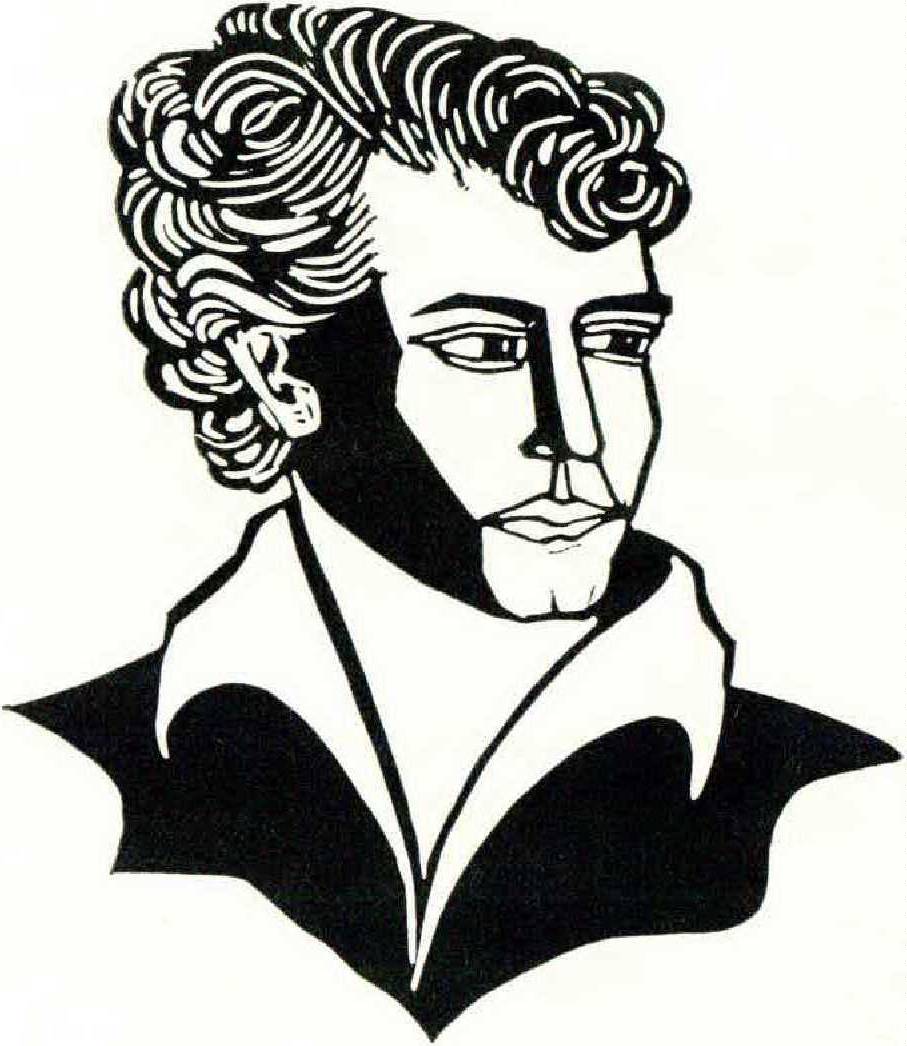
When John Murray and Thomas Moore poltroonishly burnt Byron’s memoirs, the crime affected quite a number of people. The thought of all those indiscreet confessions, outrageous jokes, amorous scandals, and diatribes against Robert Southey dispersing into common London soot has maddened generations of the scholarly, the poetical, and the prurient. Fortunately the madness is usually of an indolent, melancholic sort, but in the case of FREDERIC PROKOSCH it has taken a more active turn. Mr. Prokosch, unable to read the memoirs, has consoled himself by reconstructing them under the title of THE MISSOLONGHI MANUSCRIPT (Farrar, Straus and Giroux, $5.95). Let me be fair about this; Mr. Prokosch provides a prologue to the book, in which, as one Applebee, he establishes the text as a second, previously unknown memoir which Byron wrote in Greece during the last months of his life. By this device, Mr. Prokosch defends certain un-Byronic “quirks of phrase and oddities of vocabulary” as well as “a visual precision quite at odds with his earlier manner.” Mr. Prokosch, in short, has undertaken to impersonate Byron without troubling to imitate Byron’s style or way of viewing things, an evasion which from the first page makes suspension of disbelief a difficult task for the reader. It’s like seeing Romeo played with a long white beard; one can respect the performer’s courage without entirely approving of his judgment. Mr. Prokosch’s Byron is a middleaged hypochondriac, solemnly bothered by his weight, his fading beauty, and his digestion, which is entirely proper except that Byron himself never lost sight of the absurd aspect of the first two concerns, and always underestimated the seriousness of the last. Mr. Prokosch’s Byron has a tranquil Wordsworthian eye for dewdrops and frost crystals, things Byron ignored, and no eye at all for female complexion, an item which Byron never tired of reporting with minute precision and a mixture of affection and exasperation. On the other hand, Mr. Prokosch’s Byron is persistently preoccupied with normal but unattractive functions of female anatomy, although Byron himself once reflected, “It seems strange; a true voluptuary will never abandon his mind to the grossness of reality. It is by exalting the earthly, the material, the physique of our pleasures, by veiling these ideas, by forgetting them altogether, or, at least, never naming them hardly to one’s self, that we alone can prevent them from disgusting.” This, Mr. Prokosch would argue, is Byron in his “hot youth, when George the third was king”; in Greece he had become a different man, an inconclusive philosopher (Byron always hated, and often denounced, Coleridge’s metaphysical speculations for their vagueness), no longer concerned with money, politics, social comedy, or the social injustice which had led him, as in his first speech in the House of Lords, to attack a bill increasing the punishments for “framebreaking.” Frame-breaking was a direct protest, by stocking weavers, against technological unemployment.
In a letter to a political senior, Byron claimed that he had observed not only the condition of these weavers but the product of the new machines, inferior stuff fit only for the very cheapest export trade. Progress, he concluded, was fine and all that, but “we must not allow mankind to be sacrificed to improvements in mechanism.” Mr. Prokosch’s Byron has forgotten this affair, it would seem, and yet there he is in Greece, fighting (or trying to) for another set of underdogs. It is most awkward for Mr. Prokosch. He simply cannot get rid of the Greek enterprise, but he gets rid of much else, so many things his odd Byron has forgotten— including his frequent boast of a good memory. Now, all England has melted into fog, and his lordship is totally out of touch. His lordship, as a matter of fact, had been scribbling along for several years at Don Juan. The first canto, aside from wicked portraits of his ex-wife and the family lawyers, touches on lawyers and bluestockings in general, shorthand specialists (a reference designed to remind readers of all the gaudier society lawsuits of the day), dishonest book reviewing, the bigotry of certain literary critics, the deficiencies of Wordsworth and Coleridge, and the absolute, unmitigated worthlessness of the unfortunate Southey. The last canto tackles the press, doctors, the horrors of a countryhouse weekend, ill-buttered muffins, gout, amateur drawing-room musicians, bluestockings again, lying guidebooks, art dealers catering to rural gentry, architects proposing to restore perfectly sound old houses, the problem of “preserving partridges and pretty wenches,” the complications of bucolic politics, candidates’ jargon, Sydney Smith, the royal divorce, the whimsies of government financial reports, and the frivolous reasons for which people cast their votes. Byron was growing more, rather than less, specific, and Don Juan was not the concoction of a man out of touch with the world or uninterested in the intricate absurdities of daily life. After discarding so much of Byron, what has Mr. Prokosch provided to take its place? Merely a fellow who has never decided whether he prefers men or women as sexual partners, and worries the question for 337 pages. There was a homosexual in Byron (if there hadn’t been, he would have tried the game anyway), but he is of small interest compared to the observant, disrespectful, inventive, sharp-witted, mischievous, quarrelsome, freakishly generous, wildly funny, tactful, boorish, selfpitying, self-mocking, indomitable, self-indulgent, hardworking, lazy old pro of a writer that Mr. Prokosch has chosen to ignore
THE EDGE (Dial, $4.95) is an exceptionally interesting first novel by PAGE STEGNGNER. AS a study of inability to cope with adult responsibility, it does not probe much beyond surface manifestations, but it is technically very adroit, the characters interesting, the action coherent, the California settings described vividly and with an evocative touch of lyricism.
WILLIAM STEVENS’ THE GUNNER (Atheneum, $5.95) is another novel about adjustment, in this case, to a position that justifies reluctance by the participant. Deacon, port waist gunner on the Bawl, Buster, is the only survivor of a bombing mission over Vienna. The return to the Italian base, with plane and crew nightmarishly flaking away, is so brilliantly written as to be almost unbearable. As a dutiful soldier, Deacon goes to report; the officer does not have the faintest idea who he is. The rest of the book describes Deacon’s blundering, grimy, persistent attempts to re-establish himself as a human being instead of a military number. By his personal standards, he succeeds, but since Mr. Stevens’ thesis is the unalterable anonymity of war, Deacon must fail on the practical level. The author is forced to resort to an accidental ending, the only weak point in an otherwise admirable book.
According to Richard Ellmann, who supervised its publication, JAMES JOYCE finished GIACOMO JOYCE (Viking, $10.00) in the summer of 1914. He never published it, but pilfered the piece of phrases and ideas that appear in later works, notably Ulysses. It is remarkable that a thing occupying sixteen pages, with much white space, should be worth pilfering. Giacomo Joyce genuinely was, for Joyce crammed into this miniscule memoir of his arms-length love affair with a young student a number of ideas that demanded fuller treatment. He also achieved, in a succession of nonepisodes, a tense excitement compounded of desire, frustration, middle-aged chagrin, and irony.