Ingmar Bergman at Fifty
Many are suspicious of his films. They seem too much Works of Art. Covered with dust, they are, at their worst, pieces already fit for museums, joyless items of Culture. In a decade that prizes exuberance in its art, Bergman is restrained; in a time that wants artistic sensuousness, Bergman’s films are characterized by their austerity, a visual style so restrained it seems almost impoverished. We expect art to be playful as in Godard, Richard Lester, or Andy Warhol; and Bergman is single-mindedly serious. We do not wish to puzzle too hard about meanings; but Bergman demands that we discern a theme behind his incongruous events.
His characters always seem to mean more than they are saying, giving his dialogue a portentousness that often becomes annoying. Even the objects in his films—the cups of coffee in Winter Light, the turbulent city of “Timolka” in The Silence— refuse merely to exist as sensuous experience; they insist on being translated into something else. Even Bergman’s jokes are so loaded with significance, so weighted with meaning, that they’re almost never funny.
And the concerns of his movies! To a director like Luis Bunuel it seems that Bergman has been “wasting himself on wholly uninteresting questions. What does he ask in every film? God, the Devil and the Gooddoes God exist—one simply can’t be bothered with such things!” More recently one could add to Bunuel’s list: authenticity, good faith, the nature of the artist, the brutalizing effect of war—one simply can’t be bothered! Some people prefer the sensuous violence of Bonnie and Clyde, the orgies of Antonioni’s Blow-Up, the erotic sadism of Joseph Losey, Pinter, or Bunuel, the political knowingness and parody eroticism of Godard. All Bergman ever provides is a thin, unpalatable metaphysical gruel. His sex and violence all stink with Meaning.
And yet with all his ponderousness, his asceticism, Bergman is, I think, the most enduring director of the last twenty years. From the simplicity of his elements, from his repetitive concern with private, ahistorical, decidedly unfashionable obsessions, Bergman has fashioned the most emotionally affecting (as well as intellectually rigorous) of all films.
He has improvised virtues from his defects. His austere visual style has allowed him to compose sequences, such as the one that ends The Seventh Seal, that are stunning in their emotional effect and their abstract beauty. There is almost no shot in any of his films since The Seventh Seal where one does not feel the eye of a master director. By limiting the elements of his visual field (as he has narrowed his thematic range), Bergman has assured himself of absolute control over it; what he has sacrificed in sensuousness he has more than regained in intensity of effect; and from his private obsessions, he has made, in pictures like The Silence and Shame, the most accurate images of psychic reality. For the concerns of Bergman’s films, though limited in number, he somehow makes expansive enough to encompass much of our emotional life. His obsessions come to seem, if not identical, then analogous to our own. He can make us feel, when religion seems almost not worth considering, the terror of God’s silence.
“The religious problem,” Bergman once said, “is an intellectual one to me: the relationship of my mind to my intuition. The result of this conflict is usually some kind of tower of Babel.”Far from resulting in towers of Babel, this dialectic of “mind" and “intuition" has given Bergman some of his most affecting images. And keeping Ins statement in mind, we can see how consistent a body of work Bergman’s films have been. We can discern beneath the surface of a movie like Hour of the Wolf an engagement with the same concerns that are embodied in Winter Light or The Silence.
Intuition is what we know but cannot speak directly. It is the realm of deepest feelings, feelings that impinge on our conscious, everyday, rational “mind,” and yet never directly enter it (except of course, as in Wild Strawberries, when we dream). For the “mind” is the realm of words, of ideas and analysis, and our most profound intuitions are not really ideas but feelings, and they have no words. (This is not to say that intuition cannot be conveyed. An artist embodies his intuition in his images, and when we look on his images he conveys to us his feelings about the world.) And intuition is also a metaphor for love, for love in Bergman’s films is that which lies beyond analytic ways of thinking; it is the knowing of another person through unconscious, irrational, intuitive sympathy.
In several of Bergman’s movies there are characters cut off from intuition. Deficient in grace, they are analytical, severe, cold, rational, rigid. They embody a potentiality in Bergman himself that gives us the worst aspects of his art. In Wild Strawberries Isak Borg is such a character. He is brought to realize his graceless condition through his dreams, and he is enabled to move through despair toward at least the beginning of tenderness. But in the later work (Through a Glass Darkly, Winter Light, The Silence) there is no path through despair. In Through a Glass Darkly the possibility of love is illusory; in Winter Light it exists only in one’s past. In The Silence, Ester, the translator, has given her life to making the world rationally explicable. She dies in Timolka, a land where nothing makes sense. Her dying gesture is to translate from the language of Timolka two words that embody her realization of her failure to love, to be touched, to move beyond what she could understand and make explicable to that inexplicable realm where forgiveness is possible. These words are a gift to her young nephew. “I’ve written you a letter as I promised. It’s lying on the floor if you can find it. (pause) Johan! It’s important, d’you understand! You must read it carefully. (pause) It’s all . . . It’s all I . . . You’ll understand.” This letter, this secret message, has written on it the words for hand and face. They are to embody, as a touch can, what can never be spoken. And Bergman has made these words encompass a world of pain. Ester’s death agony becomes one of the most terrible in art.
A world of pain that is too often the world each of us lives in—Timolka, a city of fragments of meaningless encounters, embodies, Bergman says, his own feelings on his first visit to Paris, the City of Light. It is not that God’s silence terrifies us anymore, but that His silence implies that we can no longer love and forgive as we could when His existence was secure, no longer live in a world rich with shared intuitive understanding. The death of faith means the destruction of community, for our only meaningful sense of community was based on faith. The world now lies about us in fragments, the image and cause of our anxiety. The wafer that was once the sacrament of an ordered society, a community of believers, is now only another stale scrap of bread. The rituals of worship once embodied the deepest feelings of all men. Now there is only private vision, private ritual; and private vision which no community shares shades too easily into insanity. The world, like a cracked and slivered mirror, now returns our deepest intuition to us in the image of madness. Tomas, the pastor in Winter Light, says, “Every time I confronted God with the reality I saw, he became ugly, revolting, a spider god— a monster. That’s why I hid him away from the light, from life. . . . The only person I showed him to was my wife. She backed me up, encouraged me. . . .”
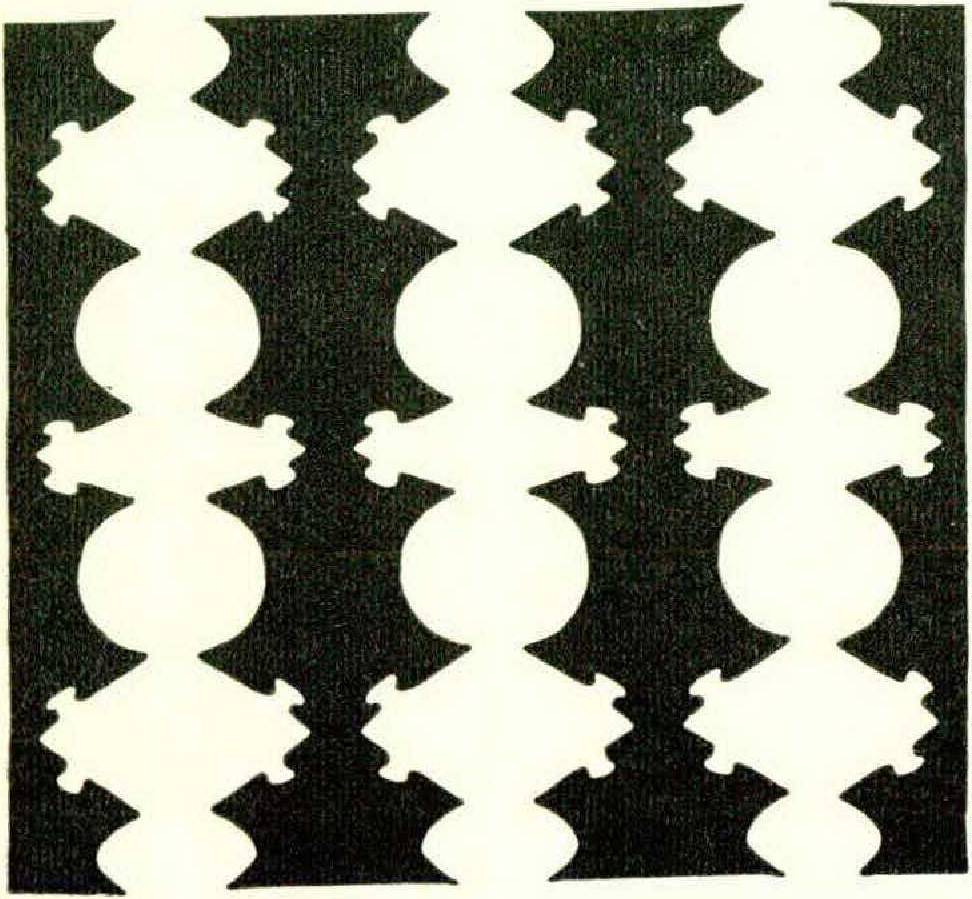
The community that supported and justified faith is long shattered. To confront our intuition with the world now is to see God distorted into a spider, a monster. We are left to private visions shared perhaps with one other person. The artist in Hour of the Wolf, like Tomas in Winter Light, is obsessed by the memory of the woman who had shared his private vision, lived in his intuitive world. Separated from her, he cracked up. His second wife enters only partially into this world. And under pressure of this silence, this unresponsiveness to his intuitions, his vision becomes increasingly fragmented, increasingly mad, until finally it destroys him.
The artist more than anyone else is tormented by the shattered nature of community, by the graceless silence where his work reverberates with twisted echo. Like the title figure in The Magician, the artist lives in a world where his skills are so despised that he begins to doubt himself, and yet where the new scientific pieties give no human emotional satisfaction. Bergman longs for the Middle Ages, for the time when an entire community built and then worshiped in the Cathedral of Chartres:
. . . it is my opinion that art lost its basic creative drive the moment it was separated from worship. It severed an umbilical cord and now lives its own sterile life, generating and degenerating itself. In former days the artist remained unknown and his work was to the glory of God. . . . Today the individual has become the highest form and the greatest bane of artistic creation. . . . The individualists stare into each other’s eyes and yet deny the existence of each other. . . .
This is not to say that today Bergman is a humble and selfless artistin fact he is a dominating and egotistical one—but that he longs for a time when the artist’s work was sanctioned by and spoke for a community of men. The magician, the madwoman of Through a Glass Darkly, the pastor of Winter Light, the translator in The Silence, the artist in Hour of the Wolf are all resonances of this longing, a longing that began, Bergman says, in his childhood:
I entertained my friends with tremendous stories of my secret exploits. They were embarrassing lies, which failed hopelessly when confronted with the level-headed skepticism of the world around me. Finally I withdrew and kept my dream world to myself. A child looking for human contact, obsessed by his imagination, had been quickly transformed into a hurt, cunning and suspicious day-dreamer.
Art now exists in a vacuum, “kept alive as a conventional politeness towards the past.” Art is “a snake’s skin full of ants. The snake is long since dead.” To speak one’s inner truth now is to be ignored, to be misunderstood, to see it grotesquely distorted. One must lie, be taken for a madman, or go mad oneself. Under these all too normal conditions the actress in Persona refuses to speak. The film itself is seen being burnt through by a projection light as the director screens it for himself. He, too, will refuse to speak. And yet that refusal too, as Persona shows, is distorted. Bergman continues then to work, deprived of community, knowing the Cathedral will never be rebuilt, speaking only for himself. “The artist lives exactly like every other living creature that only exists for its own sake. That makes a rather numerous brotherhood.”
As a film-maker Bergman is sparingly innovative, yet what he knows he knows to perfection. His latest film, Shame, shows him entirely the master of his medium, working with a fluidity and strange angular grace unapproached by any other director. He works with an absolute integrity, making every film “as if it were my last.” Personal imperative has allowed him no concession to the taste of his time. To achieve complete control over his art he has forced on himself greater and greater acts of renunciation, forging an art that perfectly embodies his obsessions, that directly speaks his concerns. He has sharpened and resharpened the edges of his dialectic until they cut directly to our heart.
I wouldn’t wish to use Bergman as a club to beat all other living directors, but this prolific Swede represents a phenomenon rare in any time, a profoundly moving artist, an entertainer, a magician—and one working in a medium still too easily disdained.