An Unfinished Woman
Lillian Hellman, who grew up in New Orleans and New York, made her reputation as one of America’s great playwrights before she was thirty. THE CHILDREN’S HOUR took New York by storm when it opened in 1934, ran for 691 performances on Broadway, and played in every major city in the United States. Her second triumph, THE LITTLE FOXES, which starred Tallulah Bankhead on the stage and Bette Davis in the film version, portrayed the selfishness and hypocrisy of a turn-of-thecentury Southern family and established Miss Hellman as a major American dramatist. The author of twelve plays in all and many film scripts, Miss Hellman has now written a book of extraordinary fascination and power. It is the memoir of the private, not the theater’s, Lillian Hellman, and in advance of its publication by Little, Brown and Company in June, we are proud to present a substantial excerpt. Originally planning to publish in two successive issues of the ATLANTIC, we decided that these pages from, AN UNFINISHED WOMAN deserved to be read at one sitting. We believe our readers will agree.

by Lillian Hellman
I WAS born in New Orleans to Julia Newhouse from Demopolis, Alabama, who had fallen in love and stayed in love with Max Hellman, whose parents had come to New Orleans in the German 1845—1848 immigration to give birth to him and his two sisters. My mother’s family, long before I was born, had moved from Demopolis to Cincinnati and then to New Orleans, both desirable cities, I guess, for three marriageable girls.
But I first remember them in a large New York apartment: my two young and very pretty aunts; their taciturn, tight-faced brother; and the silent, powerful, severe woman, Sophie Newhouse, who was their mother, my grandmother. Her children, her servants, all of her relatives except her brother, Jake, were frightened of her, and so was I. Even as a small child I disliked myself for the fear and showed off against it.
The Newhouse apartment held the upper-middle-class trappings, in touch of things and in spirit of people, that never manage to be truly stylish. Heavy weather hung over the lovely oval rooms. True, there were parties for my aunts, but the parties, to a peeping child in the servants’ hall, seemed so muted that I was long convinced that on fancy occasions grown people moved their lips without making sounds. In the days after the party one would hear exciting stories about the new suitors, but the suitors were never quite good enough, and the parties were, obviously, not good enough for those who might have been. Then there were the Sunday dinners, with great uncles and aunts sometimes in attendance, full of open ill will about who had the most money or who spent it too lavishly, who would inherit what, who had bought what rug that would last forever, who what jewel she would best have been without. It was a corporation meeting, with my grandmother unexpectedly in the position of vice-chairman.
The chairman was her brother, Jake, the only human being to whom I ever saw her defer. Early, I told myself that was because he was richer than she was, and did something called managing her money. But that was too simple: he was a man of great force, given, as she was given, to breaking the spirit of people for the pleasure of the exercise. But he was also witty and rather worldly, seeing his own financial machinations as natural not only to his but to the country’s benefit, and seeing that as comic. (I had only one real contact with my Uncle Jake: when I graduated from school at fifteen, he gave me a ring that I took to a Fifty-ninth Street hock shop; I got twenty-five dollars and bought books. I went immediately to tell him what I’d done, deciding, I think, that day that the break had to come. He stared at me for a long time, and then he laughed and said the words I later used in The Little Foxes: “So you’ve got spirit after all. Most of the rest of them are made of sugar water.”)
But that New York apartment where we visited several times a week, the summer cottage where we went for a visit each year as the poor daughter and granddaughter, made me into an angry child and forever caused in me a wild extravagance mixed with respect for money and those who have it. The respectful periods were full of self-hatred, and during them I always made my worst mistakes. But after The Little Foxes was written and put away, this conflict was to grow less important, as indeed the picture of my mother’s family was to grow dim and almost fade away.
It was not unnatural that my first love went to my father’s family. He and his two sisters were free, generous, funny. But as I made my mother’s family all one color, I made my father’s family too remarkable, and then turned both extreme judgments against my mother.
In fact, she was a sweet eccentric, the only middle-class woman I have ever known who had not rejected the middle class—that would have been an act of will—but had skipped it altogether. She liked a simple life and simple people, and would have been happier, I think, if she had stayed in the backlands of Alabama riding wild on the horses she so often talked about, not so lifelong lonely for the black men and women who had taught her the only religion she ever knew. I didn’t know what she was saying when she moved her lips in a Baptist church or a Catholic cathedral or, less often, in a synagogue, but it was obvious that God could be found anywhere, because several times a week we would stop in a church, any church, and she seemed to be at home in all of them.
But simple natures can also be complex, and that is difficult for a child, who wants all grown people to be sharply one thing or another. I was puzzled and irritated by the passivity of my mother as it mixed with an unmovable stubbornness, (My father had not been considered a proper husband for a rich and pretty girl, but my mother’s deep fear of her mother did not override her deep love for my father, although the same fear kept my two aunts from ever marrying and my uncle from marrying until after his mother’s death.)
Mama seemed to do only what my father wanted, and yet we lived the way my mother wanted us to live. She deeply wanted to keep my father and to please him, but no amount of protest from him could alter the strange quirks that Freud already knew about. Windows, doors, and stoves haunted her, and she would often stand before them for as long as half an hour, or leaving the house, would insist upon returning to it while we waited for her in any weather. And sad, middle-aged ladies would be brought home from a casual meeting on a park bench to fill the living room with woe: plain tales of sickness, or poverty, or loneliness in the afternoon often led to their staying on for dinner with my bored father.
I remember a time when out apartment was being painted, and the week it was supposed to take stretched into three because one of the two painters, a small, sickly man with an Italian accent, soon found that my mother was a sympathetic listener. He would, in duty, climb the ladder at nine in the morning, but by eleven he was sitting on the sofa with the tale of the bride who died in childbirth, the child still in Italy, his mother who ailed and half starved in Tuscany, the nights in New York where he knew nobody to eat with or talk to. After lunch, cooked by our bad-tempered Irish lady, and served to him by my mother to hide the bad temper, he would climb the ladder again and paint for a few hours while my mother urged him to stop work and go for a nice day in the sunshine. Once, toward the end of the long job—the other painter never returned after the first few days—I came home carrying books from the library, annoyed to find the painter in my favorite chair. As I stood in the doorway, frowning at my mother, the painter said, “Your girl. How old?”
“Fifteen,” said my mother.
“In Italy, not young, fifteen. She is healthy?”
“Very healthy,” said my mother, “Her generation has larger feet than we did.”
“I think about it,”said the painter, “I let you know.”
I knew my mother didn’t understand what he meant, because she smiled and nodded in the way she always did when her mind had wandered, but I was angry and told my father about it at dinner. He laughed, and I left the table, but later he told my mother that the painter was not to come to the house again. A few years later when I brought home for dinner an aimless, handsome young man who got roaring drunk and insisted upon climbing down the building from our eighth-floor apartment, my father, watching him from the window, said, “Perhaps we should try to find that Indian house painter.”My mother was dead for five years before I knew that I had loved her very much.
MY MOTHER’S childbearing had been dangerously botched by a fashionable doctor in New Orleans, and forever after she stood in fear of going through it again, and so I was an only child. (Twenty-one years later, when I was married and pregnant, she was as frightened for me, and unashamedly happy when I lost the child.) I was thirty-four years old, after two successful plays, and fourteen or fifteen years of heavy drinking in a nature that wasn’t comfortable with anarchy, when a doctor told me about the lifelong troubles of an only child. Most certainly I needed a doctor to reveal for me the violence and disorder of my life, but I had always known about the powers of an only child. I was not meaner or more ungenerous or more unkind than other children, but I was off-balance in a world where I knew my grand importance to two other people who certainly loved me for myself, but who also liked to use me against each other. I don’t think they knew they did that, because most of it was affectionate teasing between them, but somehow I knew early that my father’s jokes about how much my mother’s family liked money, how her mother had crippled her own children, my grandmother’s desire to think of him—and me—as strange vagabonds of no property value, were more than teasing. He wished to win me to his side, and he did. He was a handsome man, witty, high-tempered, proud, and, although I guessed very young I was not to be certain until much later, with a number of other women in his life. Thus his attacks on Mama’s family were not always for the reasons claimed.
When I was about six years old. my father lost my mother’s large dowry. We moved to New York and were shabby poor until my father finally settled for a life as a successful traveling salesman. It was in those years that we went back to New Orleans to stay with my father’s sisters for six months each year. I was thus moved from school in New York to school in New Orleans without care for the season or the quality of the school. This constant need for adjustment in two very different worlds made formal education into a kind of frantic tennis game, sometimes played with children whose strokes had force and brilliance, sometimes with those who could barely hold the racket. Possibly it is the reason I never did well in school or in college, and why I wanted to be left alone to read by myself. I had found, very early, that any other test found me bounding with ease and grace over one fence to fall on my face as I ran toward the next.
THERE was a heavy fig tree on the lawn where the house turned the corner into the side street, and to the front and sides of the fig tree were three live oaks that hid the fig from my aunts’ boardinghouse. I suppose I was eight or nine before I discovered the pleasures of the fig tree, and although I have lived in many houses since then, including a few that I made for myself, I still think of it as my first and most beloved home.
I learned early, in our strange life of living half in New York and half in New Orleans, that I made my New Orleans teachers uncomfortable because I was too far ahead of my schoolmates, and my New York teachers irritable because I was too far behind. But in New Orleans I found a solution: I skipped school at least once a week and often twice, knowing that nobody cared or would report my absence. On those days I would set out for school done up in polished strapped shoes and a prim hat against what was known as “the climate,”carrying my books and a little basket filled with delicious stuff my Aunt Jenny and Carrie, the cook, had made for my school lunch. I would round the corner of the side street, move on toward St. Charles Avenue, and sit on a bench as if I were waiting for a streetcar until the boarders and the neighbors had gone to work or settled down for the postbreakfast rest that all Southern ladies thought necessary. Then I would run back to the fig tree, dodging in and out of bushes to make sure the house had no dangers for me. The fig tree was heavy, solid, comfortable, and I had, through time, convinced myself that it wanted me, missed me when I was absent, and approved all the rigging I had done for the happy days I spent in its arms: I had made a sling to hold the school books, a pulley rope for my lunch basket, a hole for the bottle of afternoon cream-soda pop, a fishing pole and a smelly little bag of elderly bait, and a pillow embroidered with a picture of Henry Clay on a horse that I had stolen from Mrs. Stillman, one of my aunts’ boarders; and I drove a proper nail to hold my dress and shoes to keep them neat for the return to the house.
It was in that tree that I learned to read, filled with the passions that can only come to the bookish, grasping, very young, bewildered by almost all of what I read, sweating in the attempt to understand a world of adults I fled from in real life but desperately wanted to join in books. (I did not connect the grown men and women in literature with the grown men and women I saw around me. They were, to me, another species.)
It was in the fig tree that I learned that anything alive in water was of enormous excitement to me. True, the water was gutter water and the fishing could hardly be called that: sometimes the things that swam in New Orleans gutters were not pretty, but I didn’t know what was pretty, and I liked them all. After lunch—the men boarders returned for a large lunch and a siesta—the street would be safe again, with only the noise from Carrie and her helpers in the kitchen, and they could be counted on never to move past the back porch or the chicken coop. Then I would come down from my tree to sit on the side-street gutter with my pole and bait. Often I would catch a crab that had wandered in from the Gulf; more often I would catch my favorite, the crayfish, and sometimes I would, in that safe hour, have at least six of them for my basket. Then, about two thirty, when house and street would stir again, I would go back to my tree for another few hours of reading or dozing or having what I called the ill hour, it is too long ago for me to know why I thought the hour “ill,” but certainly I did not mean sick. I think I meant an intimation of sadness, a first recognition that there was so much to understand that one might never find one’s way, and the first signs, perhaps, that for a nature like mine, the way would not be easy. I cannot be sure that I felt all that then, although I can be sure that it was in the fig tree, a few years later, that I was first puzzled by the conflict which would haunt me, harm me, and benefit me the rest of my life: simply, the stubborn, relentless, driving desire to be alone as it came into conflict with the desire not to be alone when I wanted not to be. I already guessed that other people wouldn’t allow that, although, as an only child, I pretended for the rest of my life that they would and must allow it to me.
I liked my time in New Orleans much better than I liked our six months’ apartment life in New York. The life in my aunts’ boardinghouse seemed remarkably rich. And what a strange lot my own family was. My aunts Jenny and Hannah were both tall, large women, funny and generous, who coming from a German, cultivated, genteel tradition had found they had to earn a living and earned it without complaint, although Jenny, the prettier and more complex, had frequent outbursts of interesting temper. It was strange, I thought then, that my mother, who so often irritated me, was treated by my aunts as if she were a precious Chinese clay piece from a world they didn’t know. And in a sense, that was true: her family was rich, she was small, delicately made, and charming—she was a sturdy, brave woman, really, but it took years to teach me that—and because my aunts loved my father very much, they were good to my mother and protected her from the less wellborn boarders. I don’t think they understood—I did, by some kind of child’s malice—that my mother enjoyed the boarders and listened to them with the sympathy Jenny couldn’t afford. I suppose none of the boarders were of great interest, but I was. crazy about what I thought went on behind their doors.
I was conscious that Mr. Stillman, a large, loose, good-looking man, flirted with my mother and sang off-key. I knew that a boarder called Collie, a too thin, unhappy-looking noage man, worked in his uncle’s bank and was drunk every night. He was the favorite of the lady boarders, who didn’t think he’d live very long. (They were wrong: over twenty years later, on a visit to my retired aunts, I met him in Galatoire’s Restaurant looking just the same.) And there were two faded, sexy, giggly sisters called Fizzy and Sarah, who pretended to love children and all trees. I once overheard a fight between my mother and father in which she accused him of liking Sarah. I thought that was undignified of my mother and was pleased when my father laughed it off as untrue. He was telling the truth about Sarah: he liked Fizzy, and the day I saw them meet and get into a taxi in front of a restaurant on Jackson Avenue was to stay with me for many years. I was in a black rage, filled with fears I couldn’t explain, with pity and contempt for my mother, with an intense desire to follow my father and Fizzy to see whatever it was they might be doing and to kill them for it. An hour later, I threw myself from the top of the fig tree and broke my nose, although I did not know I had broken a bone and was concerned only with the hideous pain.
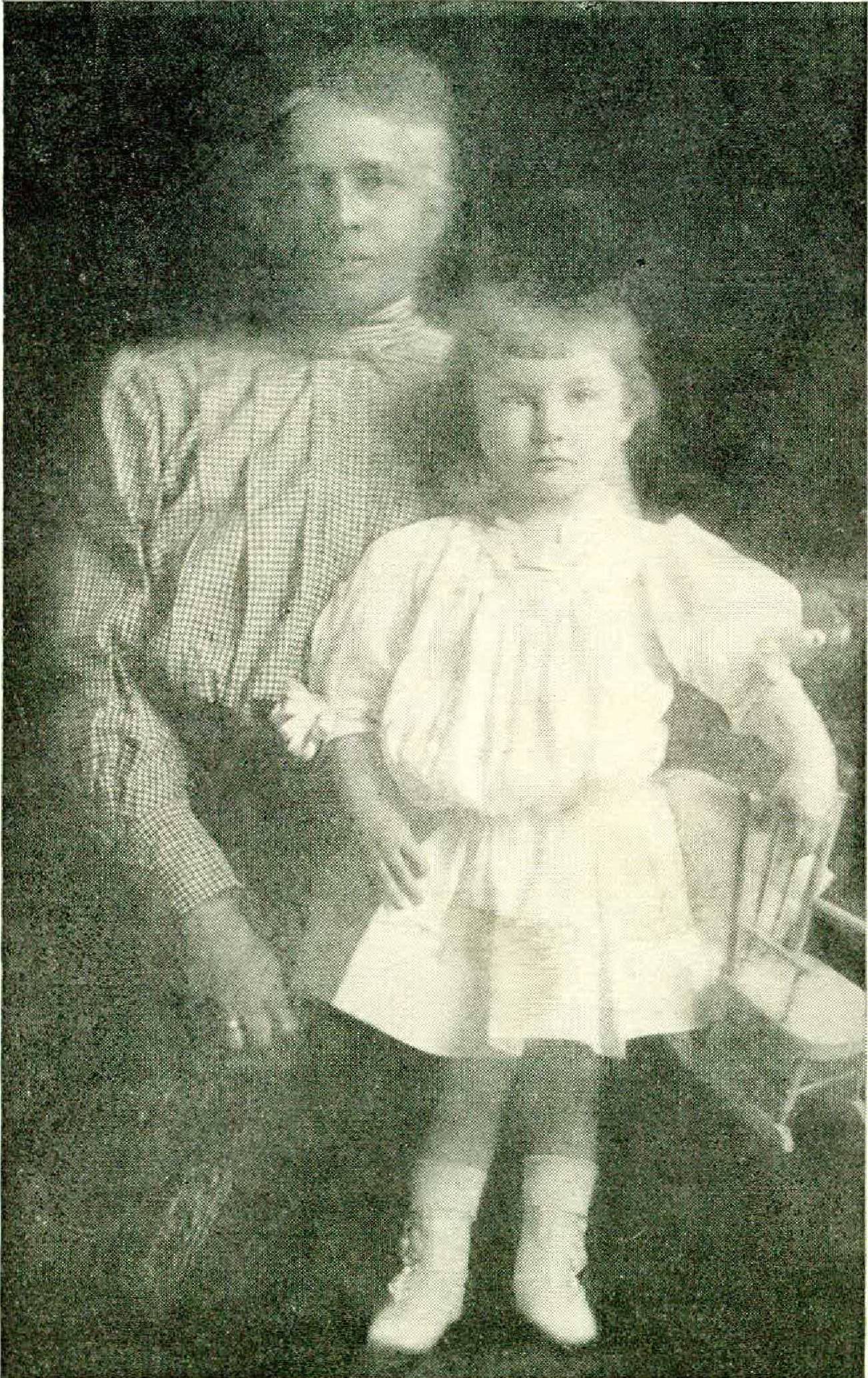
I went immediately to Sophronia, who had been my nurse when I was a small child before we moved, or half moved, to New York. She worked now for people who lived in a large house a streetcar ride from ours, and she took care of two little red-haired boys whom I hated with pleasure in my wicked jealousy. Sophronia was the first and most certain love of my life. (Years later, when I was a dangerously rebellious young girl, my father would say that if he had been able to afford Sophronia through the years, I would have been under the only control I ever recognized.) She was a tall, handsome, lighttan woman—I still have many pictures of the brooding face—who was for me, as for so many other white Southern children, the one and certain anchor so needed for the young years, so forgotten after that. (It wasn’t that way for us: we wrote and met as often as possible until she died when I was in my twenties, and the first salary check I ever earned she returned to me in the form of a gold chain.) The mother of the two red-haired boys didn’t like my visits to Sophronia, and so I always arrived by the back door. But Sophronia was not at home on the day of my fall. I sat on her kitchen steps crying and holding my face until the cook sent the upstairs maid to Audubon Park on a search for Sophronia. She came, running, I think for the first time in the majestic movements of her life, waving away the two redheads. She took me to her room and washed my face and prodded my nose and put her hand over my mouth when I screamed. She said we must go immediately to Dr. Fenner, but when I told her that I had thrown myself from the tree, she stopped talking about the doctor, bandaged my face, gave me a pill, put me on her bed, and lay down beside me. I told her about my father and Fizzy and fell asleep. When I woke up she said that she’d walk me home. On the way she told me that I must say nothing about Fizzy to anybody ever, and that if my nose still hurt in a few days I was only to say that I had fallen on the street and refuse to answer any questions about how I fell. A block from my aunts’ house we sat down on the steps of the Baptist church. She looked sad, and I knew that I had displeased her. I touched her arm, which had always been between us a way of saying that I was sorry.
She said, “Don’t go through life making trouble for people.”
I said, “If I tell you I won’t tell about Fizzy, then I won’t tell.”
She said, “Run home, now. Good-bye.”
And it was to be good-bye for another year, because I had forgotten that we were to leave for New York two days later, and when I telephoned to tell that to Sophronia, the woman she worked for said I wasn’t to telephone again. In any case, I soon forgot about Fizzy, and when the bandage came off my nose—it looked different but not different enough—our New York doctor said that it would heal by itself, or whatever was the nonsense they believed in those days about broken bones.
WE WENT back to New Orleans the next year and the years after that until I was sixteen, and they were always the best times of my life. It was Aunt Hannah who took me each Saturday to the movies and then to the French Quarter, where we bought smelly old leather books and she told me how it all had been when she was a girl: about my grandmother—I remembered her—who had been a very tall woman with a lined, severe face and a gentle nature; about my grandfather, dead before I was born, who in his portrait over the fireplace looked too serious and distinguished. They had, in a middle-class world, evidently been a strange couple, going their own way with little interest in money or position, loved and respected by their children. “Your grandfather used to say” was a common way to begin a sentence, and although whatever he said had been law, he had allowed my father and aunts their many eccentricities in a time and place that didn’t like eccentrics, and to such a degree that not one of his children ever knew they weren’t like other people. Hannah, for example, once grew angry—the only time I ever saw her show any temper—when my mother insisted I finish my dinner: she rose and hit the table, and told my mother and the startled boarders that when she was twelve years old, she had decided she didn’t ever want to eat with people again, and so she had taken to sitting on the steps of the front porch, and my grandmother, with no comment, had for two years brought her dinner on a tray, and so what was wrong with one dinner I didn’t feel like sitting through?
I think both Hannah and Jenny were virgins, but if they were, there were no signs of spinsterhood. They were nice about married people, they were generous to children, and sex was something to have fun about. Jenny had been the consultant to many neighborhood young ladies before their marriage night, or the night of their first lover. One of these girls, a rich ninny, Jenny found irritating and unpleasant. When I was sixteen I came across the two of them in earnest conference on the lawn, and later Jenny told me that the girl had come to consult her about how to avoid pregnancy.
“What did you tell her?”
“I told her to have a glass of ice water right before the sacred act and three sips during it.”
When we had finished laughing, I said, “But she’ll get pregnant.”
“He’s marrying her for money; he’ll leave her when he gets it. This way at least maybe she’ll have a few babies for herself.”
And four years later, when I wrote my aunts that I was going to be married, I had back a telegram: FORGET ABOUT THE GLASS OF ICE WATER TIMES HAVE CHANGED.
I think I learned to laugh in that house and to knit and embroider and sew a straight seam and to cook. Each Sunday it was my job to clean the crayfish for the wonderful bisque, and it was Jenny and Carrie, the cook, who taught me to make turtle soup, and how to kill a chicken without ladylike complaints about the horror of dealing death, and how to pluck and cook the wild ducks that were hawked on our street every Sunday morning.
I was taught, also, that if you gave, you did it without piety and didn’t boast about it. It had been one of my grandfather’s laws that no poor person who asked lor anything was ever to be refused, and his children fulfilled the injunction. New Orleans was a city of many poor people, particularly black people, and the boardinghouse kitchen after the house dinner was, on most nights, a mighty pleasant place: there would often be as many as eight or ten people, black and white, most always very old or very young, who sat at the table on the kitchen porch while Carrie ordered the kitchen maids and me to bring the steaming platters and the coffeepots.
It was on such a night that I first saw Leah, a light-tan girl of about fifteen, with red hair and freckles, a flat, ugly face, and a big stomach. I suppose I was about fourteen years old that night, but I remember her very well because she stared at me through her hungry eating. She came again about a week later, and this time Carrie herself took the girl aside and whispered to her, but I don’t think the girl answered her because Carrie shrugged and moved away. The next morning, Hannah, who always rose at six to help Jenny before she went to her own office job, screamed outside my bedroom window. Leaning out, I saw Hannah pointing underneath the house and saying softly, “Come out of there.”
Slowly the tan-red girl crawled out. Hannah said, “You must not stay under there. It’s very wet. Come inside, child, and dry yourself out.” From that day on Leah lived somewhere in the house, and a few months later had her baby in the city hospital. The baby was put out for adoption on Sophronia’s advice, with a little purse of money from my mother, I never knew what Leah did in the house, because when she helped with the dishes Carrie lost her temper, and when she tried making beds Jenny asked her not to, and once when she was raking leaves for the gardener he yelled, “You ain’t in your proper head,” so in the end, she took to following me around.
I WAS, they told me, turning into a handful. Mrs. Stillman said I was wild, Mr. Stillman said that I would, of course, bring pain to my mother and father, and Fizzy said I was just plain disgusting mean. It had been a bad month for me. I had, one night, fallen asleep in the fig tree and, coming down in the morning, refused to tell my mother where I had been. James Denery the Third had hit me very hard in a tug-of-war, and I had waited until the next day to hit him over the head with a porcelain coffeepot, and then his mother complained to my mother. I had refused to go back to dancing class.
And I was now spending most of my time with a group from an orphanage down the block. I guess the orphan group was no more attractive than any other, but to be an orphan seemed to me desirable and a self-made piece of independence. In any case, the orphans were more interesting to me than my schoolmates, and if they played rougher they complained less. Frances, a dark beauty of my age, queened it over the others because her father had been killed by the Mafia. Miriam, small and wiry, regularly stole my allowance from the red purse my aunt had given me, and the one time I protested she beat me up. Louis Calda was religious and spoke to me about it. Pancho was dark, sad, and to me, a poet because once he said, “Yo te umo.” I could not sleep a full night after this declaration, and it set up in me forever after both sympathy and irritability with the first sexual stirrings of little girls, so masked, so complex, so foolish as compared with the sex of little boys. It was Louis Calda who took Pancho and me to a Catholic Mass that could have made me a fourteen-year-old convert. But Louis explained that he did not think me worthy, and Pancho, to stop my tears, cut off a piece of his hair with a knife, gave it to me as a gift from royalty, and then shoved me into the gutter. I don’t know why I thought this an act of affection, but I did, and went home to open the back of a new wristwatch my father had given me for my birthday and to put the lock of hair in the back. A day later when the watch stopped, my father insisted I give it to him immediately, declaring that the jeweler was unreliable.
It was that night that I disappeared, and that night that Fizzy said I was disgusting mean, and Mr. Stillman said I would forever pain my mother and father, and my father turned on both of them and said he would handle his family affairs without comments from strangers. But he said it too late. He had come home very angry with me: the jeweler, alter my father’s complaints about his unreliability, had found the lock of hair in the back of the watch. What started out to be a mild reproof on my father’s part soon turned angry when I couldn’t explain about the hair. (My father was often angry when I was most like him.) He was so angry that he forgot that he was attacking me in front of the Stillmans, my old rival Fizzy, and the delighted Mrs. Dreyfus, a new, rich boarder who only that afternoon had complained about my bad manners. My mother left the room when my father grew angry with me. Hannah, passing through, put up her hand as if to stop my father and then, frightened of the look he gave her, went out to the porch. I sat on the couch, astonished at the pain in my head. I tried to get up from the couch, but one ankle turned and I sat down again, knowing for the first time the rampage that could be caused in me by anger. The room began to have other forms, the people were no longer men and women, my head was not my own. I told myself that my head had gone somewhere, and I have little memory of anything after my Aunt Jenny came into the room and said to my father, “Don’t you remember?” I have never known what she meant, but I know that soon after I was moving up the staircase, that I slipped and fell a few steps, that when I woke up hours later in my bed, I found a piece of angel cake—an old love, an old customleft by my mother on my pillow.
The headache was worse, and I vomited out of the window. Then I dressed, took my red purse, and walked a long way down St. Charles Avenue. A St. Charles Avenue mansion had on its back lawn a famous dollhouse, an elaborate copy of the mansion itself, built years before for the small daughter of the house. As I passed this showpiece, I saw a policeman and moved swiftly back to the doll palace and crawled inside. If I had known about the fantasies of the frightened, that ridiculous small house would not have been so terrible for me. I was surrounded by ornate, carved reproductions of the mansion furniture scaled for children, bisque figurines in miniature, a working toilet seat of gold leaf in suitable size, small draperies of damask with a sign that said “From the damask of Marie Antoinette,” a miniature samovar with small bronze cups, and a tiny Madame Récamier couch on which I spent the night, my legs on the floor. I must have slept, because I woke from a nightmare and knocked over a bisque figurine. The noise frightened me, and since it was now almost light, in one of those lovely mist mornings of late spring when every flower in New Orleans seems to melt and mix with the air, I crawled out.
Most of that day I spent walking, although I had a long session in the ladies’ room at the railroad station. I had four dollars and two bits, but that wasn’t much when you meant it to last forever and when you knew it would not be easy for a fourteen-year-old girl to find work in a city where too many people knew her. Three times I stood in line at the railroad ticket windows to ask where I could go for four dollars, but each time the question seemed too dangerous and I knew no other way of asking it.
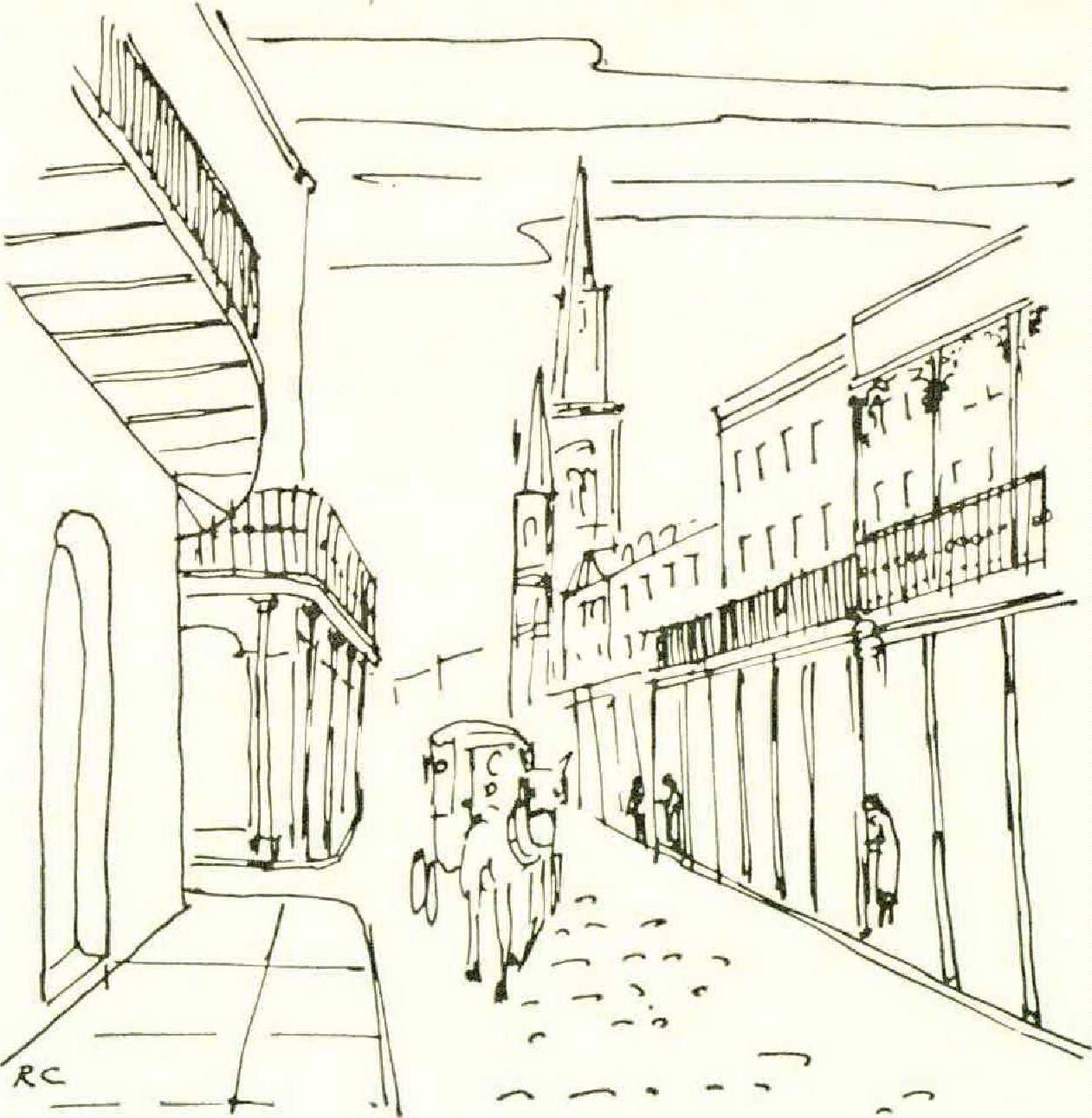
Toward evening, I moved to the French Quarter, feeling sad and envious as people went home to dinner. I bought a few Tootsie Rolls and a half loaf of bread and went to the St. Louis Cathedral in Jackson Square. (It was that night that I composed the prayer that was to become, in the next five years, an obsession, mumbled over and over through the days and nights: “God forgive me, Papa forgive me, Mama forgive me, Sophronia, Jenny, Hannah, and all others, through this time and that time, in life and in death.” When I was nineteen, my father, who had made several attempts through the years to find out what my lip movements meant as I repeated the prayer, said, “How much would you take to stop that? Name it and you’ve got it.” I suppose I was sick of the nonsense by that time because I said, “A leather coat and a feather fan,” and the next day he bought them for me.) After my loaf of bread, I went looking for a bottle of soda pop and discovered, for the first time, the whorehouse section around Bourbon Street. The women were ranged in the doorways of the cribs, making the first earlyevening offers to sailors, who were the only men in the streets. I wanted to stick around and see how things like that worked, but the second or third time I circled the block, one of the girls called out to me. I couldn’t understand the words, but the voice was angry enough to make me run toward the French Market.
The Market was empty except for two old men. One of them called to me as I went past, and I turned to see that he had opened his pants and was shaking what my circle called “his thing.” I flew across the street into the coffee stand, forgetting that the owner had known me since I was a small child, when my Aunt Jenny would rest from her marketing tour with a cup of fine, strong coffee.
He said, in the patois, “Que faites, ma ‘fant? Je suis fermé.”
I said, “Rien. My tante attend—Could I have a doughnut?”
He brought me two doughnuts, saying one was lagniappe, but I took my doughnuts outside when he said, “Mais où est vo’ tante à c’ heure?”
I fell asleep with my doughnuts behind a shrub in Jackson Square. The night was damp and hot, and through the sleep there were many voices, and much later, there was music from somewhere near the river. When all sounds had ended, I woke, turned my head, and knew I was being watched. Two rats were sitting a few feet from me. I uri-
nated on my dress, crawled backward to stand up, screamed as I ran up the steps of St. Louis Cathedral and pounded on the doors. I don’t know when I stopped screaming or how I got to the railroad station, but I stood against the wall trying to tear off my dress and only knew I was doing it when two women stopped to stare at me. I began to have cramps in my stomach of a kind I had never known before. I went to the ladies’ room and sat bent in a chair, whimpering with pain. After a while the cramps stopped, but I had an intimation, when I looked into the mirror, of something happening to me: my face was blotched, and there seemed to be circles and twirls I had never seen before, the straight blond hair was damp with sweat, and a paste of green from the shrub had made lines on my jaw. I had gotten older.
SOMETIME during that early morning I half washed my dress, threw away my pants, put cold water on my hair. Later in the morning a cleaning woman appeared, and after a while began to ask questions that frightened me. When she put down her mop and went out of the room, I ran out of the station. I walked, I guess, for many hours, but when I saw a man on Canal Street who worked in Hannah’s office, I realized that tire sections of New Orleans that were known to me were dangerous for me.
Years before, when I was a small child, Sophronia and I would go to pick up, or try on, pretty embroidered dresses that were made for me by a colored dressmaker called Bibettera. A block up from Bibettera’s there had been a large ruin of a house with a sign, ROOMS-CLEAN-CHEAP, and cheerful people seemed always to be moving in and out of the house. The door of the house was painted a bright pink. I liked that and would discuss with Sophronia why we didn’t live in a house with a pink door.
Bibettera was long since dead, so I knew I was safe in this Negro neighborhood. I went up and down the block several times, praying that things would work and I could take my cramps to bed. I knocked on the pink door. It was answered immediately by a small young man.
I said, “Hello.” He said nothing.
I said, “I would like to rent a room, please.”
He closed the door but I waited, thinking he had gone to get the lady of the house. After a long time, a middle-aged woman put her head out of a second-floor window and said, “What you at?”
I said, “I would like to rent a room, please. My mama is a widow and has gone to work across the river. She gave me money and said to come here until she called for me.”
“Who your mama?”
“Er. My mama.”
“What you at? Speak out.”
“I told you. I have money—” But as I tried to open my purse, the voice grew angry.
“This is a nigger house. Get you off. Vite.”
I said, in a whisper, “I know. I’m part nigger.”
The small young man opened the front door. He was laughing. “You part mischief. Get the hell out of here.”
I said, “Please,” and then, “I’m related to Sophronia Mason. She told me to come. Ask her.”
Sophronia and her family were respected figures in New Orleans Negro circles, and because I had some vague memory of her stately bow to somebody as she passed this house, I believed they knew her. If they told her about me, I would be in trouble, but phones were not usual then in poor neighborhoods, and I had no other place to go.
The woman opened the door. Slowly I went into the hall.
I said, “I won’t stay long. I have four dollars and Sophronia will give more if—”
The woman pointed up the stairs. She opened the door of a small room. “Washbasin place down the hall. Toilet place behind the kitchen. Twofifty and no fuss, no bother.”
I said, “Yes ma’am, yes ma’am,”but as she started to close the door, the young man appeared.
“Where your bag?”
“Bag?”
“Nobody put up here without no bag.”
“Oh. You mean the bag with my clothes? It s at the station. I’ll go and get it later—" I stopped because I knew I was about to say, I’m sick, I’m in pain, I’m frightened.
He said, “I say you lie. I say you trouble. I say you get out.”
I said, “And I say you shut up.”
Years later, I was to understand why the command worked, and to he sorry that it did, but that day I was very happy when he turned and closed the door. I was asleep within minutes.
Toward evening, I went down the stairs, saw nobody, walked a few blocks, and bought myself an oyster loaf. But the first bite made me feel sick, so I took my loaf back to the house. This time, as I climbed the steps, there were three women in the parlor, and they stopped talking when they saw me. I went back to sleep immediately, dizzy and nauseated.
I woke to a high, hot sun and my father standing at the foot of the bed staring at the oyster loaf.
He said, “Get up now and get dressed.”
I was crying as I said, “Thank you, Papa, but I can’t.”
From the hall, Sophronia said, “Get along up, now. Vite. The morning is late.”
My father left the room. I dressed and came into the hall carrying my oyster loaf. Sophronia was standing at the head of the stairs. She pointed out, meaning my father was on the street.
I said, “He humiliated me. He did. I won’t—” She said, “Get you going, or I will never see you whenever again.”
I ran past her to the street. I stood with my father until Sophronia joined us, and then we walked slowly, without speaking, to the streetcar line. Sophronia bowed to us, but she refused my father’s hand when he attempted to help her into the car. I ran to the car, meaning to ask her to take me with her, but the car moved, and she raised her hand as if to stop me. My father and I walked again for a long time.
He pointed to a trash can sitting in front of a house. “Please put that oyster loaf in the can.”
At Vanalli’s Restaurant he took my arm. “Hungry?”
I said, “No, thank you, Papa.”
But we went through the door. It was, in those days, a New Orleans custom to have an early black coffee, go to the office, and after a few hours have a large breakfast at a restaurant. Vanalli’s was crowded, the headwaiter was so sorry, but after my father took him aside, a very small table was put up for us—too small for my large father, who was accommodating himself to it in a manner most unlike him. He said, “Jack, my rumpled daughter would like cold crayfish, a nice piece of pompano, a separate bowl of bearnaise sauce, don t ask me why, French fried potatoes—”
I said, “Thank you, Papa, but I am not hungry.
I don’t want to be here.”
My father waved the waiter away, and we sat in silence until the crayfish came. My hand reached out instinctively and then drew back.
My father said, “Your mother and I have had an awful time.”
I said, “I’m sorry about that. But I don’t want to go home, Papa.”
He said angrily, “Yes, you do. But you want me to apologize first. I do apologize, but you should not have made me say it.”
After a while, I mumbled, “God forgive me, Papa forgive me, Mama forgive me, Sophronia, Jenny, Hannah—”
“Eat your crayfish.”
I ate everything he had ordered and then a small steak. I suppose I had been mumbling throughout my breakfast.
My father said, “You’re talking to yourself. I can’t hear you. What are you saying?”
“God forgive me, Papa forgive me, Mama forgive me, Sophronia, Jenny—”
My father said, “Where do we start your training as the first Jewish nun on Prytania Street?”
When I finished laughing, I liked him again. I said, “Papa, I’ll tell you a secret. I’ve had very bad cramps, and I am beginning to bleed. I’m changing life.”
He stared at me for a while. Then he said, “Well, it’s not the way it’s usually described, but it’s accurate, I guess. Let’s go home now to your mother.”
We were never, as long as my mother and father lived, to mention that time again. But it was of great importance to them, and I’ve thought about it all my life. From that day on I knew my power over my parents. That was not to be too important: I was ashamed of it and did not abuse it too much. But I found out something more useful and more dangerous: if you are willing to take the punishment, you are halfway through the battle. That the issue may be trivial, the battle ugly, is another point.
MY MOTHER had gone to Sophie Newcomb College in New Orleans, and although the experience had left little on the memory except a fire in her dormitory, she felt it was the right place for me. (My aunts Jenny and Hannah could keep an eye on me.) But I had had enough of Southern education and wanted to go to Smith. A few months before the autumn entrance term, when I thought the matter had been settled, my mother and father held out for Goucher on the strange ground that it was closer to New York. But a month before I was to leave for Goucher, my mother became ill, and it was obvious that I was meant to stay at home. I do not remember any sharp words about these changes, and that in itself is odd, because sharp words came often in those years, but I do remember a feeling of what difference did it make. I knew, without rancor, that my parents were worried about a wild and headstrong girl; and then, too, a defeat for an only child can always be turned into a later victory.
New York University had started its Washington Square branch only a few years before, with an excellent small faculty and high requirements for the students it could put into one unattractive building. I was, of course, not where I wanted to be, and I envied those of my friends who were. And yet I knew that in another place I might have been lost, because the old story was still true: I was sometimes more advanced but often less educated than other students, and I had little desire to be shown up. And by seventeen, I was openly rebellious against almost everything. I knew that the seeds of the rebellion were scattered and aimless in a nature that was wild to be finished with something-or-other and to find something-else-or-other, and I had sense enough to know that I was overproud, oversensitive, overdaring because I was shy and frightened. Ah, what a case can be made for vanity in the shy. (And what a losing game is selfdescription in the long ago.)
It was thus in the cards that college would mean very little to me, although one professor opened up a slit into another kind of literature: I began an exciting period of Kant and Hegel, a little, very little, of Karl Marx and Engels. In a time when students didn’t leave classes or even skip them very often, I would slip away from a class conducted by a famous editor, annoyed at the glimpses of his well-bred life, and would slam my seat as I left in the middle of a lecture by the famous Alexander Woollcott whenever he paraded the jibe-wit and shabby literary tastes of his world. (My bad manners interested Woollcott. He went out of his way, on several occasions, to find me after class and to offer a ride uptown. But the kindness or interest made me resentful and guilty, and I remember a tart exchange about a novel written by a friend of his. Years later, because Woollcott admired Dashiell Hammett, who did not admire him, I was to meet him again. And after that, when I wrote plays, he was pleasant to me, if saying that I looked like a prow head on a whaling ship is pleasant.)
A good deal of the college day I spent in a Greenwich Village restaurant called Lee Chumley’s curled up on a dark bench with a book, or arguing with a brilliant girl called Marie-Louise and her extraordinary, foppish brother, up very often from Princeton, carrying a Paris copy of Ulysses when he wasn’t carrying Verlaine. (Hal was a handsome, strange young man, and we all hoped to be noticed by him. A few years later he married one of our group, and a few years after that he killed himself and a male companion in a Zurich hotel room.)
In my junior year, I knew I was wasting time. My mother took me on a long tour to the Midwest and the South, almost as a reward for leaving college. We returned to New York for my nineteenth birthday, and the day after, I began what was then called an “affair.” It was an accident: the young man had pressed me into it partly because it satisfied the tinkering malice that had gone through the rest of his life, mostly because it pained his best friend. The few months it lasted did not mean much to me, but I have often asked myself whether I underestimated the damage that so loveless an arrangement made on my future. But my generation did not often deal with the idea of love—we were ashamed of the word, and scornful of the misuse that had been made of it—and I suppose that the cool currency of the time carried me past the pain of finding nastiness in what I had hoped would be a moving adventure.
In the autumn, feeling pleasantly aimless, but knowing that I deeply wanted to work at something, I went to a party and met Julian Messner, the vice president of Horace Liveright. I had never met a publisher before, never before had a conversation with a serious man much older than myself, and I mistook what was an automatic flirtatious interest for a belief that Julian thought I was intelligent. In any case, by the time the party was over, I had a job.
A job with any publishing house was a plum, but a job with Horace Liveright was a bag of plums. Never before, and possibly never since, has an American publishing house had so great a record. Liveright, Julian, T. R. Smith, Manuel Komroff, and a few even younger men had made a new and brilliant world for books. In the years before I went to work, and in the few years after I left, they discovered, or persuaded over, Faulkner, Freud, Hemingway, O’Neill, Hart Crane, Sherwood Anderson, Dreiser, E. E. Cummings, and many other less talented but remarkable people, all of them attracted by the vivid, impetuous, high-living men who were the editors. It didn’t hurt that Horace was handsome and daring, Julian serious and kind, Tom Smith almost erudite, with his famous collection of erotica and odd pieces of knowledge that meant nothing but seemed to; that the advances they gave were large and the parties they gave even larger, full of lush girls and good liquor; that the sympathy and attention given to writers, young or old, were more generous than had been known before, possibly more real than have been known since. They were not truly serious men, I guess, nor men of the caliber of Max Perkins, but they had respect for serious writing. Their personal capers, which started out as outrageous and dashing in the fusty world of older publishing houses, became comic and in time, dangerous and destructive. In the case of Horace himself, the end was sad, broken, undignified. But I was there at a good time and had a good time while I was there.
BY THE time I grew up, the fight for the emancipation of women, their rights under the law, in the office, in bed, was stale stuff. My generation didn’t think much about the place or the problems of women; we were not conscious that the designs we saw around us had so recently been formed that we were still part of the formation. (Five or ten years’ difference in age was a greater separation between people in those days, perhaps because the older generation had gone through the war.) The shock of Fitzgerald’s flappers was not for us: by the time we were nineteen or twenty we had either slept with a man or pretended that we had. And we were suspicious of the words of love. It was rather taken for granted that you liked one man better than the other and hoped he would marry you, but if that didn’t happen you did the best you could and didn’t talk about it much. We were, I suppose, pretend cool, and paid for it later on, but our revolt against sentimentality had come, at least, out of distaste for pretense. Of the five girls I knew best, three married for money and said so, and we were not to know then that two of them, in their forties, would crack up under deprivation or boredom.
I was not, therefore, attracted by the lady intellectuals I met at Liveright’s. They puzzled me. They talked so much about so little, they were weepy about life and men, and I was too young to be grateful for how much I owed them in the battle of something-or-other in the war for equality. They came through the office door as novelists or poets or artists, and there I caught only glimpses and heard only gossip. But at parties I saw them in action and felt envy for their worldliness, their talent, their clothes, their age—and bewilderment at their foreign, half-glimpsed problems.
Liveright gave a great many parties. Any writer on a New York visit, any new book, any birthday was an excuse for what he called an “A” party or a “B” party. (Liveright was possibly the first publisher to understand that writers care less for dollars than for attention.) The “A” parties were respectable and high-class chatty. The “B” parties were drunk, cut-up sex stuff, and often lasted into another day and night with replacements. I was invited to both the “A” and “B” parties, maybe because I was young and thought to be unjudging, maybe for reasons not so good.
The respectable parties were filled with wives, single or divorced ladies, and a few wellborn lesbians. They chatted about books and Freud. Not many of them had read Freud carefully, and so he was considered by some as a metaphysician and by others as a welcome emancipator. And his conclusions about children were considerably misunderstood: I remember one of Maxwell Bodenheim’s wives deploring, in Freud’s name, the stodgy mind of her very young son who would not admit that when his mama flapped her arms she really rose in the air and soared above the city. She had been cursed, she felt, with a seven-yearold banker type. When she turned to me for agreement, I truly ran across the room feeling younger than her son and more ignorant. But I felt that way most of the time: Edmund Wilson, who met me somewhere in those years, says that I was a shy girl who spoke very little. I like him to say that, but the shyness was a cover for the fear of being shown up.
The “B” parties were filled with pretty ladies, semi-ins, almost-actresses, or newspaper girls, and they slept quite openly with the gentlemen guests or executives of Liveright’s or the bankers Horace so often had at his parties because he so often needed their money. Some of the ladies had permanent alliances—permanent meant about six months, and semi-permanent meant a few weeks. The “B party girls puzzled me as much as the “A” party ladies and seemed to me no livelier. (If I had known the word square, I would have used it.) I felt that the words of emotion they spoke were not the truth, but then I was not yet old enough to be kind about lost ladies. Whatever step my generation had taken, forward or backward, it was large enough to separate us from people not too much older than ourselves.
Sometimes the parties were given at Horace’s apartment, more often they were given at the office. And the office was a wacky joint in a brownstone house on Forty-eighth Street. Certain jobs were more clearly defined than others, but even the stenographers and shipping clerks often wandered about reading manuscripts, offering opinions about how to advertise or sell a book, and there was seldom a day without excitement. Some days a “great” new book was found; some days no corner could be found for work because too many writers were in town or had just dropped by; sometimes one of the editors had been in mysterious trouble the night before and everybody went around to his house or hospital to call upon him; on no day could you ever be sure what you would see through a half-open office door, or how long lunch hour would be for Horace and the editors, or who was taking a long nap afterward. All the men in the office made routine passes at the girls who worked there—one would have had to be hunchbacked to be an exception—and one of the more pleasant memories of my life is the fast sprinting I would do up and down the long staircases to keep from being idly pinched or thrown by a clutching hand on a leg.
But the nicest times came when an efficiency cleanup was ordered. Then for a short time we would look and act like every other office and return from lunch prompt and sober, and work late into the night. I enjoyed the calm and was sorry that such periods never lasted more than a few days.
IT WAS in one of those efficiency periods that I knew there was talk of firing me—I had misplaced an important manuscript, I didn’t know how to file, my typing was erratic, my manuscript reports were severe. I would have been fired if I hadn’t, that very week, discovered that I was pregnant by the man who, a half-year later, I would marry.
A young man called Donald Friede had just been made a partner because Horace needed the money Donald brought into the firm. (He always needed money and often found it by selling part of the business to rich young men.) Donald seemed friendly, more my age, and I was so desperate to find an abortionist that, foolishly, I asked if he knew such a doctor. He found one immediately, swore himself to secrecy, and I made an appointment with the doctor for the following week. The morning following Donald’s vow of secrecy, every member of the firm called me into his office to offer money, to ask the name of my child’s father, to guess that it was one of them, to make plans and plots for help I didn’t want. I was suddenly a kind of showcase. I was angry about that, and so throughout the good-natured questionings I sat sullen, staring into space, refusing answers, trying not to think about the vicarious, excited snoopiness I knew was mixed with the kindness.
The operation, done without an anesthetic in a Coney Island half-house, with the doctor’s mother as assistant, was completed on a Monday evening. I went home, weak and more frightened than I had ever been about anything, and so ignorant that I was awake all night worried that my parents could tell what had happened by just looking at me. On Tuesday morning, feeling sick, but sure that my mother would call a doctor if I said that, I went back to work. Horace called me in to ask how I was and to give me a glass of midmorning champagne; Friede stopped by my desk to ask if I had now decided to reveal the name of the father; Julian Messner asked me out to lunch and bought me a drink that was called a pink-un, and stared at me throughout lunch as if I were a recent arrival from a distant land. We didn’t talk much at lunch, but as we walked back to the office he said, gently, “I don’t understand what you’re about.”
I said, “That’s all right, Julian,” and knew he didn’t like the answer.
As we climbed the steps of the brownstone, T. R. Smith yelled, “Julian, tell that ninny to go home to bed. She shouldn’t have come to work today. Tell her to get out of here.”
I was sure this was his way of firing me, so on my way past his office, I stopped in. I said. “I know I’ve lost the manuscript, Tom, but I’ve been nervous and tomorrow I’ll find it—”
He said, “What are you made of, Lilly?”
I said, “Pickling spice and nothing nice.”
He said, “ That kind of talk. I don’t understand you kids. Go home.”
I said I couldn’t, that if I went home too early my mother would be nervous and make a fuss, so I’d go to the movies.
He said, “You look awful. Lie down on the couch. I’ll send you in some supper. When you feel better, go home, or go wherever you go.”
He went back to the manuscript he was reading, the phone calls he was making, and I went to sleep on the couch.
When I woke up he said, “What’s your generation about?”
“I don’t know what it’s about, and I don’t know why all of you keep asking questions like that. Everybody here seems angry with me for a reason I don’t understand, and I’m angry with Donald for breaking his word.”
Smith said, “It isn’t that we’re angry with you. We’re worried about ourselves. We’re used to bums, and we’re used to nice or near-nice girls who make speeches and cause a fuss. We’re not used to a respectable girl who doesn’t make trouble for the man, says she is probably going to marry him anyway, but won’t when she’s pregnant, doesn’t even tell him what day the abortion is—”
“I didn’t tell him because it would have made me more nervous.”
“How many men have you slept with?”
“Three hundred and thirty-three, Tom, not counting my brothers and uncles who don’t much like to be counted.”
I came toward his desk, took a deep breath, and no longer cared about being fired. “And it’s none of your business. I haven’t much liked being everybody’s pregnant pet the last few days and all the questions. It’s as if all of you were waiting for me to cry or to throw myself from a window or to tell you the man had deserted me and wouldn’t I come home with one of you nicer boys—”
He said, “Not me. I don’t want you home with me. You’re not up my alley. But you’re right. Exactly right.”
“Funny,” I said, “because none of you gives a damn about me.”
“Not one damn. They even forgot you were here until this happened. But you acted too calm, wouldn’t talk, came to work and so on, so now we realize that you’re younger, different than the women we know. There is a new generation, and nobody here likes to think that. But we’d better catch up on it if we want to publish it. I don’t think we’re going to like it, but maybe you’d better start telling us about it.”
A waiter came into Smith’s office, bringing a tray front the speakeasy next door. Smith moved a table in front of me, gave me a drink, and stared at me as I ate all of the good food. I grinned at him, and he said, “So?”
I said, “I don’t know how to answer you. I don’t know about my generation. It’s just us. We think we sound better than your ladies, but we don’t know even that much because we haven’t had time to make theories or maybe even need any.”
“What do you think of what you call our ladies?”
I said, “All the talk about love, all the stuff.”
“Did you ever read Flaming Youth?”
“Certainly not.”
“Well, smarty, a lot ol people did. We want Sam Adams to do a new book, maybe a sequel. But I think things have changed even in these few years, and I don’t think we know, or he knows, what we’re talking about. You can help.”
I said I wasn’t flaming youth, didn’t even know what it meant.
“Yes, you do. You’re it. Or it to us.”
He came and sat by me and patted my hand. “It was I who wanted to fire you. You’re not very efficient. But I’ll make you a bargain. Get a couple of your bright friends, bring them over to Horace’s this Saturday night, let Sam Adams ask all of you a few questions, and you can keep the job. For a while, anyway.”
SATURDAY night my two friends, Marie-Louise and Alice, and I were escorted to Horace’s apartment entrance by Alice’s two brothers. As flaming youth we’d each had a root beer and a sandwich in a delicatessen. The boys left us at the door with a few bad jokes, and the three of us went up to Horace’s duplex apartment.
I should have guessed there would be a party, there was a party almost every Saturday night, but I couldn’t have guessed how noisy it would be. We stood in the door, knowing nobody, feeling awkward and foolish, until Tom Smith saw us, and crossing the room, motioned us up the stairs. I remember Liveright calling out from his place on the sofa, telling us to come and join him, but Tom hurried us to a kind of small library-guestroom, and then, having made a leering examination of my friends, went out, closing the door. None of us talked: we felt like new patients in a hospital ward, in a few minutes Tom came back carrying glasses and a bottle. He was followed by Mr. Adams, who sat down on the couch bed and motioned us to chairs around him.
I would like to say these many years later that I remember his questions. But I don’t, and for a good reason: he had already decided on whatever he meant to write, and the questions were fitted to his decisions. So most of the time we didn’t know what he was talking about.
After a few drinks, Mr. Adams’ boredom with us was no longer concealed. (I think he had agreed to meet us only because Smith had insisted upon it. And the hour was late and he wasn’t young.) The three of us felt silly and resentful, so when he got down to stuff like “How old were you when you had your first sexual encounter?” Marie-Louise said she didn’t know what encounter meant, kind of, and when Mr. Adams explained that it meant being in bed with a man, she said that in Bombay, where she had been born, things like that didn’t take place in a bed. She had been born in Albany, New York, was a virgin until she married two years later, but it was a good thing to say because it put a little fire under Alice and me, who had been acting sulky. I said I had my first encounter in a chicken coop in New Orleans when I was four years old, but Mr. Adams was more interested in Alice, who was a beautiful girl and who could cry any time she felt like it. She was crying now over her first encounter, an imaginary geographerexplorer who had disappeared on what she sometimes called the Niger and sometimes called the Amazon. Marie-Louise, tired ot Alice’s overlong fantasy, took to singing. She had a pretty voice, and she was improvising about her love in Bombay. Mr. Adams liked the singing and asked her if she wanted him to speak to Liveright, who would speak to Otto Kahn, the culture-kick banker, about money for singing lessons. Alice had now left the geographer behind and was trying to tell Mr. Adams that she had had so many encounters that only her priest could remember the details, but she’d make him write them all down for Mr. Adams because her father was a papal count. (Her father was a rich Jew from Detroit, and she was already started on the road to Marxism that would lead her, as a student doctor, to be killed in the Vienna riots of 1934.)
The three of us had had too many drinks, were talking at the same time, were laughing too much at nothing. Mr. Adams rose, thanked us, suggested that we all go downstairs and join Horace’s party.
But the door wouldn’t open. I don’t know why it wouldn’t open, and although he later denied it, I’ve always believed that Tom Smith had locked us in and forgotten about us. In any case, there we were. We tried hitting the door, we shouted, we stamped on the floor, but no sounds could overreach the noise of the party below. Mr. Adams finally threw himself against the door with such angry force that he reeled and fell back over a chair, and pushed Alice when she tried to help him up. She stayed on the floor and claimed that it was the first time in all of her many encounters that a man had been mean to her. When she started to cry, Marie-Louise said to cut it, but by now the tears were real, and they were soon being nasty to each other.
The only other door in the room led to a bathroom, and when Mr. Adams went in there, we had no reason to be curious. (In any case we were too busy: Marie-Louise and Alice were shouting at each other, and I was explaining the damage alcohol made on the brain.) When the three of us quieted down, and Alice and Marie-Louise had apologized to one another, we whispered and giggled about the new encounters we were making up for Mr. Adams’ return. It took us quite a while to realize that Adams had been missing for longer than a trip to a toilet usually requires. We knocked on the bathroom door, got no reply, consulted, and finally opened the door. There was no sign of him, but the bathroom window was open and sounds were coming from below. We climbed the bathtub ledge to see that Mr. Adams was on a fire escape three flights below us, one story above ground level. He was shouting into a window that faced him, but nobody answered. He took to pounding on the window and then to pushing it. He was sweating, and he looked sick. Slowly he walked to the opening of the fire escape, crouched, and began to shake the ladder. But the ladder had rusted through the years and would not budge. Mr. Adams stood erect as if to jump. But he didn’t make the jump, and he was right: it was a long jump, he was not young, and frustration and anger had turned him clumsy. He slipped and fell the length of the fire-escape landing.
Marie-Louise said, “Ssh. He wouldn’t want us to see him.”
Alice said, “He’s going to hurt himself.” She pushed us both aside, climbed out the window, going young and rapid down the ladders. Adams didn’t see her until she had almost reached him, and then, in some kind ol panic, or shame, he grabbed her leg and motioned her to go back. Alice kicked his hand and made the long jump to the ground with an athlete’s soft, forward motion. Adams shouted something to her we couldn’t hear, but we could see that her face changed to anger.
She stepped back to look up at us and called out, “Don’t ever have encounters with old gentlemen on fire escapes.”Then she disappeared around a corner of the building, and in a few minutes Mr. Adams rose from his fire escape and began a slow climb back to our bathroom window.
I said to Marie-Louise, “Take your clothes off, get in the shower, and when he gets here, pop out and offer yourself. I think that’s what flaming youth does every Saturday night.”
She said, “Don’t be mean,” and backed me out of the bathroom.
The three of us didn’t speak during the half hour it took the janitor and his assistant to take the door off the hinges. We faced a large group of people from the party who treated us as if we were a vaudeville turn put on for their amusement. By the time we got past them and downstairs, Mr. Adams had disappeared, and Alice was sitting next to Tom Smith.
I said, “Tom, flaming youth thinks you locked us in and it was a dirty trick.”
Tom put his arm around Alice. “This little girl has sense. Some little girls don’t have too much. I think well fire you tomorrow.”
I wasn’t fired, but I left a few months later to get married. Mr. Adams never wrote a sequel to Flaming Youth; although he did write a book called The Flagrant Years about the “beauty market.” I don’t think that could have been us.
AFTER I was married I would often drop around to the office to see my old friend Louis Kronenberger, who had gone to work there, and sometimes Julian Messner would take me out to lunch. I wanted very much to ask him to give me back my old job, but I guess I knew I wouldn’t get it. In any case, I had a feeling that the place wars in a decline. Rumors went about that Horace was wasting money producing plays and was drinking too much; and because the Depression had now set in, the rich, available young men partners were no longer to be found. Gradually the firm began to disappear, its assets and contracts taken over by a man who had been the head of the shipping room. It was, of course, a sad story, but there were so many sad stories in the early 1930s that I don’t remember any special pain when I met Horace again in Hollywood. He had become a producer at Paramount Pictures: some of the old glamour was there, where his name was still famous and his recent history not yet fully understood. But every time I saw him— not many times, perhaps five or six—I knew, for a simple reason, that the pride was breaking: he would, immediately, cross the room to sit beside me because I alone in the room was the respectful young girl who had known him in the great days, and the more he drank the more we talked of those days, not so mam years before. (He had as a mistress, a very nice actress, and was by this time divorced from his wife. The nice actress was good to him and faithful, and we all took for granted that he would marry her.)
Then for a long time I didn’t see him, and I no longer can remember whether he was fired from Paramount or resigned. I saw him again after I was divorced and Hammett and I had moved to New York. About a year after that, I had a call from him asking me to his wedding reception the following week. I didn’t want to go, although I don’t know what instinct dictated that, but Hammett, who didn’t know him very well and didn’t like him very much, unexpectedly insisted that we go.
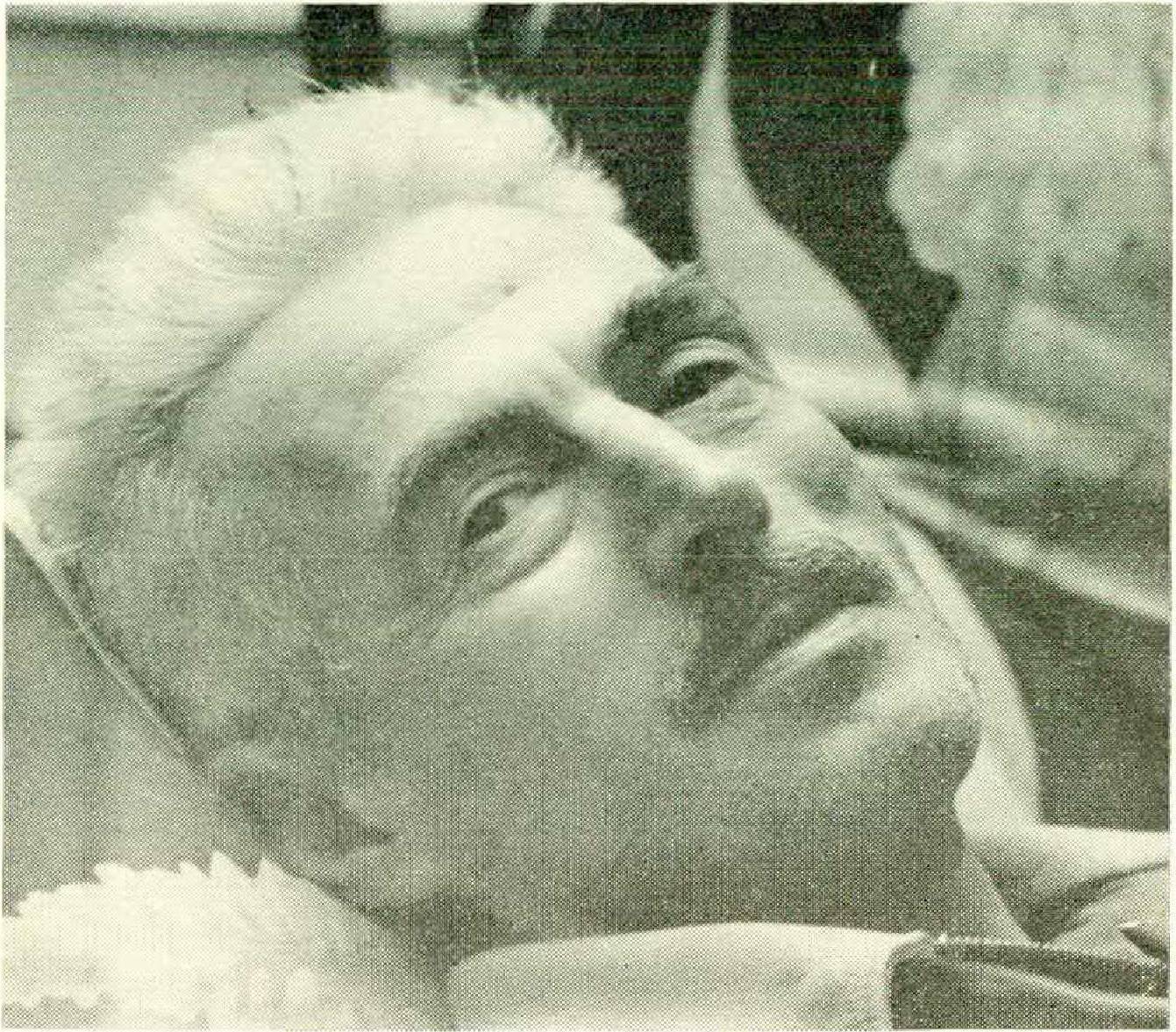
The reception was given at the apartment of one of his respectable lady cousins. The room was filled with people I had never seen before, although an occasional familiar face would float in and float out. The party seemed in the managerial hands of two brothers who, when they weren’t kissing the gentlemen guests, were kissing each other.
I said to one of them, “Where’s Horace?”
“Passed out,” he shrieked with laughter, “and so has the bride. They had a simply, simply splendid
fight.”
“She never used to drink,” I said.
“Always. Always. How do you know? You never met her.”
When we got that straight, it turned out that Horace had not married the nice actress, but another actress, recently met, a dark beauty who appeared in a few minutes, lurching, demanding that somebody find the bridegroom because she wanted an immediate divorce.
I said to Hammett, “Let’s get out.”
Hammett said, “No. Wait for him, the poor bastard.”
And so we sat through the long afternoon and night, neither of us having much to drink, although those were the heavy drinking days. Hammett, sober, was always a silent man, and after a while I couldn’t bring myself to even the smallest conversation with the strange men and women in the room. We must have been an odd pair, sitting silent on a big couch as the place emptied, filled again, grew quiet, then noisy with new visitors, the bride screaming “darlings” at some, curses at others, explaining over and over again that the bridegroom had given her a black eye. (Her eyes were beautiful and clear.) Toward midnight, I think I must have dozed, because I remember being surprised to see Hammett on his feet as Horace came through the door. The fine clothes were rumpled, the strong, handsome face was set as if it had been arranged before a mirror. He came directly toward me, and I rose to meet him.
Horace said, “You don’t have to rise to greet me. Nobody does anymore.”
Hammett said, “Don’t tell her things like that. I’m having enough trouble keeping her respectful.”
It was a good thing to say because it made Horace smile. He said, “I need a drink. Were you the only one to come today?”
I said that all his old friends and writers had been there—it was not true—but it was late now, and they had gone when they couldn’t find him.
He said, “I’ve been resting. Where’s the bride?” When he went to look for her, and Hammett came back with the drink Horace had forgotten about, we decided to go home. On the way down the stairs, voices were suddenly raised, and I recognized Horace angry, and the bride even angrier.
I was never to see him again. But in 1933 one of his former secretaries called to tell me that he was very ill and broke and living alone. She gave me the address, I took five hundred dollars from the bureau drawer where Hammett always left money for me, and took a taxi to the address. But I had the wrong address and had to telephone home to ask Hammett to find the piece of paper on which I had written it.
I said, “I’m taking him five hundred dollars. Is that enough?”
Hammett said, “Enough to make you feel noble. Get yourself in a taxi and come back here. He won’t want money from you, have a little sense. Find somebody else to take it to him.”
I said, “That’s foolish. Why wouldn’t he want it from me?”
Hammett said, “OK, do what you want.”
But I went home and called Dick Simon, of Simon and Schuster, who had once worked for Liveright. Simon’s secretary said he was out ot town, and would be back in a week. But three days later Horace died.
I HAD left my job at Liveright’s to marry Arthur Kober, who was a charming young man working as a theater press agent and just beginning to write about his friends in the emerging Jewish-American lower-middle-class world.
We didn’t have much money, but we had enough for a pleasant life of reading, afternoon bridge for me, and nice, aimless evenings. I found that I liked to do the good New Orleans cooking of my childhood and wanted to learn more about the excellent backwoods cooking of my mother’s Alabama. I went back to writing short stories in fits of long hours of secret work. But I knew the stories were not very good, and so I always put them aside.
Those first few years of marriage included a long trip to Paris, where Arthur worked on a magazine. I wandered around Europe in a jumble of passivity and wild impatience. I believed I was not doing or living the way I had planned—I had planned nothing, of course. I was bewildered: if I really felt there were a million years ahead of me, why then did I feel so impatient, so restless?
I think we were younger in our twenties than people are now because the times allowed us to be and because we were not very concerned with position or money or the future. (That came to most of us a few years later.) And I was even younger than my friends. I was rash, overdaring, certain only that any adventure was worth having, and increasingly muddled by the Puritan conscience that made me pay for the adventures. I needed a teacher, a cool teacher, who would not be impressed or disturbed by a strange and difficult girl. I was to meet him, but not for another four or five years.
The time came when my idle life didn’t suit Arthur and didn’t suit me. I wasn’t any good at finding jobs or keeping them, and so Arthur found them for me in the theater. I worked as a press agent for an arty little group who didn’t pay me after the second week. I worked as a play reader for Anne Nichols, the author of Abie’s Irish Rose, who wanted to become a producer. I had a good time for four months in Rochester, New York, working for a stock company and gambling every night for money to spend in Europe that summer. Once, lor a few weeks, I went back to the short stories, but I convinced myself that I was not meant to be a writer. I was rather relieved by that discovery —it gave me more time to listen to a gangster who ran Rochester’s underworld, more time to win money at bridge from Rochester society, more time to read and drink.
I have no clear memories of those days, those years, not of myself where and when, not of other people. I know only that I was ignorant pretending to be wise, lazy pretending to work hard, so oversensitive to a breath of reservation that 1 called it unfriendliness and swept by it with harsh intolerance. It was the fashion then to like the witty insult behind the back, the goose-grease compliment before the face. (That fashion has now returned, and we like only those we consider “pleasant.”) But I did not want that form of human exchange. I respected only those I thought told the “truth,” without fear for themselves, independent of popular opinion. And thus, like so many lady extremists, I began a history of remarkable men, often difficult, sometimes even dangerous.
I did win enough money in those scrubby Rochester days to go to Europe that summer of 1929. I went to Germany, liked Bonn, and decided to study there for a year. I lived in a university boardinghouse, waiting for the day of enrollment, and went on nice picnics with large healthy blonds. I thought I was listening to a kind of socialism, I liked it, and agreed with it. But one day on an autobus, riding out to the picnic grounds, two of them gave me a cheesy-looking pamphlet about their organization— cannot remember its name, but it was, of course, a youth camp publication of Hitler’s National Socialism—and asked if I wouldn’t like to become a member, no dues for foreigners if they had no Jewish connections. I said I had no other connections that I knew of, although a second cousin in Mobile had married the owner of a whorehouse, nonJewish. But nobody paid attention to what I said, because Hellman in Germany is often not a Jewish name. I left Bonn the next day and came back to New York.
It has been forgotten that for many people the Depression years were the good years. True, my father, like so many of his generation, took a beating from which he did not recover, but Arthur was offered a job as a scenario writer for Paramount Pictures at more money than we had ever seen. We had been living in a beat-up old house on Long Island, and I was reluctant to leave it. So Arthur went ahead of me to Hollywood, and I fooled and fiddled with excuses until the day when I did go, knowing even then, I think, that I would not stay.
WE RENTED a dark house in Hollywoodland, the hilly section above the already junky Hollywood Boulevard. I do not know why we chose such an ugly house nor why we employed an exactress to cook bad dinners. The ex-actress was a sad, lonely woman who gave me my first concern about middle age because she so often cried and spoke about growing bald. Arthur and I felt sorry for her, but my father didn’t ever feel sorry for bad cooks, and so, when he and my mother came west for a visit, at the second night’s dinner he said to me, “How can you eat salad before the soup, and what kind of people eat grapefruit at dinner? What has happened to you?”
He was right. Something had happened to me. Torpor had touched down. I spent most of the day reading in a leather chair, and at night I was learning to drink hard. I was out of place, and the drinking made uninteresting people matter less, and late at night, matter not at all. I was twenty-five years old that June, and I had stepped too early into solitude.
After my father spoke to me, I was worried enough to try again for a job. My husband pulled strings, and I was given fifty dollars a week at Metro-Goldwyn-Mayer to read manuscripts and write reports about them. In order to get the job, you had to read two languages—or pretend that you did—and you had to write the kind of idiot-simple report that Louis Mayer’s professional lady storyteller could make even more simple when she told it to Mr. Mayer.
Twelve men and two women sat in large room in a rickety building on stilts, and every small tremor—and California had a number of tremors that yearsent the building atilt. When you finished a manuscript (you were expected to read at least two a day) , you went into another large room and waited your turn for one of the halfbroken typewriters, it was said that if your reports showed signs of promise, you would be promoted to what was called a junior writer position, but after that I don’t know what became of you because I was never promoted.
The job didn’t matter to me after the first few weeks’ pleasure of having any job at all, but it did matter to the learned Austrian who sat next to me, and to the former English lady writer who sat by herself in a corner, and most of all it mattered to one who had been a most respected editor of a New York publishing house and had left his wife to live with a young girl and ended up here. I used to stare at him a good deal hoping we could become friends, but while he was polite to me, as he was to all others, I was the one person in the room who knew about him and thus most to be avoided. (I knew the girl he had run away with, and the fact that she was an ugly girl somehow made the whole story more interesting.) In the third or fourth month of our bowing acquaintance, his girl picked him up one evening and invited me to dinner the following week. I looked forward to the evening, but a few days before the dinner he did not appear in the office, and the head lady of the typewriters told me that his daughter had killed herself, and he had returned to New York. I tried to find his girl, but the landlady at the sad little half-house said she had moved without leaving an address. I was never to see or hear from them again, although many years later he did a distinguished piece of scholarly research.
The days and the months went clip-clop along, much as they had done in the leather chair in our ugly house, except that now I was reading junk when, alone, I had been with good books. I would leave home at eight thirty, drive to Culver City carrying a small basket with my lunch and a bottle of wine. I would, by one o’clock, have a vague headache that would disappear as I ate my picnic on the back lot of the studio and got fuzzy on the wine and the surrounding dream of old movie sets piled next to one another: early Rome at right angles to the painted roses of a girlie musical, at the left of a London street, side by side with a giant, empty whaling ship.
It was not a good place to eat lunch, but it was better than going to the studio commissary, where I had to pass a large table for famous directors and writers, some of whom knew my husband and thus had to make the kind of half rise-bow, acknowdedged in all worlds where classes are sharply marked to mean you are above the ordinary but not enough above it to include you in the circle. Nor was I interested in looking at the almost-stars, and occasional real stars, who sat at special tables spooning the chicken soup that was Mr. Mayer’s special pride, (I did not know then that the glamour of theater people was never to mean anything to me, which was forever to make me difficult for those who have the right to think it should.) I remember once seeing Garbo there and thinking she was the most beautiful woman in the world, and I often remember John Gilbert, whose career was about to come to an end because his voice shocked the talking-picture audiences, and Norma Shearer, the face unclouded by thought. (Years later, after The Children’s Hour, Mrs. Patrick Campbell, broke and anxious for a job, borrowed four hundred dollars from me “to go to dinner with Shearer and her husband, Irving Thalberg, because he’s the head of the studio, duckie, and crazy about her the way Jews are about women who aren’t.”
I didn’t understand why that should cost four hundred dollars until a few days after the dinner when Mrs. Campbell showed me a dress she had bought for the occasion. Four hundred dollars was a fortune for a dress in those days, but i thought it a splendid gesture for a proud old lady and asked her if Thalberg had given her the job she wanted. “No, duckie, and I don’t think I’ll get it. So I’ll give you a few of Bernard Shaw’s letters as repayment.”I said I didn’t want Mr. Shaw’s letters, but by this time she was giggling and playing with a little dog called Moonbeam. Through the giggles she said, “You see, dearie duckie, I was doing rather splendidly at first. And then, well, it’s true, isn’t it, and that’s the important thing, I said to Mr. Thalberg, ‘Your wife has the most beautiful little eyes I’ve ever seen.’ ”)
AFTER my picnic lunch, warm with wine, I would go back to work and try for a nap if the head lady of the typewriters was out of the building. But two and sometimes three and four reports of plays or novels is a lot of work for one day, and by four o’clock there wasn’t a face in the room that didn’t show the strain. But I would stay late, always with the excuse that I wasn’t finished or the typewriter had broken or that I was waiting for somebody to call me.
In truth, I was avoiding the ride home. I do not know why that drive in the dark of six o’clock was so terrible to me. Maybe because the flat, soggy land of the main road was the kind of country I had never seen before, maybe the awful speed and jerkincss of California drivers, maybe the ugly house I was going home to, maybe because I knew this shabby job had solved nothing. Maybe all of that and maybe little of it. I don’t know anymore, but the drive had become so bad for me that I would tremble as I got into the car and would often have to stop the car and press my hands together to stop the movements they were making. Sometimes when I stopped I fell asleep for a while; once I leaned front the window and screamed; once I left the car, went to a small hotel, and phoned to say I couldn’t get home and didn’t want anybody to come for me; twice I had minor accidents, and once I killed a rabbit and sat by it for a few hours. I did not yet know about “inhuman cities” or roads built with no relief for the eye, or the effects of a hated house upon the spirit. I didn’t even understand about my marriage, or my life, and had no knowledge of the new twists I was braiding into the kinks I was already bound round with.
Certainly I did not know that fear, to many, was no disgrace. Like most of the middle class, I had been brought up to swim, drive cars, climb around. Irrational fear was no part of your own class, and you had contempt for the few times you had seen it in other people. Now here it was, out in the open, and I realized it had been with me before, and would now be with me forever unless I did something, a favorite phrase of my time. I did nothing more than go home, because I had no place else to go.
That is the way I saw it then, because that is the way I wrote about it then, but now I know it is not a whole or a true picture. We often had nice weekends in Tijuana, where my father found an oyster shucker he had known in New Orleans. The oyster shucker owned a small restaurant and was so happy to see my father that he would go quail shooting at dawn and broil them for us at breakfast, drinking Pernod as he told of the old days when he would open oysters for my father and the other young bloods and their “girlies.” Once, when he told about a ball in New Orleans that had lasted three days and punched my father in the ribs with teasing about “seven girlies” in those three days, my mother’s pleasant face changed so sharply that I thought she was sick. She went to the ladies’ room, and I followed her there. She was sitting in a chair, staring at the floor. I don’t think we spoke, but I remember thinking that I had never in my life been jealous about a man and had contempt for what I was watching. A few years later, when I had gone to live with Dashiell Hammett, I remember being ashamed of that contempt and always wishing to apologize to my mother for it.
And we had pleasant evenings with our best friends, Laura and Sidney Perelman and Laura’s brother, Nathanael West. The five of us, and a few others, stayed close together not only because we liked one another but because we were in what was called “the same salary bracket.” Then, and probably now, if you were a writer who earned five hundred dollars a week, you didn’t see much of those who earned fifteen hundred a week. That was OK with me because other, richer and more important, groups puzzled me and made me disorderly: the remarkable gadgets in their houses, the then new swimming pools, the earnest talk made me irritable and nasty. It took me years to understand that it had been a comic time, with its overperfect English antiques that were replacing the overcarved Spanish furniture and hanging shawls; the fluty refined language—one producer spoke often of his daughter’s “perberty,” and Hammett phoned me one night from Jean Harlow’s house to tell me that she had rung the bell for the butler and said, “Open the window, James, and leave in a tiny air,” and the attempt, running side by side with the new life, to stand by the old roots: Jewish mama stories and Jewish mamas proudly imported from the East, French cooks and stuffed derma, and one studio executive who lived in a colonial house with Early American furniture and a mezuzah above the door encased in pickled pine. And there was the wife of a composer who had two ermine coats exactly alike in case one should burn, and the ex-star, our neighbor, who often came calling to show me the knife cuts on her body put there the night before by a very religious movie director, and over our own fireplace in the ugly house there was a portrait of a lion whose eyes lit up if you pressed a button, and we knew a pug dog who would not eat his meat unless his Polish mistress flavored it with what she called a soupgon d’ail.
MORE interesting to me was the foggy edge-world of people who had come to Hollywood for reasons they had long ago forgotten. They lived in the Murphy-bed, modern apartments that were already the slums off Hollywood Boulevard, or in the rickety houses that stuck out like broken tree-geraniums from the Hollywood mud hills. There were still traces of the days when most of them had wanted to act or write or paint, but those days passed into years of drinking and doping or grubbing. I saw this world only after I knew Hammett, but because of my nature and theirs, I saw it only through a crack in the door. It seemed to me a world of independent spirits, and I envied the long, free nights and the sleeping days, but they thought my envy was something else, and were suspicious of me. I remember an older woman asking, “Where did you get that suit?” And before I could answer she said, “It takes too damned long to tell that your clothes are good.” They saw me, I think, as a tight, tense sightseer, and believed that my unspoken romantic view of them was an outlander’s patronage. Hammett saw this world for what it was, and turned to it only during drinking bouts, turning sharply away when they were over. Pep West saw it through his own, wonderfully original mind and wrote, in The Day of the Locust, the only good book about Hollywood ever written. (Fitzgerald’s The Last Tycoon was a sentimental view of Irving Thalberg: Scott had written magnificently of the rich and powerful in the East and in Europe, but he got sticky mooncandy about a man who was only a bright young movie producer.)
The people of that world are now, in my memory, rolled into one mass in one room, and I cannot be sure that I do not mix up the men with the women, their dogs with their children or mothers. But I do remember an artist who went barefoot along the streets and picked up a job when he had to as a first-rate captain or engineer on one of the yachts of the rich. His leaning house in the hills was full of china and glass and sheets bearing the names of the many large boats from which they had been taken, and he did funny imitations of movie moguls on the water.
And I remember a small, faded woman called Sis, who lived with and exchanged men with her mother. Sis was always too doped to talk much, and as she sat in a chair holding a small dog on her lap, silent, waited upon by her vigorous greenblond mother, she seemed to me an interesting girl, but the one time I tried talking to her she suddenly slapped my face. She died a few months later when, according to her mother, she was so drunk that she fell to the floor and hit her head on a radiator. Hammett said he didn’t believe that because he had never known anybody who doped heavily to drink heavily, and evidently somebody agreed with him because there were a few days of excitement when the mother was arrested and charged with throwing Sis against the radiator during a fight. Nothing ever came of that except a party the mother gave when the police could prove nothing, or didn’t want to. And there was a man, an ex-actor, who played the flute and lived with a fat woman everybody said was a man, and there was the American Indian who sold postcards on Hollywood Boulevard and went to every fancy movie opening in top hat and tails. One night Elammett and I were having dinner in the Brown Derby, and the Indian came in, pushing his way past the headwaiter, to sit down next to Hammett. He said, “My grandfather was chief of the Sioux, my great-grandfather was killed by—”
“How much do you want?” Hammett asked.
“Nothing as a gift from you. You told me once you arrested an Indian for murder—”
Hammett put his wallet on the table and said, “Take it any way you want, but don’t tell me what you think.”
The Indian opened the wallet and took out five twenty-dollar bills. “Be sure I do not take it as a gift. I take it as a loan. You are better than most, but you—”
Hammett said wearily, “Arrested an Indian for murder. That’s right.”
The Indian said, “And thus it is impossible for me—”
“Sure, sure,” Hammett said, “Mail it to me someday.” The Indian bowed, kissed my hand, and was gone.
I said, “He’s proud, isn’t he?”
Hammett said, “No. He’s a Negro pretending to be an Indian. He’s a no-good stinker.”
I said, “Then why did you give him the money?”
“Because no-good stinkers get hungry too.”
But all that came after I left the job at Metro. I was there for about a year, and then one night, driving home, I knew I could not make that drive again. It had, of course, become a symbol of much else that had gone wrong. A short time later Arthur and I separated, without ill feeling, and I went back to New York.
I forgot about those rides in the car, don’t think I ever thought about them again until seven or eight years later. By that time I had written two plays and two movies, was earning a lot of money, and was able to write a clause in a contract with Samuel Goldwyn that allowed me a choice of scripts and did not require me, except for short periods, to go to Hollywood.
AND so I was living on an island off the shore of Connecticut when the Spanish Civil War began in 1936. Never before and never since in my lifetime were liberals, radicals, intellectuals, and the educated middle class to come together in single, forceful alliance. (The present feeling against the war in Vietnam is stronger, of course, and more widespread. But it took us four or five years to realize that we, our own people, my hairdresser’s husband, and the son of my friend’s friend, and a former student of my own at Harvard, and a garage mechanic who should never have been trusted with a penknife, had all been drafted to murder for reasons neither they nor we understood.) Therefore when Archibald MacLeish, in 1937, suggested that he, Hemingway, Joris Ivens, and I make a documentary movie about Spain, I jumped at the chance to do something. Sitting in New York it was easy enough to write a check, but too hard to write a shooting script, or even an outline, about a war I did not know in a place I had never seen. I decided to join Ivens in Spain, but I came down with pneumonia in Paris, came home, and didn’t get to Spain for another eight or nine months. But Hemingway was already in Spain, and he was much better qualified than I to make the picture.
In 1938, after I had been to Spain and was back in Hollywood for a short stay, Ernest and joris brought the final cut of Spanish Earth to California. It was a good picture, with remarkable work by Ivens and a narration by Ernest that I still like—I saw the picture again about a year ago —because he felt deeply enough not to care that he often sounded like a parody of himself. Fredric and Florence March offered us their house for a first, private showing of the picture. We invited a few well-heeled people and raised thirteen thousand dollars, a great deal of money in those days, to buy ambulances for Spain. (We all felt so good that night that nobody much cared that Errol Flynn, invited because he claimed he had been to Spain during the war—Ernest said that Flynn had crossed the border and crossed right back again— went to the toilet during the money raising and was not seen again.)
When we left the Marches, Dorothy Parker asked a few of us to her house for a nightcap. (She had known Ernest for many years, and while they didn’t like each other, the night was pleasant enough to make both of them affectionate.)
I had met Scott Fitzgerald years before in Paris, but I had not seen him again until that night, and I was shocked by the change in his face and manner. He hadn’t seemed to recognize me, and so I was surprised and pleased when he asked if I would ride with him to Dottie’s. My admiration for Fitzgerald’s work was very great, and I looked forward to talking to him alone. But we didn’t talk: he was occupied with driving at ten or twelve miles an hour down Sunset Boulevard, a dangerous speed in most places, certainly in Beverly Hills. Fitzgerald crouched over the wheel when cars honked at us, we jerked to the right and then to the left, and passing drivers leaned out to shout at us. I could not bring myself to speak, or even to look at Fitzgerald, but when I saw that his hands were trembling on the wheel, all my rides from Metro came rushing back, and I put my hand over his hand. He brought the car to the side of the road, and I told him about my old job at Metro, the awful rides home, my fears of California drivers, until he patted my arm several times, and then I knew he hadn’t been listening and had different troubles.
He said, “You see, I’m on the wagon. I’ll take you to Dottie’s, but I don’t want to go in.”
When we finally got to Dottie’s, he came around to open the door for me. He said softly, “It’s a long story. Ernest and me.”
In those days I knew no stories about Hemingway and Fitzgerald, just that they had been friends and weren’t anymore, but I remembered that Dottie had once told me that she and Scott had slept together years before I knew her, in a casual oneor twonight affair.
I said, “But Dottie wants to see you. Everybody in that room wants to meet you.”
He shook his head and smiled. “No, I’m riding low now.”
“Not for writers, nor will you ever. The Great Gatsby is the best—”
He smiled and touched my shoulder. “I’m scared of Ernest, I guess, scared of being sober when—”
I said, “Don’t be. He could never like a good writer, certainly not a better one. Come. You’ll have a nice time.”
I put out my hand, and after a second, he smiled and took it. We went into the hall and turned left to the living room. Nobody saw us come in because the four or five people in the room were all turned toward Ernest, who stood with his back to the door, facing the fireplace. I don t know why he did it, or what had gone on before, but as we started into the room, Hemingway threw his highball glass against the stone fireplace. Fitzgerald and I stopped dead at the sound of the smashing glass; he stepped back into the hall and turned to leave, but I held his arm, and he followed me through a swinging door as if he didn’t know or care where he was going. Dottie and Hammett were in the kitchen talking about Errol Flynn as they watched Alan Campbell, Dottie’s husband, grow irritable about ice trays.
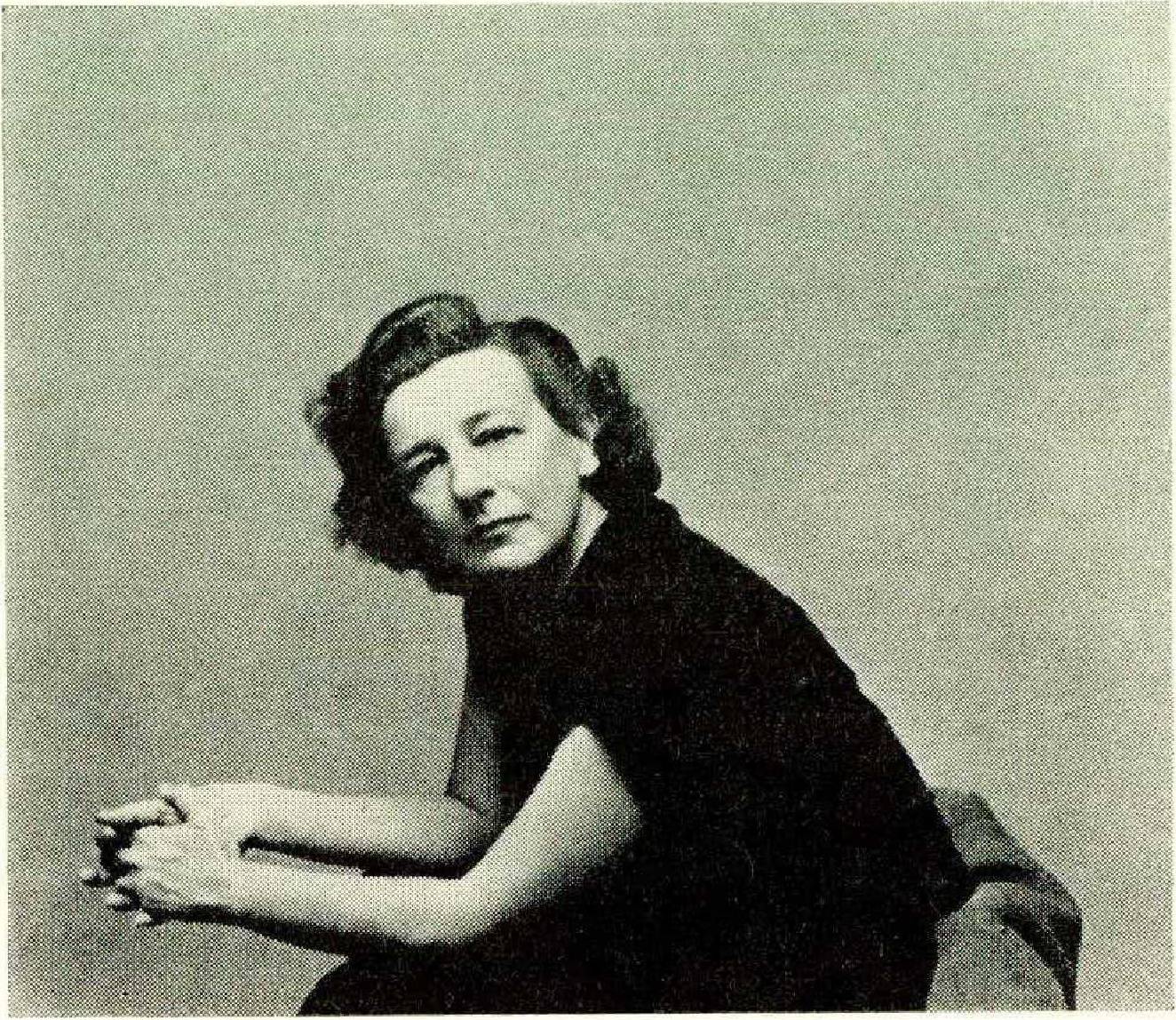
I said, “Ernest just threw a glass.”
Dottie said, “Certainly,” as she kissed Fitzgerald.
I moved toward Dash and said in a whisper, “Please help Mr. Fitzgerald. He’s frightened of Ernest, and the glass-throwing didn’t help.”
Hammett, when he was drinking heavily, and he was that night, seldom paid any attention to what anybody said but continued with whatever was in his head at the minute. So now he said, “Ernest has never been able to write a woman. He only puts them in books to admire him.”
By the time I asked what the hell that had to do with what I was saying, he was out of the kitchen, and when I went back into the hall, he was saying the same thing to somebody else. The rest of the evening was quiet, but I don’t remember how long Fitzgerald stayed, and I was never to see him again. But somewhere through the liquor tog of that night, and many others like it, what had been said to him, or what be had seen or sensed himself, stayed in Dash’s mind. (Often he would forget a night or a week, could not remember where or with whom he had been, only to discover that many of the details of such periods were almost recorded accurate.)
Later we were in the Stork Club, and the table grew, as it so often did, until it included Ernest and Gustav Regler, a German writer I had known in Spain. (Ernest and Dash had seemed to like each other—they had dined alone a few times when Ernest was in New York—and once I had said, “Ernest is generous about your books, that’s nice.” Hammett laughed. “Must mean I’m a bad writer.”)
The Spanish War was just ended, and many Republicans and their supporters had been caught in France, or in northern Spain, and had to be bailed or bought out. We had all given money to make that possible, but Ernest was in a bad humor that Stork Club night and gave small jab lectures about safe people in New York. People began to leave our table until nobody was left but Ernest, Regler, Dash, and me, and by that time Dash had had as much to drink as Ernest, and had grown too quiet. Now he put his head in his hands as Ernest spoke again of the friends who must be saved.
Ernest said, “What’s the matter with you, Hammett?”
“I don’t always iike lectures.”
I remember an angry silence, and then suddenly Ernest seemed in a good humor and Dash in a bad humor as they talked of saving intellectuals or saving ordinary people, and when Regler or I tried to speak, neither of them cared. When I came back from a trip to the ladies’ room, Ernest had a tablespoon between the muscles of his upper and lower arm and was pressing it hard. Hammett was staring down at the tablecloth. Just as I settled myself the spoon crumpled, and Ernest threw it down with a happy grin.
He turned to Hammett, “All right, kid, let’s see you do that.”
Kid looked up, stared at Ernest, returned his head to his hands, and I knew there was going to be trouble. I tinkled and giggled and chatted and chittered, but nobody paid any attention. I didn’t hear anything for a few minutes until Ernest said, “So you’re against saving the intellectuals?”
Hammett spoke through his hands, “I didn’t say that. I said there were other people in the world. “ He turned to me, “Come on. Let’s go.”
He half rose. Ernest’s hand shot out and held him down. Ernest was grinning. “No. Let’s see you do the spoon trick first.”
Dash stared at Ernest’s hand, settled in his chair again, put his head back in his hands. Regler began to talk about something, but I don’t remember what he said. Ernest was holding out another tablespoon as he whispered to Dash.
Dash said, “Why don’t you go back to bullying Fitzgerald? Too bad he doesn’t know how good he is. The best.”
The hand on Dash’s arm came away and the fingers spread open as the grin disappeared. Ernest said, very sharply, “Let’s see you bend the spoon.”
Dash got up. He was drunk now, and the rise was unsteady. He said, very softly, “I don’t think I could bend the spoon. But when I did things like that, I did them for Pinkerton money. Why don’t you go roll a hoop in the park?”
He left the table, and by the time I got up to follow, he was nowhere to be found on the street.
In the succeeding chapters of AN UNFINISHED WOMAN Miss Hellman writes of various aspects of her life in a span of time that extends from the Spanish Civil War to the present. She concludes with a group of portraits from which we have chosen three.
I FIRST met Dorothy Parker in 1931, shortly after I moved back to New York with Hammett. She caused a wacky-tipsy fight between us. She had read The Maltese Falcon and Red Harvest, perhaps a year or two before, and she had written about them, but she had not met Hammett until a cocktail party given by William Rose Benét. I was already uncomfortable at this party of people much older than myself, when a small, worn, prettyish woman was introduced to Hammett and immediately fell to her knees before him and kissed his hand. It was meant to be both funny and serious, but it was neither, and Hammett was embarrassed into a kind of simper.
I had a habit in those days—there are still often hangovers of it on other levels—of making small matters into large symbols, and after enough cocktails, I saw the gesture as what New York life was going to be like for an unknown young woman among the famous. That night I accused Dash of liking ladies who kissed his hand, he accused me of being crazy, I said I wasn’t going to live with a man who allowed women to kneel in admiration, he said he had “allowed” no such thing, didn’t like it, but if I wanted to leave right away, he would not detain me. I said I’d go as soon as I had finished my steak, but I guess by that time we were fighting about something else, because a few months later he said if 1 ever reminded him of the incident again, I would never live to finish another steak.
I was not to meet Dottie again until the winter of 1935 in Hollywood, and then, having glared at her for most of the evening in memory of that silly first meeting, we talked. I liked her, and we saw each other the next day and for many, many other good days and years until she died in June of 1967.
It was strange that we did like each other and that never through the years did two such difficult women ever have a quarrel, or even a mild, unpleasant word. Much, certainly, was against our friendship: we were not the same generation, we were not the same kind of writer, we had led and were to continue to lead very different lives, often we didn’t like the same people or even the same books, but more important, we never liked the same men.
When I met her in 1935 she was married to Alan Campbell, who was a hard man for me to take. He was also difficult for her, and she would talk about him in a funny, half-bitter way not only to me but, given enough liquor, to a whole dinner party. But she had great affection for Alan and certainly—since she was to marry him twice—great dependence on him. If I didn’t like Alan, she didn’t like Hammett, although she was always too polite to say so. More important to me, Hammett, who seldom felt strongly about anybody, didn’t like Dottie, and in the later years would move away from the house when she came to visit us. He was not conscious that his face would twist, almost as if he had half-recovered from a minor stroke, as she embraced and flattered a man or woman, only to turn, when they had left the room, to say in the soft, pleasant, clear voice, “Did you ever meet such a shit?” I think the game of embrace-denounce must have started when she found it amused or shocked people, because in time, when she found it didn’t amuse me, she seldom played it. But Hammett found it downright distasteful, and I gave up all efforts to convince him that it was the kind of protection sometimes needed by those who are frightened.
I am no longer certain that I was right: fear now seems too simple. The game more probably came from a desire to charm, to be loved, to be admired, and such desires brought self-contempt that could only be consoled by behind-the-back denunciations of almost comic violence.
If she denounced everybody else, I had a right to think that I was included, but now I think I was wrong about that, too: so many people have told me that she never did talk about me, never complained, never would allow gossip about me, that I have come to believe it. But even when I didn’t, it didn’t matter. I enjoyed her more than I have ever enjoyed any other woman. She was modest— this wasn’t all virtue; she liked to think that she was not worth much—her view of people was original and sharp, her elaborate, overdelicate manners made her a pleasure to live with, she liked books and was generous about writers, and the wit, of course, was so wonderful that neither age nor illness ever dried up the spring from which it came fresh each day. No remembrance of her can exclude it.
The joke has been changed and variously attributed to Mischa Elman and Heifetz, but it is hers, because I was there when it happened. We were knitting before the living room fireplace in the country house that she and Alan once owned in Pennsylvania. Upstairs, Alan was having an argument with his visiting mother. The afternoon grew dark; it began to snow; we made the fire very large and sat in silence. Occasionally, the upstairs voices would grow angry loud, and then Dottie would sigh. When the voices finally ceased, Alan appeared in the living room.
He said, immediately, irritably, “It’s hot as hell in here.”
“Not for orphans,” Dottie said, and I laughed for so long that Alan went for a walk and Dottie patted my hand occasionally and said, “There, there, dear, you’ll choke if you’re not careful.”
Once she said to me—I quoted it at her funeral and found to my pleasure, as it would have been to hers, that the mourners laughed—“Lilly, promise me that my gravestone will carry only these words: ‘If you can read this you’ve come too close.’ ”
Long before I knew her she dined in Paris with a group of lesbians who were seriously talking of the possibility of legal marriage between them. Dottie listened most politely, clucked in agreement. They expected her friendly opinion and asked for it. The large eyes were wide with sympathy. “Of course you must have legal marriages. The children have to be considered.”
But for me, the wit was never as attractive as the comment, often startling, always sudden, as if a curtain had opened and you had a brief and brilliant glance into what you would never have found for yourself. Like the wit, it was always delivered in a soft, clear voice; like the wit, it usually came after a silence, and started in the middle. One day she looked up from a book: “The man said he didn’t want to see her again. That night she tried to climb into the transom of his hotel room and got stuck at the hips. I’ve never got stuck at the hips, Lilly, and I want you to remember that.”
Dottie was very fond of the Gerald Murphys, but fondness never had anything to do with judgment. The Murphys had been in Europe and site had not seen them for six or eight months. We met to walk to their apartment for dinner. Dottie said, “Make a guess who Gerald will have discovered this time, what writer, I mean.” It was Gerald who told the story that always seemed to me to sum up the contradictions in the Parker nature. Long before I met her, she had an affair of high tragicomedy with a handsome, rich, wellborn stockbroker, getting extra enjoyment from it because Elinor Wylie had also had her eye on him. Murphy said that one night he called to take Dottie to dinner. She appeared as neat and pretty as usual, but with a black eye, recently caked blood on the mouth, and nasty bruises on the arm, She explained to Gerald that the wellborn had beaten her up the night before, that even worse cuts and bruises were concealed by her dress.
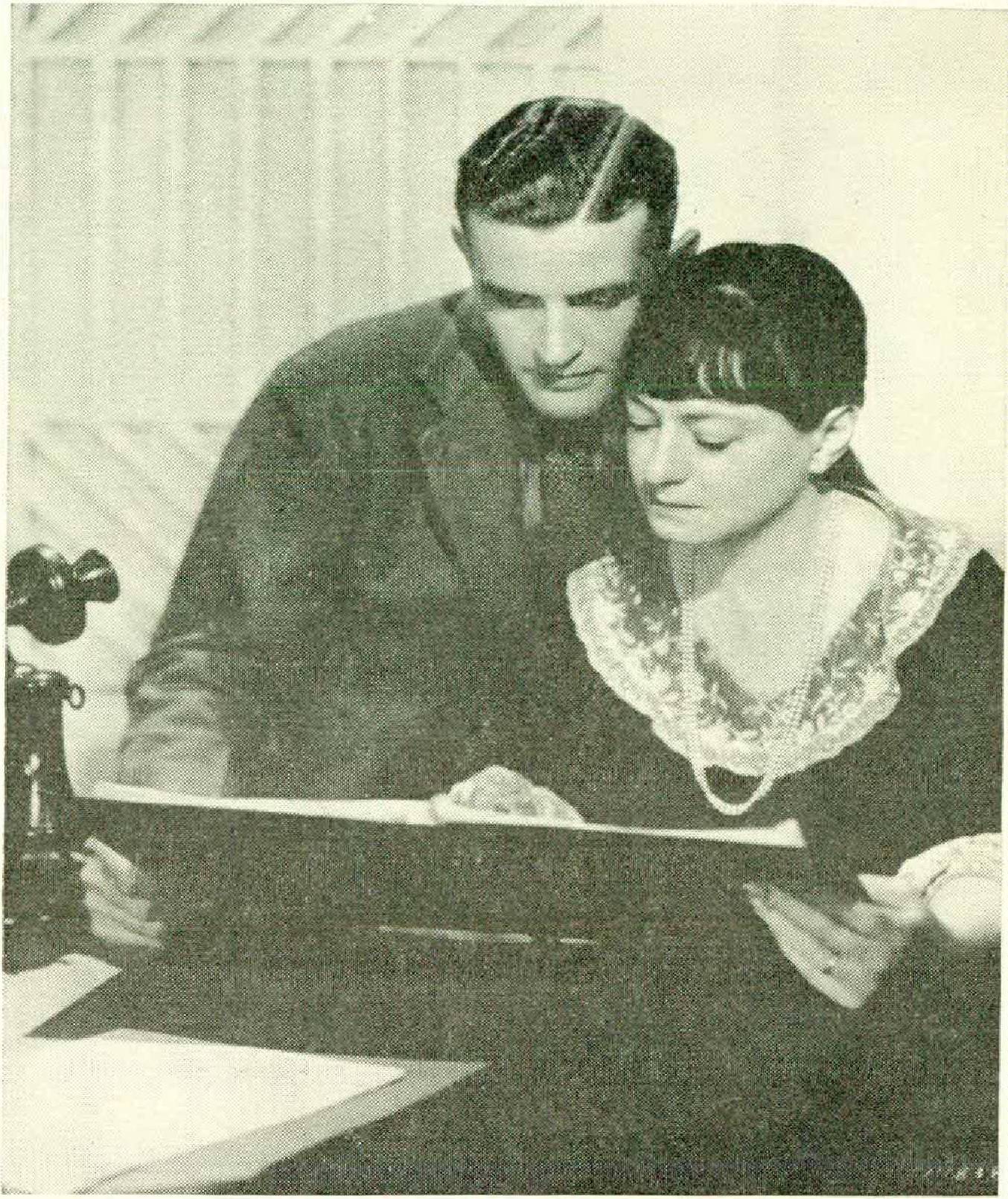
I said I couldn’t guess, I didn’t know Gerald as well as she did.
Site said, “OK. Give me three guesses, and if I hit one right, will you buy me a drunken lunch tomorrow?”
I agreed, and she said immediately, “Madame de Staël, Gerard Manley Hopkins, or Philippe de Swarzberger.”
“Who is Philippe de Swarzberger?”
“An Alsatian who moved around Tibet. Born 1837, died 1871, or so it’s thought. A mystic, most of whose work has been lost, but two volumes remain in Lausanne under lock and key, and Gerald invented him this afternoon.”
We had a fine dinner at the Murphys and were drinking our brandy when Gerald produced a small book and asked if he could read a few poems from it. It was, indeed, a volume of Gerard Manley Hopkins.
Gerald, horrified, said, “How can you bear that man, Dottie? He’s a very dirty cad.”
Dottie turned to stare at him, opened the door of the taxi, said softly, “I can’t let you talk about him that way, Gerald,” and fell from the taxi into the middle of Park Avenue traffic. (The cad, many years and a wife or two later, was to fire a gun into his mouth in the Martha’s Vineyard airport.)
HER taste in men was, indeed, bad, even for writer ladies. She had been loved by several remarkable men, but she only loved the ones who did not love her, and they were the shabby ones. Robert Benchley had loved her, I was told by many people, and certainly I was later to see the devotion he had for her and she for him. She had had an affair with Ring Lardner, and both of these men she respected, and never attacked—a rare mark of feeling—but I don’t think she was in love with them, because respect somehow canceled out romantic love. (She talked far too much about how men looked—handsome, well-made, and so on.) But then her relations with lovers, and with her husband, were always a mystery to me, perhaps because I had missed the early days of the attempted suicides, the long, famous tape of the broken heart. There is no question she wanted it that way—she wanted the put-down from everybody and anybody, and she always resented it and hit back. The pride was very great, although she never recognized that she so often pleaded for the indignity that offended it.
But she was, more than usual, a tangled fishnet of contradictions: she liked the rich because she liked the way they looked, their clothes, the things in their houses, and she disliked them with an open and baiting contempt; she believed in socialism but seldom, except in the sticky sentimental minutes, could stand the sight of a working radical; she drank far too much, spent far too much time with ladies who did, and made fun of them and herself every inch of the way; she faked interest and sympathy for those who bored her and for whom she had no feeling, and yet I never heard her hit mean except where it was, in some sense, justified; she herself was frightened of being hit, being made fun of, being inconvenienced, yet when she was called by the House Un-American Activities Committee and I went to say that I would come with her, she said, in genuine surprise, “Why, Lilly?” I don’t think it occurred to her, or to many of her generation, that the ruling classes were anything but people with more money than you had. She acted before the committee as she acted so often with their more literate, upper-class cousins at dinner: as if to say, “Yes, dear, it’s true that I’m here to observe you, but I do not like you and will, of course, say and write exactly that.”
But she wrote it too often in sentimental short stories about the little dressmaker or the servant as they are patronized by the people Dottie had dined with the night before. It was her way of paying back the rich and powerful, and if it is understandable in life, it is too raw and unshaded for literature. The good short stories, like “Big Blonde,” are her imaginative projections of what she knew or feared for herself, and have nothing to do with vengeance on the rich. Her put-them-in-their-place stories are often undigested, the conclusions there on the first page. The other stories, and much of the light verse, I think, are a valuable record of their time and place.
But I am not an intelligent critic of those I like. It is not that I am overgenerous or overloyal; it’s that their work, from the very best to the not very good, is too close to what I know about them, or hope to find out, and thus I am so occupied by the revelations of the author in the work that I cannot be cool about the work itself. This has been of value: it has made it possible to be good friends with writers who, in the end, do not require extravagant praise if you make clear that you have little interest in extravagant analysis. A book is good, bad, or medium for me, and I usually don’t know the reasons why. Years later, I will often think the good was not as good as I once thought, but on the record, my inability to know the why, my rather lumpish, incoherent acceptance or rejection, has often been less mistaken than the opinions of those who care more or know more of what literature is made.
And so it was with Dottie. I never gave her all the good words she got from so many others, and I always cut off her praise of my work, never sure that she meant it, never really caring. We were polite, we were reticent, but very little fakery was given or required, although certainly we both lied now and then about each other’s work, and we both knew it. I once wrote a short story, my first since I was very young, and gave it to her to read. She had warm words for it, but the fact that she picked up a phrase—I no longer remember what phrase— and kept praising its originality and delicacy worried me. A few months later she asked me what I had done with the story. I said I had decided it was a lady-writer story, not about anything. She protested, she quoted the phrase again, she said how much impressed she had been, and she tripped over a group of poodle puppies that we had brought along on our walk. As she stooped down to console them, I said, “God is not just. He punishes puppies for the lies of pretty ladies to their friends.”
She said, “Lilly, I do like the story"—but I had walked ahead of her.
In a few minutes she caught up with me, and we went in silence to the lake. It was a cold spring, but Hammett and I had decided to set the snapping turtle traps earlier than usual, and I was anxious to have a look. I hauled up one of the long, wire cages, and there was our first turtle of the year. As I put the cage on the ground to look at him, his penis extended in fear.
Dottie said, “It must be pleasant to have sex appeal for turtles. Shall I leave you alone together?” She had paid me back, and all was well.
After Dottie married Alan Campbell for the second time—she had phoned me from California immediately after the wedding reception with “Lilly, the room was filled with people who hadn’t talked to each other in years, including the bride and bridegroom”—we did not see each other as often as in the years before. But there would be periods when she moved back to New York and would come to stay with me in Martha’s Vineyard. It was in those years that Dash would pack and leave the house to return only after Dottie had left. But there was the last, painful summer of his life when he could not leave any place anymore, and I had to lie to Dottie about the reason for putting her up in a guesthouse down the road. I would sit with Dash as he nibbled on his early dinner and pretend to eat from my tray. Almost immediately he would sleep from the weariness of eating, and Dottie would come soon after to have dinner with me. I never ate a whole dinner that summer, partly because the pretend eating had spoiled my appetite, partly because I was so often silent angry with Hammett for making the situation hard for me, not knowing then that the dying do not, should not, be asked to think about anything but their own minute of running time. Dottie stayed about a month that year, without ever seeing Dash, and the measure of her tact was that she never asked a question about a situation she must have understood.
Hammett died that next winter; I sold the Vineyard house, and built myself a new house. The first telephone call in the new house came from Dottie to tell me that Alan was dead from an overdose of sleeping pills. She was very sure that the overdose was not intentional—she believed he had had too much to drink and had forgotten how many pills he had taken. I believed her. Alan was the first person I ever knew to take sleeping pills, and I remember a trip to Europe the three of us made on the old Normandie.
One day I said to Dottie, “What happens to Alan every afternoon, where is he?”
“Takes a sleeping pill. He hates to loss and turn from four to six.”
LESS than a year after Alan’s death, Dottie moved back to New York. We saw each other, of course, but after the first few times, I knew I could not go back to the past. The generation difference between us seemed shorter as I grew older, but I was irritable now with people who drank too much, and Dottie’s drinking made her dull and repetitive, and she made me sad. I had money again but no longer enough to give it without thought before it was needed, which is the way it used to be between us; but mainly, plainly, I did not want the burdens that Dottie, maybe by never asking for anything, always put upon her friends. I was tired of trouble and wanted to be around people who walked faster than I and might pull me along with them.
And so, for the next five years of her life, I was not the good friend I had been. True, I was there in emergencies, but I was out the door immediately they were over. I found that Dottie’s middle age, old age, made rock of much that had been fluid, and eccentricities once charming became too strange for safety or comfort.
Dottie had always, even in the best days, clung to the idea that she was poor. Often she was, because she was generous to others and to herself, but more often it came from an insistence on a world where the artist was the put-upon outsider, the épaté rebel who ate caviar from rare china with a Balzac shrug for when you paid. I had long ago given up trying to figure out her true poverty periods from the pretend-poverty periods, and the last sick years seemed no time to argue. She had, many years before, given me a Picasso gouache and a Utrillo landscape, saying as she gave them that she was leaving them to me anyway, so why not have them now? It was her charming way of paying off a debt, and I remember being impressed with the grace. A few years after the gift, when I thought she was short of money, I sold the Utrillo and sent her a check. (She never told me that she had received the check, we never spoke of it at all.) Now, in 1965, she needed money, and so I decided to sell the Picasso. It was a good small picture, sold immediately for ten thousand dollars, and I took the check to Dottie the day I got it. Two days later, a woman unknown to me phoned to say that Dottie was in the hospital, sick and without money. I said that couldn’t be, she said it was, and would I guarantee the hospital bills? I went to the hospital that day. Dottie and I talked for a long time, and as I rose to go, I said, “Dottie, do you need money?”
“She’s been calling you,” she said, “the damned little meddler. She’s called half of New York to make me into a pleading beggar.”
“She meant no harm. She thinks you’re broke.”
“I am broke, Lilly. But I don’t want people, not even you—”
“You’re not broke. I gave you a check two days ago for ten thousand dollars. Where is it?”
She stared at me and then turned her face away. She said, very softly, “I don’t know.”
And she didn’t know, she was telling the truth. She wanted to be without money, she wanted to forget she had it. The check was found in a bureau drawer along with three other checks. It had always been like that, it always would be. After her death, and nobody ever left fewer accumulations, I found four uncashed seven-year-old checks. She never had much, but what she had she didn’t care about, and that was very hat-over-the-windmill stuff in a sick lady of seventy-four.
What money she had, she left to Martin Luther King, a man she had never met. I was the only executor of the will, I was, I am, moved that she wanted it that way, because the will had been dictated during the years of my neglect. But I had always known and always admired her refusal to chastise or complain about neglect. When, in those last years, I would go for a visit, she always had the same entrance speech for me, “Oh, Lilly, come in quick. I want to laugh again.” In the same circumstances, I would have said, “Where have you been?”
And in a little while, we would laugh again, not as often, not as loud as in the old days, but enough to give us both a little of the old pleasure. Her wit, of course, was delicate, clear, and sharp. I don’t know what mine is, but it isn’t that, and I never knew why it amused her. But we were affectionate about each other’s jokes, even when they weren’t very good, and would endlessly repeat them to other people with the pride of mothers. (She never in her life repeated her own witticisms, perhaps sure that other people would do it for her. I was one of the many who did.)
Among the small amount of papers she left were odds and ends of paid or unpaid laundry bills, a certificate of the aristocratic origins of a beloved poodle, a letter dated ten years before from an admirer of her poems, and the letter from me sent from Russia about six weeks before she died. This is the letter:
Dearest Dottie,
Leningrad is a beauty, Moscow is not, but I think you ought to know that once upon a time not so long ago there was a man called Beria, Stalin’s police boy, who liked very young girls. Then there was Madame Comrade Gigglewitz—I was told her name but I can’t remember it—whose second husband was a minor GPU official, but not so minor he didn’t know Beria’s tastes. Madame Gigglewitz waited until her beautiful Natasha, the child of a first marriage, reached the age of fifteen and then, putting Natasha in her baby carriage, she wheeled her over to Beria. You will remember that the sexual act does not necessarily take a long time, particularly when your Mummie is there to help. So clipclop and Natasha is pregnant. Beria likes that and sets Natasha up in an apartment with a curly fur coat, an elderly cleaning woman, a car and chauffeur, and when he isn’t too tired from sending people to Siberia he comes around to coo at the baby.
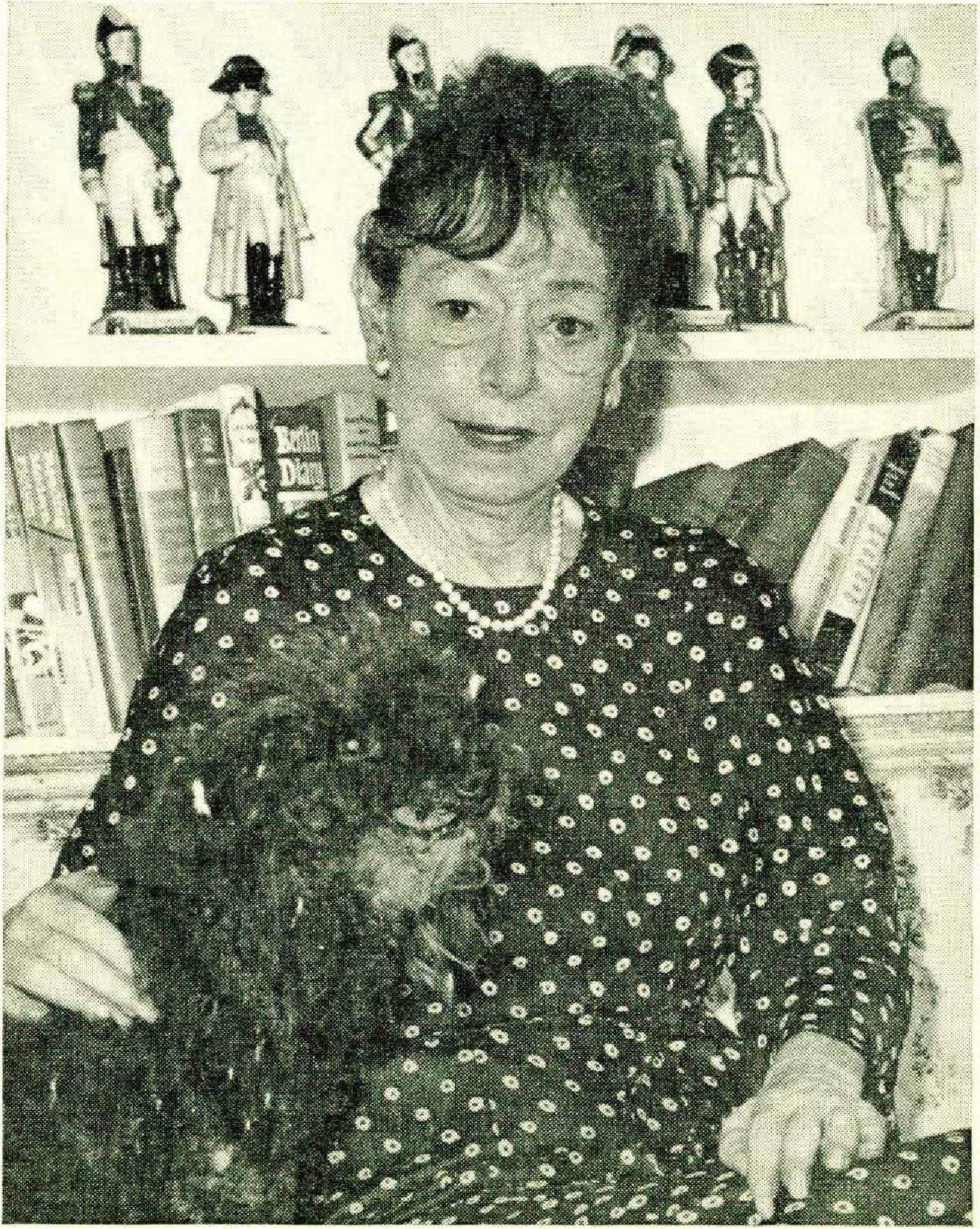
But Stalin, Beria’s friend and admirer, ups and dies. For three days Natasha hears nothing from her lover and nothing from the chauffeur who has always taken her on a daily nice drive. On the fourth day she is irritable, as you would be, too. So she calls Beria’s secretary and asks when the car can be expected.
The secretary says, “I think never,” and hangs up.
Most of us go to our mummies when a secretary is rude, and that’s just what she did. Madame Gigglewitz is brighter than Natasha—who wouldn’t be?— so in a few hours they are sitting before a judge swearing to a document that accuses Beria of traitorism whispered to Natasha through the years, or bed. Natasha’s Ma had guessed right, of course: Beria had been arrested, was tried and condemned, and Natasha’s testimony helped to shuffle him off. A year passes—do you remember once asking me what else a year could do?—before Madame Gigglewitz and Natasha thought it wise to petition for the support of Beria’s child. They are sentimental here about the sins of the father shall not be visited, so they give the child a nice allowance and Natasha goes to live with Mummie, share and share alike the kid’s money.
But Natasha hasn’t had enough trouble so she takes to hanging out in an Armenian restaurant. There she meets Mr. X. He’s a nice, kindly Jew who has a surprising amount of money and this time it’s a real marriage which all goes to show that my people—so, O.K., for the fiftieth time don’t tell me you’re half Jewish—do not wish to corrupt women the way many of your mother’s people so often do. A few years and two children later, over bevond the Urals, strange rumblings are heard in the land. They grow and grow until the storm reveals that Mr. X is one of the bosses of a syndicate, operating, often in caves, with stolen government material to make private light machinery. Scandal, arrest, execution of Mr. X. (Do you remember the story in the New York Times?)
Now you can say that Natasha ain’t the best luck for a boy, but that kind of talk won’t get anybody anything. Anyway, there’s always Mummie, and after the two of them have had a good cry, what’s there to do but wait, knowing that God has been on their side before.
Now, in time, comes a delegation, half from America, half from Israel to investigate charges of anti-Semitism in the Soviet Union. Our two cozies hot-foot it over to the delegation to tell the story of Mr. X, a fine fellow, an excellent husband, innocent of all knavery, persecuted only because he was a Jew. This saddens the hearts and confirms the opinions of the visitors, and after several meetings with Natasha, private or public, I couldn’t find out, the American delegation begs to be allowed to send a monthly contribution for the support of Mr. X’s children. The Israelis cannot afford money, but certainly they are sympathetic.
1 have a friend here—I first met him during the war-who is a doctor. Last summer my friend went to the country to visit his brother. Three A.M. and the brother is awakened by a man who says his wife is dying down the road, would the doctor come immediately? The dying lady—she does not die, she is still down the road—is Madame Gigglewitz. During the long hours before a Moscow ambulance arrives she occasionally confuses my friend, the doctor, for a priest, and the tale I’ve told you is told to him. The house is filled with pictures of the pretty Natasha—she offers one to the doctor— and enormous baskets of fresh and dried fruits. From time to lucid time Madame Gigglewitz raises her voice above a whisper: “Have a piece of fruit, Doctor, it comes regularly from some dirty Jews in Israel.”
Around the envelope of my letter was folded a piece of paper that was the beginning, obviously, of a letter Dottie never finished. It said, “Come home soon, Lilly, and bring Natasha on a leash. She’d be such a nice companion for C’est Tout. I—”
C’est Tout, a very small poodle, was with her when she died, I was never to see Dottie again, but even now I don’t think of her as dead, and only a few weeks ago, when Peter Feibleman told me a story I had not heard before, I had a nice minute of wanting to reach for the telephone. The story is all of her as age put aside the deceits of youth, as time solidified the courage she didn’t want to admit was there.
Feibleman was with her when Alan Campbell’s body was taken to the coroner’s car. (No charge of suicide was ever made.) Among the friends who stood with Dottie on those California steps was Mrs. Jones, a woman who had liked Alan, had pretended to like Dottie, and who had always loved all forms of meddling in other people’s troubles. Mrs. Jones said, “Dottie, tell me, dear, what I can do for you.”
Dottie said, “Get me a new husband.”
There was a silence, but before those who would have laughed could laugh, Mrs. Jones said, “I think that is the most callous and disgusting remark I ever heard in my life.”
Dottie turned to look at her, sighed, and said gently, “So sorry. Then run down to the corner and get me a ham and cheese on rye and tell them to hold the mayo.”
IN MANY places I have spent many days on small boats. Beginning with the gutters of New Orleans, I have been excited about what lives in the water and lies along its edges. In the last twenty years, the waters have been the bays, ponds, and ocean of Martha’s Vineyard, and autumn, when most people have left the island, is the best time for beaching the boat on a long day’s picnic by myself—other people on a boat often change the day into something strained, a trip with a purpose—when I fish, read, wade in and out, and save the afternoon for digging and mucking about on the edge of the shore. I have seldom found much: I like to look at periwinkles and mussels, driftwood, shells, horseshoe crabs, gull feathers, the small fry of bass and blues, the remarkable skin of a dead sand shark, the shining life in rockweed.
One night about six months ago, when I was teaching at Harvard, it occurred to me that these childish, aimless pleasures—my knowledge of the sea has grown very little with time, and what interested me as a child still does—which have sometimes shamed me and often caused self-mocking, might have something to do with the digging about that occasionally happens when I am asleep. It is then that I awake, feeling that my head is made of sand and that a pole has just been pulled from it with the end of the pole carrying a card on which there is an answer to a long-forgotten problem, clearly solved and set out as if it had been arranged for me on a night table.
On that night I was living in a rickety Cambridge house and went running down the steps at the sound of a crash. A heavy rainstorm had broken the cheap piece of modernity that had been lighting the ceiling, and as I stood looking at the pieces on the floor, I thought: Of course, one has been dead three years this month, one has been dead for over thirty, but they were one person to you, these two black women you loved more than you ever loved any other women, Sophronia from childhood, Helen so many years later, and it was all there for you to know two months ago when, poking about the beach, a long distance from the house Helen and I had lived in, I found a mangled watch, wondered where I had seen it, and knew a few hours later that it was the watch I had bought in the Zurich airport and that had disappeared a short time after I gave it to Helen. The answer now was easy. She never walked much because her legs hurt. Sam had brought it down to the beach, and she didn’t want to tell me that my dog, who loved her but didn’t love me, could have done anything for which he could be blamed.
From the night of that rainstorm in Cambridge, for weeks later, and even now, once in a while, I have dreamed of Sophronia and Helen, waking up sometimes so pleased that I try to go on with a dream that denies their death, at other times saddened by the dream because it seems a deep timewarning of my own age and death. When that happens, in argument with myself, I feel guilty because I did not know about Sophronia’s death for two years after it happened, and had not forced Helen into the hospital that might have saved her. In fact, I had only been angry at her stubborn refusal to go. How often Helen had made me angry, but with Sophronia nothing had ever been bad . . . But the answer there is easy: Sophronia was the anchor for a little girl, the beloved of a young woman, but by the time I had
met the other, years had brought acid to a nature that hadn’t begun that way—or is that a lie?—and in any case, what excuse did that give for irritation with a woman almost twenty years older than I, swollen in the legs and feet, marrow-weary with the struggle to live, bewildered, resentful, sometimes irrational in a changing world where the old, real-pretend love for white people forced her now into open recognition of the hate and contempt she had brought with her from South Carolina. She had not, could not have, guessed this conflict would ever come to more than the sad talk of black people over collard greens and potlikker, but now here it was on Harlem streets, in newspapers and churches, and how did you handle what you didn’t understand except with the same martyr discipline that made you work when you were sick, made you try to forgive what you really never forgave, made you take a harsh nature and force it into words of piety that, in time, became almost true piety? Why had these two women come together as one for me? Sophronia had not been like that.
I don’t know what year Helen came to work for me. We never agreed about the time, although when we felt most affectionate or tired we would argue about it. But it was, certainly, a long time ago. The first months had been veiled and edgy: her severe face, her oppressive silences made me think she was angry, and my nature, alternating from vagueness to rigid demands, made her unhappy, she told me years later. (She did not say it that way; she said, “It takes a searching wind to find the tree you sit in.”)
PLAYS BY LILLIAN HELLMAN
THE CHILDREN’S HOUR, 1934
DAYS TO COME, 1936
THE LITTLE FOXES, 1939
WATCH ON THE RHINE, 1941
THE SEARCHING WIND, 1944
ANOTHER PART OF THE FOREST, 1946
MONTSERRAT, an Adaptation, 1949
THE AUTUMN GARDEN, 1951
THE LARK, an Adaptation, 1955
CANDIDE, an Operetta, 1956
TOYS IN THE ATTIC, 1960
MY MOTHER, MY FATHER AND ME, 1963, an Adaptation
Then one day, at the end of the first uncomfortable months, she said she was grateful, most deeply. I didn’t know what she meant, didn’t pay much attention, except that I knew she had grown affectionate toward me, even indulgent. Shortly after, she brought me three hundred dollars done up in tissue paper with a weary former Christmas ribbon. I asked her what it was, she said please to count it, I counted it, handed it back, she handed it back to me and said it was the return of the loan for her daughter. I said I didn’t know what site was talking about. Her face changed to angry sternness as she said, “I want no charity. I pay my just debts, Miss Hellman. Mr. Hammett must have told you I said that to him.”
Hammett hadn’t told me she said anything, but it turned out that one night when he had come from the country to have dinner with me, and found he was too tired to return to the country—it was the early period of emphysema—he decided to spend the night in the library. He had been reading at about three in the morning when the phone rang and a frightened voice said there was an emergency, was it possible to call Helen? He had climbed four flights of steps to fetch her, and when she had finished with the phone she said her niece or her daughter or somebody-or-other had had a terrible accident and she would have to go immediately. He asked her if she needed money, and after the long wait she always took when pride was involved, she asked him for taxi money.
Hammett had said, “What about money for the hospital?”
She had said, “Black people don’t have it easy in a hospital.”
He had said, “I know. So a check won’t do you any good. You’d better have cash.”
I said to Hammett, “But what’s this got to do with me?”
He said, “It’s your money she’s returning. I took it out of the safe.”
He told me how disturbed she had been when he had opened my safe, and so he had said, “Don’t worry. It’s OK. There’s no sense waking Miss Hellman because she can’t learn how to open the safe and that makes her angry.”
For many years after, whenever I tried to open the safe, she would come as close to mirth as ever I saw her, saying always that I wasn’t to get disturbed, she thought my fingers were too thin for such work, and then always reminding me of the night Hammett gave her the money, “before he even knew me, that is a Christian man.”
I said to him, “Helen thinks you’re a Christian man.”
“Sure. She’s a convert to my ex-church. We teach ‘em to talk like that.”
“I won’t tell her that. She might not like you.”
“I won’t find that too tough.”
“But I’m worried that she might think you don’t like her.”
“I don’t like her.”
He didn’t like her, and he was the only person I ever met who didn’t. Sometimes he would say it was because she spoke rudely to me. (He was right: when she didn’t feel well, she often did.) Sometimes he would say he couldn’t stand Catholic converts, or overbig women, or he would complain that she was the only Negro in America who couldn’t carry a tune. Even through the last four and a half years of his life, when he had come to live in the house and when she, a woman older than he by a number of years I never knew, would climb the steps with endless trays or mail or books or just to ask if there was anything he wanted, he never said anything more to her than “Good morning, or “Thank you,” or, on special occasions, “it looks like a pleasant day.” I think it is possible that the two of them, obsessed with pride and dignity, one of the more acceptable forms of self-love, but self-love nevertheless, had come face to face with a reflection, and one of them didn’t like what he saw in the mirror.
Other people always came, in time, to like her and admire her, although her first impression on them was not always pleasant. The enormous figure, the stern face, the few, crisp words did not seem welcoming as she opened a door or offered a drink, but the greatest clod among them came to understand the instinctive good taste, the highbred manners that once they flowered gave off so much true courtesy. And, in this period of nobody grows older or fatter, your mummy looks like your girl, there may be a need in many of us for the large, strong woman who takes us back to what most of us always wanted and few of us ever had.
It is difficult to date anything between people when they have lived together long enough, and so I can’t remember when I knew, forgot, knew, doubted, and finally understood that her feelings for white people and black people were too complex to follow, because what had been said on one day would be denied on the next. In the early years, when she told me of the white family in whose house she had been raised in Charleston, her mother having been the cook there, I would dislike the Uncle Tomism of the memories, and often when the newspapers carried a new indignity from the South we would both cluck about it, but she would turn away from my anger with talk about good and bad among white people, and she had only known the good. During the University of Mississippi mess, I asked her what she meant by good whites, good to her?
She said, “There’s too much hate in this world.”
I said, “Depends on where you carry the hate, doesn’t it, what it’s made of, how yon use it?”
She shrugged. “I ain’t ever hated.”
I said, too fast, “Yes, you have. You just don’t know it—” and stopped right before I said, You often hate me, I’ve known it for years and let you have it as a debt I wouldn’t pay anybody else but Sophronia.
OH, SOPHRONIA, it’s you I want back always. It’s by you I still so often measure, guess, transmute, translate, and act. What strange process made a little girl strain so hard to hear the few words that ever came, made the image of you, true or false, last a lifetime? I think my father knew about that very early, because five or six years after I was separated from Sophronia by our move to New York, when I saw her only during our yearly visits to New Orleans, he shouted at me one night, “To hell with Sophronia. I don’t want to hear about her anymore.”
That night started in Montgomery, Alabama, although why or how we got to Montgomery I no longer remember. My father had, among other eccentricities, an inability to travel from one place to another in a conventional line: If it was possible to change trains or make a detour, he arranged it. And since we traveled a great deal between New York and New Orleans, stopping for business or for friends, we were often to be found in railroad stations waiting for a train that would take us out of our way.
I had been sleeping on a bench that night in Montgomery, Alabama, so I don’t know when I first saw the three figures—a young, very thin Negro girl, and two white men. The men were drunk, my father said later, and maybe that accounted for the awkward, shaggy movements, their sudden twists and turns. The girl would move to a bench, sit, rise as the men came toward her, move to a wall, rest, slide along it as the men came near, try for another bench, circle it, and move fast when they moved fast. She was trying to stay within the station lights, and as the train came in, she ran down the platform toward it. But she miscalculated and ran outside the lights. I saw one of the men light matches and move in the darkness. When he caught the girl he put the lighted matches to her arm before he kissed her. The girl dropped her valise, and there was the noise of glass breaking. I have no clear memory of the next few minutes until I heard my father say, “Let the girl alone.” Then he hit the man, and the other man hit my father, but he didn’t seem hurt because he picked the girl up and shoved her up the steps of the train, came running back for me, shoved me up the steps of the train, got in himself, and suddenly began to yell, “My God, where is your mother?” My mother was on the ground repacking the girl’s valise. The two men were running toward her, but she smiled and waved at my father and put up her hand in a gesture to quiet him. She had trouble with the lock of the valise, but she seemed unhurried about fixing it.
My father was halfway down the train steps when she rose, faced the two men, and said, “Now you just step aside, boys, and take yourselves on home.” I don’t know whether it was the snobbery of the word “boys” or the accents of her native Alabama, but they made no motion as she came aboard the train.
The girl was invited to share our basket supper, and she and my mother spent the next few hours speaking about the nature of men. I went into the corridor to find my bored father.
Like most other children, I had learned you usually got further by pretending innocence. “What did those men want to do with the girl?”
When he didn’t answer, I said, “Rape, that’s what. You’re a hero. Sophronia will be pleased.”
His voice was loud and angry. “To hell with Sophronia, I don’t want to hear about her anymore.”
A few days later, sitting on a bench in Audubon Park, while the two small boys she now nursed played near us, I told Sophronia the story. When she didn’t speak, I said, “Papa was brave, wasn’t he?”
“Yep.”
“What’s the matter?”
“Things not going to get themselves fixed by one white man being nice to one nigger girl.”
I thought hard and long about that, as I thought about everything she said, and by the next year’s visit to New Orleans I had decided on a course for myself. Sophronia and I had gone to the movies and were returning home on a streetcar. We had always moved back to sit in the Negro section of the car, but this time I sat in the front directly behind the driver and pulled her down next to me. She whispered to me, I whispered back, she half rose, I pulled her down, and she sat still for a minute waiting for me to grow quiet. The conductor had evidently been watching us, because he turned his head.
“Back.”
I held so tight to her arm that she couldn’t move.
He said, “Get back in the car. You know better than this.”
I said, my voice high with fright, “We won’t. We won’t move. This lady is better than you are—”
And the car came to a sudden jolt in the middle of the street. People rose, and an old woman moved toward us. The conductor opened the doors.
Sophronia got to her feet, and I screamed, “Come back, Sophronia, don’t you dare move. You’re better than anybody, anybody—" and the old lady slapped me as the conductor took my arm.
I was carrying a book bag and I threw it at him. turned to push the old lady, turned back to find Sophronia. She had moved between me and the conductor, who looked more surprised than angry. Now she grabbed my arm and pulled me into the street.
I said, “Let’s run.”
She said, “You run. I’m past the runnin’ age.”
So we stood together, staring up at the streetcar, waiting for what we did not know. Then the car started up and moved away from us. I was crying as we walked together toward my aunts’ house.
After a while she said, “Crybaby.”
“I did wrong?”
It was an old question, and she had always had a song for it:
And who can tell it all by sight?
I said, “Sophronia, I want to go away with you for always, right now. I’ve thought a lot about it all year, and I’ve made up my mind. I want to live with you the rest of my life. I won’t live with white people anymore—”
She put her hand over my mouth. When she took it away, I knew she was very angry. She said, “I got something to tell you, missy. There are too many niggers who like white people. Then there are too many white people think they like niggers. You just be careful.”
She crossed the street and was gone before I could move. Sleepless that night and miserable the next day, I went on the second day to find her in Audubon Park.
I said, “Aren’t you going to see me anymore?”
She said, “I got a no-good daughter and a nogood son.”
I had heard this from my mother, but I didn’t know then, and I don’t know now, what no-good meant to her, and so I waited. We sat without speaking on the park bench watching one little redhaired brother push the other off a tricycle.
She called out, “Stanley, Hugh,” and the fight stopped immediately.
After a while, I said, “Aren’t you going to see me anymore?”
“You’re growing up, a few years away. Time’s approachin’ to straighten things out.”
“You mean I’m no good, either?”
She turned her head and looked at me as if she were puzzled. “I mean you got to straighten things out in your own head. Then maybe you goin’ LO be some good and pleasure me. But if they keep on pilin’ in silly and gushin’ out worse, you goin’ to be trouble, and you ain’t goin’ to pleasure me and nobody else.”
Many years later, I came to understand that all she meant was that I might blow up my life with impulsiveness or anger or jealousy or all the other things that she thought made a mess, but that day, in my thirteenth year, I shivered at the contempt with which she spoke. (And there I was not wrong.
I came to know as she grew older and I did, too, that she did feel a kind of contempt for the world she lived in and for almost everybody, black or white, she had ever met, but that day I thought it was only for me.)
I got up from the bench in maybe the kind of pain you feel when a lover has told you that not only does the love not exist anymore, but that it possibly never existed at all.
I said, “You mean I am no good and you don’t want to see me anymore. Well, I won’t hang around and bother you—”
She got slowly to her feet. “You all I got, baby, all I’m goin’ to have.”
Then she leaned flown and kissed me. She hadn’t kissed me, I think, since I was three or four years old. Certainly I have had happier minutes since, but not up to then. We shook hands, and I went back to the park bench the next day.
THERE has always been a picture of Sophronia in my house, all of them taken with me as a young child. Some years after Helen came to work for me,
I came into the library to find her with one of the pictures in her hand.
I said, “My nurse, my friend. Handsome woman, wasn’t she?”
“You look like a nice little girl.”
“Maybe I was, but nobody thought so. I was trouble.”
“She didn’t think so.”
I took the picture from Helen, and for the first time in the forty years since it had been taken, saw the affection the woman had for the child she stood behind.
I said, “It takes me too long to know things.”
“What?”
“Nothing. I hadn’t seen her for two years before she died.”
“You didn’t go to the funeral?”
“I didn’t know she died. Her daughter didn’t tell me.”
“She was a light-skinned woman?”
I know about that question, I’ve known about it all my life.
“Yes, very. But she didn’t use it, if that’s what you mean.”
“How old was she?”
“In the picture? I don’t know. I—my God. She couldn’t have been thirty. I can’t believe it, but—”
“Black women get old fast.”
“Yes,” I said, “watching white women stay young.”
“White women never been bad to me.”
I was in a sudden bad humor, maybe because she wasn’t Sophronia. I said, “Colored women who cook as well as you do never had a bad time. Not even in slavery. You were the darlings of every house. What about the others who weren’t?”
She said, “You mean the good house nigger is king boy.”
I said, “I mean a house nigger pay no mind to a field hand.”
She laughed at the words we had both grown up on. A half hour later I went down to the kitchen for a cup of coffee. She was using an electric beater, and so neither of us tried to talk over the noise. Then she turned the beater off and, I think for the first time in her life, raised her voice in a shout.
“You ain’t got no right to talk that way. No right at all. Down South, I cook. Nothing else, just cook. For you, I slave. You made a slave of me, and you treat me like a slave.”
I said, “Helen! Helen!”
“A slave. An old, broken slave.”
“You’re a liar,” I said, “just a plain goddamned liar.”
“God will punish you for those words.”
“He is, right now.”
She took a check from her apron pocket—her share of the last royalties from Toys in the Attictore it up, and held out the pieces to me.
“There. Take it. You think money and presents can buy me, you’re wrong.”
I said, “I’m going up to Katonah. That will give you a few days to move out.”
That night, sitting on a pile of books that had become the only place one could sit in the depressing little cottage filled with furniture broken by the weight of phonograph records and books, ashtrays toppling on the edges of manuscripts, a giant desk loaded with unopened mail that had arrived that day or five years ago, facing a window that had been splintered by the gun of somebody who didn’t like his politics, I told Hammett about the afternoon.
He said, “Why do you talk to her about the South?”
“I didn’t think she hated me.”
“She doesn’t. She likes you very much and that scares her, because she hates white people. Every morning some priest or other tells her that’s not Christian charity, and she goes home more mixed up than ever.”
“I guess so. But I don’t care about what she hates or doesn’t. I care about what I said to her. I’ll wait until she has left, and then I’ll write and say I’m sorry I screamed liar.”
He stared at me and went back to reading. After a while he said, “You should have screamed at her years ago. But of course you never lose your temper at the right time. Then you feel guilty and are sure to apologize. I’ve always counted on that, it’s never failed.”
I said, “All these years, waiting to catch me out.”
“Yep. And shall I tell you something else that goes hand in hand, kind of?”
“I am, as you know, grateful for all high-class revelations.”
“Well,” he said, “when you start out being angry, you’re almost always right. But anybody with a small amount of sense learns fast that if they let you go on talking, you come around to being wrong. So after you’ve slammed the door, or taken a plane, or whatever caper you’re up to, that fine, upright, liberal little old sense of justice begins to operate, and you’ll apologize not only for the nonsense part of what you’ve said but for the true and sensible part as well. It’s an easy game—just a matter of patience.”
I thanked him and went back to New York. It has long been my habit to enter the house on the bedroom floor, and on that day I did not wish to see the kitchen without Helen, did not wish to face a life without her, so it was four or five hours before I went downstairs. Helen was sitting in a chair, her Bible on the table.
She said, “Good evening. Your hair is wet.”
“Yes,” I said, “I’m trying to curl it.”
WE DID learn something that day, maybe how much we needed each other, although knowing that often makes relations even more difficult. Our bad times came almost always on the theme of Negroes and whites. The white liberal attitude is, mostly, a well-intentioned fake, and black people should and do think it a sell. But mine was bred, literally, from Sophronia’s milk, and thus I thought it exempt from such judgments except when I made the jokes about myself. But our bad times did not spring from such conclusions by Helen—they were too advanced, too unkind for her. They came, I think, because she did not think white people capable of dealing with trouble. I was, thus, an intruder, and in the autumn of 1963 she told me so.
I had gone down to Washington to write a magazine piece about the Washington March. Through Negro friends, through former Harvard students, through a disciple of Malcolm X, I had arranged to meet the delegations from Louisiana and Alabama. Sophronia’s grandson, whom I had never seen, was to arrive with the Alabama delegation. Many years before, I had had letters from his older sister, a teacher at Tuskegee. Now, when I wrote to ask if they would like to come to Washington, she had written back that they could not make the trip. Immediately after, I had a letter from Orin saving that he wanted to come if I would send the bus fare, but please not to tell his sister, because she did not approve. I had sent the money, and as far as I knew, he was on his way. At seven o’clock on the morning of the March, I was sitting on the steps of the Lincoln Memorial waiting for Orin, wondering if he looked like Sophronia, if he had brought me the photographs I had asked for, if his mother had ever told him much about her. At nine o’clock I went to look for the Alabama delegation. They had been in Washington for six hours, but nobody had heard of Orin and they were sure he had never been on the bus, never signed up to come.
It was, of course, a remarkable day. Two hundred thousand people came to ask only what they thought had been promised, still calm, pleasant, and gay in the face of the onehundred-year-old refusal. But as the day wore on, I felt as if a respectable Madison Avenue funeral had gone on too long. When Martin Luther King rose to speak—and there was no question of the pride the audience felt in the man, no question that he represented all that was gentle and kind in this kindest of people—I remembered too many Negro preachers from my childhood and grew impatient with “I have a dream.”
I wandered off looking for something to eat. I dropped my pocketbook, spilled the contents, and was helped by a small colored boy who, when I thanked him, said, “Ok, lady, courtesy of the Commonwealth.” I laughed and found that his companion, a tall young Negro, was laughing, too.
I said, “What’s that mean, courtesy of the Commonwealth?”
“Nothing,” said the young man. “Old George tries to learn a new word every day. We were up around Boston last night so today it will be ‘Commonwealth.’”
Old George turned out to be fourteen years old, small for his age, and the young man’s name was Gene Carondelet.
I said, “That’s the name of a street in New Orleans.”
He said, “Yep. That’s why I took it.”
Old George weaved in and out of the crowd, bringing frankfurters and then coffee, while Carondelet told me he had been in jail seven times for trying to register Negroes in Greenwood, Mississippi, and for leading a march in Baton Rouge. He said he had never seen old George before McComb, Mississippi, where a policeman had hit George over the head and George’s mother had hit the policeman. The next day George’s mother said, “Take the boy with you. He’s in danger here. Take him and teach him.”
“He’s been with me for eight months. That George can do, learn anything. Makes a mighty fine speech. Make a speech for the lady.”
George rose. “You folks better take your black behinds down to vote your way to freeyour way dom, The first correlative to freedom—” At the word “correlative" George grinned at me and sat down, saying he didn’t feel too well, he had his headache back again. Carondelet explained that in a few days they were going to New York to see a doctor about the headaches George had been having since he got hit over the head by the policeman.
About a week later, I came in the house to find Carondelet, George, and a gangly, popeyed man of about twenty-four sitting in the living room with Helen. Carondelet said they’d been waiting for an hour, and now they had to go because George was on his way to the doctor’s. As I took them to the elevator, I did not notice that the strange man was still in the living room until George said, “You wanted him, you got him.”
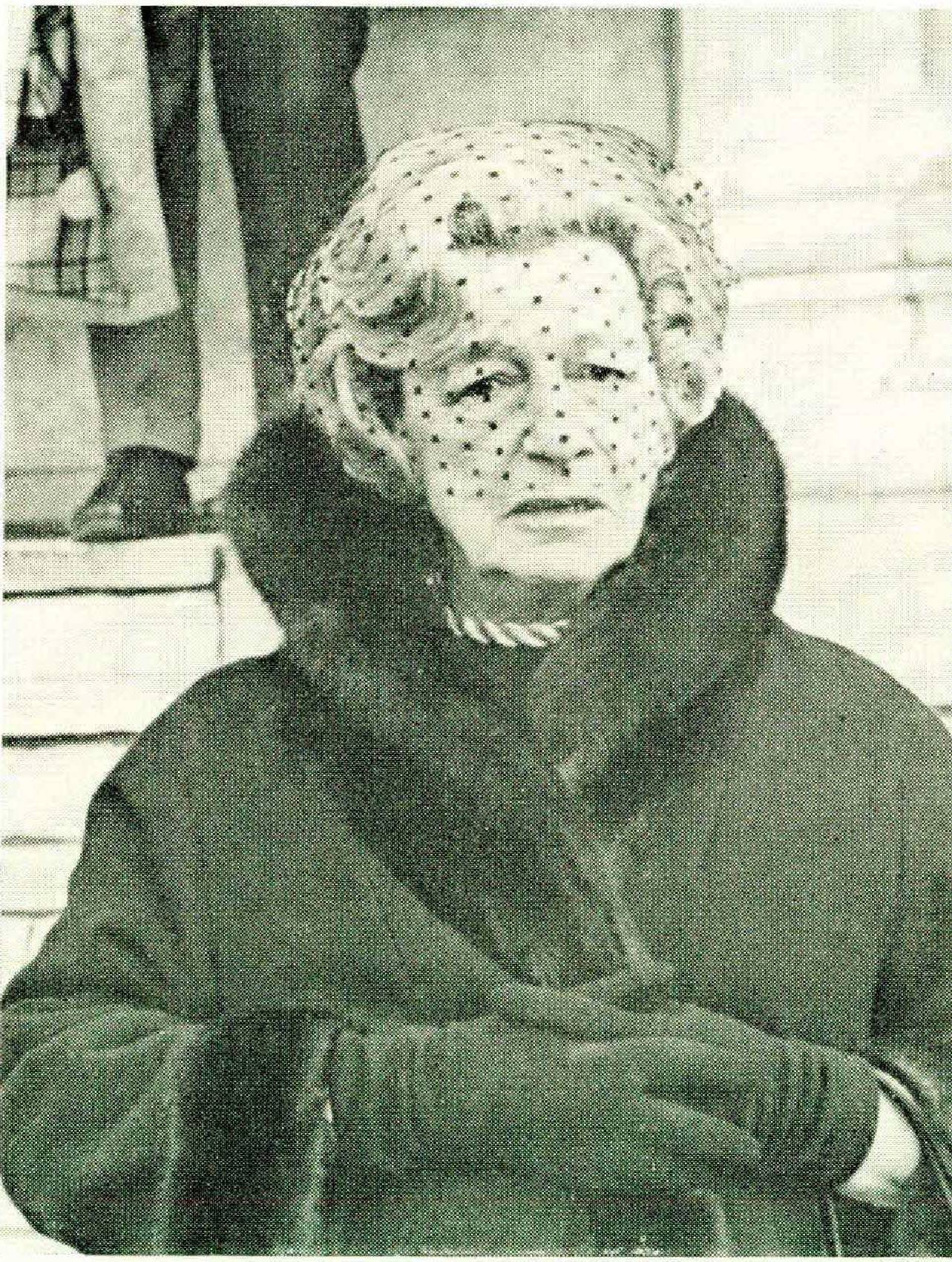
“Who?”
“That Orin something.”
Carondelet said, “He’s silly stuff.”
Orin was, indeed, a dull young man, sleepy, overpolite, as anxious as I was to get the visit over with. He had been born long after Sophronia’s death, had no memory of his mother’s ever having talked about her. What about his uncle, Sophronia’s son? Never heard of him. Where was his mother? She’d skipped long ago, maybe dead, maybe still turning a trick. Why hadn’t he come to Washington with the Alabama delegation? They weren’t his kind. He’d come to New York, been robbed, lost my address, hadn’t eaten, where was the men’s room? I pointed toward the kitchen, waited a long time, puzzled and sad that this man should be Sophronia’s grandson.
When he did come back, I said I had to go to work, and rose to shake his hand. He suddenly began to talk in a more animated way, although the words were now slurred. I had become Miss Hellmar or, more often, “man” in puzzling sentences like “Man, this is some town, and they can take me to it any time they got enough, man,” and “Man, where them two finkies I come here with, and where is here, just where is here at?" After a while I said I’d get him some money for the trip back home if he wanted to make it, and he began to laugh as I went into the hall to find Helen standing by the door.
She said, “He took a shot in the toilet.”
“What do you mean?”
“A no-good punkie-junkie. Maybe heroin.”
The words were so modern, so unlike her, that I stared, amused and puzzled that there was a side of her I didn’t know.
“I don’t think so. He’s just stupid, and uncomfortable with me.”
When I came back down the steps, the phonograph was playing very loudly and Orin was moving around the room. I couldn’t hear what Helen said, but his voice was very loud.
“Lady man, I’m stayin’ right where I fall, see?”
Helen said, “You a sick boy. You going for a cure, or you going to hell.”
“Lady man, hell’s my place and you my girl, tired and old. Maybe even have to send you on a little errand soon—”
She crossed to him, pulled his arms behind his back, and stepped to one side as he tried to kick her. She held him easily, gracefully, as she pulled him toward the door.
She said to me, “Go for a walk, and closed and locked the door.
The following morning she said, “You see, things happen to people.”
I didn’t answer her, and after an hour or so she appeared again—an old habit, conversation without prelude, in space, from hours or days or months before—“I locked the door ‘cause I wanted you out of trouble.”
“No,” I said. “You just didn’t think I’d be any good at it.”
“Time I told you what I ain’t told you. My daughter same way, same thing.”
After a while I said, “That shouldn’t have happened to you.”
“No good for colored people to come north, no good,” she said. “Live like a slummy, die like one. South got its points, no matter what you think. Even if just trees.”
I was never to see or hear from Orin again, but when George got out of the hospital, he came to stay with us several times, appearing and disappearing without explanation. There was something odd about his relations with Helen, something teasing on his side, cautious on hers.
A few days after he arrived, he was romping with the poodle on the lawn outside her window, while I read on the porch above their heads.
He said to her, “Hey, Mrs. Jackson, your poodle got fleas.”
“Lot of people got fleas,” she said.
After a long pause, George called out, “I ve been thinking about what you said, and I’m goddamned if I understand it.”
“You been sleepin’ here, Miss Hellman been sleepin’ here. That’s all I got to say.”
George screamed with laughter. “You mean we give the dog the fleas? You some far-out lady, Mrs. Jackson.” And a door slammed.
At a dinner, a few weeks later, he said to Helen, “Could I have a piece of your corn bread?”
“Where you see corn bread?”
“Why you hide it where you do?”
It had long been her habit to hide any food that was fattening on the pretense that she ate very little and thus had inherited her “fat glands.”Now she opened the stove, reached far back into the oven, and slammed down on the table a giant corn-bread cake and a pot of greens and fatback.
“Can I have some,” I said, knowing he had made a bad mistake, “nothing in the world like potlikker and corn—”
She said to George, “What you do all day, besides snoopin’? You know more about this island that we ever find out, or want to.”
“Sure do,” said George, “that my job. Got to find out before you organize. You, for example. Find out all about you being like crazy with your money. You got so much money, give it to SNCC instead of wasting it on that no good Almira family down in town.”
Helen said, softly, “Eat your dinner, son.”
George said to me, “Old man Almira leave his family for a fourteen-year-old girl, and Mrs. Jackson here, that makes her sad, so she send money all year round, all year round, to the wife and kiddies—”
Helen said, “No-good men, that’s what you all are.”
George said, “And no-good kiddies. You some fine picker, Mrs. Jackson. The Almira boy was the one set the fire last week, and the girl whores all over the Cape.”
“You lie, boy, and you a mighty dirty talker about your own people.”
“First,” said George, “they ain’t my people cause they ain’t all black, they part Portuguese. Two, bums is bums, forget the color. Three, a revolutionary got no right to defend the baddies even of his own color, kind, or faith. Otherwise it comes about—”
I said, “Oh, shut up, George,” and Helen hit me on the arm, an old sign of affectionate approval.
GEORGE came to visit us the next summer for a few days, but I did not see him at all in 1965 until the cold autumn day of Helen’s funeral. That night, quite late, he rang the bell, a small suitcase in his hand.
He said, “I wouldn’t have come like this, but I’m going back to Atlanta, and I wanted to—well, I don’t know.”
We talked for a while about what he’d been doing, where he’d been, and then he said, “You’re worried, Miss Hellman.”
“Yes,” I said, “if that’s the word.”
“About the funeral. They didn’t come to you?”
“I guess that’s part of it, but not much. No, they didn’t come to me, although they telephoned, the two nieces, and the daughter I’d never heard from before. They asked me what kind of funeral I wanted, but I didn’t like to intrude, or maybe—I don’t know.”
“Stinking funeral.”
I said, “It’s hard to know what strong people would want. I’ve been there before. You think they’re trying to tell you something, forbid you something, but you don’t know—”
“Ah,” he said, “the one thing they knew for sure was she didn’t want that coffin, all done up for a bishop, with brass. Seventeen hundred dollars.”
“My God, I didn’t know that. What fools—well, at least I talked them into burying her in South Carolina. That I know she wanted.”
“It’s my birthday,” George said, so we had two drinks. When he got up to leave, he said, “Don’t worry about the funeral or the coffin. It’s done, done.”
“That’s not what’s worrying me. She got sick on Monday. I wanted her to go to the hospital. She wanted to go home. I was annoyed with her and went for a walk. When I came back she was gone.
I phoned the next day, and she said she was better, but might not be able to work for a while, and then as if she wanted to tell me something. The next morning she was dead.”
“She did want to tell you something. She was getting ready to die.”
I said, “You know too much, George, too much you’re sure of. I don’t believe she knew she was going to die. I won’t believe it. And how do you know how much the coffin cost?”
“They told me,” he said. “On Tuesday morning, Mrs. Jackson asked me to come round.”
“She asked you, she didn’t ask me. I’m jealous, George.”
“She had things for me to do, errands.”
I said, “She always had people doing secret errands. I didn’t know you saw each other.”
“Oh, sure, whenever I came up north, and then I always wrote to her. My second operation, I stayed in her place till I was better.”
“You didn’t tell me you had a second operation.”
He smiled. “Anyway, there I am on Tuesday. She shows me two savings bank things and says they’re for her grandchildren. Then she gives me orders to pack her clothes and take ‘em to the post office, all of them except one dress and shoes.”
“Where did she send them?”
“Somebody in Augusta, Georgia. Then I take around the TV radio set, and I sell that for her. When I come back, she asked me to make her a lemonade and said she wanted to sleep. I said I’d be back at night, but she said not to come, she wanted rest. Then she gave me one hundred dollars. Eightyfive for me, she said, or wherever I wanted to give it. Fifteen for Orin when I found him.”
“Orin? Orin?”
“He’s still hanging around. She always gave him a little money. But he ain’t going to get this fifteen, ‘cause I ain’t going to find him. She was some farout lady, Mrs. Jackson. Some far-out Christian lady.”
“Sure was,” I said.
“I hope you feel better,” he said. “Next time I’m here, I’ll come see you.”
But he nevèr has come to see me again.