Alexander Haig: Pragmatist at State
America’s new secretary of state is no intellectual, but those who know him say he understands the limits of U.S. power, won’t make promises he can’t keep, and spends his political capital wisely.
December 1979—Alexander Haig was home from the front. Nearly five years as commander of NATO forces in Europe had given him a new lease on life. No more was he portrayed simply as a survivor of Watergate, the White House chief of staff who stuck with Richard Nixon until the very end; instead, he was an articulate, troubled diagnostician of the national health, a man with a message about the decline of America’s position in the world. For six months after his return from Brussels, Haig had traveled back and forth across the States (thirty-five of them), giving more than 100 speeches and casting himself as a great big maybe in the 1980 presidential sweepstakes. Now he was in Philadelphia, his hometown, weighing whether adulation on the lecture circuit could be translated into delegates in the convention hall.
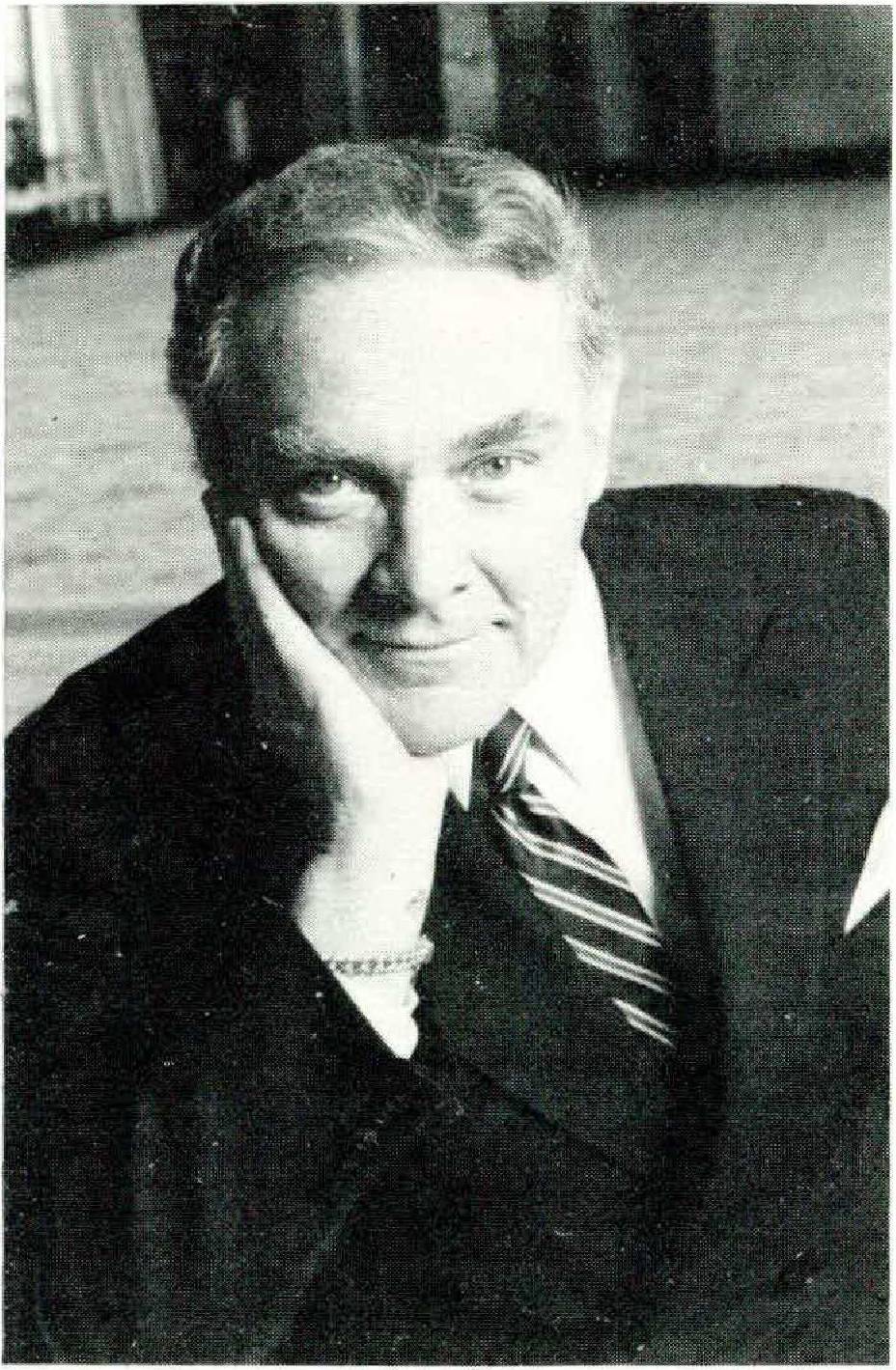
Brussels it was not. The headquarters for Haig’s brief public drama of decision-making was a large, grungy corner room within the Foreign Policy Research Institute at the University of Pennsylvania. The general’s coming had transformed the usually solemn FPRI: an impressively bearlike guard, posted outside the elevator on the third floor, treated all visitors as potential terrorists. (Haig had been the target of an assassination attempt just before he left Belgium.) Every desk was equipped with a “panic button” so that help could be summoned in the event of a problem. Maps of the world and of the United States divided into congressional districts covered the painted cement-block walls of Haig’s office. On a large table lay stacks of books and papers, materials for the oversubscribed seminar he had taught at Penn on “Presidential Decision-Making” and for two “studies” he was preparing, one on NATO defense needs and the other on the organization of the presidency. In this setting, Haig wore his veneer of elegance like a diving suit. His clothes were impeccably tailored. A Gucci belt and a flashy gold ID bracelet set each other off. His gun-metal hair resisted virtually all movement as he paced, and somehow this eerily smooth man of fifty-five seemed to be able to smoke cigarettes almost without polluting the air.
“I don’t mean to sound arrogant or megalomaniac,” he said, sounding steady and confident, “but I think I have seen the office, I think I have had the experience abroad, and I think I have had the experience at home to make me believe that I am as qualified—and more—than anybody in the field, given the unique challenges facing our country . . . The modern military career—certainly mine—has been one of extensive breadth. And I for the last twenty years have been fairly close to the highest levels of policy.”
Close, but not yet the very top. Could he do it? Should he add his name to the ten already declared Republican candidates for President? A few days later, Haig convened half a dozen informal advisers in a suite at the SheratonCarlton Hotel in Washington to take up those questions. GOP fund-raisers, strategists, established political operators, they were men still without a horse. Some urged Haig to get into the race at once, because the world situation cried out for a returning military man with clear vision, a latter-day Eisenhower. Others told him to hang back, wait for a stalemate to develop in the primaries. After five hours or so of listening, he flew off to Dallas for a board meeting of Texas Instruments, Inc.
Haig had discovered for himself that while he had many listeners and admirers, he had no real political base. One scenario had him building a solid bloc of Republican delegates in Pennsylvania and New Jersey while he swept into Florida and won that state’s presidential primary with a coalition of retired military officers and their families, the Cuban exile community, and the Jewish community. But even with a 49 percent recognition factor in the polls (substantially higher than Jimmy Carter’s at a similar moment four years earlier), Haig regarded that as a pipe dream. And he could not realistically present himself as a potential vice-presidential nominee, because he would bring no specific, tangible political strengths to a national ticket. To make a credible race, he concluded, would require two years of full-time work. He felt electable but not nominatable.
On the Saturday before Christmas, in Philadelphia, Haig phoned at least ten national and local reporters and the two out-of-work conservative activists who had already set up a “Draft Haig” office in Alexandria, Virginia. He had decided it “wouldn’t be a constructive thing” for him to run. The day after Christmas, as he relaxed in the sun in Key Biscayne, Florida, the board of directors of United Technologies Corporation, a major defense contractor and the largest employer in the state of Connecticut, announced that it had elected him its president. Haig had privately found himself a comfortable new niche. As one Republican strategist who had been consulted by Haig put it later, the general “found a job with more power, a higher salary, more perks, and more appointments to make” than he would have had as President of the United States—“plus, no ethics law to worry about.”
On the Saturday morning after Christmas, Haig went into his office at the Foreign Policy Research Institute to pull together some loose ends. He called Richard Nixon to wish him a happy new year and to explain his own plans. Nixon congratulated Haig on the wise decisions he had made.
December 1980—For six weeks after the election of Ronald Reagan, Haig’s name was thrown back and forth like a volleyball. At one point he seemed to have a good chance at the Defense Department, but Reagan’s advisers concluded that it would be too much to have to go to Congress for special legislation to circumvent the legal requirement of civilian control of the military. Soon he became the most-mentioned prospect for the State Department. The press said he could never survive the questions about his past, but Haig maintained that he could answer them all. Senate Democrats said they would go after Haig, but that only made the Republicans, newly in charge of the Senate, rally to his side; and it gave Reagan his first cause to defend.
It was all as if according to script. There was Haig, the most controversial, and therefore in many respects the most interesting, member of the Reagan Cabinet. At a news conference where several nominees were presented, it was Haig who attracted most of the questions. He reacted proudly, cautiously, just a touch defiantly. Then he went down to the State Department and there dismissed most members of the transition team, whose leaks and impulsive declarations had caused the President-elect so much trouble. Haig the problem would instantly convert himself into Haig the problem-solver.
What had happened to the general’s much-vaunted new business career? His year at United Technologies—barely ten months, really, if you subtract the time necessary for triple-bypass open-heart surgery in the springturned out to be just another quick assignment, standard operating procedure for a career military officer. He had gone to Hartford, taken charge, and, by all appearances, done a competent job. What he brought to it, above all, was his cold, hard-driving manner, his ability to make others feel vaguely uncomfortable in his presence. No one has suggested that he was especially innovative or that he had any clear impact on the corporation, although, through his tendency to attract publicity, he did get its name in the paper. And he made a great deal of money (probably more than a million dollars, including his speaking fees during his first six months back from Europe).
Haig’s ambivalence about his future was clear all along. Even as he was buying a nineteenth-century Federal Era home in Farmington, Connecticut—the first house he has ever owned—he was maneuvering himself into a spot as a delegate from Connecticut to the Republican convention in Detroit. There he delivered a rousing speech, warning that “the Soviet threat has now become a threat to the very nexus of Western vitality—political, economic, and military.” There could be no doubt that he was available, or that he was a committed, cheerleading Reaganite.
Oddly enough, when Reagan turned to the task of selecting a secretary of state, he found very few options. Henry Kissinger’s return to Foggy Bottom had been excluded from the outset, because he was anathema to the very people who secured the nomination for Reagan. That left a short list of people with solid reputations in foreign affairs who would be eligible to serve this Republican President. Haig’s main support came from the East Coast moderates in the party—the “Rockefeller faction”— many of whom had been willing to support a Haig candidacy for President and now needed reassurance that Reagan was not a warmonger. Ironically, a few figures on the extreme right of the party, such as Senator Jesse Helms of North Carolina, also favored Haig, because he had always been polite and deferential to them and they thought they could influence him. As an intellectual base of sorts, he had the “neoconservatives,” the former liberal Democrats who now found the world an uncongenial place and liked what Haig had been saying. Indeed, the first person to jump to the general’s defense on the Op-Ed page of the New York Times was none other than Norman Podhoretz, editor of Commentary and author of Reagan’s favorite election-year book, The Present Danger.
Once the offer was made, Haig was on the next plane back to Washington. He was not even worried about the ethics law. And he signed up his old Democratic patron, Joseph Califano, to help him with the Senate Foreign Relations Committee during the confirmation hearings.
It is not easy to play the role of a Cassandra in America today. But Haig selected that part and, relying on his cachet as the returning Supreme Allied Commander, Europe (SACEUR)—and as the purveyor of the allies’ frustration and unhappiness with the United States—carried it off quite effectively. His real debut had come in the summer of 1979, when he testified before the Senate Armed Services Committee on the pending SALT II treaty with the Soviet Union. In the byzantine world of Capitol Hill, the promise of Haig on the agenda was enough to permit the relatively anti-SALT Armed Services Committee to win the Senate Caucus Room and live public, television coverage away from the relatively pro-SALT Foreign Relations Committee. The general did not disappoint anyone. Senators and members of the audience virtually squirmed with pleasure as Haig all but winked at the camera and ad-libbed that “Americans want to be number one.” SALT II had flaws, he asserted, but more important than that, American defense capabilities were on the wane. “A firm, unambiguous demonstration of renewed U.S. strength and ability to lead is overdue,” he said. “The global power balance is viewed in Europe as shifting against us, and we can ignore it no longer.”
On the road, Haig did not always sparkle. In small groups of big-money types, he sometimes seemed awkward. When he had to share a platform with someone else, he was occasionally overshadowed. But on his own, speaking to a large audience about grand issues of geostrategy and military capability, Haig was at his very best. His message was direct and chilling; it played into the angry, frightened mood of the American people. It still does.
The period of healing that was so necessary in post-Vietnam, post-Watergate U.S. foreign policy, says the general, has gone too far. Now the nation is being doubted by friends and enemies alike on three crucial grounds: consistency, reliability, and relevancy. Looking back over the past two decades, Haig sees “an overdose of dialectic” and “a whipsaw effect” that have destroyed bipartisan foreign policy and virtually paralyzed the country internationally. “Those in power are perceived and attacked by those out of power as being immoral, irrational, and incompetent,” he complains. “Then, when the critics assume power, they have a vested interest in carrying out the most extreme aspects of their criticism. This has had devastating consequences.”
Once his listeners have been softened up, Haig delivers the body blow: “America is no longer the America it was, and that’s largely attributable to Vietnam, the mistakes of Vietnam.” The mistakes Haig sees in the Vietnam experience, and the lessons he draws from it, are not the same as those of most liberal critics. In his revisionist view, Washington should have reacted to Communist mischief in Southeast Asia in the mid-1960s with more “vigorous and direct” steps, “up to and including mobilization.”That way, when the United States intervened, it could have done it “right”; but in all probability, he argues, “had we taken those steps before intervening, we never would have had to intervene.” The Soviet Union, respecting resolve and clarity of intentions more than anything else, would have pressured its Vietnamese clients to behave differently. “It’s been my experience with the Soviets that they perform far more constructively—or at least predictably— when we deal with them rather directly. It serves no purpose to confuse them, to lead them to take risks which otherwise they might not take.”
Today, Haig laments, the United States is not even capable of a general mobilization. Foggy-headed systems analysts at the Pentagon have redefined the real and potential threats to America in a specious way that makes the country less able to respond to
grave contingencies. The military is more than 500,000 reservists short, and Haig’s experience in Europe has taught him that the all-volunteer Army suffers from high costs and low quality. No wonder, he says with a sardonic chuckle, that on his return he found among Americans “a nagging concern that we are a nation less and less able or willing to preserve our vital interests abroad”—a concern that he believes has grown to the point of eclipsing popular worries over inflation or energy. Meanwhile, the crises roll in as if custom-designed to prove Haig’s point: Cuba, Iran, Afghanistan, possibly Poland. And Haig’s voice takes on more and more of an I-told-you-so quality.
Part of Haig’s appeal to impatient, worried Americans is that he seems to be the antithesis of the people who worked in Carter’s State Department.
He comes off as a man of action who understands how the world really works and would not turn sentimental notions such as human rights into precepts of foreign policy; he has spoken with appreciation of American friends such as the shah of Iran, warts and all. Many people are also drawn to his image as a tough military officer who can perform the most unsavory task with total aplomb. As Nixon wrote in his memoirs, Haig “was always loyal to the commander he served.”
The story of Alexander Meigs Haig, Jr. is as all-American as they come. His father, an up-and-coming Philadelphia lawyer, died at the age of thirtynine, when young A1 was ten. Although they could not really keep up with the life-style there, his mother held the family together in an affluent suburb. His older sister became a lawyer and his younger brother went into the priesthood; A1 always dreamed of the romantic military life. He saved enough money from odd jobs during parochial school to pay for two years at Notre Dame, and then, on his second try, he won an appointment to West Point. He never stood out there academically, but he drew one good assignment after another as a career soldier. He served with General Douglas MacArthur in postwar Japan and was a member of the younger generation of American heroes in the Korean War. After various staff positions at West Point and Annapolis and in Europe, he picked up a master’s degree in international relations at Georgetown University and then began a string of assignments at the Pentagon.
It was there, in the early 1960s, as a lieutenant colonel, that Haig was noticed and that he developed powerful civilian —and Democratic—sponsors: then Secretary of the Army Cyrus Vance and Joseph Califano, who was special assistant to Secretary of Defense Robert McNamara. As an aide to Califano, Haig had a reputation as a workaholic who seldom left his office before eleven P.M. In due course, McNamara and Vance sought to reward him with an early promotion to colonel, but the Army balked, because there was a hot war going on in Vietnam and Haig had not yet served in it. Off he went in 1966, winning his promotion as well as the Distinguished Service Crossfor heroism in the battle of Ap Gu. After six months back at West Point as deputy commandant, Haig was invited to the Pierre Hotel in New York late in 1968 by Henry Kissinger, Nixon’s newly appointed national security adviser. On the glowing recommendation of Califano, Kissinger selected Haig as his senior military aide.
The rest is history. Haig lived by his wits and his stamina in the Nixon/Kissinger White House. His hours were, if possible, even longer than they had been at the Pentagon in the Kennedy and Johnson years. Kissinger, emerging as a social lion on the Washington scene and an international celebrity, would often hit the party circuit in the evening, leaving Haig behind and promising to come back and do more work. Haig simply appropriated much of the work for himself. Sometimes Nixon, on his nocturnal prowls around the mansion, would discover Haig working in Kissinger’s office; they would chat animatedly, with Haig playing cleverly to the President’s prejudices and suspicions. Before long, Nixon was sending Haig off on special missions to Southeast Asia and other trouble spots, and after eighteen months he became Kissinger’s official deputy.
When Reagan chose Haig as his secretary of state, some commentators portrayed him as a kind of secret agent for the restoration of Nixon’s respectability and influence and, perhaps more important, as a stand-in for the former wizard of American foreign policy, a Kissinger-without-tears. But that interpretation misses important subtleties.
Haig now refuses to talk publicly or privately about either man, except to extol Kissinger as a statesman of genius and to note a growing nostalgia for Nixon’s foreign policy successes. By all accounts, however, the Nixon-Kissinger-Haig triangle was one of the more complicated love-hate relationships in the history of the White House. Though Haig was Kissinger’s protégé, he was also his rival, and Nixon encouraged both roles. Presumably Kissinger was glad to be rid of Haig when Nixon advanced him ahead of 240 higherranking officers, gave him two more stars (he was already a two-star general), and made him Army Vice Chief of Staff in January 1973. (The President had intended to make him Chief of Staff, but Haig, aware of the resentment already directed at him by his Army peers, declined to be catapulted ahead of Creighton Abrams, who had commanded U.S. forces in Vietnam.) Hardly had Kissinger breathed a sigh of relief when Haig was back, in May, to superintend the White House bunker for the catastrophic final fifteen months of the Nixon presidency. The rivalry flared anew, with Kissinger—by then secretary of state as well as national security adviser—even feuding with Haig over who would get the bedroom next to the President’s during his trip to Moscow in June 1974.
To read the first volume of Kissinger’s memoirs, Haig was little more than an errand boy and a paper-shuffler. To read Nixon’s, Haig was sturdy and true, “the strongest man in the whole group” around him at the end. Haig has not yet written his book, although he claims to have had lucrative offers from every major publisher in America.
It is from his five and a half years in and out of the White House that the dark side of the Haig mystique emerges. Those who worked with or near him tend to view him with profound, almost painful ambivalence. “He hung in there until the bitter end, and yet he didn’t get tainted in any way,” says one Watergate casualty; “things went sour for me, but never for him. He’s led a remarkably charmed existence.” “I was never sure where the boundary was between Haig and Nixon,” notes another former official who had occasion to observe them both closely toward the end; “I despised — and yet admired—Nixon, and I could never understand how Haig could stand to be around him so much . . . Yet I don’t think Haig ever pursued a course of action which he thought to be wrong.”
Haig did select many of the seventeen people who would be covered in Nixon’s program of secret wiretaps, and he passed the names along to J. Edgar Hoover (thus helping Kissinger keep his own hands relatively clean). Some of those wiretaps continued for a very long time, and he handled the sensitive transcripts. It has never been shown that he was aware of the operations of the White House “plumbers,” but he was certainly active in trying to build the case against one of the plumbers’ prime targets, Daniel Ellsberg. While Army Vice Chief of Staff, Haig turned up in full uniform as a steely witness for the prosecution at Ellsberg’s trial in Los Angeles on espionage charges for leaking the Pentagon Papers.
How should Haig be regarded by his countrymen for his actions in that period? With suspicion or with gratitude? The question surely would have been central if he had decided to mount a full-fledged campaign for the Republican nomination in 1980. William Ruckelshaus, who lost his job as Nixon’s deputy attorney general during a phone conversation with Haig in the course of the “Saturday Night Massacre” of October 1973, still believes that Haig was too willing to march in step with his Commander in Chief at the time. When Ruckelshaus completed his brief tenure as acting director of the FBI and became deputy attorney general, he recalls, he received “a lecture from Haig on the President’s noninvolvement in Watergate, rather than questions about my own opinions after running the FBI’s investigation of Watergate.” And yet. “And yet, for all my suspicions of him,” said another man who is no friend of Haig’s, “he ends up as the guy to whom the nation should be grateful for Nixon’s departure.” Indeed, in accounts both public and private, it is Haig who finally persuaded the embattled and embittered President to spare the nation further anguish by resigning.
Gerald Ford was certainly grateful. Soon after he took over from Nixon, he rewarded Haig with the NATO post, an excellent spot for recuperation and rehabilitation. (Once again Haig was a candidate for the job of Army Chief of Staff, and had he received that job, would probably eventually have become Chairman of the Joint Chiefs of Staff. But those jobs require Senate confirmation, and Ford’s advisers thought it unwise to risk turning his confirmation hearings into yet another Watergate investigation.) For his part, Haig insists that he is entirely comfortable about his behavior during Nixon’s final days in the White House, if still unwilling to review the details. “I will not take credit for anything,” he says, “but nor will I take any lumps . . . There are certain times when you have to do things and you do not have the luxury of putting your finger up to see if they are career-enhancing or not. . . I am not self-conscious about anything I did during that period.” Still, Haig makes cryptic asides concerning the last phases of the Watergate scandal: “There were considerations of the moment that haven’t yet come out. The whole thing was a constitutional crisis, and a lot of people haven’t looked at what kinds of alternatives were possible during that process.” He refuses to explain further.
The NATO assignment substantially broadened Haig’s scope and gave him new international recognition. He established independent and early credibility with the Europeans. One profile of Haig, in the conservative West German weekly Die Welt, praised him as the “strongest leader” ever to command NATO forces: “He masters task after task with brilliant expert knowledge, with unfailing political instinct, and with proverbial persistency. He seems to have discovered more weaknesses in the alliance than all his predecessors.” The European infatuation with Haig obviously reinforced his extraordinary self-confidence; the autobiographical description that he routinely provided in response to inquiries after his return stated flatly that “he has built a reputation as being the finest NATO commander since Dwight D. Eisenhower.”
For all his enjoyment in the job, Haig found himself chafing at American military policies. He was particularly offended when he learned only at the same time as the European allies about some of the provisions of SALT II (including the controversial “protocol” restricting U.S. deployment of the cruise missile and the MX until the end of 1981). It was an obvious opening to come back and carve out a new role.
The Europeans were the first to show their relief, disguised as glee, when Haig was named secretary of state. They had been frightened by this man Reagan, worried about what his foreign policy might do to what was left of détente. The nomination of Haig, said the spokesman for the West German government, represented “the return of a friend to Europe”; the opposition Christian Democrats called his appointment “a ray of hope for the Atlantic Alliance.” Britain’s Margaret Thatcher was pleased, and the Elysée Palace in Paris let it be understood that Haig “fits well,” perhaps the ultimate French compliment.
Democrats raised plenty of bluster when Haig appeared before the Senate Foreign Relations Committee in January, but they failed to damage him substantively or to put a chink in his armor of self-assuredness. Indeed, Haig conveyed the impression that he was doing the senators a favor by spending so much time with them. The toughest denunciation of Haig came from Senator Lowell Weicker of Connecticut, a Republican who had specialized in Watergate investigations in the early 1970s and is not even a member of the Foreign Relations Committee. In the end, the committee approved Haig’s nomination by a vote of 15 to 2, with only vague demurrals from Democrats Paul Sarbanes of Maryland and Paul Tsongas of Massachusetts. On the day after the Inauguration, Haig’s name sailed through the Senate, 93 to 6.
But when the shouting stops, what kind of secretary of state will Haig be? According to his own prescription, spelled out in the Washington Quarterly, the secretary of state should be “the vicar of foreign policy,” a coordinator and a loyal servant of the President, but one who is not upstaged by competitors within the government. Beyond that, skeptics point out, Haig’s published work and his speeches are filled mostly with pedestrian rhetoric—often with big words and convoluted sentences that do not say much.
“Okay,” admits one close associate, “he’s not an intellectual who sits there and says, ‘On the one hand, on the other hand.’ He’s an operator, and he hasn’t had a whole lot of time for reflection in his life. But he has had some. And I’m not so sure that the secretary of state ought to be a stunning intellect. What we need now is someone who can rank his priorities, spend his political capital wisely, and organize his day.”
That he will do—and probably quite well, according to William D. Rogers, a Washington lawyer who was undersecretary of state for economic affairs under Gerald Ford and is frequently sent, abroad on official and quasi-official missions by presidents of both parties. Haig will have “enormous advantages,” says Rogers, “an opportunity to run the game his own way. He will be working for a President who, unlike Jimmy Carter, will not try to work thirty-six hours a day. Reagan will trust and expect his Cabinet to do their jobs, and no other members of his Cabinet know anything about foreign policy.”
It has apparently been made clear that Haig will have preeminence over Reagan’s national security adviser, Richard V. Allen, and Haig’s associates worry only about the new White House counselor, Edwin Meese, who had a tendency in the post-election period to act like a viceroy, announcing the President-elect’s views on various foreign policy issues while Reagan was off chopping wood in California.
When he does get around to speaking on the issues, one colleague predicted, Haig will be cautious: “He has a concept of credibility that is quite sophisticated. He knows that you do not make stupid promises when you are not sure you can deliver. You do not draw lines on the map and promise to protect the Persian Gulf if everyone knows you can’t. He knows the limits of American power, especially within the alliance. Pie knows you have to take into account the other person’s view, allies and adversaries, because he knows you have to live with these guys.”
He also knows it’s never too early to start thinking about 1984, or even 1988.
-SANFORD J. UNGAR