Washington: Fighting the Last War
Spurred by Jack Kemp, the Bush Administration is preparing to launch a new war on poverty. So far it looks quite a bit like the old one
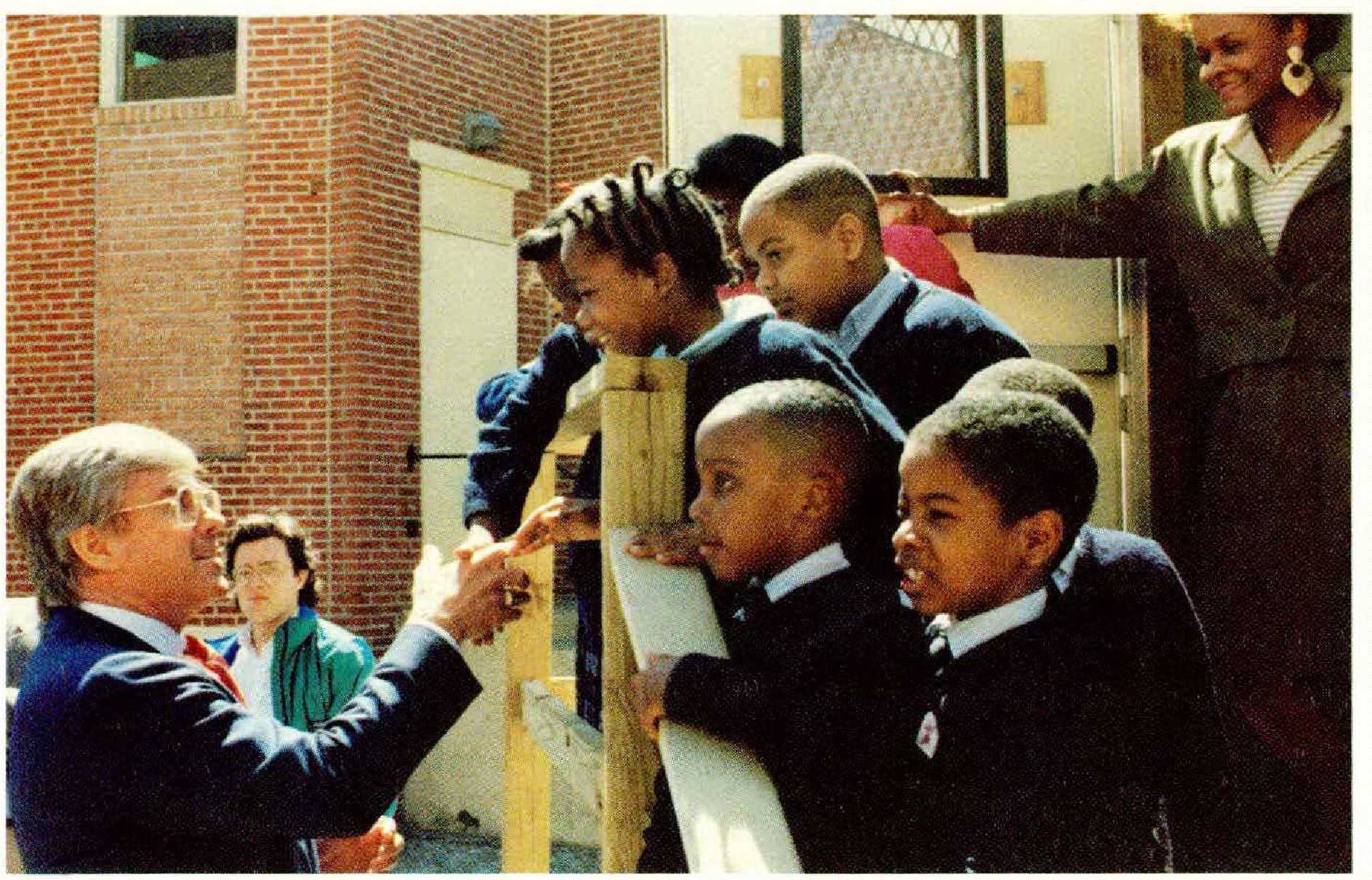
THE WAR ON POVERTY may turn out to have been more important historically for the political reaction it provoked than for what it actually did. The agency created to carry out the War on Poverty, the Office of Economic Opportunity, was fairly small, modestly funded (its highest-ever annual budget was $1.9 billion—under Richard Nixon), and short-lived (it existed for barely a decade). Nevertheless, politicians have been running against the War on Poverty almost from the moment it began. The year that Lyndon Johnson started the War on Poverty, 1964, was also the year that Ronald Reagan emerged as a national politician, because of his speechmaking in Barry Goldwater’s presidential campaign; Reagan attacked the War on Poverty then, and he’s still attacking it now. In his recently published memoirs Reagan describes his vehement objection to the War on Poverty as having been one of the main things on his mind as he was deciding whether or not to run for President. “Hundreds of billions were spent on poverty programs, and the plight of the poor grew more painful,” he writes. “They had spent billions on programs that made people worse off.”
Oddly, though, there is now a movement to declare war on poverty again. Its leader is Jack Kemp, the Secretary of Housing and Urban Development. After he dropped out of the 1998 presidential race, Kemp began calling for a “conservative war on poverty.” During the press conference at which his appointment to HUD was announced, Kemp said, “I told my friends on Capitol Hill, both Democrat and Republican alike, I want to wage war on poverty. ” Last fall, after some spirited politicking inside the Administration, President Bush put Kemp in charge of an Economic Empowerment Task Force, which is supposed to formulate a new federal anti-poverty policy.
It appears now that the historical importance of the Bush Administration’s war on poverty will also not lie in what it actually does. It probably won’t receive from the President either the rhetorical commitment or the significant new budget authority that the original version got from Johnson. But it does provide a way of gauging the stance of the Republican Party—the presidential party, and so the likely source of major government initiatives—on social-welfare issues. During the period after Bush appointed the Economic Empowerment Task Force and before its first official meeting, I spoke with all its leading figures. I was struck by the extent to which these conservatives, determined to avoid the mistakes of a liberal program that in their view failed miserably, were reliving with an almost eerie exactitude the early machinations that preceded the War on Poverty.
THE MOST SIGNIFICANT flurry of social-policy making in the Reagan Administration came at the very beginning, in the form of David Stockman’s cuts in federal spending on domestic programs. Stockman’s great cause—a failed one, as it turned out—was eliminating what he called “the social pork barrel,” a system under which government money was distributed according to the political power of the beneficiaries rather than need. After Stockman, the best-known conservative in the field of social policy during the 1980s was probably Charles Murray, the author of the book Losing Ground, who argued that social programs, especially welfare, had caused poverty to increase, and so should be eliminated.
Although this was similar to the view of poverty programs that Reagan has expressed throughout his career, Murray had very little discernible influence on the Reagan Administration—there was no attempt to dismantle the welfare state after Losing Ground was published—and, of course, neither did Stockman after the first year. Instead, Reagan surrounded himself with a group of people who had worked for him when he was governor of California, whose guiding principle was that the federal government shouldn’t “micro-manage” social-welfare policy: it should hold overall spending down and let the states decide what to do. The California group might have agreed with Stockman’s and Murray’s views, but to them it was far more important to limit the power of the federal government than to make it operate according to conservative principles.
For most of Reagan’s second term a man named Charles Hobbs, who had worked for Reagan in Sacramento in the early 1970s, was the member of the White House staff in charge of social policy. Hobbs’s dream was to persuade Congress to pass a bill that would give the states power to experiment with welfare programs. In 1986 the bill was killed in committee, and Hobbs was forced to accept a pale substitute—an organization inside the White House called the Low Income Opportunity Board, which encouraged the states to apply for waivers from federal rules so that they could institute their own welfare-reform plans. Almost half the states participated, but most of their plans were, as Hobbs told me recently, “incremental,”not revisions of the welfare system. He continued, “To tell the truth, I had to sit and bite my tongue for two years because I thought they were being too timid.”
When Bush took office, having signaled for months that he would display more compassion toward the poor than Reagan had, he decided to keep the Low Income Opportunity Board going. Hobbs left the White House in the spring of 1989, and another member of the White House staff, William Roper, who had many other responsibilities, took over responsibility for the board. In September of 1989 Bush asked it to develop, in the words of a White House memo, “the principles of a conservative anti-poverty agenda.” The board began to hold monthly meetings, attended mostly by second-level officials of the domestic Cabinet departments, to discuss ideas. To judge from the paperwork generated by the board, the main new initiative it discussed was what one memo calls “large-scale community intervention in high poverty areas,” which sounds a lot like the main new initiative of the War on Poverty, the community-action program.
Last spring William Roper left the White House, and authority over the board passed to a member of the Council of Economic Advisers. The impression that Bush wasn’t doing much to bring into being a “kinder and gentler nation” was sharply underscored by a story by Robert Pear that appeared on the front page of The New York Times on July 6, 1990, under the headline “WHITE HOUSE SPURNS EXPANSION OF NATION’S ANTI-POVERTY EFFORTS.” After describing the failure of the Low Income Opportunity Board to come up with anything that the Domestic Policy Council, the group of Cabinet members it reported to, would approve, Pear wrote, “A White House official summarized the upshot this way: ‘Keep playing with the same toys. But let’s paint them a little shinier.'”
Kemp was already rankled by the mood of caution that prevailed in the Domestic Policy Council. He had long since personally declared war on poverty, but there was no visible Administration-wide effort to show for it. He had privately urged Bush and John Sununu, the White House chief of staff, to make “war on poverty” a presidential catchphrase, but they refused, not wanting to imply that they were going to create big new government programs. (Finally, Bush did slip a war-onpoverty reference into a speech.) The meetings of the Domestic Policy Council “went poorly for Secretary Kemp,” says Thomas Humbert, one of his aides at HUD. “He wanted to start immediately with the new war on poverty. He had the themes and designs. That was turned down.”Other Cabinet secretaries told Kemp that if the Administration publicly raised poverty as an issue, it would only help the Democrats. On May 25, 1990, Kemp expressed his reaction to the proceedings of the Domestic Policy Council in a letter to Richard Thornburgh, the Attorney General, who is its chairman. “I am absolutely convinced that we are at a moment of critical mass,” he wrote. “It is past time for the Administration to aggressively highlight a new comprehensive anti-poverty agenda. . . .”
The New York Times story was based on a memo drafted for the Domestic Policy Council, sketching out a series of non-actions such as expanding the Low Income Opportunity Board and further studying federal anti-poverty programs. This memo was not at all what Kemp and his aides had in mind. “This is awful!” one of them wrote in the margin of a copy. The Times story gave them an opening. Kemp was in London when it appeared; he immediately called the White House to complain, and was assured that no decision had been made to drop the idea of an anti-poverty offensive. When he got back to Washington, he wrote Thornburgh another testy letter, suggesting that a Cabinet member be put in charge of the anti-poverty effort, and warning that unless the effort was juiced up, there would be more bad publicity. “The Administration has already been criticized in the press for studying the problem to death and throwing up its hands,” he wrote. “Here we are asking the President to endorse a war on poverty that will produce, in a year’s time, a report, an analysis, and, perhaps, some proposals. Meanwhile, what’s going on in our neighborhoods and on the streets?”
Evidently Kemp’s views won out. By the beginning of September the Low Income Opportunity Board had quietly slipped beneath the waves. Bush had approved the establishment of the Economic Empowerment Task Force as a replacement body, with a Cabinet secretary as its head, and Kemp had beaten out the secretaries of Labor, Education, and Health and Human Services to get the job. There was a lot going on here. To use one of Kemp’s favorite locutions, it’s no secret that Jack Kemp has presidential ambitions. He was known to have become restless at HUD. Being assigned to run the task force, a job Kemp sees as highly visible and demanding, keeps him on the reservation.
Inside the White House there was some desire to prove the Times story wrong—to counter, for reasons of election-year political expediency and East Coast Republican gentility, the perception that the Bush Administration didn’t care about the poor. In particular, a White House aide named James Pinkerton, who is in charge of trying to shore up Bush as regards what the President calls “the vision thing,” became involved in anti-poverty policy after the story. Pinkerton, who is the son of two liberal academics, cuts a figure in Washington today a little like that of Stockman in the late 1970s, or of Representative Newt Gingrich in the early 1980s: he is a young intellectual convert to conservatism who wants to create for the Republican Party an overarching concept so compelling that it will remake American politics as completely as the New Deal did. Pinkerton calls his concept the New Paradigm. Its essential tenet is that bureaucracy is a spent force in the world and is being replaced by decentralized, market-driven forms of organization. Last spring Bush gave a speech about the New Paradigm.
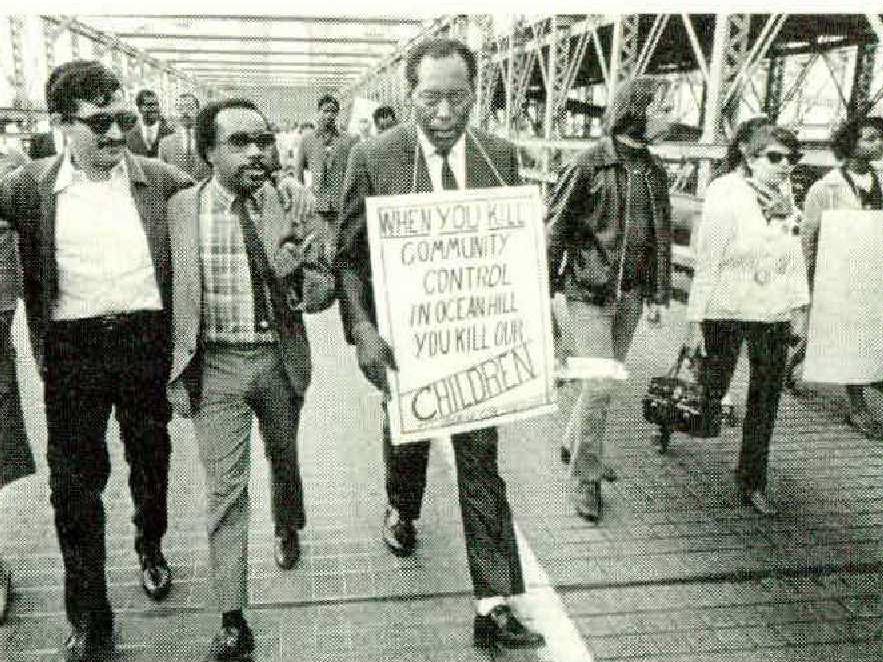
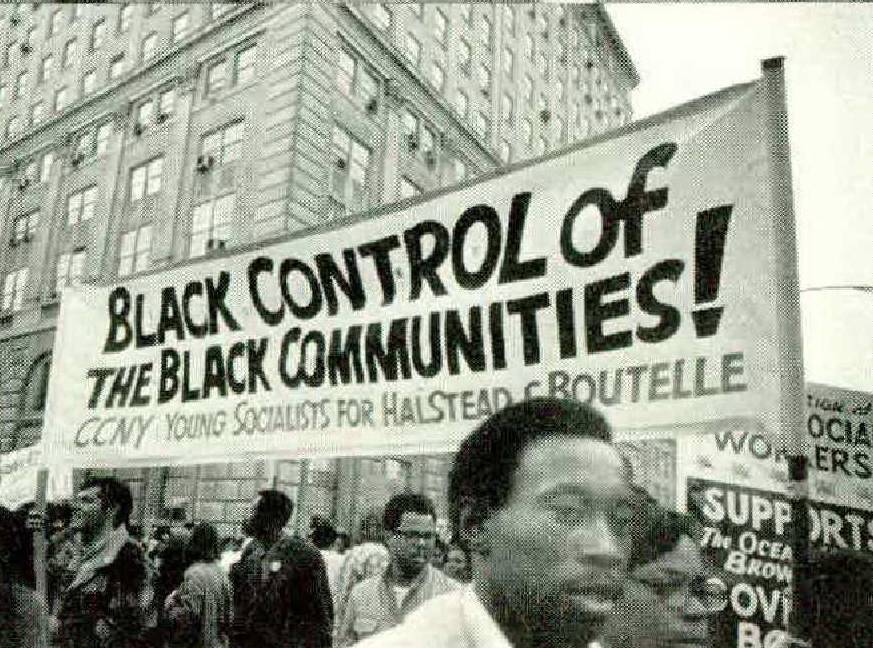
In lobbying for the Economic Empowerment Task Force, Pinkerton joined with two White House aides who have more-conventional responsibilities in the management of domestic policy, Charles Kolb and Richard Porter. A new anti-poverty initiative appealed to Pinkerton as a chance to kill two birds with one stone. It could help draw below-median-income voters into the Republican Party and also be a proving ground for the New Paradigm, by supporting anti-bureaucratic poverty-fighting ideas like school and housing vouchers and tax-free “enterprise zones” in urban slums. Although the task force has members from throughout the government, the two key clusters of people involved in it are the group on the White House staff and Kemp and his circle of advisers at HUD—all of whom are uninterested in the Reagan Administration cause of getting the federal government out of social-policy making. Kemp is strongly committed to using the federal government as an instrument of social-policy making, because he believes that the solution to most of the country’s problems lies in changing the income-tax code in various ways, which state and local governments can’t do.
THE WORD “empowerment” conjures up visions of SDS manifestos, campus demonstrations, the Black Power movement—all the things the Republican Party ran against so successfully for so many years. But now it is the mantra of the Bush Administration regarding poverty. That a catchphrase of the left could have mutated into a catchphrase of the right is only one of many examples of the way in which discussions of poverty and race in America tend to encourage elaborate rhetorical posturing.
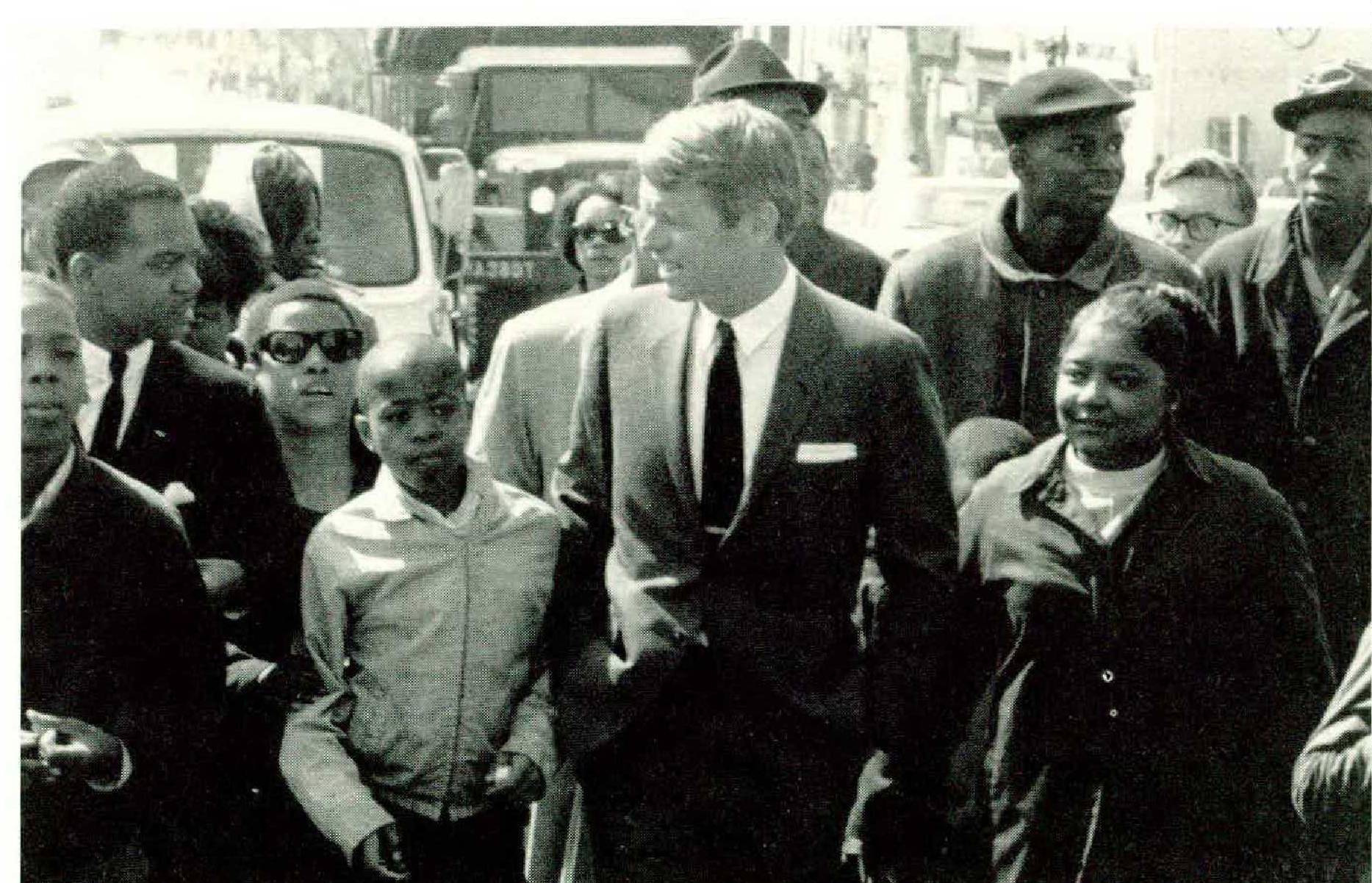
All the essential actors in the formation of the Economic Empowerment Task Force make it clear that inner-city black ghettos are their central concern; they don’t talk much about Appalachian hollows or shantytowns along the Mexican border. Even to raise as a possibility new government programs aimed at the ghettos runs the risk of offending two constituencies: blacks, who might feel they are being colonialized and treated as deficient, and conservative members of Congress, who aren’t inclined to support new socialwelfare spending. “Empowerment" neatly evades both problems.
For many blacks the word has a resonance it simply lacks for most whites. The standard white-ethnic mythology of intergenerational progress from the slums to the suburbs doesn’t include anyone’s having become empowered, but African-American history and psychology is bound up with the idea of throwing off the bonds of oppression and powerlessness. Robert Woodson, a black conservative who runs the National Center for Neighborhood Enterprise, a think tank, is the person most responsible for popularizing the word “empowerment" in conservative circles. Many of the white conservatives who use it (like Kemp, who keeps a bust of Lincoln on his desk at HUD) believe that the Republican Party can attract a substantial black constituency. The social-welfare consensus of the early sixties foundered on the charge that white officialdom’s attitude toward the ghettos consisted of “blaming the victim,”and the fear of appearing to victim-blame has haunted social-policy makers ever since. The Economic Empowerment Task Force is determined to avoid this problem, even if that means explaining itself in language that will seem esoteric to most whites. James Pinkerton says, “People like me don’t need to be empowered. The black in the ghetto has to be empowered. If it means nothing to ninety percent of the American people, so be it. ”
“Empowerment" sends a different signal to the conservative audience. It implies that the ghetto poor are going to be encouraged to solve their own problems, rather than to become wards of the state—and therefore that the spending is going to be modest. Also, conservatives are intensely aware that there are two main strains in modern conservatism, one extremely unpopular with voters, the other extremely popular. The unpopular strain is austere. pessimistic about human nature and the wisdom of the public’s will, and prone to viewing government as a bulwark against disorder, rather than as a solver of all the world’s problems. The popular strain—Reagan’s strain, and also Kemp’s—is anti-establishment, ebulliently optimistic, and full of trust in the common man. The Economic Empowerment Task Force will be firmly in this camp, whose catechism is that the American ghettos. Eastern Europe, and the poorer parts of Latin America have an essential similarity: all are places where the heavy hand of the state has prevented the basic abilities of people from showing themselves. Pinkerton talks about the need for perestroika in the ghettos. Stuart Butler, the chief poverty expert at the Heritage Foundation (which was Kemp’s resting place, briefly, before he got the HUD job), uses the slogan “Trust people, mistrust bureaucracy.”
Sometimes, in conversation, some of these conservatives hint that government might play some role in the lives of the poor other than simply getting out of the way. Joseph Schiff, the assistant secretary of HUD in charge of public housing, who spent the late 1980s running HUD’S Louisville office and so was not in close touch with the conservative think tanks in Washington as they developed the new line, told me that he wants to provide public-housing tenants with a range of special social services. When I asked him how this constituted empowerment, he seemed momentarily flustered, and then got with the program and said that the kinds of social services he had in mind were different from “traditional social work, which as I understand it is more welfare.” Kemp’s aide Thomas Humbert told me, “There is another side to the story we don’t have the authority to do— preaching values. Conservatives don’t do that well. Jesse Jackson does it well. A sense of, ‘You can do it, you can make it, the dream’s alive, keep your family together,’and so on. But that’s not Secretary Kemp’s role—he’s a white suburbanite who grew up middle class.” Practically speaking, there is quite often a blurring of the intellectual distinction between programs that empower and programs that acculturate; job training, for example, could be put under either rubric. But in the stance it strikes for purposes of Washington debate, the Bush Administration is completely for the former and against the latter.
THE ECONOMIC Empowerment Task Force didn’t meet for the first time until November 15, so it is still in the early stage of its deliberations—the stage at which domestic agencies and departments are asked to submit poverty-fighting ideas. It is not difficult to guess what the end result will be, though. The task force is under instructions to be “budget-neutral,” so it has to propose a rearrangement of, rather than an increase in, government spending. Charles Kolb, the White House aide who actually runs the task force, insists that money for new programs can be found by eliminating the waste in old ones. “The gross dollars are enormous,” he says. “The money’s getting raked off somewhere.” It usually turns out that what appears to be waste is actually payroll or benefits, which are very difficult to cut, so it’s unlikely that the conservative war on poverty will be budgetarily substantial. Both Kemp and Kolb say, too, that the task force probably won’t propose a major piece of legislation along the lines of the Economic Opportunity Act of 1964, because the Administration doesn’t trust Congress. As Stuart Butler puts it, by submitting legislation “you lose control and get into a bidding war.”
Whatever the task force does propose will probably be some version of Kemp’s poverty-fighting agenda, on which the key items are substantial tax cuts for the working poor, tenant management of housing projects, housing and education vouchers, and enterprise zones, all of which fit comfortably under the rubric of empowerment. Like Reagan, Kemp is drawn more to anecdotes than to statistics. Overall, the ghettos have been tremendous population-losers over the past two decades, but Kemp has a circle of community-leader acquaintances, most of them middle-aged black women, whose success at turning around their neighborhoods has convinced him that all ghettos can be made into thriving, crime-free ethnic neighborhoods through the application of economic incentives by the government. It is difficult to imagine that when the Economic Empowerment Task Force goes public, Kemp won’t extol the good works of Kimi Gray in Washington and Bertha Gilkey in East St. Louis and call for a nationwide application of their ideas, since he does so in almost every speech he gives.
The impolite question to ask about Kemp’s uplifting vision is whether the intellectual foundation on which it rests—that all the problems of the ghettos were created by liberal government programs that began in the mid1960s— is plausible. Kemp himself, when pressed on this point, is willing to concede that all was not well in the ghettos even before the War on Poverty began, and that many blacks have been helped by government programs since then. The true-believer conservative position on the War on Poverty can be more readily found in the writings of Stuart Butler, who is close to Kemp. He has written that the War on Poverty committed three crucial errors: first, “policymaking was centralized in Washington”; second, “the idea of ‘welfare rights’ guided many programs”; and third, “the War on Poverty assumed that the best way to help people was to send trained professionals into communities to help the poor.” The White House memorandum that led to the creation of the Economic Empowerment Task Force subscribes to the Butler theory. It says, for example, “Although it alleviated some of the worst symptoms of poverty, the war on poverty could not succeed in reducing poverty because it was based on a philosophy of redistributionism and promoted dependency.”
Actually, none of these charges against the War on Poverty is true. Rather than being centralized in Washington, the War on Poverty had as its biggest program community action, which was carried out by quasi-independent organizations in poor neighborhoods. Rather than promoting welfare, the War on Poverty explicitly rejected it, in part because Lyndon Johnson hated the idea of government handouts. (It was the Nixon Administration that made increasing cash and in-kind assistance to the poor the centerpiece of its anti-poverty policy.) And rather than relying on what conservatives now call “the service-provider industry,”the War on Poverty went to some lengths to shut it out; the community-action program was supposed to be substantially staffed by poor people rather than social workers. Some of the slogans now being discussed in the Administration—for example, “a hand up, not a handout”— were used in the War on Poverty. Whatever the failures of the War on Poverty now appear to have been, most of its political troubles at the time stemmed from its heavy reliance on ghetto community-development groups, which tended to get a bad press and to engender the enmity of conventional elected politicians, who thought that federal anti-poverty money should be spent through them.
THE MORE INTERESTING conclusion to draw from a comparison of the two wars on poverty is that their similarities bespeak some fundamental truth about social-welfare-policy making in America. The Bush Administration’s war on poverty is now where the War on Poverty was in the early fall of 1963. That was the last time until now that the White House was occupied by the son of a wealthy and prominent father, a graduate of an Ivy League college, and a Navy combat veteran of the Second World War; in keeping with his background, that President, like this one, was primarily interested in foreign affairs. John F. Kennedy was being pushed toward poverty-fighting by an ambitious Cabinet member who had developed a strong interest in the black ghettos and who had formulated his own daring agenda for solving their problems—his brother Robert. Bush is being pushed by Kemp. The impetus for the explorations of anti-poverty policy in 1963 was that Kennedy was proposing an income-tax cut and was worried that he would appear unfair if he didn’t also do something for the poor; Kemp and Bush have both been drawn first to tax-cutting and then to anti-poverty policy, as a way of providing balance.
The War on Poverty began with the convening of an interagency task force like the Economic Empowerment Task Force. This proved to be a cumbersome vehicle for policy-making, and most of its time was taken tip in squabbling among Cabinet departments. (In the Bush Administration the squabbling began, very publicly, the day after the first meeting of the task force, when Richard Darman, the budget director, gave a speech making fun of the New Paradigm, which infuriated Kemp and Pinkerton.) Eventually the povertyfighters, desperate to cut through the bureaucracy and find a fresh new idea that didn’t cost too much, settled on trying to revive the ghettos by “empowering” their residents. That will probably be the outcome this time around, too, only the empowerment will be economic rather than political.
Had John Kennedy not been assassinated, the War on Poverty would never have been declared. If Bush’s presidency proceeds pretry much as it has so far. there is little likelihood that Bush will make any vast Johnson-style promise to eliminate ghetto poverty either. That would be more in Jack Kemp’s line. It appears that the natural, ordinary operations of the federal government do not encourage major reforms in race relations. Instead, normal procedure in centrist administrations is for the existence of obvious racial problems to produce some pangs of conscience or duty, which are followed by a search for a course of action that won’t be very expensive or disruptive. Breakthroughs in the area of race, the most difficult issue in American domestic life, have in the past been wrenching experiences for the whole society. That is why they have been associated with times of national crisis and Presidents of immoderate temperament— not times like these, or Presidents like this one.
—Nicholas Lemann