Japan: Nationalism, Not Racism
The argument that frictions between the United States and Japan are essentially racial in character is not only wrong but dangerous
WHILE I WAS driving to the airport for a recent trip to Japan, I heard the announcer on a sports-talk station discussing the sale of the Seattle Mariners to the Japanese family that owns Nintendo. If American baseball had said no to the sale, he argued, the explanation would have been one of only two possible things: terminal stupidity or “outright racism.”
He was probably right about the stupidity. It is generally shrewd for businesses to draw in as much capital as they can—especially in an industry like baseball, since there is no risk that a foreign-owned team, unlike a factory, will be moved overseas. Indeed, many in Seattle pointed out that selling the team to Japanese owners was probably the only way to keep it in town.
But I wonder about the insistence on racism, which has run through many other commentaries on the United States’ current problems with Japan. Every American knows that race is this country’s central social problem. Anyone who has considered American history can tick off cases in which the country rationalized what now seems like blatantly racist behavior. Even a glance at the past century of U.S.Japanese interactions shows a recurring racist theme. The most obvious instance was during the Second World War, when Japanese-Americans were interned on the assumption that they were, in effect, genetically disloyal.
On the better-safe-than-sorry principle, many Americans have apparently concluded that it’s important to sound the alarm about latent racism even in cases, such as the sale of a baseball team, that have no obvious racial content. The motives behind this self-critical reaction are understandable and well-meaning. Like many Americans, I have a similar reflex when it comes to black-white relations within this country. (When I see a white contestant screw up on Jeopardy, I know that he has embarrassed only himself. The pressure on black contestants is much greater.) But in dealings between the United States and Japan, the insistent search for racial motives is having the opposite of its intended effect. By asserting again and again that U.S.-Japanese frictions are fundamentally racial, liberal-minded America makes it harder to deal with resolvable problems and increases the risk that outright racial showdowns will occur.
LET’S GO BACK to baseball. Japan, of course, has a professional baseball system of its own. Most of the teams are owned by big corporations, for which they serve as a seasonlong corporate-advertising medium. The Yakult Swallows, for example, are owned by the Yakult prepared-foods company. (Since Yakult makes a number of popular drinkable yogurt products, the name could be an elaborate English-language pun.) The first time I heard of the team called the Nippon Ham Fighters, I wondered if “ham fighting” was some kind of martial art. In fact the Fighters merely bear the name of their owners, the Nippon Ham company. If the same system were in effect in America, teams would be known as the Anheuser-Busch Cardinals, the Microsoft Mariners, and the CNN Braves.
It would be impossible for a Japanese team to be known as the Lockheed Fighters or the Coca-Cola Swallows, though: the rules and practices of Japanese baseball prevent non-Japanese owners from buying a controlling interest in any of the teams. The rules of Japanese baseball also affect the rosters. No team may put more than two non-Japanese players on the field. This policy has an obvious racial effect. A few of the foreign players have been Korean or Taiwanese, but the vast majority are black, white, or Hispanic Americans. Without the rule, foreign players would dominate the lineup. With the rule, the racial tone of the teams remains Japanese.
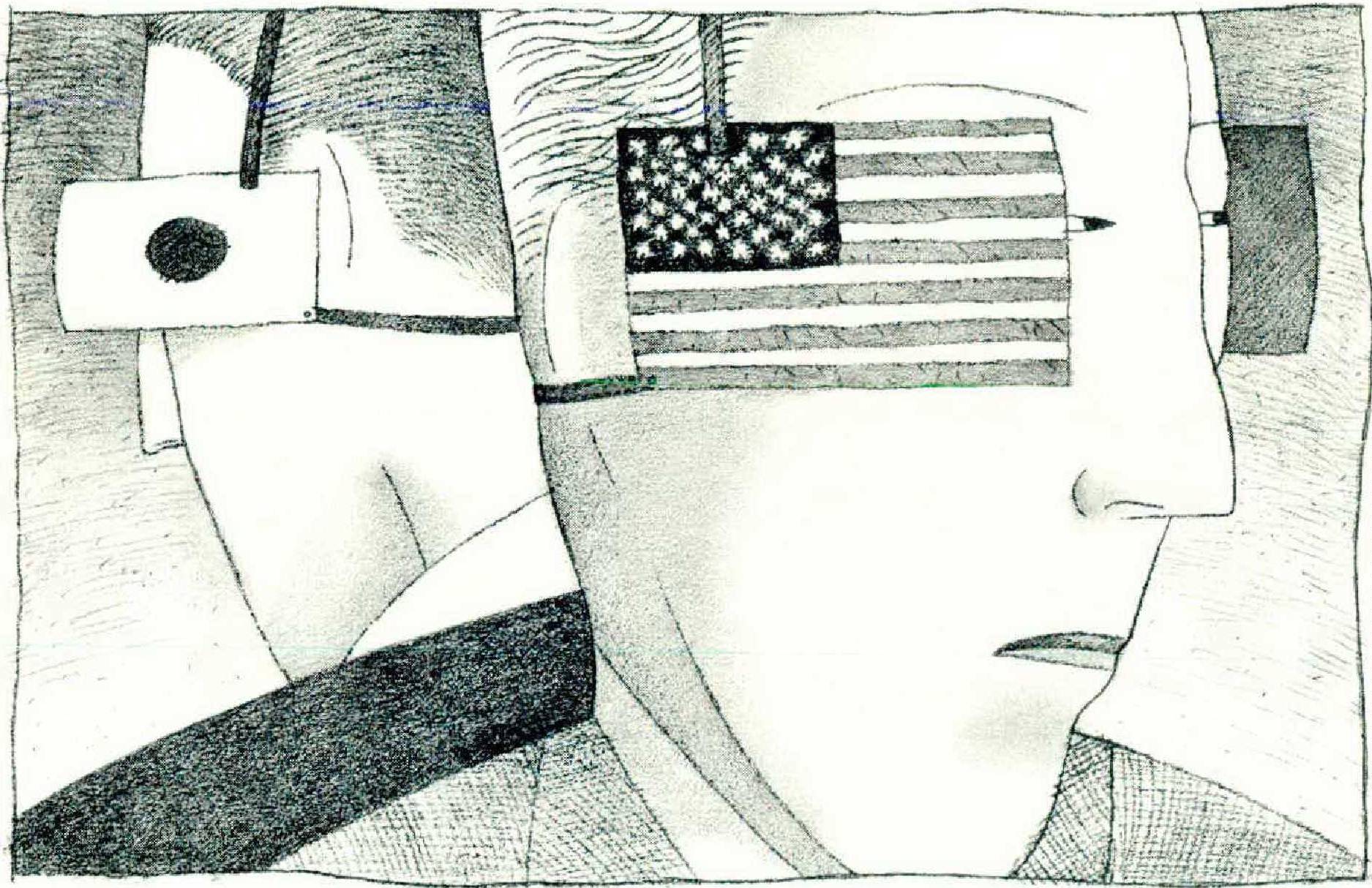
My point is not to complain that Japanese baseball is “closed” or “racist.” For reasons of their own, the Japanese leagues have established a system with which the Japanese public seems content. The disadvantages of the exclusionary policies are obvious. The two-foreigner limit, like any other kind of protectionism, depresses the level of performance. But the limits also bring advantages—notably the chance for Japanese athletes to have careers as baseball stars. It is as if the U.S. hockey teams decided to secede from the National Hockey League, form their own league, and hold down the number of Finns, Russians, and even Canadians who were allowed to play. The resulting teams would be much worse, but more Americans could grow up to play professional hockey than can now.
The world is full of limitations and exclusions that, like the constraints on Japanese baseball, have differential racial effects but that we discuss without constantly calling them “racist.” Korea makes it almost impossible for non-Koreans to buy land in Korea. Every country has immigration laws, which in most cases are designed to keep the local ethnic mix unchanged. Sometime in the next year or two the Japanese space agency will probably launch the H-2 rocket, which is usually described in the Japanese press as being the first rocket “entirely free of foreign components.” This means that it is free of products made by people who are not ethnically Japanese.
We can discuss these and other restrictive policies without harping on racism because we know that moremanageable explanations are at hand. The most important is nationalism, which in practice often has racial effects but which is seen, unlike racism, as being a generally legitimate impulse. The Swedish government generally provides free university tuition to Swedish citizens. In practice this policy excludes most nonwhites, but no one talks about it as being fundamentally racist.
In many countries the distinction between “nation” and “race" seems elusive. South Korea’s name for itself is Dae Han Min Guk. This literally means “Country of the Great Korean People,” but the word for people (min) has an ethnic connotation, like the German Volk. Japan famously defines itself as being simultaneously one nation and one race. Although the United States, Canada, and Australia have historically been mainly white societies, they differ from the rest of the world in embracing, in principle, the complete separation of ethnicity from nationalism. In principle, their ethnic makeup can constantly change without jeopardizing their national identity.
It should therefore be much easier for Americans than for Japanese or Finns to keep national issues separate from racial ones. When an issue can be explained in national rather than racial terms, we should be able to recognize the distinction—and to see the advantages of keeping the discussion on the plane of nationalism. Conflicts of national interest may not be pleasant, but they are normal, and they can be resolved. A whole network of international diplomacy exists to smooth them out. Once a conflict is defined as being purely racial, we’re at a dead end.
In the case of the Seattle controversy, there’s no need to reach for racial interpretations. Indeed, “outright racism” can’t possibly explain the resistance to Nintendo. If someone of the same race as the Nintendo owners but of U.S. nationality had bought the team, it is hard to imagine that anyone would have complained. (Think, for instance, of Senator Daniel Inouye or Representative Robert Matsui.) Right or wrong, the anti-Nintendo position could be stated in purely national terms. American baseball has resisted foreign ownership of major-league teams—except in Canada, where two are actually based. Why should it be considered “racist” for extending this policy to buyers from a country that flatly bans foreign control of its own teams?
In most other U.S.-Japanese frictions national rather than racial explanations will, similarly, suffice. For example, foreign investment in America: newspaper articles frequently point out that British and (until recently) Dutch firms have larger investments in the United States than Japanese ones do. Isn’t it racist to focus so much attention on the Japanese? Maybe, but it might also be because the rate of new investment from Japan during most of the late 1980s was much higher than that from anywhere else; the Britishand Dutchowned companies, unlike the Japanese-owned firms, are managed mainly by Americans, and in that sense no longer seemed foreign; and Britain and Holland themselves are quite open to U.S. investment.
As Dennis Encarnation, of the Harvard Business School, points out in his new book, Rivals Beyond Trade, U.S. firms invest freely in Europe, as European firms do in America, but neither European nor U.S. firms have been able to invest significant amounts in Japan. U.S.-based firms own a larger share of the British and Dutch economies than either of these countries’ firms own of the American. Even though the British and Dutch economies together are much smaller than Japan’s, American ownership of British and Dutch firms is worth more, in absolute terms, than American ownership in Japan. Depending on how you count it, Japan’s ownership in the United States is at least five times as great as U.S. ownership in Japan. It is possible that “outright racism” lies behind the focus on Japanese investment, but I would bet that if the Germans, French, Italians, or Poles had a five-to-one imbalance with the United States, we would be focusing on them. Canadians in the 1970s, like the French in the 1960s, complained lustily about the American presence in their economy, without any obvious racial motive.
What about the emphasis on Japanese exports to America? It is true that the United States has often been the world’s largest exporter, and that Germany has during several years had a proportionately larger trade surplus than Japan. But, as an increasing body of research has shown, Japan’s economic structure is in fundamental ways different from any other advanced country’s. Although Japan imports more manufactured goods than it used to, it still imports dramatically less than European and North American nations do. The difference is clearest and most significant (as Edward Lincoln, of the Brookings Institution, has extensively demonstrated) in a category called intra-industry trade. Improbable as this may sound, developed countries often buy the same sorts of products that they sell. For instance, the United States is both a leading importer and a leading exporter of office machines. Japan engages in very little intra-industry trade. If its own companies are technically capable of making a product, it rarely buys from anyone else. If the German economy did the same thing, I suspect it would encounter the same complaints.
Without working down the whole list of U.S.-Japanese problems, it seems that straightforward economic and national forces are sufficient to explain where the two countries disagree. Racial difference, in contrast, is not sufficient. As far as most Americans are concerned, Japan, Korea, and Taiwan are in the same racial group. In the 1988 presidential campaign Japan and Korea were often mentioned in the same breath as economic challenges. At the time, both had rapidly rising trade surpluses with the United States. Since then Korea’s surplus has fallen drastically, and last year it actually had a deficit with the United States (and a huge deficit with Japan). In this year’s campaign the Democratic candidates have talked about Japan and Germany instead. If race rather than economics were the main factor, Korea would have stayed on the list. Korea has its own list of economic grievances relative to Japan, longer and more heartfelt than America’s. But the main themes are the same. Korea’s attitude toward Japan is complex, like Ireland’s toward England, but the feelings can’t exactly be called racist, since anthropologically the two cultures are so close.
IT WOULD BE foolish to rule out racial consciousness as a factor in U.S.Japanese relations, considering the role race plays in each country’s domestic politics and in the relations between the two. Even if racism is not the intention, it can be an overtone or a result.
In balancing racial and nonracial interpretations, therefore, we return to a question of intellectual style. Should we sniff out and emphasize any possibility of racial motive? Or should we stick to the demonstrable—and resolvable—differences in economic policy and national interest? Everything I have seen of life suggests that we should try to stay with the solvable problems and provable facts. Ask any marriage counselor, business negotiator, or diplomat.
Moreover, we trivialize our most serious social problem and our most potent political term when we throw around charges of racism carelessly. If we’ve used the word to describe “Buy American” proposals or the latest trade bill moving through Congress, we don’t have much left with which to condemn real bigotry. This spring Senator Ernest Hollings made a gruesome joke about “testing” the atomic bomb on Japan. Some Asian-Americans and Asians in America have been victims of racially motivated attacks. Such events are disgusting, but the case against them is weakened if it is squandered on Nintendo and the Mariners.
One step in the right direction would be to recognize the damage that the term “Japan-bashing” does. British friends tell me that the term is derived from “Paki-bashing”—assaults on Pakistanis in England. Whatever its origin, it clearly carries a connotation of bigotry, but it is now used as a matter of course. This spring, to choose one example from hundreds, a routine headline in USA Today read, “JAPAN BASHING ASIDE, TOYOTA MARKET SHARE RISES.” Use of the term has become comparable to calling every disagreement with Israeli government policy “anti-Semitism.” Some are, some aren’t—and by erasing the distinction between disagreement and bigotry we imply that there is one seamless mass of U.S.-Japanese friction, which at its core is an ethnic clash.
I have been in Japan for two weeks as I write. To be here is to see every moment the endless human variations that make up “the Japanese.” Some Japanese people like Nintendo and its owners. Some don’t. Some sympathize with the complaints outsiders make about their business practices. Others bristle. Despite decades of nationalistic propaganda, most Japanese seem to recognize the difference between their system—the interleaved approach to education and production that demands so much of individuals and produces so much for the nation—and their racial identity. We should recognize the difference too.
—James Fallows