Mothers and Jobs
AT LAST COUNT
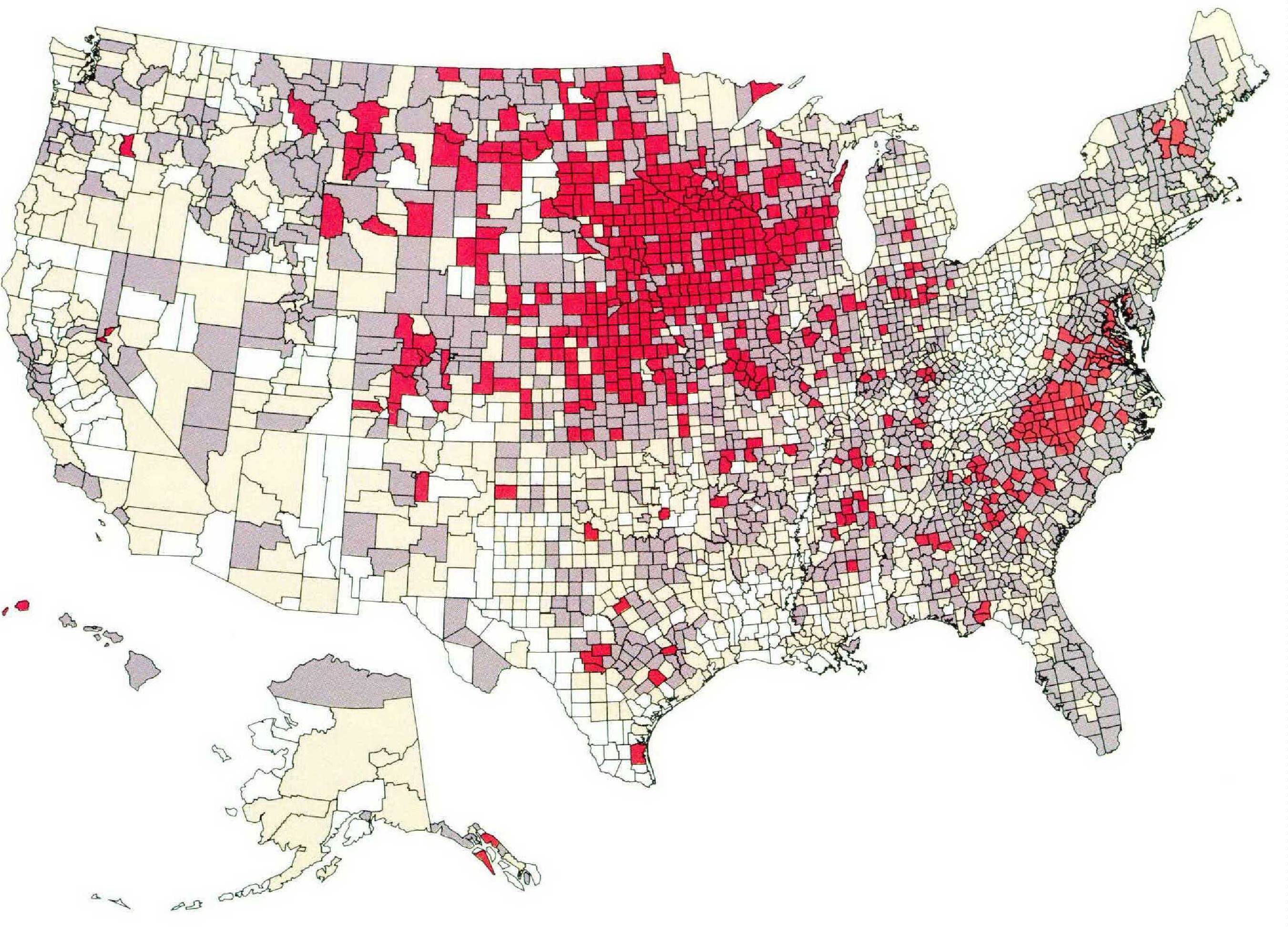
DURING THE PAST generation urban and suburban mothers have been depicted in the media as having made dramatic inroads into the country’s work force—and they certainly have done so. But metropolitan areas do not, as a whole, have the highest percentage of working mothers with young children. As the map above illustrates, the two biggest clusters of working mothers are in the rural areas and small towns of the North Central states and the Southeast. There are special historical reasons why.
Economic necessity and personal desire impel mothers toward the workplace in varying degrees in different parts of the country, but the variable that more than any other determines high labor-force participation rates is simply this: the existence of jobs. In the Southeast, jobs for women happen to be relatively plentiful. Over the course of the past century the Southeast has been a magnet for northern industries—textiles, apparel, furniture— seeking lower capital and labor costs. These industries have traditionally employed large numbers of women.
The North Central states, too, have during the past forty years created economic opportunities for women—most recently in retail sales and other service-sector jobs. More important, real wages in the region have been declining significantly since the 1970s, which has encouraged mothers to enter the job market to offset declines in their husbands’ incomes. This reaction to falling income—adding a paycheck—is particularly common in the North Central states, some economists say, owing to a heartland work ethic that makes people, including single mothers, more reluctant there than elsewhere to accept public assistance. Another factor contributing to the North Central states’ work-force profile is the region’s large number of farm wives, who, even though unpaid, are counted as employed by the Census Bureau. —Rodger Doyle Percentage of working women aged sixteen or older with children under the age of six

0 to 44.9 percent

45 to 54.9 percent
55 to 64.9 percent

65 percent or more
Source: 1000 V. S. Census