The Bounteous Berkshires
An embarrassment of riches—cultural and otherwise—awaits
by Jack Beatty
THE BERKSHIRE HILLS of western Massachusetts need no introduction from me. Their moonon-the-meadow charm has been luring travelers and tourists for decades, and has found throbbing articulation in the writings of Edith Wharton, who built a palatial home there (now used by an excellent summer Shakespeare troupe), and Henry James, who drove through the hills with Mrs. Wharton in the days when a motor trip was as liable to detour and delay as one of James’s latemanner sentences. Verdant, rife with swimmable lakes, scenic panoramas, lovely unspoiled villages, and mounded hills friendly to the middle-aged hiker, the Berkshires are also one of the preeminent arts places in the country. The vacationer wrho craves concerts, plays, dance performances, uncrowded art museums, architectural shrines, and stop-the-car New England houses at seemingly every turn in the road will find in the Berkshire Hills what my wife and I found on a recent trip—a cultural dreamscape.
What makes the Berkshires such a cynosure of culture is the pressure of money and taste exerted on them from Boston and New York, each about three hours’ drive away. You can actually feel this pressure on Church Street, the main shopping way of the charming hilltop town of Lenox, which we made our base for excursions. The first thing that strikes you about the shops and galleries along this short street is the variety and quality of the objects on display. By a commercial version of natural selection they have been shaped to appeal to seen-everything consumers from the cities. Even a principled nonshopper like me, his head crammed with condemnations of consumerism from Marx to Marcuse, wanted a frightening quantity of the things he saw for their beauty and style—what Bernard Bercnson would have called their “tactile values.” This was true of the handcrafted pottery in the Hoadley Gallery, as it was of the fabrics and trinketry in a shop called African Magic, as it was of the paintings and artists’ products— from candlesticks to jewelry—at the Arkos Gallery, a temple of temptation to one burdened with that common legacy of a liberal-arts education, more taste than money.
It was while performing wholesale triage on our desires in Arkos that we met Linfield and Susan Simon. Bonnie Wohlreich, the stylish proprietor of Arkos, introduced us. We were, she told them, unhappy with our accommodations (we were, in fact, blisteringly mad, a susurrus of rock music through the night conforming to our idea of hell). Did they have a room at their inn? They might, they said promisingly. They were people slightly north of us in age who had migrated to the Berkshires from the Midwest in the early 1980s. Linfield Simon studied at Stanford with David Potter, a legendary teacher of American history one of whose works, People of Plenty, took on a sudden poignant relevance. We chatted animatedly of books read, films seen, politicians disdained. When, after a quick phone call, the Simons said that we were in luck, they had a room, we accepted with reckless alacrity, reading their politics into their business and picturing a redshuttered, creaky sort of place smelling of damp books—a liberal intellectual’s retreat from the temperate blasts of academe. I had momentarily forgotten that Simon had mentioned that besides having done graduate work in history, he had a law degree from Harvard. Ah, the law. If the taste that picked “Wheatleigh,” the name of the Simon establishment, was that of a last-century historian, the cash to finance this rococo pile came from a successful Chicago lawyer.
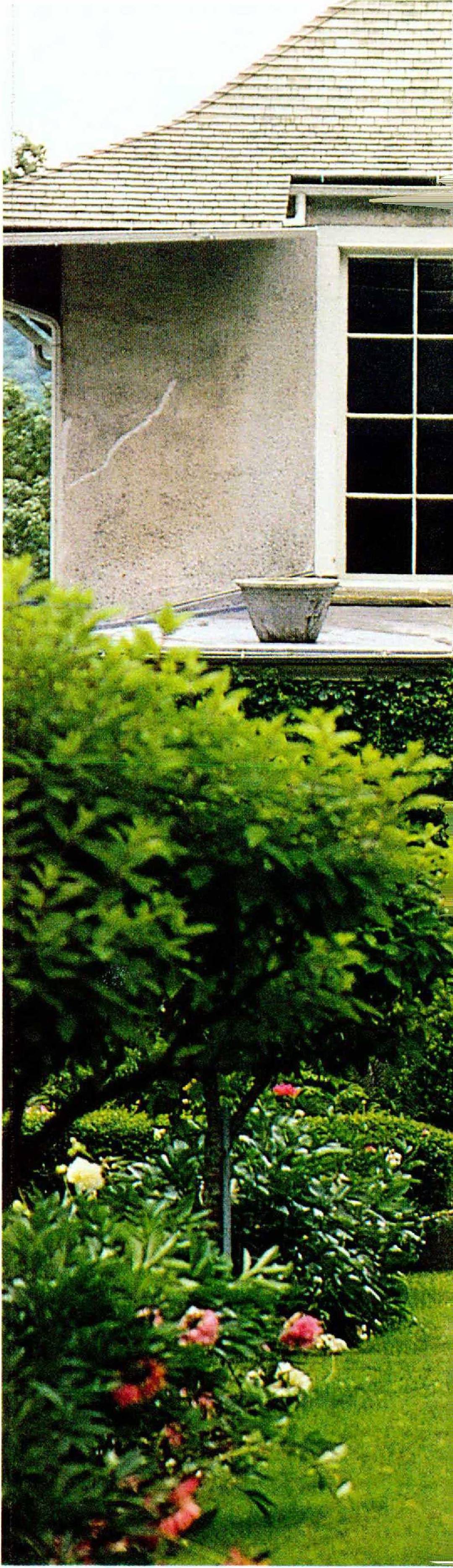
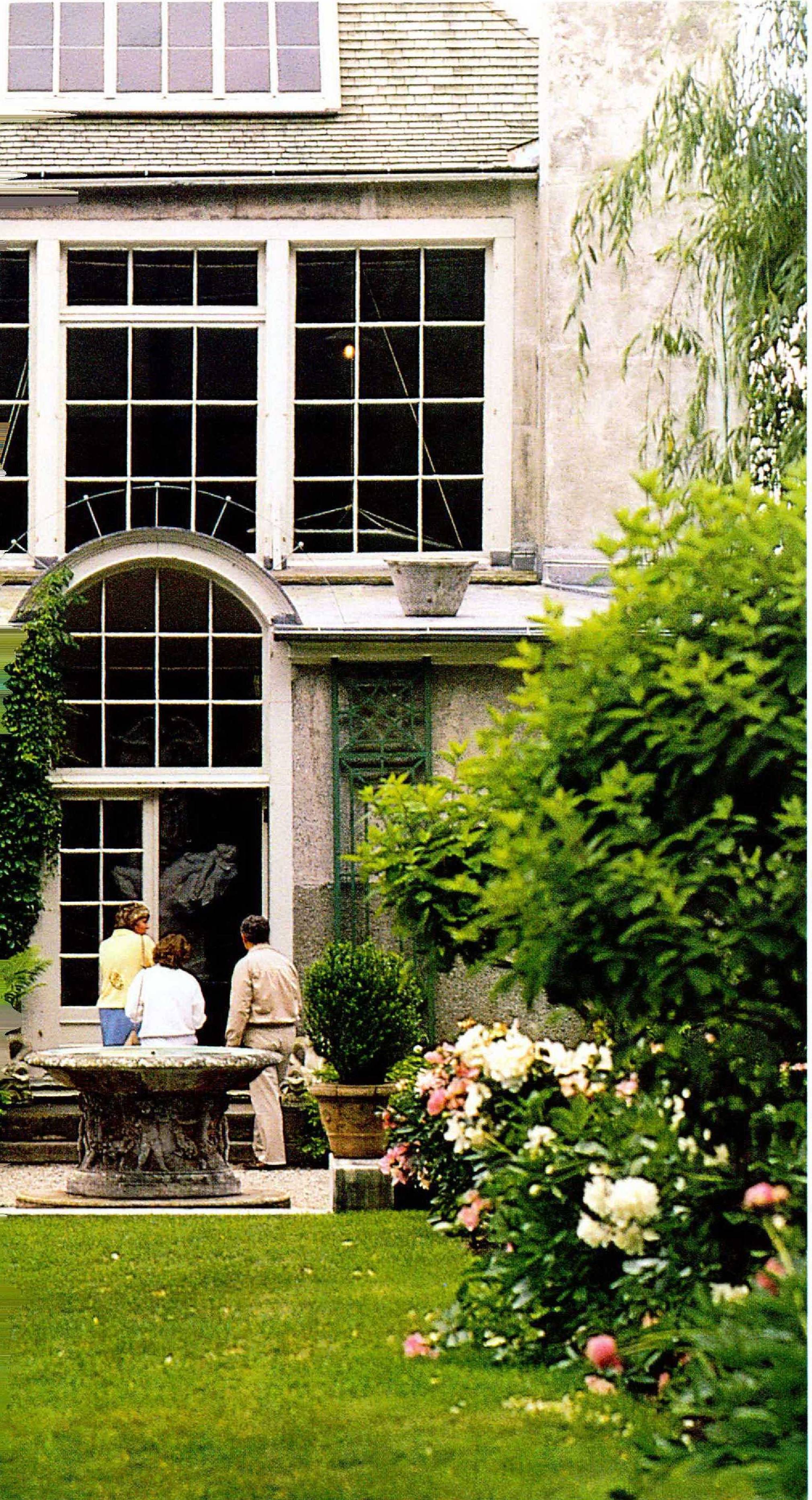
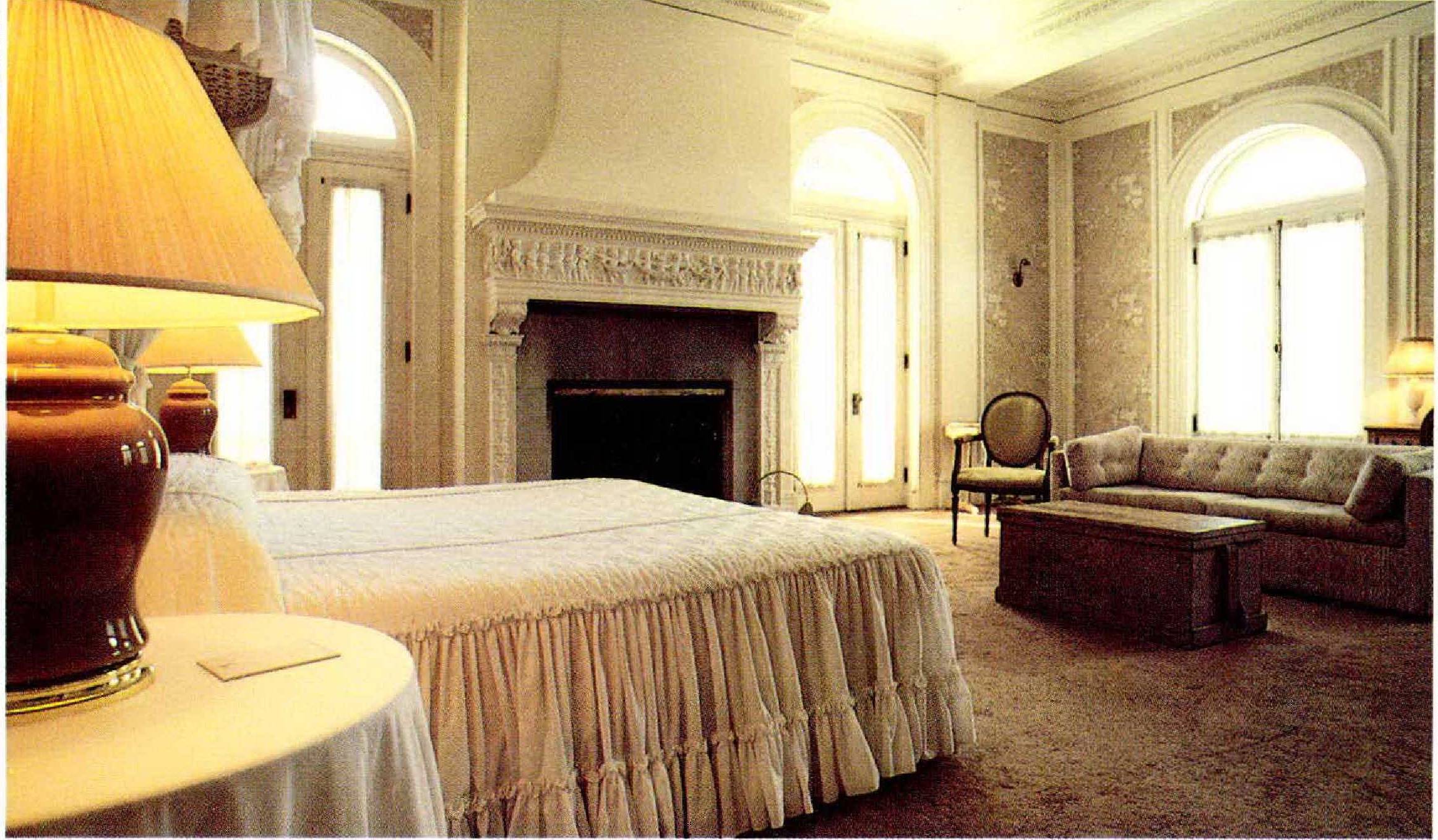
Wheatleigh, originally a wedding present from a quondam robber baron to his daughter in the 1890s, lies just outside Lenox next to Tanglewood, the summer performance center of the Boston Symphony Orchestra. The Italian-villa fountains, the heavy mahogany unch the doors make in closing, the inspired food, the bathrooms you could play basketball in, the watercolor views of lakes and distant hills—such details may perhaps be summed up in the fact that the grounds of Wheatleigh were designed by the architect of Central Park, Frederick Law Olmsted. Money and beauty have at Wheatleigh entered into one of their memorable collaborations. Among the many delights we found there, two deserve special mention. We had the pleasure of seeing the cellist Yo Yo Ma perform at Tanglewood in the afternoon and then, with suitably furtive glances, watching him eat dinner with some friends at Wheatleigh that evening. Mr. Ma wore a red carnation in the lapel of his white dinner jacket, and that flower may be said to have punctuated that room, so strongly did it resonate. Musical celebrities stay at Wheatleigh partly because of its incomparability, and also because it is just a pleasant ten-minute walk from Tanglewood. This is worth mentioning inasmuch as traffic in and out of Tanglewood is deadly, a vexing prelude or coda to the combined restorative effect of music and nature, the latter represented by the lush lawns and generous shade trees of the grounds and the pastoral views they afford.
THE SOCIOLOGIST of leisure should note the exacting—I go so far as to call it decadent— care the picnickers at Tanglewood take with the lunches they eat on the lawns. As I watched the bright big baskets disgorge their contents (the baked ham, the skinned chicken parts, the redolent cheese, the pert pots of mustard, the wine, the two-tone grapes, the French bread, the cunning little cakes), I thought of the small, dark, dented green lunch bucket my father carried to his job every day (the baloney sandwich, the bruised pear, the burnt cookies, the tepid coffee in the leaky Thermos) and I felt inexpressibly sad. One cannot, as perhaps you too have discovered, take a holiday from the deposits of one’s past which define one’s character, and a striking thing about travel is how unexpectedly new surroundings can ambush the heart with old memories. Such moments are epiphanies, and even if painful, they are touched by the elation of surprise.
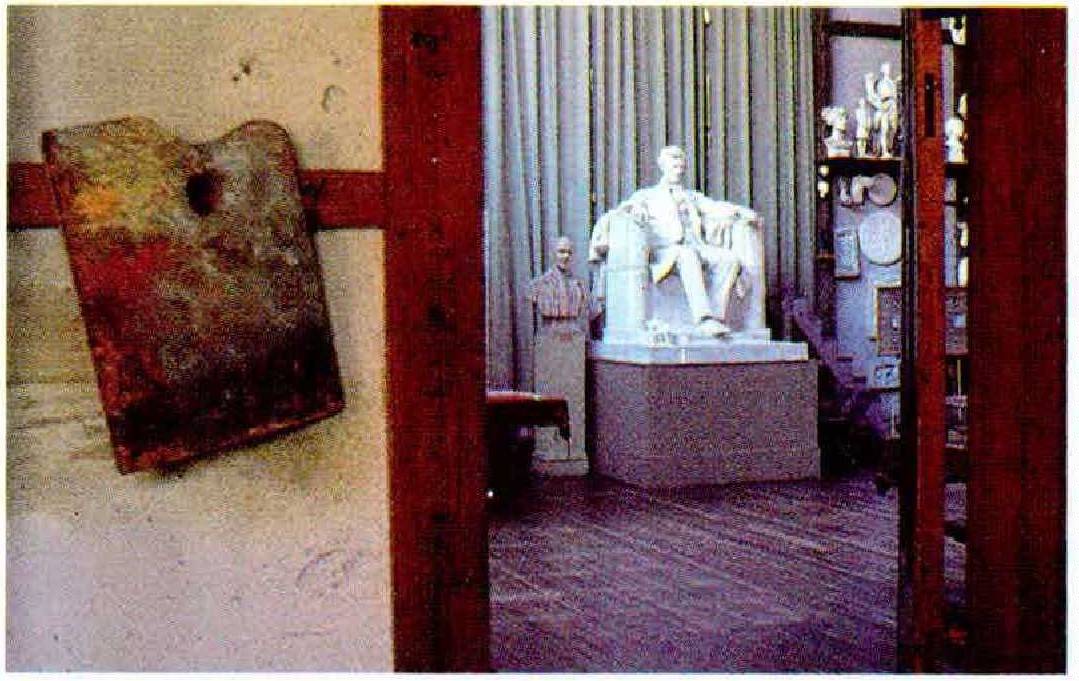
My father was an admirer of one of the great works of Daniel Chester French, whose studio lies just off Route 183, a sinuous road from Tanglewood. That work was the Lincoln of the Lincoln Memorial. French’s studio and house must be one of the loveliest places in all New England. Tours are given of the studio, a handsome stucco building that fronts on a meadow with cow and backs onto a large formal garden. Every summer the woods behind French’s studio host a sculpture show. No visitor to Chesterwood, as the French estate is called, should fail to take this woodswalk through the often bizarre world of contemporary sculpture. “Mister” French, as the guides unfailingly refer to him, paid $8,000 to build his residence back when that was real money, and no doubt paid laughably little for this manyacre slice of paradise. Land is still relatively cheap in the Berkshires, but you would need a portable occupation to live there today.
Norman Rockwell had a portable occupation, but for the last twenty-five years of his life he stayed rooted to one spot, the town of Stockbridge, which not only houses his museum; it is his museum. He drew’ its people for decades. It is fashionable, I suppose, to deride Rockwell. “He was only an illustrator,” sniff people who are insensible to the power of his iconography. But as the visitor to his museum in Stockbridge need only look about him to notice, Rockwell continues to move his fellow countrymen and -women as no other artist in any medium, save perhaps Frank Capra, can do. Rockwell made a fortune out of his work, but it celebrates a world of plain people living plain lives exalted by attainably democratic graces like neighborliness, good citizenship, and simple love of country. Any American who can view his Four Freedoms without tearing up has been debauched by modernism. The sinewy man in the flannel shirt, standing up to address a town meet-
ing in the panel on Freedom of Speech, looks as if he might carry a dented lunch bucket to work, but his fellow townspeople are according his remarks grave respect—here speaks a free man. This April a new Rockwell museum opened outside Stockbridge, replacing the simple wooden colonial house on Main Street that had long been Rockwell’s shrine. It is by the celebrated architect Robert A. M. Stern, and fundraisers for the Reagan and Bush libraries should seek him out, for he sure knows how to build a presidential library. From its Citizen Kane approach to its elephantinely homey stone supporting walls, the new Norman Rockwell museum shouts money and whispers taste.
Stockbridge is also a theatrical center, the longtime home of one of the great summer theaters in America—the Berkshire Theatre Festival. We saw a play at the festival playhouse by the prolific A. R. Gurney. The Cocktail Hour is an autobiographically resonant work about a sensitive playwright son’s confrontation with his aging haute-WASP parents during their eponymous evening ritual. Well-acted and attractively staged, The Cocktail Hour was toothless—without the beginnings of bite, so much social flattery disguised as social criticism. The reader will forgive me for indulging in a little social criticism myself, but it was hard not to remark the consonance between the play’s message and the white-trousered, blue-blazered gentlemen and Talbotsaccoutered ladies in the audience. “You are all right; this society of ours—yes, it has troubles, but fundamentally it’s all right too, full of beauty and culture and well-meaning people who are strangers to panic and emptiness.” Such was the emollient message of this play, an appropriate one for a summer theater far from America’s cities; and such, it seems to me—which is why I make a point of it—is the seductively complacent message of the Berkshire’s, the region’s spell, why people love to go there.
Jacob’s Pillow is an attractively rustic dance-performance theater fifteen miles southeast of Stockbridge in the hamlet of Becket. It was founded in the 1930s by the great dance impresario Ted Shawn, whose goal it was to introduce a masculine element into modern dance. Even today that locution, “modern dance,” is frankly intimidating to your middle-aged, meat-eating sort of man. Yet I managed to enjoy the show, though it was hard to feel on one’s dignity in that audience of prepubescent girls, who wobbled and giggled and sought frequent refreshment throughout a performance by which they gave every evidence of being ravished.
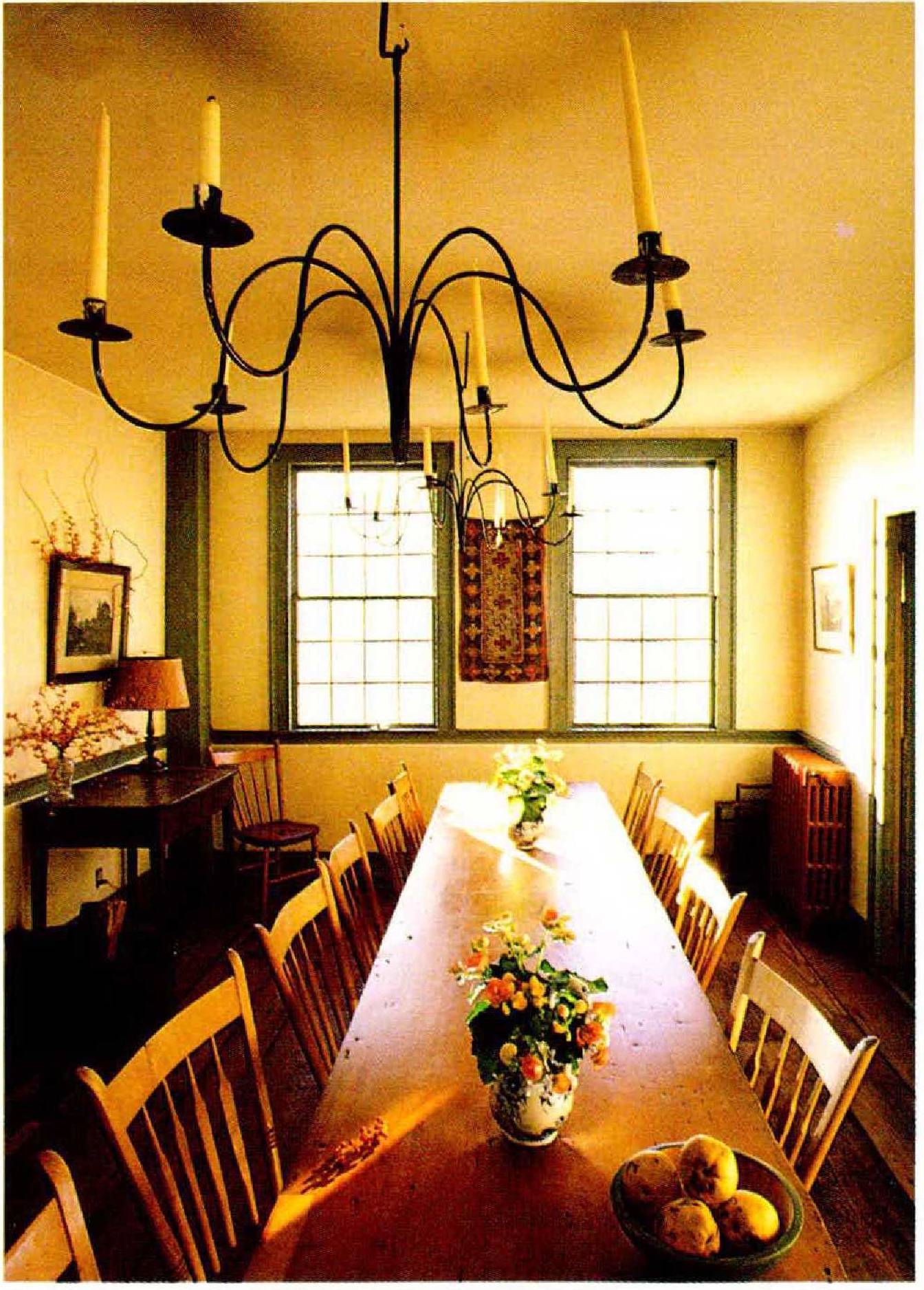
The Old Inn on the Green is south of Becket in the even tinier hamlet of New Marlborough. Exquisite. Superb. Expensive. Yes, the food is all of those and also transatlantic (French and American). The Old Inn on the Green is a storied eighteenth-century building that once endured Indian attack and now bears up pretty well under a genteel onslaught of tourists. The various dining rooms are lit by candlelight from taper-bearing period chandeliers and from candles on the tables, set in silver holders that might have been made by Paul Revere. In winter and on chill nights in other seasons the rooms are heated by fireplaces that sometimes cough delicious eye-smarting smoke. There are a few slant-floored rooms upstairs, but the main hostelry is down the street at Gedney Farm, a huge former dairy barn that has been remade into a posh rustic inn, with large fireplaceequipped rooms and suites. Here is an ingenious transformation of an indigenous architectural idiom. Pity that the
architect responsible didn’t win the commission for the Rockwell Museum.
Two final snapshots of the southern Berkshires: the town of Great Barrington and the studio of Richard Bennett, in nearby Housatonic. Great Barrington is a crossroads where the 1950s and the 1990s meet. There are older buildings on Main Street, but the goods displayed in the stores, the marquee of the movie theater, the sign in front of the hardware store, all belong to the fifties in spirit even if that is not their date of origin. Yet around the corner is your gourmet coffee shop with your $7.60 cookie, just to pull you back to the future.
Richard Bennett, whose studio and showroom, The Great Barrington Pottery, is on Route 41, is an artist who, though a man of pronounced individuality, may stand for his numerous brethren in these hills, the makers who create the beautiful objects for sale in the shops—yes, even in the shoppes. Bennett is a potter under the spell of the Orient, a student of Chinese and Japanese art, language, literature, and philosophy. His vases, cups, dishes, bowls, and platters are gorgeous to behold. He used to perform an authentic Japanese tea service in an adjacent tea room, but interest in it dwindled recently, as things Japanese became more threatening to Americans. Bennett is brusque and intense in the way of artists, but should you light on one of his topics—Ireland, Korea, Japan, the decline in American education since he left the Boston Latin School—you won’t be able to shut him up, nor will you want to, for he brings to his talk some of the energy and elegance of his work.
M Y FAVORITE cultural artifact in the Berkshires, though, is the product not of any one artist but of the collective care and the collective living we call history. It is the town of Williamstown, in the extreme northwest corner of Massachusetts, named for the college it houses, a fine private institution. Williamstown’s charms arc hard to exaggerate. There are the starkly graceful stone buildings of the college, which flank the main street like monuments from another time; the tall bent trees; the wide sidewalks; the steep little hill just above the village center; the distant views of fields and woods; the bracing air of plain living and high thinking. (We asked directions of a professor of French literature who just happened to be reading John Rawls’s demanding A Theory of Justice—and this Matterhorn of a book on her summer vacation.) In the deep, tenured quiet of the side streets are a number of handsome Victorian houses, which with their ample gardens and trees are visually delectable.
Nestled against the Vermont and New York borders, Williamstown is an art object in itself, but it also boasts two splendid art museums, a theater, a latenight cabaret, and a home-cooking restaurant I cannot recommend highly enough. The Clark Art Institute, on the outskirts of town, has a varied collection, though it is best known for its roomful of Renoirs and other Impressionists. No traveler to the Berkshires should miss immersion in the color bath of that room. The Clark’s setting—the estatelike lawns leading up to it, the steep grassy hills rising up behind—makes a suitably majestic frame for one of the great small museums in the country. Often overlooked in the Clark’s shadow is the fine Williams College Museum of Art. Located on the Williams campus, it has a serendipitous basic collection, featuring artists one has read about but never seen; in addition, it hosts traveling shows of the work of notable contemporary artists. The sculptor Kiki Smith had some of her pieces on display there when we visited, and to view her gore-dripping plastic body parts was to undergo a visual mugging. Here was the kind of imagery people go to the Berkshires to escape.
The same might be said of the play we saw at the justly celebrated Williamstown Theatre, where many offBroadway vehicles get early exposure. That play was 2, by Romulus Linney, about the last days of Hermann Göring. After we witnessed film clips of the Holocaust, coming out in the bright sunshine between acts felt awkward, and I understood better than I had at Stockbridge the quandary of the summer theatre—too dark a play can clang incongruously against the season and its mood. Next morning, at the Cobble Café, a marvelous, inexpensive eatery on Spring Street in the village, we saw one of the actors from 2 having a late breakfast. We complimented him on his work; he thanked us and then held up the front page of that morning’s New York Times, and said something like “This play is so relevant.”We looked at the paper; the phrase “ethnic cleansing” leaped out at us.
If you can’t get away from your character on a vacation, history dogs you too. You make neither, and must bear with both. To renew the freshness of your spirit for that task, try a culture tour of the Berkshires. It will contain just enough of what Dostoevsky called “the realism of real life” to keep your soul in fighting trim, but also enough idyllic escapism to make you believe that the Berkshire whispers of happiness through beauty are true, and meant for you to hear.