



|
|

He weeps by the side of the ocean,In Lear's best-loved poem, "The Owl and the Pussy-cat," the logic underlying the fantasy is an emotional trueness. This tender narrative of love and escape is filled both with anti-Victorian romantic risk, a sense of exotic (and, dare we say, erotic?) adventure, and also a piquant post-Romantic, post-Industrial-Revolution sense of practicality (these lovers even wrap their money in money). It's not satire. The mince and the quince, the colors (that pea-green boat!) and light, are too deliciously real to be the object of ridicule. We want to partake of this pleasure-feast.
He weeps on the top of the hill;
He purchases pancakes and lotion,
And chocolate shrimps from the mill.
He reads but he cannot speak Spanish,
He cannot abide ginger-beer:
Ere the days of his pilgrimage vanish,
How pleasant to know Mr. Lear!
("How Pleasant to Know Mr. Lear")
The Owl and the Pussy-cat
1
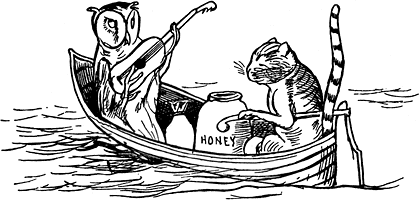
The Owl and the Pussy-cat went to sea
In a beautiful pea-green boat,
They took some honey, and plenty of money,
Wrapped up in a five-pound note.
The Owl looked up to the stars above,
And sang to a small guitar,
'O lovely Pussy! O Pussy, my love,
What a beautiful Pussy you are,
You are,
You are!
What a beautiful Pussy you are!'
2
Pussy said to the Owl, 'You elegant fowl!
How charmingly sweet you sing!
O let us be married! too long we have tarried:
But what shall we do for a ring?'
They sailed away, for a year and a day,
To the land where the Bong-tree grows
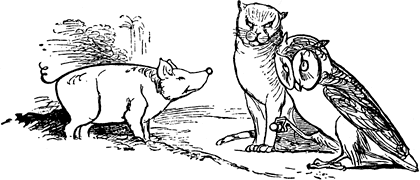
And there in a wood a Piggy-wig stood
With a ring at the end of his nose,
His nose,
His nose,
With a ring at the end of his nose.
3
'Dear Pig, are you willing to sell for one shilling
Your ring?' Said the Piggy, 'I will.'
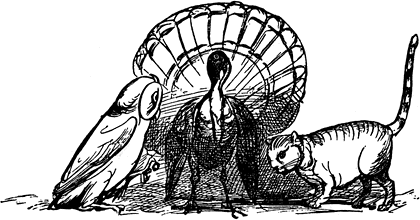
So they took it away, and were married next day
By the Turkey who lives on the hill.
They dined on mince, and slices of quince,
Which they ate with a runcible spoon;
And hand in hand, on the edge of the sand,
They danced by the light of the moon,
The moon,
The moon,
They danced by the light of the moon.
'Dear Pig, are you willing to sell for one shillingThe most musical gesture of all is the unexpected appearance of those two identical short lines:
Your ring?'
What a beautiful Pussy you are,These veritably trance-like refrains create an atmosphere of mystery and awe that is the deepest quality of this poem. Aren't these facts remarkable! Who could believe them? Yet who couldn't believe them? "You are,/You are!" the Owl insists, perhaps pre-empting his extraordinary lover's possible protestations of modesty. "His nose,/His nose" has an air of amused disbelief (Imagine! Have you ever seen such a thing?). And "The moon,/The moon"—as uncannily poignant as Frost's repetition of "And miles to go before I sleep"—combines a sense of ecstatic revelation with the acceptance of a kind of simple blessing. Lear leaves his two honeymooners bathed in heavenly light, dancing. Reading these lines aloud, which they cry out for, we should be sure we give them their full weight and expansiveness.
You are,
You are! . . .
With a ring at the end of his nose,
His nose,
His nose . . .
They danced by the light of the moon,
The moon,
The moon . . .