
Return to the January 1998 A&E Preview Cover
|
Arts & Entertainment Preview - January 1998


B Y A U S T I N B A E R

Prizewinner

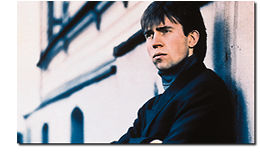 | Leif Ove Andsnes at the Gilmore Festival
|
Some budding talents thrive in a hothouse atmosphere, but not all. The pianist
Leif Ove Andsnes, a master at twenty-seven, grew up uneventfully on the
rugged western coast of Norway, playing soccer and not practicing all that
much. At the comparatively ripe old age of sixteen he entered the conservatory
in Bergen, a musically sophisticated city but hardly the big time, where there
was quite simply no one in his league. His latest CD, a Schumann album for EMI,
shows how beautifully he developed on his own. From the first bars one senses
the power not of a personal "style" indiscriminately applied but of a searching
imagination excellently served by supple, unimpregnable technique. Kudos to the
Irving S. Gilmore International Keyboard Festival of Kalamazoo, which has named
Andsnes its third "Gilmore Artist," an honor amounting to a quadrennial
MacArthur for pianists. Unlike his predecessors, Andsnes qualifies not only as
a musicians' musician but as a certifiable star. His prize money, some
$300,000, is likely to pay not for promotion but for such luxuries as
commissions of new music or recording projects unencumbered by commercial
considerations. (As the co-director of a venturesome summer chamber-music
festival in rural Norway, Andsnes is not likely to run short of ideas.) His
Gilmore tenure commences on April 25, in a concert that kicks off this year's
Gilmore International Keyboard Festival (616-342-1166). This month Andsnes has
Beethoven on his mind. With the Los Angeles Philharmonic he plays the Piano
Concerto No. 4, the most introspective and poetically mysterious of the five
(January 16-18). On January 19 he joins a local chamber ensemble in the Quintet
for Piano and Winds, op. 16. (for both programs call 213-380-1171).
The Capital's Revival of the Song Recital
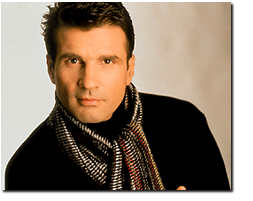 | Wolfgang Holzmair
|
Good news from inside the Beltway: the renaissance of the vocal recital has
spread to Washington. True, the constituency is small, but oh, the trend! The
first series by the Vocal Arts Society, in 1991-1992, consisted of three
concerts in a hall seating 150. Seven seasons later, twice as many evenings are
offered, selling out in a hall twice as large. (The venue is the French
Embassy.) According to managers who book their artists with the Vocal Arts
Society, the fees are modest, but no one minds. An all-volunteer staff takes
not a penny in overhead, and the talent -- a bright mixture of top names and
stars-in-waiting -- is treated like royalty by an audience of connoisseurs.
This month brings the extraordinary David Daniels, who is spearheading the
countertenor exodus from the medieval and baroque ghetto (January 13). Next up
is Wolfgang Holzmair, from Austria, as gifted an interpreter of Schubert,
Schumann, and Wolf as any in the history of recorded sound (March 12). The
final guest this season is Olga Makarina, a young Russian who appears
under the aegis of the Marilyn Horne Foundation, an institution founded
expressly to promote the vocal recital in America. For information call
202-265-8177.
Two Divas in the Role of the Countess
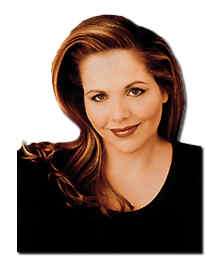 | Renée Fleming
|
In Capriccio, his final opera, Richard Strauss took up a question that
has echoed throughout the history of the art form: What comes first, words or
music? You don't get one without the other, so why quarrel? But people do,
passionately. The plot of Capriccio is scarcely more than a pretext for
such debate, with a poet and a composer vying for the favor of a lovely
countess, the patron who inspires them both. One writes a sonnet, the other
sets it to music, and both are left wondering to whom she will give the prize,
which is to say herself. In the final scene, an extended monologue, she wonders
too, reaching no conclusion. "Is there an ending that isn't banal?" she asks
herself, going in to a late, lonely supper. This solo, incorporating the
sonnet, ranks with the loveliest scenes Strauss ever wrote for soprano, a voice
range he favored above all others. This month Renée Fleming, a diva
whose rosy timbre, caressing phrasing, and keen responses to the meaning of the
words she sings have audiences and critics in raptures, performs the excerpt
with the Chicago Symphony (January 15, 16, 17, 20; 312-294-3000). It should be
something special. Her partner is the conductor Christoph Eschenbach, with whom
she has also traversed the sumptuous landscapes of Strauss's Four Last Songs
(recorded by BMG Classics). The Capriccio Countess is apt to become a
signature role for Fleming, as it has long been for Kiri Te Kanawa, another
artist of uncommon graciousness, though more placid and less mercurial.
Kanawa's well-practiced portrayal is the raison d'être of a new
production of the opera at the Met this month, the first in the company's
history (January 9-31; 212-362-6000).
Austin Baer is a writer based in New York.
Go to ...
 
Copyright © 1997 by The Atlantic Monthly Company. All rights reserved.
|