—Bob Dylan broke his cryptic silence about receiving the Nobel Prize in Literature two weeks ago in an interview with a British newspaper. Will he attend the ceremony? “Absolutely,” he said. “If it’s at all possible.”
—Spanish Prime Minister Mariano Rojay received a narrow mandate from parliament to form a new government, ending 10 months of paralysis after two inconclusive elections.
—Icelandic voters are poised to hand the Pirate Party, a populist civil-libertarian party, the most seats in the Althing in Saturday’s parliamentary elections.
—We’re live-blogging the news stories of the day below. All updates are in Eastern Daylight Time (GMT -4).
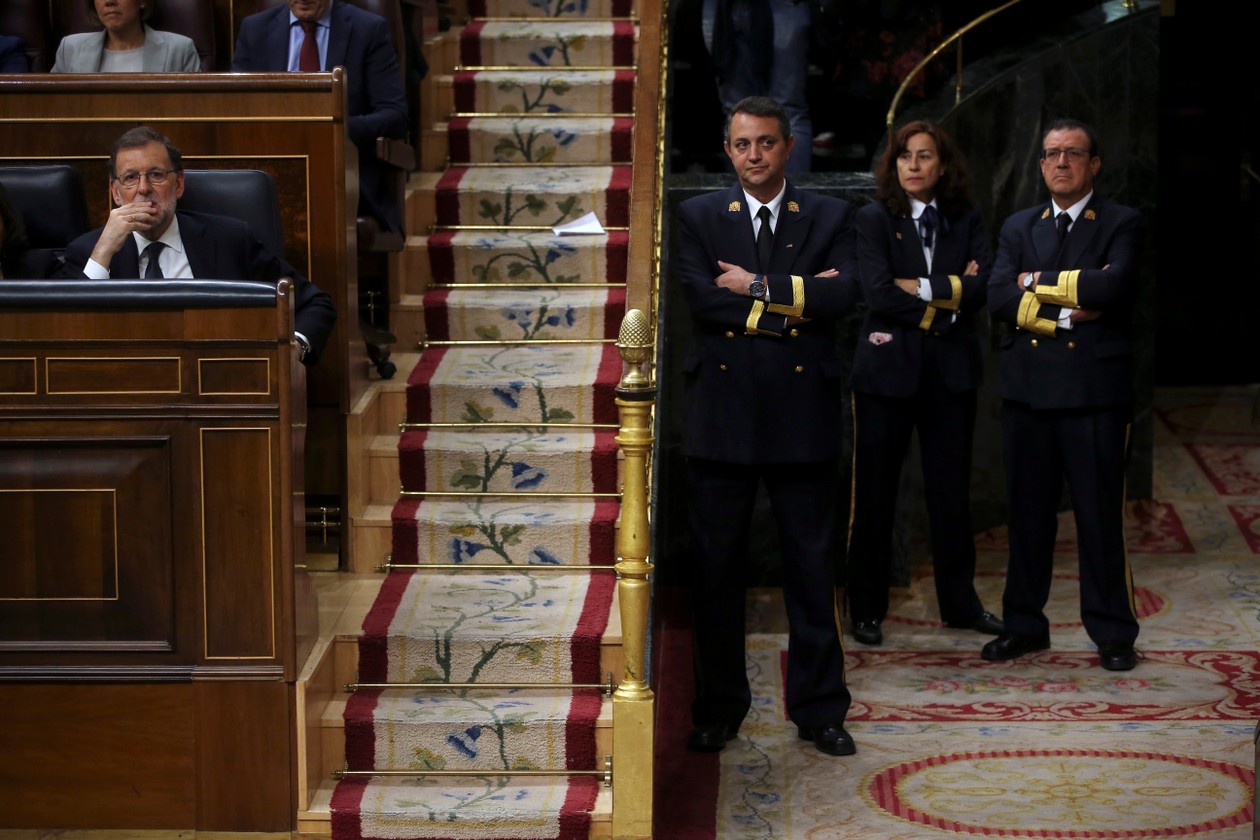
Spanish Prime Minister Mariano Rajoy, seated, attends the investiture debate at the Parliament in Madrid on October 29. (Susana Vera / Reuters)
Spain’s parliament re-elected Prime Minister Mariano Rajoy on Saturday, ending 10 months of paralysis following two inconclusive elections last December and this June.
Neither Rajoy’s center-right People Party nor the opposition Socialist Party mustered a simple majority of seats in either general elections, forcing both sides into a protracted stalemate as they struggled to build coalitions with smaller parties to govern.
The stalemate ended when Ciudadanos, a centrist regional party from Catalonia, threw its support—and its 32 seats—behind Rajoy. The New York Timeshas more:
The Popular Party won the most votes in June’s election but, with just 137 of the 350 seats in Parliament, fell well short of a majority. The Socialists came in second, with 85 seats, their worst-ever result, but still sufficient for them to remain the largest left-wing political group, ahead of the far-left Podemos party.
In the coming weeks, Mr. Rajoy will present a budget for 2017 that will be the first major test of his ability to pass legislation without a parliamentary majority. He will be under pressure to make budgetary concessions to regional and left-wing parties, but his spending will be curtailed by deficit targets imposed by the European Union.
Mr. Rajoy is also under pressure to defuse a territorial dispute with Catalonia. Separatist parties control the Catalan regional Parliament and have pledged to hold an independence referendum by September, despite fierce opposition from Madrid and the courts.
Had legislators not granted Rajoy a slim mandate to govern, Spain would have been forced to call its third election in a year in an attempt to break the deadlock.
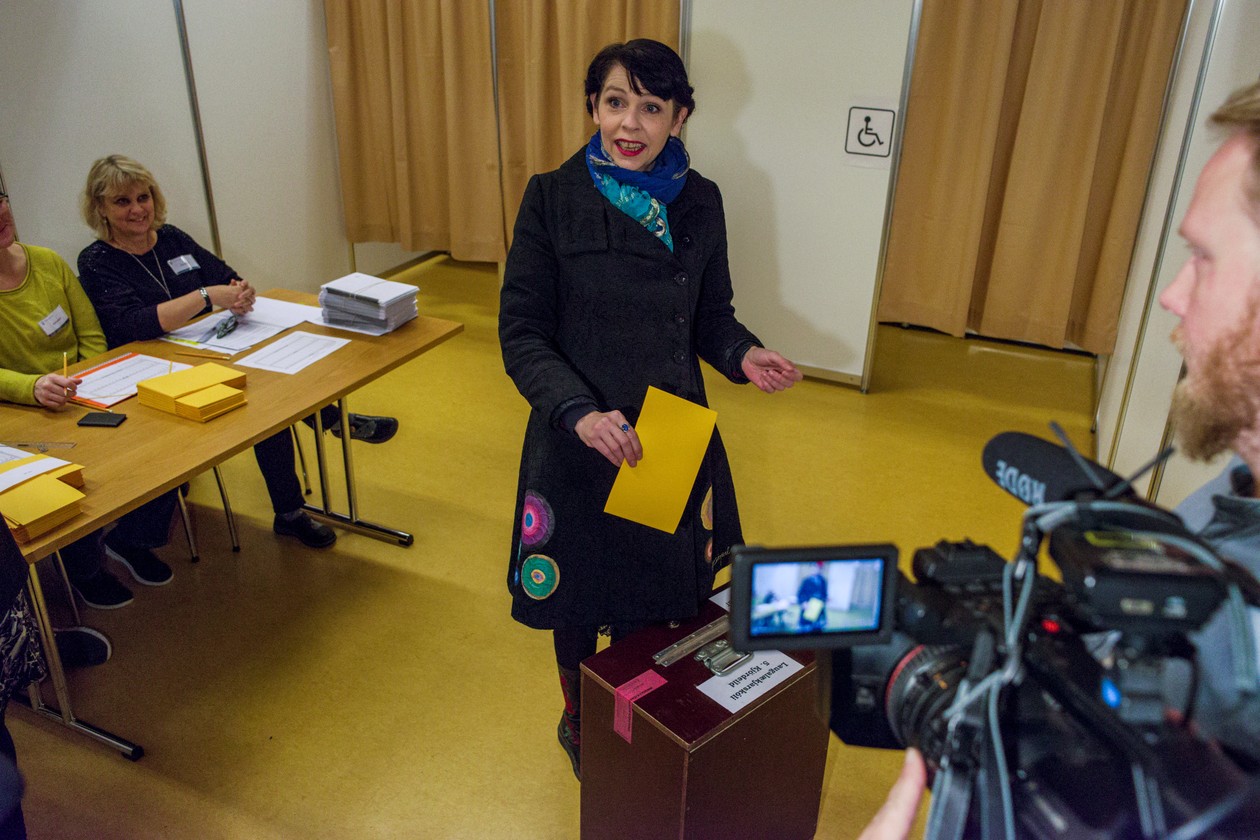
Birgitta Jónsdóttir of the Pirate Party reacts as she votes during the parliamentary election in Reykjavik. (Geirix / Reuters)
Icelandic voters are heading to the polls Saturday as the country holds its first parliamentary elections since the resignation of Prime Minister Sigmundur Davíð Gunnlaugsson in April.
Gunnlaugsson’s fall from power followed revelations in the Panama Papers, a cache of leaked documents from the corporate law firm Mossack Fonseca, that linked him to foreign creditors who profited from the collapse of Iceland’s banking sector.
Leading the latest opinion police is Iceland’s Pirate Party, a civil-libertarian party founded in 2012. It currently holds three seats in the Althing, Iceland’s parliament, but could emerge with the most seats of any party after the election. The Guardianhas more:
Riding a wave of public anger at perceived political corruption in the wake of the 2008 financial crash and the Panama Papers scandal in April, the Pirate party campaigns for direct democracy, full government transparency, individual freedoms and the fight against corruption.
Its radical platform, which also includes decriminalising drugs, offering asylum to whistleblowers such as Edward Snowden and relaxing restrictions on the use of the bitcoin virtual currency, has the backing of 21% of Icelanders, polls suggest, making it the country’s second-biggest party.
Its figurehead is Birgitta Jónsdóttir, a 49-year-old MP, poet and former WikiLeaks collaborator who has said she has no ambition to be prime minister but wants to sweep away a “corrupt and dysfunctional system.”
The election results will be announced Sunday morning local time.
Bob Dylan, who won the Nobel Prize for Literature earlier this month, finally acknowledged the honor on Friday. In an interview with the Daily Telegraph, the American folk bard said he might attend the awards ceremony in Stockholm in December.
“Absolutely,” he replied. “If it’s at all possible.”
Dylan cryptically did not elaborate on why he wouldn’t be able to attend. The Nobel Foundation subsequently released a statement that said Dylan had called the Nobel committee last week. “The news about the Nobel Prize left me speechless,” he said, according to the foundation. “I appreciate the honor so much.”
The Nobel committee announced Dylan had won literature’s most prestigious honor on October 13 for “for having created new poetic expressions within the great American song tradition.” He is the first musician to receive the prize. The choice caused a minor controversy within the literary world, with some praising the selection’s novelty while others dissented that a more traditional writer or poet was not honored instead.
Then followed silence. Dylan made only a brief, fleeting reference to the award on his website that day. To the foundation’s frustration, he also did not answer or return numerous calls from them. A committee member last week described his silence as “arrogant and impolite.”
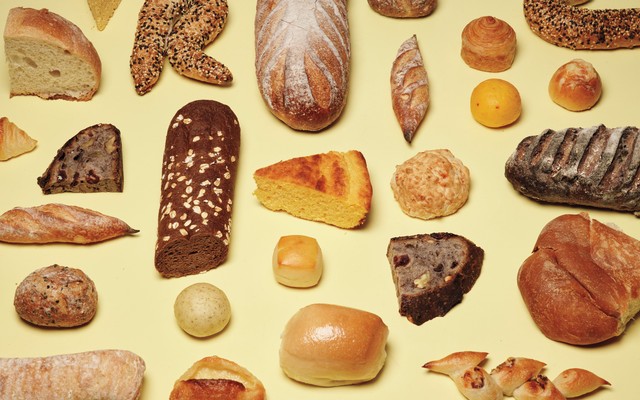
Thirteen thousand miles. Infinite contenders. One beautiful loaf.
This article was featured in the One Story to Read Today newsletter. Sign up for it here.
Here is the promise you and I must cling to across the thousands of words that follow: At some point within this text, I will reveal to you what—after 555 responses, 13,000 miles of travel, and months of monomaniacal research—I have determined to be the best free restaurant bread in America. I will not attempt to slither to the moral high ground, arguing that best is a meaningless measure, or insisting that all bread is dear in its own way. Even if you attempt to betray me—for instance, by merely scanning the text that follows for the phrase Here it is: the best free restaurant bread in America—I will uphold my end of the bargain.
The president is on a losing streak, and even some of his aides are dismayed by his choices.
This article was featured in the One Story to Read Today newsletter. Sign up for it here.
You’ve heard the joke: The White House is going to start talking about the Epstein files to distract from how badly the Iran war is going.
Except that this reverse “Wag the dog” is based on bizarre truth: First Lady Melania Trump did bring the disgraced financier up, unprompted, late last week in an effort to distance herself from the scandal (in a move that, predictably, only shifted it back into the spotlight once again). Meanwhile, as negotiations with Iran stumble forward, the Strait of Hormuz is still in Tehran’s hands and now President Trump has authorized a risky naval blockade that will likely send prices soaring further. Moreover, Trump’s poll numbers have continued to fall, Republicans worry that both houses of Congress could be lost in November, and the president threw away a remarkable amount of geopolitical capital trying to support his now-defeated illiberal buddy Viktor Orbán of Hungary. Oh, and Trump deeply offended adherents of the world’s two largest religions in one week’s time.
The car industry says it has an answer for drivers wary of going electric.
Two hours into a road trip in my Tesla, I start to get twitchy. By that point, the battery in my 2019 Model 3 has dipped to an uncomfortably low percentage. If I can’t reach the next plug, I’m in trouble. This is the kind of problem that Ram’s electric pickup truck—the first of a new breed of EV to arrive in the United States—is intended to solve. When the range starts to dwindle, the truck automatically fires up a hidden gas engine that refills the giant battery. The “electric” vehicle keeps on chugging down the highway, hour after hour; pit stops are once again decided by the need for bathroom breaks rather than battery range.
The Ram 1500 REV, set to debut later this year, is what’s called an “extended-range electric vehicle,” or EREV. In essence, it is an electric vehicle that burns gas. There’s nothing revolutionary about a half-gas, half-electric car, of course. Hybrids have been a mainstay in the United States since the Toyota Prius broke through two decades ago, and automakers have released more efficient plug-in hybrids—allowing drivers to charge up for about 30 miles of electric driving, just enough to accomplish daily errands without fossil fuels. An extended-range EV is a different kind of beast. The engine burns gasoline for the sole purpose of replenishing the battery—it never actually pushes the wheels. In the Ram, the battery can run for about 150 miles of electric driving, and the whole setup delivers enough range to travel nearly 700 miles between stops.
A minimally speaking autistic man just wrote a best-selling book. Or did he?
On a recent morning at Rockefeller Center, NBC employees strolled through the crowd with copies of Upward Bound, the latest book-club pick from the Today show co-host Jenna Bush Hager. “It’s deeply heartfelt and moving,” Hager said, after holding up the debut novel from the 28-year-old Woody Brown, “and the reason it’s so authentic is that the author understands autism firsthand.”
That understanding is indeed profound. Brown’s autism is such that he can barely speak, and he communicates mostly by pointing to letters, one by one, on a laminated board. This is also how his novel, which is already a New York Times best seller, came to be. In the recorded interview that followed Hager’s introduction, Brown’s mother, Mary, sat beside him, holding the letter board and reading his tapped-out messages.
Maybe you’ve seen photos of Tehran in the 1970s, just before the Islamic Revolution: images of young women going to work in miniskirts, of couples making out in parks while wearing bell-bottoms, of people at pools in bikinis. It looks like Paris or Milan or Los Angeles. But in 1979 the revolution happened, and now Tehran looks like something from an earlier century.
Sometimes I think that our whole world has become kind of like that—going backwards in time. The religious movements thriving in today’s secularized age are the traditionalist ones that dissent from large parts of contemporary culture—not only the Shiite Islam of post-revolution Iran, but Orthodox Judaism and conservative Catholicism. Young Americans are flooding into Eastern Orthodox churches.
Is the president’s son-in-law carrying out the public’s business or pursuing his own private interests?
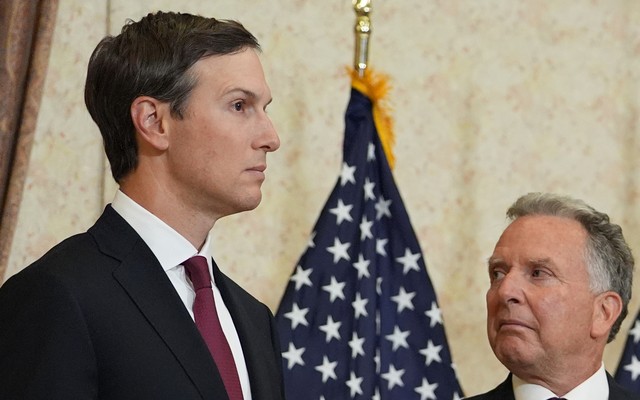
In 2021, shortly after he left his role as a senior White House adviser, Jared Kushner let it be known that he had loved his job but disliked the scrutiny and disclosure that came with being a top U.S. government official. He set up a private-equity firm and took a $2 billion investment from a Saudi fund led by Crown Prince Mohammed bin Salman. He proclaimed that he was embracing private life. “I’m an investor now,” Kushner said in a 2024 interview. If President Trump “calls you on November whatever and says, ‘I’d like you to come back to D.C.,’ you say, ‘Thanks, but I’m good’?” the interviewer, Dan Primack of Axios, pressed. “Yes,” Kushner responded.
But Kushner did come back. Two days before the United States and Israel attacked Iran this past February, he was in Geneva in a negotiation of the highest possible stakes. Over the weekend, he traveled with Vice President Vance to Islamabad to participate in failed peace talks with Iran. Without title or remit or any kind of official designation—only “presidential son-in-law”—Kushner has in the first 14 months of the second Trump administration sat down with world leaders including Vladimir Putin, Benjamin Netanyahu, and Volodymyr Zelensky, along with Saudis and multiple other actors from the Middle East.
The president’s attempts to interfere with the midterms demand vigilance, but a recent flimsy gambit is an argument against despair.
This is an edition of The Atlantic Daily, a newsletter that guides you through the biggest stories of the day, helps you discover new ideas, and recommends the best in culture. Sign up for it here.
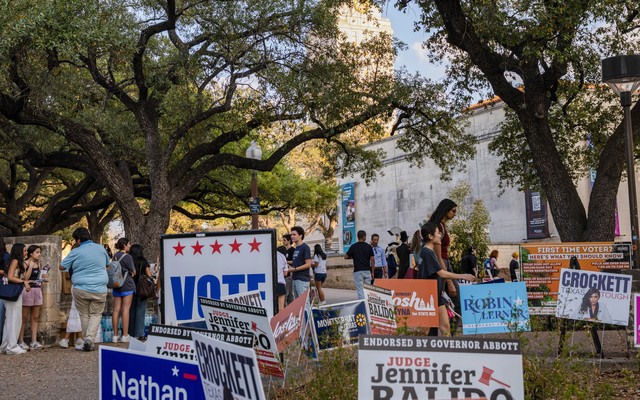
Anxiety among election officials and experts had been building for months before Donald Trump issued his latest executive order purporting to ensure election integrity late last month. When the actual text emerged, the reaction wasn’t relief exactly—but a definite sense that things could have been much worse.
Americans have many reasons to be worried about whether the midterm elections will be free and fair. As I laid out in a cover story last fall, the president’s plan to subvert the 2026 election is multifaceted and already in swing. But last month’s order and the dismissive reaction it’s received from experts—along with this weekend’s decisive defeat of Hungarian Prime Minister Viktor Orbán, which shows how the competitive-authoritarian playbook that Trump has imitated can be beaten—also point to the reasons to resist doomerism.
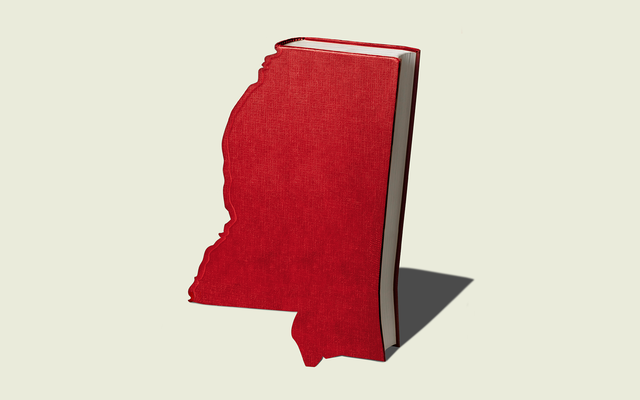
A phonics-based curriculum is only one part of how Mississippi went from worst to first in education. The other part is much harder to pull off.
Updated at 8:52 p.m. ET on April 9, 2026
This article was featured in the One Story to Read Today newsletter. Sign up for it here.
No story has caught the imagination of education reformers this decade quite like the “Mississippi miracle.” From 1998 to 2024, fourth-grade reading and math scores in my home state—the nation’s poorest—rose from among the worst in the country to among the best. When adjusting for demographic factors such as poverty, we’re in first place.
Other states are now trying to emulate what Mississippi did. Those efforts largely revolve around adopting what’s known as the “science of reading”— a set of principles and teaching techniques, including phonics, that are grounded in decades of empirical research. Last fall, for example, the Wall Street Journal editorial board marveled that “even California is now following Mississippi’s lead by returning to phonics” as Governor Gavin Newsom prepared to sign a major new reading bill into law. But what many outsiders fail to understand is that Mississippi changed far more than just how reading is taught. They therefore miss why and how our literacy approach succeeded.
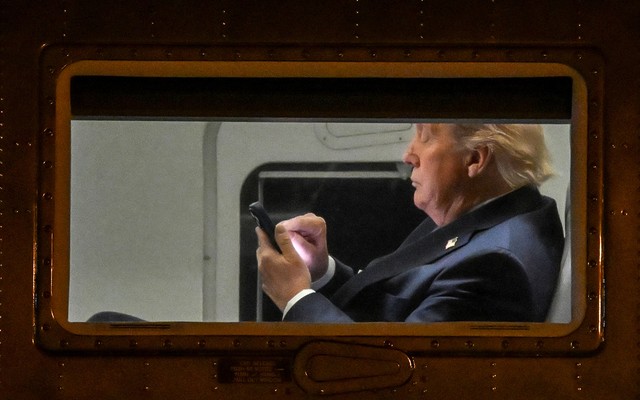
On many recent nights, Donald Trump has been posting obsessively on his Truth Social site into the wee hours. The president, of course, has never been one for a solid night’s sleep—or restrained and temperate commentary on social media—but his emotional state seems to be fraying: This weekend, he attacked Pope Leo XIV, presented himself as Jesus Christ, and then jabbed at his phone until dawn.
Judging from those posts, the commander in chief is in distress. No one can say for sure what is causing the president’s bizarre behavior. Perhaps Trump’s narcissistic insistence that he is always successful in everything he undertakes is feeling the sting and strain of multiple public failures, including the collapse of his campaign to dislodge the Iranian regime, plummeting approval ratings, the decline of the U.S. economy, and, on Sunday, the crushing defeat of one of his favorite fellow authoritarians, Hungary’s Viktor Orbán.
Hungary offers lessons in defeating right-wing populists.
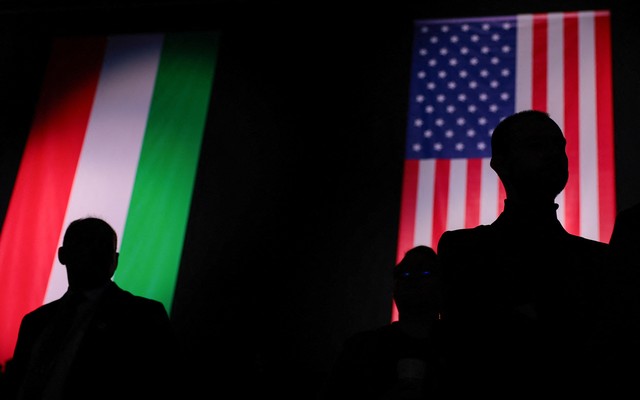
To the outside world, Hungarian Prime Minister Viktor Orbán began his rule as a pariah—an obstreperous, often lone dissenter from European Union policies, especially over migration. Then he became a prophet to new-style “national conservatives”—the anti-immigration, anti-elite right-wing movement that has reshaped the politics of the West. After resoundingly losing national elections held on April 12, Orbán has become a parable for how populism can be defeated.
His political demise was hardly inevitable. It had to be shrewdly engineered by politicians and voters who put aside their ideological differences to defeat him. In politics, there is no natural law of self-correction.
From 2010 until now, Orbán and his Fidesz party transformed Hungary into a new kind of state, which he proudly proclaimed as an “illiberal democracy.” He and his allies rewrote the constitution to entrench his power, centralizing control over civil society and countervailing institutions such as courts and universities. Péter Magyar, the presumptive next prime minister, triumphed against a tilted electoral system—gerrymandered districts, government influence over traditional media and even over the country’s billboards—designed to keep Fidesz in power. Magyar understood that such a regime does not simply collapse under the weight of its own contradictions and mismanagement.