TransCanada files new permit for Keystone XL pipeline, Mexican president cancels Washington trip, and more from the United States and around the world.
—TransCanada has filed an application to construct the Keystone XL pipeline, a 1,200-mile-long oil pipeline that would connect the tar sands of Alberta to oil refineries in Nebraska. More here
—Mexican President Enrique Peña Nieto announced on Twitter he’s canceled his visit next week to the U.S. to meet with President Trump over the American leader’s insistence Mexico will pay for a wall the U.S. wants to build on its southern border to keep away illegal immigrants. More here
—We’re tracking the news stories of the day below. All updates are in Eastern Standard Time (GMT -5).
TransCanada Files a New Application to Build the Keystone XL Pipeline
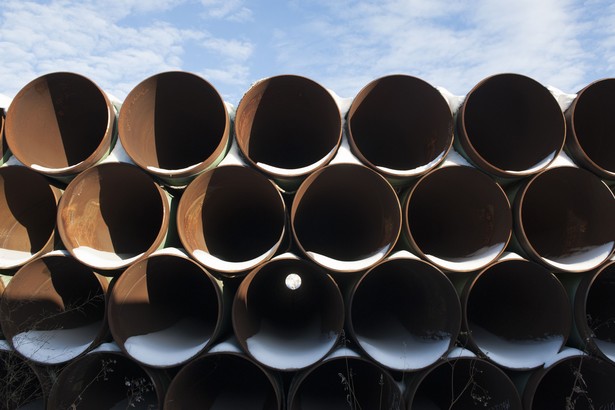
Pipes that would have become the Keystone XL sit in Gascoyne, North Dakota. (Terray Sylvester / Reuters)
TransCanada has filed an application to construct the Keystone XL pipeline, a 1,200-mile-long oil pipeline that would connect the tar sands of Alberta to oil refineries in Nebraska, according to Reuters. President Trump invited the Canadian energy company to re-submit the pipeline for approval in an executive order on Tuesday. The application now formally sets the Keystone XL pipeline back in motion, bringing the infrastructure project closer to reality. According to the same executive order, the U.S. State Department now has 60 days to approve or reject the company’s application, and it may not prepare a new environmental-impact statement for the pipeline.
The construction of the pipeline would represent a significant hit to former President Obama’s environmental legacy. In November 2015, Obama denied TransCanada’s first application to build the Keystone XL pipeline after it became a rallying symbol of the climate movement. Bill McKibben, a journalist and activist, said that the construction of Keystone XL would be “game over” for the planet, as it would allow the extraction and combustion of the especially dirty oil present in the Tar Sands. As I wrote on Wednesday, many U.S. environmental activists trace the origins of the country’s grassroots climate movement back to the mass protests opposing Keystone XL.
When he signed the executive order, Trump said the construction of Keystone XL would create 28,000 jobs. In fact, most studies indicate the pipeline would create only about 3,900 temporary construction jobs, though perhaps 7,000 more might be funded through local follow-on effects. But after construction is complete, the Keystone XL won’t create much long-term employment: Estimates say it will only lead to 35 new permanent employees.
With no Keystone XL pipeline, many oil extractors have resorted to shipping oil across the continent on trucks or trains. On top of this, others have stopped exploring for oil in the tar sands, as crude prices are now too low to justify drilling. On Wednesday, Russ Girling, the CEO of TransCanada, said that he wasn’t sure if shippers would use the pipeline if his company built it. Now we find out.
Chile Battles Its Worst Wildfires in Modern History
Pablo Sanhueza / Reuters
This post was updated on January 27 at 5:38 p.m ET.
The death toll has risen to at least 10 Friday in the wildfires that have spread throughout central Chile. Mario Fernandez, Chile’s interior minister, said Thursday the victims include two police officers were found in the Maule River, as well as four firefighters. Though wildfires are not uncommon in Chile, historically high temperatures and a nearly decade-long drought contributed to conditions that sparked blazes the likes of which Chilean President Michelle Bachelet said “we have never seen… never in Chile’s history.” Since Chile declared a state of emergency last week, the country has recorded more than 100 separate fires, which have burned nearly 500,000 acres—an area more than twice the size of New York City. Other countries, including the U.S., Russia, France, Peru, and Mexico, have contributed to the relief effort. As of Friday, Chile’s Conaf forestry service estimates that 72 fires have yet to be controlled.
Mexican President Peña Nieto Cancels Meeting with Trump
Dario Lopez-Mills / AP
Mexican President Enrique Peña Nieto announced on Twitter he’s canceled his visit next week to the U.S. to meet with President Trump over the American leader’s insistence Mexico will pay for a wall the U.S. wants to build on its southern border to keep away illegal immigrants. Trump on Wednesday issued an executive order affirming his intention to build the wall—in line with a longstanding campaign promise. Mexico has consistently said it will not pay for such a structure.
Esta mañana hemos informado a la Casa Blanca que no asistiré a la reunión de trabajo programada para el próximo martes con el @POTUS.
Last Bodies Recovered From Italian Hotel, Rescuers Say
Reuters
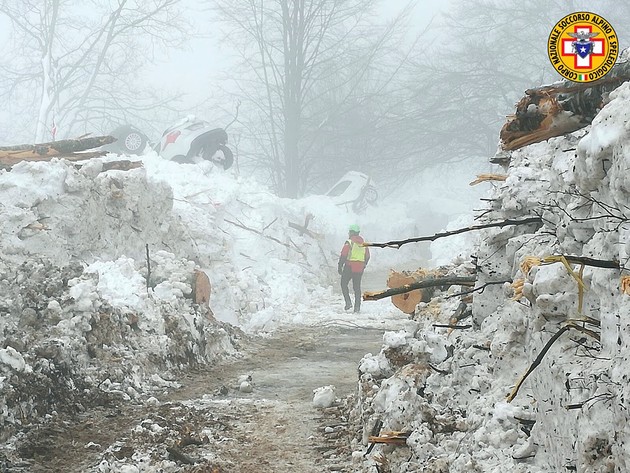
The remaining bodies of the victims killed in last week’s deadly avalanche have been recovered from the wreckage, Italian authorities said Thursday, bringing the final death toll to 29. You can read more about the avalanche and the recovery process here.
Greece's Supreme Court Rules Against Extraditing Coup-Linked Turkish Soldiers
The eight Turkish soldiers are escorted by police officers to the Supreme Court in Athens on January 26. (Alkis Konstantinidis / Reuters)
Greece's Supreme Court has ruled against extraditing to Turkey eight Turkish soldiers linked to last July’s coup attempt against President Recep Tayyip Erdogan. The countries have had traditionally tense relations, but are both members of NATO and, as such, are allies. Turkey wants the soldiers, who fled to Greece by helicopter, returned so they can stand trial. Erdogan has cracked down on the military, the media, and government, and civil society after the coup attempt. Thousands of people have been arrested and tens of thousands have lost their jobs. The Greek Supreme Court’s decision is final and cannot be appealed.
The shooting at the Correspondents’ Dinner made clear who gets saved first.
This article was featured in the One Story to Read Today newsletter. Sign up for it here.
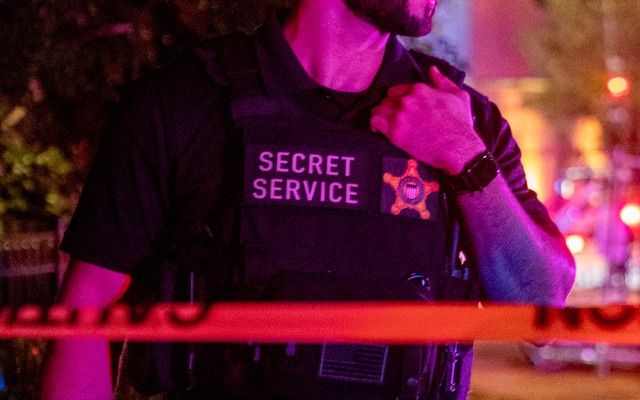
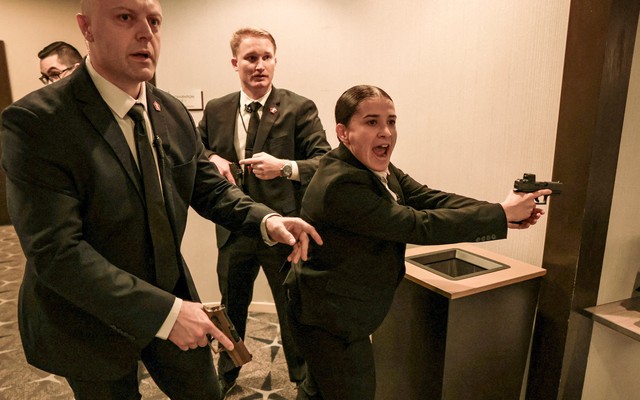
On one level, the system worked. The perimeter held. A would-be assassin was tackled in the hallway outside the White House Correspondents’ Association’s annual dinner. The one bullet that found a human target—a U.S. Secret Service agent—was halted, in part, by the officer’s phone and bulletproof vest, according to a law-enforcement summary report that we reviewed. A counterassault team promptly swarmed the stage with assault rifles and night-vision equipment in case the lights were cut. The government’s top leaders—president, vice president, Cabinet officials, speaker of the House—were ushered to secure locations in a matter of minutes. No one died in the attack.
Instead of a crackdown on his enemies, Trump wants his ballroom.
When an assassin murdered Charlie Kirk in September 2025, the MAGA movement seized the moment to demand a campaign of repression. Vice President Vance called for an ambitious program to “go after the NGO network that foments, facilitates, and engages in violence.” He named the Ford Foundation, Open Society Foundations, and The Nation magazine as examples of candidates for the retaliation he had in mind. The people who faced consequences after the killing almost universally did so for things they had written or said, not for acts of violence. In November, Reuters counted some 600 cases of people who were fired, suspended, or otherwise disciplined for their speech about Kirk’s life and death.
Now another gunman has attacked political targets. At the White House Correspondents’ Association dinner, a man discharged a firearm in the vicinity of hundreds of people from the worlds of politics, media, and business—among them, the president and vice president of the United States. Although much about the event remains unclear, the available evidence suggests that the gunman was motivated by an anti-Trump agenda. Yet this time, MAGA’s immediate response to political violence has been much less aggressive. At his press conference after yesterday’s attempted shooting, President Trump cited the attack as proof of the need for his wished-for White House ballroom. Social-media accounts that take their cues from the White House promptly echoed the message.
*But it’s time to rethink security at an event that is clearly so vulnerable.
Here’s what happened: On Saturday evening, a man carrying a shotgun, a handgun, and knives got close to the ballroom of the Washington Hilton, where more than 2,000 guests, including the president of the United States, were enjoying the appetizer course at the annual White House Correspondents’ Association Dinner. “I am no longer willing to permit a pedophile, rapist, and traitor to coat my hands with his crimes,” the would-be shooter purportedly wrote in a letter that was apparently written in the lead-up to his attack. He said his targets were Trump-administration officials, “prioritized from highest-ranking to lowest.”
Terrifying, for sure. But here’s what happened next: The assailant was intercepted by armed agents from the Secret Service before he came anywhere close to his intended victims. He was tackled, restrained, and arrested after sprinting past a security checkpoint, through which guests passed earlier in the evening. Shots were fired. The assailant, later identified as Cole Tomas Allen of Torrance, California, hit a Secret Service agent, whose bulletproof vest and cellphone protected him. The agent is recovering. The suspect is in custody. No one died. And the president, his Cabinet, and all other dinner guests left the ballroom safely.
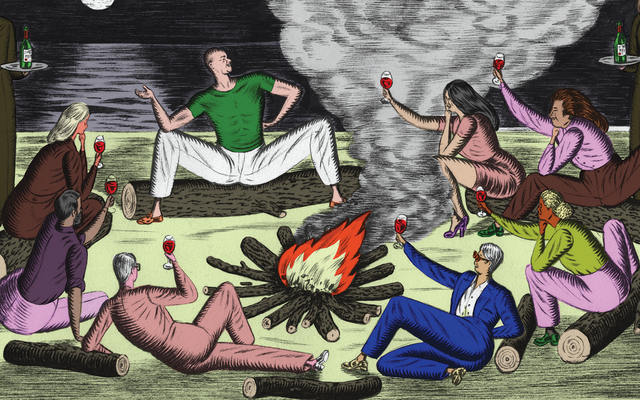
For the richest men on Earth, everything is free and nothing matters.
At the end of Paul Thomas Anderson’s 2007 movie, There Will Be Blood, Daniel Day-Lewis’s oil-baron character, old now and richer than Croesus, beats Paul Dano’s preacher to death with a bowling pin. Dano’s Eli Sunday, a nemesis of Day-Lewis’s Daniel Plainview during his seminal, wealth-building years, has come to sell Plainview the oil-rich land that he once coveted. But Plainview doesn’t need the land anymore, because—as he explains in one of the most famous monologues in modern cinema—he has sucked out all the oil hidden beneath it from an adjoining property, like a milkshake.
Desperate for money, Eli begs for a loan. Instead, Plainview chases him around a bowling alley and murders him with great enthusiasm. Once it’s over, a butler comes to see what all the noise was about. “I’m finished,” Plainview yells.
A manifesto-like email allegedly sent by the dinner shooter suggests a murderous obsession with Trump’s politics.
The line “I experience rage thinking about everything this administration has done” could probably have been written in an email to friends by any number of the attendees at last night’s White House Correspondents’ Association dinner. But the line was apparently written by a man who showed up with a shotgun and pistol and was ready to kill “most everyone” there to get to Donald Trump and assassinate him and his Cabinet. In a manifesto-like email that he reportedly sent to family minutes before allegedly shooting, Cole Tomas Allen wrote that the assembled journalists and machers “chose to attend a speech by a pedophile, rapist, and traitor, and are thus complicit.” Allen never came near the president or the gala floor. A Secret Service agent was shot in the vest before Allen was tackled and arrested.
The Trump administration could exert much greater control over the AI industry.
AI companies are beginning to entertain the possibility that they could cease to exist. This notion was, until recently, more theoretical: A couple of years ago, an ex-OpenAI employee named Leopold Aschenbrenner wrote a lengthy memo speculating that the U.S. government might soon take control of the industry. By 2026 or 2027, Aschenbrenner wrote, an “obvious question” will be circling through the Pentagon and Congress: Do we need a government-led program for artificial general intelligence—an AGI Manhattan Project? He predicted that Washington would decide to go all in on such an effort.
Aschenbrenner may have been prescient. Earlier this year, at the height of the Pentagon’s ugly contract dispute with Anthropic, Secretary of Defense Pete Hegseth warned that he could invoke the Defense Production Act (DPA), a Cold War–era law that he reportedly suggested would allow him to force the AI company to hand over its technology on whatever terms the Pentagon desired. The act is one of numerous levers the Trump administration can pull to direct, or even commandeer, AI companies. And the companies have been giving the administration plenty of reason to consider doing so.
Requiring schools to endorse biblical laws is both unconstitutional and counterproductive.
When you were in elementary school, did your mind occasionally rise above the smell of pencil shavings and the sound of squeaking desk chairs to contemplate whether you ought to commit murder? Did you ponder what it would mean to covet your neighbor’s wife? Ordinarily those aren’t questions addressed in grade-school classrooms, but according to legislators in Alabama, Louisiana, Texas, and Arkansas, they ought to be.
In those districts, state Republicans are rallying behind laws that would mandate posting the Ten Commandments in public-school classrooms and common areas, such as cafeterias and libraries. This fad began in 2024, when Louisiana Governor Jeff Landry signed such a bill, reviving a debate long silenced by the Supreme Court’s 1980 decision in Stone v. Graham to strike down a similar Kentucky law.Other states followed suit: Arkansas and Texas last year, and Alabama just this month. Although these laws pose a threat to the First Amendment rights of students and teachers, the trend is spreading, so far unchecked by courts. Opponents of Texas’s law suffered a defeat last week when an appellate court decided in the state’s favor. The ACLU and other organizations representing the plaintiffs—a multifaith group of Texas families—are expected to appeal this decision to the Supreme Court.
A new history of the Red Scare prompts the question: Does literature still have enough influence to bring down the powerful?
Revenge is a dish best served cold, but how cold? Can we set that dish to cool for 400 years? Satisfaction so long deferred might seem beside the point. We want to watch our enemies humbled in an instant, to see their heads bowed low before our rage burns clean.
In A Treacherous Secret Agent, the prominent Harvard English professor Marjorie Garber proposes a subtler and far slower model of revenge. Garber’s subject is the role of literature in the Red Scare of the 1950s, a period during which artists and writers suspected of Communist sympathies were scapegoated, blacklisted, and hauled in front of investigative committees. In transcripts of hearings of the notorious House Un-American Activities Committee (HUAC), Garber finds an upwelling of voices from the literary past, among them Christopher Marlowe, the revenge dramatist Thomas Kyd, and, from first to last, Shakespeare, Shakespeare, Shakespeare.
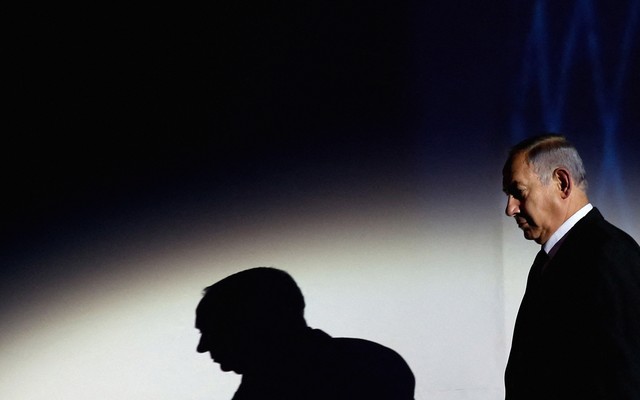
The Israeli prime minister’s focus is, as always, on himself and his near-term political needs. The plight of American Jews is simply not his concern.
The relationship between the United States and Israel is in crisis. Six in 10 Americans have a negative view of Israel, and a majority of those under 50 in both major parties view Israel as well as its prime minister, Benjamin Netanyahu, negatively. After the brutal Gaza war, a large percentage of liberal-leaning Generation Z considers Israel a pariah state. Democratic candidates are scrambling to distance themselves from Israel and its controversial leader; earlier this month, 40 of the 47 Democratic senators voted against a military aid package for the country. And hostility toward Israel is spilling over into hostility toward Jews. Liberal influencers, activists, podcasters, and even politicians are invoking age-old anti-Semitic tropes with frightening regularity.
This weekend’s failed attack highlighted a risk that often goes unspoken.
In the chaotic swirl of events after President John F. Kennedy’s assassination, doctors feared that Vice President Lyndon B. Johnson had suffered a heart attack upon arrival at Parkland Memorial Hospital in Dallas. The signs were ominous: Johnson’s face was ashen, and he was clutching his chest. “There was the real possibility that the No. 3 in the line of succession would become president,” the historian Michael Beschloss told me. Johnson was reportedly examined and a heart attack ruled out—but not before then–House Speaker John McCormack was told that he might be the next president. The declaration prompted a severe bout of vertigo in the 71-year-old.
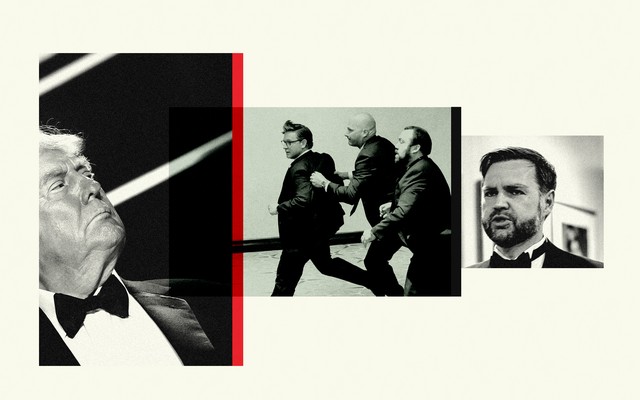
Few moments in history have so starkly exposed the vulnerabilities of the presidential line of succession—or the lack of clarity about how it is protected. Last night provided another illustration of them. If events at the White House Correspondents’ Association Dinner had gone differently, a gunman who breached security at the Washington Hilton could have reached a ballroom containing an unusually dense cluster of American power. The president and the vice president were seated a few feet apart. Congressional leadership and many Cabinet secretaries were also on hand. In other words, much of the presidential line of succession was in the same spot—and subject to the same vulnerabilities.