Keep the Peace Through Air Power
By
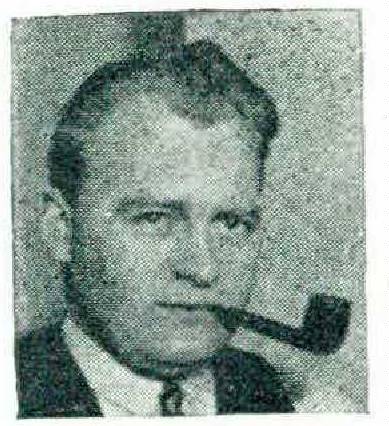
MUCH discussion of the peace to come after the war is theoretical almost to the point of vacuousness. And this is probably unavoidable, if one considers that the wisest and best-informed human being could scarcely foresee accurately all the conditions which will arise when the European and Asiatic sectors of the mightiest conflict in human history return from war to peace.
Mr. Michie’s work possesses the advantage of concentrating on a single technical aspect of the future peace: how to keep Germany and Japan disarmed after they are defeated. A war correspondent with considerable experience on various fronts, the author feels deeply and thinks clearly. He makes out a very persuasive case for the proposition that air policing would be the simplest and the surest method of preventing the aggressor nations of the present war from conjuring up new delusions of grandeur.
Because the disarmament of Germany failed after the last war, there is a tendency in some quarters to lapse into a fatalistic pessimism, or to propose methods of fantastic ruthlessness, such as the destruction of all German and Japanese industry. Mr. Michie is on solid historical ground when he argues that there was no insuperable inherent difficulty in enforcing the disarmament provisions of the Versailles Treaty. Contrary to general belief, German evasions of these restrictions were accurately reported and established. What was lacking in England and France until the late thirties was not the power to keep Germany disarmed, but the will to do so.
His recipe for Germany and for Japan is much the same: unconditional surrender, all-out temporary military occupation, to be followed by a transitional period, when the responsibility of government is to be left in the hands of the democratic or moderate elements that may emerge after the downfall of Hitler and the Japanese militarists. In the background, as insurance against the revival of militarism, is the threat of punitive air bombing. He looks forward to a time when this formidable weapon can be placed in the hands of an international police force.
For the period immediately after the end of the war, he sees the hope for world peace and order in a close association of the major victorious powers. Naturally the prospect of any scheme of peace and disarmament depends on whether this association proves feasible. But if one grants this assumption, it is difficult to see any serious flaw in Mr. Michie’s contention that the terms of the disarmament settlement can be enforced on Germany and Japan, two urban and industrialized countries, by the potential shattering impact of the blockbuster bombs. Holt, $2.00
WILLIAM HENRY CHAMBERLIN