Writing Is My Life: The Novelist Under Fire
These letters of a great novelist illuminate the problems of every beginning writer.
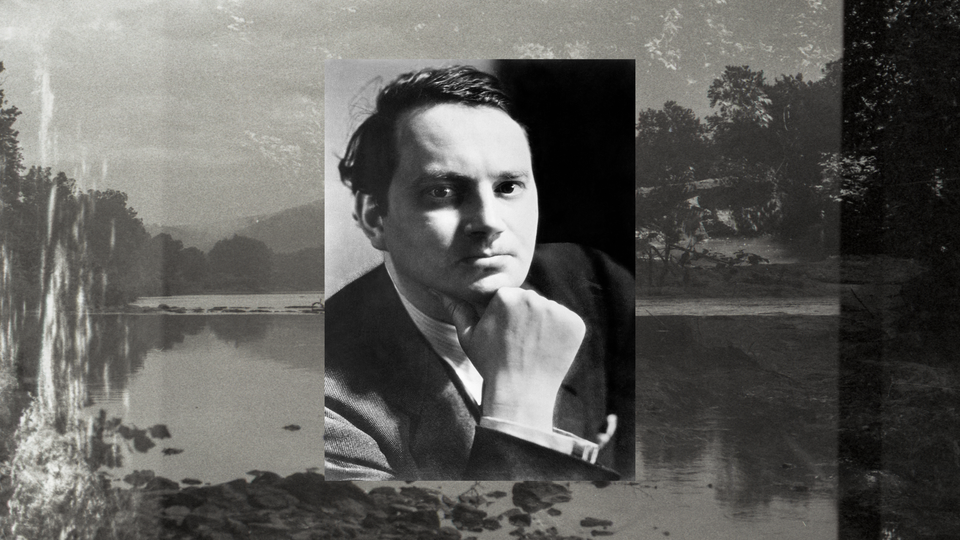
A shy, hulking Southerner, THOMAS CLAYTON WOLFE came North in his early twenties to make his bid in literature.
For a year he studied playwriting under Professor George Pierce Baker at Harvard, but the plays which resulted were turned down on Broadway. New York University offered him an instructorship in English, and in the metropolis or as he traveled abroad on vacation young Tom Wolfe began to be possessed with the characters and scenes of his first novel, which was to be published in 1929 under the title of Look Homeward, Angel.
Tom Wolfe’s father was a stonecutter, his mother the keeper of a boardinghouse in Asheville, North Carolina, His novel was regarded as a personal affront by many in his home town, and even his beloved teacher, Mrs. J. M. Roberts, to whom these letters were written, felt hurt. This accounts for his self-defense in the opening letter, and for the gap of six years in the correspondence. On his trip West in the spring of 1938 Wolfe contracted pneumonia. During his convalescence, complications set in which led to his death on September 15, 1938.
This is the last of three installments. — THE EDITOR
New York City
Feb. 2, 1930
DEAR MRS. ROBERTS: -
It has been almost impossible for me to write letters, or anything else, during the last three months — partly because of classes and papers at N.Y.U., and partly because of telephone calls, invitations to speak, dine, or visit (which I now shy away from), interviews and excitement. Now I am finishing my work at the University — I have resigned and will be finished there as soon as my term grades are in (I still have 200 quizzes and themes to read!). Scribner’s have very generously made it possible for me to live modestly until my next book is done — I have already begun it, and it is to be called The October Fair [published in 1935 as Of Time and the River]. It deals with different scenes, with different characters, and with a different theme from the first. I hope, naturally, that it will be a better book than the first [Look Homeward, Angel], and with all my heart I hope that people who thought my first book ugly and painful will find beauty and wisdom in the second. That is a wish I shall always keep for my work, and I hope in some measure it comes true. . . .
I shall have time to write you the letter I want to write after next week. Meanwhile, will you let me say again one thing in reference to your own fine letter: I think you are mistaken in the estimate you put on some of the characters in my book and I know you are wholly mistaken in your interpretation of one of the scenes. You are certainly right in saying I would not do such a book twenty years from now — I hope I will do one that is much better and much more beautiful, but such growth as that must come, with time, and with maturity and wisdom.
But I do believe sincerely, Mrs. Roberts, that any bitterness in my book — and I would not deny that there is bitterness in it — is directed not against people or against living, but against the fundamental structure of life, which seems to me, or at least, seemed to me when I wrote the book, cruel and wastefully tragic. I may be wrong in that feeling, but at any rate, it was deep-seated and real.
The other thing I want to say is longer and more difficult, and I must write you about it later at length, but here it is indicated in outline: that all creation is to me fabulous, that the world of my creation is a fabulous world, that experience comes into me from all points, is digested and absorbed into me until it becomes a part of me, and that the world I create is always inside me, and never outside me, and that what reality I can give to what I create comes only from within. Its relation to actual experience I have never denied, but every thinking person knows that such a relation is inevitable, and could not be avoided unless men lived in a vacuum.
I began to write the book in a little room in London and I finished it in a New York sweatshop garret; and from beginning to end the theme was that men are alone and strangers on the face of the earth, and never come to know one another — this theme came as a result of years of wandering, and was as true of men in London, Budapest, or Naples, as of men in Asheville, Idaho, or Alaska. You said in one place in your letter that you knew I was sincere, no matter what anyone said. I thank you with all my heart; but how could you ever doubt it? Have you ever known me to be lacking in sincerity, to be evasive, dishonest, or to have my eye glued on the main chance? One man wrote in to Scribner’s saying that the rumor was Wolfe had written the book because he needed money badly. What damnable nonsense! Doesn’t every word, every sentence, every page, and the whole great length of the book show that such a work could never be written from any desire except the desire of the artist to create a vision of life that burned inside him? If I had wanted money don’t you suppose there are a million easier, cheaper, shorter, and baser ways of getting it? The fact that the book has had a modest commercial success is one of the most astonishing things about it, but surely you must understand it was not published for this reason, and that dozens of bad writers make more money on one of their books than I could make on six of mine.
Finally, Mrs. Roberts, will you please believe me when I tell you sincerely and earnestly that when I began this book in London, and finished it in New York, I shaped and created its reality from within: my own world, my own figures, my own events shaped themselves into my own fable there on the page before me, and that I spent no time in thinking of actual Smiths, Joneses, or Browns; nor do I see yet how such a thing is possible. If anyone thinks it is, let him take notes at street corners, and see if the result is a book.
I have written you more than I intended at present; let me in concluding entreat you to remember that I have written only one chapter of my whole book, and that if you do not think the first is worthy of me, I shall try to do something that will deserve your faith and affection in those that follow. Let me also say now that the saddest thing about all of this to me is not that some people have misunderstood the intention and meaning of my first book, but that some people I still love and honor have misunderstood me. I will not say a word against them — the really sad thing is that we lead a dozen lives rather than one, and that two or three of mine have gone by since I was a kid in Asheville. If people now draw back when they see the man, and say: “I do not know him. This is not the boy I knew” — I can only hope they will not think the man a bad one, and that they will be patient and wait until the boy comes back. And I think he will, after the man has made a long journey.
Good-bye for the present. I send you again my warmest, my deepest affection, and my most devoted wishes for your health and happiness. I think you are one of the grandest people I have ever known. . . .
P.S. I hope you have seen some of the reviews of my book. They have been on the whole very wonderful. ... If I am to be honest I must create my vision of life as I see it; but I hope that in my future work everyone I respect and like will find beauty and wonder in everything I do.
Forgive me for talking so much about the book — it is my first, and naturally close to my heart.
Again, I send you my warmest and most devoted remembrance.
I am back at work now. It is going to be another very long, hard pull. I am already beginning to be haunted by nightmares at night. I am probably in for several thousand hours of hell and anguish, of almost losing hope, utterly, and swearing I’ll never write another word and so on, but it seems to have to be done in this way and I have never found any way of avoiding it. I am both fascinated and terrified by this new book. It is a thing which has been going in my mind for years and it is not one of the books that have been announced. It is a much more objective book than any I have yet written. Sometimes I am appalled by my own undertaking, and doubt that I can do it.
The best friend I have in the world, who is also the best editor this country has produced, and who has never been wrong in his judgment yet, told me at once, when I described the book to him, that there was no doubt that I could do it, that I was the only one who could do it, that he had known for years I would have to write this kind of book some day, and by all means to do it at once with all my might. I think it is a good thing for several reasons; in the first place, if I succeed, it will meet the objections which some of t he critics have passed about my being an autobiographical writer. In the second place, I think that one of the things that is likely to happen to the artist when he gets a little older is that he may tend to become cautious and conservative and to stick to the thing which he has learned or is learning to do. There is a good deal to be said for this, but I do think it is a pity if a man is to lose the enthusiastic eagerness, the desire to experiment and find out new ways, the fearlessness of conception and effort which he has in his twenties. I don’t want to lose it and my friend tells me I never will, and that there is no question about my being able to do this thing if I see it through. I wish you knew him, his name is Maxwell Perkins. He is not only a wonderful friend, he is also a great man and a great person with the finest qualities of character, spirit, and intelligence I have ever known. He has often asked me about you and I know he would like to meet you.
This last year has been a very extraordinary one. I have seen some wonderful things and met a great many people. I took too much time away from work, but I was desperately tired and had in fact been writing steadily for almost five years and I found that a man’s energy and the way he uses his talent is like a reservoir: when it gets depleted, you have got to let it fill up again. Well, I think it is full again, full to overflowing. I hope and believe that I may have learned something from all the mistakes and errors of the past and that I will be able to work hereafter without quite so much useless waste and confusion and agony of spirit. I don’t think by any means that I can wholly avoid these things yet, but I do think you learn something from every piece of work you do and that every piece of work you do adds something to your stature, increases the power and maturity of your experience, and helps you to use your talent with greater certainty.
I am sorry you didn’t see M - when you came through Washington, I know she will be disappointed when I tell her you couldn’t find her. Yes, I think they did have their telephone taken out, but they are still living there. They have had a terribly hard time and she has suffered a great deal, but somehow, I always believe that she has it in her to pull herself together in a time of crisis or necessity and meet the situation no matter how hard or bitter. Mr. W—, as you know, is a fine man in many ways. He has devotion and loyalty and great staunchness of character, but I think, and this of course is confidential, that he is a most tragic individual case of the effects of this tragic depression. I am sometimes accused by the Communist writers here in New York of lacking what they call “social consciousness” and of not showing in my writing sufficient resentment towards the present system. Well, there are several answers to that. When I am told that I do not appreciate or understand the lot of the worker, I remember and am proud to remember that I am the son of a stonecutter, that I come from people in Pennsylvania and in the hills of western North Carolina, who have had to work hard and long for two hundred years or more by the sweat of their brow, the strength of their hands, to earn their daily bread. I am not talking of the more prosperous members of the family whom you may have known in Asheville, yet even they, my mother’s brothers and my mother herself, knew poverty and want in their childhood in the years after the Civil War, and my father worked all of his life. So I think you will agree with me there is no particular reason for me to be very much impressed by the assertions of young gentlemen calling themselves Communists, whose fathers provide them with a comfortable allowance which enables them to indulge their political fancies without knowing a great deal about some of the things or people of whom they write.
What I am really telling you, and I think you agree with me in your own feeling, is that by instinct, by inheritance, by every natural sympathy and affection of my life, my whole spirit and feeling is irresistibly on the side of the working class, against the cruelty, the injustice, the corrupt and infamous privilege of great wealth, against the shocking excess and wrong of the present system, the evidences of which are horribly apparent, I think, to anybody who lives here in New York and keeps his eyes open. I think that the whole thing has got to be changed, and I’ll do everything within the province of my energy or talent to change it for the better, if I can, but 1 am not a Communist, and I believe that the artist who makes his art the vehicle for political dogma and intolerant propaganda is a lost man. I think almost every great poet and every great writer who ever wrote and whose works we all love and treasure has been on the side of the oppressed, the suffering, the confused and lost and stricken of the earth. Do you know of a single exception to this? But really isn’t this just another way of saying that every great man or any good man is on the side of life, and although I am myself the son of a working man, I go so far as to say that an artist’s interests, first and always, has got to be in life itself, and not in a special kind of life. His devotion, his compassion, his talent has got to be used for man and for the enrichment of man’s estate and not for just one class or sect of man. Finally, I think that insofar as any artist would turn against a man because that man is rich or would have no understanding or tolerance of the lot of a man who belongs to a certain class, the artist who would feel this way is by just this much a smaller man than he should be.
To get back to W -. I think he has been crushed by the catastrophe of recent years. Furthermore, although I never had much feeling one way or another about great corporations until this thing happened, I think the way he was treated by the great corporation that employed him after he had given his life, his strength, his youth and all his best energies since his fourteenth year, was simply damnable and I for one do not propose to sit around silent and acquiescent in a society where such a situation exists and where such things happen. He knows how to do nothing except to sell business equipment. His father died when he was a child and it was up to him to contribute to the support of his mother and his sister without delay. He left school at the age of thirteen or fourteen, went into the corporation’s factory — learned the business and finally became an agent as you knew him in Asheville. Now he is no longer a young man, he has been in poor health for many years, his reserve of physical strength and energy is very short, and he was kicked out ruthlessly, brutally, and without notice by the employers to whom he had given his life and who for thirty years or more had profited by his efforts. I suppose the cold-blooded answer to this would be that he profited too, and that he was paid well for his services, and that when the period of his usefulness waned as far as the company was concerned, they owed him nothing more, they were free to dismiss him as they chose. I say to hell with all such reasoning; it is probably in accord with the ruthless code of business procedure, but it is not in accord with human life, with human justice, with human decency, do you think so? . . .
I think I have myself learned a good deal about men and living in this last year that was surprising and astonishing and sometimes pretty painful and unpleasant. For the first time I received some considerable amount of public notice and I confess there are now times when I long for the comparative obscurity of a few years back and wonder whether such success as I may have attained doesn’t take with it a pretty heavy price. For one thing, I found out to my utter astonishment that anyone in the world can sue you and for no earthly reason save that there are apparently a lot of people who think it would be rather nice to sue you and see if they cannot badger, worry, threaten, torment, or wheedle you into giving them some money, simply because they don’t have any intention of going to work and earning it for themselves. I assure you that this can happen, that it is happening all the time, that it has happened to me, and that so far as justice, right, or fairness is concerned the law, from what I have seen of it, seems to have no concern with these matters at all. Rather it becomes a question of who can twist the terms and phrases of the law to his own advantage.
Of course, I suppose in the end, if you carry it through, you can usually win out, particularly if the person suing you has taken money from you, has concluded contracts and agreements of which you have never been informed, has been dismissed utterly and forever from your employment, has in fact not one square inch of earth on which to stand. I say you can win, but in the end, no matter what happens you always lose, don’t you? You have to go and employ a lawyer, you have to be haled into court for an examination before trial, you get gray hairs worrying and fretting over it. And finally, you pay them some money, so that you can get peace of mind and go on working and not be bothered and exhausted by it any more.
I have been through the whole thing. I have had people, members of some poor and humble families whom I liked, with whom I had enjoyed pleasant and friendly relations, walk off with my manuscripts, sell them, and pocket the money. I have read my name in the papers as a speaker at public dinners of which I knew nothing and to which I had never given my consent. Only the other day, I received a great batch of essays with a letter saying that the promoters of this essay contest were delighted that I had consented to be one of the judges, but I had never heard of the thing before. Some of the success has been very pleasant, some of it grotesque, some very comical, and some of it appalling, but I have hung on grimly, and I am back at work again and of course, as long as I can work, I am all right. They can take what little money I have left, I suppose I can earn more money; they can even walk away with my manuscripts, I can certainly write more manuscripts; but if they take away my power to work, then they have taken everything. But I think that this probably won’t happen. . . .
I am digging in here for a great burst of work and may not pause for a week or two, but I shall call you up and hope you will be able to arrange a time for meeting, and perhaps you can also meet Mr. Perkins, if you feel like it. . . .
P.S. I haven’t had time to correct this letter carefully — so please excuse errors, and the worn-out typewriter ribbon!
I want you to help me if you can. . . . I am writing a long book, and I want to put everything that I have in it: and this time the book is not about a town, nor about any certain group of people, but it is about America and what happened here between 1929 and 1937. I think you will agree with me and see what I am driving at when I tell you that what happened in Asheville in that period seems pretty important and significant in the light it throws on what happened to the whole country. So, to get down to brass tacks: first of all, do you know what is the best and completest newspaper account of the events — the bank trials, the affairs of the city, etc. — which occurred between 1930 and 1932? And do you know where I can get a copy of them? I would be willing to buy them, if I could do so at a fair price; or if you know anyone who has kept such a record, and would be willing to let me have it for several weeks, I would make every guarantee to preserve it and to see that it is returned to its owner safely. And if anything else occurs to you, if there are any people you think I could write, or any other information that might be useful, I should be grateful if you would let me know about this too.
There is so much that I would like to tell you now of what has been happening to me, and so much that I would like to tell you about this book. But if I ever got started here I would never finish. All that I can tell you here is this: I began life, as so many young men do, as a lyrical writer, and my first work was largely concerned with the affairs and preoccupations of youth and of the world in terms of its impingements on my own personality. Now I am older, and I shall never write that kind of book again. I am no longer so much concerned with my own life, I am rather passionately concerned with the life around me and with the broader social implications it has. At any rate, for better or for worse, I am now committed utterly to this book — like old Martin Luther, “I can’t do otherwise” — there is no other way. Therefore, please help me if you can. And please write soon. . . .
I was delighted to get your postcard this morning and to know that you would be able to help. . . . I realize, of course, that the peak time, so far as Asheville is concerned, was around 1926; but I have chosen 1929 deliberately for the opening of my book, because it represents a time when the great national boom had reached its highest fever pitch of intensity—anything and everything, of course, that can contribute to the whole picture, from beginning to end, is meat for my grinder: of course, as I believe we said last summer, the tremendous thing is the human thing, the great human tragedy, the social drama in all its inner weavings, and its whole weblike complexity. In the end, it is this — what actually happened to the lives of the people — that I am after; it is important to me, down below the story of the banks and speculation and real estate and politics and all the rest of it. . . .
I wonder what is wrong with the set-up, anyhow. I suppose Asheville is no worse than other communities in this respect, and that the average of catastrophe is no higher there than anywhere else. And yet, that was one of the most disturbing revelations that I got last summer, going back as I did after an absence of eight years and with the sharp and fresh impressions that such absence gives to one. It seemed as if the whole landscape was strewn with the shipwrecks of people I had known: I inquired about person after person only to be told that they were at Dix Hill, or had just returned; or at Morganton, or that they had gone completely to pieces through drugs or drink, or a combination of both. And looking back over my childhood and early youth in Asheville, it often seems to me now that the people who went down, who became these shipwrecks, were not the worthless litter of humanity, but often the best, the brightest, and the most intelligent we had.
It occurred to me that if such things happen to such people there must be something wrong with the background that produced them, something in the life around them that did not give them enough to employ their talents or waken the deepest interest in their lives. Am I wrong about this? I want to keep a clear perspective, and I think the answer may be that my own life in so many special and intimate ways is bound up with the life of Asheville: I know so many people there, in a sense, when I go home, I inherit the life of the whole community.
Here, in this vast city, it is, of course, different: the number of people that one know’s or can know is relatively small. I know that one can find every kind of human wreckage here, because I have seen it myself, but it does seem to me, among most of the people that I know best, such catastrophe does not happen with the appalling frequency it does at home. The big wicked city that one hears so much about is also a very busy and hard-working place. It would be ironic, wouldn’t it, if one eventually discovered that he had come here to keep out of mischief?
Anyway, the whole problem to my mind is a pretty serious one: if there is anything in it, I would like to find out why—it seems to me that that, too, is a legitimate subject for fiction. For example, often when I have heard the learned economists talk about the boom — how and when it began, how it got going, why it collapsed, what was fundamentally wrong about it — I have kept silent, because there were so many human and spiritual things about it as well that never get mentioned. I think that one of these things — remembering my own childhood — is a deep and intense hunger in people for “something to happen” — waiting for something, they are not sure what, but something that is full of excitement, movement, color, sudden wealth. . . .
I can assure you the book is in no special autobiographical sense of the word about a special community and special persons. I still feel scared and a little hollow inside‘when I think of what I have done and am doing — but I have now given my inventive and imaginative powers full play, I have contrived a kind of legend or tremendous fiction — and the beauty of it is that in this free medium, I find for the first time in my life that I am myself much more free than I have ever been — that is, I can create in a free medium, and use everything I know or have seen or experienced or found out about. The book covers a tremendous panoramic sweep of places, people, events, and times — I may be a doddering old man before I am done with it, but meanwhile I am giving it everything I have. So everything you do, together with all the trouble and labor I know this entails, is deeply and genuinely appreciated.
I don’t know whether I shall come home this summer — if I do it will only be for a short visit. I have to work now at the top of my bent, and last summer I found out that one’s home town is not always the best place to do it. But I can’t tell you what a tremendous experience that was — I’d like to tell you all about it some day, for in a way I think it may have been one of the great turning points in my life. It crystallized a feeling, a conviction, a discovery that I had been slowly coming to for years. And I suppose that discovery and conviction might be best summarized by these words: “You can’t go home again.” By that I don’t simply mean back to your home town — I mean back to your childhood, back to the image of the father you have lost, back to the whole cosmos of your youth, and all its colors and associations, back to time and memory, back to romantic love, back to so many other things that were once the whole world to you.
It has been a hard and grievous discovery, and so much time has been spent in mourning for the dead; but now that I have made it, I feel new strength and hope: I am standing on the shores of a new land, and if the old world is behind me, my heart somehow is full of hope about the new one I shall explore; because I found out that although “you can’t go home again,” the home of all of us, of every mother’s son of us, is in the future.
That trip to Asheville crystallized that discovery, and I believe was one of the most important things that ever happened to me. For years, I had thought about my long absence from Asheville; I felt a sense of exile until it began to eat in me, haunt me in dreams. It became so oppressive and overwhelming that that return was inevitable — and it was a cleansing flood, I know you won’t misunderstand me: I was more deeply touched and moved than I can tell you over the overwhelming reception I received, the great kindness and friendliness and interest of almost everyone I saw. And it is comforting to know that whenever I want to I can go back to my own town, and find friends there who will be glad to see me.
But my discovery that “you can’t go home again” went a whole lot deeper than this: it went down to the very roots of my life and spirit — it has been a hard and at times terrifying discovery because it amounts to an entire revision almost of belief and of knowledge; it was like death almost, because it meant saying farewell to so many things, to so many ideas and images and hopes and illusions that we think we can’t live without. But the point is, I have come through it now, and I am not desolate or lost. On the contrary, I am more full of faith and hope and courage than I have been in years. I suppose what I am trying to tell you here is a spiritual conviction that will inform the whole book — you could almost call that book, “You Can’t Go Home Again.”
It is an immense undertaking that I have embarked on. A week or so ago I was so tired that I simply could not force myself another foot; so I went out into the country for several days, all of which did a lot of good, but I have about reached the conclusion that when a man gives himself completely to a tremendous piece of work, there is just no such thing as rest, and he had better reconcile himself to it. . . .
It is curious how many hard and thorny things we find out about life, and how strangely palatable they become to us. It is all so different from what we imagined it was going to be when we were children, and curiously in so many ways it is so much better. I suppose like so many other boys I pictured a future life of brilliant works crowned by success and fame and ease, and surcease from labor; but it does not work out that way at all. Work gets harder all the time because as one digs deeper one goes into the rock. And there is no rest — those periods of delightful relaxation as a kind of reward for work accomplished that I used to look forward to with such eagerness simply do not exist. Now I would say that almost the worst time in a writer’s life are those periods between work — periods when he is too exhausted and feels too empty to attempt a new piece of work, or when a new piece of work is still cloudily formulating itself in his mind. It is really hell, or worse than hell, because writing itself is hell, and this period of waiting is limbo — floating around in the cloudy upper geographies of hell trying to get attached to something. It just boils down to the fact that there is no rest, once the worm gets in and begins to feed upon the heart — there can never after that be rest, forgetfulness, or quiet sleep again: somewhere long ago — God knows when, or at what fated moment in my childhood — the worm got in and has been feeding ever since and will be feeding till I die. After this happens, a man becomes a prisoner; there are times when he almost breaks free, but there is one link in the chain that always holds; there are times when he almost forgets, when he is with his friends, when he is reading a great book or a great poem, when he is at the theater, or on a ship, or with a girl — but there is one tiny cell that still keeps working, working; even when he is asleep, one lamp that will not go out, that is forever lit.
It sounds pretty grim, but like so many other grim discoveries, it is not so grim once you recognize it, accept it, make up your mind to it. In fact, when I think of all the dreams I had as a boy — my idea of “happiness,” “fame,” and so on—I do not know that I would have them back again, even if I could recapture them; and as for this thing I used to call happiness, I am not so sure but that it, too, is a very hard and thorny thing, and not the smooth and palatable thing I thought it was. And I am perfectly sure that whatever it is, if it exists at all, it cannot exist without work — which would have been strange doctrine indeed when I was twelve years old. As far as I am concerned, there is no life without work — at least, looking back over my own, everything I can remember of any value is somehow tied up with work.
What to do? Like you, I have become in the last few years tremendously involved with the state of the world — as my consciousness of life has enlarged, my consciousness of self has dwindled; there are things now that so afflict me in the state of man that I think I would take up arms against them, or give my life to stop them — but what to do? There is hardly a day goes by now but what people — for the most part, I think, sincere and genuine people — call me up or write me, and ask me to sign my name to a petition or proclamation of some sort, to go to Washington with a group to protest to the President about the state of things in Spain; to appear with a group at the French Consulate and protest to the French Consul about the state of things in Spain; to serve on committees of protest about the condition of the sharecroppers in the South — about the imprisonment of Tom Mooney — about the violation of civil liberties in various places — about the Scottsboro boys — about the Moscow trials — for or against the Stalinites or Trotskyites. But what to do, what to do?
To reject these pleas for help and demonstration often seems callously indifferent and self-centered, particularly when so many of them are about things with which my mind and conscience are now seriously involved, but in the name of God, what is a man like myself to do? The observation of Voltaire in Candide that at the end of all the best thing is for a man to tend his garden used to seem cynically and selfishly callous to me, but I am not so sure now that it does not contain much deep wisdom, and much humanity as well. Perhaps the best thing that a man can do is just to do the work he is able to do, and for which he is best fitted, as well as he can. And perhaps his greatest service to other men can be rendered in such a way as this.
I am solicited and persuaded on all sides now by worthy people to take sides and to make proclamations on all manner of things — there are so many writers and leagues of writers who are involved in all of this, but although I admire their energy and do not question their sincerity, I do not know when these writers write — or how they can possibly find time to write: one does not write books by carrying placards in front of the French Consulate, or having interviews with President Roosevelt. It is hard enough for me to get anything done anyway, because everything comes out with such a tremendous superflux, and calls for such infinite boiling down and rearrangement — but it seems to me the best course for me is to stick at it somehow, somehow by the grace of God to get it done, somehow to get it all wrought into a single and coherent vision of life, not just as a series of explosive and isolated protests.
I think I have ploughed to the bottom now as far as this present work is concerned. It has been going on for years and it has been hell because it involved, perhaps for the first time in my life, the creation of a whole universe of the imagination into which I could pour all the materials I had gathered. Now I think I have accomplished it, 1 have the whole thing launched and floated in my mind, and I believe I am the master of it: an enormous labor of completion and fulfillment is before me, but if I stick to it I shall get there. . .
I suppose it is wise, as you say, to go about the business as discreetly as possible; but I do want to assure you again, and everyone else, that I have no intention of doing a job on Asheville: God knows, after what I have known and seen and lived through myself in the last few years, I am in no mood to exult and mock at the afflicted and tormented soul of man, particularly when it comes as close to home as this does. Time and again last summer I could have groaned in anguish at the things I saw: most pitiful and moving of all, perhaps, was the pretense — people with naked terror in their eyes still whistling to keep up their courage, still speaking the old words, the old spurious phrases that had lost whatever meaning they may once have had because they referred to something that was gone forever. And I think the people knew it. I could give you an account of a meeting of the Associated Civic Clubs at which I was present — a concerted effort or “drive” to raise funds for a Convention Hall — it would be howlingly funny if it were not for the underlying tragedy and pathos of the situation.
There has been a good deal of talk about “the lost generation,” meaning the young men who came up during and after the last war, but I wonder if the real lost generation is not these men of middle or advanced middle age, who keep saying the old phrases, trying to whoop it up in the old way over something that is gone forever: it made me think of a pep meeting in a morgue, a kind of cheering squad of ghosts. And, in the name of God, what are these men going to do? They have only one language, only one set of values. The language and the values were false to begin with, but now that they know that they were false, they have not even the conviction of their previous delusion to give them hope.
I am not lost because I accept and am ready to meet the future that is before us; but what are people to do when they cannot accept it, cannot face it, are looking forever backward at the image of a world that is gone? Do not think that I could be happy at the tragic spectacle, or take pleasure in flaying the hide off something that is already quivering and raw. . . .
. . . When I was a child, the poet, the artist, the creative man was held up to me as an ideal of the highest and the best in human life — the man who bravely and truthfully wrought out his vision of the world, at no matter what the cost to him, according to the dictates of his conscience and his talent. In later years, when I tried to do the same thing myself, it was shocking and bewildering to find out that I was most bitterly denounced and execrated by some of the very people who had held this ideal before me — to find out that it is noble to tell the truth, so long as the truth is not too close at home, and does not refer to the wart upon Aunt Nellie’s chin.
I am not bitter, but I am through with apology. The only apology I have now to make is to my conscience, to the knowledge wherein I may have failed, to the things to which I may have been unfair, to the things in which I did not fulfill myself and my work as completely as I should. I lived out my exile for more than seven years and then went back, and I saw what I saw, I know what I know. I know now that you can’t go back — there is no turning back; with that knowledge also came a deeper feeling of compassion and of understanding for stricken people. But no apologies — they are not needed, they are not due. I was a citizen of Asheville, and I am now a citizen of mankind — there is my loyalty, and that is where it must go. . . .