The Peripatetic Reviewer
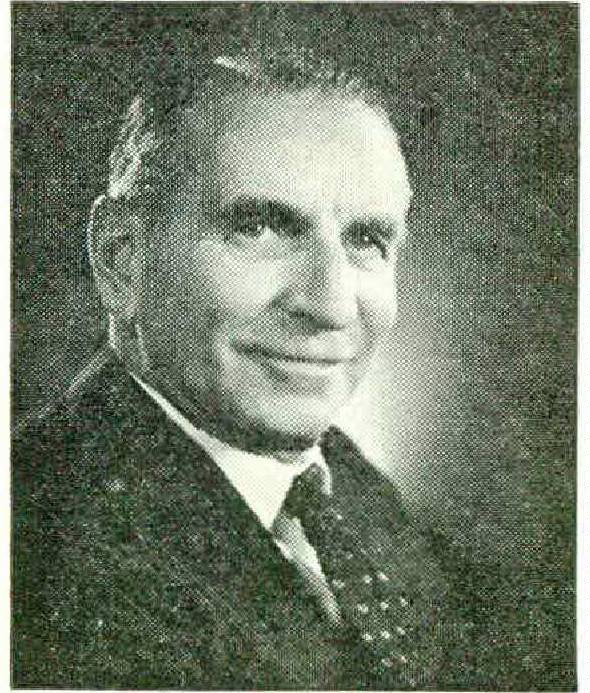
BY EDWARD WEEKS
PART of the delight of fly-fishing is that one does it alone, or if for salmon, in the company of a silent guide. This is not to say that the angler goes about his business in monastic calm: there are always irritants to contend with — the slippery boulders under water, the blackflies and midges above; and in his communion with nature he vents his exasperation by talking to himself, sometimes in grunts, sometimes in more colorful terms. This self-address has not yet been recorded, but a long-playing record of such a soliloquy would, I think, be an amusing Christmas novelty for Abercrombie’s.
For each of us there comes a day, not necessarily the first, when our timing is off. The elements, of course, have a way of conspiring, and a tired elbow may be a further handicap, but whatever the cause, the result is certain to be humiliating, Take an early July morning at the salmon brook pool on the southwest Miramichi. The river is low, and the water pouring down the brook is several degrees cooler than the river, and with this lure there can be no doubt that fish have moved in during the night, though none as yet is showing. Since the sun is at my back, I move into the shadow of the trees before I begin to cast. There is an air of expectancy about this first approach to an unmolested pool.
But why is there so much belly in my opening casts? The fly swings in a loose, wide arc; to straighten things out I retrieve a little line, and as I do so take my Green Highlander away from the first fish that rises. I suspect that he was a grilse and that I pricked him, for he doesn’t come back. Still in the shadows, I work my way slowly down toward the deeper apartments in the pool, the hot spot where a salmon is apt to lie. Suddenly there is a convulsion as a big fish turns for my fly and misses it. “That was a salmon,” comments Ranny, the guide, and I get the implied reproach, for there was still that cursed belly in my line. “Rest the fish.”says my self-address system. “Rest him until he is back in position, and step back, you bloody fool, so as to get a better angle.” The wind is rising, blowing straight upstream, ruffling the water, and when I try to allow for it, I put too much elbow in the rod, and leader and fly hit the water with a ga-lump! “Nice going!” says the self-address. “That’s a mean wind,” says Ranny. I try to take care, for my fly must be almost over the salmon by now, but nothing happens. Perhaps he has dropped back, and with this thought I pull out more line, and my next curling cast stirs a fish on the far side. I wasn’t ready for him, my attention being centered on the salmon’s lair, and all I saw was the bright gleam of a grilse as he leapt and ran before shaking the hook free. “Just one of those days, you ass!” says the selfaddress.
My line is all over the place, and standing at the edge of the pool, I reel it in until there is hardly more than five feet above the tip. Automatically and without thinking. I make a short cast toward the hot spot: the fly must have landed right before the salmon’s nose, for he smacked it, hooked himself, and was off. This was a reprieve I didn’t deserve, and as he came out of water, a good ten-pounder, and fought upstream in the pool, I had a growing feeling of dominance. But in his fight for freedom the pool proved too confining, and in a flash he turned and headed downriver, taking out backing by the yard and roiling the water sixty yards below us. “Get down to him,” shouted Ranny.
“Yes, get down to him, you fool. Never mind the boulders. Keep going. And take in your slack! Damnit, the reel is loose. Screw it tighter. There he goes again. You’ve got to get down to him. Blast this reel. You’ll lose him with all that slack. Hurry! Goddammit, hurry!” But we never quite closed the distance. When last seen he was headed for Boiestown, and then the line went dead, and I knew that we had lost him and felt, as one always does, dismay at my helplessness and admiration for a good fighter.
Fortunately there are always consolations for the defeated angler, and the first comes out of a bottle as, waders removed and feet up, he takes from Matt and Murray the ribbing that is coming to him on the porch of the cabin. Ken’s lunch — Ken is the best cook on a wood fire in the north country — of hash, grilse salad, shortbread cookies, and colfee paves the way for a ninety-minute nap that follows. Then as one awakens for the second half of the day, one begins to appreciate life with a fresh heart: to notice the pine grosbeaks and purple finches which are digging away for the salt around the smokehouse, the big cow moose that ambles down for her evening greens on the opposite shore, the wind which had been such a devil in the morning now swinging to the southwest and dropping, the river as it shades from blue to molten metal, which will turn to jet as the sun goes down behind the ridge, and the slender crescent moon. “A dry moon,” says Ranny. “Good fishing tomorrow.”
OUR GREATEST REVOLUTION
NEVER CALL RETREAT, the third and climactic volume of BRUCE CATTON’S Centennial History of the Civil War (Doubleday, $7.50), is a vigorous and illuminating book. It takes hold in December of 1862 when Jefferson Davis had been drawn incognito from Richmond to the Mississippi Valley to see what could be done to keep the Federals from splitting the Confederacy. General Lee had been apprehensive about this threat for the reason that his horses and mules came from the West and the army of northern Virginia was in short supply. In Washington President Lincoln was concerned about the French in Mexico; more concerned about the ironclads which were being built in Britain for the Confederacy and which, if allowed to sail, might destroy the blockade; most of all, concerned about finding a general who would not grow numb when confronted with Lee and Stonewall Jackson. In the months to come he would try Burnside and Joe Hooker before he finally saw in Meade and then in Grant the rugged unconquerables he had been searching for. In the campaigns of late '62 and early ‘63, Lee had the odds in his favor at Fredericksburg, and his genius won at Chancellorsville, though it cost him the life of Jackson. But the venture into Pennsylvania proved at Gettysburg to be a desperate roll of the dice, and at the high point of Pickett’s charge, the South’s hope for a military decision that would end the war came to an end. Thereafter, Davis and Lee could only play for time.
What makes the great epic so fresh and telling in Mr. Catton’s prose is his power to judge these men as if they were our contemporaries; his scouring of all the memorabilia for human detail and for those quotations from letters which leap from the page; and, finally, the masterly way in which he describes the social revolution which the fighting released within the nation. “The nation,” he writes, “had not been driven to war by its desire to free the slaves; instead it had been driven to free the slaves by its desire to win the war.” He shows by what cautious degrees Lincoln approached the Emancipation Proclamation: how the President first toyed with the idea of exporting the liberated for a fresh start in someforeign land. And Catton points out that when emancipation, which he terms “the greatest single change in American life,” arrived, it did so “without the benefit of any advance planning.” The runaways, amounting in some cases to thirty or forty thousand, were placed in concentration camps supervised by the nearest Union army, where the food was scant and the death rate high. When Lincoln took the next step of placing them in uniform, the die was cast. Here is how Frederick Douglass, a former slave, put it: “Once let the black man get upon his person the brass letters, U.S.; let him get an eagle on his button, and a musket on his shoulder, and bullets in his pocket, and there is no power on earth which can deny that he has earned the right to citizenship in the United States.”
Much of the enrichment of Catton’s splendid book comes from those who saw the truth while history was being made. When over a bottle of wine in his cabin Admiral Farragut spoke his mind to General Banks and said in conclusion, “Wc must fight this thing out until there is no more than one man left and that man must be a Union man. Here’s to his health,” he was expressing a determination the South always underestimated. When a Union infantryman on the night of Chancellorsville wrote, “Darkness was upon us, and Jackson was on us, and fear was on us,” he was saying in his way what terrible fighting had to be endured before the Union could be saved.
The two greatest men in the book are, of course, Abraham Lincoln and Robert E. Lee, and when Lee writes to his wife of his hopes and dreads in the spring of ‘63, or when Lincoln writes to Joe Hooker, whom he is appointing to succeed Burnside despite the calumny which Hooker has been spreading about him, the words have a strength and nobility which make us proud that we can claim them both. There is magnificent comedy in this, as when Porter at the cost of $8.61 has his carpenters fit out an old flat-bottom scow with a round turret and a small deckhouse, and then in the dead of night drifts this reputed monitor past the Confederate forts to instill a fear which disrupts the Southern fleet; corruption, as under Ben Butler in New Orleans; breathtaking beauty, as when Pickett’s mile-long line comes out into the sunlight for its final charge; and tragedy, so superbly controlled at Appomattox. Mr. Catton and his publishers are to be congratulated.
HAPPINESS AT SEA
Mankind has long been divided between those who yearn to go to sea and those who don’t, and for those who do, no wiser chronicler exists than SAMUEL ELLOT MORISON, historian, rear admiral retired, and a saltwater cruiser since boyhood. In his Admiral of the Ocean Sea and his John Paul Jones he has recorded the exploits of two of the most audacious skippers; more modestly, more lovingly, and with that precise Yankee touch that gives his prose such style, he now tells in SPRING TIDES (Houghton Mifflin, $4.00) of the boats, the voyages, the reading and remembrance which have given him such personal happiness. The little book is dedicated to his wife, Priscilla, and reading one of its most perfect chapters, “A September Cruise,” one can readily see why.
Good sailors are men of resourcefulness and of magnificent prejudice, too, as can be seen from Sam Morison’s occasional allusions to those “stinkpots,” the cabin cruisers; they are also men of poetry. Melville was (Morison quotes his glorious phrase “the humming silence,” which occupies a cabin in storm), and so was H. M. Tomlinson; John Masefield is, and so is Admiral Sam — his book is alive with it, especially the account of the summer cruise he made with Alec Forbes in the Aegean thirty years ago, a blend of seamanship and scholarship, poetic in its appreciation.
OIL IN THE GARDEN OF EDEN
A SOUVENIR FROM QAM (Holt, Rinehart and Winston, $4.50) is MARC CONNELLY’S first venture in the field of light fiction. His skill as a dramatist is a guarantee that his narrative will be well plotted and entertaining. The action is centered in Suruk, fabled to be the original site of the Garden of Eden, a tiny kingdom whose people, dependent on agriculture for two thousand years, are made frightened or rapacious at the prospect of the king’s new Program, which the flooding oil wells have made possible. In addition to oil, there are thought to be mineral deposits, highly coveted in a nuclear age, and when His Majesty asks our State Department for an immediate consultation (at a fee of one million dollars) with Newton Bemis,
the brilliant young physicist, Washington suspects that a momentous decision is at stake and pressures him to go. Bemis is hesitant: fearless and superbly confident in his own field, he is an ingenue with women, and having just become engaged to “the Seventh Most Beautiful Woman in Washington,” he would prefer not to be interrupted. But go he must. The red-carpet treatment he receives in Qua, the capital, is something out of Aladdin’s lamp, and the beauty of the gardens and the charm —as much as he can see — of Princess Farha, who “throws off rainbows” every time she looks at the tall Vermonter, for a time conceal the intrigue which is building up against him, in and out of the palace.
Mr. Connelly’s fantasy is lush and neatly contrived. Where he goes light is with his people: their lines are good, but their behavior must be accepted with a willing suspension of one’s disbelief.
THE PEOPLE OF THE BEAR
Fantasy of a more primitive, sophisticated nature is the substance of ROBERT NATILAN’S enchanting novel THE MALLOT DIARIES (Knopf, $3.95). Mr. Nathan, long one of the finest practitioners of the short novel, finds his source material in anthropology and in this manner: Professor Osgood and his younger associate, Professor Mallot, set out with their guide and wrangler, Fred Bailey, in search of a tribe of aborigines believed to carry on a Stone Age existence in the canyons and mountain meadows to the northeast of Phoenix. It is the old Apache country with a bad reputation, a couple of campers from New York having been found murdered, literally torn apart, the previous December. Osgood, the Jean-Paul Sartre of the expedition, believes that man is half rat and half pig in his origin, and that the Neanderthals, who lived on this planet seventy thousand years ago, were just as savage, warlike, sex-ridden, and superstitious as ourselves. Mallot is at once more credulous and more hopeful. When they are captured by the People of the Bear, it is Mallot who saves them from immediate extinction, and during their captivity in the caves, it is he who proves to be the more attractive and the more susceptible to the ancient community. Inevitably, he falls in love with the High Chief’s daughter.
“We are on the edge of the past, we stand on the rim of history,” cries Professor Osgood, and the skill with which the novelist holds up the mirror to the pompous academic, the irony with which he points to the advantages enjoyed by these hidden Neanderthals, and the satire with which he portrays human nature make this a story of subtlety, laughter, and suspense. Like so many fantasies, it deflates at the close.