Upstaging the British
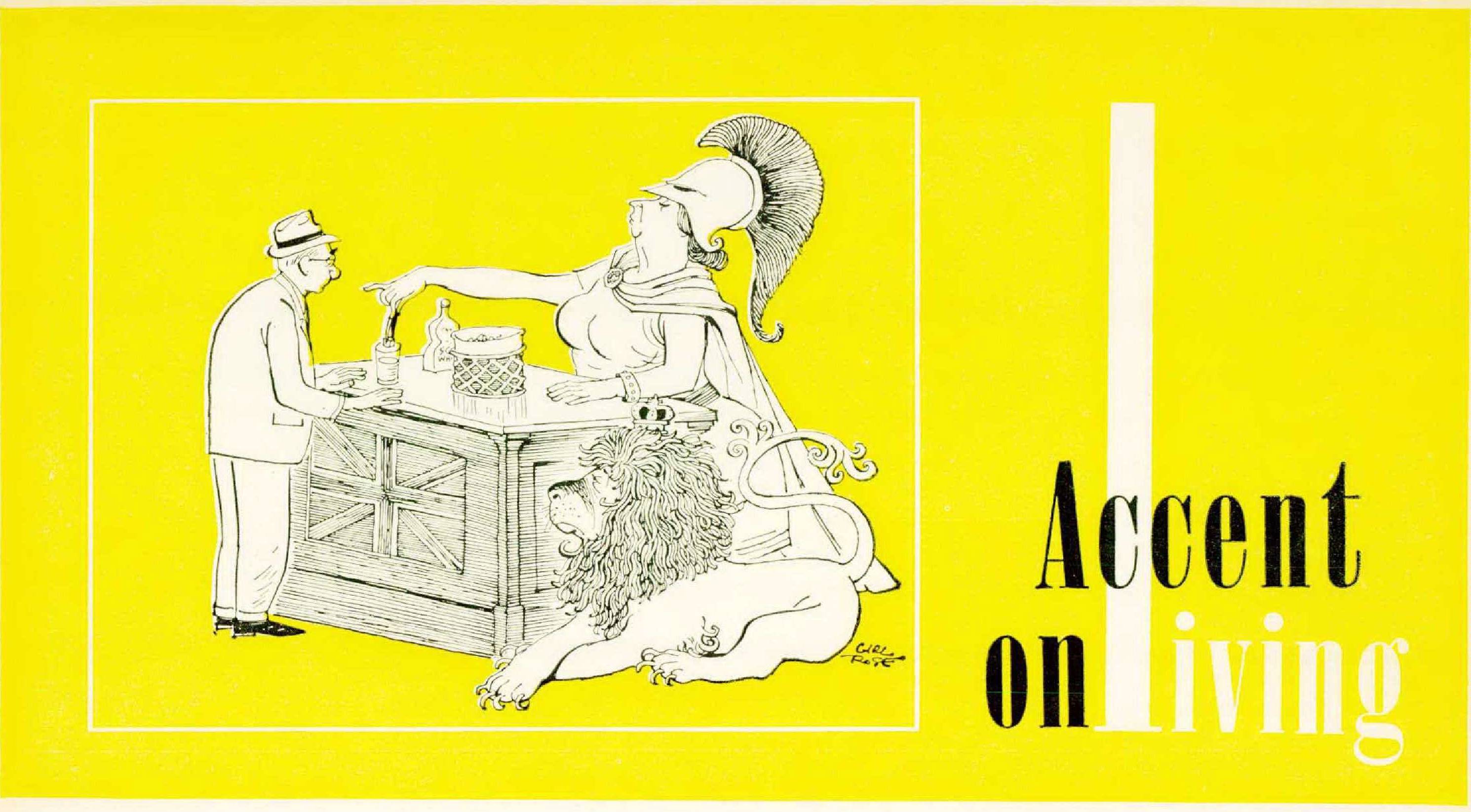
After some years of puzzlement about it, I believe I have found a reasonable explanation for the British attitude toward ice, especially ice in drinks. Their preference for no ice in their own drinks is of course strictly their own affair.
If coldness is a standard of high style in the tropics, where even the strongest beer is served so cold as to be virtually tasteless, the British liking for beer at a cellar temperature is understandable, for Britain is certainly not in the tropics, and very few of its brews (with the rousing exception of Barley Wine, Bass & Co. No. 1) could be called strong. As for the usually lightbodied British spirits, ice does them no great good and could hide their flavor completely, although gin and vermouth at room temperature does take some getting used to.
But why the British bartender, in other respects an openhanded sort, should dole out the ice so grudgingly to Americans had long baffled me: in pubs, restaurants, even on transatlantic ships and aircraft, the request for ice usually brings a small lump, sometimes two, never three. If the customer presses for more, up go the eyebrows, and the bartender takes on the stoical air of one prepared to endure just about every aberration of the species.
It is not that the British lack a proper supply of ice; indeed, one encounters on every hand the great advertising names of American freezerdom, with their grinning housewives disclosing refrigerator shelves of a splendor rarely found on either side of the Atlantic. I have seen with my own eves installations of the “fridge” in actual use in several British flats and houses, but we must bear in mind that the marvels of mechanical refrigeration came to most Britons recently, in the last ten or fifteen years. John Christie had only to conceal in the walls of his Notting Hill lodgings the bodies of the women he murdered, so effectively did the chill of his quarters preserve the remains.
One should note, also, that the term “meat safe” still enjoys currency in Britain; in fact, there is no other name for this contraption, which survives today in many households: a cupboard made of window screen stretched over a light framework, used for the storage of perishable foodstuffs.
The contented user of a meat safe might very well decline the fridge altogether. One supposes that behind the bloc of nonfridge opinion lies an even more formidable mass of antifridge people. Out of such thinking comes a hostility toward, or at least some mistrust of, ice itself; and it is these sentiments to which I attribute the American’s difficulties in getting the extra lump or two. How well founded this theory proved to be I learned at a country hotel where I stayed for a few weeks last summer.
The hotel barmaid was a singularly disagreeable woman. It was her daily habit, on opening the bar at noon, to exchange bitter opinions about the hotel, its management, and all its occupants with two equally disagreeable old biddies who sat at a nearby table, sipping roomtemperature gin and water. The bar was small, and anything said by anyone was clearly heard by all.
My request for ice brought the usual single lump from a well-filled container. A second lump was delivered with such ill grace that I felt obliged to speak tip. “What’s so troublesome about ice?” I asked. “You have plenty of it.”
The barmaid’s reply was addressed to no one in particular. “These Americans,” she said. “Always asking for ice, and more ice . . .”
One of the old biddies chimed in. “Yes, the Americans and their ice,” she said. “What swank!”