Requiem for Potheen
The highroad from Nenagh, County Tipperary, to Tipperary Town is one of the emptiest in Ireland. For its first five miles out of Nenagh, a small market town which — greatly daring — has just built its first “luxury” hotel, the highroad runs through flat, grassy country studded with the small southernmost marshes of the great, generically termed, Bog of Allen. At Dolla (two public houses, one general store, and a post office) the road begins to climb into the hills of the Silvermine and Slievefelim mountains, rambling and plunging through them for twenty miles before dropping down into the “Golden Vale” of South Tipperary.
Along this twenty-mile stretch there are only a couple of hamlets, and precious few owners of motorcars. Trucks carrying canned goods, coal, and cattle avoid the NenaghTipperary highroad, preferring to make the longer but easier run by Thurles and the Rock of Cashel. And in the course of its twenty miles of curves and corners, the Nenagh-Tipperary highroad is crossed by only one other road of any importance, that from Thurles to Limerick.
Much of this diamond-shaped mountainy area of the Silvermines and Slievcfelim is high “red” bog — endless acres of wet peat, with patches of purple heather and green rushes and every shade in between of russet and yellow. The occasional lane straggles across the bog. Here and there a cottage nestles under a hill for shelter from the southwest wind which blows ten months in the year. This is one of the most deserted areas in underpopulated Ireland.
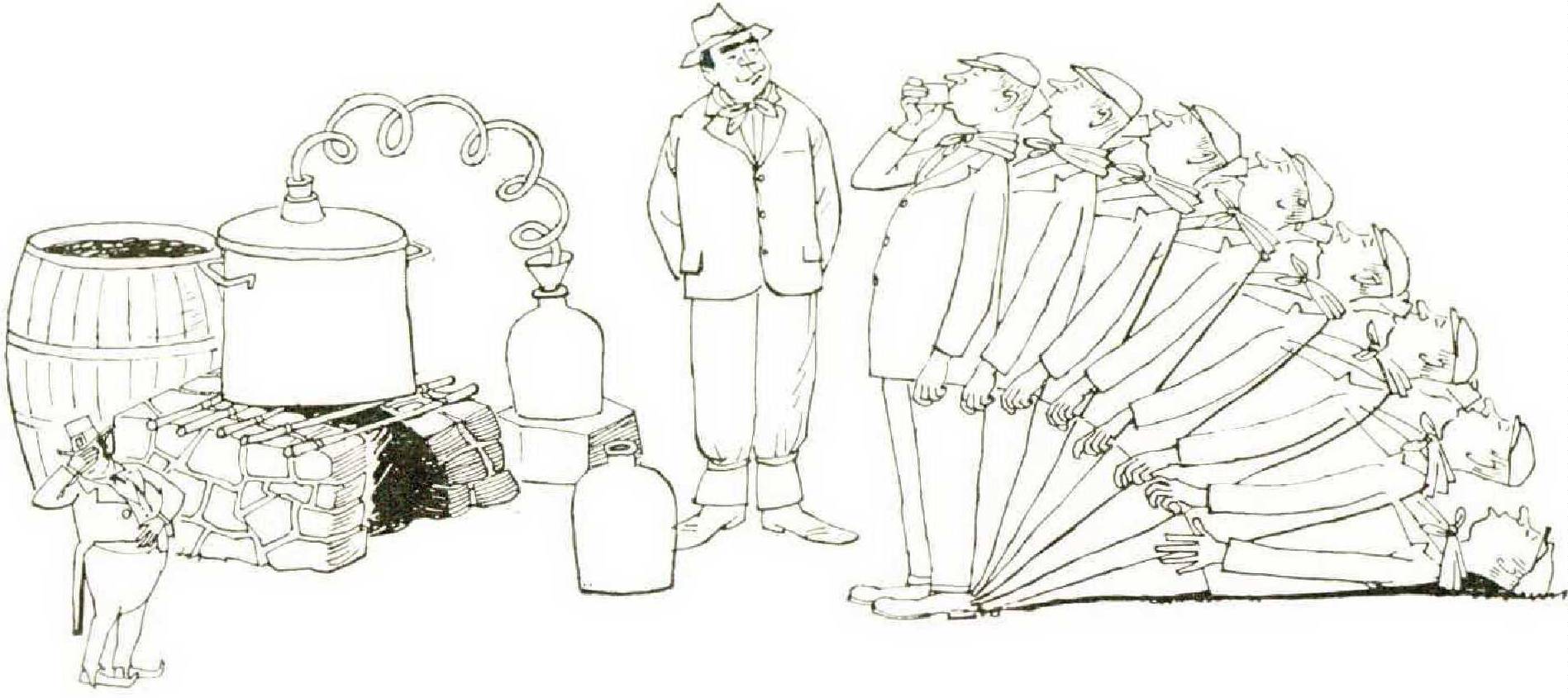
There are others like it: in Iarconnaught, stony and barren and neighbor to the picture-postcard beauties of Connemara, and in the Derrynasaggart hills on the borders of counties Kerry and Cork, where there generally were scores of the “irregulars” of the Irish Republican Army on the run during the civil war of the early 1920s. These areas have one thing in common: because of the absence of population and roads they were traditional centers for the illicit distilling of potheen, the raw, colorless, bitter “mountain dew” sold in the back rooms of remote cottages, as close to pure alcohol as possible, and guaranteed to produce conviviality in the shortest possible time and a horrible headache on the day after.
By virtue of its alcoholic strength, potheen was a guaranteed knockout. Its taste made it a cautioner, for its base was potatoes, and the men who made it were ready to throw in anything which came to hand — wet and otherwise unusable sugar, damp and unsalable grain, cabbage stalks, and decayed sugar beets. It’s hard to believe that anyone ever drank potheen because of liking its taste. But its effects were nearly instantaneous and apt to be spectacular. There is the attested story of the man who drank a tumblerful in Nenagh and woke up three hours later to find himself fighting on a ballroom floor in Limerick, twenty-five miles away.
In pre-war days thousands of gallons of the stuff must have been distilled in the Silvermine and Slievefelim mountains each year. The potheen makers often set up their stills in the open, far away from main roads and the slowmoving bicycle patrols of the Gardai (police). A wisp of smoke in the air might denote the presence of an illegal still. But the Gardai faced an invariable quandary: there was never only one wisp of smoke. Single members of the distilling gang would light other fires here and there among the hills and marshes. The Gardai who scoured the red bog for the lawbreakers would usually land a red herring, in the shape of a deserted slow-burning fire of dried peat and tree stumps.
Potheen-making flourished in those days. There was never any difficulty in getting hold of a bottle of it if one only knew whom to ask. The mountain dew traveled to Nenagh and other market towns in farm carts, snugly concealed under loads of peat, turnips, or stinking straw. The most reputable citizens acted as middlemen, marketing the liquor in pint or liter bottles and taking their cut on it. My own source was an employee of a Nenagh bank, a most respected citizen who supplemented his salary by acting as gamekeeper to the bank manager on high days and holidays. It was then that he picked up consignments of potheen, which traveled to town in the trunk of the car and in the company of the golden labrador, the dead snipe and woodcock.
In the 1930s a bottle of the stuff might cost up to seventy cents. Today it would cost three times as much. The illicit trade in potheen is dying fast, but not because of the increase in price. The lads who used to distill it can nowadays earn more numerous and more honest pennies at a normal job. The uneconomic small holdings in the hills are being forsaken. Their owners are selling out to the Forestry Commission, and trees — even if mainly only larch and fir — are returning to the uplands. The drift to the towns is increasing in this first flush of the Irish industrial revolution.
Potheen is dying a natural death, and today the wisps of smoke over the Slievefelim no longer draw the now motorized Gardai from their barracks. For they probably do no more than mark the hearths of cottages or the work of an assiduous farmer, burning old grass along the side of a lane. The old folk who used to make merry in the mountains are vanishing, and their grandsons prefer to turn up at the village dance halls, scrubbed, rosy-cheeked, and dressed in the standard, serviceable blue suit. One may lament the disappearance of the mystery and the Carbonari atmosphere of conspiracy which potheen created — but one must remember that it always tasted terrible.