Slaves for Rent: The Shame of American Farming
The price we pay for agricultural prosperity — for crowded supermarkets and the highest standard of living in the world — is the heartless exploitation of millions of itinerant farm workers. Truman Moore, a twenty-nine-year-old free-lance writer-photographer, a graduate of the University of North Carolina, spent four years traveling the migrant streams and talking with growers,union officials, ministers, social workers,and the migrants themselves. The article following is drawn from his book THE SLAVES WE RENT,which Random House will publish later this month.


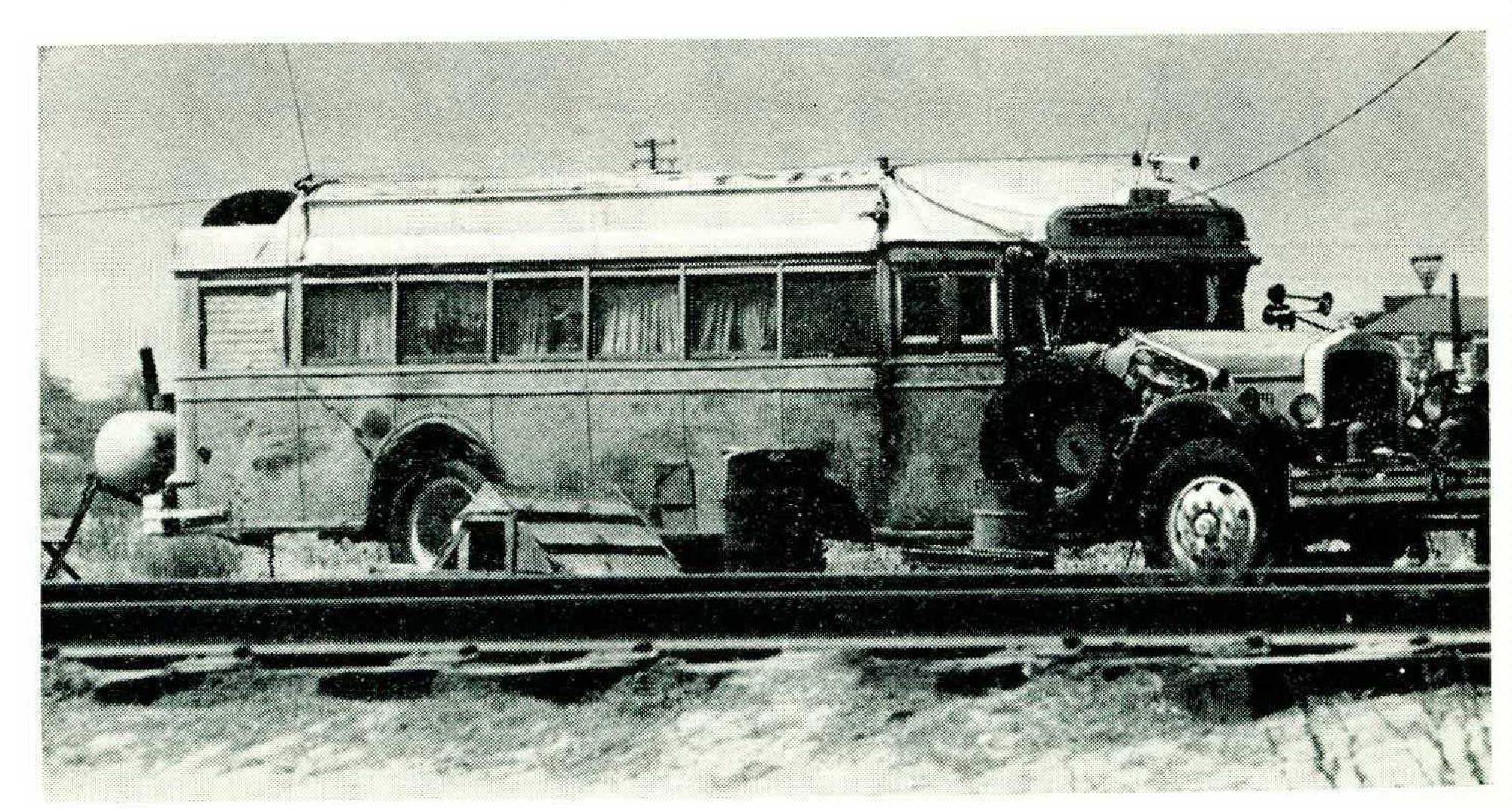
EACH year when the harvest begins, thousands of buses haul thousands of crews to fields across America as millions of migrant workers hit the road. They ride in flathed trucks or old condemned school buses patched together for just one more season. They go by car: Hudson bombers with engines knocking, laying a smoke screen of oil; pre-war Fords packed with bags, bundles, pots and pans, children crying. They go in pickups made into mobile tents — a home for the season. They ride the rods of the “friendly” Southern pacific.
They come from farms in the Black Belt, from closed mines in the mountains of Kentucky and West Virginia, from wherever men are desperate for work. They come by whatever means they can find These are the migrants — the gasoline gypsies, the rubber tramps — crossing and recrossing America, scouring the countryside in a land where the season never ends. There’s always a harvest somewhere. From Florida to Oregon the fruit tramp pursues the orchards. From Texas to Michigan the berry migrants work from field to held. Two million men, women, and children invade every state of the Union to pick fruit, to chop cotton, to scrap beans, to top onions, to bunch carrots, to pull corn, to fill their hampers with the richest harvest earth ever yielded to man.
The circus and the college house parties leave Florida after Easter. The first week of April, the major league clubs wind up their spring training and go home to play ball. The snowbirds start back to the cities of the north with their tans. And the migrants form crews and follow the sun. Sometimes a single bus will carry a crew; sometimes they pass in ragged convoys as the migrant battalions rumble out of Florida and up the Eastern seaboard.
The invasion hits South Carolina in May, North Carolina and Virginia by June. By late summer they have passed through Pennsylvania into New Jersey and New York State. Some go into Delaware and Maryland, others to Long Island, and a few on to Maine. By October the upstate crops are in, and the migrant tide flows back to the southern tip of Florida.
The workers find little to do in November. It is after a lean Thanksgiving and a bleak Christmas that hands are needed again in the fields and groves of the winter gardens.
From Texas the pattern is much the same, This is the home base of the largest migrant group. The exodus begins in early spring. Storekeepers close down for the season as the little towns depopulate. Everyone who can bend and stoop starts for the great corporate farms of the North and the West. From the steaming valleys of Arizona and California to the great Pacific Northwest comes a string of harvests. There is no crop in the world that can’t be grown on the Pacific coast, and relatively few that aren’t. Where once was a vast desert wasteland, there are now the rich irrigated valleys, principally the Imperial and the San Joaquin. In steady sun and several inches of water, crop after crop is produced with factorylike precision.
Into all these fields, through state after state, the migrants cut a footpath across America. But in spite of their mobility, the migrants are shut off in their own world. Migrant America is a network of side roads, of farm towns and labor camps and riverbanks, of fields and packing sheds. The famous cities are not New York, Boston, and San Francisco, but the capitals of the agricultural empire of the big growers: Homestead and Belle Glade in Florida; Stockton in California; Riverhead on Long Island; and Benton Harbor in Michigan. For the migrants, no roadside motel or tavern offers a neon welcome. The host community sees them not as a potential payroll but as a blight to the community’s health and a threat to the relief rolls. Businessmen, dance bands, and tourists making their way across the country find many services and comforts at their disposal. The migrant can hope at most for good weather, a grassy bank, and a filling station that will permit him to use the rest room.
There is always blood on the harvest moon. No one knows how many luckless migrants have died on their way to gather the harvest. Only a few of the more spectacular crashes make their way to America’s breakfast table by way of the local newspaper. A few years ago, a half-ton truck left Texas for the sugar-beet fields of Wyoming. In it were fifty-four migrant workers. As the truck neared the outskirts of Agate, Colorado, the driver suddenly hit the brakes. The truck spun around and turned over twice, scattering workers across the highway. There was one death, a baby who died in a Denver hospital shortly after the accident. In October, 1963, not three miles from the spot in Fayetteville, North Carolina, where a truckload of migrants died in 1957, a truck carrying twentyfour bean-pickers turned over when a tire blew out, strewing its human cargo like a handful of oats. Fortunately no one was killed.
When the ICC was considering regulation of migrant transportation in 1957, a representative of the “jolly” Green Giant Company complained that restriction of travel between 8 P.M. and 6 A.M. was a hardship on the workers and the employers. “It has been our experience,” said the company’s man, “that these trucks can complete the trip from Texas to Wisconsin in from fifty to sixty hours with stops only for meals, gasoline, and general stretching.”
A vegetable packer said that it was practically impossible to attach seats securely and still use the trucks to haul produce. He did not advance this as an argument against carrying workers in produce trucks, but against using seats. Many crew leaders use trucks because of the extra money they can make hauling the crops from the fields to the processors. Jon Misner, the director of migrant labor at StokelyVan Camp in Indianapolis, said he knew crew leaders who made $15,000 hauling vegetables — in an eight-week season.
THE CREW LEADER
Little Jim was a good crew leader. His bus, the Bean-picker Special, was a bit run-down, and the tires were slick. But the driver was sober and careful. The camps that Little Jim found for his crew while they were on the road were not always what he had promised them, but he could hardly help that. He couldn’t demand that the grower put the crew up in the Holiday Inn.
The crew went hungry before the crop came in, but Little Jim never told them he was going to feed them. If he lent them money to buy food before they got work, he charged them no more than the going rates, just as a bank would. And he had not been greedy about the money he took from their pay. A dime out of every dollar was his take. He stuck to it. And he charged a couple of dollars for each job he got them, and there were no more than three or four a season. While they were on the road, he got them to “help on the gas.” When he deducted for social security, he always turned it in, as he was supposed to. If there was a big shopping center near the camp, he’d stop on the way back from the field so that the crew could do their shopping there instead of in the little stores near the camps, which always overcharged.
His wife thought he was stupid to pass up any chance to make money. So he sold moonshine. There was a good profit in that. “I keep a little around because some of them — they won’t work without it. If you don’t have it for them, they’ll go out and get it.” He bought from a bootlegger for $1.00 a quart and sold it in the fields at $.50 a shot. A heavy drinker gets thirsty in the field. But Little Jim had to be careful not to give a bad drinker too much. He had one worker named Leroy Small, who was a mean drunk. He pulled out a homemade machete one afternoon and almost took a man’s head off. After that Little Jim was more careful.
He was usually on the road with the crew four to five months a year. During that time, he was the crew’s official representative. It is the crew leader, not the grower or the corporate farm, who is recognized as the employer. Whether or not a migrant ends the season money ahead or money behind often depends on his crew leader.
There are more than 8000 crew leaders in the migrant streams. They come in all shades of reliability and honesty. Good or bad, the crew leaders perform a service that is invaluable to the grower. A grower in Maryland can make a simple agreement with a crew leader to supply a given number of migrants at a specified date and for a stipulated price. The farmer, theoretically, can rest assured that his labor problems will be taken care of. In practice, however, he can never rest easy until he sees the crew pull into camp. An unscrupulous crew leader can shift his crew to a higher-paying farm at the last minute. The first farmer can easily lose his crop for lack of a harvest crew. Because both the migrants and the farmers depend on the crew leader, he is in a good position to take advantage of both. Hamilton Daniels was like that.
You had to admire Hamp. He was a thorough professional, with imagination and style. He usually honored his obligations to deliver the promised number of workers at the agreed price and time. Sometimes he came a little late though, because he would stop for a few small unscheduled jobs on the way. Born in New Orleans, a diplomat and a shrewd judge of character, Hamp had a quick intelligence far beyond what five years in school had given him. He knew how to get along with the white growers. He just played Uncle Tom.
Sometimes when the grower was around, Hamp would ride herd on the crew just to let the man know he was in charge. But the growers knew that. They depended on Hamp to bring the migrants in on time and get them out when the work was done. Neither Hamp nor the grower would profit by argument. His dealings with the growers were usually cordial; a balance of power existed that neither cared to test.
Hamp could make a flat price for harvesting and then cut the crew’s pay as low as they’d stand for. On a flat-fee basis, Hamp’s profit was the difference between what the grower paid him and what he paid the crew. Hamp didn’t care for this because if the weather was too hot or it rained too much, he might even lose money.
If there was a good crop and a high market, the grower might agree to an hourly rate so the crew would take their time and not damage the crop. But the usual agreement was a piece rate. This fixed the cost for Hamp and the grower. The rates were usually set up on a sliding scale. When the crop was good, the rates were lower, and as the fields thinned out, the rates went up. When the fields thinned out, the crew didn’t want to work them because it was hard to make any money. So the grower would pay a bonus at the end of the harvest to all the workers who stayed on the job. But it really wasn’t a bonus. He just withheld some of their money until the job was finished.
Whatever arrangement was made, the crew seldom knew the details. If the grower gave his camp rent free as part of the payment, Hamp might still charge the crew rent. He was careful never to cut into a man’s pay directly, except to take out social security, which he never turned in to the government.
His dealings with the migrant crew were complex. For one thing, he lived closely with them. His impression on them was important. If a crew leader looked too prosperous, the crew might think he was crooked. If he looked too poor, they might doubt he was a good crew leader. Hamp managed to look just right. He had a pair of brown pants and a red shirt that were ragged to the point of fascination. He was the raggedest man they’d ever seen. Close examination of this costume would have revealed patches sewn over whole cloth, but the effect was one of arresting poverty. To contrast with this. Hamp drove a Cadillac. His garments attested to his humility and his car to his success.
In picking a crew, Hamp seemed to work with little thought or design. Actually, he was very careful about whom he took on. He wouldn’t take boys who looked as if they were trying to save money for college in the fall. They held too tight to their money, and most of them would leave the crew to go back to school before the season was over.
Hamp looked for the quirk, the twist: the reason this man or that woman wanted to work the crops. He preferred workers, either male or female, in the first stages of alcoholism. Some crew leaders wouldn’t hire the drinkers, but Hamp knew better. You had to wait until a man was hooked. Then he didn’t seem to know or care what you took out of his pay as long as he had enough to eat and drink. He might get mad, but he didn’t leave. Of course, a hardened wino was worthless. He couldn’t stand the pace. It isn’t easy to bend over in the broiling sun all day.
Hamp kept a good supply of white mule and had places along the way where he could get it. There was good money in it. He also kept little white packets of dope. There was the real money. But sometimes it was hard to get. You really had to push it all the time to make it pay, and it was too bad if the government men caught you with junk.
He kept his hand in the ordinary rackets, too. He got a 15 percent cut from the grocery store near the camp. If the storekeeper refused to pay a kickback. Hamp would take the crew to another store. The crew seldom had cash, so Hamp worked out a credit system with the storekeeper. The crew members were never shown an itemized bill; they just paid what Hamp said they owed. Hamp also had beer and cigarettes in his trailer at double the store prices. For a $.50 bottle of wine, he charged $1.45. None of the crew stocked up on these things because they never had the cash. With one thing and another, Hamp cleared about $20,000 in a fair year.
On the West Coast, the crew leader is called a labor contractor. (The term “crew leader” refers to the foreman.) Nick Peronni is a labor contractor in California. He has a fleet of buses and trucks that haul workers in and out of the San Joaquin Valley. He operates out of the “slave market.” a big fenced-in lot that serves as a hiring hall, just up the street from the Farm Placement Service in the skid-row section. Before a man can work, he has to get a white card from the placement office. If he changes crews, he can’t get another card. Even if the grower cheats him, he can’t quit without losing his white card.
Most of the growers that Nick works for prefer to contract workers from elsewhere. Part of Nick’s job is to keep too many of the local workers from getting on the crews. Nick does not travel with the crews. He loads the buses out of the slave market each day for short hauls into the valley. He also handles the paper work. No one is sure how much Nick makes, but estimates run high. As he himself puts it, “If this thing blows up tomorrow, I’ll go fishing. It’ll be a long time before I get cold and hungry.”
These men are representative of crew leaders. For the most part their lives are hard to trace. Some use colorful pseudonyms like Sugar Daddy, Cool Breeze, or Meatball. A few years ago, the New York Times reported that only half of the crew leaders coming into New York State gave addresses that could be located. Tax investigators in Oregon found that relatively few crew leaders had ever filed personal income taxes, and almost none had filed social security returns for the crew, even though all presumably deducted from their migrants’ paychecks.
In 1964, Congress passed a crew-leader registration law designed to put dishonest crew leaders out of business. The crews have just started to move now. It remains to be seen what effect the new law will have.
THE TAR-PAPER CURTAIN
Across America there are tens of thousands of migrant camps. They are in the valleys and in the fields, on the edges of cities and towns. Some are half deserted. Some are behind barbed wire and even patrolled by armed guards. Migrant camps are within commuting distance of Times Square, under the vapor trails of Cape Kennedy, and surrounded by missile sites in the Southwest. They have names like Tin Top, Tin Town, Black Cat Row, Cardboard City, Mexico City, The Bottoms. Osceola (for whites), Okeechobee (for blacks), and Griffings Path.
Negroes from the Black Belt are dismayed by camps they find up North. Okies and Arkies who migrate today find camps much like those the Joads found in The Grapes of Wrath. You can drive from New York to California and never see a migrant camp. You have to know where to look. To borrow a popular analogy, a tar-paper curtain separates the migrants from the rest of America.
Let us look at a typical migrant camp which we will call Shacktown. Shacktown is owned by a corporate farm, one of whose foremen is in charge of the camp. “But mostly,” he says, “we just turn it over to the people to run for themselves.” In other words, no one collects garbage or maintains the camp in any way. The camp is built on the grower’s sprawling farm. It cannot be reached without trespassing, and several signs along the road remind the visitor of this fact. Even finding it is difficult. Local residents are suspicious of outsiders who are interested in migrant camps. Requests for directions are met with icy stares.
Shacktown was built about fifteen years ago. No repairs to speak of have been made since then. Most of the screen doors are gone. The floors sag. The roofs leak. The Johnsons, a Shacktown family, have a six-month-old baby and five older children. “When it rains,” says Mr. Johnson, “it leaks on our bed and all over the room. At night when it rains, we have to stand up with the baby so he don’t get wet and catch pneumonia.’
All the rooms in Shacktown are the same size, eight feet by sixteen. When the Johnsons moved in, they found they needed much more space. They sawed through the wall, a single thickness of one by six inch pine, and made a door to the next cabin, which was not occupied. The exterior walls are unpainted and uninsulated. They keep out neither wind nor rain, sight nor sound. Cracks between the boards are big enough to put your hand through. There is no privacy, and the Johnsons, like most Shacktown families, have learned to live without it. The windows are simple cutouts with a hatch propped open from the bottom. Some have a piece of clothlike screening tacked on.
The only touch of the twentieth century in the Johnsons’ cabin is a drop cord that hangs down from the ceiling. It burns a single light bulb, plays a small worn radio, and when it works, an ancient television set that Mr. Johnson bought for ten dollars, through which they get their only glimpse of urban, affluent America.
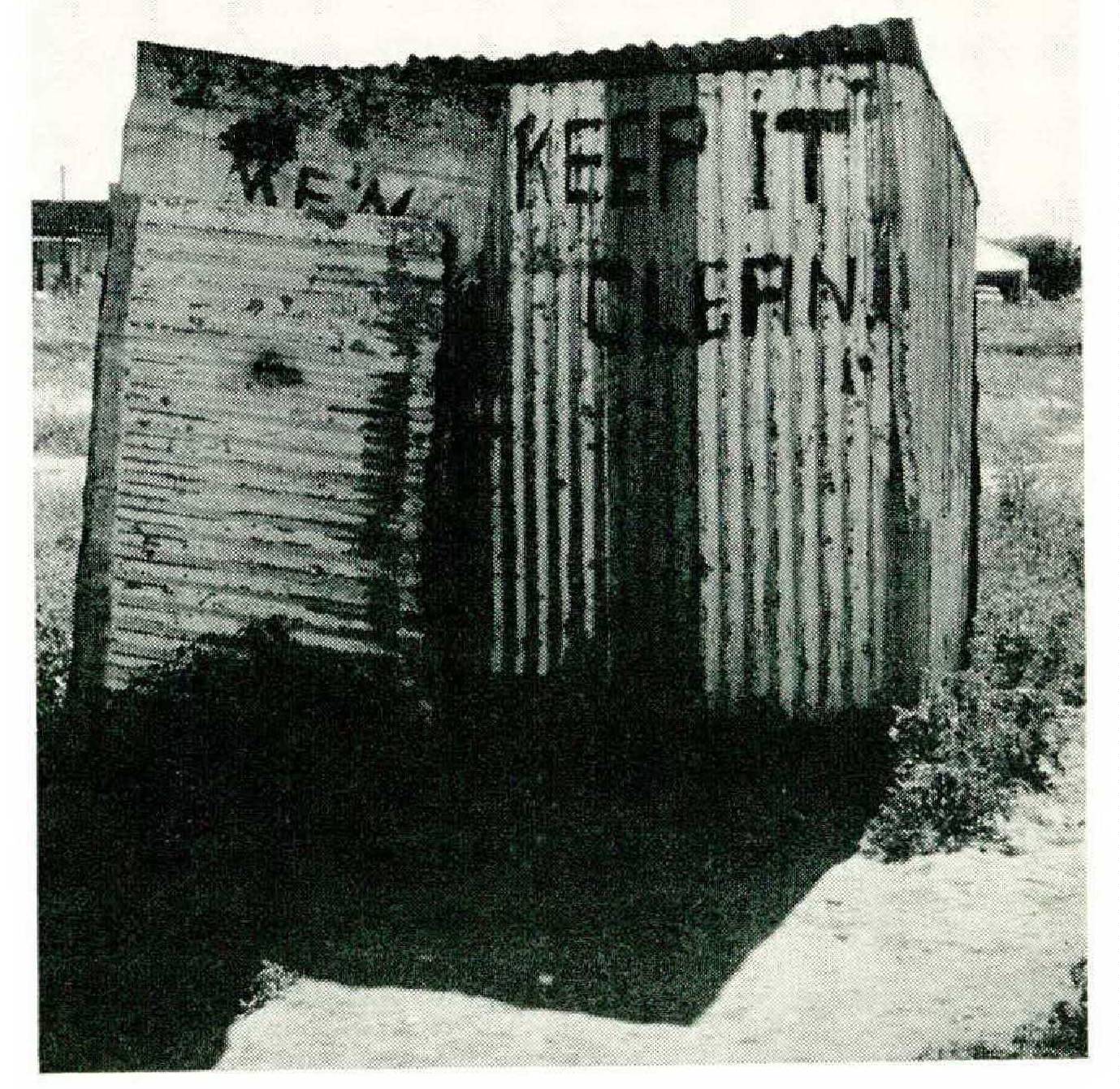
Although there are trees nearby, the camp is built on a barren red-clay hill, baked by a blazing summer sun. There are four barrack-type frame buildings, divided into single rooms. Behind the barracks are two privies, both four-seaters. The door to the women’s privy is missing, but the rank growth of weeds serves as a screen. There are no lights, and no one uses the toilets after dark. The Johnsons use a slop jar at night. It is kept in the kitchen and used for garbage, too.
There is virtually no hope of keeping out the flies that swarm around the privies. But one county health inspector found an unusual way of getting the growers interested in the problem. The inspector would drop by the grower’s house just before lunch and ask to see the migrant camp. When they came to the privy, the inspector would throw a handful of flour over the seats, which invariably swarmed with flies. On the way back to the house, the inspector would manage to get invited to stay for lunch. At the table he would remark, “Well, I’m sure glad you asked us all to lunch.” And there crawling around on the fried chicken would be a floured, white-backed privy fly.
During most of the season in Shacktown there will be several fullor part-time whores. The going price is $3.00. Prostitution thrives behind open doors. Venereal diseases are sometimes epidemic. In a crew near Morehead City, North Carolina, one woman infected ten men in the course of three days. Six out of eight crews working in the area had at least one syphilitic.
There are two hasps on the Johnson’s door in Shacktown. One is for the family to use. The other is for the grower. If the rent is not paid, the family will find when they return from the field that they have been locked out. Some growers provide cabins free. Some charge according to the number of able-bodied workers. Rents run from as low as $10 a month to as high as $50.
The Johnsons, like most Shacktown families, do their own cooking. But grocery shopping is not easy. There is a small cracker-barrel store near the camp, run by the grower, but the prices are a third higher than in town. “We got a ten-cent raise,” says Mr. Johnson, “and everything in the store went up a quarter. He wants us to buy from him or move out. It don’t seem right.”
Cooking is done on a small, open-flame, unvented kerosene stove which serves as a heater in the cold weather. Fires and explosions are not uncommon. The cabins are not wired for electric heaters; natural gas is not available. Bottled gas requires a deposit and an installation fee. Asked if the tenants didn’t suffer from the cold nights, the camp manager replied, “Oh, heat’s no problem. You’d be surprised how hot it gets in one of them little cabins with so many people.”
For most of the year the cabins are miserably hot. Refrigeration is nonexistent, and perishable foods seldom find their way to the migrant’s table. The baby’s milk sours quickly, and he is given warm Coke. Good water is always scarce in Shacktown. Between the long buildings there is a single cold-water tap. The faucet leaks, and there is no drainage. A small pond has developed, and the faucet is reached by a footbridge made of boards propped on rocks. This is the only water in camp.
Just keeping clean is a struggle. Water must be carried in from the spigot, heated over the kerosene stove, and poured into the washtub. In the evening, the oldest children are sent out with buckets to stand in line for water. Sometimes when the line is too long, the Johnsons buy their water from a water dealer, who sells it by the bucket. “We get some of our water down the road about five miles,” says Mrs. Johnson. “Sometimes I get so tired I’d just like to go in and die. We have to boil the water and then take it to the tub to wash the clothes. We have to boil water for washing dishes. The last camp we was in had a shower, but you had to stand in line for it half a day, especially in the summer.”
The problem of getting water is widespread in migrant camps. A Mexican national in California said his camp was without water for a week. “The contractor said the pump broke. There was a small rusty pipe that brought enough water for washing the hands and the face, but we could not wash our clothes, and we could not take a bath for a week. The inspector ordered the pump be fixed right away. Now the water from the baths is pumped out of a big hole, and it flows through a ditch between the bunkhouse and the tents. When it makes warm weather it smells very bad. To me it looks like the contractor is not afraid of the inspector.”
When several children in a Swansboro, North Carolina, camp became ill, a young minister named Jack Mansfield had the water in the camp tested. It was found to be contaminated. He reported this to the county health office, but they said nothing could be done since the camp had been condemned long ago.
Shacktown is a typical migrant camp, but not all migrants live like the Johnsons. Some find better camps. Many will find no room at all, and unfortunate workers will live, as they say in Arkansas, “under the stars.” Three hundred migrants were stranded in Nevada when the harvest was late. “For days they had barely enough food to keep alive,” the Associated Press reported. “They camped — men, women and children — in the open, along ditch banks, without protection from winter rains and freezing night temperatures. They took their drinking water from irrigation ditches used by cattle. Many children were sick. And they had no work.”
Migrant workers are often housed with the livestock. A Mexican worker in California described his camp this way: “We are installed in a barn which was used for the cows when we moved in. You have to slide the big door and go in and out the same as the cows. The cracks between the wall planks are about eight or ten centimeters wide. This makes very good ventilation for the cattle, but it allows the wind to pass over our bunks at night. It is strong and fresh cow smell. It is necessary to use much Flit, and the smell of this chemical also affronts us. The Americans are very inventive. Perhaps someday they will invent a Flit with perfume. . . . The only person who comes to see us is the Father, who hears confessions and says the Rosary. We are ashamed to have him come on account of the smell of the cows and the stink of the Flit.”
As bad as conditions are in the camps where the migrants live, they are worse in the fields where they work. A Florida Health Department report noted that at times crews refused to harvest fields because of the human waste deposited there by an earlier crew.
Americans are probably the most dirt-conscious people in the world. We are a bathroom-oriented society. Chains of restaurants, motels, and hotels across the country appeal to customers almost solely on the contention that their establishments are spotlessly clean. In such a society, it is not pleasant to imagine that beneath the cellophane wrapper lies a head of lettuce that has been urinated on. A storm of controversy erupted when a labor union showed a movie of field workers urinating on a row of lettuce. Growers charged that the picture was posed by union men in old clothes. Perhaps it was, but it need not have been faked.
The fields of the modern factory farm are immense. And there are no bathrooms. A Catholic priest observed that “most consumers would gag on their salad if they saw these conditions, the lack of sanitary conditions, under which these products are grown and processed.”
After a tour of leading farm states, Senator Harrison Williams of New Jersey said: “In the fields . . . sanitation facilities are a rarity. Unlike other sectors of our commerce, agriculture generally does not provide migrant farm workers with fieldsanitation facilities such as toilets, hand-washing facilities, and potable drinking water.
“We as consumers have good reason to be uneasy about this situation. Much of our soft food and other products are picked, and often field packed, by migratory farm workers. If we object to filth anywhere, we certainly should object to it in any part of the process that brings the food from the fields to our tables.”
One grower, a woman, docked the workers an hour’s pay if they left the field to go to the bathroom. The woman stayed with the crew most of the day. The men had to relieve themselves in front of her. They found this humiliating but were unwilling to lose the wage.
Antonio Velez, a field worker in the San Joaquin Valley, said he was told by the grower to drive a pickup truck into the fields which carried two chemical toilets. The grower told him to drive fast so that the toilets would slosh around and be dirty, and no one would want to use them. He was afraid the workers “would lose too much time going to the bathroom.” The idea of providing field workers with toilets and clean water strikes most growers as an unnecessary refinement. Consumers who realize that diseases such as amebic dysentery, polio, and infectious hepatitis (to name only a few) can be transmitted through human excreta may not be so convinced of the frivolity of field sanitation.
Dysentery is often considered a joke. It is called by a host of humorous euphemisms. The facts about dysentery are not funny. It kills 6000 Americans a year, finding its heaviest toll among children less than two years old, many of whom are the children of migrant workers.
It will be argued that to supply field workers with rest rooms would be prohibitively expensive. In 1955, as a result of newspaper articles and state investigations about the lack of bathrooms and hand-washing facilities, a group of Western lettuce growers started a voluntary program. A novel type of mobile toilet and hand-washing facility was developed and tried out in the lettuce fields and found to be successful. Forty of the units were built and put into the fields in the spring of 1956. None of the other growers picked up the idea; so when the pressure abated, the project was abandoned.
THE CHILDREN OF HARVEST
The man put down his hamper. “It sure looks like rain,” he said. The skies were a bright crystal blue, with only a trace of clouds to the east. The crew kept working, but a few looked up and saw the three men coming down the row. One was the grower, who seldom came around. The other was the crew leader. The third man was a stranger. He carried a brown leather case and a clipboard. The men just nodded as they passed.
They went up and down the rows, the first two walking easily. The third man, the stranger, stumbled now and then —a city man used to flat sidewalks. They crossed the red-clay road and went into the south field. A woman looked up as they came past the stacks of empty crates. Before they were close enough to hear, she turned to the busy crew. “Sure looks like rain.” Two small pickers dropped their boxes and darted through the vines and ran into the woods. Someone on the next row passed the word. “Sure looks like rain.”Two more children ducked into the vines and ran.
The children hid beyond the road in a small clearing in a clump of scrub oaks. From here they could see the man leave. It was their favorite game. Hiding from the inspector was about the only thing that broke up the long hours in the field. In the camp they played hide and seek this way. When you were “it” you were the inspector. But it was more fun when there was a real inspector.
Luis at twelve was the oldest of the children. He had been to school off and on since he was six, but he was only in the fourth grade. If he ever went back he would be in the fifth grade, because he was older and bigger now. But Luis didn’t want to go back. He wanted to run away. He had been around the country a lot. Last year his family went to California and Oregon. One year they went to Arkansas. Once long ago — he was too young to remember when — his father took them to Florida for the winter citrus harvest. Luis was an ageless child. He had a way of taking a deep weary drag on a cigarette, and after a long while letting the smoke curve slowly out of his nostrils. His face was wrinkled, marked with a tiny network of fragile lines at the corners of his eyes and deeper lines across his forehead.
Still a child, he liked to play games. He enjoyed the gaiety at the Christmas feast. But at the end of the working day, he would stand stooped over slightly with his hands stuck flat into his back pockets. From behind he looked like a dwarf, a tiny old man whose bones had dried up and warped with age.
Billy was the youngest of the children. He was not quite five but old enough to do a little work. He didn’t earn much, but it was better, his father said, than having him sit around the day-care center costing them $.75 every single day. His mother kept the money he earned in a mason jar. When fall came, he’d get a pair of shoes if there was enough money. He could start school, if there was one nearby, in new shoes.
His brother lay beside him in the clearing. John was ten. In the years that separated Billy and John, a brother and sister had died, unnamed, a day after birth. John kept them alive in his imagination. There were few playmates in the camps and fields that he ever got to know.
“I got two brothers and a sister,” he would say. “And they’s all in heaven but Billy there.”
He called his invisible brother Fred, which is what he wanted to be called instead of John. Faith was the name he gave his sister. He saw her as soft and gentle, wearing a dress with white frills, like a china doll. He played over in his mind a single drama with endless variations. Faith was hurt or being picked up by some bully. He would come to her side to help or defend her. Then he and Faith and Fred would sit beneath a tree, and they would praise him for his bravery, and he would say it was nothing. They would have something cold to drink and maybe some candy to eat. He retreated more and more into this pleasant world. His mother had noticed his blank gaze many times and had heard him say “Faith.” She thought he was going to be called to the ministry to be a gospel preacher or a faith healer.
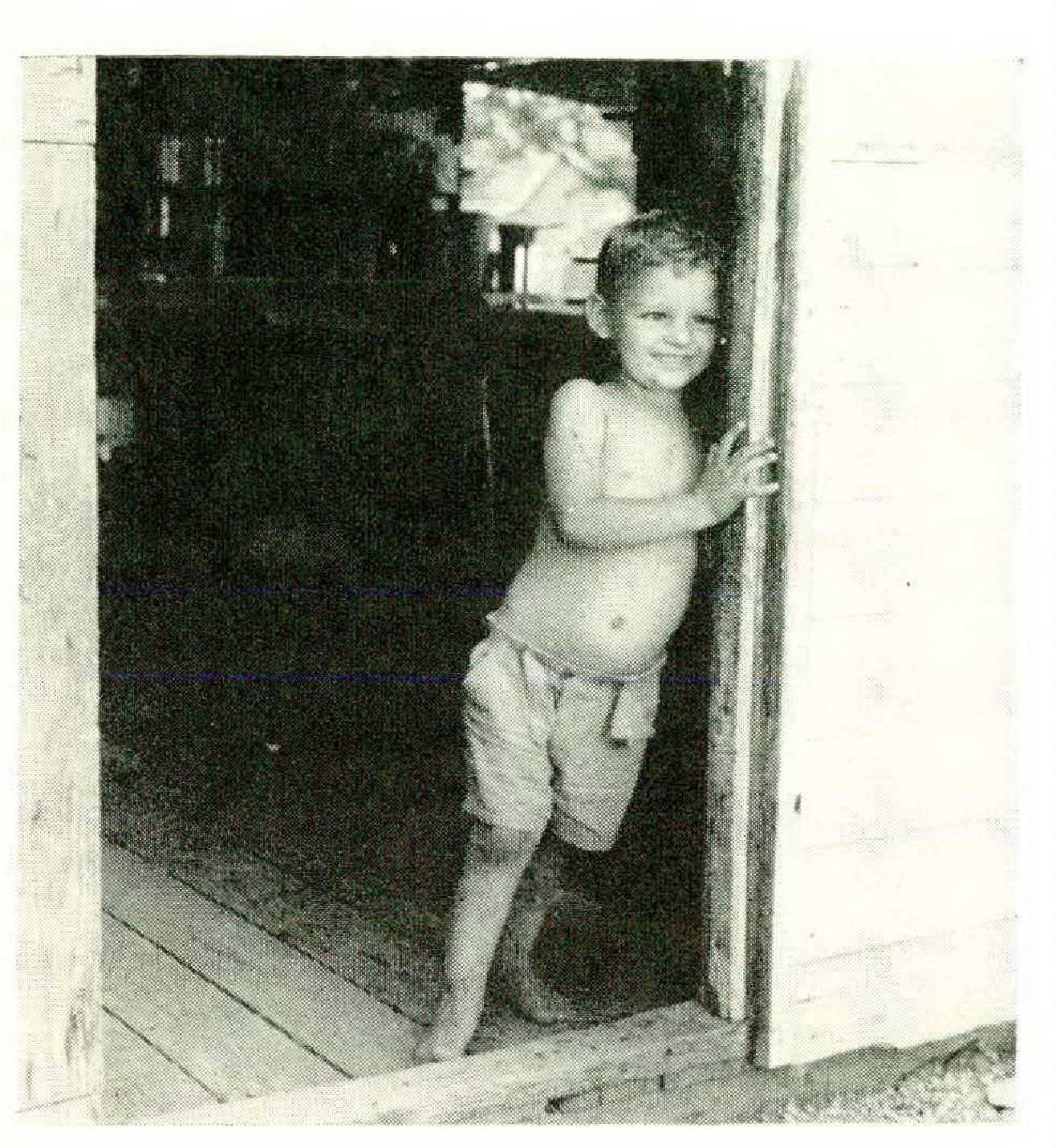
Robert was almost as old as Luis. He had been on the season for two years. His father came from the sawmill one day and said, “They don’t need me any more. They hired a machine.” His father had tried to make a joke of it, but late at night Robert could hear his mother crying. He knew it wasn’t a joke about the machine being hired. They sold their house and packed everything into the car. Robert left school, and now they lived in one camp after another. Sometimes they slept in the car.
The man with the clipboard left. The children came out of the bushes, picked up their boxes. They bent over in silence and began to pluck at the vines. These are the children of harvest. “The kids that don’t count” they are sometimes called. “The heretoday-gone-tomorrow kids.”
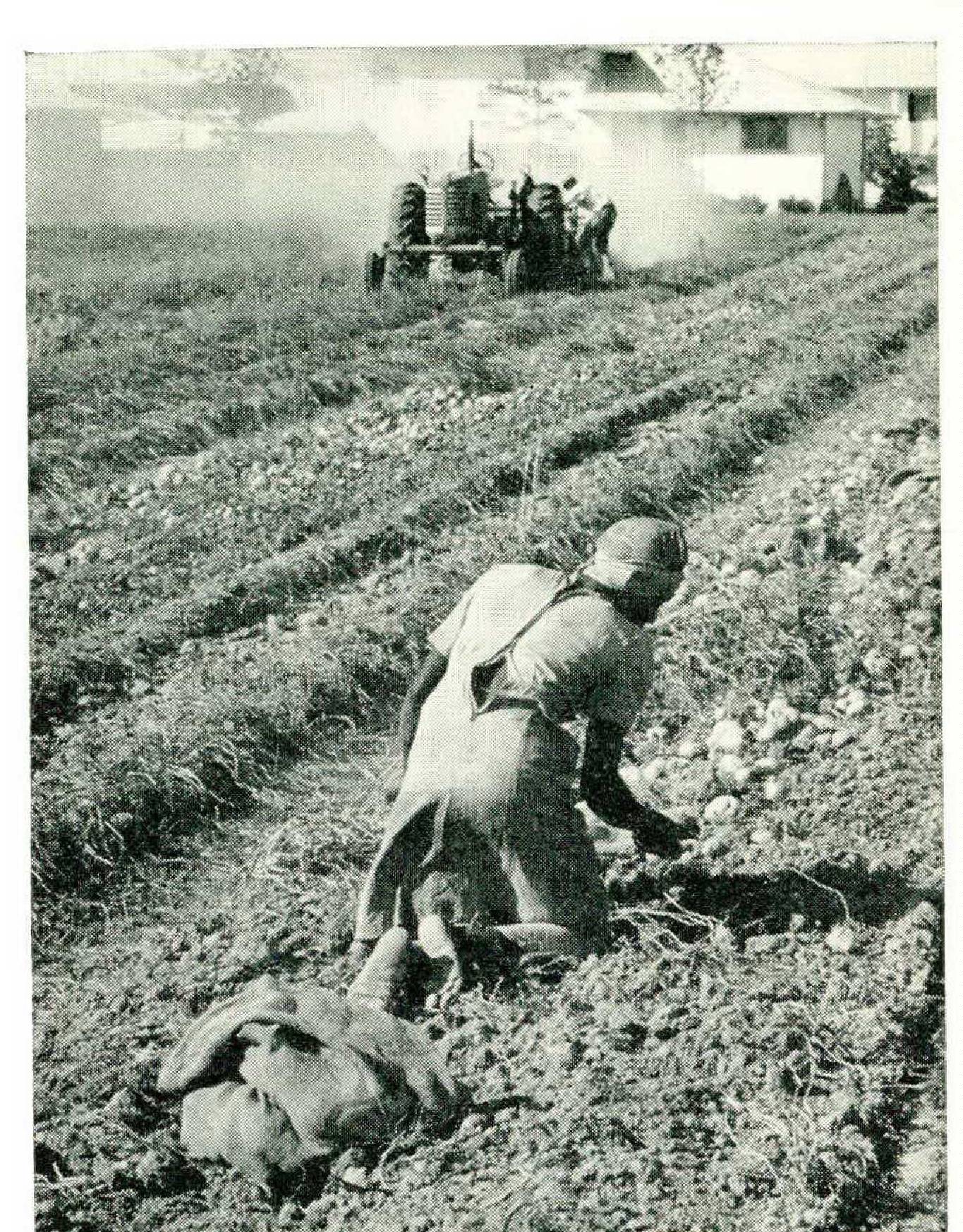
Inspectors from the Department of Labor find children working illegally on 60 percent of the farms they inspect. And no one knows how many hide in the woods when it “looks like rain.” No one really knows how many migrant children there are. Estimates run from 100,000 to 600,000. The most frequently used figure is 150,000. One survey in the olive groves of California showed that nearly three fourths of the workers were children. An Oregon survey showed the importance of the child’s labor to the family. There the average migrant worker earned $32 a week during the weeks he worked. But his wife and children together earned $48. In some crops women and children do more than half the harvest work.
The birth of the migrant child will most likely be in a migrant shack or, at best, in the emergency room of a county hospital. His nursery is the field and his toys the things that grow there. A few camps have day-care centers. There are twentyfour such registered centers in the United States, with a total capacity of less than a thousand children.
The migrant child may never develop any idea of home. His family is never in any place long enough, and home to him is wherever he happens to be. He seldom sees a doctor. It is almost certain that he will have pinworms and diarrhea. Other common ailments untreated are contagious skin infections, acute febrile tonsillitis, asthma, iron deficiency anemia, and disabling physical handicaps. A poor diet condemns the child from the start. A report on a camp in Mathis, Texas, showed that 96 percent of the children had not drunk milk in six months. Their diet consisted mainly of cornmeal and rice. A doctor commenting on the report said there was evidence of ordinary starvation. The migrant child is prone to scurvy, rickets, and kwashiorkor — a severe protein deficiency. Some reports have put the incidence of dental abnormalities at 95 percent, and others said that bad teeth were universal.
Epidemics, like the one in the San Joaquin Valley a few years ago, take a heavy toll. Shigellosis, a form of dysentery, had been rampant in the valley for years. The infant mortality rate was extremely high. Within a short time, twenty-eight babies died of dehydration and malnutrition. The migrant child is also prey to a host of diseases now rare in the nonmigrant world: smallpox, diphtheria, and whooping cough. A medical survey in California showed that two thirds of the children under three years of age were never immunized against diphtheria, whooping cough, lockjaw, or smallpox. Two thirds of the children under eighteen had not received polio shots.
There have been many brave attempts to provide migrant workers with medical service, usually on a shoestring budget and through the energy of a few determined people in a community. In the little farming towns around Morehead City, North Carolina, the Reverend Jack Mansfield got together the first mobile medical clinic, a white trailer called the Rocking Horse, equipped with the rudiments of a doctor’s office. The Rocking Horse— so named because it tilted back and forth when you walked around in it — was staffed by a group of local doctors who took turns going out to the migrant camps. The welfare department was persuaded to provide a social worker. The National Council of Churches provided a migrant minister.
By the light of a flickering kerosene lantern, the lines of workers waited to see the doctor. Some had unnamed miseries of the head and the chest, aches and pains that move up the back and seize the neck in a vise. Colds, bad teeth, rheumatism, and chronic headaches could only be treated by the same white pills.
It would take a full staff of psychologists to evaluate the psychic condition of the migrant children. But even in the absence of any thoroughgoing study, the symptoms of frustration, bitterness, and disorganization are easy to see. A daycare center was started in the basement of an Arkansas church for migrant children. One of the most successful parts of the center was a workshop run by a young man named Alec Johnson. The shop was set up in a corner room with small windows for ventilation at the top. It was cool and pleasant on the hottest days.
Alcc had assembled the usual carpentry tools and some leatherworking tools. By the end of the season, when the migrants pulled out, he had learned several things about migrant children by watching them at play. Joey Smith was a blond blue-eyed boy from Kentucky. The family had been on the road for almost ten years, which was most of Joey’s life. He was two when the coal mine was closed and his father lost his job. When Joey first came to the shop, he was quiet; by the end of the second week, he was racing around the room banging the chairs with a hammer. Alec had to take the hammer away from him, and Joey sulked and refused to do anything.
Alec got Joey interested in making a leather billfold. “I got all the material together,” said Alec, “and Joey started with a flurry of energy. But within an hour, he had put it aside and was toying with some pieces of lumber. I started him back on the billfold. Joey hit it a few whacks with the mallet and then looked around for something else to do. Joey wanted the billfold and had been excited about making it. But he didn’t seem to be able to stay with it and finish. There were many of the kids who were like this. It seemed to be a characteristic. They start out with great enthusiasm, but as soon as they hit a snag, they toss whatever it is aside and go to something else. They haven’t had any experience in building anything or in solving problems. They have no confidence in themselves.” Teachers, doctors, and ministers have the most contact with the migrant children. They are, understandably, not optimistic about the future.
Children have worked on farms since the first farmer had a son, and it has always been considered part of the rural way of life. But there is a difference between the farmer’s boy doing his chores and the migrant child topping onions and digging potatoes. The two are blurred together in the minds of people outside agriculture. The blurring gets help from such spokesmen as North Carolina’s Congressman Cooley, who enunciated the Blue Sky Doctrine: “There are no sweat shops on the farms of America,” he said. “On the farms of our nation, children labor with their parents out under the blue skies.”
Under the blue skies of Idaho, a twelve-year-old girl got her ponytail caught in a potato-digging machine. It ripped off her scalp, ears, eyelids, and cheeks. She died shortly afterward in a hospital. On a farm in California, a ten-year-old girl came back from the fields exhausted from a day’s work. She fell asleep on a pile of burlap bags as she waited for her parents. As other workers returned from the fields, they tossed the empty bags on the stack, and the little girl was soon covered up. A two-ton truck backed across the pile and drove off. hey did not find her body until the next day.
If children were mangled in steel mills, there would be a storm of public protest. But death and injury on the mechanized farms seem to pass unnoticed. Under the blue sky of the farm factory is no place for little children. Agriculture is one of the three most hazardous industries. In California alone, more than five hundred agricultural workers under the age of eighteen are seriously injured every year.
The migrants who follow the harvest are the only people in America who are desperate enough for this work to take it. Their children will be another generation of wanderers, lost to themselves and to the nation.
FACTORIES IN THE FIELD
The family farm used to be the citadel of virtue in the American rural tradition. Life was made hard by the vagaries of the weather and complicated only by the bureaucrats in Washington, who always meddled with farming. In 1900, when the population of the United States was under seventysix million, 40 percent of the people lived on the farm. Today, only 8 percent live on farms, and more leave every year.
Today, the important farms, as units of production, are more like factories. Great cultivators and harvesting machines lumber through endless fields. Gangs of workers bring in the harvest. One cannot ride past these giant farms after the harvest is over and the crew has left without an eerie feeling of being in a land without people. A verse from Isaiah rides the wind: “Woe to those who join house to house, who add field to field, until there is no more room, and you are made to dwell alone in the midst of the land.”
The importance of making the distinction between the big farm and the little farm — between the homestead and the factory in the field — is essential to the story of migrant labor. To begin with, the family farmer and the migrant worker are in the same sinking boat. The family farm, while providing an income and a place to live, no longer contributes significantly to America’s food production.
If the earth suddenly swallowed up a million and a half small family farms in America — nearly half the total number — food production would drop by only 5 percent. Half of our food is produced by only 9 percent of the farms. These highly mechanized, capitalized, and integrated companies use most of the seasonal labor. Only a relatively few big growers (5 percent of the total number) use more than $2000 worth of labor a year. The real giants — the top 3 percent — hire more than a third of all farm labor.
It is through the fields of the farm factories that the migrant stream flows. And these are the growers that have brought foreign farm workers to America each year. The growth of corporation farming and its effect on the traditional family farm have been watched with concern for many years. In 1923 a North Carolina land commission issued a still-urgent report: “It is quite conceivable that under capitalistic or corporation farming, greater gains might be secured than under a system of small individual holdings.
“It is quite inconceivable, however, that the . . . farmer would be as good or as efficient a citizen, that he would take as great pride in farming, that he would get as much contentment and happiness for himself and his family out of his home, or that he could develop as satisfactory a community for himself and neighbors as he could and would if he owned the house in which he lives and the farm he cultivates. The problem, then, is that of life on the farm, the development of rural communities and the building of rural civilization with which, after all, we are most concerned. . . . The late Governor Bicket said: ‘the small farm owned by the man who tills it is the best plant-bed in the world in which to grow a patriot. . . .’ Every consideration of progress and safety urges us to employ all wise and just measures to get our lands into the hands of many and forestall that most destructive of all monopolies — the monopoly of the soil.”
The policy of the federal government has always more or less agreed with this. Nearly every administration has declared itself in favor of preserving the family farm. It is ironic that each, in turn, has brought it closer to extinction.
In 1963 the government spent $4.7 billion on surplus commodities. Most of the money went to prosperous commercial farms, with only pennies trickling down to the hard-pressed family farms. The government-support price is often more than the production costs of the big commercial farms. This means they can produce without worrying about the market since “Uncle Sucker” — as some of the farmers say — will buy what they can’t sell elsewhere.
In 1961 two corporate cotton farms received government subsidies of $2 million each; thirteen great farms each received $649,753 on the average; and 332 farms received $ 1 13,657 each. By contrast, 70 percent of the cotton farms were given an average of $60.
The government has subsidized the big operators in a more important way. Until this year the commercial farms have been allowed to draw on the pools of cheap labor from other countries, principally Mexico. The presence of hundreds of thousands of foreign workers has naturally disrupted the domestic labor market, resulting in low wages and poor working conditions. The family farmer, who hires little outside help, has to value his and his family’s labor at no more than the commercial farmer pays for gang labor.
The exodus from the farm is proceeding at the rate of about 800,000 people a year, although cities and towns have as little immediate need for surplus rural population as the nation does for surplus farm production. It has been seriously proposed many times that overproduction is caused by a surplus of farmers and that we should let the natural laws of competition weed out the less successful. This way, the problem of surplus production and surplus farmers would solve itself at no expense to the taxpayers. But, as we have already seen, most of the food is produced by a relatively few big farms. And, of course, when the small farmer finally gives up and goes to the city, his land is taken over eventually by another farmer and remains in production.
As a unit, the larger family farm is not without merit. According to a 1962 government report, “Family farms [in this case those using 1.5 manyears of hired labor] are more efficient than large corporate-type farms .... When the management of a farm is taken away from those who supply the labor, there is a loss of incentive, diligence, skill and prudent judgment which are necessary to maintain efficiency.” The report said that the advantages of the corporate farm lay primarily in superior financing and control on the market.
No farmer, of course, whether big or small, can dominate the market. But the vertically integrated farm is its own market. The perishable harvest from the field goes to the farm’s own processing and canning plants and is sold canned or frozen under less urgent conditions. (In 1962, however, the government bought up $1.3 million worth of California canned apricots.) The small farmer selling perishable produce is completely at the mercy of the market, or specifically, the buyer.
Today the position of the buyer is stronger than it has ever been. In 1958, supermarket buying agencies handled 60 percent of the food dollar. At the present time, it is said that chain buyers account for 90 percent of the food dollar.
There are about 3.7 million farms in the United States. What seems to be happening is this: the 312,000 first-class farms are big and getting bigger; the 1,755,000 middle-class farms are struggling, and to survive they need a more equitable marketing structure, some government aid, and an orderly farm labor force; the third-class farms, of which there are 1,641,000, are marked for certain death if agriculture continues for much longer on its present path.
The farm of the classic rural tradition, the family farm, required little outside labor. A hired man or two were enough on the bigger farm for most of the year. And at planting or harvest, neighboring farm families joined together and did the work, going from farm to farm.
THE EXPLOITATION OF LABOR
The history of migrant labor is sketchy, but its dominant themes are quite clear. The rise of the corporate farm and the growth of the migrant labor force were twin developments. It is arguable which came first. Some say the industrialized farm developed because growers saw a chance to utilize a growing pool of unemployed labor. Others say that the development of the giant farm created a demand for gangs of itinerant labor, and the migrants came to fill the need. Whichever way it happened, the result has been that the corporate farm is, and always has been, dependent on cheap, migrant labor.
The migrant force of today still bears the marks of our history. Since early America was largely rural, farm interests dominated the government. While manufacturers adjusted to the industrial revolution early, agriculture was able to win exemption from most of the social legislation passed since the turn of the century. Agriculture has grown from a society, or way of life, into a complex food industry without coming to terms with its labor force. Had the automobile industry been able to import cheap labor from underdeveloped countries, it is unlikely that the automobile union would have made much headway.
The commercial farm has never adjusted to the realities of modern labor conditions or wages. Furthermore, the modern commercial farmer holds on to the idea that he somehow has a God-given right to unlimited cheap labor. Never has he had to enter the labor market and make serious efforts to attract farm labor. If anything characterizes the history of the seasonal farm worker, it is this — fate, through famine or depression, war or revolution, has time and again delivered to the commercial grower an ample supply of cheap and docile labor.
The migrant drama caught the nation’s attention in the thirties. Great dust storms swept the plains and dimmed the sun as far away as the east coast. Long lines of tenant families, the gasoline gypsies, crossed the desert into California looking for work. The dust bowl refugees were only one set of characters in the migrant epic that began long before the Joads of The Grapes of Wrath.
By 1934 the Anglo population in the labor camps reached 50 percent. As the bitter years of dust storms and depression set in, Okies and Arkies continued to stream into California in caravans of jalopies. It was ironic that after so many years of coolies and peons, American workers took over in a time of widespread unemployment. Hence wages and working conditions, bad as they were, got worse. For every job that was open, there was a hungry carload of migrants. Men fought in the field over a row of beans. For the first time Western growers admitted there was a labor surplus. The Farm Security Administration reported that by 1938, 221,000 dust bowlers had entered California.
THE BRACEROS
With the coming of World War II, shipyards and aircraft industries drained off the surplus labor left by the Draft Board. Food demands climbed to wartime levels. Another source of cheap labor had to be found. The government was induced to sanction the wetbacks. And in 1944 the United States spent nearly $24 million to supply the growers with 62,170 braceros— Mexican farm laborers.
As the war progressed, prisoners of war were turned over to growers, along with convicts. Japanese-Americans, impounded in concentration camps, were released to the custody of the big growers. Armed guards patrolled the fields. When the war ended, the P.O.W.’s went back to Italy and Germany, and the convicts went back to their cells.
The wetbacks remained, and their questionable legal position became more and more evident. Border patrols, on orders from Washington, looked the other way during the harvest season, and the wetbacks streamed in. The federal government not only condoned wetback traffic during the harvest season but actually encouraged it. The President’s commission studying the problems of migratory labor discovered this incredible situation:
. . . wetbacks (who were apprehended) were given identification slips in the United States by the Immigration and Naturalization Service which entitled them, within a few minutes, to step back across the border and become contract workers. There was no other way to obtain the indispensable slip of paper except to be found illegally in the United States. Thus violators of law were rewarded by receiving legal contracts while the same opportunities were denied law-abiding citizens of Mexico. The United States, having engaged in a program giving preference in contracting to those who had broken the law, had encouraged violation of the immigration laws. Our government thus has become a contributor to the growth of an illegal traffic which it has the responsibility to prevent [Italics mine].
In 1950 when the “police action” began in Korea, President Truman appointed a commission to study the problems of migrant labor. The pressure was building up for more cheap labor to meet the anticipated new demands for food. The McCarran-Walter Act (Public Law 414) had just been passed over the President’s veto. This was a new Immigration and Naturalization Act, which permitted the temporary importation of foreign labor under contract for periods up to three years.
Following completion of the report of the President’s commission, the 82nd Congress, on July 12, 1951, passed Public Law 78. The commission had recommended a few months earlier that “no special measures be adopted to increase the number of alien contract workers beyond the number admitted in 1950.” In that year 192,000 legal braceros (literally arm-men) came in under contract to work in the fields of the Southwest. Illegal wetback traffic began to decline, but by the end of the decade the number of braceros had risen far above the wartime emergency levels of either World War II or the Korean War. In 1959 there were 437,000 Mexican nationals scattered across the United States from Texas to Michigan.
Over the years growers have shown a decided preference for the foreign farm workers. The reasons are many. The foreigner many times does not speak English. He is uninformed about his rights and in a poor position to defend them if they are violated. He is willing to work for less and under poorer conditions. Imported farm workers are always single males. Housing and transportation are simpler. And when the farmer has done with them, they can be shipped back where they came from. And if any of them make trouble, they can be shipped home a little early.
Shortage of workers amid mass unemployment; foreign workers in record numbers while American workers can’t find jobs — these are long-standing contradictions in farm labor. Growers say they can’t find workers. Workers say they can’t find jobs. Part of the answer lies in the definition of the terms. A shortage of labor exists for many growers when they don’t have more than twice the number of workers they can get by with. Extra hands keep the wages down and the union out. The workers’ idea of the proper labor supply is when he can choose between jobs and take the one that pays the most.
The theory of the laws that enable growers to import labor was that both worker and grower could be served. In practice these laws crushed the worker and gave the grower an almost limitless supply of cheap labor. Obviously, when a worker refuses a job at $.35 an hour (the prevailing wage for field workers in Arkansas, for example), he only makes it possible for the grower to get Mexicans. Until very recently, Arkansas was the thirdlargest user of braceros, employing about 40,000 annually.
An interesting example of the law in action was the shifting wages in the Imperial Valley. For many years domestic workers in the winter lettuce harvest were paid a piece rate of a penny a head for harvesting lettuce. This amounted to an hourly wage of from $1.25 to $2.00, good money for harvesting.
As growers began to use more braceros, the piece rate was finally dropped and the wage level in the valley fell. For several years prior to 1961, it was frozen at about $.70 an hour. When President Kennedy signed the extension of Public Law 78 in 1961 (for two years), he instructed the Secretary of Labor to see to it that the program had no adverse effect on domestic labor. As a result, Imperial Valley growers who sought to use braceros were instructed to reinstate the old piece rate of a penny a head. (It can be noted in passing that if harvest wages were doubled, the labor cost would be only $.02 a head.)
In anticipation of this change, growers had increased the hourly wage from $.70 to $1.00. But as soon as the Labor Department called for the old piece rate, 200 growers flew to Washington to protest. The department backed down and agreed that the growers could pay either $1.00 an hour or the piece rate of $.24 a carton. The choice was to be left to the worker. That the growers were satisfied with the new arrangement indicated that they didn’t intend the workers, most of whom were braceros, to have much say in the matter after all. And the nature of the choice — between $1.00 an hour or $2.00 an hour — indicated that the Department of Labor was either naïve or cynical.
The mystery was cleared up when an accountant employed by an El Centro lettuce company announced that she had falsified the payroll records. What she had done, on the orders of the company owners, was to pad the hours reported by the labor crews. This lowered, on paper, the hourly wage. Thus the Labor Department was unaware of what the piece rate earnings actually were. Apparently the wage surveyors had asked the growers what they were paying. But no one bothered to ask the workers what they were earning. If it had been discovered that the piece rate was equal to $2.00 an hour, then the bracero wage of $1.00 would have had to be doubled. It would have been clear that the use of the Mexicans had definitely had an adverse effect on other wages in the valley.
The low wages in agriculture may seem to be of little importance to the rest of society. But “agriculture as a whole,” according to the California Democratic Council,” still remains our largest single industry. Depressed farm purchasing power contributes directly and significantly to fewer sales, fewer jobs, lower business profits, and a lower general level of national output and income than what the U.S. economy should be producing.”
MEASURED IN PENNIES
The marketing of agriculture products needs a thorough investigation. In many cases neither the grower nor the worker is getting a fair shake. Tomatoes grown in McAllen, Texas, and sold in Denver, for instance, produced a net income to the grower of $68.85 per acre. But the consumers paid $9660 for this acre of tomatoes. Only a small fraction of retail food prices reflect farm crop prices. And a much smaller fraction represents harvesting wages.
There is room here for fair profits to growers and honest wages to workers. What the harvesters need is the dignity of work done under conditions meant for farm workers, not farm animals. The issues that are fought over are cabin space, hot water, and piece rates, but the real issues are basic human rights and fair play. The migrant doesn’t want charity or handouts. He wants a chance, a start, to build his strength and manage his own life.
The wages paid harvest labor constitute a tiny fraction of the retail cost of food. In many cases, an increase in wages as much as 100 percent would barely affect the retail price. The price to consumers of eliminating migrant poverty is measured in pennies.
Legislation designed to help migrant labor is urgently needed. In 1964 a number of bills were enacted which will help states improve migrant education, expand the restrictions on child labor, provide some new day-care centers for children, and help farmers provide field sanitation. Congress could, if it would, establish a minimum wage for migratory workers, improve the methods of recruiting, training, transporting, and distributing farm workers, and extend the National Labor Relations Act to cover agriculture.
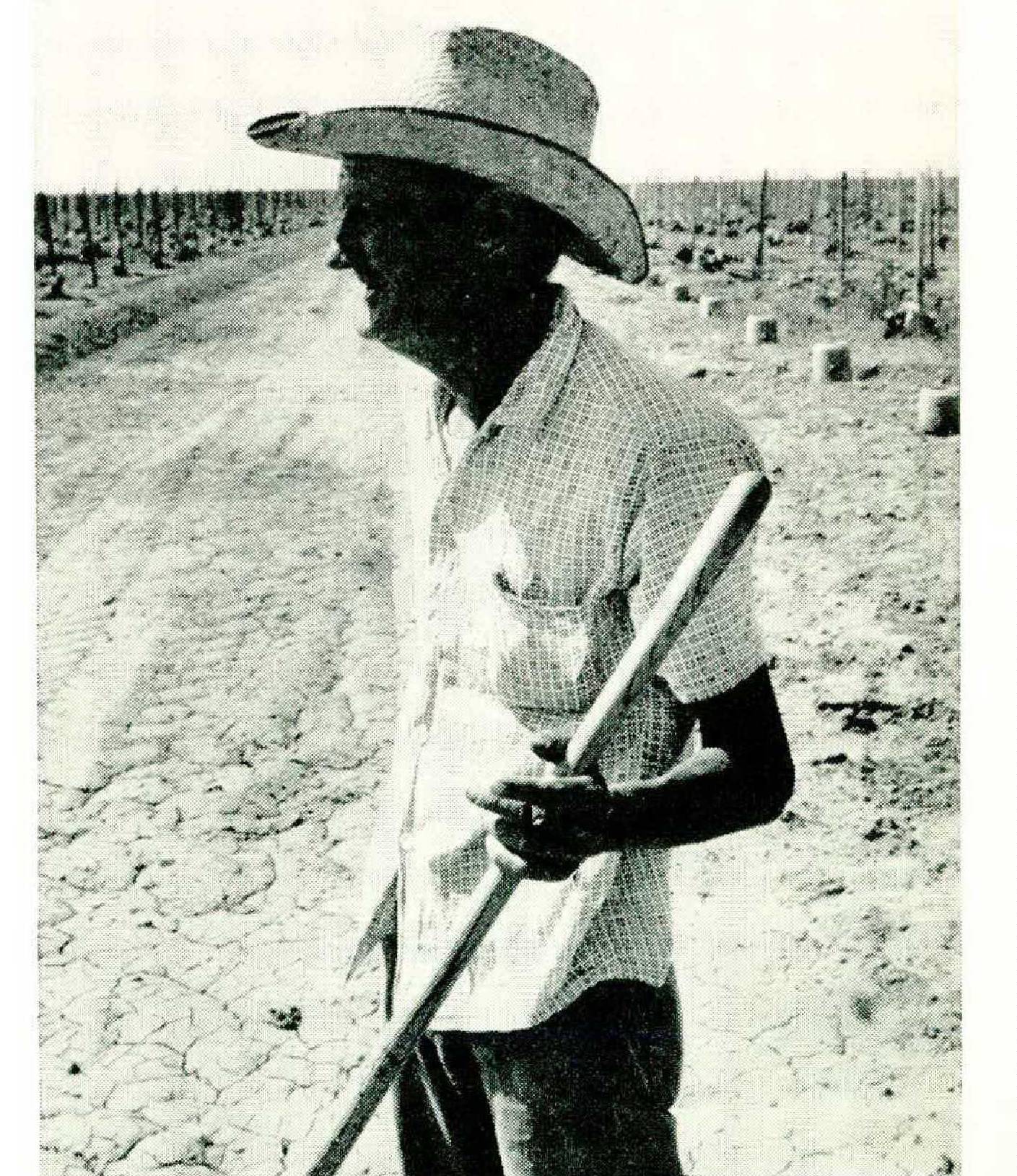
The ingrained poverty and underemployment that exist among the seasonal farm workers will be difficult to eliminate. Our agricultural system has made harvest work shameful. It has made the welfare check often more honorable than harvest work. It has made pride and satisfaction impossible. No man goes into a field to harvest crops if there is any other choice open to him. The new laws passed in 1964 do not constitute a complete solution. But they would make a start.
NOTHING BUT DESPAIR
The Brent family is typical of many thousands of migrant families. They were forced off their land in Georgia. They blundered into the migrant stream when the owner combined it with five other “mule and nigger” farms. One afternoon a placard appeared in the window of the filling station - grocery store near their home. It offered “employment opportunities” in the harvest in Homestead, Florida. The family was desperate for work. They loaded their household goods into their 1940 Dodge and started for Homestead.
After a long, hot, and dusty trip, they stopped in Belle Glade, north of Homestead, where the harvest was under way. Once there, they found plenty of work, and the whole family went to the fields. In a month it was all over. They never got to Homestead. Work was finished there, too. They realized, too late, that they would have to go where the crops were. They sold their car and joined a crew headed for Pennsylvania. They had become migrants.
Crew leaders and roving bus drivers make recruiting drives into the South, and many workers enter the migrant stream this way. The promise of “a hundred dollars a week and live in a ho-tel” sounds good. A favorite target of the recruiters is the debt-ridden tenant family. Cash earnings and a place to live are heady inducements.
Some families enter the stream to search for a better place to live. One member will go on the season to look around up north or out west. Still, many of them wind up in the rural slums that lie at the fringes of the suburbs across the land. There are, for example, many Negroes from North Carolina living in Riverhead, Long Island. They came with migrant crews first and later brought their families.
Settling is a slow and difficult process. A Long Island woman explained it this way: “A man comes alone with a crew and picks a place to settle down. Next season, he may come back with another of the men in the family. If they decide it’s OK, he’ll come next year with his wife. At the end of the season, they stay in Riverhead. No one wants to hire a migrant because they’re supposed to be wild and unstable; no one will rent him a house for fear he’ll tear it up. So the first place the family lives is a real chicken house. If he finds a job, he can move his family out of the ex-migrant slum into a regular slum. After that, he’s got it made. A lot of them don’t, and they get stranded. Sometimes the husband has to leave so the wife can get welfare.”
The valleys of California and Arizona and the suburbs of the Middle West are filled with the cabin slums of Mexican-Americans, Negroes, and poor whites trying to settle down. After a few years a migrant who cannot escape the stream is broken by it. The poverty, anxiety, homelessness, and isolation wear away his spirit. It is this apathy that is often called acceptance and makes people say, “ They like things that way.”
“We’re always goin’ someplace,” said a sandyhaired Oklahoma migrant, “but we never git noplace.” In a tired, flat voice, an old woman in a Michigan field put it only a little differently: “I been ever’ place, and I got no place.”
A migrant minister in a Belle Glade camp asked a woman in his camp church if she was going on the season again. “1 don’t know. Ever’ year I go up broke, and I come back broke. I don’t know why I go even.”
A migrant in Arkansas sat on the steps of his one-room cabin. For an hour he had talked about where he had been, and the things he had done to keep his family alive. Suddenly it seemed as if the memory of the years crushed him. “I get sick of the world sometimes and ever’body in it. I don’t know what’s goin’ to happen. Used to make a livin’ pickin’ cotton. Then they started bringin’ in them Mexicans by the truckload. Now they’re gettin’ them machines every day.”
Few urban Americans have any awareness of this vast impoverished army that tramps through their country to bring the crops in from the fields. It cannot be seen except as a broken-down car or bus here, a truck there, a ragged crew working somewhere off in a field.
But the harvest cycle yields its own fruits: ignorance, poverty, death, and despair. Until we see the connection between migrancy — the corpses piled up on the roadway, the children left to the darkness of ignorance and illiteracy, the despairing, destitute families groping for a way to live — and the bountiful supply of fruits and vegetables on every corner fruit stand or in every supermarket, no changes will come. Without this understanding, no war on poverty can hope to win more than a few skirmishes.